Tag: artificial intelligence

  • Nvidia Partners with Japanese Robotics Firms to Accelerate AI-Powered Automation

    Nvidia Partners with Japanese Robotics Firms to Accelerate AI-Powered Automation

    Nvidia is deepening its commitment to robotics by partnering with leading Japanese companies to develop advanced AI-powered machines. This collaboration targets the creation of next-generation factory robots, AI-powered humanoids, and digital twin simulations that streamline development and testing.

    Japan’s longstanding leadership in robotics, combined with Nvidia’s powerful GPU computing platforms, positions the partnership to drive a new wave of industrial automation. The goal is to improve productivity and efficiency in manufacturing through smarter, AI-driven systems.

    Beyond factories, the technology could extend to healthcare, logistics, and service robots, enabling more intelligent and autonomous operations. The move reflects the global race to invest in intelligent automation, with Nvidia providing the computational backbone for training and deploying robotics AI models.

    This strategic partnership underscores how Japan is strengthening its role in global AI development, leveraging digital twins and advanced simulations to accelerate innovation. The collaboration is expected to have a significant impact on the future of robotics and AI across multiple industries.

  • PLATON AI Camera Reconstructs Particle Paths Using Just Five Photons

    PLATON AI Camera Reconstructs Particle Paths Using Just Five Photons

    Scientists at ETH Zurich and EPFL have developed an AI-powered camera system that can reconstruct the paths of subatomic particles using only a handful of photons. The technology, called PLATON, could simplify particle detectors by replacing millions of conventional detector elements with a single light-emitting block and artificial intelligence. The findings were published in Nature Communications.

    How PLATON Works

    Particle detectors help scientists study elementary particles by tracking how they move through matter. Most existing detectors use scintillators, materials that emit tiny flashes of light when struck by charged particles. To pinpoint where these interactions take place, the scintillator is divided into millions of small segments connected to optical fibres and photon sensors. While this design offers high precision, it also increases the complexity and cost of large-scale detectors. Experiments such as Japan’s T2K neutrino project and CERN’s LHCb rely on these segmented detector systems to accurately track particle interactions.

    PLATON removes the need for millions of detector elements. Instead, it uses a single, unsegmented scintillator block and reconstructs the particle’s trajectory by analysing the emitted light.

    Inside the PLATON System

    The system combines a plenoptic, or light-field, camera with a single-photon avalanche diode (SPAD) sensor that detects individual photons generated inside the scintillator. Unlike conventional cameras, a light-field camera records both the intensity of light and the direction from which it arrives. The research team built the prototype by mounting a micro-lens array directly on the SwissSPAD2 imaging sensor. The setup captures extremely faint light signals while filtering background noise through gated photon detection.

    During laboratory tests, the prototype reconstructed particle interactions using as few as five detected photons, with the experimental results closely matching computer simulations.

    Potential Applications Beyond Physics

    The researchers also developed a transformer-based neural network to analyse where and when photons are detected. Instead of processing text, the AI identifies patterns in photon data to reconstruct the original particle path in three dimensions. Simulations suggest a future version of PLATON could achieve sub-millimetre spatial resolution inside a 10×10×10 cm detector. A larger one-cubic-metre detector is expected to deliver resolution of only a few millimetres, comparable to today’s advanced scintillator detectors despite using far fewer components.

    The researchers also see potential beyond particle physics. They have filed three patents covering the use of PLATON in positron emission tomography (PET) scanners. The technology could improve medical imaging by reconstructing faint light signals more accurately while reducing the complexity of detector systems.

  • Apple Trade Secrets Case Escalates Legal Pressure on OpenAI’s Hardware Ambitions and Potential IPO

    Apple Trade Secrets Case Escalates Legal Pressure on OpenAI’s Hardware Ambitions and Potential IPO

    Apple has intensified its trade secrets lawsuit against OpenAI by sending preservation letters to approximately 40 former employees who now work at the AI company. The letters instruct recipients to retain all relevant documents and communications, and request meetings with Apple’s legal team. This move follows Apple’s initial lawsuit filed on July 10 in the Northern District of California, which accuses OpenAI, io Products, and two former Apple employees of using confidential hardware information. OpenAI has denied any interest in rivals’ trade secrets, and the claims remain untested in court.

    Apple Widens Its Search for Evidence

    Apple named former employees Chang Liu and Tang Yew Tan in the complaint. Tan serves as OpenAI’s chief hardware officer after years at Apple, while Liu worked as a senior electrical engineer at Apple. The complaint alleges Liu kept a company laptop and later accessed Apple’s network through an authentication flaw, downloading many confidential internal Apple hardware files. It also claims Tan emailed himself supplier details and internal reports before leaving Apple. Both claims remain allegations. Apple further says Tan encouraged Apple employees interviewing at OpenAI to bring physical parts for “show and tell” sessions. One candidate allegedly said, “I didn’t even know we could take those from the office.” OpenAI has not publicly answered each claim. The preservation letters show Apple wants records from a wider group than the two employees named in court. More than 400 former Apple workers now work at OpenAI, according to Apple’s filing. Employee movement alone does not prove trade secret theft under California law.

    Hardware Plans Face Court Scrutiny

    OpenAI moved deeper into consumer hardware after buying io Products, a company linked to former Apple design chief Jony Ive. Reuters valued the transaction at $6.5 billion. Apple says OpenAI used hiring practices and supplier contacts to speed up its hardware work. Apple also alleges OpenAI approached Apple suppliers for confidential production information. One claim involves a metal-finishing method that Apple describes as secret. Apple says a supplier believed OpenAI had permission to use the process. OpenAI disputes the accusation. The court could examine emails, interview records, product files, and supplier communications during discovery. Apple may seek limits on technology that a judge finds connected to protected information. No court has ruled that OpenAI used Apple trade secrets. OpenAI said, “We have no interest in other companies’ trade secrets.” It added that the company focuses on building technology for users. The statement does not address the separate claims against Tan, Liu, or io Products.

    OpenAI IPO Plans Meet New Legal Risk

    Reports say OpenAI has considered a public listing in late 2026 or 2027. The company has not announced an IPO date. Previous statements from OpenAI said a listing was not its main focus. The Apple OpenAI lawsuit adds another item for banks and investors to review before any share sale. An IPO filing must describe material lawsuits, business risks, management matters, and possible costs. The case may also require OpenAI to explain whether its hardware plans rely on disputed information. A long discovery process could overlap with IPO preparations. It could expose internal messages, hiring records, and product development documents. However, the lawsuit does not automatically stop a listing, and Apple has not proved its claims. The dispute comes after Apple and OpenAI worked together to add ChatGPT access to Apple devices in 2024. Their relationship now includes cooperation and competition. The legal case will proceed separately from any reported IPO timetable.

  • 7 Deep Tech Startups in India Poised for Global Impact in 2026

    7 Deep Tech Startups in India Poised for Global Impact in 2026

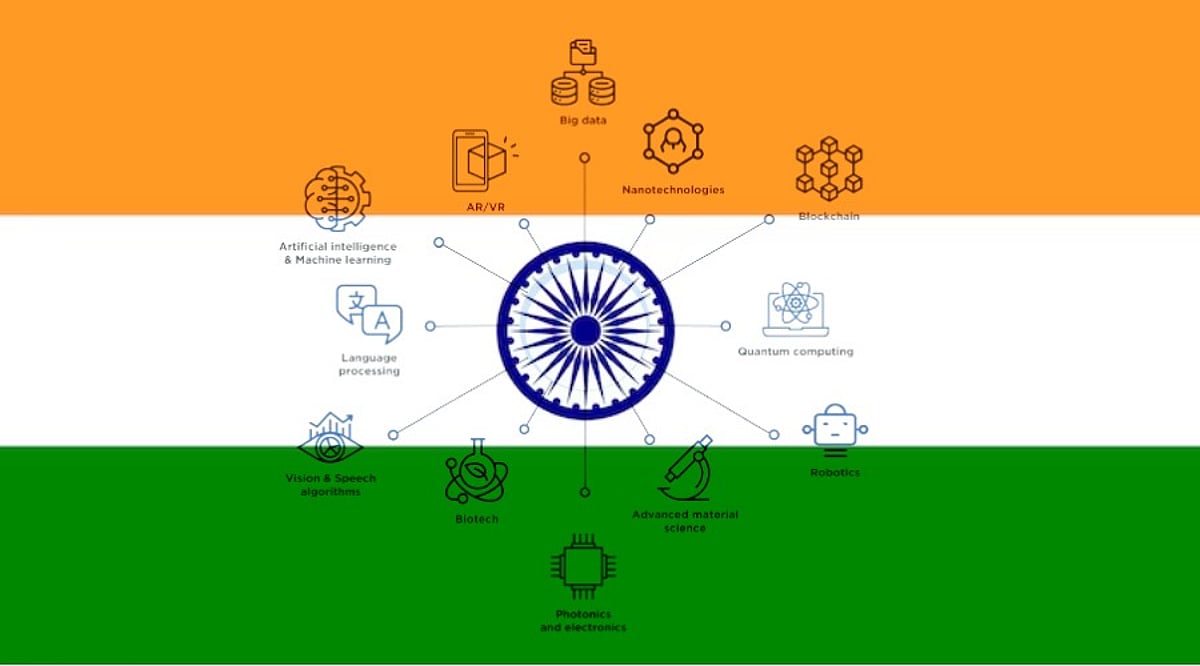
    India’s deep-tech ecosystem is entering a transformative phase as artificial intelligence, space technology, quantum computing, robotics, and advanced manufacturing move from research labs to commercial markets. Backed by rising venture capital investments, government initiatives such as the National Deep Tech Startup Policy discussions and IndiaAI Mission, and growing global demand for frontier technologies, 2026 is shaping up to be a defining year for Indian startups building intellectual property with worldwide impact.

    Leading Deep Tech Companies in India

    Deep-tech ventures are driving innovation through supportive government policies, research institutions, and increased funding. Unlike typical software startups, these companies develop intellectual property in fields like AI, space technology, quantum computing, robotics, and mobility. Here are seven startups to watch in 2026:

    1. Pixxel (Space Technology)

    Founded in 2019 by Awais Ahmed and Kshitij Khandelwal, Bengaluru-based Pixxel is building the world’s largest hyperspectral satellite constellation. Its Earth Observation Platform delivers high-quality imagery for agriculture, climate monitoring, mining, and defense. With global investments and commercial satellite launches, Pixxel has strengthened its international position and advanced analytical capabilities. As demand for geospatial intelligence soars, Pixxel stands out as one of India’s most promising space tech companies in 2026.

    2. Agnikul Cosmos (Space Launch)

    Set up in 2017 by Srinath Ravichandran and Moin SPM, Chennai-based Agnikul Cosmos offers custom-built launch vehicles for small satellites. The company gained worldwide attention by demonstrating a rocket launch using a 3D-printed engine made from a single piece. Supported by institutional and individual investors, Agnikul serves the commercial space sector, research institutions, and defense.

    3. QpiAI (Quantum Computing & AI)

    Founded in 2019 by Dr. Nagendra Nagaraja, QpiAI specializes in using AI and quantum computing to solve complex optimization problems. The company develops quantum computers, software, and AI for enterprise applications in manufacturing, pharma, logistics, and finance. With significant investments and government partnerships, QpiAI is accelerating India’s quantum sector.

    4. Sarvam AI (Generative AI)

    Founded in 2023 by Vivek Raghavan, Pratyush Kumar, and Ankit Jain, Bengaluru-based Sarvam AI focuses on developing sovereign generative AI models tailored for India’s multilingual environment. Its large language models, enterprise AI, and conversational systems support business and government initiatives. Having attracted funding from prominent investors and being selected for the IndiaAI Mission to build sovereign AI, Sarvam AI is poised to become a key player in India’s AI landscape in 2026.

    5. Qure.ai (Healthcare AI)

    Formed in Mumbai in 2016 by Prashant Warier and Pooja Rao, Qure.ai enhances medical imaging using AI. Its diagnostic tools help doctors identify diseases such as tuberculosis, lung conditions, and strokes from radiology images. The company operates in multiple countries, expanding through partnerships, and is one of the most commercially successful Indian healthcare AI firms.

    6. Ati Motors (Autonomous Industrial Robotics)

    Established in 2017 by Saurabh Chandra, Saurabh Agarwal, and Sikander Khan, Bengaluru-based Ati Motors specializes in Autonomous Mobile Robots (AMRs) for material movement in factory floors and warehouses. With enterprise adoption worldwide and additional funding, the company has gained a strong market position. As smart factories become more common, Ati Motors is well-positioned for growth in industrial automation.

    7. Vecmocon Technologies (EV Deep Tech)

    Headquartered in New Delhi and founded in 2016 by Peeyush Asati, Pallav Gupta, and Aman Raj, Vecmocon Technologies provides intelligent electronics, battery management systems, IoT platforms, and vehicle control units for electric vehicles. Serving two-wheelers, three-wheelers, and commercial EVs, the company continues to attract investment amid India’s growing electric mobility push, making it a leading innovator in clean mobility.

    Deep Tech Market Overview

    Rising enterprise adoption, defense requirements, and global demand for frontier technologies are accelerating commercialization. As startups increasingly collaborate with academia, industry, and public institutions, India’s deep-tech ecosystem is expected to expand further. For enterprise AI, Sarvam AI leads the way, while Pixxel and Agnikul Cosmos are reshaping space and defense technologies. Qure.ai continues transforming healthcare diagnostics, Ati Motors strengthens industrial automation, Vecmocon advances clean mobility, and QpiAI represents India’s growing ambitions in quantum computing. Together, these companies showcase the breadth and maturity of India’s rapidly evolving deep-tech ecosystem heading into 2026.

    Frequently Asked Questions

    What are deep tech companies?

    Deep tech companies create breakthrough technologies rooted in scientific research and engineering, including artificial intelligence, robotics, quantum computing, biotechnology, semiconductors, and space systems with strong intellectual property.

    Why is India’s deep tech sector growing rapidly?

    India’s deep tech sector is expanding due to increasing venture capital, government initiatives, research collaboration, skilled talent, and rising enterprise demand for frontier technologies across multiple industries.

    Which Indian company is leading in space technology?

    Pixxel specializes in hyperspectral Earth observation satellites, while Agnikul Cosmos develops customizable launch vehicles, making both companies pioneers in India’s rapidly growing private space industry.

    Which startups are driving AI innovation in India?

    Sarvam AI develops multilingual foundation models for enterprises, while Qure.ai uses artificial intelligence to improve medical imaging, disease detection, and clinical decision-making across healthcare systems worldwide.

    Which deep tech sectors offer the biggest opportunities in 2026?

    Artificial intelligence, quantum computing, space technology, robotics, healthcare AI, clean mobility, and semiconductor innovation are expected to drive investment, commercialization, and global competitiveness throughout India’s deep tech ecosystem in 2026.

  • Bank of America Creates Unified Head of Digital Assets and AI Role to Strengthen Crypto Strategy

    Bank of America Creates Unified Head of Digital Assets and AI Role to Strengthen Crypto Strategy

    Bank of America has appointed a new Head of Digital Assets and AI, merging oversight of cryptocurrency strategy and artificial intelligence under a single executive. The move signals a deeper internal focus on governance, analytics, and infrastructure rather than a new product launch.

    One Executive, Two Strategic Areas

    The new structure combines digital-asset and AI leadership, suggesting the bank sees operational overlap between automation, analytics, and asset infrastructure. The appointment does not confirm a new product rollout but points to internal coordination across functions that shape policy, governance, and market readiness.

    Bank of America has also published research on how stablecoins fit into financial infrastructure, adding context to the new role and showing continued attention to digital-asset policy and operational planning.

    What the Restructuring Signals

    The move indicates the bank wants closer alignment between technology, compliance, and asset strategy. It may help internal teams coordinate more quickly and places AI tools within the same governance framework as digital-asset operations and analytics. Large financial institutions often use leadership changes to signal where they see future growth; here, the appointment frames crypto as part of broader enterprise innovation.

    Institutional Crypto Strategy Comes into View

    Bank of America is among the largest U.S. banking institutions, so any leadership change tied to crypto draws wide attention. Institutional participation often acts as a credibility signal for the sector. The new role sits within that broader trend, though it remains a governance move rather than a confirmed announcement of new services, partnerships, or products. One report also noted that the bank shifted a top trader to oversee crypto strategy across the firm, adding to the picture of a wider restructuring around digital assets.

    The appointment places Bank of America’s crypto work inside a larger strategic framework and shows that AI now sits beside digital assets in the bank’s leadership structure.

    What’s Next?

    Bank of America has created a Head of Digital Assets and AI role, bringing crypto strategy and artificial intelligence under one executive. The restructuring strengthens internal coordination around governance, analytics, and digital assets while reflecting the bank’s broader approach to advancing its crypto strategy.

  • Former Twitter CEO Parag Agrawal’s AI Startup Parallel Hits $2 Billion Valuation

    Former Twitter CEO Parag Agrawal’s AI Startup Parallel Hits $2 Billion Valuation

    Parag Agrawal has made a notable comeback after his controversial departure from Twitter. The Indian-American technology executive, who served as Twitter’s CEO before Elon Musk’s acquisition, now leads the AI startup Parallel Web Systems.

    The company recently achieved a $2 billion valuation after raising $100 million in a Series B funding round led by Sequoia Capital. This latest investment brings Parallel’s total funding to $230 million and positions Agrawal at the helm of one of the fastest-growing startups in the AI infrastructure space.

    From Twitter CEO to AI Entrepreneur

    Elon Musk acquired Twitter for $44 billion in October 2022 and terminated Agrawal along with other top executives. Agrawal subsequently shifted his focus from social media to artificial intelligence.

    Agrawal founded Parallel Web Systems to build infrastructure for autonomous AI agents. Its technology enables AI agents to search, browse, and utilize information from the open web for complex tasks. Unlike traditional search technologies designed primarily for human use, Parallel’s technology specializes in machine-oriented research. The platform allows AI agents to gather information, browse websites, and conduct multistep research.

    This technology finds applications in legal research, finance, insurance, and enterprise intelligence. Among the companies using Parallel’s platform is the AI legal startup Harvey. Additionally, over 100,000 developers are leveraging the infrastructure.

    Funding Fuels AI Agent Ambitions

    The latest funding round was led by Sequoia Capital, with existing investors including Kleiner Perkins, Index Ventures, Khosla Ventures, First Round Capital, Spark Capital, and Terrain Capital. Parallel plans to use the funds to expand its R&D efforts and strengthen its sales and marketing operations while targeting more enterprise customers.

    Parallel has also expanded its partnership with Google. Customers from Google Cloud who develop AI agents using Gemini can now benefit from Parallel’s search engine technology, providing another pathway into the larger enterprise ecosystem.

    Agrawal’s journey from a short-lived tenure as Twitter CEO to leading a $2 billion AI startup underscores the rapidly changing technology landscape.

  • Wearable Robot from South Korea-US Team Helps Users Dress Independently

    Wearable Robot from South Korea-US Team Helps Users Dress Independently

    Researchers from South Korea and the United States have developed a groundbreaking wearable robotic system that assists individuals with dressing. The technology combines smart sensors and robotic arms to provide gentle, precise movements, making it easier for elderly people and those with mobility challenges to put on clothes without assistance.

    The robot uses artificial intelligence to adapt its force and movement, ensuring that clothing is handled safely and comfortably. This innovation is designed to promote independence and improve the quality of life for millions who struggle with daily tasks.

    Hospitals and rehabilitation centers are expected to be major adopters of this technology, which also holds promise for home care and assisted living facilities. The developers plan to make the system smaller, faster, and more affordable in future iterations.

    Assistive robotics like this one could transform daily living for people worldwide, offering a new level of autonomy and dignity. The collaboration between South Korea and the US underscores the global effort to advance healthcare through robotics and AI.

  • Meta Introduces AI-Powered Alerts to Protect Teens from Self-Harm Conversations

    Meta Introduces AI-Powered Alerts to Protect Teens from Self-Harm Conversations

    Meta is rolling out a new safety feature that alerts parents when their supervised teen discusses suicide or self-harm with Meta AI. The company has also updated how its AI responds to such conversations and expanded content restrictions for teen accounts.

    The feature is currently launching in the United States, the United Kingdom, Australia, and Canada, with plans for a global rollout by the end of the year.

    Parents to Receive Safety Alerts

    If a supervised teen shares thoughts of suicide or self-harm, Meta AI will encourage them to reach out to a trusted adult, counselor, or crisis support service. Parents using Meta’s supervision tools will receive a notification if their teen needs support. The company aims to help parents recognize signs of distress and intervene when necessary. The system can identify conversations where a teen may be expressing suicidal thoughts, even if the language is not explicit.

    Every Alert Will Be Reviewed

    Meta emphasized that alerts are not generated automatically. Each conversation flagged by its AI is reviewed before a notification is sent to a parent. The company said it will ‘err on the side of caution’ when assessing conversations. If there is uncertainty, parents may still receive an alert rather than risk missing a genuine case where a teen needs help.

    AI Responses Updated with Expert Input

    To improve Meta AI’s responses, the company consulted more than 75 mental health clinicians with experience in adolescent care. Experts reviewed hundreds of conversations involving teens and evaluated whether the AI responded appropriately. Their feedback was used to enhance how Meta AI handles sensitive discussions.

    Meta said the updated system is designed to acknowledge a teen’s emotions, encourage them to seek help, and connect them with relevant support instead of ending the conversation quickly.

    Emergency Response Feature in Development

    Meta is also developing a feature that could allow it to contact emergency services if conversations with Meta AI suggest a user faces an imminent risk of suicide. The company already reports credible suicide threats identified on Facebook and Instagram. Meta said it made more than 19,000 referrals to emergency responders worldwide last year, enabling authorities to perform welfare checks when required.

    More Restrictions for Teen Accounts

    Meta is extending Instagram’s Limited Content setting to Meta AI chats. Teen Accounts already receive age-appropriate AI responses. Meta AI does not engage in sexual or romantic conversations with teens and does not provide recipes for alcoholic drinks. With the stricter Limited Content setting enabled, Meta AI will refuse a wider range of sensitive requests.

    The update builds on Meta’s existing parental supervision tools, including alerts when supervised teens repeatedly search for suicide or self-harm-related content on Instagram. The company said the latest changes are aimed at giving parents more visibility while strengthening protections for teenagers using its AI services.

  • Today’s Tech Roundup: Tata’s Semiconductor Strategy, NVIDIA Robotics, Bybit in Indonesia, and Cognizant Hiring

    Today’s Tech Roundup: Tata’s Semiconductor Strategy, NVIDIA Robotics, Bybit in Indonesia, and Cognizant Hiring

    Welcome to today’s tech roundup! From chips and AI to crypto, climate tech, and hiring, here’s a quick look at the stories shaping the technology world today.

    Tata Group Resorts to Older Tech to Launch Its Chip Foray

    Tata Group’s entry into the field of semiconductors takes an efficient course whereby the company begins its venture from older and tested technologies of chips rather than advanced technology. This ensures cost efficiency, quicker production, and helps meet demands in fields such as the automotive industry, power, and industrial electronics.

    Climate Tech Venture Funding Surges Driven by AI Infrastructure Demand

    There has been renewed interest in climate technology, driven by the accelerated development of AI infrastructure. With the increased usage of energy by data centers, venture capital firms are funding startups that specialize in renewable energy, batteries, smart power grids, and energy efficiency.

    Bybit Launches in Indonesia After NOBI Acquisition

    Bybit crypto exchange has now officially made its entry into Indonesia after taking over local exchange platform NOBI. This marks the extension of their operations in Southeast Asia and gives the firm the ability to provide regulated crypto trading services to customers.

    NVIDIA Partners with Japanese Robotics Firms to Accelerate AI Development

    With the collaboration between NVIDIA and Japanese robotics firms, there is an effort to make progress in developing AI automation. By using its computing technology together with Japan’s robotics expertise, it hopes to produce industrial robots that are better than current ones.

    Cognizant to Hire 1,500 US Graduates by End of 2026

    As part of efforts to build its artificial intelligence team, Cognizant is set to recruit 1,500 graduates in the US by 2026. These new employees will be trained in areas such as artificial intelligence, digital engineering, and other new technologies.