Tag: artificial intelligence

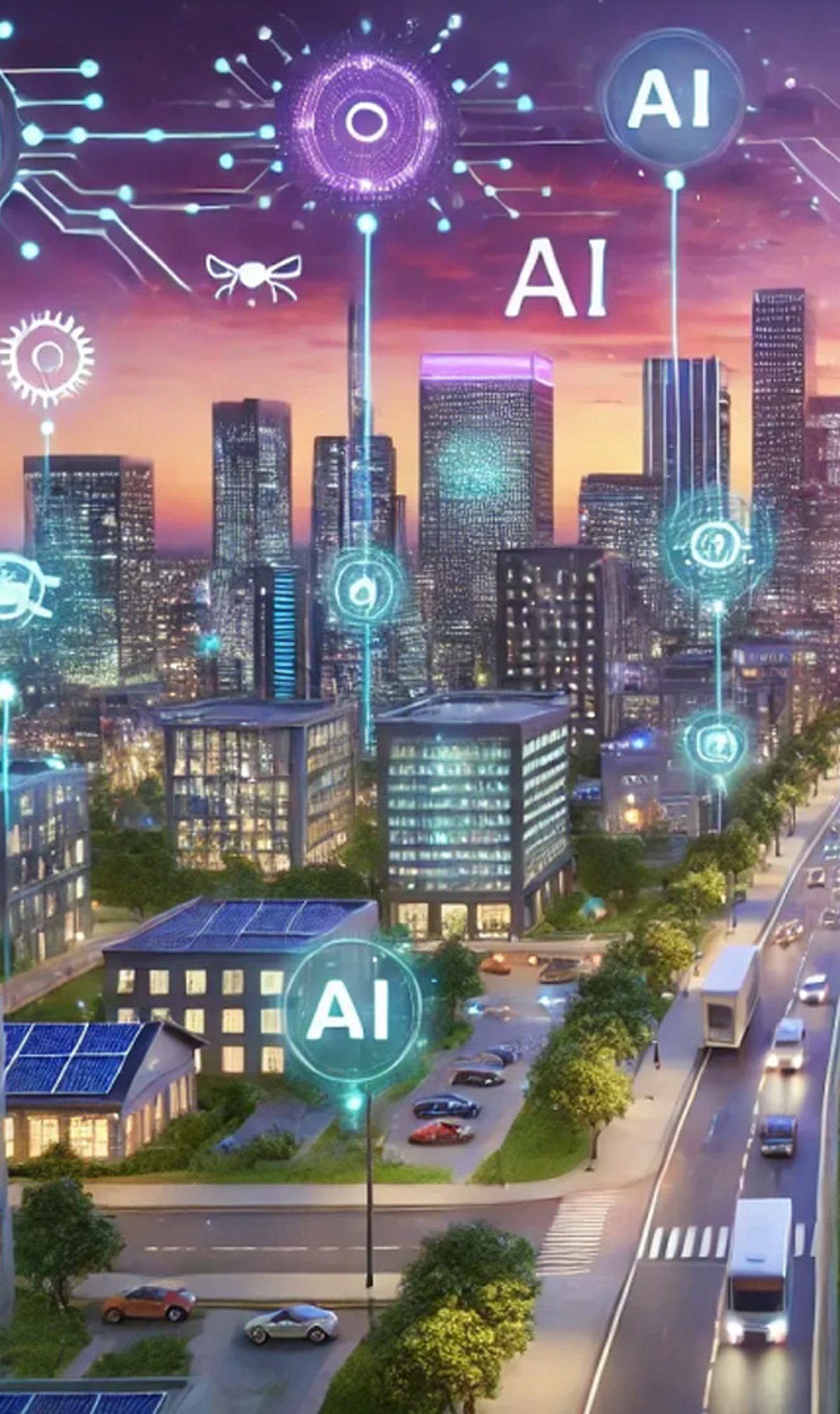
  • 10 Smart Cities Using AI to Revolutionize Urban Living

    10 Smart Cities Using AI to Revolutionize Urban Living

    Artificial intelligence is reshaping urban life, helping cities become more efficient, sustainable, and livable. From traffic optimization to smart energy grids, here are ten cities leading the charge.

    Singapore

    Singapore uses AI for traffic optimization, predictive maintenance, public safety monitoring, and smart urban planning, improving efficiency, sustainability, and residents’ quality of life.

    Dubai

    Dubai implements AI across government services, policing, healthcare, and transportation, accelerating digital transformation while enhancing citizen experiences through intelligent automation.

    Barcelona

    Barcelona employs AI-powered sensors for waste management, traffic control, and energy efficiency, creating cleaner neighborhoods and more sustainable public infrastructure systems.

    Seoul

    Seoul integrates AI into public transportation, emergency response, surveillance, and administrative services, enabling faster decision-making and improved urban convenience for citizens.

    Amsterdam

    Amsterdam uses AI for mobility management, environmental monitoring, and energy optimization, supporting sustainable development while reducing congestion and carbon emissions citywide.

    Tokyo

    Tokyo applies AI to disaster preparedness, transportation networks, and smart infrastructure maintenance, increasing resilience and operational efficiency across one of the world’s busiest cities.

    New York City

    New York City leverages AI for traffic analysis, emergency services, crime prevention, and infrastructure monitoring, helping manage complex urban operations more effectively.

    Helsinki

    Helsinki uses AI-driven digital government platforms and mobility solutions to simplify public services while encouraging environmentally responsible urban development initiatives.

    Copenhagen

    Copenhagen integrates AI with smart energy grids, cycling infrastructure, and environmental monitoring to improve sustainability, resource efficiency, and overall urban livability.

  • How AI Is Reshaping the Insurance Industry: From Underwriting to Customer Retention

    How AI Is Reshaping the Insurance Industry: From Underwriting to Customer Retention

    Artificial intelligence is rapidly transforming the insurance industry, enabling carriers to streamline operations, reduce costs, and improve customer experiences. From underwriting to claims processing, AI-powered tools are being deployed across the value chain. Below are the key areas where AI is making a significant impact.

    AI Underwriting

    AI analyzes vast datasets to assess risk faster, allowing insurers to make accurate policy decisions while reducing manual processing time.

    Fraud Detection

    Machine learning identifies suspicious claims, minimizing financial losses and improving the integrity of insurance operations across multiple sectors.

    Claims Automation

    AI-powered document analysis processes insurance claims quickly, reducing settlement times while improving customer satisfaction and operational efficiency.

    Personalized Policies

    By evaluating customer behavior and risk profiles, AI enables insurers to offer customized insurance plans with more competitive pricing and relevant coverage.

    Customer Chatbots

    AI chatbots provide instant policy assistance, claim updates, and personalized support around the clock, enhancing customer engagement and reducing service costs.

    Predictive Risk Analysis

    Using historical and real-time data, AI forecasts potential risks, helping insurers improve pricing strategies and proactive risk management.

    Image-Based Damage Assessment

    AI evaluates vehicle and property damage from uploaded images, accelerating claims processing while improving assessment consistency and accuracy.

    Regulatory Compliance

    AI-powered analytics monitor evolving regulations, helping insurers maintain compliance while reducing administrative burdens and operational risks.

    Customer Retention Analytics

    AI identifies policyholders likely to switch providers, enabling targeted engagement strategies that improve loyalty and long-term business growth.

  • Google Employees Mobilize: 4,500+ Sign Petition to CEO Sundar Pichai Over AI-Driven Job Security Fears

    Google Employees Mobilize: 4,500+ Sign Petition to CEO Sundar Pichai Over AI-Driven Job Security Fears

    More than 4,500 Google employees have formally petitioned CEO Sundar Pichai, urging the company to implement stronger job protections as it ramps up investment in artificial intelligence. The petition, delivered by members of the Alphabet Workers Union, represents one of the largest employee-led movements in the company’s recent history.

    The workers’ concerns center on the growing disconnect between Google’s aggressive AI expansion and the ongoing layoffs affecting staff worldwide. The petition demands concrete measures, including guaranteed severance packages, voluntary buyout options before any compulsory layoffs, and reforms to Google’s performance review system.

    Alphabet Workers Union President Parul Koul criticized the company’s priorities, stating, "These layoffs and cuts are not difficult decisions, but simply profit being put over the people that make this company run." Koul accused Google of valuing shareholder returns above employee welfare, despite the company’s rising share price.

    Google has not announced any new layoffs directly linked to the petition. In previous statements, the company has maintained that AI is designed to enhance worker productivity, not replace human roles. However, the petition underscores persistent anxiety among employees as Google deepens its AI commitments.

    The movement gained further visibility when approximately 100 employees gathered outside Google’s campus to show solidarity. The petition has been delivered to Pichai’s office, signaling a clear demand for leadership to address job security in the age of AI.

  • Top 8 No-Code AI Certifications for Beginners in 2026

    Top 8 No-Code AI Certifications for Beginners in 2026

    Artificial intelligence has become a workplace skill rather than a technical specialty. Companies now seek people who can leverage AI without writing a single line of code. This shift has spawned numerous beginner-friendly AI certifications, making it challenging to choose the right one. Some programs focus on everyday productivity, while others emphasize business strategy, prompt engineering, or platform-specific tools. This guide categorizes certifications by use case, comparing cost, learning time, practical outcomes, and employer recognition to help you find the ideal starting point for your goals.

    Quick Match by Goal

    Coursera operates on a monthly subscription model, so treat the figures below as current estimates rather than fixed rates.

    8 Beginner-Friendly Certifications

    Google AI Essentials

    Google AI Essentials teaches practical AI skills for everyday work. You learn to summarize documents, draft content, write effective prompts, and use Google Gemini more efficiently. It consists of five modules and requires about 5 to 10 hours. Enroll on Coursera for around $49 (pricing may change). It stands out as one of the fastest and cheapest beginner AI certifications available.

    AI for Everyone (DeepLearning.AI)

    AI for Everyone covers the basics of AI without touching tools or code. Created by Andrew Ng, the course explains how AI works, where it fits in business, and its limitations. It runs about seven hours over four weeks and costs around $49 on Coursera. It is a solid choice for anyone wanting to understand AI at a conceptual level.

    Generative AI for Everyone (DeepLearning.AI)

    Generative AI for Everyone builds on basic AI knowledge, walking through how tools like GPT and image generators work. It covers real use cases, responsible usage, and core ideas—all without code. The course takes 6 to 10 hours and costs around $49 on Coursera. Best for learners who already know the basics and want to go deeper.

    IBM AI Foundations for Everyone

    IBM AI Foundations for Everyone provides the most hands-on experience on this list. Across four courses, you build and launch a simple AI chatbot without writing code. It takes about 40 hours spread over a month and costs around $49 per month on Coursera. The longer time commitment pays off with more real practice than most beginner courses offer.

    Azure AI Fundamentals (AI-900)

    Azure AI Fundamentals (AI-900) is an exam-based certification designed for beginners interested in Microsoft’s AI tools. It covers AI basics, machine learning, computer vision, and generative AI on Azure. The exam includes 40 to 60 questions and takes about an hour. At around $99, with a certificate that never expires, it holds long-term value.

    Career Essentials in Generative AI (Microsoft and LinkedIn)

    Career Essentials in Generative AI pairs AI basics with career skills. The course covers generative AI, workplace productivity, resume writing, and interview preparation. It runs through LinkedIn Learning, so the certificate appears directly on your LinkedIn profile. A strong fit for job seekers who want their AI skills visible.

    Foundations of Prompt Engineering (AWS Skill Builder)

    Foundations of Prompt Engineering is a free AWS course focused on one skill: writing prompts that work. It skips broader AI theory and goes straight to techniques that improve everyday tasks. Its short length makes it a solid pick for marketers, content creators, and other professionals seeking quick, usable AI skills.

    Anthropic AI Fluency: Framework and Foundations

    Anthropic AI Fluency: Framework and Foundations is a free course that takes about three hours. Rather than teaching tools, it focuses on using AI responsibly through a four-part decision framework. It covers when to trust AI output, when a human should intervene, and how to collaborate effectively with AI systems. Anthropic also offers free courses built on the same framework for students, teachers, and nonprofits.

    Choosing a Starting Point

    • Complete Beginners: Start with AI for Everyone or IBM AI Foundations for Everyone. Both build a solid base in core AI ideas.
    • Daily Productivity: Pick Google AI Essentials or AWS Foundations of Prompt Engineering. Both teach skills you can apply immediately on the job.
    • Job Seekers: Go with Career Essentials in Generative AI. It is built for resumes and LinkedIn profiles.
    • Formal Credential: Choose Azure AI Fundamentals (AI-900). It comes with a proper exam and a certificate that holds up.

    General Rule

    One finished certification with a small real project beats five half-done courses sitting in a browser tab.

    Final Thoughts

    The certification you use within a week of finishing beats the one that just sits on a profile. A rewritten team document, a chatbot built for practice, or a prompt library used on the job—any of these turn a course into a skill an employer can actually see. Choosing a certification that aligns with your goals and putting those skills into practice will deliver far greater value than earning multiple credentials without real-world application.

    FAQs

    1. Which AI certification is best for complete beginners with no coding experience?

    Google AI Essentials, AI for Everyone by DeepLearning.AI, and IBM AI Foundations for Everyone are among the best options because they teach AI concepts and practical applications without requiring programming skills.

    2. Do I need coding knowledge to earn an AI certification?

    No. Many beginner-friendly AI certifications are designed for non-technical learners and focus on AI fundamentals, prompt engineering, ethics, and productivity tools rather than programming.

    3. Are beginner AI certifications recognized by employers?

    Yes. Certifications from reputable providers such as Google, Microsoft, IBM, AWS, and DeepLearning.AI are widely recognized and can strengthen your resume, LinkedIn profile, and professional credibility.

    4. Which AI certification should I choose for career growth?

    Your choice depends on your goals. Google AI Essentials is ideal for workplace productivity, AI for Everyone builds foundational knowledge, while Azure AI Fundamentals (AI-900) suits those interested in Microsoft’s AI ecosystem.

    5. Can I get an AI certification for free?

    Many platforms allow you to audit AI courses for free, but obtaining an official certificate often requires a paid subscription or exam fee. Some providers also offer free learning paths and occasional certificate promotions.

  • Apple Tests AI-Powered Live Notes to Automatically Transcribe Genius Bar Sessions

    Apple Tests AI-Powered Live Notes to Automatically Transcribe Genius Bar Sessions

    Apple is piloting a new artificial intelligence feature called Live Notes at select Apple Stores. The tool is designed to automatically record and transcribe conversations during Genius Bar support appointments, reducing the need for employees to take manual notes, according to a report from 9to5Mac citing Bloomberg’s Mark Gurman.

    The feature transcribes customer conversations in real time, generates a summary, and saves the record to Apple’s internal Genius Bar system after the session ends. Apple has emphasized that the feature is optional and requires explicit consent from both the customer and the employee before recording begins.

    To address privacy concerns, Apple has informed employees that voice recordings are not stored on any server, managers will not have access to the raw transcripts, and employees retain the ability to edit both the transcript and the generated summary before submission. Despite these assurances, some staff members have expressed concerns that the transcripts could be used in performance evaluations.

    Currently, Live Notes is being tested in only a limited number of Apple retail locations. The company has not announced plans to expand the trial or make the feature mandatory.

    This move highlights Apple’s continued investment in AI to enhance customer service experiences while navigating privacy and employee relations challenges.

  • How Entrepreneur Ankur Warikoo Leverages ChatGPT to Enhance Daily Productivity and Deep Work

    How Entrepreneur Ankur Warikoo Leverages ChatGPT to Enhance Daily Productivity and Deep Work

    Entrepreneur and author Ankur Warikoo has openly shared how he integrates ChatGPT into his daily workflow to boost productivity, sharpen his thinking, and accelerate learning. Rather than using AI as a crutch to complete tasks for him, Warikoo treats it as a collaborative partner that helps him brainstorm ideas, simplify complex topics, and structure his thoughts before taking action. His approach offers a practical blueprint for professionals who want to harness AI without sacrificing critical thinking or creativity.

    Why This Matters

    As artificial intelligence becomes more embedded in professional environments, the conversation has shifted from whether to adopt AI to how to use it effectively. Warikoo’s methodology demonstrates that AI tools can enhance productivity while preserving human judgment and independent decision-making.

    Overcoming the Blank-Page Challenge

    Starting a new task—whether it’s a presentation, newsletter, or business plan—is often the hardest part. Many professionals spend more time figuring out how to begin than actually completing the work. Warikoo uses ChatGPT to break through this initial barrier. He starts with a simple request, explores different angles, and lets the AI inspire him rather than copying its output verbatim. This approach cuts down the time spent staring at a blank page while keeping creative decisions firmly in human hands.

    Simplifying Complex Information

    In fast-moving fields like finance and business, staying informed is essential—but the challenge is often organizing information, not accessing it. Warikoo uses ChatGPT to clarify complicated concepts, make comparisons, and generate concise summaries. This helps him grasp new topics quickly before diving into deeper research, a strategy that is especially valuable for busy professionals juggling multiple responsibilities.

    Building Better Daily Habits

    Warikoo also applies ChatGPT beyond work tasks. For instance, he asked the chatbot which habits could help someone become more successful than most people. The response emphasized practical, everyday routines such as maintaining a steady schedule, exercising regularly, carving out time for deep work, continuous learning, eating well, saving money, reducing distractions, and nurturing personal relationships. While none of these points are revolutionary, turning them into a structured checklist makes them easier to follow. This exercise highlights how AI can organize proven principles into a manageable daily routine.

    The Importance of Deep Work

    One of Warikoo’s key takeaways from using ChatGPT is the emphasis on uninterrupted, focused work. He recommends dedicating two to four hours each day to deep work—free from notifications, meetings, or social media distractions. This aligns with the growing productivity trend that prioritizes concentrated effort over multitasking. For Warikoo, AI serves as a habit reminder for well-known productivity techniques rather than a source of novel methods.

    Accelerated Learning Without Cutting Corners

    Warikoo also leverages ChatGPT for faster learning. Instead of spending hours searching for articles, videos, and reports, he asks the chatbot for a general overview of an unfamiliar topic. Once he has the basics, he continues with in-depth research—but in a more efficient order. This approach saves time while maintaining research quality.

    AI as a Thought Partner, Not a Replacement

    Perhaps the most important aspect of Warikoo’s strategy is viewing AI as a thinking partner rather than a substitute for expertise. ChatGPT can help structure information, generate ideas, and automate repetitive tasks, but judgment, creativity, and decision-making remain human responsibilities. The quality of the output depends heavily on the quality of the questions asked. Warikoo’s core takeaway is that AI delivers the most value when it augments human thought rather than replacing it.

    Frequently Asked Questions

    1. How does Ankur Warikoo use ChatGPT every day? He uses it to brainstorm ideas, simplify complex topics, plan tasks, accelerate learning, and organize his daily workflow.
    2. Does Ankur use ChatGPT to write all his content? No. He uses it for idea generation and structure, but relies on his own knowledge and judgment for final content.
    3. What productivity habit does Ankur highlight the most? He emphasizes deep work, recommending two to four hours of uninterrupted focus daily for high-impact tasks.
    4. Can ChatGPT help professionals improve productivity? Yes, by organizing information, generating ideas, summarizing topics, and reducing repetitive work, it allows professionals to focus on important decisions.
    5. What is Ankur’s biggest takeaway about using AI? He believes AI works best as a thinking partner that supports human creativity and decision-making, not as a replacement for them.
  • Christopher Nolan Calls AI a ‘Trojan Horse’ and Says Young Audiences Are Turning Away from AI-Generated Content

    Christopher Nolan Calls AI a ‘Trojan Horse’ and Says Young Audiences Are Turning Away from AI-Generated Content

    Renowned filmmaker Christopher Nolan has described artificial intelligence as a “Trojan horse,” warning that while AI can be a useful tool, replacing human creativity with it is “nonsense.” His comments come amid growing debate over the technology’s impact on filmmaking, storytelling, and the value of human-made work.

    Nolan Says AI Is Facing Strong Public Resistance

    Nolan believes that public reactions to generative AI have been particularly swift and aggressive. According to the director, younger generations—including his own children—can easily identify and disregard what is often called “AI slop.”

    “The younger generation has grown up online and understands how digital content is created and circulated,” Nolan said. That familiarity, he suggested, makes it easier for them to recognize content that feels artificial or lacks genuine creative effort.

    He also views AI as an irreversible technological wave. The industry, he noted, has spent enormous effort marketing AI, but audiences are not responding in the same way.

    ‘Replacing Human Creativity Is Nonsense’

    Nolan does not believe artificial intelligence will replace human creativity. While he acknowledged that AI might be useful as a practical tool, he stressed that it cannot substitute the human role as a creative filmmaker and artist.

    For Nolan, filmmaking is always about the human element, the physical world, and performances. His creative process typically relies on practical effects, location shooting, and large-format cinematography. This approach was evident in his adaptation of The Odyssey, an ancient epic designed to be a big-screen experience emphasizing scale and physical filmmaking.

    Nolan’s remarks arrive as Hollywood continues to debate the use of generative AI. The technology has sparked concerns over hiring writers, the nature of writers’ work, and the future of creative jobs. The debate also played a role in the 2023 Hollywood strikes. While some filmmakers and studios are exploring AI tools, others argue that technology should assist human creators rather than replace them.

    Also read: San Francisco Urges Apple, Google to Remove AI Nudify Apps

  • Netflix Acquires Ben Affleck’s AI Startup InterPositive for $587 Million to Boost Original Content Production

    Netflix Acquires Ben Affleck’s AI Startup InterPositive for $587 Million to Boost Original Content Production

    Netflix is making another big bet on artificial intelligence by agreeing to buy InterPositive, the AI filmmaking startup co-founded by Ben Affleck. The acquisition news came to light initially in March 2026.

    According to the latest reports found in a regulatory filing, the deal is worth around $587 million, and they paid this amount in cash as part of the acquisition. If the acquisition successfully happens, it will be Netflix’s biggest investment in AI tools for film and TV production.

    When the news first surfaced, Ben Affleck mentioned that the deal aims to ‘protect the power of human creativity.’ He added, “InterPublic’s AI tools help filmmakers improve their footage in post-production, particularly with real-world production challenges such as missing shots, background replacements or incorrect lighting.”

    Netflix also announced that the entire InterPositive team will join the company, with Affleck as a senior advisor. While Netflix has not shared exactly when the technology will be used, the company believes AI can help creators work faster without replacing them.

    The move comes as streaming companies continue to spend billions on original content every year. Finding ways to streamline production has become just as important as creating new shows. InterPositive’s technology could help Netflix release more original movies and series each year. If parts of the production process take less time, creative teams may be able to work on more projects over the same period.

    Netflix has not announced any immediate changes to its production process. However, this deal shows that the company believes AI will play a bigger role in creating future Netflix Originals.

  • OpenAI Elevates Indian-Origin Engineer Uday Ruddaraju to Chief Technology Officer of Compute

    OpenAI Elevates Indian-Origin Engineer Uday Ruddaraju to Chief Technology Officer of Compute

    OpenAI has promoted Indian-origin technology executive Uday Ruddaraju to the role of Chief Technology Officer (CTO) of Compute, marking a significant leadership milestone at the AI frontrunner. The appointment, announced nearly a year after Ruddaraju joined from Elon Musk’s xAI, positions him to steer the company’s compute infrastructure as it scales next-generation AI systems.

    In a LinkedIn post, Ruddaraju described his first year at OpenAI as “incredibly rewarding” and expressed enthusiasm for leading the compute division during a period of rapid expansion. As CTO of Compute, he will oversee the massive computing power required to train and deploy frontier models, including GPT-5.6. His team is focused on scaling capacity while strengthening compute, networking, storage, and machine learning systems.

    From Hyderabad to Silicon Valley

    Ruddaraju’s journey began in Hyderabad, India, where he earned a Bachelor’s degree in Computer Science from Chaitanya Bharathi Institute of Technology (CBIT). During his undergraduate studies, he interned at Amazon Web Services. He then moved to the United States for a Master’s degree in Computer Science at the University of Minnesota. His professional career includes stints at eBay and Robinhood before joining xAI as Head of Infrastructure Engineering. In 2025, he moved to OpenAI, rising from Head of Compute and Infrastructure to the CTO of Compute role.

    Strategic Importance for OpenAI

    Ruddaraju’s elevation underscores OpenAI’s push to strengthen its computing backbone as AI models grow more complex. The company is actively hiring talent in distributed systems, hardware engineering, manufacturing, and large-scale data center development to support future AI growth. His appointment also highlights the growing influence of Indian-origin technology leaders in shaping the future of artificial intelligence.

    Ruddaraju’s roadmap includes significantly scaling compute infrastructure to meet the demands of increasingly powerful AI systems, positioning OpenAI to maintain its competitive edge in the global AI race.

  • San Francisco Demands Apple and Google Remove AI Deepfake Nudify Apps from Stores

    San Francisco Demands Apple and Google Remove AI Deepfake Nudify Apps from Stores

    San Francisco has taken legal action against Apple and Google, demanding the removal of AI-powered ‘nudify’ apps from their app stores. The city alleges these apps enable users to create non-consensual intimate deepfake images, violating California law.

    In cease-and-desist notices sent to both companies, San Francisco City Attorney David Chiu accused Apple and Google of continuing to host dozens of such apps and processing payments for them despite the risks. The city warned that further legal action could follow if the companies fail to comply.

    ‘Nudify’ apps use artificial intelligence to generate fake nude images by digitally removing clothing from photographs. Authorities say the technology is increasingly used to target women and girls without their consent. The notices argue that Apple and Google are facilitating the distribution and monetization of software that enables non-consensual intimate deepfakes.

    The city has asked both companies to remove the apps, cut ties with their developers, and strengthen measures to prevent similar apps from appearing on their platforms. David Chiu stated that companies should not profit from software that enables digital exploitation.

    While AI technology has made image editing easy, it has also made it simple to create highly realistic fake images that can harm victims. According to San Francisco officials, investigations revealed that some nudify apps were still in use despite app store policies against abusive, exploitative, and sexually explicit material.

    This case adds to mounting pressure on major technology companies to take greater responsibility for AI-powered apps distributed through their marketplaces. Google stated that it removed hundreds of nudify apps and restricted related search terms. Apple had not publicly responded to the legal notices at the time of reporting.

    The move marks one of the strongest attempts by a U.S. city to hold app store operators accountable for hosting AI tools capable of generating non-consensual intimate deepfakes. It also signals growing regulatory pressure on technology platforms as AI-powered applications become more widely available.