Tag: artificial intelligence

  • Understanding Ambient Intelligence: How It Works and Why It Matters

    Understanding Ambient Intelligence: How It Works and Why It Matters

    What Is Ambient Intelligence?

    Ambient Intelligence (AmI) refers to environments embedded with artificial intelligence, sensors, connected devices, and automation that can understand people’s needs and respond proactively. Instead of requiring constant manual input, these systems quietly adapt lighting, temperature, security, entertainment, and digital services, creating seamless, personalized experiences in homes, offices, hospitals, and public spaces.

    The Technologies Behind Ambient Intelligence

    Ambient Intelligence combines AI, the Internet of Things (IoT), edge computing, cloud services, computer vision, and voice recognition. Smart sensors continuously collect environmental data, while AI analyzes patterns to make real-time decisions. Together, these technologies allow devices to communicate with one another, automate routine tasks, and provide intelligent assistance with minimal human intervention.

    How Smart Homes Use Ambient Intelligence

    Modern smart homes showcase Ambient Intelligence through connected lighting, climate control, appliances, and security systems. AI can learn daily routines, automatically adjust room temperatures, optimize energy consumption, recognize household members, and even detect unusual activity. The goal is to improve comfort, convenience, safety, and efficiency without requiring users to constantly manage individual devices.

    Ambient Intelligence in Healthcare

    Healthcare is rapidly adopting Ambient Intelligence to improve patient care and operational efficiency. AI-powered monitoring systems can track vital signs, detect falls, remind patients to take medications, and alert caregivers during emergencies. Hospitals also use intelligent environments to optimize workflows, reduce response times, and support healthcare professionals with real-time insights and predictive analytics.

    Transforming Workplaces and Cities

    Businesses and smart cities are integrating Ambient Intelligence to enhance productivity and sustainability. Intelligent offices automatically manage lighting, meeting rooms, and air quality based on occupancy. In urban environments, AI-powered traffic systems, connected infrastructure, and smart public services help reduce congestion, improve energy efficiency, and deliver more responsive experiences for residents and visitors alike.

    Privacy and Security Challenges

    As Ambient Intelligence relies heavily on continuous data collection, privacy and cybersecurity remain major concerns. Organizations must protect sensitive personal information, secure connected devices from cyberattacks, and ensure transparent data practices. Responsible AI development, strong encryption, user consent, and regulatory compliance will be essential for building public trust in intelligent environments.

    The Future of Ambient Intelligence

    With advances in generative AI, edge AI, and increasingly capable sensors, Ambient Intelligence is expected to become even more intuitive over the coming years. Future systems will better anticipate user needs, reduce energy consumption, support aging populations, and create highly personalized experiences, making intelligent environments an increasingly important part of everyday life.

  • 10 AI-Enabled ERP Vendors Reshaping Business Operations in 2026

    10 AI-Enabled ERP Vendors Reshaping Business Operations in 2026

    Enterprise resource planning (ERP) platforms are increasingly integrating artificial intelligence to automate workflows, deliver predictive insights, and enhance decision-making across finance, supply chain, manufacturing, and field service. Here are ten AI-enabled ERP vendors to watch as they leverage advanced AI capabilities to transform enterprise operations in 2026.

    SAP S/4HANA – AI-powered automation, predictive analytics, and intelligent enterprise planning enable organizations to streamline processes and forecast outcomes with greater accuracy.

    Oracle Fusion Cloud ERP – Combines generative AI with finance, procurement, and supply chain automation to drive efficiency and innovation across the enterprise.

    Microsoft Dynamics 365 – Copilot AI boosts productivity across finance, sales, and operations by providing real-time insights and automating routine tasks.

    Infor CloudSuite – Industry-specific AI delivers smarter manufacturing and supply chain insights, helping businesses make data-driven decisions faster.

    IFS Cloud – Uses AI to optimize asset management, field service, and enterprise operations, improving uptime and service delivery.

    Epicor Kinetic – A manufacturing-focused ERP with embedded AI for operational efficiency, enabling smarter production scheduling and quality control.

    Acumatica Cloud ERP – Cloud-native ERP that helps businesses automate workflows using AI insights, resulting in improved agility and cost savings.

    NetSuite ERP – Oracle NetSuite integrates AI for finance automation and business intelligence, providing real-time visibility into financial health and performance.

  • 7 Best AI Browser Extensions to Reclaim Hours Every Week

    7 Best AI Browser Extensions to Reclaim Hours Every Week

    AI browser extensions are transforming how people work online. From drafting emails to summarizing articles and automating research, these tools eliminate repetitive tasks. Whether you’re a student, professional, marketer, or developer, the right extension can significantly improve productivity and save several hours every week with minimal effort.

    ChatGPT Extension – Your AI Productivity Partner

    The ChatGPT browser extension offers instant AI assistance while you browse. It helps generate content, answer questions, summarize webpages, write emails, and assist with coding. Instead of switching between tabs, users can complete tasks directly in their browser, making daily workflows faster, smoother, and more efficient.

    Perplexity AI – Smarter Research in Seconds

    Perplexity AI combines conversational AI with web search to deliver accurate, source-backed answers. It quickly summarizes articles, explains complex topics, and provides reliable references for further reading. Researchers, students, and professionals can spend less time searching and more time understanding important information with confidence.

    Grammarly – Write with Confidence

    Grammarly enhances writing by correcting grammar, improving clarity, refining tone, and suggesting better word choices. Its AI-powered assistant helps users draft emails, reports, and presentations with confidence. Whether writing professionally or academically, Grammarly ensures polished communication while reducing editing time and improving overall writing quality.

    Merlin AI – AI Across Every Website

    Merlin AI integrates seamlessly with websites like Google Search, Gmail, LinkedIn, YouTube, and X. It summarizes content, drafts replies, creates social media posts, and answers questions without opening another application. Its versatility makes it a valuable productivity companion for professionals working across multiple online platforms daily.

    Sider & LanguageTool – Read, Translate, and Edit Better

    Sider offers AI-powered PDF analysis, webpage summarization, translation, and coding support through a convenient browser sidebar. LanguageTool complements it by checking grammar, spelling, punctuation, and style in multiple languages. Together, they improve reading, editing, translation, and communication for users working with diverse content.

    Choose the Right AI Extension for Your Workflow

    Every AI browser extension serves a different purpose. ChatGPT excels at general assistance, Perplexity simplifies research, Grammarly perfects writing, Merlin boosts productivity across websites, while Sider and LanguageTool enhance reading and editing. Selecting the right combination can automate repetitive work and save valuable hours every week.

  • How Artificial Intelligence Is Transforming Online Search: 7 Key Trends

    How Artificial Intelligence Is Transforming Online Search: 7 Key Trends

    Artificial intelligence is fundamentally reshaping how people find information online. Instead of typing short keywords, users now engage in natural conversations, search with images, and receive personalized, AI-generated answers. Here are seven major ways AI is changing online search.

    1. Conversational Search

    Users now ask complete questions instead of typing fragmented keywords. AI-powered search engines understand context, deliver direct answers, and engage in follow-up conversations. This reduces the need to open multiple websites, making information discovery faster and more natural for everyday users.

    2. Personalized Results

    AI analyzes search history, preferences, location, and behavior to deliver more relevant results. This personalization improves user experience by surfacing content that matches individual interests, helping people find useful information, products, or services with greater speed and accuracy than traditional search methods.

    3. Visual Search

    Users can now search using images instead of text. AI recognizes objects, products, landmarks, and even plants through computer vision, allowing shoppers, travelers, and students to instantly identify and learn about what they see using smartphones or other connected devices.

    4. Voice Search Growth

    AI-powered voice assistants have made spoken searches increasingly common. People can ask questions naturally while driving, cooking, or multitasking, with AI interpreting intent, understanding accents, and delivering accurate responses that feel more like conversations than traditional keyword-based searches.

    5. Generative AI Answers

    Search platforms increasingly generate summaries instead of simply listing links. AI combines information from multiple sources into concise responses, helping users understand topics quickly while changing how publishers, businesses, and content creators approach search engine optimization and online visibility.

    6. Smarter Shopping Searches

    AI simplifies online shopping by comparing products, summarizing reviews, recommending alternatives, and answering detailed buying questions. Consumers spend less time researching and more time making informed purchasing decisions based on personalized recommendations and real-time product information.

    7. Search Beyond Text

    AI is expanding search across videos, audio, documents, and multimedia content. Advanced models understand context within different formats, enabling users to find precise moments in videos, relevant podcast discussions, or specific document sections without manually browsing extensive content.

  • TCS and ABB Expand Partnership with AI-Driven Multi-Year Network Operations Deal

    TCS and ABB Expand Partnership with AI-Driven Multi-Year Network Operations Deal

    Tata Consultancy Services (TCS) and ABB have announced an expanded collaboration to transform ABB’s global network operations using AI. The multi-million, multi-year agreement marks the next phase of a 20-year partnership and will see TCS take on end-to-end network operations through an integrated network-as-a-service model.

    Under the deal, TCS will design, integrate, and run ABB’s global network ecosystem as a secure, modern, and AI-driven service. The core initiative is ABB’s Future Network Model programme, an enterprise-wide effort to replace fragmented network environments with a standardized, centrally managed digital infrastructure. TCS will orchestrate ABB’s multi-vendor environment and deploy a centralized control framework that includes service integration and management (SIAM), a global network operations center, advanced security capabilities, and modernized LAN, WAN, and software-defined WAN systems.

    “The Future Network Model represents an important milestone in reinforcing the digital foundation of ABB’s global operations,” said Alec Joannou, Group CIO at ABB. “Our association with TCS reflects a shared focus on delivery excellence, continuous enhancement, and building capabilities that can support our strategic priorities.”

    Anupam Singhal, President of Manufacturing at TCS, added: “With AI embedded into the network operations model, supported by secure digital infrastructure and our deep domain expertise, we are bringing our ‘infrastructure to intelligence’ approach to build a resilient, intelligent network backbone. This engagement will enable network systems that can sense, adapt, and improve continuously.”

    The expanded collaboration builds on two decades of joint transformational programmes, including consolidating multiple ERP systems into a unified SAP platform and accelerating cloud adoption. TCS expects the deal to improve user experience, enhance operational efficiency, strengthen security and compliance, and scale service delivery for ABB.

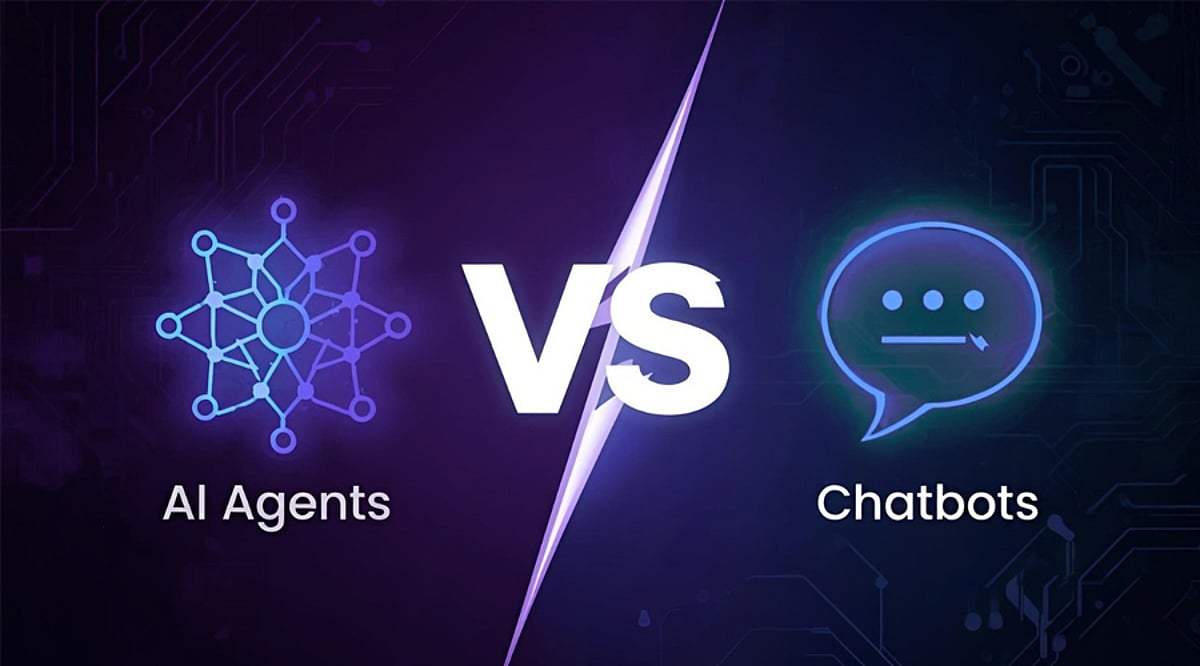
  • AI Agents vs. Chatbots: Key Differences and When to Use Each

    AI Agents vs. Chatbots: Key Differences and When to Use Each

    AI chatbots and AI agents are often mentioned together, but they serve very different purposes. Chatbots excel at conversations and answering questions, while AI agents can plan, make decisions, and complete complex tasks. Understanding the distinction helps businesses and individuals choose the right tool for their needs.

    AI Chatbots Focus on Conversations

    AI chatbots are designed to interact with users through text or voice. They answer questions, explain topics, assist with writing emails, and provide customer support. Chatbots work by responding to prompts and generating relevant replies. Most require a new user instruction before taking any further action. They are ideal for quick assistance, FAQs, and everyday conversational tasks.

    AI Agents Can Take Action

    AI agents go beyond simple chatting. They understand a goal, create a plan, use connected software, and execute multiple steps to achieve a desired outcome. Instead of merely answering questions, they solve problems. For example, an AI agent can organize meetings, gather data, prepare reports, or manage workflows with minimal human involvement.

    They Handle Decisions Differently

    A chatbot reacts to what the user asks at that moment. It provides information but rarely makes independent decisions. Every new action typically requires another prompt. An AI agent, on the other hand, evaluates options, adjusts its plan if circumstances change, and continues working until the assigned task is completed successfully.

    Real-World Applications

    AI chatbots are widely used in customer service, education, e-commerce, and content creation. They help users get instant answers and improve communication between businesses and customers. AI agents are becoming popular in finance, healthcare, software development, and business operations, where they automate repetitive tasks and boost productivity.

    Which One Is Right for You?

    If you need quick answers, writing support, or customer assistance, an AI chatbot is usually the better choice. It is easy to use and effective for everyday tasks. If your work involves automation, project management, or multi-step processes, an AI agent offers more advanced capabilities and can save significant time.

    The Future of AI

    The next generation of AI will likely combine chatbots and agents into a seamless experience. Users will interact through natural conversations while AI agents handle complex work behind the scenes. This integration could make workplaces more productive by reducing repetitive work and allowing people to focus on creative and strategic tasks.

  • Indian Metros Lead the Deep-Tech Revolution: A City-by-City Breakdown

    Indian Metros Lead the Deep-Tech Revolution: A City-by-City Breakdown

    India is witnessing a remarkable transformation as several cities evolve into robust deep-tech innovation hubs. From artificial intelligence and robotics to semiconductors and aerospace, these urban centers are leveraging startups, research institutions, and government support to drive next-generation technology. Here’s a closer look at how each city is contributing to India’s deep-tech landscape.

    Bengaluru: The Silicon Valley of India

    Bengaluru remains India’s premier deep-tech hub, powering innovation in AI, robotics, aerospace, semiconductors, and enterprise software. The city’s vibrant startup ecosystem, world-class research institutions, and presence of global tech giants create a fertile ground for cutting-edge developments.

    Hyderabad: IT, Life Sciences, and Advanced Manufacturing

    Hyderabad combines world-class IT infrastructure with strengths in life sciences, AI research, and data centers. Government support and a focus on advanced manufacturing have accelerated deep-tech entrepreneurship in the city, making it a key player in India’s innovation story.

    Chennai: EVs, Semiconductors, and Industrial Automation

    Chennai strengthens India’s deep-tech capabilities through electric vehicles, semiconductor design and manufacturing, industrial automation, and engineering-driven tech startups. Its strong industrial base and research institutions support a thriving ecosystem.

    Pune: Engineering Excellence in Robotics and Automotive Tech

    Pune leverages its strong engineering ecosystem to foster robotics, automotive technology, AI, defense innovation, and manufacturing research. The city’s growing deep-tech startup communities are making a mark nationally.

    Delhi NCR: AI, Cybersecurity, Fintech, and Space Tech

    Delhi NCR attracts significant deep-tech investments across AI, cybersecurity, fintech, space technology, and enterprise innovation. A dense network of startups, incubators, universities, and venture capital firms fuels its growth.

    Ahmedabad: Semiconductor Initiatives and Industrial Development

    Ahmedabad is expanding its deep-tech ecosystem with semiconductor initiatives, advanced manufacturing, research collaborations, and startup incubation. Technology-focused industrial development is driving progress across multiple sectors.

    Kochi: Digital Infrastructure and Maritime Tech

    Kochi nurtures emerging deep-tech companies through digital infrastructure, startup incubators, AI innovation, and maritime technology research. Government-backed entrepreneurship initiatives are fostering a supportive environment in Kerala.

    Bhubaneswar: Engineering Talent and Electronics Manufacturing

    Bhubaneswar leverages its engineering talent, research institutions, and electronics manufacturing base to build capabilities in AI, semiconductors, and advanced digital technologies. Startup programs further bolster the local deep-tech scene.

    Collectively, these emerging innovation hubs are strengthening India’s research commercialization, skilled talent pool, venture funding, infrastructure, and global competitiveness across next-generation technology sectors. The deep-tech ecosystem in India is poised for exponential growth.

  • Pioneers of Progress: How Tech Billionaires Shaped the Rise of Artificial Intelligence

    Pioneers of Progress: How Tech Billionaires Shaped the Rise of Artificial Intelligence

    The journey from the dawn of personal computing to today’s artificial intelligence revolution has been defined by a handful of visionary billionaires. These innovators didn’t just build companies; they reshaped industries, changed how we live and work, and laid the groundwork for the AI-driven future we now inhabit. Here’s a look at the key figures who turned technology into a global force for transformation.

    Bill Gates: Making Computing Personal

    As co-founder of Microsoft, Bill Gates transformed personal computing from a niche hobby into an essential tool accessible to millions. His vision made software affordable and ubiquitous, forever altering education, healthcare, and global business. Through the Bill & Melinda Gates Foundation, he also redefined how billionaire wealth can drive philanthropy and social progress.

    Steve Jobs: The Architect of the Digital Lifestyle

    Apple’s co-founder Steve Jobs revolutionized not just technology, but how people interact with it. From the Macintosh to the iPhone and iPad, his relentless focus on design and user experience set new standards for consumer electronics. Jobs turned smartphones into indispensable companions and transformed digital entertainment, music, and communication.

    Jeff Bezos: From Online Bookseller to Space Explorer

    Jeff Bezos founded Amazon as an online bookstore and built it into a global e-commerce and cloud computing behemoth. Under his leadership, Amazon redefined retail logistics, made cloud computing mainstream with Amazon Web Services (AWS), and pushed the boundaries of space exploration with Blue Origin. His long-term, innovation-first mindset created templates for modern digital business.

    Elon Musk: Accelerating the Future

    Elon Musk is a serial entrepreneur who has driven breakthroughs across multiple sectors. Tesla made electric vehicles desirable and mainstream. SpaceX lowered the cost of space travel and revived private spaceflight. Through Tesla and companies like Neuralink and xAI, Musk is also pushing artificial intelligence into energy, transportation, and brain-computer interfaces.

    Mark Zuckerberg: Connecting the World

    Mark Zuckerberg founded Facebook (now Meta) and turned social networking into a global phenomenon. The platform connected billions of people and redefined digital communication. Today, Zuckerberg is betting heavily on virtual reality, augmented reality, and AI as the next frontiers, shaping how we will interact, work, and play in the metaverse.

    Larry Page & Sergey Brin: Organizing the World’s Information

    The Google co-founders created the world’s most powerful search engine and built an empire around information access. Larry Page and Sergey Brin’s innovations in search algorithms, artificial intelligence, and digital advertising set the stage for modern data-driven technology. Their investments in autonomous vehicles, life sciences, and AI research continue to influence many fields.

    Jensen Huang: Powering the AI Revolution

    As CEO of NVIDIA, Jensen Huang turned a graphics chip company into the engine of the artificial intelligence era. NVIDIA’s GPUs are the backbone of modern AI data centers, powering everything from deep learning research to autonomous vehicles and gaming. Huang’s foresight in betting on parallel processing made him a pivotal figure in the AI boom.

    Sam Altman: Democratizing Generative AI

    Sam Altman, CEO of OpenAI, brought generative AI to the mainstream with tools like ChatGPT and DALL·E. His leadership has accelerated AI adoption across industries, sparked debates about responsible development, and pushed the conversation around artificial general intelligence. Altman’s work is changing how we think about productivity, creativity, and the future of work.

    These billionaires each played a unique role in the transition from tech to AI. Their legacies are not just fortunes, but the technologies and ideas that continue to shape our world.

  • AI-Powered Cameras: The Future of Perfect Photography

    AI-Powered Cameras: The Future of Perfect Photography

    AI-powered cameras are transforming the way we capture images, leveraging deep learning to instantly adjust focus, lighting, and colors. This technology makes professional-quality photography easier than ever, even for amateurs.

    Smart AI tracks faces, eyes, animals, and moving objects in real time, ensuring every shot is sharp—whether you’re shooting sports, travel, or wildlife. The camera automatically improves exposure, HDR, white balance, and low-light performance, helping users capture brighter, clearer photos without manual adjustments.

    Modern AI cameras offer cinematic background blur, powerful zoom, image stabilization, and one-tap editing for stunning photos and smooth videos. From smartphones to mirrorless and action cameras, AI now powers autofocus, scene detection, stabilization, and faster editing for every creator.

    However, AI makes photography faster but isn’t perfect. Overprocessed images, higher battery consumption, privacy concerns, and expensive devices remain key trade-offs to consider.

  • Musk and Altman Exchange Public Insults as AI Rivalry Heats Up

    Musk and Altman Exchange Public Insults as AI Rivalry Heats Up

    The long-standing public feud between Elon Musk and OpenAI CEO Sam Altman escalated again this week, with both leaders trading pointed insults on X (formerly Twitter). The exchange, which began on July 11, quickly went viral, drawing millions of views and sparking widespread discussion across the platform.

    The latest round started when Musk reshared an old post labeling Altman a “scammer,” adding his own comment: “He takes scamming to a whole new level.” Altman responded with a humorous jab at billionaires who dream of building cities on other planets—a clear reference to Musk’s SpaceX ambitions. Altman’s post read: “homeboy you’re the one selling public market investors on short-term space datacenters.”

    The exchange highlights the deepening rift between two of the most influential figures in technology. Musk co-founded OpenAI in 2015 but left the board in 2018; he now runs xAI, a competing artificial intelligence venture. Altman has led OpenAI through its meteoric rise, including the launch of ChatGPT and GPT-4.

    Beyond personal jabs, the spat reflects a fundamental philosophical divide. Musk has long championed making humanity a multi-planetary species through SpaceX. Altman, meanwhile, believes AI will be the most transformative tool ever created, reshaping work, education, science, and daily life. Their exchange essentially asked: which vision matters more—colonizing space or mastering intelligence on Earth?

    Social media users quickly turned the exchange into memes, screenshots, and reaction threads. The feud has become part of internet culture, with each new post generating more viral content than the last. What began as a business disagreement now plays out in real time on a global stage, where humor often travels faster than serious arguments.

    As both leaders push forward with competing AI initiatives—Musk’s xAI and Altman’s OpenAI—every public interaction between them draws intense scrutiny. This latest round shows that their rivalry is not just about technology, but about two competing visions for the future of humanity.