Tag: artificial intelligence

  • How Artificial Intelligence Is Transforming Product Development and Global Sourcing for Brands

    How Artificial Intelligence Is Transforming Product Development and Global Sourcing for Brands

    Building a product requires creativity, planning, strong supplier relationships, smart pricing, and meticulous quality control. For growing brands, this process can be both exciting and overwhelming. Finding the right manufacturer, comparing quotes, managing samples, and keeping production on track are time-consuming tasks. Artificial intelligence is now streamlining these workflows, making them more efficient and data-driven.

    Global Product Sourcing Becomes Data-Driven

    Global product sourcing is a critical component of a successful product line. The right supplier can enhance quality, reduce costs, and ensure timely production. Conversely, a poor supplier can cause delays, inconsistent products, and financial losses. AI tools enable brands to compare suppliers faster and identify better matches based on specific needs. While AI does not replace human judgment—brands must still assess quality, ethics, and shipping regulations—it reduces guesswork and accelerates decision-making with data-backed insights.

    Better Communication Reduces Production Problems

    Most sourcing errors stem from miscommunication. A supplier may misinterpret specifications, overlook material choices, or misunderstand quality standards. These small mistakes can lead to delays, rejected samples, or subpar final products. Clear communication from the outset prevents many of these issues. AI tools help structure specifications, organize supplier responses, and track production details, ensuring both parties work from consistent notes. This is especially valuable when brands operate across different countries and time zones. While not a cure-all, clearer communication significantly increases the likelihood of smooth production runs.

    AI Accelerates the Journey from Idea to Sample

    The early stages of product development are often uncertain. Brands may have a great concept but struggle to translate it into detailed specifications and samples. AI tools assist by clarifying requirements and enabling brands to communicate ideas to suppliers in straightforward terms. This reduces confusion and speeds up the transition from concept to sample. Fast sampling is crucial for brands chasing trends or seasonal opportunities. AI helps teams compare supplier capabilities, estimate costs earlier, and refine product details, giving brands a better chance of launching at the optimal time.

    Supplier Discovery Becomes More Efficient

    Traditionally, finding suppliers involved networking, attending trade shows, or browsing directories—slow processes that often miss viable options. AI sourcing tools scan broader networks, matching suppliers to a brand’s specific needs. This benefits both new brands and established companies expanding into new product categories. Speed matters because finding a supplier is about more than just production capability; it involves meeting quality standards, price targets, order volumes, and delivery schedules. A larger pool of suppliers provides more choice and reduces dependence on a single factory or region.

    Cost Control Begins Before Production

    Most product costs are determined long before manufacturing begins. Material choices, design, packaging, order size, shipping, and supplier location all influence the final cost. AI tools help brands evaluate these factors early, allowing adjustments before costs become fixed. Even small decisions in design or sourcing can significantly impact profit margins. Cost control does not mean always choosing the cheapest supplier—a low-cost supplier with poor quality or missed deadlines can be more expensive in the long run. Smart sourcing balances price against reliability and quality. AI can analyze the numbers, but the final decision rests with the brand and its strategic goals.


  • Top Free AI Video Editing Apps Ranked for 2026

    Top Free AI Video Editing Apps Ranked for 2026

    AI-powered video editing tools have made it easier than ever for creators to produce professional-looking content without expensive software or advanced skills. Here are the best free AI video editing apps ranked for 2026, each offering unique features to streamline your workflow.

    CapCut

    CapCut is one of the most popular free AI video editing apps for beginners and creators. It offers automatic captions, background removal, AI effects, text-to-speech, and smart templates. Its easy interface helps users create professional-looking videos for TikTok, YouTube Shorts, Instagram Reels, and other social platforms within minutes.

    Canva

    Canva combines graphic design and AI-powered video editing in one platform. Users can create videos using Magic Design, AI-generated visuals, animations, subtitles, and drag-and-drop templates. Its cloud-based workflow makes collaboration simple, while the free version includes enough features for students, marketers, and content creators to produce engaging videos.

    Adobe Express

    Adobe Express offers an easy way to edit videos using AI without requiring advanced editing skills. The free version includes automatic resizing, background removal, quick templates, AI image generation, and text effects. It is ideal for creating social media content, promotional videos, and presentations with minimal effort and time.

    Clipchamp

    Microsoft-owned Clipchamp provides a user-friendly editing experience with AI voiceovers, automatic captions, text-to-speech, and stock media. The free version supports full HD exports and basic editing tools for everyday projects. It works directly in the browser, making it convenient for Windows users and beginners looking for quick results.

    InVideo AI

    InVideo AI turns simple text prompts into complete videos using artificial intelligence. Users can generate scripts, voiceovers, visuals, and transitions automatically. The free plan allows creators to test AI-powered video production without spending money. It is especially useful for YouTube creators, marketers, educators, and small business owners.

    VEED.IO

    VEED.IO offers browser-based AI video editing with features like automatic subtitles, background noise removal, eye contact correction, and text-to-video generation. The free version is suitable for podcasts, online tutorials, interviews, and social media content. Its simple interface helps creators edit and publish videos much faster than traditional software.

    Descript

    Descript takes a unique approach by allowing users to edit videos through text. Its AI features include automatic transcription, filler word removal, voice cloning, and screen recording. The free plan is ideal for podcasters, educators, and YouTubers who want to create polished videos without using complicated editing timelines.

    Each of these apps offers powerful AI capabilities at no cost, making professional video editing accessible to everyone. Try them out to find the one that best fits your creative workflow.

  • Marriott International’s Digital Transformation: AI, Cloud, and New Systems Reshape Hospitality

    Marriott International’s Digital Transformation: AI, Cloud, and New Systems Reshape Hospitality

    Booking a hotel room has changed dramatically in recent years. Today’s travelers expect to book in minutes, check in via smartphone, unlock doors with digital keys, and receive assistance without waiting in long queues. Meeting these expectations is a formidable challenge for a company operating thousands of hotels worldwide. Marriott International, serving millions of guests annually, has been quietly rebuilding its technology infrastructure from the ground up to keep pace with evolving travel habits.

    Rather than making incremental updates, Marriott is replacing legacy systems that have been in use for years. Simultaneously, the company is embedding artificial intelligence (AI) across various business areas and migrating more services to the cloud. While most guests may not notice these changes day-to-day, Marriott expects these initiatives to significantly streamline booking, check-in, customer support, and hotel operations.

    A Measured and Practical AI Journey

    While many companies rushed to adopt AI as soon as it gained popularity, Marriott took a more cautious approach. The company chose to test the technology first and expand its use only after seeing real-world results. To facilitate this, Marriott established its own AI Studio in 2023. Small teams began experimenting with different ideas to identify where AI could deliver tangible benefits—some focused on supporting employees directly, while others aimed to enhance the guest experience.

    Personalization is a key goal for Marriott. Every traveler is unique—some travel for business, others with family. AI enables Marriott to better interpret these preferences and recommend hotels or services that genuinely match each guest’s needs, rather than offering generic options. The company is also leveraging AI to improve its website and mobile app, making it easier for guests to find the right hotel by understanding their search queries more clearly.

    Employees also benefit from these changes. Hotel staff can access guest information more quickly, reducing time spent navigating multiple systems and allowing them to assist guests promptly. Marriott has also emphasized that good AI depends on good data. If the underlying information is incomplete or outdated, AI cannot deliver useful results. This is why the company has invested considerable effort in improving its data quality before expanding AI across the business.

    Importantly, Marriott has made it clear that AI is not intended to replace hotel workers. Hospitality remains fundamentally about people. Technology simply helps employees perform their jobs more efficiently.

    New Systems for a Future-Ready Business

    While AI garners much attention, Marriott’s most significant changes are happening behind the scenes. The company is replacing three of its oldest systems: the hotel management platform, reservation system, and Marriott Bonvoy loyalty program. These systems have supported the business for years but now require faster and more flexible technology.

    Marriott is also moving more of its operations to the cloud. Instead of relying on older computer systems, cloud technology enables faster deployment of changes and upgrades. It also helps the company handle millions of reservations and customer requests without performance degradation. Another major goal is to connect different systems so they can work together seamlessly. Today, guest information, reservations, loyalty rewards, and hotel services need to share data quickly to create a smooth experience from booking to checkout.

    Marriott is taking a practical approach to AI, deploying it only where it solves a real problem. This helps avoid unnecessary costs while improving daily operations. The company is also preparing for what experts call an “Agentic Mesh”—a concept where multiple AI assistants work together. One could help guests make bookings, another could support hotel employees, and a third could manage loyalty rewards or answer customer questions. These AI systems would share information while handling different tasks. Although Marriott is not fully using this model today, its new cloud systems are being built to support these technologies as they become more common.

    Why This Matters

    Marriott’s technology upgrades could have a ripple effect across the hospitality industry. With better AI, faster cloud systems, and connected platforms, hotels may see improved guest experiences, fewer delays, and greater modernization in how they serve customers. Travel is changing, and hotels must change with it. Guests now expect fast service, simple booking, and personalized experiences every time they travel.

    Marriott understands that good technology is now as important as comfortable rooms and friendly staff. The company’s approach is notable because it didn’t rush into every new trend; instead, it focused on building a solid foundation first. AI is being added step by step, while employees remain central to the guest experience. As more hotels adopt AI and cloud technology, Marriott’s early investments could give it a strong competitive advantage and help shape the future of hospitality technology.

  • NVIDIA Teams Up with Fanuc, Yaskawa to Boost Robotics and AI in Japan

    NVIDIA Teams Up with Fanuc, Yaskawa to Boost Robotics and AI in Japan

    NVIDIA has announced partnerships with major Japanese robotics manufacturers, including Fanuc and Yaskawa Electric, to accelerate the development of artificial intelligence and robotics. The chipmaker revealed the collaborations during a media event in Tokyo on Thursday, signaling a deepening commitment to Japan’s industrial automation sector.

    NVIDIA CEO Jensen Huang emphasized that AI can make industrial robots smarter, more adaptable, and easier to deploy. “With AI, robots will become smart, easily adaptable and accessible,” Huang said at the Tokyo event. Fanuc and Yaskawa Electric are among Japan’s leading industrial robotics suppliers, providing automation systems to factories worldwide in sectors such as automotive production, electronics, logistics, and industrial equipment.

    The partnerships integrate NVIDIA’s computing platforms and AI software into Japan’s established robotics ecosystem. Financial terms and specific rollout schedules were not disclosed. During his visit, Huang also met with executives from memory chipmaker Kioxia and semiconductor equipment producer Tokyo Electron, and attended an event hosted by Sega Sammy in Tokyo’s Akihabara district.

    Japanese Organizations Adopt NVIDIA’s Nemotron Models

    NVIDIA announced that several Japanese organizations are using its Nemotron open models, datasets, and software tools to build AI systems tailored for Japanese language tasks and industry-specific applications. The Institute of Science Tokyo leveraged NVIDIA datasets and NeMo software to develop the Swallow model family, which supports Japanese language processing, reasoning, coding, and mathematics. Companies are applying Swallow for financial document translation and asset management reports.

    SB Intuitions, SoftBank’s generative AI research arm, trained its Sarashina models with NVIDIA technology. Japan’s Digital Agency selected Sarashina3 mini for specialized AI projects, while SoftBank built a telecom model for automated network operations. Stockmark released a Japanese document-understanding model based on NVIDIA Nemotron 3 Nano Omni and is developing business knowledge systems for manufacturing, energy, and chemical sectors. Sakana AI is integrating Nemotron into its Fugu model-routing platform, which selects different AI models based on accuracy, speed, and cost.

    Enterprise Applications Expand Across Industries

    Japanese companies are deploying Nemotron for customer service, research, remote operations, and workplace automation. Avatarin is developing Japanese-language AI agents for customer conversations and remote-presence systems, using NVIDIA HGX B300 systems for private AI processing and NVIDIA Jetson hardware for digital avatar services at airports and other locations. ENEOS Holdings applies Nemotron tools to energy and materials research, combining document search, image analysis, language processing, and molecular simulations for cooling fluids, catalysts, and other industrial materials.

    NTT Data used NVIDIA’s Japanese training dataset to improve its tsuzumi 2 language model and is exploring a multi-agent system that assigns tasks to different AI models. Hitachi is developing physical AI systems with NVIDIA Nemotron and Cosmos open models, connecting information technology with factory and infrastructure operations. NVIDIA releases Nemotron models with open weights, datasets, and development instructions, allowing companies to customize and run them on private systems or cloud platforms. The models are available through Hugging Face, ModelScope, OpenRouter, NVIDIA’s developer platform, and selected cloud providers.

  • Understanding AI Appreciation Day: Origins, Impact, and Why It Matters

    Understanding AI Appreciation Day: Origins, Impact, and Why It Matters

    Every July 16, AI Appreciation Day offers a moment to reflect on how artificial intelligence is reshaping industries and everyday life. First observed in 2021, the day has grown from a niche awareness initiative into a globally recognized occasion, embraced by technology companies and enterprise leaders. This article explores the history, significance, and practical benefits of AI Appreciation Day, along with how organizations are marking it in 2026.

    What Is AI Appreciation Day?

    AI Appreciation Day is an annual observance held on July 16. It recognizes the growing role of AI in daily life and encourages open discussions about ethics, governance, and responsible adoption. Despite its name, the day is not a government or UN holiday; it originated as a commercial entry on the National Day Calendar.

    The Origin of AI Appreciation Day

    The observance traces back to 2021 and A.I. Heart LLC, founded by freelance advertising professional Jason Kirton. Kirton, who has stated he does not run an AI company, registered the day through a paid directory. Early coverage linked it to a film project called A.I. Eve, and some outlets dismissed it as a marketing stunt. However, by 2023–2024, journalists from Forbes and PC Gamer investigated the origins, and Kirton clarified his goal: to create a fixed moment for reflecting on AI ethics and regulation. He even spent time near SpaceX’s Starbase hoping to discuss AI regulation with Elon Musk. By 2025–2026, the day was increasingly adopted by technology companies, with C-suite leaders publishing statements to mark it.

    Significance of AI Appreciation Day

    The day’s significance has evolved from novelty to infrastructure. Leaders from various sectors emphasize different aspects:

    • Sumed Marwaha, Managing Director, AHEAD India, notes that AI creates the greatest impact when built on a modern technology foundation that enables confident innovation.
    • Badri Gomatam, Group CTO at STL, highlights AI data centers as the backbone of the AI economy, stressing the rapid growth in demand for low-latency computing.
    • Vivek Ganesh, Regional Vice President, OutSystems India, warns that speed without visibility is exposure, citing research that Indian organizations embrace AI faster while accepting higher identity-related risks.
    • Marshal Correia, General Manager for India and South Asia at SUSE, calls for resilient and sovereign AI ecosystems, noting that a regulatory decision elsewhere should not shut down operations overnight.

    Benefits of AI Appreciation Day

    The day’s value lies less in celebration and more in what it prompts organizations to do:

    • Builds public awareness – gives people outside the AI field a reason to understand how the technology touches finance, healthcare, and daily operations.
    • Opens governance conversations – leaders publish plain-language positions on identity risk, data sovereignty, and responsible deployment.
    • Recognizes the people building the systems – from researchers to engineers to founders shaping enterprise AI policy.
    • Brings diverse sectors together – crypto, healthcare, and infrastructure join a single conversation.

    Industry voices also highlight practical benefits: Nischal Shetty of WazirX describes AI as an always-on research assistant for traders; Masaharu Morita of NURA points to earlier, more accurate diagnoses in healthcare; Ish Thukral of Neo4j emphasizes that better-connected data, not larger models, reduces errors and builds trust.

    How Organizations Are Observing It

    Companies mark the day less with celebration and more with candid assessment. Some publish plain-language explanations of how they use AI. Others run internal panels on identity risk and sovereignty. A growing number use the data to publish infrastructure commitments, shifting the focus from what AI can do to who controls the systems running it.

    Why It Matters

    AI is changing industries faster than most people expected. AI Appreciation Day gives everyone a chance to step back—not just to celebrate technology, but to think about what it really means for society. It builds awareness, pushes for responsible development, and gets people talking honestly about where AI is headed.

    Final Thoughts

    AI Appreciation Day may never earn formal government recognition, and its commercial origin will keep inviting skepticism. But its 2026 edition points to something sturdier taking shape. Enterprise leaders are choosing this date to say publicly what once stayed in boardrooms: that AI’s next chapter rests less on model breakthroughs and more on the foundations built beneath them.

  • Why MCP Is Becoming the Go-To Standard for AI Agent Connectivity

    Why MCP Is Becoming the Go-To Standard for AI Agent Connectivity

    AI agents are only as powerful as the systems they can reach. A model that reasons well but cannot connect to your database, ticketing queue, or internal documents is just a chatbot with ambition. That gap is exactly what the Model Context Protocol (MCP) was built to close. As AI agents need to interact with more tools, MCP is proving itself the natural foundation for reliable, scalable connections. Here are the seven key reasons driving its adoption.

    1. It Kills the Integration Sprawl

    Before MCP, each agent-to-tool connection required a custom integration. Ten tools and three agent frameworks meant thirty separate connectors, each with its own authentication, error handling, and maintenance burden. Every connector broke in its own way, and every fix lived in a different codebase. MCP replaces that with a single protocol: build one MCP server for your tool, and any compliant agent can use it. The math changes from N times M integrations to N plus M — the difference between a weekend project and a standing engineering team.

    2. Tools Become Plug-and-Play

    An agent does not need to be rebuilt when you add a new capability. Connect a database server, a chat server, or a file-system server, and the agent discovers the available tools at runtime. Because tool definitions travel with the server rather than living inside the agent’s code, swapping or upgrading a tool never touches the agent itself. This works for creative tooling as well as infrastructure — for example, an image generation platform can expose its rendering pipeline through an MCP server, letting any agent generate visuals as one step in a larger workflow. The agent stays generic while the capabilities stay modular, and that separation is the whole point.

    3. Context Stops Being Stale

    Most agent failures trace back to missing or outdated context. A support agent working from a six-month-old knowledge dump gives six-month-old answers. MCP servers expose live data instead: current inventory, open tickets, the actual state of a codebase — whatever the agent needs to reason over what is true right now rather than what was true at training time. For anything operational, that difference is the whole ballgame. It also changes how teams think about knowledge management, since the source of truth stays in the source system instead of being copied into prompts.

    4. It Is Model-Agnostic by Design

    Teams do not want their tool layer welded to one vendor. An MCP server works with any client that speaks the protocol, and support now spans the major agent frameworks and coding environments. If you switch models next quarter, your integration layer survives the move without a rewrite. That portability alone justifies the setup cost for most engineering teams. It also lowers the risk of experimenting, because trying a different model no longer means rebuilding your connections from scratch.

    5. The Ecosystem Hit Critical Mass

    Standards win on adoption, not elegance. There are now thousands of community and vendor-built MCP servers covering everything from version control and cloud storage to niche internal tooling. Official SDKs exist in Python, TypeScript, and other major languages, which keeps the barrier to building your own server low. When the connector you need probably already exists, building on the protocol becomes the default choice rather than a bet. Momentum feeds itself: more servers attract more agent builders, and more agent builders create demand for more servers.

    6. Security Gets a Defined Shape

    Ad-hoc integrations tend to smear credentials across scripts and environment files. Nobody can audit that, and nobody wants to own it. MCP gives permissions a boundary. Each server declares what it exposes, clients can require human approval before sensitive actions run, and access can be scoped per server rather than granted wholesale. It does not solve agent security entirely — prompt injection remains a real concern — but it gives teams a consistent place to enforce controls instead of fifty inconsistent ones, and consistency is what makes security reviewable.

    7. It Unlocks Multi-Tool Workflows

    Real work crosses systems. Pulling a bug report from your tracker, checking the related code, and posting a summary to your team chat is one workflow, not three. Because every tool speaks the same protocol, an agent can chain these steps without custom glue code between each hop. The output of one tool becomes the input of the next, and the agent handles the routing. That is where agents stop being demos and start handling end-to-end tasks. It is also the strongest signal that MCP is not a passing convention but the connective layer the agent ecosystem was missing.

    What This Means If You Are Building Agents Now

    The practical takeaway is simple. Treat the protocol as your default interface for anything an agent needs to touch, and only build custom when a server genuinely does not exist. Start with one or two servers that cover your highest-friction workflow — usually your data store and your task tracker. Get the permission scoping right before you expand, because retrofitting access controls across a dozen servers is painful. Then add capabilities one server at a time, letting the agent’s tool list grow with your needs. Teams that follow this order tend to ship working agents in weeks rather than quarters.

    MCP won because it solved a boring problem well. Agents needed a universal port to the outside world. Once one existed, everything else compounded around it: tooling, security patterns, and ecosystem momentum. The standard is not winning because it is clever. It is winning because every alternative means maintaining a pile of one-off connectors that nobody wants to touch twice.

  • Top 10 AI Agents Transforming the Software Development Lifecycle in 2026

    Top 10 AI Agents Transforming the Software Development Lifecycle in 2026

    Software development AI has evolved far beyond simple code completion. Modern tools now tackle the entire software delivery lifecycle—from triaging issues and planning implementations to reviewing pull requests, fixing vulnerabilities, generating documentation, and coordinating releases across teams. This article evaluates ten leading platforms that bring meaningful automation to engineering organizations, focusing on SDLC coverage, context awareness, workflow automation, and enterprise readiness.

    How We Evaluated These AI Agents

    We assessed each solution based on:

    • SDLC coverage – how much of the development lifecycle it supports
    • Context awareness – ability to understand repositories, issues, and historical decisions
    • Workflow automation – reducing manual overhead in engineering processes
    • Repository integration – seamless connection with GitHub, GitLab, Bitbucket, etc.
    • Enterprise readiness – security, governance, audit trails, and scalability
    • Multi-agent capabilities – coordination among specialized AI agents
    • Governance and security – sandboxing, approval gates, and compliance

    1. Overcut – Best Overall SDLC Orchestration Agent

    Overcut leads the list by acting as an orchestration layer for engineering organizations. Rather than being another coding assistant, it connects autonomous AI agents with everyday developer workflows. It handles ticket triage, requirements analysis, technical design reviews, pull request validation, documentation updates, vulnerability remediation, and release coordination. Key features include contextual orchestration across GitHub, Jira, and Azure DevOps, ephemeral sandboxed environments, model-agnostic architecture, and enterprise governance with audit logs.

    2. Devin – Autonomous Software Engineering Pioneer

    Devin popularized the concept of autonomous software engineering. It independently analyzes problems, writes code, runs tests, and iterates toward solutions without constant prompting. Developers can assign larger implementation tasks and review final outputs. Recent updates expand its capabilities beyond repository reasoning into broader engineering workflows.

    3. GitHub Copilot – Ecosystem-Centric Development Assistant

    GitHub Copilot has grown from code completion to a full assistant supporting repository-aware conversations, pull request assistance, documentation generation, and agentic workflows. Its greatest strength is seamless integration with GitHub, allowing teams to adopt AI without changing their existing workflows. Features include AI code generation, repository reasoning, and GitHub Actions integration.

    4. Claude Code – Analytical Depth for Complex Repositories

    Claude Code from Anthropic excels at reasoning through complex codebases, explaining architectural decisions, debugging intricate problems, and assisting with large-scale refactoring. It maintains context over long sessions, making it ideal for projects spanning multiple services or legacy systems. It acts as an intelligent collaborator rather than a replacement for engineering judgment.

    5. Aider – Terminal-Native AI Collaboration

    Aider operates directly in the terminal, integrating with local Git repositories. Developers can request features, bug fixes, refactoring, or documentation updates while using their preferred editor. Its Git-native design tracks AI-generated changes alongside normal commits, and it supports multiple language models for flexibility.

    6. 8090.ai – Software Factory Orchestration

    8090.ai takes a broader view, orchestrating activities before, during, and after coding—including requirements gathering, architecture planning, documentation, testing, and delivery. It supports multi-role collaboration among product managers, architects, engineers, and QA teams. Structured governance ensures AI-generated artifacts remain visible throughout the development lifecycle.

    7. Factory.ai – Mission-Based Autonomous Agents

    Factory.ai enables multiple AI agents to collaborate on complex initiatives that span hours or days. Its “mission-based” approach lets developers define broad outcomes like service migration or legacy modernization, and agents coordinate planning, implementation, and validation. It supports desktop, command-line, and SDK interfaces.

    8. Opsera.ai – DevOps-Focused AI Automation

    Opsera.ai applies AI to CI/CD pipelines, deployment automation, release orchestration, security validation, and observability. It integrates with existing DevOps toolchains rather than replacing them, extending AI beyond implementation into continuous delivery.

    9. CrewAI – Custom Multi-Agent Workflows

    CrewAI is a framework for building specialized AI agents that collaborate on distinct responsibilities—architecture reviews, documentation, testing, security analysis, and more. It is highly customizable, allowing organizations to design autonomous processes that mirror their engineering team structures.

    10. Clears.ai – Engineering Operations and Workflow Intelligence

    Clears.ai focuses on automating repetitive delivery activities and improving visibility across development workflows. It assists with reviewing engineering work, coordinating tasks, surfacing bottlenecks, and providing analytics. It complements implementation-focused AI by addressing operational coordination challenges.

    Four Approaches Defining the Future of Software Development AI

    These platforms represent different philosophies:

    • SDLC Orchestration Platforms (Overcut, 8090.ai, Factory.ai) – treat the lifecycle as one connected organism, aligning work across planning, implementation, testing, and deployment.
    • Autonomous Engineering Agents (Devin) – give AI independence during implementation with minimal supervision.
    • Repository-Centric AI (GitHub Copilot, Claude Code, Aider) – improve developer productivity by working directly with source code and repositories.
    • AI for Engineering Operations (Opsera.ai, CrewAI, Clears.ai) – emphasize workflow coordination, DevOps automation, and collaboration.

    Choosing the right agent depends on whether your organization prioritizes individual coding speed, autonomous execution, or end-to-end delivery orchestration.

  • How Meshy AI Is Transforming 3D Design and Content Creation in 2026

    How Meshy AI Is Transforming 3D Design and Content Creation in 2026

    Artificial intelligence has revolutionized every creative profession, from writing and image creation to video composing. But one field remained difficult to automate for years: high-resolution 3D modeling. Creating assets for games, product prototypes, architectural objects, or models for printing has always required specialized software, expertise, and hours of manual labor.

    That reality has changed dramatically. In 2026, AI-generated 3D content has emerged as a top growth market for creative technology. Designers, developers, educators, marketers, and entrepreneurs can now move from concept to completion in minutes instead of days. One driving force behind this innovation is Meshy AI, a 3D production system that has become the industry exemplar for AI-driven 3D content creation.

    Why 3D Creation Needed Reinvention

    Traditional 3D workflows come with long learning curves. Professional software offers limitless creativity, but mastering modeling, UV mapping, texturing, rigging, topology optimization, and export prep can take years. Even experienced artists spend hours polishing simple objects. For companies producing hundreds or thousands of digital assets, those bottlenecks mean higher costs and slower turnaround.

    AI flips that dynamic. It handles repetitive manual work, leaving the creative part to the creator. The latest AI tools do not replace professional artists; they act as creative assistants, delivering substantial starting points that artists can refine.

    Turning Words into Production-Ready 3D Models

    The first standout feature of Meshy is Text to 3D. Users simply type natural language, and in about a minute they get a textured 3D model ready for immediate download and use in professional software. This removes the biggest barrier for newcomers and helps professionals quickly prototype ideas instead of spending hours blocking out loose designs.

    From Reference Images to Detailed Assets

    Many creative projects begin with images—photos, sketches, or concept art. Meshy’s Image to 3D workflow generates textured 3D content from a reference image. Applications include e-commerce product visualization, industrial design from concept sketches, gaming character creation, and immersive marketing campaigns—all at massive time savings.

    The Rise of Conversational 3D Creation

    Perhaps most ambitious is Meshy’s 3D Agents feature. Instead of a simple chatbot, it acts like a creative partner: users can start from text, sketches, images, or ideas. The agent guides multiple creative directions, generates variations, answers questions, and enables real-time refinement—making the interface feel more like talking with a talented human designer than traditional software.

    Eliminating Technical Bottlenecks

    Production-ready 3D assets need proper texture sets, optimal polygon counts, and game-engine-ready topology. Meshy provides a complete integrated workflow:

    • AI Texture Generation automatically creates PBR materials (normal, metallic, roughness, ambient occlusion) without manual UVs.
    • Auto-Rigging prepares characters for animation in under 30 seconds.
    • Remeshing and Retopology ensure compatibility with game engines, editing software, and 3D printing.

    Exports in GLB, FBX, OBJ, STL, 3MF, USDZ, and Blender formats mean seamless integration with Blender, Maya, Cinema 4D, Unity, and Unreal Engine.

    Beyond Digital Creation: From Screen to Physical Object

    Meshy’s Creative Lab bridges digital and physical worlds by letting users turn 3D models into physical objects via built-in manufacturing partners. A character sketch becomes a 3D-printed figurine; a logo becomes a badge; a digital drawing becomes a keychain. This opens prototyping, merchandise testing, and limited drops to creators with minimal technical know-how.

    Hardware Partnerships That Extend the Workflow

    Meshy has integrated with leading 3D printer manufacturers like FlashForge, Bambu Lab, and Formlabs, allowing users to send models directly to printers with texture-to-filament color conversion. These partnerships—along with earlier integrations with xTool and Snapmaker—show that AI-generated models are now part of broader creative ecosystems.

    Real Creators, Real Results

    Independent game developer Jlemarchand used Meshy to create characters for Navy Island Confidential, cutting a months-long process to a fraction of the time. EvilKris used the 3D Agent mode to rapidly prototype monsters for horror game Famished. Creator cyber_fox reduced a 300-hour Blender modeling task to 5 minutes using Meshy for an educational app. Teacher Noel piloted Meshy with 8th-grade students, who created Roblox-compatible assets after one lesson. And Annie, R&D Director for the “Colorful Woven World” exhibition, cut days per model to minutes.

    The Future of AI-Powered 3D Design

    The conversation has shifted from whether AI can produce creative works to which systems best fit into production pipelines. Meshy stands out because it not only fits but provides all steps: from text or image to production-ready assets, animation, topology optimization, and manufacturing integration. With demand for immersive media, digital twins, gaming, robotics, product visualization, and additive manufacturing surging in 2026, Meshy positions itself as a next-generation platform linking creativity to production.

  • Tesla Optimus Robot: 10 Impressive Capabilities Already Demonstrated

    Tesla Optimus Robot: 10 Impressive Capabilities Already Demonstrated

    Tesla’s humanoid robot, Optimus, has already demonstrated a wide range of practical skills, from walking independently to assisting with household chores. Here are 10 things Tesla Optimus can already do, showcasing its rapid progress in robotics and artificial intelligence.

    • Walk Independently: Optimus can walk steadily across different surfaces using advanced balance systems and AI-powered movement coordination for stable navigation.
    • Carry Objects: The robot lifts, carries, and transports everyday items carefully, demonstrating practical usefulness in warehouses, factories, and future household environments.
    • Sort Items: Optimus identifies, categorizes, and organizes objects using computer vision, making repetitive industrial and logistics tasks more efficient and accurate.
    • Perform Factory Tasks: Tesla designed Optimus to handle repetitive manufacturing jobs, reducing human workload while increasing productivity across production facilities and assembly lines.
    • Climb Small Steps: The robot navigates slight elevation changes and steps with improved stability, expanding mobility across real-world indoor environments effectively.
    • Use Human-Like Hands: Advanced robotic hands grip delicate and heavy objects precisely, enabling versatile performance in numerous practical everyday applications.
    • Respond to Voice Commands: AI-powered speech recognition allows Optimus to understand instructions and complete assigned tasks through natural voice interactions efficiently.
    • Learn Through AI Training: Optimus continuously improves movement and task performance using artificial intelligence models trained on real-world human demonstrations and experiences.
    • Assist with Household Chores: Tesla envisions Optimus helping with cleaning, organizing, carrying groceries, and other repetitive household responsibilities in the near future.

    These capabilities mark significant strides toward a versatile, general-purpose robot that could transform industries and daily life. Stay tuned for more updates on Tesla Optimus.

  • Zoho Launches AI-Powered Classes 2.0 Across India with Support for 22 Languages

    Zoho Launches AI-Powered Classes 2.0 Across India with Support for 22 Languages

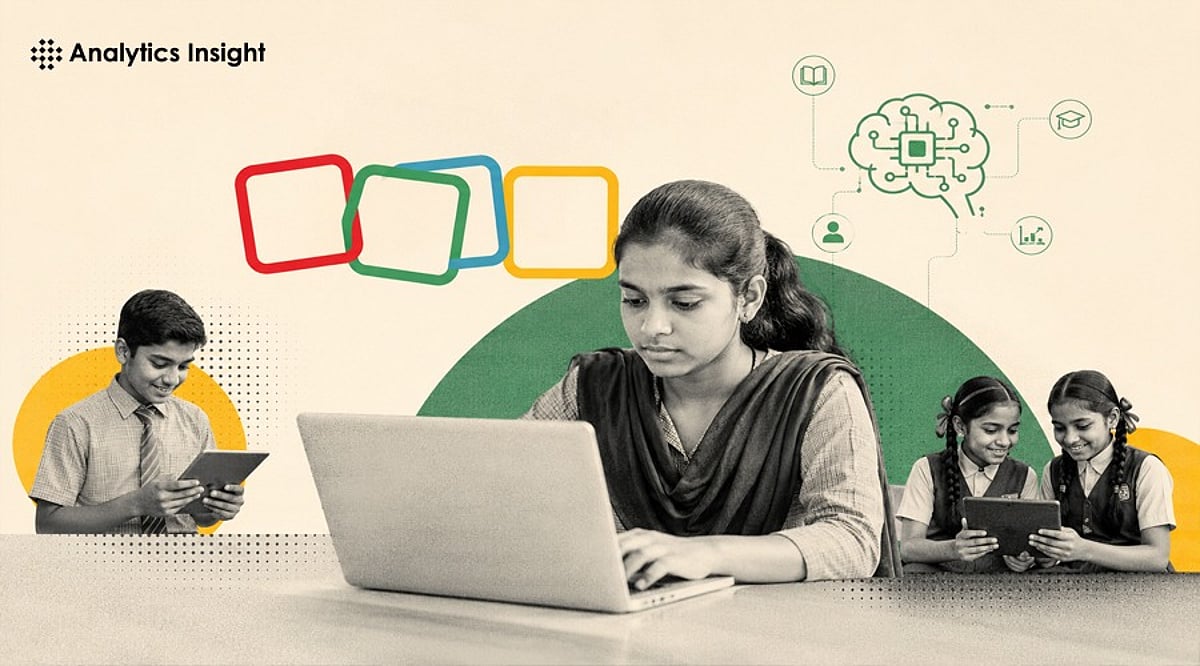
    Zoho has unveiled Zoho Classes 2.0, an advanced Learning Management System (LMS) that leverages artificial intelligence to simplify teaching and learning. The platform introduces a suite of new tools designed for students, teachers, schools, colleges, and universities. Notably, Zoho is offering the platform free of charge to government educational institutions across India.

    Originally launched during the COVID-19 pandemic as a tool for teachers to collect assignments online, Zoho Classes has evolved significantly based on educator feedback. Zoho Classes 2.0 now functions as a comprehensive learning platform that supports everyday classroom activities.

    AI Tools Enhance Teaching and Learning

    One of the standout features is the AI tutor, which only answers questions related to the subjects a student is studying. This ensures learners stay focused on their curriculum rather than receiving answers on unrelated topics. The platform also offers daily practice questions and rewards consistent learning through simple streaks.

    Teachers benefit from time-saving AI tools that can quickly generate lesson plans, course details, learning objectives, and classroom content. Educators can review and customize materials before sharing them with students, significantly speeding up lesson preparation.

    Another valuable addition is AI-based grading, which evaluates computer science assignments and prepares feedback for teachers. Teachers retain final control before releasing marks to students. Zoho states this feature can reduce hours of manual grading each semester, allowing educators to dedicate more time to student interaction.

    New Features for Schools and Colleges

    Educational institutions gain tools to streamline administrative tasks. Many schools and colleges must prepare reports for government and education authorities. Zoho Classes 2.0 helps collect course information and learning records, simplifying and accelerating report generation.

    The platform supports all 22 scheduled Indian languages, enabling students and teachers from diverse regions to use it comfortably. Zoho says the AI understands multiple Indian languages, making learning more natural for users.

    Safety features are also enhanced. The AI tutor restricts answers to classroom subjects, and schools can decide whether to enable AI features for students. The mobile app allows students to view saved lessons offline for a limited time, though full downloads are not available.

    Free Access for Government Institutions

    Zoho is providing Zoho Classes 2.0 at no cost to central and state government schools, colleges, and universities. Individual teachers can use it free for up to 100 students. Private institutions can subscribe for Rs 500 per teacher per month.

    With Zoho Classes 2.0, the company aims to make education more accessible and efficient. The platform reduces routine tasks for teachers, offers better learning support for students, and helps schools manage academic operations smoothly. Its intuitive AI features and multilingual support are expected to drive digital learning adoption across India in the coming years.