Tag: artificial intelligence

  • Infosys Stock Plunges 36% from Peak Amid IBM Crash and Global IT Spending Concerns

    Infosys Stock Plunges 36% from Peak Amid IBM Crash and Global IT Spending Concerns

    Infosys shares were trading at Rs. 1,081.10, extending a prolonged decline from their January 2026 peak of nearly Rs. 1,700. The weakness comes amid growing concerns over slowing global technology spending, cautious enterprise budgets, and the ripple effect of IBM’s historic 25% single-day stock plunge. Although the sharp correction has weighed on investor sentiment, analysts believe client spending trends will shape the long-term outlook for Infosys, large deal wins, and the company’s ability to capitalize on the artificial intelligence (AI) boom.

    Why Infosys Is Feeling the Heat

    IBM’s sharp sell-off has become the latest trigger for weakness across technology stocks globally. The US technology giant reported weaker-than-expected preliminary quarterly results. Enterprise spending is softening, raising concerns about delayed discretionary business technology spending and a shift toward AI investments.

    The news is relevant to Infosys in many ways. Most of its revenue comes from enterprises globally that rely on digital transformation, cloud migrations, and consulting services. Any cut in tech spending, especially in North America, affects investor sentiment towards Indian IT companies. Yet the news will not affect all of its business areas equally, as it serves clients across various industry verticals with different economic cycles.

    IBM’s Decline Weighs on the Broader IT Sector

    The market response did not end at Infosys. The stocks of Tata Consultancy Services, Wipro, HCL Technologies, Tech Mahindra, Coforge, and Persistent Systems were also under selling pressure as the growth prospects of India’s IT industry were being reassessed. This is because companies are shifting their spending priorities. Even as companies keep pouring money into areas like artificial intelligence, cybersecurity, and cloud computing, projects like digital transformations and consulting projects are taking longer to get approval. These changes can affect the growth of outsourcing companies that rely heavily on long-term technology contracts.

    Nonetheless, experts have advised against comparing IBM’s performance with that of India’s IT sector companies. The business models of these companies differ significantly, and IBM’s earnings might not reflect the demand picture for offshore technology services.

    Can Infosys Recover?

    Though the recent rally has seen some retracement, Infosys continues to have solid fundamentals. This includes having a diversified clientele across the globe, maintaining sufficient cash on its balance sheet, and staying focused on growth sectors such as AI, cloud computing, automation, and digital engineering. Such sectors are set to drive enterprise IT spending in the coming years.

    Technically, Infosys is trying to consolidate around Rs. 1,050 – 1,100 levels. Holding above these levels can help it consolidate its gains, and a decisive move above Rs. 1,150 can restore investors’ confidence. On the downside, Rs. 1,000 remains a crucial support level for traders.

    Besides, investors would be keeping an eye on the next quarterly results, management commentary, the deal pipeline, and potential revenue from the AI sector.

    Market Outlook

    There is no doubt that IBM’s steep decline would have affected the share prices of technology companies worldwide. Still, in the case of Infosys, the long-term investment story is independent of any particular company’s fortunes. Infosys is well-placed to capitalize on emerging structural themes such as AI adoption, cloud migration, and digital transformation.

    Although near-term stock volatility may persist amid uncertainty about global tech spending, Infosys’s success in closing larger transformation deals and in AI-enabled services would ultimately determine whether the recent fall was merely a correction or an indication of lower growth ahead. For investors, the upcoming earnings season may provide important insights into this stock’s future.

    FAQs

    What caused Infosys shares to decline recently?

    Infosys shares fell after IBM’s historic stock plunge raised concerns about slowing global technology spending and weaker enterprise IT budgets.

    How does IBM’s decline affect Infosys?

    IBM’s weak outlook fuels fears of reduced enterprise technology spending, which could delay client projects and impact Infosys’ revenue growth.

    Is Infosys fundamentally weak despite the stock correction?

    No. Infosys continues to have strong fundamentals, healthy cash reserves, diversified clients and growing investments in AI and cloud services.

    Which sectors contribute the most to Infosys’ revenue?

    Financial Services is the largest contributor, followed by Retail, Manufacturing, Communication, Energy, Hi-Tech, and Life Sciences businesses.

    What should investors watch before buying Infosys shares?

    Investors should monitor quarterly earnings, deal wins, management guidance, AI-driven growth opportunities and global enterprise technology spending trends.

  • 10 Best GenAI and Agentic AI Certifications to Future-Proof Your Career in 2026

    10 Best GenAI and Agentic AI Certifications to Future-Proof Your Career in 2026

    The AI job market is shifting toward professionals who can build, deploy, and manage intelligent systems instead of simply using AI tools. GenAI and Agentic AI courses provide structured learning with hands-on projects and industry-recognized credentials. The best programs can strengthen both technical expertise and long-term career prospects.

    Overview

    GenAI and Agentic AI courses develop practical skills in large language models (LLMs), AI agent frameworks, RAG, Model Context Protocol (MCP), AI governance, and autonomous AI system design for real-world applications. These programs cater to different experience levels, from beginners learning generative AI fundamentals to professionals building production-ready AI agents, enterprise workflows, and intelligent automation systems.

    University-backed and industry-recognized courses combine hands-on projects, technical expertise, and system-level thinking to prepare learners for AI engineering, product management, software development, and enterprise AI leadership roles.

    Prompt engineering got people through the door of Generative AI. Now the demand is shifting toward something bigger: professionals who can build, deploy, and govern autonomous AI systems that actually solve business problems. Certification programs are moving with that shift, leaving prompt basics behind and teaching production-ready AI skills instead.

    Generative AI courses teach people to use large language models to create content and applications. Agentic AI courses go further. They teach people to build systems that plan, use tools, maintain context, and finish tasks with little human input. That is why courses covering architecture, evaluation, and governance now carry more weight than courses built around prompting alone.

    How We Ranked the Best GenAI and Agentic AI Courses in 2026

    These ten are ranked by curriculum depth, verified hands-on project work, institutional accountability, and how directly the skills map to a real job function, from the complete beginner through the production engineer. That range is deliberate. A ‘top 10’ list that only serves engineers offers little to a product manager or executive searching for the same term.

    Top 10 GenAI and Agentic AI Courses at a Glance

    1. Learnbay – Generative AI & Agentic AI Master Program

    Most AI courses just teach tools or prompt writing. Learnbay takes a different path, helping learners apply AI directly in their existing fields. The Generative AI & Agentic AI Master Program mixes live classes, real projects, and guidance from actual industry practice. Topics covered include Generative AI, Agentic AI, RAG, LangChain, LangGraph, CrewAI, MCP, vector databases, LLMOps, AI deployment, automation, and responsible AI use. The focus stays on real work, not sample projects. Through AI Co-Lab and startup-style challenges, plus the Build Your Own Project (BYOP) program with a mentor guiding each step, learners build a portfolio worth showing employers. The projects are tailored to different fields too, including banking, healthcare, manufacturing, retail, telecom, and consulting. Classes run live on weekends, which works well for people balancing a full-time job. A three-year access period is also included, so the material stays available for future review. Career Services Pro adds further support with resume building, LinkedIn profile help, mock interviews, and placement assistance.

    2. Building AI Agents and Agentic Workflows (IBM)

    A three-course specialization that moves from LangGraph fundamentals to CrewAI multi-agent orchestration to AG2 and BeeAI, inside guided labs using real large language models such as GPT and IBM Granite. It works as a reasonable second step after a GenAI foundations course, though it remains a framework survey in nature. Learners wanting deep architecture or governance content will outgrow it fast.

    3. Full Stack Agentic AI Specialization (Coursera)

    This program moves past framework tours into ownership: RAG pipelines, the Model Context Protocol, vector databases, and backend orchestration. It suits engineers who want the whole stack under one roof rather than a single layer. The tradeoff is breadth over depth. Covering the full stack means less specialization in any one area than Cornell’s architecture-focused track offers.

    4. Master Agentic AI: Core Principles and Real-World Applications (Coursera)

    Built for people who already build ML models and need to operate agent systems at production scale: reward-signal design, CI/CD pipelines for retraining, drift detection, and threat modeling for agent security. The honest limitation is the prerequisite. Real ML fluency is assumed already. This program suits practitioners moving beyond prompting, not those starting from it.

    5. Applied Agentic AI Certificate (University of San Francisco)

    An intensive, in-person program with labs and a hackathon, built for people who need to understand agentic AI without writing code. It fills a genuine gap, since most agentic programs assume an engineering background. The cost is depth: graduates leave with strategic fluency, not implementation skill.

    6. Agentic AI Certificate Program (Johns Hopkins)

    A twelve-week, university-backed program covering Python, LLMs, RAG, and agent construction through applied projects, with weekly live sessions from faculty and industry experts. It sits between USF’s no-code approach and Coursera’s engineering-heavy tracks, a reasonable middle path for professionals wanting some hands-on coding without a pure software-engineering prerequisite.

    7. Agentic AI Architecture (eCornell)

    Four short courses over two months, focused not on building agents step by step but on designing the systems around them: LLM reliability, RAG, multi-agent workflows, and governance frameworks for responsible deployment. It suits architects, tech leads, and PMs who own decisions rather than code. Engineers wanting deep framework practice will find it thinner on implementation than IBM’s specialization.

    8. Generative and Agentic AI Certification (BITS Pilani Digital)

    A roughly 30-week program covering LLM applications, agentic systems, RAG, and deployment, built for technology professionals moving from experimenting with AI to architecting it. The length is the differentiator, for better and worse. It offers more depth than any other program on this list but demands a real-time commitment, closer to a part-time postgraduate course than a certification sprint.

    9. Agentic and Generative AI Course (IISc CCE with TalentSprint)

    An advanced program carrying IISc’s research credibility, relevant in India and among engineers who value an academic institution behind the certificate. It overlaps closely in content with BITS Pilani’s track, so the deciding factor usually comes down to institutional preference and location rather than curriculum difference.

    10. GitHub Certified: Agentic AI Developer (Microsoft)

    Four courses at 15 to 16 hours each, built for developers already working inside GitHub workflows and the software development lifecycle. It teaches agentic development inside tools people already use daily, which shortens the learning curve for that specific audience and narrows relevance for anyone outside it.

    How to Choose the Right GenAI and Agentic AI Certification

    Complete beginners fit best with Generative AI for Everyone before attempting anything agentic; every program past that point assumes basic LLM familiarity. Developers wanting hands-on framework practice suit IBM’s specialization or Coursera’s Full Stack track. Architects and technical leads gain more from Cornell’s system-design focus than from a coding-heavy specialization they will not use directly. Professionals wanting depth and university credibility should weigh BITS Pilani or IISc against the time commitment involved. Non-technical leaders get the most direct value from USF’s applied, no-code format.

    Final Thoughts

    The strongest certification is rarely the longest or the most recognizable name. It is the one that closes an actual skill gap. Whether that means understanding what generative AI even is, building production-ready agents, or governing how autonomous systems get deployed at scale.

    FAQs

    1. What is the difference between Generative AI and Agentic AI? Generative AI creates content such as text, images, code, and audio from user prompts, while Agentic AI enables systems to reason, plan, use tools, and complete multi-step tasks with minimal human intervention.
    2. Which GenAI and Agentic AI certification is best for beginners? Beginners should start with foundational Generative AI courses that teach LLMs, prompt engineering, and AI applications before advancing to Agentic AI courses focused on autonomous agents and workflow automation.
    3. Are GenAI and Agentic AI courses worth pursuing in 2026? Yes. As businesses increasingly adopt AI-powered workflows and intelligent agents, courses with hands-on projects and practical AI skills can improve employability and support long-term career growth.
    4. What skills should a good GenAI and Agentic AI certification include? A strong certification should cover prompt engineering, large language models (LLMs), retrieval-augmented generation (RAG), AI agent frameworks, workflow automation, AI governance, model evaluation, and real-world project development.
    5. How do I choose the right GenAI and Agentic AI course? Select a course based on your experience level, career goals, curriculum, hands-on learning opportunities, industry recognition, and whether it covers practical applications such as AI agent development, deployment, and enterprise AI solutions.
  • Merging Economics, Engineering, and AI: How Oleh Halat Solves Modern Retail Challenges

    Merging Economics, Engineering, and AI: How Oleh Halat Solves Modern Retail Challenges

    Most analysts read dashboards. Most engineers build systems. Most AI strategists develop frameworks. Oleh Halat does all three, and his role at ALEKO Products, an outdoor and home retailer based in Kent, Washington, exemplifies how rare that combination still is.

    Three professional disciplines that traditionally exist in separate departments, and often in separate companies, converge in a single role. For modern multi-channel retailers, that convergence is becoming less unusual and more necessary. The complexity of digital commerce now demands people who can understand margins, build technical systems, evaluate automation, and measure whether any of it actually improves the business.

    Halat’s career offers a clear example of what that hybrid profile looks like in practice, and industry observers increasingly describe this convergence of disciplines as the emerging standard for the next generation of e-commerce leaders. His path to that combination was not planned. He earned a Bachelor’s degree in Economy of an Enterprise from Kyiv National University of Trade and Economics in 2016. After moving to the U.S., he added a degree in Applied Science in Web Development. “I trained as an economist and finished training as a web developer,” Halat says. “Ten years ago that combination didn’t exist in any job description. Today it’s the only profile that makes sense for modern commerce.”

    At ALEKO, Halat’s work begins with the analytical layer. He owns pricing strategy and performance analytics across eight major retail channels, including Home Depot, Lowe’s, Walmart, Amazon, Overstock, Unbeatable, Wayfair, and the company’s direct-to-consumer storefront. His responsibilities include channel-level economic modeling, customer segmentation, conversion optimization, and data-driven decisions about platform and product investment.

    “Pricing in a multi-channel world isn’t a number — it’s a system,” Halat says. “You’re not setting one price; you’re setting a logic that determines prices across eight retailers, multiple platforms, and an evolving promotional landscape.”

    That distinction matters because Halat is not only interpreting what happens inside the business. He is also building the systems that shape those outcomes. His engineering role places him directly inside the technical infrastructure supporting ALEKO’s digital commerce operations. He owns the company’s U.S. BigCommerce storefront and a separate Canadian e-commerce platform, while coordinating an integration stack that includes SellerCloud, Klaviyo, Klevu, Bolt, Affirm, and BigCommerce itself.

    The engineering hat shows up in a daily reality most analysts never touch. Halat led the complete redevelopment of alekoproducts.com across 2024 and 2025, designed a dynamic live-pricing system that adjusts retail prices in real time across multiple channels, created automated checkout discount logic, and runs an ongoing technical SEO and Core Web Vitals program that has meaningfully improved the site’s performance across critical web-performance metrics.

    “Managing eight retail channels simultaneously taught me one thing: consistency at scale isn’t about tools — it’s about integration architecture,” he says. “Tools come and go. Architecture decides whether you survive growth.”

    The clearest single artifact of Halat’s hybrid profile in action is Cosmoflows.app, an innovative standalone workflow-tracking and process-automation platform that he designed, built, and deployed himself. He created Cosmoflows because the existing tools did not fit how ALEKO’s team actually worked. Most automation platforms assume that workflows are already clearly defined. In many mid-size retail operations, they are not. Processes live in spreadsheets, emails, side conversations, task lists, and individual memory. Before automation can create value, the work itself has to become visible.

    “I built Cosmoflows because I kept seeing the same pattern: companies buy automation tools but never describe their actual workflows,” Halat says. “You can’t automate what you haven’t made visible yet.”

    Cosmoflows takes a step back from automation as a buzzword. It first surfaces how processes actually move across teams, then creates structure around what should be tracked, improved, and eventually automated. Currently deployed at ALEKO, the platform replaces scattered Excel tracking and email threads, streamlines processes for the operations team, and delivers something many teams value even more than time saved: fewer dropped tasks, clearer project visibility across functions, and less context-switching between disconnected systems.

    That is where Halat’s profile becomes more than a résumé of separate skills. The economist understands where inefficiency costs the business. The engineer can build the tool that removes it. The AI strategist can decide which parts of the workflow should be automated, measured, or left human.

    The results are visible in ALEKO’s direct-to-consumer e-commerce performance. Over the past year, the channel has delivered significant year-over-year revenue growth despite a declining site-traffic environment that many industry observers attribute to shifting customer behavior around generative AI. The growth came from metrics tied directly to operational optimization: substantial improvements in conversion, average order value, and revenue per visit — outcomes that reflect disciplined execution rather than macro tailwinds.

    At one of the most difficult conversion bottlenecks in online retail — cart abandonment — the direction of the metrics also improved meaningfully, alongside continued growth in early-funnel shopping intent measured through product engagement.

    Those results show the practical meaning of Halat’s hybrid role. Performance improvement did not come from analytics alone, engineering alone, or AI strategy alone. It came from the ability to connect all three into operational decisions that could be implemented, tested, and measured.

    “Being an E-Commerce Business Analyst in 2026 isn’t only reading the data,” Halat says. “It’s understanding the system that produces it, and knowing where AI fits in the next iteration. Most teams have only one of those three. The hard part is having all three.”

    The third discipline — AI integration strategy — completes the profile. Halat was an early adopter of agentic coding environments and parallel large language model systems in production e-commerce operations. He also authored the AI-Commerce Integration Assessment Framework, known as ACIAF, published through Zenodo and registered as a literary work — a contribution to the industry that formalizes how retailers should evaluate AI investment decisions.

    For Halat, methodology is not abstract. It grows out of the same daily question that drives his operational work: where, exactly, does AI create measurable value in this business, and where does it not?

    That question separates his approach from broad enthusiasm around new technology. AI is not treated as a separate initiative sitting outside the business. It is evaluated inside existing workflows, pricing systems, platform architecture, customer behavior, and measurable commercial outcomes.

    Few e-commerce roles combine pricing strategy, performance analytics, AI integration, platform architecture, and operational automation under a single person’s ownership. Halat’s career suggests that this combination is no longer rare by accident. It is becoming the structural answer to the operational complexity modern retailers actually face.

    The companies best positioned for the next phase of digital commerce may not be those with the largest AI budgets or the most aggressive technology roadmaps. They may be the ones that find or grow operators capable of building, measuring, and operating those systems themselves.

    In that sense, Oleh Halat represents a new generation of recognized e-commerce experts — one who can read the economics, build the infrastructure, and decide where artificial intelligence belongs inside the work.

  • From Smart Glass to Finance: The Intelligent Systems Architecture of Surya Teja Meesala

    From Smart Glass to Finance: The Intelligent Systems Architecture of Surya Teja Meesala

    Across industries like manufacturing and financial services, software systems have become essential for managing complex operations and driving efficiency at scale. Yet research from McKinsey and Boston Consulting Group shows that nearly 70% of large-scale technology and digital transformation initiatives fail to achieve their intended outcomes. The limitation is rarely the idea itself—it often lies in the inability of execution systems to scale or perform reliably under real-world complexity.

    In this environment, engineers who build reliable execution systems are increasingly critical. Surya Teja Meesala, a senior member of IEEE with over a decade of experience spanning advanced manufacturing, medical devices, retail logistics, and financial systems, has focused on designing systems that keep operations consistent, traceable, and reliable at scale.

    Smart glass manufacturing, for example, operates in a high-mix environment where multiple product generations—each with distinct electrical and firmware requirements—move through the same factory equipment in constantly changing sequences. At View, Inc., a leading U.S. electrochromic smart window manufacturer with deployments in commercial buildings, airports, and adoption by companies like Uber and Netflix, this challenge was central to scaling operations. The company needed real-time visibility into material consumption, production workflows, and work order completion, integrated with enterprise systems like Oracle ERP, while accommodating rapid plan changes without breaking traceability or auditability.

    Meesala contributed significantly to creating a comprehensive system that replaced outdated, fragmented tools. Instead of passive tracking, the system actively guided operations by determining what could run, in what order, and under which constraints. One key challenge was managing production around highly energy-intensive equipment, where delays or miscalculations reduced efficiency. Previously reliant on manual calculations and operator expertise, Meesala built automated decision-making into the workflow, making it easier for factory teams to adjust production without guesswork. The result was smoother operations, improved product quality, and more efficient use of expensive equipment.

    He also developed an automated smart connector programming system that removed manual decision-making at a critical stage. Each unit was configured correctly based on production requirements, with a clear, versioned record of every setting applied. This reduced long-term failures and improved overall manufacturing reliability. These capabilities formed the backbone that helped View transition from a private company to a publicly listed manufacturer.

    In the financial sector, at Raymond James Financial, one of the largest U.S. financial advisory networks, Meesala has worked on core treasury and back-office systems that support critical operations. His focus has been on ensuring transactions are processed accurately, transparently, and in compliance with evolving regulatory standards. He also contributed to an AI-powered Incident Intelligence Platform designed to reduce response times during system outages and preserve institutional knowledge—an initiative recognized at a firm-wide engineering event.

    Across industries, Meesala’s efforts demonstrate a reality that industry leaders are increasingly acknowledging: in complex, high-stakes settings, a quiet, disciplined, and invisible execution architecture is what determines whether innovation can survive.

  • Top 8 Fastest-Growing AI Careers to Watch in 2025

    Top 8 Fastest-Growing AI Careers to Watch in 2025

    The artificial intelligence industry is evolving at an unprecedented pace, creating a wave of new, high-demand job roles. Professionals looking to future-proof their careers should consider specializing in one of these rapidly growing AI positions. Below, we break down the key roles that are shaping the future of technology.

    AI Engineer

    AI Engineers design, develop, and deploy intelligent applications that leverage machine learning, cloud platforms, and automation. They solve complex business challenges by building scalable AI systems that drive efficiency and innovation.

    Machine Learning Engineer

    Machine Learning Engineers create predictive models and self-learning algorithms that power recommendation engines, fraud detection, automated decision-making, and operational optimization across industries.

    Generative AI Engineer

    Generative AI Engineers build chatbots, virtual assistants, content generators, and enterprise solutions using large language models, prompt engineering, and retrieval-augmented generation techniques.

    Data Scientist

    Data Scientists extract actionable insights from massive datasets using statistics, machine learning, and visualization. Their work supports strategic business decisions and drives innovation.

    AI Research Scientist

    AI Research Scientists conduct advanced research in deep learning, natural language processing, and reinforcement learning to develop next-generation AI models and technologies.

    AI Product Manager

    AI Product Managers bridge business objectives and technical development. They define product strategies, coordinate teams, prioritize features, and ensure successful AI product delivery.

    Prompt Engineer

    Prompt Engineers craft optimized prompts that improve AI-generated responses, increase model accuracy, and streamline enterprise workflows across diverse applications.

    AI Ethics Specialist

    AI Ethics Specialists ensure AI systems remain fair, transparent, secure, and compliant by implementing responsible AI practices, governance frameworks, and regulatory standards.

    Computer Vision Engineer

    Computer Vision Engineers develop AI systems that analyze images and videos, enabling breakthroughs in autonomous vehicles, healthcare diagnostics, robotics, surveillance, and industrial automation.

    As AI continues to reshape industries, these roles offer exciting opportunities for growth and innovation. Staying current with emerging skills and technologies is essential for success in this dynamic field.

  • How AI Is Revolutionizing Lifelong Learning Across Industries in 2026

    How AI Is Revolutionizing Lifelong Learning Across Industries in 2026

    Artificial intelligence is reshaping lifelong learning by making education more personalized, accessible, and skill-focused in 2026. AI-powered learning platforms now adapt lessons based on individual progress, enabling learners to master concepts at their own pace.

    Professionals are leveraging AI assistants to acquire coding, business, marketing, design, and communication skills faster than ever before. Companies are adopting AI-driven training programs to help employees reskill for emerging technologies and evolving job roles. Universities and online education providers are integrating AI tutors that deliver instant feedback and personalized study support.

    Industries such as healthcare, finance, manufacturing, and retail are utilizing AI learning tools to boost workforce productivity and ensure compliance. Generative AI helps learners create summaries, practice interviews, solve problems, and prepare for professional certifications. Experts recommend balancing AI assistance with critical thinking, fact-checking, and practical experience to build lasting skills.

    As AI continues to evolve, lifelong learning is becoming an essential strategy for career growth and staying competitive across every industry.

  • Top Advanced Humanoid Robots Shaping the Future of Automation and AI

    Top Advanced Humanoid Robots Shaping the Future of Automation and AI

    The field of humanoid robotics has seen remarkable advancements, with robots now capable of performing complex tasks in industrial, research, and commercial settings. Below is a look at the world’s most advanced humanoid robots and their unique capabilities.

    Tesla Optimus

    Designed to handle repetitive workplace tasks, Tesla Optimus leverages advanced artificial intelligence, autonomous movement, and human-like dexterity for industrial applications worldwide.

    Figure 02

    Built for manufacturing environments, Figure 02 combines AI reasoning, natural conversations, precise manipulation, and autonomous task execution inside modern industrial facilities.

    Boston Dynamics Atlas

    Boston Dynamics Atlas demonstrates remarkable agility through running, jumping, lifting, balancing, and performing complex physical tasks with advanced robotic intelligence and control.

    Unitree G1

    Unitree G1 offers affordable humanoid robotics featuring agile movement, AI-powered capabilities, and versatile applications across research, education, and commercial development environments.

    Agility Robotics Digit

    Engineered for warehouse logistics, Agility Robotics Digit can lift packages, navigate obstacles, and assist human workers with repetitive operational tasks efficiently.

    Sanctuary AI Phoenix

    Sanctuary AI Phoenix focuses on general-purpose intelligence, enabling robots to perform human-like tasks using advanced AI reasoning and adaptable physical capabilities daily.

    Engineered Arts Ameca

    Engineered Arts Ameca is famous for lifelike facial expressions, realistic interactions, advanced conversational abilities, and demonstrations that showcase human-robot communication and emotional engagement effectively.

    Xiaomi CyberOne

    Xiaomi CyberOne combines AI vision, speech recognition, human motion sensing, and balanced walking to demonstrate China’s progress in humanoid robotics innovation.

    UBTECH Walker S2

    Developed for smart factories, UBTECH Walker S2 integrates autonomous mobility, object handling, collaborative operations, and intelligent manufacturing support with advanced robotic capabilities.

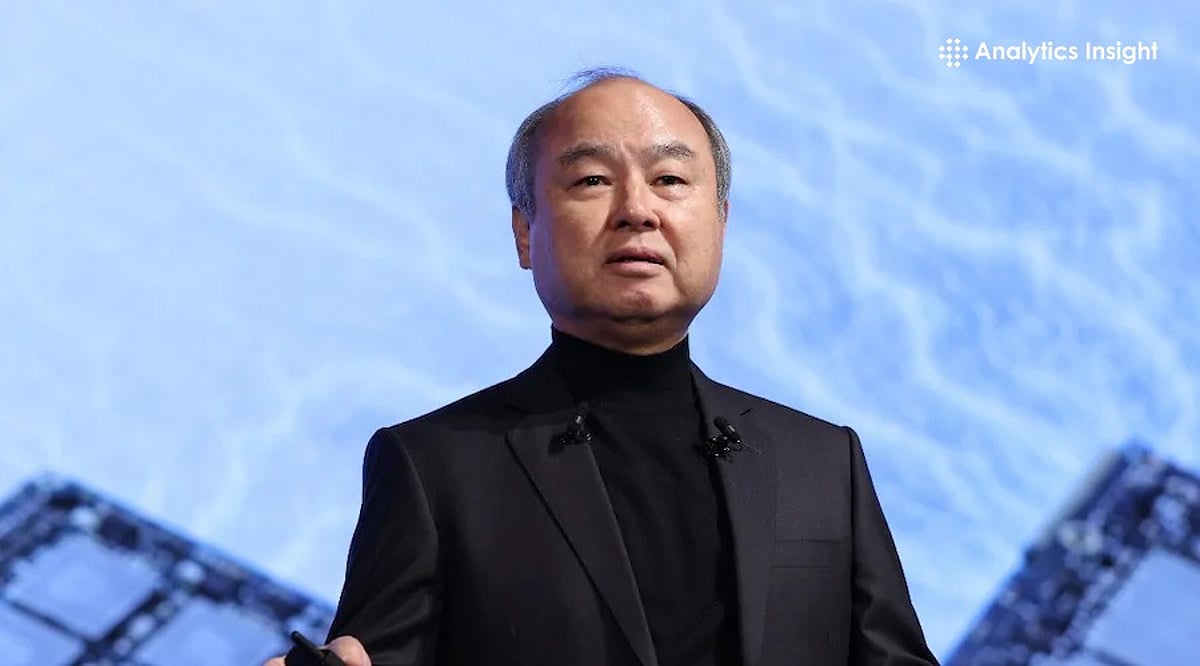
  • Masayoshi Son Bets on Nuclear Fusion to Power AI’s Growing Energy Demands

    Masayoshi Son Bets on Nuclear Fusion to Power AI’s Growing Energy Demands

    SoftBank founder Masayoshi Son has identified nuclear fusion as a potential long-term solution to one of artificial intelligence’s most pressing challenges: energy consumption. Speaking about the future of AI infrastructure, Son argued that fusion power could supply the massive electricity demands of next-generation data centers.

    Son emphasized that as AI adoption accelerates, electricity consumption will rise sharply. While some may view natural gas as a quick fix, he believes nuclear fusion is the superior endgame for sustainable AI growth.

    Demand for Power Grows with the Rise of AI

    As corporations race to advance AI systems and expand data center capacity, the need for electrical power will intensify. Son projected that the world will require approximately 3 terawatts of additional data center capacity by 2040 to support future AI developments. Traditional energy sources, he warned, may fall short of meeting this escalating demand.

    Fusion Might Be the Solution in the Long Term

    Son described fusion—the process that powers the Sun—as the most promising energy source for AI data centers. Although commercial fusion is not yet viable due to ongoing technical hurdles, he believes it has the potential to transform AI infrastructure economics over the long haul.

    SoftBank Doubles Down on AI

    These comments align with SoftBank’s aggressive AI strategy. The Japanese conglomerate has invested heavily across the AI ecosystem, backing companies like Arm and OpenAI while expanding into chips, robotics, and data center infrastructure. Son has repeatedly compared AI’s transformative potential to—or beyond—the internet revolution, urging businesses to embrace AI rather than hesitate.

    The Bigger Picture

    The AI revolution is creating not just a demand for computing power but also for adequate energy supplies. Major tech firms are exploring a mix of natural gas, nuclear power, and renewables to meet their needs. For Son, fusion represents the ultimate endpoint—a way to power the next stage of AI without energy constraints, even though its commercial application remains a work in progress.

  • DeepSeek Weighs New Funding Round Weeks After Record $7 Billion Raise

    DeepSeek Weighs New Funding Round Weeks After Record $7 Billion Raise

    Chinese artificial intelligence startup DeepSeek is already exploring another funding round, barely a month after completing its first-ever external fundraising. The move underscores the soaring capital demands of the global AI race, where companies are spending aggressively on computing infrastructure and custom chips to stay ahead.

    According to a Financial Times report, DeepSeek has begun preliminary discussions with potential investors for a new funding round that could value the company at about $71 billion before the investment. If completed, the proposed valuation would mark a sharp rise from the roughly $52 billion post-money valuation it secured after raising nearly $7 billion in late May.

    The fresh capital is expected to support expansion plans, particularly the construction of proprietary data centers and the purchase of additional AI processors needed to power next-generation models and AI agents.

    New fundraising efforts can be viewed as a large amount of money needed to build the complex infrastructure that would enable the development of cutting-edge artificial intelligence technology. Due to increased competition, more money will be spent on building computational power, not only via third-party cloud infrastructure.

    DeepSeek also builds AI chips for the inference stage, which involves the reaction of already-trained models to user queries. The firm intends to reduce its dependence on foreign hardware, optimize performance, and lower costs. It was previously reported that DeepSeek used Huawei Ascend processors alongside its existing hardware.

    DeepSeek has quickly gained a reputation as one of the most-watched Chinese AI startups because of the attention and appreciation of V3 and R1 models both internationally and among experts in the field. This success raised doubts about China’s ability to compete with leading US-based AI companies and made the startup a representative of China’s AI developers.

    With the successful completion of the proposed fundraising, DeepSeek will have significantly more financial resources to invest in infrastructure construction and chip development in the competitive AI environment.

  • 2030 Robotics Forecast: Top Trends Driving the Industry’s Next Decade

    2030 Robotics Forecast: Top Trends Driving the Industry’s Next Decade

    The robotics industry is undergoing a profound transformation. No longer confined to rigid, pre-programmed tasks, modern machines are learning, adapting, and collaborating with humans at an unprecedented pace. Driven by advances in artificial intelligence, sensor technology, and declining hardware costs, the sector is poised for explosive growth. By 2030, experts predict the global robotics market will surpass $110 billion, with some estimates reaching beyond $200 billion. Here are the top ten predictions shaping the future of robotics.

    1. Humanoid Robots Become Mainstream

    Humanoid robots, designed to navigate environments built for people, are moving from research labs into commercial settings. By 2030, these machines will be common in factories, warehouses, hotels, and healthcare facilities. Industry forecasts suggest that at least one million humanoid robots could be deployed between 2026 and 2030, though specialized robots will still outperform them in many specific tasks.

    2. AI Becomes the Brain of Every Robot

    Artificial intelligence is transforming robots from simple tools into intelligent agents. Future robots will understand voice commands, recognize objects, and make real-time decisions. The intelligent robotics market is projected to grow from $13.99 billion in 2025 to $50.33 billion by 2030, a compound annual growth rate (CAGR) of 29.2 percent.

    3. Collaborative Robots Work Alongside Humans

    Collaborative robots, or cobots, are designed to operate safely with people without extensive safety barriers. Their ease of use and lower cost make them accessible to small and mid-sized businesses. With the global stock of industrial robots reaching 4.664 million units in 2024—a 9 percent increase from the prior year—automation continues to drive productivity and address labor shortages.

    4. Smart Factories Achieve Greater Autonomy

    Factories are integrating robots, sensors, cameras, and software into unified systems that can adapt to changing demand, equipment issues, or supply chain disruptions. Digital twins and machine vision enhance quality control. Asia leads this trend, accounting for 66.6 percent of the global industrial robotics market in 2024, fueled by strong manufacturing growth and automation investments.

    5. Healthcare Robots Expand Their Role

    Robots are increasingly assisting in surgery, transporting supplies, disinfecting rooms, and supporting rehabilitation. An aging population and healthcare worker shortages are driving demand. The service robotics market is expected to grow from $26.35 billion in 2025 to $131.9 billion by 2034, at a CAGR of 19.8 percent.

    6. Warehouse Automation Accelerates

    E-commerce growth is pushing warehouses to process orders faster. Autonomous mobile robots, robotic picking systems, and smart inventory tools are becoming essential. The warehouse robotics market is forecast to rise from $6.51 billion in 2025 to $25.41 billion by 2034, a CAGR of 16.8 percent.

    7. Robot Teams Tackle Complex Tasks

    Future workspaces will rely on teams of robots that share information and coordinate tasks. This approach improves resilience—if one robot fails, others can step in. Annual industrial robot installations now exceed 500,000 units, roughly double the rate from a decade ago.

    8. Edge AI Boosts Robot Performance

    Edge AI enables robots to process data locally, reducing latency and enhancing privacy. This is critical for applications in factories, hospitals, and remote locations. The industrial robotics market could reach $60.6 billion by 2030, with edge computing and AI as key drivers.

    9. Digital Twins Speed Up Development

    Digital twin technology creates virtual replicas of machines and production lines, allowing engineers to test and refine robotic systems before deployment. This reduces costs and risks. As AI advances, digital testing will become a standard part of robot development.

    10. Robotics Becomes a Massive Global Industry

    The convergence of smarter AI, cheaper hardware, and labor shortages is fueling demand across manufacturing, healthcare, logistics, agriculture, retail, and construction. The global robotics market is expected to exceed $110 billion by 2030, and with software and service robots included, could top $200 billion. Robotics is set to become one of the most lucrative and influential technology sectors of the decade.