Tag: artificial intelligence

  • Top Claude AI Extensions and Tools to Supercharge Your Workflow

    Top Claude AI Extensions and Tools to Supercharge Your Workflow

    Claude AI is evolving rapidly, and pairing it with the right extensions can unlock even greater productivity. Whether you are a developer, writer, or business professional, these tools help you get more done with Claude. Here are the top extensions every Claude user should know about.

    Official and Desktop Tools

    Claude Desktop: The official desktop app provides faster access, file uploads, and smoother conversations. It is ideal for daily AI workflows and reduces reliance on browser-based interactions.

    Raycast AI: Raycast brings Claude directly into your desktop launcher. You can search files, write content, and automate tasks without leaving your keyboard — a true productivity booster.

    Developer-Focused Extensions

    Continue.dev: Developers can connect Claude to VS Code using Continue. It helps generate code, explain functions, and speed up debugging, making it a valuable companion for coding projects.

    Cline (VS Code): Cline turns Claude into an AI coding assistant that understands your entire project and assists with development workflows, from architecture to implementation.

    All-in-One AI Interfaces

    LibreChat: This clean, open-source interface supports Claude alongside multiple AI models. It is great for users who prefer a single workspace for different AI assistants.

    Automation and Integration

    Zapier: Connect Claude with thousands of apps through Zapier. Automate emails, spreadsheets, CRMs, and repetitive business tasks with simple triggers and actions.

    Knowledge Management

    Obsidian Claude Plugin: Enhance your note-taking. Claude can summarize, organize, and generate ideas directly from your Obsidian knowledge base, turning your vault into an intelligent assistant.

    Extending Claude Further

    MCP Tools: Model Context Protocol (MCP) tools allow Claude to connect with local files, databases, and external applications, expanding its capabilities beyond the chat window.

    These extensions cover a wide range of use cases, from everyday productivity to specialized development tasks. Start with the ones that match your workflow and explore more as Claude continues to improve.

  • Elon Musk Dismisses SpaceX AI Smartphone Rumors as ‘Utterly False’

    Elon Musk Dismisses SpaceX AI Smartphone Rumors as ‘Utterly False’

    Elon Musk has publicly denied recent reports claiming that SpaceX is developing an AI-powered smartphone. The rumors, which gained traction after reports of a prototype AI device, have been firmly rejected by the billionaire entrepreneur.

    The speculation began when The Wall Street Journal reported that SpaceX was working on an AI handheld device powered by Qualcomm’s Snapdragon chipset and running a custom operating system with AI capabilities from xAI, Musk’s AI company. The report also suggested that SpaceX had shown an early prototype to investors ahead of its record-breaking IPO. Days earlier, the Financial Times reported that SpaceX COO Gwynne Shotwell had discussed launching a mobile service in the U.S. using the Starlink satellite network, further fueling the rumors.

    In response, Musk took to X (formerly Twitter) on July 1, 2026, posting a simple but definitive statement: “Utterly false.” This is not the first time he has denied such claims. Earlier this year, he refuted a Reuters report, stating that SpaceX is “not developing a phone.” During an event in Pennsylvania last year, Musk made his position clear: “The idea of making a phone makes me want to die. If we have to make a phone, we will, but we will aspire not to make a phone.”

    Despite the denial, the rumors underscore growing industry interest in dedicated AI hardware. OpenAI is also reportedly exploring purpose-built AI devices. Industry analysts believe that if OpenAI pursues such a device, Musk would want to compete. SpaceX and its sister company Tesla have the manufacturing expertise to mass-produce AI hardware, and SpaceX has signaled interest in expanding into wireless services via Starlink Mobile, potentially challenging Verizon and AT&T.

    Musk continues to focus on artificial intelligence, recently predicting that AI could surpass the combined intelligence of all humans within the next four to five years. While a SpaceX smartphone remains off the table, the broader AI hardware race is accelerating, with the potential to reshape how users interact with AI through purpose-built devices.

  • Mastering Prompt Engineering: How to Write Effective Prompts for High-Performing AI Agents

    Mastering Prompt Engineering: How to Write Effective Prompts for High-Performing AI Agents

    Modern AI agents depend heavily on prompt quality. Clear instructions, proper context, logical structure, defined limits, and self-review methods help AI systems deliver stronger, faster, and more reliable results.

    Overview

    Clear and specific prompts help AI agents produce more accurate and reliable results. Step-by-step instructions improve reasoning quality and reduce mistakes in complex tasks. Modern prompt engineering has become a critical skill as autonomous AI systems become more powerful.

    AI Agents Have Changed How Prompts Work

    In the past, prompts were simple. Most people asked direct questions and received direct answers. Modern AI agents work differently. These systems can handle tasks that require planning, reasoning, and decision-making. Large technology companies have already started using advanced AI agents in their businesses. Recent reports from 2026 show that companies such as OpenAI, Google, and Anthropic now use AI agents for software development, customer service, legal document review, research work, and financial analysis. As AI agents become more powerful, prompt writing now looks less like asking a question and more like writing a set of instructions for a machine that can think through a process.

    Clear Role Creates Better Results

    One of the biggest mistakes in prompt writing is lack of clarity. AI performs better when it clearly understands what role it must take before starting the task. For example, a weak prompt may simply ask an AI system to analyze business data. This type of instruction often creates general answers with little value. A stronger prompt gives the AI a clear identity. For example, the prompt can state that the AI should act as a senior financial expert who studies company revenue and finds business risks. Recent research shows that role-based prompts improve accuracy, especially for technical and professional work.

    Specific Goals Improve Accuracy

    AI systems often fail when instructions remain vague. A broad prompt usually creates broad answers. Better prompts clearly explain what final result is expected. For example, a cybersecurity task should not simply ask AI to study security problems. A stronger prompt clearly states that the system must find five security risks, rank them by danger level, and suggest solutions. When the goal becomes specific, AI has less confusion. This usually leads to stronger and more reliable output.

    Step-by-Step Instructions Help AI Think Better

    Complex tasks often need several stages before a good answer becomes possible. AI agents perform better when prompts divide work into smaller parts. Instead of asking for an instant answer, prompts should guide the system through a process. The system may first collect information, then study the facts, compare possible solutions, and finally create the best answer. This method has become extremely important in modern AI systems. Experts now call this method Chain of Thought reasoning. Many enterprise AI systems use this reasoning structure because it improves logical accuracy and reduces mistakes.

    Limits Help AI Stay Focused

    Powerful AI systems need clear boundaries. Without limits, AI may produce answers that go beyond the original task. A strong prompt clearly defines restrictions. For example, a business prompt may ask AI to create a marketing plan with a budget limit of $50,000 while avoiding television advertising. These limits help AI stay focused on the real task. Cybersecurity experts recently warned that weak prompt structure can create security risks. Prompt injection attacks have become one of the fastest-growing concerns for companies that depend on autonomous AI systems.

    Context Makes Answers More Relevant

    Background knowledge helps AI do its job better. The little things can sometimes have huge impacts. For example, a prompt asking AI to write marketing content for a product would do much better if it explained what the product is, who the customer is, what the price point is, and at whom the product is targeted. As an example, if I told the AI that I’m making a premium smartwatch for a well-to-do Health and Fitness professional in their 30s through 40s, then the AI can help me create even better work. Generally speaking, the more information you provide to the AI, the smarter and more helpful the AI’s output will be.

    Why Output Structure is Important

    Modern AI agents often connect with software tools, databases, websites, and business systems. This makes output format extremely important. A good prompt clearly tells AI how the final answer should look. Some tasks may require a report. Others may require tables, JSON format, summaries, technical documentation, or structured business analysis. When format rules remain clear, AI produces cleaner output that works better inside automated systems.

    Self-Review Makes AI More Powerful

    Loop engineering is one of the latest trends. This method allows AI systems to review their own work before producing a final answer. Instead of stopping after one response, the AI first creates a solution, checks for mistakes, improves weak sections, tests assumptions, and then produces a better version. Technology experts now believe loop engineering may soon become more important than traditional prompt engineering. This process creates far more reliable results, especially for difficult tasks.

    Why Prompt Engineering Matters

    Prompt writing is no longer a simple skill used for chatbots. It has become an important part of modern artificial intelligence systems. New research published in June 2026 introduced advanced prompt frameworks that divide prompts into categories such as goals, priorities, limits, execution plans, and expected results. These frameworks help AI systems understand tasks more clearly. As AI agents become a bigger part of business, education, healthcare, finance, and software development, prompt quality will decide how useful these systems become. Better prompts create smarter AI agents. In the future, the ability to write strong prompts may become one of the most valuable digital skills in the world.

    FAQs

    1. What is prompt engineering?

    Prompt engineering is the process of writing clear instructions that help AI systems understand tasks and produce better results.

    2. Why do AI agents need better prompts?

    AI agents depend on prompts to understand goals, make decisions, and complete tasks accurately.

    3. What makes a prompt effective?

    An effective prompt contains a clear role, specific goal, proper context, defined limits, and expected output format.

    4. What is Chain of Thought reasoning in AI?

    It is a method where AI solves a task through logical steps instead of producing an instant answer.

    5. Why is prompt engineering important in 2026?

    As businesses adopt autonomous AI agents for complex work, prompt quality directly affects speed, accuracy, and overall performance.


  • Why Data-Driven Enterprises Must Refine AI-Generated Language for Human Impact

    Why Data-Driven Enterprises Must Refine AI-Generated Language for Human Impact

    The integration of Large Language Models into enterprise infrastructure has fundamentally transformed data processing, automated reporting, and corporate communications. In today’s data-driven ecosystem, organizations are leveraging these sophisticated models to make sense of massive amounts of unstructured data and translate it into actionable insights at unprecedented speeds. From real-time financial analytics dashboards to comprehensive predictive market reports, artificial intelligence is changing the speed of information distribution at its core.

    As the initial novelty of rapid text generation wears off, data scientists and Chief Data Officers (CDOs) are facing a major qualitative hurdle. The output of language models is mathematically efficient, unfiltered, and unedited, but it often lacks the contextual nuance, empathetic tone, and rhythmic variance of natural human thought. To ensure that automated reports and executive briefings actually resonate with their intended human audiences, technology leaders are realizing that it is no longer sufficient to simply generate text at scale. Instead, they must actively deploy secondary Natural Language Processing (NLP) frameworks to humanize AI outputs, effectively bridging the critical gap between statistical probability and genuine human cognition.

    At its core, this qualitative issue stems from the fundamental architecture of generative models. LLMs operate on a predictive, probabilistic basis, calculating and selecting the next most likely token based on massive training datasets. From a data science perspective, this results in highly uniform, low-entropy output. In enterprise applications like automated data storytelling, business intelligence reporting, and client-facing analytics, this rigid syntactical structure becomes highly problematic.

    When text lacks the “burstiness”—the natural variation in sentence length, structural pauses, and conversational cadence—that characterizes authentic human writing, it inevitably triggers cognitive fatigue in the reader. The underlying data and analytical insights might be perfectly accurate, but the delivery mechanism is fundamentally flawed. This algorithmic predictability not only diminishes reader engagement but also raises valid concerns about the homogenization of corporate intelligence. When every enterprise utilizes similar foundational models, the unique brand voice and authoritative edge of the company are quickly lost in a sea of synthetic uniformity.

    In response to this influx of synthetic text, the broader technology industry has witnessed a rapid proliferation of digital auditing and verification tools. Today, it has become standard compliance protocol for enterprise governance teams, academic research institutions, and digital publishers to process incoming documents through a specialized AI checker to evaluate the origin of the content. These diagnostic algorithms are engineered to analyze the perplexity and structural predictability of a given text, searching for the unmistakable mathematical watermark of a machine.

    While these auditing tools are essential for maintaining data integrity, mitigating algorithmic bias, and ensuring transparency, they ultimately represent an incomplete solution. They serve merely as a diagnostic boundary rather than a developmental bridge. Knowing that an automated earnings report or a market analysis draft sounds robotic does not solve the underlying communication deficit. Furthermore, highly technical writing, such as data science whitepapers, often triggers false positives in these systems due to their naturally rigid structures. The enterprise challenge, therefore, is not merely to detect machine-generated text, but to actively refine it into a format that is virtually indistinguishable from expert human analysis.

    To address this critical limitation, the focus within the enterprise AI sector has shifted toward sophisticated structural refinement. The goal is to move far beyond the superficial replacement of vocabulary—a hallmark of early-generation text spinners that often destroyed contextual accuracy—and focus instead on the deep semantic restructuring of the text. By algorithmically introducing the natural cognitive friction, pacing variations, and empathetic tone found in genuine human communication, these advanced systems can effectively recalibrate synthetic drafts. This critical transformation ensures that the final narrative accurately conveys the underlying data without alienating the human reader on the receiving end.

    This necessary paradigm shift is giving birth to an entirely new layer of mission-critical enterprise software. Platforms designed for advanced linguistic recalibration are quickly becoming integral parts of the modern data pipeline. These tools serve as an invisible editorial and polish layer that lets organizations harness the immense computational scale and speed of generative AI while fiercely protecting the authentic, authoritative voice of their brand.

    With artificial intelligence becoming increasingly involved in every aspect of business intelligence, data analytics, and corporate activity, the biggest competitive advantage will not be solely in speed of generation. It will be the exclusive property of enterprises that master the integration of advanced refinement technologies, keeping their automated insights deeply, engagingly, and persuasively human.

  • Microsoft Layoffs Could Reshape Xbox Gaming Division Amid Shift to AI: 5,700 Jobs at Risk

    Microsoft Layoffs Could Reshape Xbox Gaming Division Amid Shift to AI: 5,700 Jobs at Risk

    Microsoft is reportedly preparing another round of job cuts that could affect nearly 2.5% of its workforce, placing the Xbox gaming division at the center of the restructuring. The move comes as the tech giant continues to pivot heavily toward artificial intelligence, raising questions about the future of its gaming strategy.

    Multiple reports indicate that Microsoft may announce layoffs affecting around 5,700 positions globally, impacting sales, consulting, and the Xbox gaming division. With a current global workforce of approximately 228,000, even a 2.5% reduction represents a significant number of job losses. This would mark one of the largest workforce reductions at Microsoft since the 4% layoff in July 2025.

    Although Microsoft has not officially confirmed which teams will be affected, the gaming division is widely expected to be the most impacted. Xbox has already undergone major changes since the company completed its Activision Blizzard acquisition. Several studios have closed, projects have been canceled, and teams have been reorganized. Recent reports even suggest that Microsoft is about to close Arkane Studios, effectively halting development of Marvel’s Blade.

    The layoffs come at a time when Microsoft is investing billions of dollars in AI infrastructure, cloud services, and new software. Many industry experts believe AI has become Microsoft’s biggest priority. As a result, the gaming division may need to adjust to a new reality where efficiency and cost control take precedence over rapid expansion.

    “If Xbox teams are included in the latest layoffs, it could point to a broader change in Microsoft’s gaming strategy,” the report notes. Instead of pursuing more acquisitions or larger development teams, the company may focus on making existing studios more productive. Services such as Xbox Game Pass are still expected to remain central to the company’s gaming plans.

    Microsoft is unlikely to abandon gaming entirely, given that it owns some of the industry’s biggest franchises. However, the latest reports suggest that the company’s biggest investments are now flowing into AI. For Xbox, that means a stronger emphasis on careful spending rather than breakneck growth.

    As the tech landscape continues to evolve, Microsoft’s next moves will be closely watched by industry observers and gamers alike.

  • Analyst Projects Amazon Could Reach $1 Trillion Annual Revenue by 2028

    Analyst Projects Amazon Could Reach $1 Trillion Annual Revenue by 2028

    Amazon is on track to become the first company to generate $1 trillion in annual revenue by 2028, according to a projection from Shay Boloor, Chief Market Strategist at Futurum Equities. The forecast highlights Amazon’s diversified business model, which spans e-commerce, cloud computing, advertising, logistics, and artificial intelligence.

    Diversified Portfolio Drives Growth

    Boloor shared his outlook on social media, stating, “$AMZN is on track to become the first company to cross $1 trillion in annual revenue by 2028.” He attributed the potential milestone to Amazon’s broad portfolio rather than a single segment, calling the company “one of the most important infrastructure companies in the world compounding across commerce, cloud, logistics, ads and AI all at once.”

    Amazon’s latest quarterly results reinforce this optimism. The company reported first-quarter revenue of $181.52 billion, surpassing analysts’ expectations of $177.30 billion. Earnings per share came in at $2.78, well above the consensus estimate of $1.66. AWS posted 28% year-over-year revenue growth, its fastest expansion in over three years, while the advertising business and retail operations also delivered double-digit sales growth.

    Massive AI and Cloud Investments

    Amazon plans to invest approximately $200 billion in capital expenditures during 2026 to expand its AI and cloud infrastructure. The company noted that major customer commitments, including over $100 billion from OpenAI, support this investment plan. Its custom chip business, powered by Graviton and Trainium processors, has surpassed a $20 billion annualized revenue run rate, growing at triple-digit rates while targeting lower operating costs.

    In a move to accelerate enterprise AI adoption, AWS launched a new Forward Deployed Engineering division with an initial $1 billion commitment. The unit will embed AI engineers directly into customer organizations for about 45 days to help build and deploy AI applications. AWS Vice President of Frontier AI Engineering and Services Francessca Vasquez said, “We have a ton of demand for customers who are asking for our help to really drive agentic AI patterns in their workflows.”

    New Engineering Unit Targets Enterprise AI

    The new division plans to deploy teams of five to six engineers to customer sites, working alongside business and security teams to accelerate AI deployment. AWS expects to staff the unit with thousands of engineers through external hiring and internal transfers. Initial customers include the National Basketball Association and electronics company Ricoh. This initiative places AWS alongside companies like Palantir Technologies, Salesforce, Anthropic, and Google Cloud that already offer embedded engineering services.

    Success for the program will be measured by how quickly customers build products and gain practical AI capabilities. As analysts continue to monitor spending and profitability, Amazon’s expanding AI investments, cloud growth, advertising business, logistics network, and retail operations remain central to projections that the company could approach the $1 trillion annual revenue milestone in the coming years.

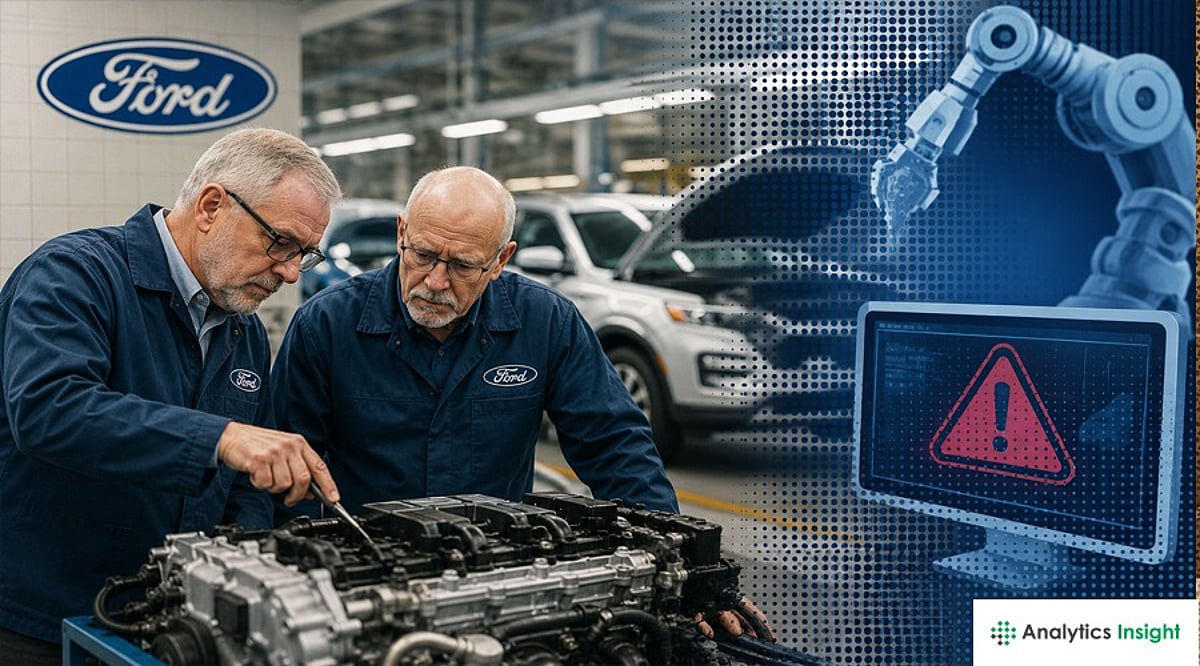
  • Ford Brings Back Hundreds of Engineers After AI-Driven Quality Issues Led to Billions in Warranty Costs

    Ford Brings Back Hundreds of Engineers After AI-Driven Quality Issues Led to Billions in Warranty Costs

    Ford Motor Company has begun rehiring hundreds of veteran engineers following a series of quality problems and skyrocketing warranty expenses that exposed the limits of relying too heavily on artificial intelligence. The automaker’s renewed focus on experienced talent marks a significant shift after years of investing in AI-led quality control that ultimately failed to deliver expected results.

    This strategic pivot underscores a costly lesson: while AI can process vast amounts of data and accelerate certain tasks, it cannot replace decades of hands-on engineering expertise. After suffering substantial quality-related losses, Ford is now returning to a model where AI supports engineers rather than replacing them.

    Hundreds of Experienced Engineers Return

    Approximately 350 engineers and technical experts who had retired or left the company are being rehired. Their deep institutional knowledge will be applied to developing new vehicles and improving product quality.

    Charles Poon, Ford’s Vice President of Vehicle Hardware Engineering, acknowledged that the company had underestimated the value of experienced engineers. He noted that years of institutional knowledge walked out the door with retiring employees, leaving a gap that AI systems could not fill despite advances in automation.

    Ford has also reinstated engineer-led design reviews, giving senior technical teams a larger role in evaluating products before they move into production.

    Early Results Show Improvement

    The new approach appears to be paying off. Ford recently earned the top spot among mass-market brands in the 2026 J.D. Power Initial Quality Study — its best performance since 2010. The company has also trimmed warranty spending by identifying manufacturing and design problems earlier, during the development phase, so fewer defects reach customers.

    Still, Ford remains the automaker with the most recalls in the U.S. this year, though many of those recall actions are linked to older vehicle programs rather than newly launched models.

    AI Remains Part of Ford’s Future

    Despite the strategic shift, Ford is not abandoning artificial intelligence. The company continues to use AI for software validation, automated testing, and manufacturing analysis — with more than 100,000 software tests now handled through AI-assisted systems.

    Executives say the company’s approach has changed, not its commitment to technology. AI will continue to play a role in increasing efficiency and decision-making, but skilled engineers remain indispensable in manufacturing.

    Ford’s initiative serves as a cautionary tale for companies adopting AI in manufacturing: technology can assist engineering, but it cannot replace human expertise.

  • How AI Is Transforming Web Design: Personalization and Optimization at Scale

    How AI Is Transforming Web Design: Personalization and Optimization at Scale

    Just about every business is trying to conjure up ways to leverage the foretold productivity increases offered by artificial intelligence. While most are familiar with AI apps that are predominantly chatbots and generators of content, some are making use of the technology behind the scenes.

    Websites are being targeted as fertile ground for AI. Web design, building sites, and running them are all seen as areas that can be improved by the tech when applied correctly. As it stands, personalization is the Holy Grail, and given what AI could provide, it’s easy to see why.

    Optimizing Optimized Platforms

    Essentially, a website can hold unlimited options. It’s wholly digital, meaning that there aren’t any walls and that space is barely an issue. This does lead to many that offer a wide collection of options or products, filling up with as many as possible. This way, the site can have a much broader appeal and hit more specific searches.

    Already, these heavily stocked sites are well optimized. You’ll see home pages loaded with categories to scroll through, the most important and appealing picks up top, and an easy navigation flow. The bingo sites UK player go to follow this format, making it straightforward to explore their hundreds of options.

    Up top is a tight bar of all of the categories. Under the banner, the rotating options of live and upcoming bingo rooms move through to assist in quick access. Scroll further, and there are the new games, originals, jackpots, trending games, favorites, and more on horizontal scrolls for easy navigation.

    What AI seeks to do is transform this layout in a way that always personalizes it. This way, segments aren’t optimized for the experience of all, but tailored through a predictive program that creates real-time changes. Of course, even for AI, this would be quite a demanding addition to a website, but one that could transform the online experience.

    A Lot of Variety in AI Web Design

    As has been covered by BI, AI and vibe coding are very much trending in the web design and development department right now. More and more platforms that allow people to build their ideal sites without knowing any code have begun to introduce AI tools for users and AI behind the scenes for the platform as a whole.

    However, not all AI is made equal, and pulling together the most useful tools and applications can sometimes be quite the task. What’s important is not to simply use AI because it’s a useful tool, but to make sure the application of the tech is done properly and with a strong amount of oversight and supervision.

    AI is a tool, and a tool can only be as useful as its user lets it. So, whenever AI is applied to a website, it needs to be done with careful consideration of what you want and, just as importantly, what you don’t want from it. Continually reviewing the results in test conditions is the most straightforward way of eventually getting a useful AI application for your website.

    There’s a lot of promise around AI, particularly in its potential for further optimizing websites. However, it takes considerable time and skill to realize its true power.

  • Humanoid Robot Companies Dominating 2026: Key Players to Watch

    Humanoid Robot Companies Dominating 2026: Key Players to Watch

    Humanoid robots are steadily moving into factories, warehouses, and industrial environments. Competition is accelerating as companies refine AI, mobility, and manufacturing efficiency. The industry’s next phase will be shaped by scalable deployments and reliable real-world performance.

    Overview

    Figure AI has moved past demos. Its robots have logged real production hours inside a BMW plant, setting it apart from most competitors. Unitree has turned volume and low cost into a profitable business strong enough to support a Shanghai IPO filing. Tesla, Apptronik, Boston Dynamics, and Agility each chase a different edge: factory scale, enterprise trust, engineering precision, or warehouse focus.

    A humanoid robot sorted more than 200,000 packages on a public livestream this year, almost unnoticed outside robotics circles. That quiet detail reveals the state of the industry — humanoid robots have left the demo stage but remain far from mass adoption. A small group of companies is now placing very different bets on how to close that gap.

    Quick Comparison

    • Figure AI: Real factory deployment with 1,250+ production hours at BMW.
    • Tesla: Leveraging existing manufacturing infrastructure; still in R&D stage.
    • Apptronik: Enterprise partnerships with Mercedes-Benz and GXO, backed by DeepMind AI.
    • Unitree: Highest volume shipped (5,500+ units) with strong margins and an IPO filing.
    • Boston Dynamics & Agility: Specialists in dynamic manipulation and warehouse automation.

    Figure AI: Deployment is the Real Headline

    Figure has become the closest thing to a proof point in the industry. Its robots have run production shifts inside BMW’s Spartanburg plant for more than 1,250 hours, loading over 90,000 parts across roughly 30,000 vehicles. The newer Figure 03 has scaled to 40 units at the same site. This track record sits atop Helix, Figure’s in-house vision-language-action model, which lets a robot respond to spoken instructions without task-specific programming. A Series C round above $1 billion in September 2025 valued the company at $39 billion, and Figure now sells access through a subscription model priced at roughly $1,000 per robot per month.

    Tesla: Manufacturing Muscle, Proof Still Pending

    Tesla’s edge comes from the infrastructure it already owns. The company runs car factories at a scale most rivals face building from scratch, and Optimus draws on perception software adapted from Tesla’s self-driving systems. Roughly $20 billion of Tesla’s 2026 capital spending plan is tied in part to Optimus production, though this covers wider manufacturing and AI compute. Musk has described Optimus as still in early R&D on recent earnings calls, and outside customer deployments remain limited compared to Figure or Apptronik.

    Apptronik: Betting on Enterprise Partnerships

    Apptronik’s Apollo robot is currently piloting inside Mercedes-Benz manufacturing lines and GXO Logistics warehouses, made possible by a partnership with Google DeepMind that brings Gemini Robotics models into Apollo’s software. This enterprise-first approach is backed by $935 million raised across its Series A round and extension, pushing valuation close to $5.5 billion. Apptronik favors named customers and real factory data over flashy public demos.

    Unitree: Winning on Price, Volume, and Actual Profit

    Unitree shipped over 5,500 humanoid units in 2025, more than any competitor worldwide, built on an affordable actuator design and reinforcement learning methods. An open SDK has attracted a wide base of researchers and universities. Revenue grew 335% year-over-year with gross margins above 60%, strong enough to support a roughly $610 million IPO filing on Shanghai’s STAR Market in March 2026. Most revenue still comes from research and education buyers, so the industrial proof point that Figure and Apptronik hold is one Unitree is still working to earn.

    Boston Dynamics and Agility: Specialists Worth Watching

    Boston Dynamics rebuilt Atlas around electric actuators and whole-body motion planning, choosing precise dynamic manipulation over raw hydraulic power. Agility Robotics focuses on warehouse work, running some of the earliest humanoid pilots inside Amazon facilities. Two other names to watch are 1X Technologies and Sanctuary AI, both pushing embodied AI research that could reshape next year’s rankings.

    What This Means Going Forward

    This race is not just about who can build the most impressive prototype. It has become a contest of deployment scale, software reliability, manufacturing efficiency, and cost per productive hour. The companies that solve those problems — not simply those with the largest funding rounds — will define the next phase of industrial automation.

    Final Thoughts

    The rise of humanoid robots will depend on more than technological breakthroughs. Success will increasingly be shaped by how well these machines integrate into existing workflows, earn workforce trust, and deliver consistent performance across diverse industries.

    FAQs

    1. What are the top humanoid robot companies to watch in 2026? Figure AI, Tesla, Apptronik, Unitree, Boston Dynamics, and Agility Robotics are among the leaders, competing through AI, real-world deployments, manufacturing scale, and industrial automation.
    2. Which humanoid robot company is leading in commercial deployments? Figure AI stands out with robots operating in BMW manufacturing facilities; Apptronik and Agility are also expanding enterprise pilots in logistics and industrial environments.
    3. Which company offers the most affordable robots? Unitree Robotics is recognized for affordable humanoid robots like the G1, making advanced robotics more accessible for research, education, and early commercial applications.
    4. How are humanoid robots being used in 2026? They are deployed for material handling, warehouse logistics, manufacturing support, quality inspection, and repetitive industrial tasks, mostly in pilot or early commercial stages.
    5. What will determine the success of humanoid robot companies? Long-term success depends on reliable AI, scalable manufacturing, cost-effective production, real-world performance, and the ability to deliver measurable productivity gains for enterprise customers.
  • Key AI Trends Reshaping the Banking Sector by 2026

    Key AI Trends Reshaping the Banking Sector by 2026

    Artificial Intelligence has moved from experiment to reality in the banking industry. AI is already a part of the onboarding, lending, compliance, customer service and fraud detection workflows, and it’s being deeply integrated into bank operating models.

    The Gartner CIO and Technology Executive Survey 2026 revealed that more than 2,300 banking CIOs and technology executives surveyed indicated that their organizations had already implemented generative AI, with 55% stating they had done so by the end of 2025 and 26% expecting to do so within 12 months. This shows that AI adoption in banking is entering a faster and more operational phase.

    1. AI Application Development Platforms

    Banks are increasingly moving away from isolated AI tools and investing in common AI application development platforms. Gartner projects that over 40% of banks globally will be investing in these platforms in 2026. The platforms can enable banks to develop reusable AI modules, manage models, leverage approved data, and safely expand AI throughout the bank. Wells Fargo’s Enterprise Open Source Data Science Platform and BNY’s Eliza platform are examples of this shift.

    2. Multi-Agent Systems

    The latest trend in banking AI is the use of multi-agent systems. Gartner reports that 17% of banking CIOs already have an AI agent in place and 41% are aiming to deploy them within 12 months. Such systems enable several AI agents to collaborate with each other on intricate tasks like loan pre-approvals, investment analysis, identifying anomalies, and resolving disputes. By the end of 2027, multi-agent systems will independently drive 30% of all day-to-day banking decisions, according to Gartner.

    3. Domain-Specific Language Models

    The large language models used by banks are transitioning from general to domain-specific. By 2028, over 60% of generative AI models being used by banks will be industry-specific, compared to 30% in 2025. These models help lower the risk of hallucination and enhance accuracy in areas like compliance, fraud monitoring, customer service and risk assessment.

    4. Physical AI in Branches

    Physical AI is slowly starting to appear in branches, ATMs and customer service lobbies. Humanoid robots and AI-powered ATMs and facial recognition tools are already on trial in banks like China Construction Bank, HSBC, and CaixaBank. Gartner estimates that by the end of 2027, around 10% of banks will have physical AI in their branches or operations, compared with around 3% currently.

    5. AI Security Platforms

    With the increasing adoption of AI, the security threats are increasing as well. AI security platforms may become a core part of the investment needed to prevent 75% of data breaches by 2028 due to the use of AI and agentic AI by banks.

    6. Agentic AI in Banking Operations

    Agentic AI is stepping into the real banking business in 2026. Accenture calls this the change to “unconstrained banking,” one where smaller teams manage AI workers to provide greater operational scale. To ensure multiple agents use the same data, policies and to remain fully auditable is the key challenge.

    7. AI-Powered Onboarding

    KYC and KYB onboarding remain expensive and slow for banks. AI agents can streamline these processes and minimize friction, such as document checks, data extraction, verification, and account activation. Banks that adopted coordinated AI workflows witnessed a transformation in lending and onboarding decision cycles, accelerating them from weeks to days, and in some instances, hours.

    8. Relationship Manager Productivity

    Relationship managers usually spend less than 30% of their time in front of the client. AI can help with that by providing pre-reading on the client brief, risk assessment of the portfolio and cross-selling opportunities before meetings. This will allow the relationship manager to focus more time on counseling the clients and less time on moving between systems.

    9. AI Credit Decisioning and Compliance

    AI credit decisioning is improving loan and exception management, along with loan pre-approvals. The companies behind the AI origination tools claim to have seen a 10-15% conversion rate improvement and a 25-35% cost saving for banks.

    10. AI Fraud Detection and the ‘10x Bank’

    Fraud detection is now blending in with ID verification and compliance. AI is used to identify deepfakes, synthetic identities and account takeover fraud throughout the customer lifecycle.

    Why this Matters

    AI is becoming core banking infrastructure rather than an experimental tool. Banks that adopt secure, domain-specific AI can improve efficiency, reduce costs, strengthen fraud detection, accelerate lending and onboarding, and deliver faster, more personalized customer experiences while remaining compliant with regulations.

    What’s Next?

    In banking, AI adoption is shifting from pilot runs to actual core operations, and it brings many changes in onboarding, lending, fraud detection, regulatory compliance, and customer service. By 2026, banks that put money into secure AI platforms, use models built for specific domains, and tie operations together through unified data systems are more likely to be set up well for higher efficiency, lower expenses and quicker customer experiences.

    FAQs

    1. What are the top AI trends in banking in 2026? The top AI trends include AI application development platforms, multi-agent systems, domain-specific language models, AI security platforms and AI-powered onboarding.
    2. How many banks have adopted generative AI? According to the Gartner CIO and Technology Executive Survey 2026, 55% of surveyed banking CIOs and technology executives had already deployed generative AI by the end of 2025.
    3. Why are multi-agent systems important for banks? Multi-agent systems allow several AI agents to work together on complex banking tasks such as loan pre-approvals, dispute resolution and anomaly detection.
    4. How can AI improve customer onboarding in banks? AI can speed up KYC and KYB onboarding by automating document checks, data extraction, verification and account activation.
    5. What are the risks of AI adoption in banking? The biggest risks include data breaches, compliance failures, hallucinations, prompt injection and misuse of autonomous AI agents. That is why banks are investing in AI security platforms, domain-specific models and unified data systems to keep AI use controlled and auditable.