Tag: artificial intelligence

  • Hands-On Review: My Top AI Tools After Extensive Testing

    Hands-On Review: My Top AI Tools After Extensive Testing

    After testing a wide range of popular AI tools, I’ve identified the ones that truly stand out for productivity, creativity, and research. Here’s a detailed look at my favorites and why they earn a spot in my daily workflow.

    ChatGPT: The All-Purpose AI Assistant

    ChatGPT remains my go-to AI assistant for writing, brainstorming, coding, research, and everyday productivity. It consistently delivers natural conversations, detailed explanations, creative ideas, and reliable assistance across multiple tasks. Whether drafting articles, summarizing reports, solving technical problems, or learning something new, it is the most versatile AI tool I use regularly.

    Claude: Master of Long-Form Analysis

    Claude excels at handling lengthy documents, thoughtful reasoning, and polished writing. It analyzes reports, edits content, summarizes research papers, and maintains context across extended conversations. Whenever I need structured analysis or nuanced responses, Claude produces clear, well-organized, and dependable results.

    Google Gemini: Seamless Ecosystem Integration

    Gemini integrates seamlessly with Google’s ecosystem, making it ideal for users relying on Gmail, Docs, Drive, and Search. It delivers accurate information, multimodal capabilities, and useful productivity features. I especially appreciate its ability to combine web knowledge with document-based assistance inside Google’s familiar workspace.

    Microsoft Copilot: The Enterprise Workhorse

    Copilot shines for professionals working within Microsoft 365. It helps draft emails, summarize meetings, generate presentations, analyze spreadsheets, and improve workplace productivity. Its integration with Word, Excel, PowerPoint, and Teams makes it an excellent AI companion for business users and enterprise environments.

    Perplexity AI: The Research Companion

    Perplexity has become my preferred research assistant whenever I need quick, source-backed answers. It simplifies complex topics, provides citations, and makes exploring current information easier. Instead of opening multiple browser tabs, I can quickly understand subjects through concise summaries supported by relevant references.

    Midjourney: Creative Visuals Redefined

    Midjourney continues to impress with exceptional AI-generated artwork and creative visuals. It produces highly detailed illustrations, concept art, marketing assets, and imaginative designs from simple prompts. For designers, marketers, and creators seeking visually stunning results, it remains one of the strongest image-generation platforms available.

    GitHub Copilot: The Developer’s Coding Partner

    GitHub Copilot significantly speeds up software development by suggesting code, generating functions, explaining logic, and reducing repetitive programming tasks. It supports multiple programming languages and integrates directly into popular code editors. For developers, it acts like an experienced coding partner that enhances productivity every day.

  • Top 9 Free AI Apps to Boost Personal Productivity in 2025

    Top 9 Free AI Apps to Boost Personal Productivity in 2025

    Artificial intelligence has become an indispensable ally for anyone looking to streamline daily tasks, manage time better, and stay organized. The best part? Many powerful AI tools are available for free. Here are nine standout free AI applications that can transform your personal productivity across writing, research, design, meetings, and more.

    ChatGPT

    OpenAI’s ChatGPT helps with writing, brainstorming, summarization, coding, research, and answering everyday questions. It makes daily tasks faster and more organized without any cost, serving as a versatile virtual assistant.

    Google Gemini

    Google’s Gemini assists in generating ideas, summarizing documents, answering questions, and integrates seamlessly with Google Workspace. It enhances personal productivity by streamlining task management and information retrieval.

    Microsoft Copilot

    Microsoft Copilot boosts productivity through AI-powered recommendations and content generation. It aids in writing, document creation, research, presentations, and other everyday workflows, making it a valuable companion for Office users.

    Perplexity AI

    Perplexity AI delivers accurate, source-backed answers and quick research summaries. Its conversational search capabilities help users gather reliable information more efficiently, perfect for fact-checking and deep dives.

    Notion AI

    Notion AI enhances note-taking, content drafting, summarization, brainstorming, and task organization. It integrates smoothly into personal knowledge management workflows, turning chaotic notes into structured insights.

    Grammarly

    Grammarly improves writing quality with AI-powered grammar corrections, tone suggestions, clarity enhancements, and real-time feedback across emails, documents, and online communication platforms. It ensures your writing is clear, professional, and effective.

    Otter.ai

    Otter.ai automatically records, transcribes, summarizes, and organizes meetings, lectures, and conversations. It saves time while capturing important information accurately, making it indispensable for students and professionals alike.

    Canva AI

    Canva’s AI tools simplify graphic design by generating presentations, social media content, images, and creative visuals. They are suitable for both beginners and professionals, allowing anyone to create stunning designs quickly.

    Adobe Express AI

    Adobe Express AI enables users to create social media graphics, marketing materials, presentations, and edited images using free AI-powered creative features. It brings professional-level design within everyone’s reach.

    All of these apps are free to use (with optional premium upgrades) and can dramatically improve how you manage your time, communicate, and create. Pick the ones that fit your workflow and start boosting your productivity today.

  • Alphabet to Replace Verizon in Dow Jones Industrial Average on June 29

    Alphabet to Replace Verizon in Dow Jones Industrial Average on June 29

    Alphabet, the parent company of Google, will join the Dow Jones Industrial Average on June 29, replacing Verizon Communications in the 30-stock benchmark. S&P Dow Jones Indices announced the change on June 23, placing Google’s parent company alongside other major technology groups already in the index.

    The decision comes after a difficult trading session for Alphabet stock. Its shares fell 5% on June 22 as technology stocks weakened and two senior artificial intelligence researchers prepared to join rival firms. The decline put fresh attention on Google’s ability to keep leading AI researchers.

    The change also expands the Dow’s exposure to businesses tied to cloud computing, digital advertising, and AI. It follows the additions of Amazon and NVIDIA in 2024, which moved the benchmark further toward large technology companies.

    Alphabet Replaces Verizon in the Dow

    The index provider said the change will take effect before trading opens on June 29. Alphabet will join under its Class A ticker, GOOGL, while Verizon will leave the index after holding a place since 2004.

    S&P Dow Jones Indices said Alphabet’s market value, share price, and broad business mix made it a “more representative Communication Services constituent.” Its operations cover digital advertising, cloud services, AI, hardware, healthcare technology, autonomous vehicles, and media distribution.

    Price-Weighted Structure Drives the Change

    Unlike the S&P 500, the Dow uses share prices to set each company’s weight. A company with a higher stock price has more influence on the index, regardless of its total market value.

    Verizon accounted for about 0.5% of the Dow with a lower share price. Alphabet’s higher share price will give it a larger role in daily index moves. The index provider will also adjust the Dow divisor to prevent the membership change from creating an artificial move in the benchmark.

    AI Researcher Exits Pressure Alphabet Shares

    Meanwhile, Alphabet shares closed 5% lower on June 22, marking their steepest daily fall since May 2025. The stock had fallen 6% earlier in the session and was on track to erase more than $256 billion in market value.

    John Jumper, a senior Google DeepMind scientist and 2024 Nobel Prize winner, said he would leave for Anthropic. Noam Shazeer, a Google engineering vice president and co-lead of the Gemini models, also said he would join OpenAI. Both departures came within days of each other.

    The moves added to investor concerns over competition for AI researchers. Google has invested heavily in Gemini, cloud infrastructure, and AI tools across Search, YouTube, and other services. Alphabet’s Dow entry therefore arrives as the company gains index recognition while managing changes within its AI leadership.

    Honeywell Keeps its Dow Position

    Additionally, Honeywell International will stay in the Dow after completing the planned spinoff of Honeywell Aerospace on June 29. The remaining parent company will change its name to Honeywell Technologies.

    Honeywell Aerospace will trade as a separate company but will not enter the Dow. The index will keep 30 members after the Alphabet-Verizon swap and Honeywell separation.

    Funds that track the Dow will need to adjust their portfolios before the change takes effect. They will add Alphabet shares and remove Verizon shares to match the updated index. Alphabet will join Apple, Microsoft, Amazon, NVIDIA, and Salesforce among the benchmark’s major technology-related companies.

  • MIT Anthropology: Bridging Local Knowledge and Global Research

    MIT Anthropology: Bridging Local Knowledge and Global Research

    The MIT Anthropology department is a leading force in community-based archaeology, cultural analysis, and human-centered research. Through innovative fieldwork and interdisciplinary collaboration, faculty and students explore how local expertise can inform academic inquiry and address pressing global challenges from climate change to AI ethics.

    Community-Based Archaeology

    Professor Sonya Atalay is pioneering community-based archaeology, linking local knowledge with academic research across the globe. Her work emphasizes participatory methods that empower indigenous communities and reshape archaeological practice.

    Climate and Community

    The Living Climate Futures Symposium and the Living Climate Futures Lab take a human-centered approach to climate research, investigating how communities experience and respond to environmental change. These initiatives highlight the importance of place-based pathways to a viable future.

    Technology and Health

    Anthropologist Amy Moran-Thomas studies overlooked insights from people that health care systems are meant to serve, bridging medical realities with technology and health research.

    AI, Chatbots, and Social Confidence

    A new MIT class uses anthropological methods to improve AI chatbots, helping computer science students design conversational agents that assist young users in becoming more social and socially confident.

    Human Insight Collaborative

    The MIT Human Insight Collaborative (MITHIC) launched its annual event showcasing projects that blend humanities, arts, and social sciences with other disciplines. The initiative also introduced the SHASS Faculty Fellows program to support research and mentorship.

    Other recent highlights include the Mind, Hand, and Harvest program bringing low-cost organic produce to campus, research on data visualizations as social artifacts, and MIT’s top ranking in arts and humanities by Times Higher Education.

  • Meta Relaunches Facebook Creator Studio as AI-Powered App with Smart Insights and Automated Replies

    Meta Relaunches Facebook Creator Studio as AI-Powered App with Smart Insights and Automated Replies

    Meta has relaunched Facebook’s Creator Studio as a standalone AI-powered companion app, marking the return of a platform it discontinued in 2023 when it shifted creators to Meta Business Suite. The revamped app is designed to help creators grow their audiences with AI-driven insights, engagement tools, and personalized recommendations.

    At the heart of the new experience is the AI Creator Assistant, which provides creators with performance insights, answers questions about audience engagement, suggests ways to improve reach, and recommends the best times to post. The assistant can also identify the most important audience comments and draft replies in the creator’s own tone, allowing users to review and publish responses quickly.

    The application will also feature a daily priorities feed that will show top priorities such as following up on recently published post performance and interactions. According to Meta, the application will make it easy for content creators to work without using third-party applications when coming up with ideas.

    The new Creator Studio has been tested by some selected creators while users who are willing to be part of the creators can enroll on the waitlist. Thus far, there is no update about any wider release dates by Meta. Besides the app, Meta has redesigned its creator dashboards on Facebook.

  • Algorithms Research at MIT: Recent Breakthroughs and Developments

    Algorithms Research at MIT: Recent Breakthroughs and Developments

    MIT Algorithms News

    Massachusetts Institute of Technology continuously pushes the boundaries of algorithm research. Below are some of the latest stories from MIT News covering breakthroughs in AI, robotics, optimization, and theoretical computer science.

    • LLMs help robots understand vague instructions and focus on key details — A new approach uses one language model to clarify instructions and another to ignore irrelevant info. (June 26, 2026)
    • Improving the speed and energy-efficiency of AI agents — The Murakkab system optimizes multistep workflows for AI applications. (June 25, 2026)
    • Computer model could enable bridges and buildings that use less material — Approach generates more buildable structures, bridging optimized design and real-world construction. (June 24, 2026)
    • Exploring the societal impacts of AI — MIT researchers examine AI’s influence on employment and democracy. (June 23, 2026)
    • New chip could help tiny robots traverse complex environments — Efficient algorithm and dedicated hardware generate 3D maps for navigation. (June 23, 2026)
    • In game theory, generalists sometimes win out over specialists — Overlooked class of algorithms performs better than expected. (June 17, 2026)
    • Could AI tell you where you left your keys? — Spatial memory system for robots captures object details. (June 17, 2026)
    • When it comes to predicting preferences, it pays to consider “the power of three” — Upgrade to random utility models. (June 11, 2026)
    • NSF renews support for MIT-led AI and physics institute — IAIFI enters second phase. (June 4, 2026)
    • Teaching AI agents to ask better questions by playing “Battleship” — Small AI model outperforms larger ones at lower cost. (June 3, 2026)
    • New research enables a robot to chart a better course — MIGHTY system streamlines disaster recovery and delivery. (May 19, 2026)
    • Researchers “reprogram” materials by quickly rearranging their atoms — Method gives rise to exotic quantum properties. (May 13, 2026)
    • Method for stress-testing cloud computing algorithms helps avoid network failures — MetaEase technique predicts scenarios causing outages. (May 6, 2026)
    • Games people — and machines — play: Untangling strategic reasoning to advance AI — Gabriele Farina mines decision-making in multi-agent scenarios. (May 5, 2026)
    • The MIT-IBM Computing Research Lab launches to shape the future of AI and quantum computing — Convergence of AI, algorithms, and quantum computing. (April 29, 2026)

    For full articles, visit the MIT News Algorithms topic page.

  • Google Gemini 3.5 Pro Launch Reportedly Pushed to July for Extra Testing

    Google Gemini 3.5 Pro Launch Reportedly Pushed to July for Extra Testing

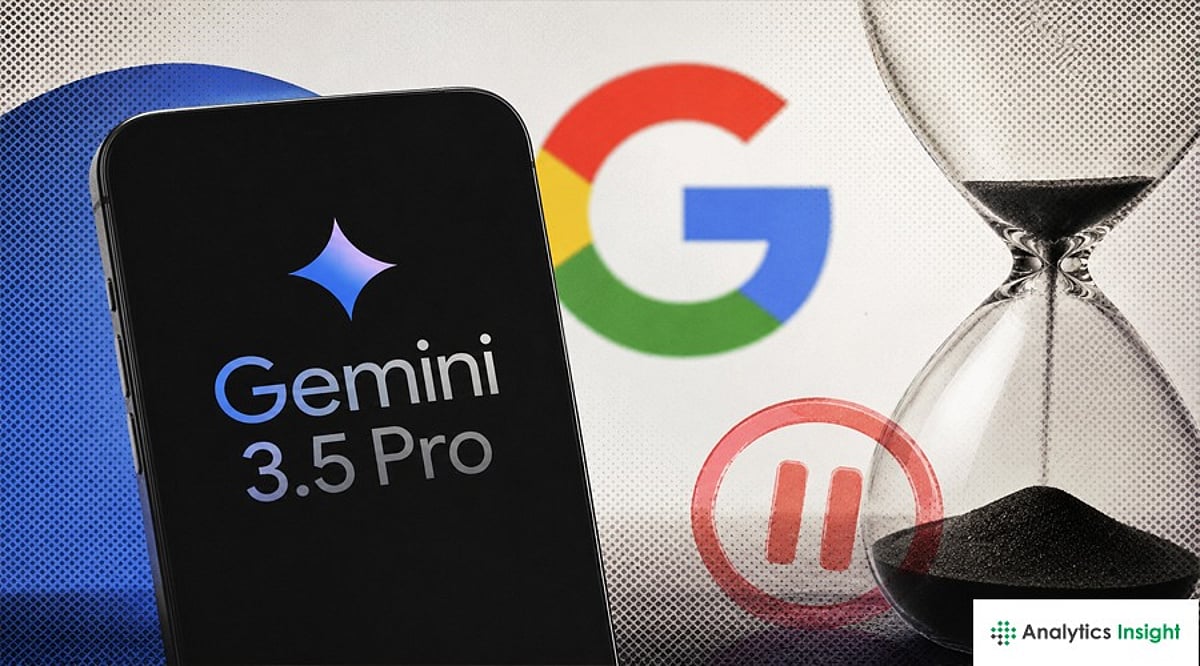
    Google has reportedly delayed the launch of its advanced Gemini 3.5 Pro AI model from June to July 2026, according to sources familiar with the development. The company is said to be using the additional time to gather feedback from early testers and refine the model’s performance in coding, token efficiency, and long, multi-step tasks.

    The postponement has not been officially confirmed by Google. A company spokesperson declined to comment when asked about the revised timeline. As a result, the July release window remains based on information from an unnamed insider.

    Extended Testing Phase

    Early users have been testing Gemini 3.5 Pro through Google’s Antigravity development environment and the LMArena benchmarking service. The company is reportedly collecting feedback and making adjustments before a wider release, particularly focusing on complex, multi-step workflows that require maintaining context over several stages.

    Google introduced the Gemini 3.5 model family at its I/O developer conference in May. CEO Sundar Pichai stated that Gemini 3.5 Pro would arrive the following month, though no firm date was provided. The company first launched Gemini 3.5 Flash, a model optimized for coding, AI agents, and complex workflows. Gemini 3.5 Pro is expected to offer greater computing power for demanding tasks.

    Feedback from Gemini 3.5 Flash Influences Pro Development

    Reports indicate that Google has incorporated feedback from Gemini 3.5 Flash users into the Pro model’s development. Some users noted that Flash consumed tokens too quickly, potentially raising costs for long prompts or extended tasks. Google is reportedly examining this issue while preparing Gemini 3.5 Pro.

    Token usage directly affects how much text a model processes and generates. Higher consumption can increase costs for developers and enterprises running large numbers of AI requests. The upcoming Pro model is also expected to improve performance on long-horizon tasks that require planning, tool use, and sustained context, such as software development, data analysis, and automated business processes.

    However, Google has not published full technical details or benchmark results for Gemini 3.5 Pro. Claims about speed, efficiency, and coding abilities will remain unverified until official data is released or wider access is granted.

    Competition in AI Coding Intensifies

    The reported delay comes as major AI developers compete for business customers, especially in coding tools. OpenAI and Anthropic have also released models aimed at coding and agent-based tasks. Google already offers Gemini through AI Studio, Vertex AI, Android Studio, and Antigravity. Gemini 3.5 Pro could expand those services once available.

    Earlier in June, Google introduced Gemma 4 12B, a lightweight multimodal model designed to run locally on laptops with 16GB of RAM or video memory. Unlike Gemini’s closed commercial models, Gemma provides open model weights for developers seeking more control over local deployment.

    For now, Gemini 3.5 Pro has no confirmed public launch date. Reports point to July, but Google has not specified which products, users, or regions will receive access first.

  • MIT Issues New Guidelines for Responsible Use of Generative AI in Communications

    In a move to maintain editorial integrity and public trust, the Massachusetts Institute of Technology (MIT) has released a set of guidelines governing the use of generative artificial intelligence (AI) across its official communications channels. The guidelines, effective December 6, 2023, were developed by the Institute Office of Communications (IOC) with input from internal communicators and MIT faculty members.

    The core principle is that human authorship remains paramount. All articles, newsletters, and video scripts published on IOC-managed platforms—including MIT News, the MIT Daily/Weekly newsletters, the MIT homepage, and Institute-level social media accounts—must be written by humans. The IOC cites the well-documented potential for inaccuracy and bias in AI-generated text as the primary reason for this restriction. While much of MIT’s content undergoes expert vetting before publication, the IOC aims to minimize any risk of disseminating incorrect or biased information.

    However, the guidelines do permit limited use of generative AI tools in a preparatory or assistive capacity. This includes generating ideas, researching background information, creating outlines, analyzing data, copyediting, cutting text, drafting headlines, image captions, alt-text, meta descriptions, and social media posts. These uses are classified as preparation and summarization, and content prepared with such assistance is allowed on IOC channels, provided that all material is thoroughly fact-checked and vetted by human communicators before submission.

    A notable change is the prohibition on publishing AI-generated images in IOC content. Previously accepted for accompanying MIT News articles, such images will no longer be used, aligning with the emphasis on human authorship. Exceptions may be made for AI-generated images used for research purposes that directly illustrate the described research. Brainstorming, planning color palettes, moodboarding, or developing an image concept using generative AI is still acceptable. AI-generated thumbnail images for links to non-IOC websites are also allowed.

    While these guidelines are mandatory for IOC platforms, other MIT departments, labs, and centers are free to adopt them or develop their own approaches. The IOC acknowledges that these guidelines will evolve as AI technology and its societal use continue to develop. Any significant changes will be communicated across the Institute.

    By adopting these principles, MIT aims to preserve the trust, accuracy, and editorial standards that its audiences expect, while responsibly integrating new technologies that can enhance communications.

  • Top AR/VR and AI Developments: From Apple Vision Pro to Generative AI in Gaming

    Top AR/VR and AI Developments: From Apple Vision Pro to Generative AI in Gaming

    The world of augmented reality (AR), virtual reality (VR), and artificial intelligence (AI) continues to evolve rapidly. Recent headlines highlight how these technologies are converging to reshape industries from entertainment to manufacturing. Here’s a roundup of key stories.

    Apple Vision Pro Ushers in a New Era of Spatial Computing

    Apple’s Vision Pro headset marks a significant milestone in AR technology. With spatial computing expected to dominate the global tech market, the device is poised to test multiple industries, from healthcare to education, by blending digital content seamlessly with the physical world.

    Microsoft and Inworld AI Partner on Generative AI for Xbox

    Microsoft has joined forces with Inworld AI to develop generative AI tools for Xbox game developers. This collaboration showcases how AI is extending beyond business digital transformation into entertainment, enabling more dynamic and responsive gaming experiences.

    Web3, AI, and the Metaverse Transform the Music Industry

    The metaverse is revolutionizing the music industry, with artists like Robbie Williams venturing into Web3 spaces. Virtual concerts and AI-driven experiences are creating new revenue streams and fan engagement models.

    Asian Games 2023 Embraces AI and Eco-Friendly Tech

    Held in Hangzhou, China, the Asian Games 2023 features esports as a medal event for the first time. The event also showcases AI and eco-friendly technologies, highlighting digital transformation on a global stage.

    Deloitte: Industrial Metaverse to Transform Manufacturing

    A report from Deloitte reveals that most manufacturing companies are leveraging the industrial metaverse. However, cybersecurity and data protection remain key concerns as factories become more digitized.

    Virtual Marriage: Woman ‘Marries’ AI-Powered Partner

    In a sign of emerging trends, a woman has entered into a virtual ‘marriage’ with an AI-powered partner. This unconventional union raises questions about the future of relationships and markets in a digitally connected world.

    Top 10 Augmented Reality Companies for Business

    Augmented reality is building on the Internet of Things (IoT) to unlock new commercial opportunities. From Pokémon Go to enterprise solutions, AR is expected to redefine how businesses interact with the physical world.

    Stay tuned for more updates as AR, VR, and AI continue to shape our future.

  • Latest MIT Research in Artificial Intelligence: From Fake News Detection to AI Chemistry Models

    Latest MIT Research in Artificial Intelligence: From Fake News Detection to AI Chemistry Models

    MIT News: Artificial Intelligence

    Massachusetts Institute of Technology continues to lead cutting-edge research in artificial intelligence, with recent breakthroughs spanning fake news detection, AI ethics, workforce impacts, and chemistry modeling. Below is a roundup of the latest developments from MIT’s AI and computing labs.

    The Consequences of Relying on AI for Accurate News

    A Media Lab study reveals that dependence on AI, similar to how GPS has weakened navigation skills, can reduce our ability to detect fake news. The findings underscore the importance of human oversight in information verification.

    The Crucial Human Component in Computing and AI

    The MIT Ethics of Computing Research Symposium brought together experts to discuss ethical and social impacts of technology, emphasizing that human judgment remains essential in AI development.

    PATH Initiative: Boosting AI Training for Industry Jobs

    MIT RAISE and Georgia State University announced a collaborative initiative to connect universities, community colleges, industry, and government, expanding industry-aligned AI training and career pathways.

    NSF Renews Support for AI and Physics Institute

    The Institute for Artificial Intelligence and Fundamental Interactions (IAIFI) enters its second phase with increased funding, broader ambitions, and a growing community at the frontier of AI and fundamental physics.

    Teaching AI Agents to Ask Better Questions with ‘Battleship’

    MIT researchers used the classic game Battleship as a test bed for AI agents, discovering a small AI model can outperform the biggest ones at just 1% of the cost, demonstrating efficiency gains in AI reasoning.

    Tod Machover Receives George Peabody Medal

    The renowned composer and technologist was honored for his contributions to music and technology, receiving the highest distinction from the Peabody Institute.

    MIT Researchers Teach AI Models to Interpret Charts

    The new ChartNet training dataset aims to improve the accuracy of vision-language models, enabling better analysis of business trends and scientific figures.

    Media Advisory: MIT to Establish Regional Quantum Hub

    With a $25 million investment from Massachusetts, MIT will build a new shared-use facility serving as a statewide quantum toolbox, advancing quantum computing and AI integration.

    Will AI Create Jobs for Young, Skilled Workers?

    A study of postwar U.S. labor trends shows which workers historically filled new tech-enabled jobs, offering insights into AI’s potential impact on employment.

    Building AI Models That Understand Chemical Principles

    Connor Coley works at the intersection of chemistry and machine learning to discover and design new drug compounds, showcasing AI’s potential in scientific discovery.

    Justin Solomon Appointed Associate Dean of Engineering Education

    The MIT electrical engineering and computer science faculty member will focus on innovation in engineering education and new pedagogical approaches.

    Two from MIT Named 2026 Knight-Hennessy Scholars

    The prestigious fellowship funds graduate studies at Stanford University, recognizing MIT’s talent in AI and related fields.

    Expanding MIT’s Global Reach Through Universal Learning

    Dimitris Bertsimas and Megan Mitchell discuss the motivation behind Universal Learning, a new MIT Open Learning educational initiative that leverages AI for accessible education worldwide.

    Universal AI: A Pathway to AI Fluency for Everyone

    New AI education program from MIT Open Learning debuts with AI-powered personalization and a free introductory course, making AI accessible to learners everywhere.

    Study: Firms Often Use Automation to Control Wages

    MIT economists found that companies tend to target employees earning a ‘wage premium’ with automation, increasing inequality but not necessarily productivity.

    Source: Massachusetts Institute of Technology. Visit MIT News for the full articles and more.