Tag: automation

  • How AI-Driven Intelligence Is Transforming Enterprise Compliance and Configuration Risk Detection

    How AI-Driven Intelligence Is Transforming Enterprise Compliance and Configuration Risk Detection

    In today’s hyperconnected enterprise environment, compliance and configuration management have become mission-critical functions. With hybrid infrastructures spanning cloud and on-premise systems, traditional audit-based approaches—periodic, manual, and retrospective—are no longer sufficient to manage risk. Organizations are turning to artificial intelligence to shift from reactive compliance validation to continuous, predictive risk intelligence. This transformation is redefining governance models, enabling real-time anomaly detection, automated remediation, and scalable compliance visibility across increasingly complex digital ecosystems.

    Nadeem Siddiqui, a Senior Software Engineer, leads this technological transition with his expertise in automation and configuration management. Siddiqui has dedicated his career to developing enterprise-scale systems, designing and enhancing a compliance intelligence platform that operates between 15,000 and 20,000 hybrid endpoints and implements AI-powered risk detection for enterprise governance. “Compliance is no longer just about passing audits,” Siddiqui explains. “It’s about continuously understanding your infrastructure, identifying risk in real time, and acting on it before it becomes a violation.”

    Over the past four years, Siddiqui has contributed to transforming traditional compliance workflows into intelligent, automated systems. By integrating AI-driven risk visibility into configuration management processes, he has helped organizations move away from manual data collection and static validation cycles toward continuous monitoring models that provide ongoing insight into system health and compliance posture.

    A key aspect of his work has been centralizing configuration telemetry across hybrid environments and enabling intelligent drift detection, allowing organizations to quickly identify deviations from compliance baselines. This approach has significantly reduced the need for manual audit evidence gathering while improving the speed and accuracy of anomaly detection. “Drift is inevitable in dynamic systems,” he notes. “The real value lies in detecting it early and understanding its impact across the environment.”

    Siddiqui’s contributions extend to co-architecting an in-house compliance and configuration intelligence platform that integrates AI-powered analytics with automation pipelines. The system continuously monitors infrastructure, translating regulatory requirements into machine-enforceable policies that are embedded directly into DevOps workflows. This ensures that compliance is not an afterthought, but an integral part of system design and deployment.

    The measurable impact of this work is reflected in the platform’s scale and efficiency. Supporting governance across up to 20,000 endpoints, with approximately 75–80% in the cloud, the system has replaced periodic compliance validation with continuous monitoring capabilities. Automated reporting has significantly reduced manual operational overhead, while AI-assisted visibility has improved remediation response times and strengthened collaboration between cybersecurity, DevOps, and audit teams.

    However, implementing such a transformation has required overcoming significant challenges. Siddiqui highlights the complexity of standardizing configuration data across diverse environments, ensuring consistency in AI models, and aligning cross-functional teams around a unified compliance strategy. Additionally, translating regulatory controls into machine-interpretable policies, without slowing down deployment velocity, has been a critical engineering and governance challenge. “Balancing compliance rigor with engineering agility is one of the hardest problems in modern enterprises,” he says. “You need systems that are both strict and flexible at the same time.”

    Beyond his engineering contributions, Siddiqui has also advanced thought leadership through peer-reviewed research on AI-enabled infrastructure intelligence and governance models. His work bridges the gap between academic frameworks and real-world enterprise applications, offering insights into how intelligent systems can be leveraged to enhance compliance and risk management at scale.

    Looking ahead, Siddiqui sees the future of enterprise compliance being driven by predictive analytics, explainable AI, and deeper integration with operational systems. As organizations continue their journey toward DevOps and cloud-native architectures, compliance will morph into an intelligent control layer baked into the infrastructure, rather than a standalone audit function. “We are moving toward a model where compliance systems don’t just detect issues, they anticipate them,” he observes. “Predictive risk intelligence will become a cornerstone of how enterprises manage security and governance.”

    As the scale and complexity of technology increase, coupled with an increasingly challenging regulatory environment, thought leaders such as Nadeem Siddiqui are helping change the way enterprises think about compliance—transforming it from a reactive burden to a strategic asset powered by intelligent systems.


  • Mark Zuckerberg Ends 3-Year X Hiatus to Unveil Meta’s Muse Spark 1.1 AI Model

    Mark Zuckerberg Ends 3-Year X Hiatus to Unveil Meta’s Muse Spark 1.1 AI Model

    Mark Zuckerberg has made a surprising return to X (formerly Twitter) after more than three years of silence, using the platform to launch Meta’s latest artificial intelligence model, Muse Spark 1.1. The announcement signals Meta’s aggressive push into enterprise AI, targeting developers with advanced coding capabilities, automation tools, and multi-agent coordination.

    Key Highlights of the Launch

    Zuckerberg’s post on X was brief, but the substance behind it is significant. The Muse Spark 1.1 model is designed for coding tasks, software development, and running AI agents. Developers can access the model through Meta’s new proprietary API, the Meta Model API—the company’s first such offering in the United States. This move positions Meta to compete directly with OpenAI and Anthropic for developer market share.

    Technical Capabilities

    Muse Spark 1.1 can handle complex tasks with ease, including integration with third-party tools. It features a context window of up to 1 million tokens, meaning it can retain and process a massive amount of information in a single session. The model can also run multiple AI agents simultaneously across desktop, mobile, and browser platforms.

    Key functionalities include:

    • Writing and debugging code
    • Automating workflows
    • Processing text, images, and video
    • Multi-agent coordination for complex tasks

    Pricing and Availability

    Meta is offering developers free credits to get started, with pay-as-you-go pricing afterward. Reports indicate the cost is $1.25 per million input tokens and $4.25 per million output tokens. The model will also be integrated into Meta’s own apps, including a new ‘Thinking’ mode coming soon to the Meta AI app and website.

    Strategic Implications

    The launch of Muse Spark 1.1 places Meta squarely in the race for AI dominance. The company is betting that its strong memory and multi-agent capabilities will attract developers away from established players. Looking ahead, Meta plans to integrate the model into WhatsApp, Instagram, Facebook, and its smart glasses, giving it a reach that few competitors can match.

    While ultimate success will depend on real-world performance, Zuckerberg’s surprise return to X has already succeeded in putting Meta’s AI ambitions back in the spotlight.

  • How AI and Automation Are Transforming Workforce Management at Scale

    How AI and Automation Are Transforming Workforce Management at Scale

    Automation is reshaping how large enterprises manage their workforce, moving beyond traditional scheduling and staffing to intelligent, data-driven systems. These platforms now offer shift optimization, regulatory compliance, and real-time adjustments, enabling managers to focus on strategic decisions while employees benefit from fairer, faster processes. One key figure driving this change is Rohini Tirumalaraju, an automation expert who spent eight years at a leading company implementing transformative solutions.

    From Spreadsheets to Smart Algorithms

    Rohini began by overhauling core scheduling algorithms, replacing error-prone spreadsheets with dynamic systems. The results were striking: a 25% reduction in overtime expenses and a 40% increase in on-time task completion. Teams gained real-time dashboards that flagged issues before they escalated, marking a shift from reactive to proactive management.

    Predictive Analytics and AI Integration

    Building on this success, she introduced predictive analytics to forecast staffing shortages, reducing absenteeism disruptions by 30% during peak periods. “It’s not about speed—it’s about giving people time to focus on what matters,” she explains. These experiments evolved into company-wide tools that scaled seamlessly as the organization grew.

    Overcoming Integration Challenges

    Legacy systems and data silos posed significant hurdles. Rohini worked closely with legal and IT teams to ensure compliance while maintaining speed. Her efforts cut compliance errors by 35% and halved hiring times. A mobile-first approach further streamlined operations, allowing employees to request shift swaps via user-friendly apps, saving 15,000 administrative hours annually.

    Global Platform Customization

    One of her largest projects involved tailoring the platform for international teams, handling diverse regulations and time zones without friction. The result was coordinated efficiency, with measurable gains in compliance and onboarding. She also created an open-source library for shift optimization, now used by other organizations, and trained over 50 staff members on best practices.

    Impact Beyond Metrics

    The cost savings funded new training initiatives, and morale scores improved by 20%. Peers credit her with fostering a people-centered tech culture. During a supply chain crisis, she creatively redistributed staff to prevent millions in losses. Looking ahead, Rohini envisions ethical AI checks to avoid bias, ensuring systems learn with users without overstepping.

  • Morning Tech Roundup: NVIDIA’s New PC AI Chip, Enlife Raises ₹6 Crore, BOI Opens 779 Credit Officer Jobs, and More

    Morning Tech Roundup: NVIDIA’s New PC AI Chip, Enlife Raises ₹6 Crore, BOI Opens 779 Credit Officer Jobs, and More

    Good morning, tech fam! Here are the top headlines you need to know: NVIDIA has launched a new AI chip for personal computers, Enlife Research secured ₹6 crore in seed funding, Bank of India announced 779 Credit Officer vacancies, AI agents are advancing automation, and the Bank of England clarified its crypto policy stance.

    NVIDIA Introduces a New AI Chip for Personal Computers

    NVIDIA has unveiled a new AI chip designed specifically for laptops and desktops. This chip processes AI tasks directly on the device, reducing reliance on cloud services. The company promises faster performance, better privacy, and improved energy efficiency. NVIDIA believes this innovation will bring advanced AI capabilities to everyday PCs, transforming personal computing.

    Enlife Research Raises ₹6 Crore in Seed Funding

    Bengaluru-based deep-tech startup Enlife Research has raised ₹6 crore in a seed round led by Piper Serica VC Fund. The company is developing an AI-based blood test that could detect Alzheimer’s disease years before symptoms appear. The funds will be used to advance research, refine the product, and prepare for broader deployment.

    Bank of India Credit Officer Recruitment 2026: Key Details

    Bank of India has announced 779 Credit Officer vacancies in the GBO stream across MMGS-II, MMGS-III, and SMGS-IV scales. Online applications open from 30 June to 20 July 2026. The notification covers eligibility, age limits, education, work experience, fees, salary, selection process, and the revised exam pattern with English Language and Professional Knowledge sections.

    Future of AI Agents and Autonomous Workflows

    AI agents are evolving beyond simple chat interfaces into tools that can plan, use software, retain information, and complete tasks with minimal human intervention. Enhanced reasoning allows them to solve complex problems step by step. Teams of AI agents can collaborate, improving results. Companies are adopting these agents to save time and increase accuracy while maintaining safety, monitoring, and human oversight for critical tasks.

    Bank of England Says Farage Did Not Affect Crypto Policy

    Bank of England Governor Andrew Bailey stated that a private meeting with Nigel Farage did not result in any policy changes. Bailey emphasized the bank’s ability to recognize lobbying and make independent decisions. Farage had urged the bank to abandon plans for a potential state-backed digital currency. The Bank of England continues to study whether such a currency should be introduced.

  • 10 Innovative ChatGPT Uses in 2026 Beyond Simple Conversations

    10 Innovative ChatGPT Uses in 2026 Beyond Simple Conversations

    ChatGPT has evolved into a powerful AI assistant in 2026, helping users with much more than answering questions. Here are ten amazing ways to leverage ChatGPT beyond its basic chatbot function.

    1. Summarize Long Documents: Turn lengthy reports, PDFs, and meeting notes into concise summaries within seconds to save valuable time.
    2. Brainstorm and Create Content: Use ChatGPT to brainstorm business ideas, create marketing content, and generate social media posts for different platforms.
    3. Personalized Learning: Students can use ChatGPT for personalized learning, exam preparation, language practice, and step-by-step explanations of complex topics.
    4. Assist in Software Development: Developers rely on ChatGPT to write code, debug programs, explain errors, and accelerate software development workflows.
    5. Plan Schedules and Itineraries: Create travel itineraries, meal plans, fitness routines, and personalized schedules tailored to your preferences and goals.
    6. Generate Images and Analyze Data: ChatGPT now supports advanced image generation, document analysis, voice interactions, and workflow automation for eligible users.
    7. Enhance Customer Support: Businesses are using AI assistants to improve customer support, automate repetitive tasks, and increase team productivity.
    8. Automate Workflows: Integrate ChatGPT to streamline repetitive processes and boost efficiency across teams.
    9. Verify Information Carefully: As AI becomes more capable, users should always verify important information and avoid sharing sensitive personal data.
    10. Stay Updated: Join our WhatsApp Channel to get the latest news, exclusives, and videos on WhatsApp.
  • 10 AI Productivity Hacks to Supercharge Your Office Workflow

    10 AI Productivity Hacks to Supercharge Your Office Workflow

    Artificial intelligence is transforming the modern workplace, offering practical tools that save time, reduce errors, and boost efficiency. Here are ten essential AI productivity hacks every office worker should know.

    Automate Repetitive Tasks

    Use AI to handle routine activities like data entry, scheduling, and document organization. This frees up valuable time for higher-priority work that requires human judgment and creativity.

    Write Emails Faster

    AI writing assistants can draft professional emails, improve grammar, adjust tone, and summarize lengthy conversations. These tools significantly reduce communication time while maintaining clarity and professionalism.

    Summarize Meetings Instantly

    AI meeting tools generate concise summaries, action items, and transcripts automatically. This ensures everyone stays informed without needing to review lengthy recordings, saving hours of follow-up time.

    Speed Up Research

    AI quickly gathers, organizes, and summarizes information from multiple sources. Employees can make informed decisions faster, with less manual effort spent on sifting through data.

    Create Professional Presentations

    AI generates presentation outlines, slide content, visuals, and speaker notes. This makes business presentations faster to prepare and easier to refine, allowing you to focus on delivering your message.

    Enhance Data Analysis

    AI identifies trends, creates reports, and visualizes complex datasets. It enables faster insights and better decision-making across departments, turning raw data into actionable intelligence.

    Improve Team Collaboration

    AI organizes shared documents, tracks project updates, and suggests task priorities. These capabilities help teams collaborate more effectively and stay aligned on goals and deadlines.

    Manage Time Efficiently

    AI-powered scheduling tools optimize calendars, prioritize tasks, and send reminders. This reduces missed deadlines and improves daily productivity by keeping your workflow on track.

    Support Continuous Learning

    AI recommends personalized learning resources, answers work-related questions, and provides real-time guidance. It helps employees develop new skills consistently, adapting to their unique needs.

    By integrating these AI hacks into your daily routine, you can work smarter, not harder—unlocking greater productivity and focus in the office.

  • Top API Testing Tools: A Comprehensive Comparison of Features and Capabilities

    Top API Testing Tools: A Comprehensive Comparison of Features and Capabilities

    Selecting the right API testing tool is crucial for ensuring robust software quality and seamless integration in modern applications. With numerous options available, evaluating tools based on key criteria helps teams make informed decisions. Below we break down the essential features to consider when comparing API testing solutions.

    Ease of Use

    An intuitive interface reduces the learning curve, allowing developers and testers to create, execute, and manage API tests efficiently. Tools with drag-and-drop builders, clear documentation, and contextual help speed up onboarding and daily workflows.

    Protocol Support

    Top tools support a broad range of protocols including REST, SOAP, GraphQL, gRPC, and WebSockets. This ensures compatibility with diverse APIs across modern application architectures, from microservices to legacy systems.

    Automation Capabilities

    Robust automation features enable repetitive API tests to run seamlessly within CI/CD pipelines. Automated test suites improve software quality while reducing manual effort, allowing teams to catch regressions early and accelerate releases.

    Performance Testing

    Advanced platforms evaluate API speed, scalability, and reliability under varying workloads. Performance testing helps identify bottlenecks before production deployment, preventing negative user impact and ensuring system stability.

    Collaboration Features

    Shared workspaces, version control, and synchronized collections enable development and QA teams to collaborate efficiently. Real-time sharing of test definitions and results fosters alignment and speeds up issue resolution.

    Security Testing

    Built-in security testing capabilities identify authentication flaws, vulnerabilities, and misconfigurations. Strengthening API protection against cyber threats and unauthorized access is vital in today’s threat landscape.

    Reporting and Analytics

    Detailed reports, logs, and visual dashboards simplify debugging and monitor test execution. Actionable insights from analytics support continuous quality improvement and help stakeholders understand test coverage and results.

    Integration Support

    Seamless integration with Git, Jenkins, Docker, Kubernetes, and other DevOps tools streamlines automated testing workflows. Good integration accelerates software delivery cycles and fits into existing toolchains without friction.

    Pricing and Scalability

    Evaluate licensing costs, free-tier availability, and enterprise scalability. The right solution should meet current testing needs and accommodate future growth without unexpected cost overruns.

    By carefully assessing these factors, teams can choose an API testing tool that balances functionality, cost, and ease of use, ultimately driving higher software quality and faster delivery.

  • Build an AI-Powered Lead Machine: Three Pillars for Modern Growth

    Build an AI-Powered Lead Machine: Three Pillars for Modern Growth

    In the modern landscape of digital growth, marketing optimization, and B2B sales development, go-to-market teams face a massive paradigm shift. Manual execution has given way to automated, intelligent infrastructure. This guide explains how to build a comprehensive growth engine using three interconnected architectural pillars: agentic AI lead generation systems, Generative Engine Optimization frameworks, and algorithmic booking systems. Orchestrating these pillars converts modern buying signals into a continuous pipeline.

    What Does It Mean to Build an AI-Powered Lead Generation Machine?

    An AI-powered lead generation machine replaces manual list building with autonomous software workflows that track real-time intent signals, execute sequential data validation, and programmatically generate hyper-personalized outreach assets. This automated infrastructure qualifies inbound prospects using interactive form gatekeepers, removing the operational burden of lead qualification from human sales teams.

    Shifting to Agentic Prospecting Workflows

    Modern B2B lead generation relies on autonomous agents rather than manual execution. These agents operate iteratively to accomplish multi-tiered objectives without human intervention between sequence phases. The software independently maps the Ideal Customer Profile and identifies precise purchasing triggers. Teams deploy these workflows to maintain a continuous outbound pipeline natively, eliminating static database reliance.

    Intent Sourcing Mechanics and Data Tracking

    High-intent data capturing focuses on tracking real-time business signals rather than pulling static firmographic lists. High-leverage buying signals include recent venture capital funding rounds, key executive hires, and technological stack updates. Systems monitor real-time content consumption patterns across B2B data exchanges. Databases like Apollo and 6sense isolate these metrics to flag prospective buyers preparing for a purchase.

    Waterfall Enrichment Infrastructure

    Data management layers run programmatic waterfall validation algorithms to circumvent spam filters and preserve deliverability rates. This methodology uses an extraction pipeline that queries independent databases iteratively. The orchestrator passes lead records into a data framework like Clay to resolve missing corporate data points, email syntaxes, and social profiles. The pipeline queries a sequential hierarchy from one provider network to another when previous sources register as null.

    Hyper-Personalization and Asset Production

    Generative algorithms programmatically evaluate open data fields, executive interviews, or target company website updates to compose individualized cold messaging or tailored lead magnets. This strategy focuses on producing programmatically tailored high-value digital deliverables to incentivize contact acquisition. A webhook listener module intercepts new lead capture alerts from landing forms. The system routes the captured domain into an integration block to pull background variables and passes the metrics into an LLM generation node.

    Autonomous Sales Delivery and AI Gatekeeping

    The deployment phase relies on safe multi-channel sequences across secure electronic mail networks and automated professional networking touchpoints. Scalable delivery applications like Instantly deploy mass outbound communication sequences without suffering deliverability degradation. Incoming responses face continuous monitoring by predictive model scoring frameworks within CRM databases. Interactive, dynamic form gatekeepers filter incoming inquiries on landing sites to qualify intent prior to sales calls. These automated form agents verify traffic characteristics before permitting human sales interaction. For instance, companies like KIS Finance optimize their data ingestion layers by implementing predictive validation structures to evaluate risk and intent variables before routing prospects to human operators.

    Turning Incoming AI Search Traffic into Conversions: Seamless Booking Portals

    Converting outbound intent and conversational search visibility into bottom-line conversions demands automated, 24/7 client booking engines. These programmatic conversion portals eliminate back-and-forth scheduling friction by embedding responsive, full-stack calendaring layers directly onto primary digital assets to manage real-time enterprise availability, capacity-limited events, and transactional gates seamlessly.

    The Role of On-Site Booking Gateways

    Converting outbound intent and conversational visibility into bottom-line conversions demands automated client booking engines. These systems eliminate back-and-forth friction by embedding responsive calendaring layers directly onto primary digital assets. Prospective clients schedule sessions immediately upon landing on the corporate interface. Automation maintains operational continuity across global time zones 24/7.

    Enterprise Scheduling Mechanics

    Enterprise scheduling platforms orchestrate structural components across staff records, service catalogs, individual provider availability calendars, and custom resource rules. These tools automate recurring client sessions, capacity-limited team events, multi-tier pricing structures, and real-time payment capture gates. The infrastructure updates availability in real time across all integrated networks. Staff members receive individual schedule definitions matching their specific resource capacities. The system binds production API keys for credit processing networks to activate automated invoicing sequences simultaneously.

    Full-Stack Tool Customization

    Advanced scheduling architectures offer developers complete structural control over transactional interfaces. Customization capabilities include custom styling parameters, direct API pipelines, and webhooks data pipelines. The platform connects directly with major ecommerce frameworks to unify transactional operations. Programmed conditional communication protocols dispatch confirmation alerts, custom calendar assets, and automated tracking notifications via email and SMS text messaging. Growth teams can instantly implement this exact full-stack booking architecture using a WordPress booking plugin for appointments and events called Amelia, which deploys responsive shortcode values or platform block elements directly into targeted page templates to automate logistics natively.

    What Is Generative Engine Optimization (GEO) and Why Is It Crucial?

    Generative Engine Optimization (GEO) is the technical framework used to optimize digital footprints for consumption and citation by Large Language Models and conversational search engines. It is crucial because user behavior is moving toward chat interfaces that deliver direct answers, requiring brands to maintain machine-readable semantic layers to earn citations.

    The Paradigm Shift to Generative Visibility

    Generative Engine Optimization addresses the optimization of digital footprints for consumption and citation by Large Language Models. This framework moves past classical algorithmic page-ranking rules that govern traditional search engines. GEO builds textual depth and semantic relevance to become the chosen answer source inside the text paragraph outputted by an LLM. This shift is critical because user searches are moving away from traditional engines and towards chat interfaces like ChatGPT, Gemini, Perplexity, and Google AI Overviews.

    Machine-Readable Revenue Pipelines and Citations

    For an organization to earn citations in AI search interfaces, brand indices must maintain open-source, easily parsable semantic data layers. This structural necessity shifts organizational assets from traditional closed-loop funnels into accessible, machine-readable knowledge formats. Search visibility metrics within generative platforms are determined by citation share, link depth within expandable conversational user interface elements, and continuous token attribution across conversational threads. Growth teams must analyze the hidden layout architecture of generative search results pages, including the Document Object Model. Primary source citations often sit buried inside expandable code blocks, drop-down toggles, or structural containers within the DOM. Specialized enterprise applications like AthenaHQ, Authoritas, and the best GEO tools allow content teams to track specific prompt volumes, measure citation share, and audit brand perception within LLMs.

    Algorithmic User Intent Matching

    Discovery mechanics within conversational search engines rely on semantic clustering. This methodology involves gathering thousands of autocomplete user queries and transforming them into intent-based informational clusters. Software platforms like Answer Socrates group these autocomplete search queries to discover the specific structural answers required by conversational AI tools. Content teams use utilities like Frase, Writesonic, Genrank, and Dageno AI to map out source material for LLM consumption, ensuring accurate brand indexing.

    Architecting the Future of B2B Growth

    Building an automated lead machine requires integrating autonomous prospecting networks, conversational search optimization frameworks, and programmatic booking portals. This synchronized architecture allows enterprise growth teams to transform real-time buying intent signals into continuous client acquisitions, securing a dominant digital footprint within modern machine-readable revenue pipelines.

    Unifying the Three Growth Pillars

    Modern pipeline development demands the systematic integration of agentic data workflows, generative search visibility, and algorithmic scheduling interfaces. Go-to-market teams establish an optimized ecosystem by linking these independent layers. This structural approach ensures no high-intent demand slips through organizational cracks. The system processes external intent signals and internal transaction data simultaneously.

    The Machine-Readable Competitive Advantage

    Organizations must shift their digital assets into open, easily parsable semantic knowledge formats to maintain long-term market authority. Large Language Models and automated scraping tools rely completely on accessible data layers for citation attribution. Companies that hide information behind closed funnels risk immediate erasure from generative search results. Maintaining an indexable presence guarantees consistent citation share across conversational threads.

    Strategic Directives for Go-to-Market Teams

    Go-to-market teams must immediately audit their existing technical stacks to eliminate manual list validation and scheduling frictions. Deploying autonomous workflows allows human operators to focus entirely on closing qualified deals. The engineering of automated conversion paths transforms inbound traffic into concrete revenue pipelines. Organizations that deploy these integrated frameworks early will capture the highest share of AI-native demand.

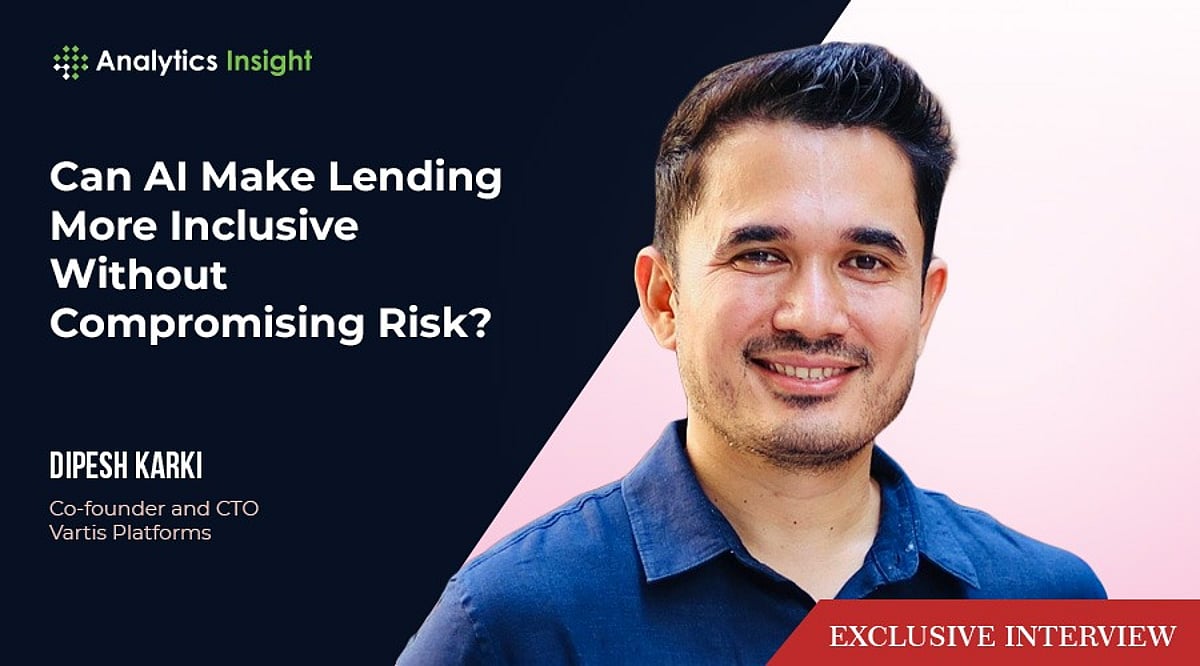
  • How AI-Native Lending Is Reshaping Credit Delivery: An Interview with Vartis Platforms’ Dipesh Karki

    How AI-Native Lending Is Reshaping Credit Delivery: An Interview with Vartis Platforms’ Dipesh Karki

    Artificial intelligence, machine learning, predictive analytics, and automation are transforming India’s digital lending ecosystem. Lenders are shifting from traditional assessments to data-driven decision-making, enhancing underwriting, fraud detection, collections, and portfolio monitoring. This technological evolution supports broader financial inclusion by allowing lenders to assess underserved and new-to-credit borrowers through alternative data and a comprehensive view of financial behavior.

    Dipesh Karki, Co-founder and CTO of Vartis Platforms, emphasizes that the future of lending lies in AI-native ecosystems that embed intelligence throughout the credit delivery process. In an exclusive interview with Analytics Insight, he discusses the impact of these technologies on underwriting, risk management, compliance, and how Vartis Platforms is using data science to foster a more efficient and inclusive lending environment. Here are the excerpts from the interview:

    How are AI, Machine Learning, and Automation Transforming Underwriting and Risk Management in Digital Lending?

    The biggest shift we are seeing in digital lending is the move from static, rules-based underwriting to intelligent, data-driven decision-making. Traditionally, lending decisions relied heavily on bureau scores and predefined eligibility criteria. While those remain important, they often provide only a partial view of a borrower’s financial profile.

    AI and machine learning allow lenders to analyse a much broader set of signals and identify patterns that are difficult to detect through conventional methods. These models can continuously learn from repayment behaviour, portfolio performance, and changing market conditions, helping improve risk assessment over time.

    From a risk management perspective, AI is enabling more proactive monitoring. Rather than assessing risk only at the point of loan origination, lenders can continuously evaluate portfolio health, identify early warning signals, and take corrective action before risks escalate.

    Automation complements this by streamlining operational processes such as application screening, verification, fraud checks, and policy enforcement. This not only improves efficiency but also ensures greater consistency in decision-making. Ultimately, the combination of AI, machine learning, and automation is helping the industry build lending systems that are faster, more scalable, and better equipped to manage risk.

    Why is Alternative Data Becoming Increasingly Important in Expanding Credit Access Beyond Traditional Bureau-Led Assessment Models?

    India has made significant strides in expanding access to formal credit, but a large segment of the population remains either new-to-credit or underrepresented in traditional credit bureau systems. If lenders rely solely on bureau data, they risk excluding many creditworthy individuals who simply lack an extensive borrowing history.

    Alternative data helps address this challenge by providing additional insights into a borrower’s financial behaviour and repayment capacity. With the growth of digital financial services, lenders today can evaluate indicators such as cash-flow patterns, income consistency, transaction behaviour, and other consent-based financial data points to build a more comprehensive risk profile.

    The emergence of digital public infrastructure and frameworks that enable secure data sharing is further accelerating this shift. Instead of assessing borrowers based only on their past credit history, lenders can increasingly evaluate their current financial health and behavioural patterns.

    This approach creates a win-win outcome. Borrowers gain access to formal credit opportunities, while lenders can make more informed risk decisions and expand responsibly into previously underserved segments. In many ways, alternative data is becoming a key enabler of financial inclusion at scale.

    What Role does Predictive Analytics Play in Improving Borrower Assessment, Repayment Forecasting, and Collections Efficiency?

    Predictive analytics has become a critical component of modern lending because it allows organisations to move from reactive decision-making to proactive risk management.

    In underwriting, predictive models help estimate the likelihood of repayment by analysing relationships between historical borrower behaviour and future outcomes. This enables lenders to make more accurate credit decisions and improve portfolio quality.

    Beyond loan origination, predictive analytics plays an important role in portfolio monitoring and repayment forecasting. By identifying behavioural patterns and early indicators of financial stress, lenders can anticipate potential delinquencies and take preventive measures before accounts deteriorate.

    Collections is another area where predictive analytics is creating significant value. Rather than applying a uniform collections strategy across all borrowers, lenders can prioritise accounts based on risk levels, predict repayment propensity, and optimise engagement strategies accordingly. This improves operational efficiency while also creating a better borrower experience.

    As lending portfolios become larger and more complex, predictive analytics will continue to be a foundational capability for improving decision-making across the entire credit lifecycle.

    How is Automation Helping Reduce Turnaround Times While Ensuring Consistency, Governance, and Regulatory Compliance?

    Historically, lending operations involved multiple manual touchpoints, which increased processing times and introduced variability in outcomes.

    Today, automated workflows can manage activities such as onboarding, KYC verification, document validation, eligibility checks, underwriting workflows, and loan servicing with far greater speed and accuracy. This significantly reduces turnaround times and improves the customer experience.

    Equally important is the role automation plays in governance and compliance. Automated systems ensure that policies are applied consistently across all applications and that decisions are made within predefined risk and regulatory frameworks. This reduces the possibility of operational errors and strengthens control mechanisms.

    From a regulatory standpoint, automation also improves transparency by creating clear audit trails and documentation for every stage of the lending process. As lending volumes continue to grow, automation will remain critical for balancing operational efficiency with accountability and compliance.

    How Could AI-Native Lending Models Reshape the Future of Credit Delivery in India?

    We are moving towards a future where AI is not simply supporting lending processes but is becoming embedded across the entire lending lifecycle. That is what defines an AI-native lending model.

    In such a model, intelligence is integrated into customer acquisition, underwriting, risk assessment, fraud detection, servicing, collections, and portfolio management. Decisions become more dynamic because models can continuously learn from new data and adapt to changing borrower behaviour and build foresights.

    For India, the opportunity is particularly significant. The combination of digital public infrastructure, increasing digital adoption, and access to richer financial datasets creates a strong foundation for AI-driven innovation in credit delivery. AI-native lending can help reduce friction in the borrowing journey, improve risk assessment accuracy, and enable a better personalization tailored to their need. At the same time, the industry must ensure that AI adoption is responsible and transparent. Explainability, fairness, data privacy, and regulatory compliance will be critical considerations as these models become more prevalent. The goal should not simply be faster lending, but smarter and more inclusive lending that benefits both borrowers and financial institutions.

    How is Vartis Platforms Leveraging Technology and Data Science to Create a More Efficient, Inclusive, and Sustainable Lending Ecosystem?

    At Vartis Platforms, technology and data science are at the core of how we build financial products and scale lending operations. With LenDenClub, InstaMoney, and Vartis One operating within a unified ecosystem, we could leverage shared technology infrastructure, AI-driven credit intelligence, and advanced analytics across multiple parts of the lending value chain.

    Our focus is on creating systems that enable faster decision-making, stronger risk management, and improved customer experiences. We use data science and machine learning to enhance credit assessment, monitor portfolio performance, strengthen fraud detection capabilities, and drive operational efficiencies.

    Through Vartis One, we are also investing in scalable technology architecture that supports both current business needs and future growth opportunities. This allows us to build modular, adaptable platforms capable of supporting evolving lending models and increasing transaction volumes.

    A key objective for us is to make lending more accessible without compromising risk discipline. By combining technology, data-driven insights, and automation, we aim to expand responsible credit access, improve operational efficiency, and create a more sustainable lending ecosystem. We believe the future of lending will be defined by organisations that can successfully balance innovation, risk management, and financial inclusion, and that is the direction we are building towards at Vartis Platforms.

  • How I Made AI My Personal Productivity Assistant: A Practical Guide

    How I Made AI My Personal Productivity Assistant: A Practical Guide

    I stopped treating AI as just a chatbot and started using it as a personal work assistant. Now it helps me organize tasks, prioritize deadlines, manage information, and reduce repetitive work. Instead of replacing my decisions, AI supports them, allowing me to focus on creative thinking and high-value responsibilities every day.

    Automating Repetitive Work

    I delegated routine tasks like drafting emails, summarizing meetings, creating to-do lists, scheduling reminders, and organizing notes to AI. Automating these everyday activities saves valuable time, reduces manual effort, and helps me stay productive without feeling overwhelmed by repetitive administrative responsibilities.

    Faster Research and Better Insights

    Instead of opening multiple websites, I ask AI to summarize reports, explain complex concepts, compare products, and identify industry trends. This speeds up research while helping me understand information quickly. I still verify important facts, but AI significantly reduces the time needed for initial research.

    Creating Better Content in Less Time

    AI helps me brainstorm ideas, prepare outlines, write first drafts, improve grammar, and refine tone. Whether creating presentations, reports, blogs, or social media content, it accelerates the writing process while allowing me to focus on adding expertise, creativity, and personal insights before publishing.

    Managing Projects More Effectively

    I use AI to break large projects into manageable tasks, generate timelines, create meeting agendas, and track progress. It helps identify priorities, organize workflows, and ensure nothing important is overlooked. This structured approach keeps projects moving efficiently from planning to completion.

    Smarter Communication Every Day

    Before sending emails or presentations, I use AI to improve clarity, grammar, and professionalism. It adapts messages for different audiences while keeping communication concise and impactful. Better-written communication saves time, strengthens collaboration, and creates a more professional impression.

    AI Is an Assistant, Not a Replacement

    My biggest lesson is that AI works best as a trusted assistant rather than a replacement for human judgment. It handles repetitive tasks, organizes information, and boosts productivity, while I remain responsible for creativity, strategy, decision-making, and final quality. Together, we achieve better results faster.