Tag: Bitcoin

  • Bitcoin Holds Above $64,200 as ETF Inflows Counter Coldcard Fears and Legislative Stalemate

    Bitcoin Holds Above $64,200 as ETF Inflows Counter Coldcard Fears and Legislative Stalemate

    Bitcoin traded near $64,236.97 on Tuesday, up 0.48% over the past 24 hours, as fresh institutional inflows offset ongoing security concerns and political uncertainty. The leading cryptocurrency steadied above $64,200 after a choppy start to August, supported by $170.1 million in net inflows into US spot Bitcoin ETFs on Monday.

    Bitcoin Price Today

    Bitcoin trades at $64,236.97, with a market cap of approximately $1.28 trillion and 24-hour trading volume of $23.11 billion. Key support lies near $62,800, while resistance is seen between $64,500 and $65,600, according to analysts.

    Analyst Perspectives

    Mudrex: $65,000 Key for Sentiment Shift

    Akshat Siddhant, Lead Quant Analyst at Mudrex, noted that Bitcoin trades above $64,000 as easing geopolitical tensions lift risk assets. He highlighted that Bitcoin futures open interest slipped to 740,000 BTC from a July peak of 776,000 BTC, a pattern that preceded April’s large short-side liquidation wave. “For now, $65,000 remains major resistance while support holds near $62,800,” he said.

    CoinSwitch: Equities Rally Supports BTC

    CoinSwitch Markets Desk observed that BTC held near $64,000 even as risk assets rallied on US-Iran de-escalation hopes. “Holding above $64,000 keeps the short-term structure positive for a push toward $64,400. A slip below $64,000 opens the next support zone near $63,600,” the desk stated.

    Delta Exchange: Break Above $64,500 Needed

    Riya Sehgal, Research Analyst at Delta Exchange, said Bitcoin reclaimed $64,000 after defending $62,200-$62,400 demand. “Bitcoin needs a sustained break above $64,500 to target $65,000-$65,600. Ethereum must reclaim $1,880 to confirm a broader breakout structure,” she added.

    Giottus: Weak Spot Demand Caps Recovery

    Vikram Subburaj, CEO of Giottus, placed Bitcoin near $64,260, up about 0.7% on the day. He advised investors to favor staggered buying ahead of Friday’s jobs report, noting that Bitcoin holds support near $63,000-$63,400, with resistance between $64,500 and $66,000.

    WazirX: Institutional Absorption Continues

    Nischal Shetty, founder of WazirX, said Bitcoin trades near $64,176 as easing tensions lift appetite. On-chain data shows 155,000 BTC accumulated between $62,000 and $65,000. Wintermute’s H1 2026 report shows institutions now drive 72% of spot volume. “A move above $64,800-$65,000 could trigger fresh long positions. Losing $63,900-$64,000 may raise the odds of a pullback toward $63,200,” he noted.

    Top 10 Coins at a Glance

    • Biggest Gainers: Hyperliquid (HYPE) led with a gain past 3%, followed by BNB (+1.27%) and XRP (+1%).
    • Biggest Losers: Stablecoins (USDT, USDC) and Solana (SOL) remained flat with minimal movement.

    Key Headlines Impacting Prices

    Bitcoin ETFs Return to Inflows With $170.1 Million

    US spot Bitcoin ETFs recorded $170.1 million in net inflows on Monday, ending a brief redemption streak. BlackRock’s IBIT led with $111.4 million, followed by Fidelity’s FBTC at $33.4 million. Ether ETFs slipped into modest net outflows of $11.9 million.

    Coldcard Firmware Flaw Fallout Continues

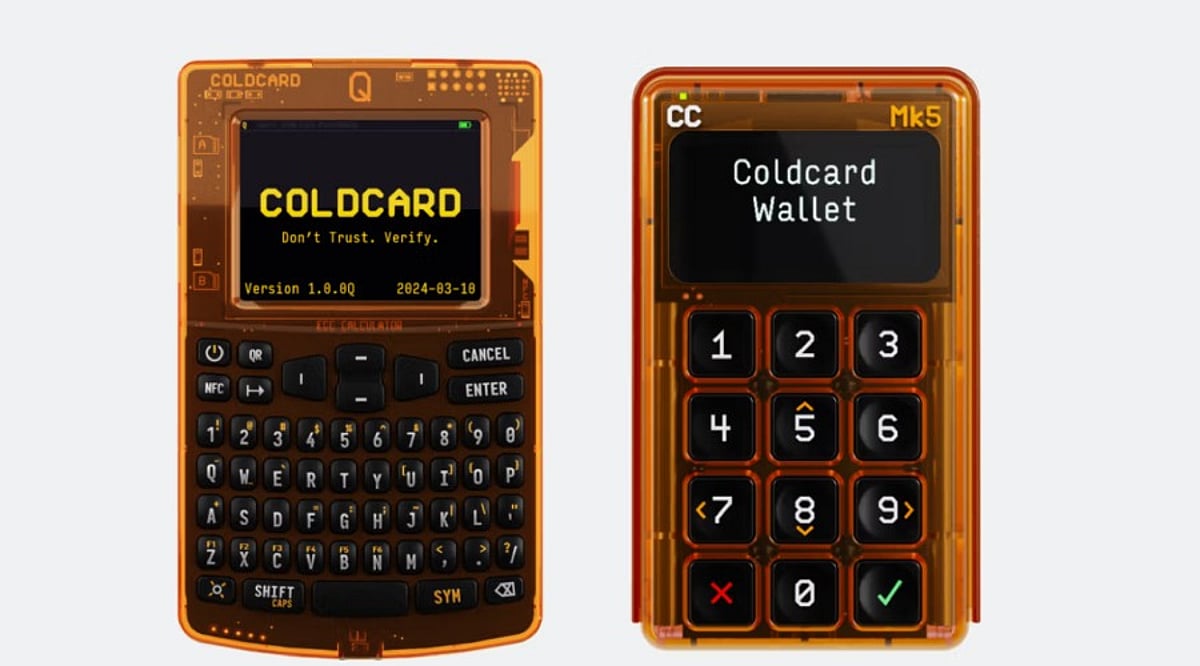
    A firmware bug in Coldcard hardware wallets has been linked to over $100 million in stolen Bitcoin this month. Emergency fixes have been rolled out, but security researchers warn that updating firmware alone is insufficient. Affected holders must generate fresh recovery phrases and migrate balances immediately.

    CLARITY Act Stuck Without Senate Floor Vote

    The Digital Asset Market Clarity Act remains absent from the Senate’s floor schedule. Senate Majority Leader John Thune indicated a vote could occur before recess, but Republicans need roughly seven Democratic votes to clear the 60-vote threshold. An unresolved ethics dispute over presidential crypto holdings remains a sticking point.

    Cardano Rallies on Heavy Whale Accumulation

    Cardano’s ADA token surged more than 26% this week as whale wallets added over 240 million tokens. Combined whale holdings have climbed to roughly 14.5 billion ADA, according to Santiment. Analysts say holding above $0.17 support keeps the bullish structure intact, with next resistance near $0.20 and then $0.24-$0.25.

    Ether ETFs Slip Into Mild Outflows

    US spot Ether ETFs recorded an $11.9 million net outflow on Monday, ending a two-day inflow streak. BlackRock’s ETHA and Grayscale’s ETHE led the modest redemptions. Analysts view the pullback as routine rotation rather than a shift in institutional demand.

    ISM Manufacturing Data Signals Resilient Economy

    The US ISM Manufacturing PMI climbed in July, pointing to resilient economic activity. Stronger readings reduce near-term expectations of Fed rate cuts. Traders now await Wednesday’s ADP payrolls and services PMI data, with Friday’s jobs report as the week’s most closely watched macro catalyst.

    Investor and Market Outlook

    Bitcoin holds above $64,200 as fresh ETF inflows offset lingering custody worries and legislative delays. A close above $64,500 could open a path toward resistance near $65,600. A slip below $63,900 risks exposing deeper support closer to $62,800. Cardano and Hyperliquid remain the most sensitive names to shifts in institutional risk appetite. Key catalysts this week include ETF flow trends, Fed rate signals, Friday’s jobs report, and the CLARITY Act’s Senate outcome.
  • How to Select the Best Cryptocurrency Exchange in 2026: Key Factors for Secure Trading

    How to Select the Best Cryptocurrency Exchange in 2026: Key Factors for Secure Trading

    Cryptocurrency adoption continues to expand globally, and selecting the right exchange is more critical than ever. Despite ongoing regulatory uncertainty and market fluctuations, India remains one of the fastest-growing markets for crypto trading. According to CoinMarketCap Research, centralized exchanges recorded approximately $4.74 trillion in trading volume in June 2026, highlighting the sector’s immense scale.

    Choosing an ideal cryptocurrency exchange involves more than just comparing trading fees. Key factors include security, regulatory compliance, liquidity, and the ability to safely store and transfer digital assets.

    Prioritize Regulation and Compliance

    The first checkpoint should always be regulatory compliance. Investors must opt for exchanges that adhere to Know Your Customer (KYC) and Anti-Money Laundering (AML) guidelines. In India, exchanges registered with the Financial Intelligence Unit (FIU-IND) offer an extra layer of compliance under local anti-money laundering laws. Leading global exchanges are also obtaining licenses to enhance investor protection through frameworks like Europe’s Markets in Crypto-Assets (MiCA) regulation.

    Evaluate Security Infrastructure

    Security is the most significant differentiator among exchanges. When opening an account, check whether the platform provides:

    • Two-factor authentication (2FA)
    • Cold storage for customer assets
    • Withdrawal whitelist protection
    • Proof of Reserves (PoR)
    • Independent security audits
    • Insurance mechanisms for certain digital assets

    After major exchange failures, Proof of Reserves has become essential, as it allows users to verify that customer assets are fully backed.

    Compare Liquidity and Trading Costs

    High liquidity enables investors to execute trades with minimal price slippage, especially during volatile market conditions. Larger exchanges typically offer tighter spreads, deeper order books, and faster execution. Investors should compare:

    • Spot trading fees
    • Deposit and withdrawal charges
    • Futures funding costs
    • INR or fiat deposit availability
    • Supported payment methods

    While low fees are appealing, they should not be the sole criterion—security and liquidity are equally important.

    Asset Selection and Features

    Investors have varying needs. Beginners may only require Bitcoin and Ethereum, while advanced traders seek features like staking, perpetual futures, margin trading, recurring buys, or institutional custody. Choose an exchange that aligns with your investment strategy rather than one with the largest token list.

    Also Read: BitMart Announces Crypto Exchange Shutdown as BMX Crashes 81%

    Customer Support and Transparency

    Customer support is crucial, particularly during market volatility. Select exchanges that regularly share system status updates, publish clear reserve reports, disclose regulatory licenses, and respond promptly to user complaints. Review uptime history, incident reports, and community feedback to gauge reliability.

    Why This Matters

    With global trading volumes hitting trillions and adoption surging across India, choosing a regulated and secure exchange safeguards your capital against market volatility, cyber threats, and sudden exchange failures in an evolving regulatory environment.

    Final Thoughts

    When selecting the best cryptocurrency exchange in 2026, consider security, compliance, liquidity, and user-friendliness. Despite a strict tax regime, India remains a top country for grassroots crypto adoption. While low trading fees may seem attractive, they should not be the deciding factor. Prioritize platforms with strong reputations, robust regulation, solid security measures, and transparency for long-term success.

    FAQs

    1. What is the most important factor when choosing a cryptocurrency exchange?

    Security should be the top priority. Choose an exchange with two-factor authentication (2FA), cold storage, Proof of Reserves, and a strong history of protecting customer assets.

    2. Are FIU-registered crypto exchanges safer in India?

    FIU-registered exchanges comply with India’s anti-money laundering regulations and KYC requirements. While registration doesn’t eliminate risk, it adds an extra layer of regulatory oversight.

    3. Why does liquidity matter on a crypto exchange?

    High liquidity allows trades to be executed faster with lower price slippage, especially during high market volatility or when placing large orders.

    4. Should beginners use exchanges with hundreds of cryptocurrencies?

    Not necessarily. Beginners often benefit more from exchanges offering major cryptocurrencies like Bitcoin and Ethereum, along with an easy-to-use interface and strong educational resources.

    5. Is the lowest trading fee always the best option?

    No. Low fees are beneficial, but security, regulatory compliance, transparency, liquidity, and reliable customer support are often more important for long-term investing success.

  • Bitcoin Slides to $62,567 as Sellers Tighten Grip on Market

    Bitcoin Slides to $62,567 as Sellers Tighten Grip on Market

    Bitcoin continued its slide on August 3, 2026, trading near $62,567 after failing to hold onto recent gains. The world’s largest cryptocurrency faced renewed selling pressure, pushing it below key support levels and reinforcing bearish sentiment across the crypto market.

    Key Takeaways

    • Bitcoin remains under pressure after losing support near $63,000.
    • RSI signals oversold conditions, but no confirmed reversal has emerged.
    • Support near $62,500 remains critical for the next price move.

    Market Overview

    Earlier in the session, Bitcoin reached an intraday high close to $63,725 before sellers stepped in and erased those gains. The price later slipped below several nearby support levels and closed near the day’s low, reflecting steady bearish control. The wider crypto market also showed signs of weakness, with fresh caution across global financial markets and uncertainty around future interest rate decisions keeping traders defensive. Recent outflows from spot Bitcoin exchange-traded funds reduced buying support, while large liquidations added pressure across digital assets. Market experts also noted that August often delivers weaker performance for Bitcoin, adding another layer of caution.

    Technical Analysis: Clear Downtrend

    The latest five-minute chart presented a well-defined bearish trend. Bitcoin failed to hold its rally after touching $63,725, then formed a series of lower highs at $63,527, $63,201, and $62,913. This sequence reflected fading buying strength after every recovery attempt. Lower lows also appeared throughout the session, with every fresh decline pushing the price beneath previous support areas, confirming strong selling momentum.

    RSI Signals Oversold Conditions

    The Relative Strength Index (RSI) dropped to 27.5, while its moving average stood near 35.7. An RSI value below 30 often signals oversold conditions, meaning the recent decline was rapid. However, strong downtrends can keep the RSI below 30 for an extended period. Traders typically look for stronger confirmation before expecting a sustained recovery, and the latest chart did not show clear evidence that buyers had regained control.

    Volume Supports Bearish Trend

    Trading volume also supported the current trend. Several large red candles appeared alongside higher-than-average trading activity, suggesting active selling rather than a simple lack of buying interest. Heavy volume during a price decline often reflects strong conviction among sellers. Until buying volume returns with similar strength, the market may continue to struggle near current levels.

    Key Support and Resistance Levels

    Bitcoin’s current trading range places it close to an important support level between $62,550 and $62,600. A break below this support could trigger a move toward the next support zone at $62,400, followed by $62,250 and the ultimate psychological level at $62,000. On the upside, immediate resistance lies around $62,700, with the next significant levels at $62,900, $63,200, and the major resistance zone between $63,500 and $63,700.

    Bullish Recovery Needs Strong Confirmation

    A bullish recovery remains possible, but buyers need several positive signals. First, stable price action above $62,500 must hold. Then, a higher low would suggest selling pressure is weakening. Finally, Bitcoin needs a move above $62,900 and a successful break above $63,200 with healthy trading volume. Those developments would improve confidence and shift the short-term outlook toward a more balanced market.

    Bears Continue to Hold the Advantage

    Bearish pressure remains solid. If Bitcoin falls below $62,500, another wave of selling may emerge, with the nearest downside target near $62,250 and possibly $62,000. The overall market structure favors sellers: lower highs, lower lows, heavy selling volume, and unsatisfactory recovery attempts suggest the current trend is likely to continue. Traders are watching global economic events, Bitcoin ETF flows, and investor sentiment. As long as Bitcoin remains below the crucial resistance of $64,000, significant short-term price moves are unlikely.

    FAQs

    What is the current Bitcoin price?

    Bitcoin traded around $62,567 during the latest session.

    Why did Bitcoin decline?

    Risk-off market sentiment, ETF outflows, liquidations, and interest rate uncertainty weighed on prices.

    What is the key support level for Bitcoin?

    The immediate support zone lies between $62,550 and $62,600, followed by $62,400 and $62,000.

    What does the RSI indicate?

    The RSI stands near 27.5, signaling oversold conditions but not confirming a price reversal.

    What resistance must Bitcoin overcome?

    Bitcoin needs to reclaim $62,900, $63,200, and eventually the $63,500–$63,700 zone to improve short-term sentiment.

    Disclaimer: This article is for informational purposes only and does not constitute investment advice. Cryptocurrency investments carry risk. Always conduct your own research before making any investment decisions.

  • Bitcoin Holds Above $63,800 Amid Coldcard Flaw, ETF Outflows, and Hawkish Fed

    Bitcoin Holds Above $63,800 Amid Coldcard Flaw, ETF Outflows, and Hawkish Fed

    Bitcoin traded near $63,812.96 on Tuesday, up 1.73% over the past 24 hours, as the market absorbed a mix of bearish headwinds and resilient price action. The token shrugged off a choppy start to August, with ETF outflows, a Coldcard hardware wallet firmware bug, and a hawkish Federal Reserve hold keeping sentiment cautious.

    Spot Bitcoin ETFs ended a three-week inflow streak with $61.53 million in net outflows for the week ending July 31, led by a sharp single-day withdrawal from BlackRock’s IBIT fund. Meanwhile, a firmware flaw linked to Coldcard wallets has been tied to nearly $70 million in stolen Bitcoin this month, prompting emergency firmware updates and warnings that affected holders must generate fresh recovery phrases.

    The Federal Reserve held rates steady but with a 9-3 vote split as three officials favored an increase, lifting September rate hike odds above 60%. The CLARITY Act remains stalled on the Senate calendar ahead of the August recess, with Democrats pushing for tougher ethics language. Traders now watch Friday’s jobs report for fresh direction.

    Bitcoin Price Today

    Bitcoin’s market cap stands near $1.28 trillion, with 24-hour trading volume at $26.81 billion. Analysts highlight $65,000 as key resistance, with support at $62,300 and $60,000 below.

    Analyst Insights

    Akshat Siddhant, Lead Quant Analyst at Mudrex: Bitcoin traded in the $63,000-$64,000 range amid growing macro uncertainty. A stronger yen, backed by an estimated $59 billion in intervention, has sped up carry trade unwinding. Strategy sold 1,638 BTC, its second largest sale this year. Bitcoin needs to reclaim $65,000 to lift sentiment, while $60,000 stands as major support.

    CoinSwitch Markets Desk: BTC approached $64,000 after the ISM Manufacturing PMI rose to 55.6, its highest since 2022. Sustained readings above 55 have historically coincided with strong altcoin performance. Near term, $64,000 is resistance, $63,000 is key support.

    Riya Sehgal, Research Analyst at Delta Exchange: Bitcoin holds between $63,500 and $64,000. Stronger US manufacturing data strengthens the case for the Fed to stay tight. Bitcoin needs to break and hold above $64,250 to improve momentum. Support at $62,300. ETH defends $1,820-$1,845 zone.

    Vikram Subburaj, CEO of Giottus: Bitcoin near $63,700, up 0.9%. Lower oil prices and improving global risk sentiment support the market. Weak spot demand and inconsistent ETF flows cap the recovery. Resistance at $64,000-$64,100.

    Nischal Shetty, founder of WazirX: Bitcoin gained 0.47% to around $63,602. Ethereum rose 0.34%. American Bitcoin reported record quarterly production of 932 BTC. Bitcoin futures traders watch $63,750-$64,300 recovery zone, with $63,000 as nearest support.

    Top 10 Coins at a Glance

    Biggest Gainers: Hyperliquid (+4.03%), BNB (+1%), TRON (+1%). Hyperliquid led major gainers with a daily jump, extending its strong weekly run. BNB and TRON also posted solid gains.

    Biggest Losers: Stablecoins (Tether, USDC) barely moved. Ethereum and Solana posted modest gains.

    Key Headlines Impacting Prices

    • Coldcard Firmware Flaw: A firmware bug drained nearly $70 million in Bitcoin. CEO Rodolfo Novak apologized. Emergency firmware rolled out, but affected users must generate new recovery phrases.
    • Bitcoin ETFs Snap Inflow Streak: $61.53 million in net outflows for week ending July 31. Spot Ether ETFs extended their four-week inflow streak with $27.42 million.
    • Fed Holds Rates: 9-3 vote split with three officials favoring a hike. September rate hike odds above 60%.
    • CLARITY Act Stalled: Senate recess deadline narrows legislative window. Democrats push for ethics language.
    • Strategy Sells 1,638 BTC: Second largest sale this year, adding selling pressure.
    • ISM Manufacturing PMI: Rose to 55.6 in July, highest since 2022, reducing expectations of near-term Fed cuts.

    Market Outlook

    Bitcoin holds above $63,800 as traders weigh ETF outflows, a hawkish Fed, and stalled legislation. A close above $64,250 could open a path to $65,000 resistance. A slip below $62,300 risks exposing $60,000. Next moves hinge on ETF flows, Fed rate signals, and Friday’s jobs report. The Senate recess deadline and upcoming inflation data are key catalysts.

  • Crypto Roundup: Bitcoin ETF Inflows Hit $170M, XRP Gains RLUSD Lending, TRON Surpasses 15B Transactions

    Crypto Roundup: Bitcoin ETF Inflows Hit $170M, XRP Gains RLUSD Lending, TRON Surpasses 15B Transactions

    Bitcoin Spot ETFs See $170 Million in Net Inflows

    According to data from SoSoValue, U.S. spot Bitcoin ETFs recorded a total net inflow of $170.09 million yesterday. BlackRock’s IBIT led the charge with $111.43 million in daily net inflows, bringing its historical total to $60.59 billion. Fidelity’s FBTC followed with $33.36 million, reaching a cumulative net inflow of $9.95 billion. The overall net asset value of Bitcoin spot ETFs now stands at $77.58 billion, reflecting an ETF net asset ratio of 6.06% and a historical cumulative net inflow of $51.49 billion.

    XRP Holders Can Now Borrow RLUSD on Ethereum

    Flare has integrated FXRP into Sentora’s $280 million RLUSD vault on Morpho, enabling XRP holders to use their assets as collateral to borrow Ripple’s RLUSD stablecoin—without selling their XRP. This marks the first time an XRP-based asset has been accepted as collateral in an institutionally curated lending vault on Ethereum mainnet, opening the door for XRP to participate in institutional decentralized finance (DeFi). Holders can convert XRP into FXRP, bridge it to Ethereum, deposit it into the vault, and borrow RLUSD, thereby increasing capital efficiency.

    TRON Crosses 15 Billion Transactions

    TRONSCAN data shows the network has processed more than 15 billion confirmed transactions as of press time, with over 12.56 million transactions in the preceding 24 hours. Total registered accounts reached 396.74 million, after adding about 158,871 accounts in the same period. The milestone reflects cumulative network operations including token transfers, smart contract calls, and staking activity. TRON DAO reported that the blockchain processed 950 million transactions in Q1 2026, a 0.62% increase from the previous quarter.

    Former FBI Agent Accused of Stealing $1 Million in Crypto

    Patrick Steven Yaroch, a former FBI agent, has been charged with interstate transportation of stolen goods and receipt of stolen goods after allegedly stealing approximately $1 million in cryptocurrency from wallets under FBI custody. Court documents indicate that the thefts occurred between early 2025 and July 2026, during which Yaroch worked in the Counterintelligence and Espionage Division with Top Secret security clearances. He is accused of accessing internal systems to retrieve recovery phrases for wallets seized in investigations targeting a foreign adversary.

    Tether Reports Strong Q2 2026 Operating Profits

    Tether announced $1.5 billion in net operating profit for Q2 2026, a 50% quarter-on-quarter increase. USDT supply grew to $184.6 billion, and the global user base surpassed 650 million. The company’s Q2 attestation showed $187.75 billion in assets against $183.64 billion in liabilities, resulting in a $4.11 billion surplus. Tether also added 14 tons of gold during the quarter, pushing its gold reserves past 146 tons, and increased its Bitcoin holdings to 98,932 BTC, valued at $5.8 billion.

  • Age-Based Crypto Adoption: Which Generations Are Investing in Digital Assets?

    Age-Based Crypto Adoption: Which Generations Are Investing in Digital Assets?

    Cryptocurrency adoption varies significantly across age groups, with each generation approaching digital assets differently. Here’s a breakdown of how different demographics are engaging with crypto.

    Gen Z (18–27)

    Young investors are drawn to cryptocurrency for its innovative potential, long-term growth prospects, and decentralized finance opportunities. They are early adopters of new blockchain technologies and platforms.

    Millennials (28–43)

    Millennials remain the largest group of crypto investors, using digital assets as a tool for wealth creation and portfolio diversification. They are comfortable with technology and seek alternatives to traditional investments.

    Gen X (44–59)

    Gen X investors are increasingly viewing Bitcoin and major cryptocurrencies as alternative investment assets. They tend to be more cautious but recognize the potential for long-term value.

    Baby Boomers (60–78)

    Older investors are cautiously entering the crypto space through ETFs and regulated investment platforms. They prefer lower-risk exposure to digital assets.

    Institutional Investors

    Professional fund managers continue to increase their crypto exposure through regulated financial products, signaling growing mainstream acceptance.

    High-Net-Worth Individuals

    Wealthy investors are allocating portions of their portfolios to Bitcoin and blockchain-based assets as a hedge and diversification strategy.

    Retail Investors

    Easy-to-use exchanges and mobile apps have made crypto investing more accessible than ever, attracting a broad range of individual investors.

    Emerging Markets

    Younger populations in developing countries increasingly use crypto for payments and financial access, bypassing traditional banking infrastructure.

  • RWA Perpetual Trading Volume Nearly Equals Bitcoin on Major Exchanges as Wright Reignites Protocol Debate

    RWA Perpetual Trading Volume Nearly Equals Bitcoin on Major Exchanges as Wright Reignites Protocol Debate

    Perpetual futures tied to tokenized stocks and commodities generated $61.7 billion in seven-day volume on Hyperliquid and Binance, nearly matching Bitcoin’s perpetual turnover. According to data from Talos, the RWA perpetual volume reached 99.2% of Bitcoin’s perpetual volume across both venues during the week ending July 31, 2026.

    Tokenized equity contracts contributed 57.8% of the tracked RWA volume, while commodities accounted for 28.2%. These contracts allow traders to gain price exposure without directly owning the underlying tokenized assets. Meanwhile, on-chain real-world asset value stood near $36.8 billion, excluding stablecoins, as reported by RWA.xyz.

    Hyperliquid recorded $25.1 billion in RWA perpetual volume from July 13 to July 19, representing about 52% of its $48.2 billion weekly total. For the first time, RWA derivatives surpassed every other perpetual category combined on Hyperliquid. The exchange relies on on-chain execution, oracle pricing, and automated liquidation systems. In contrast, Binance operates through centralized custody, exposing users to exchange counterparty risk.

    Early figures for the following week showed RWA perpetual volume reaching $37.2 billion, exceeding Bitcoin perpetual volume by about 9%, according to the Talos dashboard. Equity-linked contracts contributed $22.8 billion, commodities added $9.1 billion, and indexes produced $4.2 billion. Despite this growth, RWA perpetuals represented only about 7.5% of the broader $821.4 billion futures market tracked by Talos.

    Amid this market activity, Craig Wright revived a long-running dispute over Bitcoin governance. Wright argued that Bitcoin’s base protocol should remain permanently fixed, with competition occurring above rules that developers, miners, companies, or foundations cannot change. He accused supporters of developer-led upgrades of defending committee control while labeling fixed rules as centralized. His comments reignited debate over whether immutable rules outweigh the need to address vulnerabilities and new technical demands.

    Bitcoin traded at $63,012 on August 2, down 2.46% over seven days, with a market value near $1.26 trillion and $12.9 billion in daily volume. RWA perpetual contracts carry liquidation risks when leveraged positions move sharply against traders, and near parity with Bitcoin on two venues does not represent dominance across the entire crypto-derivatives market.

  • Coldcard Bitcoin Wallet Sweeps Top $114 Million as Replace-by-Fee Rescue Window Opens

    Coldcard Bitcoin Wallet Sweeps Top $114 Million as Replace-by-Fee Rescue Window Opens

    Early Monday, a fourth wave of sweeping attacks targeted Bitcoin addresses generated by Coldcard wallets, pushing observed losses to approximately 1,816 BTC—worth around $114 million. Researchers have identified a narrow rescue window enabled by replace-by-fee (RBF), which allows victims to override unconfirmed theft transactions by paying a higher fee.

    Narrow Rescue Window

    Galaxy Research’s Alex Thorn flagged the active wave while transactions remained in Bitcoin’s mempool. He noted that attackers enabled replace-by-fee on their pending transfers, meaning victims who detect a targeted address can move their coins first by offering miners a higher fee. Thorn urged users to check balances, remove funds from affected devices, and raise transaction fees promptly.

    Thorn had no direct victim report when he published the warning. Instead, he relied on matching transaction patterns and chose speed while users still had time to respond.

    Predictable Seed Generation

    The first sweep began July 30, removing 1,083 BTC from 1,196 addresses within 41 minutes. Two weekend waves raised observed losses to 1,367 BTC across 4,585 addresses. The fourth wave lifted the possible total to about 1,816 BTC from more than 5,200 addresses. Thorn tracked activity across blocks 960,778 through 960,792.

    Researchers counted 218 transactions that targeted 462 victim addresses. The wave averaged about 14 sweeps per block, compared with 0.3 during a pre-incident control period. The flaw traces to a March 2021 firmware build that sent seed generation to a predictable software randomizer rather than the wallet chip’s hardware randomizer. As a result, anyone who identifies the relevant range can reproduce affected keys offline.

    Coinkite released emergency firmware for all affected models after the flaw was discovered. The manufacturer also instructed users who created seeds with the flawed software to move funds and use wallet addresses generated from fresh seeds.

    Transaction Patterns

    Every spent coin arrived after the Coldcard firmware boundary was identified by researchers. The attackers also sent each victim’s funds to a fresh destination with no previous transaction history. Unlike earlier waves, the fourth used one destination per victim instead of shared collector addresses, making the new activity harder to map through common destinations.

    None of the first three waves reached multisignature setups, matching a flaw tied to single-key seeds. Researchers also removed six old destination addresses as attacker-generated addresses should lack earlier activity. According to CryptoQuant Research Head Julio Moreno, small Bitcoin holders moved 39,600 BTC on July 31—transfers under 1 BTC reached about $2.5 billion that day. The last comparable total reached 39,900 BTC on November 16, 2022, days after FTX failed. Daily active addresses also climbed from 645,000 to almost one million, marking the highest level since December 2024. The increase centered on sending addresses rather than receiving addresses as news of the Coldcard flaw spread.

    Brief Roundup

    Four Coldcard-linked sweeps may have taken about 1,816 BTC from more than 5,200 addresses. Replace-by-fee gives users a narrow chance to override pending thefts. Anyone who created a seed with affected firmware should check funds, move coins to a fresh-seed wallet, and raise fees when necessary.

  • American Bitcoin Expands BTC Reserve in Q2 Despite Revenue Miss and Stock Slump

    American Bitcoin Expands BTC Reserve in Q2 Despite Revenue Miss and Stock Slump

    American Bitcoin significantly expanded its Bitcoin holdings and mining output during the second quarter, even as revenue fell short of expectations and its stock continued to decline sharply. The company increased its reserve by 981 BTC (14%) to 8,002 BTC by June 30, up from 7,021 BTC at the end of March.

    Outstanding shares rose about 3% during the quarter, yet Bitcoin backing per share climbed from 9,943 satoshis to 10,989 satoshis. Management highlighted this metric as the company’s primary treasury goal, with CEO Mike Ho reiterating a focus on increasing Bitcoin per share. He stopped short of committing to selling Bitcoin to fund equity buybacks.

    Co-founder and Chief Strategy Officer Eric Trump doubled down on the company’s Bitcoin-centric strategy, calling the firm “absolute Bitcoin maximalists” during the earnings call. He also reflected on American Bitcoin’s rapid growth, noting that “a little over a year ago, American Bitcoin was just an idea.”

    Record Mining Output and Expanding Hashrate

    American Bitcoin mined a record 932 BTC in Q2. Mining revenue rose 8% to $67 million from $62.1 million in the prior quarter, though revenue per Bitcoin mined fell 5% to $71,900 as Bitcoin’s price dropped 12% during the period. Mining costs edged up slightly to $36,500 per Bitcoin.

    The company maintained a gross margin near 50%, offsetting weaker prices and higher energy costs with increased production. It also energized 11,298 next-generation ASIC miners at Hut 8’s Drumheller site, adding 3.05 exahashes per second (EH/s) of capacity.

    By quarter-end, American Bitcoin controlled 89,242 miners with 28.1 EH/s total capacity, operating 58,999 miners at 25 EH/s with an efficiency of 14.1 J/TH.

    Earnings Miss and Stock Decline

    Revenue came in at $67.015 million, below analysts’ $73 million estimate. The company posted a loss of $0.80 per share, far worse than the consensus forecast of a $0.15 loss. American Bitcoin continued to combine mining output with market purchases of Bitcoin.

    The stock fell 7.38% in the latest 24-hour period and has lost more than 80% over the past year. A Bloomberg report estimated that recent market performance erased about $600 million in company value. Shares have dropped 95% since their NASDAQ debut in September 2025.

    Despite the stock’s struggles, American Bitcoin now holds 8,300 BTC worth approximately $527 million, making it the 16th-largest corporate Bitcoin holder.

    Conclusion

    American Bitcoin delivered on its promise of expanding Bitcoin reserves and mining output in Q2, boosting per-share Bitcoin exposure. However, revenue missed forecasts, losses widened, and the stock remained under severe pressure. Investors face a stark contrast between the company’s strengthening Bitcoin position and its deteriorating market performance.

  • Coldcard Wallet Hack Exceeds $100 Million: 1,596 BTC Stolen Across 7,300 Addresses

    Coldcard Wallet Hack Exceeds $100 Million: 1,596 BTC Stolen Across 7,300 Addresses

    Galaxy Research has revised its estimate of the Coldcard wallet hack, now linking 1,596 Bitcoin (BTC) — worth over $100 million — to the exploit. The attack targeted approximately 7,300 addresses across three major waves and 14 smaller incidents. A suspected fourth wave could push total losses to 2,055 BTC, or roughly $130 million.

    Galaxy Raises Confirmed Theft Estimate

    Researchers at Galaxy received reports from 73 victims, which helped verify the three primary attack waves. The reports also revealed smaller transaction patterns that may involve other attackers exploiting the same vulnerability. The updated figure far exceeds the initial estimate of $70 million, as investigators continued to identify new addresses, victims, and transaction groups while the attacks unfolded.

    The first major wave began on July 30, draining approximately 1,082.65 BTC from 1,196 addresses in just 41 minutes. At the time, that Bitcoin was valued at about $70.2 million. Two subsequent waves followed. By August 2, researchers had traced roughly 1,367 BTC across 4,585 addresses. The third wave took about 208 BTC from 1,912 smaller accounts.

    Galaxy noted that each wave followed a consistent pattern, suggesting a single operator, but researchers could not definitively link every wave to the same attacker. It remains possible that additional attackers joined after the vulnerability was disclosed.

    Weak Seeds Exposed Private Keys

    The attackers did not compromise the Bitcoin network itself. Instead, they targeted recovery seeds generated by certain Coldcard firmware versions that used weak random data. A hardware wallet should generate a recovery seed from secure, unpredictable information — a process that creates entropy and protects private keys from offline guessing.

    Coldcard introduced the flaw during a firmware update in March 2021. Seed generation shifted from the device’s hardware random-number generator to software within the libNgU and MicroPython stack. An integration error then routed the process to MicroPython’s deterministic fallback, which relied heavily on device details and timing values. This drastically reduced the number of possible seeds, allowing attackers to generate candidate seeds offline, derive related Bitcoin addresses, and compare them with addresses on the blockchain — all without physical access to a victim’s device.

    Coinkite Lists Affected Firmware Versions

    Coinkite estimates that affected Mk2 and Mk3 wallets produced only about 40 bits of effective entropy. Mk4, Mk5, and Q models reached approximately 72 bits, still below the intended 128 bits. The advisory covers Mk2 and Mk3 firmware versions 4.0.1 through 4.1.9, Mk4 and Mk5 standard firmware before 5.6.0 and Edge firmware before 6.6.0X, and Coldcard Q standard firmware before 1.5.0Q and Edge firmware before 6.6.0QX. TAPSIGNER, OPENDIME, and SATSCARD use separate codebases and are not affected.

    The alert coincided with heavy movement from small Bitcoin addresses. Transfers below 1 BTC reached 39,600 BTC in one day, according to CryptoQuant research head Julio Moreno — the highest daily movement in that category since November 2022, when users moved about 39,900 BTC shortly after FTX collapsed. While not every transfer came from a Coldcard user, the timing suggests that some holders shifted funds to new wallets or exchanges after the security warning.

    Conclusion

    Galaxy Research has confirmed 1,596 BTC in losses across three attack waves and 14 smaller incidents. The flaw weakened recovery-seed randomness in several Coldcard firmware versions. Users with affected devices should follow Coinkite’s advisory and move funds to wallets created with secure, updated software.