Tag: blockchain security

  • 8 Key Security Controls Crypto Custodians Use to Safeguard Billions in Cold Storage

    8 Key Security Controls Crypto Custodians Use to Safeguard Billions in Cold Storage

    Crypto custodians safeguard enormous amounts of digital assets for institutions, exchanges, and investors. Their strongest defense often begins by keeping private keys offline.

    Cold Storage

    Cold storage keeps private keys offline and away from internet-connected systems. Because the keys are not continuously exposed to online threats, attackers have a much harder time accessing them remotely.

    Multi-Signature Controls

    Multi-signature technology can require several authorized parties to approve a transaction before funds move. Instead of relying on one private key, control is distributed across multiple keys or participants.

    Geographic Key Distribution

    Custodians can distribute key components across different secure locations. Separating critical pieces means a single physical incident, break-in or operational failure does not automatically expose the complete signing mechanism.

    Air-Gapped Systems

    Air-gapped systems are isolated from ordinary networks and the internet. Sensitive signing operations can take place on machines that have no direct online connection.

    Strict Access Controls

    Not everyone inside a custody organization should be able to access digital assets. Role-based permissions, authentication requirements, and separation of duties can restrict sensitive operations to authorized personnel.

    Transaction Approval Workflows

    Large cryptocurrency transfers can pass through multiple approval stages before execution. Automated rules and human review can help verify destinations, amounts, and transaction details.

    Continuous Monitoring

    Custodians monitor wallets, systems and transactions for unusual activity. Security teams can use automated alerts to identify suspicious access attempts, unexpected transfers, or abnormal behavior.

    Audits and Recovery Plans

    Security does not end with protecting private keys. Custodians also need regular audits, testing, and recovery procedures to prepare for operational failures or security incidents.

  • XRP vs Algorand: Which Blockchain Is Leading the Race for Quantum-Resistant Security?

    XRP vs Algorand: Which Blockchain Is Leading the Race for Quantum-Resistant Security?

    Quantum computing is becoming an increasingly important long-term security question for cryptocurrency networks. Today’s quantum computers cannot simply break XRP, Algorand or other major cryptocurrencies. However, sufficiently powerful future quantum computers could threaten some of the public-key cryptography used to protect blockchain accounts.

    Why Could Quantum Computing Threaten Crypto?

    Blockchain wallets rely on digital signatures to prove that transactions have been authorized by the legitimate owner. A sufficiently powerful fault-tolerant quantum computer could theoretically use Shor’s algorithm against certain public-key cryptographic systems. The immediate threat remains theoretical as existing quantum computers lack the scale and reliability necessary to perform such attacks against major blockchain networks. However, replacing cryptography across an entire decentralized ecosystem could itself take years.

    Algorand Has Established a Quantum Timeline

    Algorand has made post-quantum security a visible part of its development roadmap. In June 2026, the Algorand Foundation announced a target of achieving broad quantum resilience by the end of 2027, according to Algorand’s official post-quantum roadmap. The strategy includes post-quantum accounts and Falcon-based cryptographic signatures. Algorand has since released native post-quantum accounts, representing an important milestone toward its 2027 objective.

    Why Falcon Signatures Matter

    Falcon is a post-quantum digital-signature scheme designed to remain secure against attacks from both classical and quantum computers. Algorand has already used Falcon signatures within its State Proof infrastructure and is expanding post-quantum capabilities into user accounts. This is important as quantum preparedness requires more than publishing research. Wallets and users will eventually need practical mechanisms to migrate funds into quantum-resistant accounts.

    What About XRP?

    The XRP Ledger also relies on cryptographic signatures to authorize transactions. Like other blockchain networks using current public-key cryptography, XRP would eventually require upgrades if cryptographically relevant quantum computers become practical. The difference today is the roadmap’s visibility. Algorand has established specific milestones, deployed post-quantum infrastructure and attached a 2027 target to its broader migration strategy.

    XRP vs Algorand: Which Is Ahead?

    Based strictly on publicly announced and deployed post-quantum infrastructure, Algorand currently appears further along. That does not mean ALGO is necessarily a better investment than XRP. XRP has different advantages involving liquidity, payments infrastructure and ecosystem adoption. Quantum preparedness represents only one component of a blockchain’s long-term investment case. Investors should instead monitor whether networks develop post-quantum signatures, migration mechanisms, wallet support and consensus-level protections. Quantum computers may still be years away from threatening today’s cryptography. However, as blockchain migrations also take time, the networks preparing before the threat becomes urgent could have an important advantage.

    Why This Matters

    Quantum security could eventually determine whether blockchain networks can protect user funds and maintain trust as computing technology advances. Early preparation gives networks more time to upgrade infrastructure, migrate accounts and address vulnerabilities before quantum computing becomes a practical threat.

    Final Thoughts

    Algorand currently has a clearer and more advanced public roadmap for post-quantum security, while XRP has yet to demonstrate a publicly announced implementation at the same level. However, quantum readiness is only one factor when evaluating blockchain. For investors, the key will be watching how both networks turn quantum-security research into practical upgrades.

    FAQs

    1. Can quantum computers currently break XRP or Algorand? No. Current quantum computers lack the scale and reliability required to break the cryptographic protections used by major blockchains such as XRP and Algorand.
    2. Why could quantum computing become a threat to cryptocurrencies? Powerful fault-tolerant quantum computers could theoretically use algorithms such as Shor’s algorithm to attack certain public-key cryptographic systems used to secure blockchain accounts and transactions.
    3. How is Algorand preparing for quantum computing? Algorand is targeting broad quantum resilience by the end of 2027. Its strategy includes native post-quantum accounts, Falcon-based signatures and further upgrades to its cryptographic infrastructure.
    4. Is the XRP Ledger quantum-resistant today? XRP Ledger currently relies on conventional cryptographic signatures and would require future upgrades if quantum computers become capable of defeating those systems. There is no immediate practical quantum threat today.
    5. Is Algorand better prepared for quantum computing than XRP? Based on publicly announced roadmaps and deployed post-quantum infrastructure, Algorand currently appears further ahead. However, quantum readiness alone does not determine which blockchain or cryptocurrency is a better investment.
  • How Ethereum’s Quantum-Safe Roadmap Protects ETH Investors: What You Need to Know

    How Ethereum’s Quantum-Safe Roadmap Protects ETH Investors: What You Need to Know

    Quantum computing remains a long-term rather than immediate threat to Ethereum, but developers are already preparing for a world where today’s cryptography may no longer be sufficient. For ETH investors, the key question is whether Ethereum can migrate safely before quantum computers become powerful enough to break existing protections.

    Why Ethereum Needs Quantum Resistance

    Ethereum currently relies on several cryptographic systems that future quantum computers could threaten. These include ECDSA signatures used by accounts, BLS signatures used by validators, KZG commitments for data availability, and some zero-knowledge proof systems.

    No quantum computer today can break Ethereum’s cryptography, but research from Google Quantum AI (March 2026) indicates that breaking 256-bit elliptic-curve cryptography may require roughly 1,200 logical qubits — about 20 times fewer than earlier estimates. This has accelerated Ethereum’s planning.

    Ethereum’s Post-Quantum Roadmap

    The Ethereum Foundation has established a dedicated post-quantum team and a structured roadmap targeting approximately 2029 for core post-quantum infrastructure. The upgrade is phased:

    • Milestone I: A post-quantum key registry for validators.
    • Milestone J: Post-quantum signature-verification precompiles, designed as a minimal viable post-quantum Layer 1 safeguard that could keep Ethereum operating through a potential “Q-day” — when cryptographically relevant quantum computers emerge.
    • Later milestones: Post-quantum attestations, real-time consensus proofs, signature aggregation, and quantum-safe blob commitments.

    Ethereum’s September 2026 protocol update explicitly identifies Milestone J as a temporary safeguard to bridge the gap until a full transition.

    Testing is Already Underway

    The roadmap isn’t just theoretical. More than 10 client teams are participating in weekly post-quantum interoperability devnets. Open-source projects including leanXMSS, leanVM, leanSig, and leanMultisig are under active development.

    Funding signals commitment: The Poseidon Prize offers $1 million for improvements to hash-based cryptographic primitives, and the Foundation continues to support post-quantum consensus and signature research.

    What This Means for ETH Investors

    Quantum readiness matters as Ethereum secures far more than ETH itself. Stablecoins, DeFi protocols, tokenized assets, and smart contracts all depend on the network’s cryptographic security.

    Migration will be complex. Post-quantum signatures tend to be larger and harder to aggregate efficiently than existing ones, potentially increasing bandwidth and computation. Ethereum must also offer a practical migration path for existing accounts. Its 2026 protocol priorities highlight native account abstraction as one route away from ECDSA-based authentication.

    Ethereum does not face an immediate quantum emergency. Its advantage is preparation time. The 2029 roadmap, active devnets, and dedicated research funding show that quantum resistance is moving from discussion to implementation. For ETH investors, progress on these milestones could become an increasingly important measure of Ethereum’s long-term security.

  • Bitcoin Sidechains Explained: Mechanics, Benefits, and Security Risks

    Bitcoin Sidechains Explained: Mechanics, Benefits, and Security Risks

    What Is a Bitcoin Sidechain?

    A Bitcoin sidechain is an independent blockchain that connects to the Bitcoin network through a mechanism called a two-way peg. Users lock their BTC on the main Bitcoin blockchain, and in return, they receive an equivalent asset on the sidechain. When they want to move back, the sidechain asset is destroyed or locked, and the original BTC becomes available again. This design allows Bitcoin-linked value to operate under different rules without altering Bitcoin itself.

    Features That Sidechains Enable

    Because sidechains operate independently, developers can introduce functionality that would be difficult to implement directly on Bitcoin. For example, Liquid—a popular sidechain—supports confidential transactions and issued assets. Other sidechains can offer smart contracts, decentralized finance (DeFi) applications, or faster payment settlement. Critically, if an experimental feature fails on a sidechain, Bitcoin’s consensus rules remain unchanged, preserving the main network’s security and stability.

    The Security Trade-Off

    Moving BTC to a sidechain introduces new trust assumptions. Liquid, for instance, relies on a federation of 15 functionaries, with an 11-of-15 quorum responsible for block production and managing the Bitcoin peg. Users therefore depend on federation security rather than Bitcoin’s mining-based security. This distinction became highly visible in September 2026, when approximately 4,000 BTC (worth around USD 320 million) was withdrawn from Liquid’s federation wallet during a security incident. Liquid stated that the cryptographic key involved had not been compromised. Nevertheless, the incident underscores that BTC on a sidechain should not be treated as carrying the same operational risk as BTC held directly on Bitcoin.

    Withdrawal Dependencies

    Withdrawing BTC from a sidechain also depends on the operators. Liquid’s standard peg-in requires 102 Bitcoin confirmations (roughly 17 hours), while peg-outs are managed by federation participants and typically take 11 to 35 minutes. If enough functionaries become unavailable, the sidechain may stop producing blocks until quorum is restored. Users must be aware of these potential delays and dependencies.

    Final Thoughts

    Sidechains allow Bitcoin-linked capital to access functionality unavailable on the base network without changing Bitcoin itself. However, additional functionality comes with additional trust assumptions. Before moving BTC to a sidechain, investors should examine who controls the peg, how assets can be recovered, how consensus works, and what happens if operators fail. Treating sidechain BTC as equivalent to self-custodied Bitcoin is not advisable.

    Also Read: Liquid Network Recovers 3,400 BTC After Major Weekend Exploit

    Frequently Asked Questions

    1. What is a Bitcoin sidechain? A Bitcoin sidechain is a separate blockchain connected to Bitcoin through a two-way peg. Users lock BTC and receive an equivalent sidechain asset that can later be redeemed.
    2. How does Liquid Network work with Bitcoin? Liquid allows BTC to be converted into L-BTC for faster settlement and additional features. Its federation manages the peg and block production using a 15-functionary structure.
    3. Are Bitcoin sidechains as secure as Bitcoin itself? Not necessarily. Sidechains use their own consensus, operators, and peg mechanisms, introducing risks that do not exist when holding BTC directly on Bitcoin.
    4. What risks come with moving BTC to a sidechain? Main risks include federation failure, peg disruption, software bugs, and temporary withdrawal problems. Sidechain assets depend on more than Bitcoin’s mining security alone.
    5. Why do people use Bitcoin sidechains? Sidechains can provide faster settlement, confidential transactions, issued assets, and smart-contract functionality, expanding Bitcoin-linked use cases without changing Bitcoin’s base consensus rules.
  • Bybit Secures US Court Approval to Track Funds Stolen in $1.5B Lazarus Hack

    Bybit Secures US Court Approval to Track Funds Stolen in $1.5B Lazarus Hack

    In a significant legal victory, Bybit has obtained a U.S. federal court order allowing expedited discovery to trace assets linked to the $1.5 billion Lazarus Group hack. The ruling empowers the exchange to identify account holders, balances, and transaction histories from platforms operating in the United States.

    Court documents reveal that the order, issued in the District Court for the District of Columbia, permits Bybit to request detailed records before any changes occur. The lawsuit, filed under seal on June 18, targets North Korea’s Reconnaissance General Bureau, the Lazarus Group, and 20 unnamed defendants. The court approved expedited discovery the following day, while keeping certain exhibits sealed.

    To preserve identifiable assets, a temporary restraining order was issued on June 19, barring defendants from transferring specific funds. This order was renewed on July 16, and a partial preliminary injunction was granted on July 30. Bybit claims these legal steps are critical to freeze assets while the case proceeds.

    Despite these efforts, Bybit informed the court that 90.2% of the stolen assets had become untraceable by June 18. The funds were allegedly laundered through mixers, cross-chain bridges, and over-the-counter dealers, obscuring the transaction trail. Nonetheless, 9.8% of the total remains traceable, including $75.5 million that has either been frozen or returned to recovery channels.

    The February attack drained over 400,000 ETH and staked ETH from the Dubai-based exchange. Investigators linked the breach to compromised Safe Wallet infrastructure and developer credentials. The FBI officially attributed the theft to North Korea on February 26, 2025, under the operation name TraderTraitor.

    Bybit’s lawsuit seeks the return of stolen assets and $1.5 billion in compensatory damages, plus punitive and treble damages under the U.S. Racketeer Influenced and Corrupt Organizations Act. CEO Ben Zhou emphasized the company’s priority is to “protect our users first” and recover available funds, while holding those responsible accountable. Bybit plans to pursue further judicial relief and share blockchain records with investigators and regulators.

    North Korea has not publicly responded, and the defendants have yet to present a defense in unsealed filings. Parts of the proceedings remain confidential.

  • Coldcard Bitcoin Hack Update: 64 BTC Moves Through Wasabi Mixer While 1,159 BTC Stays Dormant

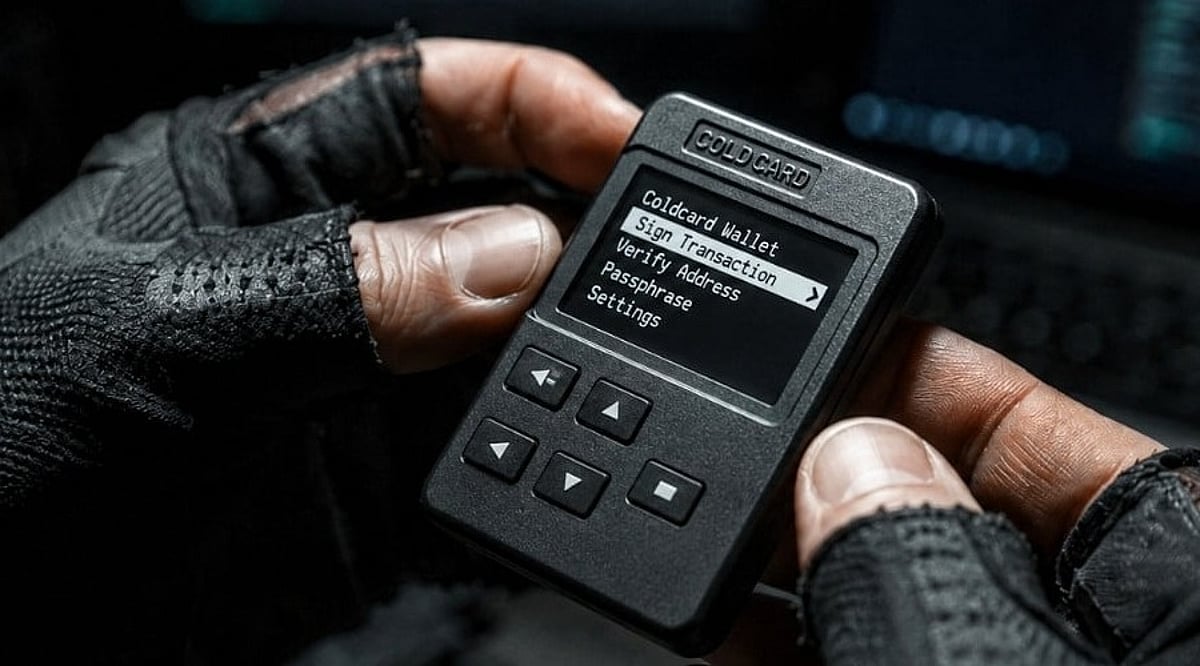
    Coldcard Bitcoin Hack Update: 64 BTC Moves Through Wasabi Mixer While 1,159 BTC Stays Dormant

    Investigators tracking the Coldcard wallet vulnerability have detected fresh movement of stolen Bitcoin through a privacy mixer. While a separate attacker has begun obscuring roughly 64 BTC via Wasabi Wallet, the largest known theft cluster remains untouched.

    1,159 BTC Still Unmoved

    Galaxy Research linked the biggest theft to approximately 1,159 BTC held across seven attacker-controlled addresses. The attacker consolidated the funds within about 41 minutes of the exploit and has not sent them to exchanges, mixers, or other identifiable services since then.

    Bitcoin’s protocol cannot freeze flagged addresses, so the funds remain spendable. However, converting such a large balance could expose the attacker. Exchanges, law enforcement agencies, and blockchain analytics firms are reportedly tracking around 600 addresses connected to the broader exploit.

    Separate Attacker Moves 64 BTC Through CoinJoin

    Analysts identified another attacker attempting to obscure approximately 64 BTC using Wasabi Wallet’s CoinJoin feature. About 10 BTC entered an initial mixing transaction, while roughly 54 BTC returned as change. The remaining Bitcoin later moved into outputs of about 7 BTC each, apparently for further mixing.

    CoinJoin combines multiple inputs and outputs, making direct links harder to establish. Still, timing patterns, output sizes, later consolidations, and exchange deposits can reveal useful clues for investigators.

    Exploit Scale and Affected Seed Phrases

    Galaxy Research estimates confirmed losses near 1,596 BTC. A suspected additional attack wave could raise the total to about 2,055 BTC, while other researchers have placed losses above 1,800 BTC.

    The vulnerability affected seed phrases created with weakened random-number generation. Firmware updates prevent new vulnerable seeds, but they cannot repair seed phrases already exposed. Affected users must create a new wallet seed and move their Bitcoin. Coldcard also destroyed remaining vulnerable inventory and urged users to generate fresh seeds.

    South Korean Users Avoided Major Losses

    South Korea’s Bitcoin community reported virtually no direct losses despite many experienced holders using Coldcard devices. Analyst Koji Higashi linked that outcome to local self-custody practices: community leaders had promoted independent entropy generation instead of relying solely on one hardware wallet manufacturer.

    Local guides described 128 coin flips for 12-word seeds and 256 coin flips for 24-word seeds. Some users converted binary results using hardware calculators rather than phones, adding another layer of protection against compromised random-number generators.

    Key Takeaways

    • The 1,159 BTC connected to the largest Coldcard attacker remains unmoved since consolidation.
    • A separate attacker has routed about 64 BTC through Wasabi Wallet CoinJoin transactions.
    • Confirmed losses stand at roughly 1,596 BTC, with possible totals exceeding 2,000 BTC.
    • Firmware updates cannot secure already exposed seed phrases; affected users must migrate to new wallets.
    • Independent entropy generation helped many Korean users avoid direct losses.
  • BlockDAG Ships 22,800 Miners as SUI and Avalanche Navigate Token Unlock Challenges

    BlockDAG Ships 22,800 Miners as SUI and Avalanche Navigate Token Unlock Challenges

    Blockchain security fundamentally determines network value, and three major projects—SUI, Avalanche, and BlockDAG—currently demonstrate contrasting approaches to defense and token distribution. Understanding these strategies helps evaluate long-term investment potential.

    SUI’s Staking and Token Unlock Dynamics

    SUI relies on a validator-based Proof-of-Stake mechanism to maintain network integrity, but ongoing token unlocks pressure its price. On August 1, 13.72 million SUI tokens (worth approximately $9.9 million) were unlocked as scheduled, representing a 0.34% supply increase. This release affected tokens from the community pool, initial contributors, and Mysten Labs treasury, contributing to a price dip of over 5%. As of early August, SUI trades around $0.68.

    Despite price weakness, underlying metrics show strong engagement. The network has processed over 4.53 billion cumulative transactions, with daily active users exceeding 200,000 on multiple days in July. The team continues development, revealing plans for Sui Basecamp 2026 and enterprise workflow tools called Spheres. However, SUI’s complete dependence on digital stake-based consensus means validator yield mechanisms remain crucial for network security.

    Avalanche’s Strong Staking and Institutional Growth

    Avalanche secures its network through capital commitment, supported by a dedicated validator base. AVAX traded between $6.59 and $6.60 on August 2, reflecting a 4% 24-hour gain while remaining flat week-over-week. A Bitwise staking report highlights that 41.5% of all AVAX is staked, indicating significant supply illiquidity and structural community commitment.

    Technological progress continues. The Avalanche Foundation launched the Helicon update on its Fuji testnet, adding continuous execution to the C-Chain, though mainnet deployment is pending. In practical adoption, Crypto.com reports that Hyundai is testing Avalanche for global stablecoin settlements. An upcoming token unlock on August 10 may create near-term volatility. Avalanche’s security model relies entirely on locked capital, making staking density a key metric.

    BlockDAG’s Hardware-Driven Security and Global Distribution

    BlockDAG takes a fundamentally different approach, using physical Proof-of-Work hardware for chain security and user acquisition. The project has begun shipping 22,800 miners across its X10, X30, and X100 product lines, scaling manufacturing toward 2,400 units per week. This physical rollout coincides with a promotional price of $0.000000017 and a planned $0.025 BuyBack target, plus a 22% discount for Live Swap buyers.

    This hardware-first strategy achieves two goals simultaneously. First, decentralized hardware mining distributes hash power, securing the ledger more robustly than concentrated capital pools. Second, physical delivery directly onboards users—each shipped miner converts a retail purchaser into an active network participant receiving ongoing mining rewards into their ecosystem wallet for trading, staking, or spending.

    Geographic diversification strengthens the network further. Deploying hardware nodes across multiple jurisdictions eliminates single-point vulnerabilities and regulatory risks. Additionally, over 3.6 million users employ the X1 mobile app as a frictionless second onboarding layer. Where SUI and Avalanche depend on financial assets locked in their ledgers, BlockDAG merges hardware security with organic user growth.

    Key Takeaways

    • SUI boasts impressive transaction throughput with 4.53 billion historical transactions, but ongoing supply unlocks pressure its $0.68 price.
    • Avalanche demonstrates strong holder commitment with 41.5% of supply staked at $6.60, backed by enterprise initiatives like Hyundai’s stablecoin project and the Helicon testnet launch.
    • BlockDAG differentiates by deploying 22,800 physical mining machines alongside 3.6 million X1 app miners, increasing network participation and scaling device throughput to 2,400 per week.

    For market participants evaluating long-term durability, the strategic distinction is clear: traditional platforms lock capital to secure ledgers, while BlockDAG uses physical hardware distribution to secure its chain while continuously onboarding daily users. This dual-purpose approach positions BlockDAG as a standout network ahead of its main exchange listings.

    Further Information

    Presale: https://purchase.blockdag.network
    Website: https://blockdag.network
    Telegram: https://t.me/blockDAGnetworkOfficial
    Discord: https://discord.gg/Q7BxghMVyu

    Disclaimer: This article is for informational purposes only and does not constitute financial or investment advice. Cryptocurrency investments carry risk; always conduct your own research before making decisions.

  • How Intent-Based Architecture Is Replacing Bridges for Safer Cross-Chain Infrastructure

    How Intent-Based Architecture Is Replacing Bridges for Safer Cross-Chain Infrastructure

    From Bridges to Intent: A Quiet Infrastructure Shift

    For most of the last decade, moving value between blockchains has relied on a mechanism that engineers quietly disliked and users learned to fear: the bridge. It worked well enough to become the default, but it also became the single most exploited surface in the entire ecosystem. As blockchain matures from a speculative curiosity into infrastructure that enterprises actually build on, the industry is replacing that mechanism — and the shift says a lot about where decentralized systems are heading.

    The replacement is called intent-based architecture, and while the name is dry, the change it represents is significant. It’s one of those quiet infrastructure shifts that doesn’t make headlines but reshapes what’s possible on top of it.

    The Bridge Was a Design Compromise, Not a Solution

    To understand why the change matters, it helps to see what bridges actually were: a workaround for a problem blockchains were never designed to solve. Each chain is its own isolated system with its own state. Getting an asset from one to another meant locking it in a smart contract on the source chain and minting a synthetic representation on the destination — an IOU backed by that locked collateral.

    That design created two structural weaknesses. The first was security. Those pools of locked collateral became enormous honeypots, and attackers drained them repeatedly, with individual exploits running into the hundreds of millions. The second was fragmentation: users ended up holding wrapped tokens that weren’t quite the real asset, liquidity splintered across dozens of bridge variants, and the experience required technical fluency most people don’t have. For a technology aspiring to be financial infrastructure, “elegant in theory, exploited in practice” is not a sustainable position.

    What Intent-Based Systems Do Differently

    Intent-based architecture inverts the model. Instead of the user specifying how a cross-chain transfer should execute — which bridge, which route, which wrapped token — they specify only the outcome they want: this asset, on that chain. A network of solvers then competes to fulfill that intent using liquidity that already exists on the destination chain, and a settlement layer guarantees the result.

    The distinction is more than semantic. Because the outcome is fulfilled from existing destination-chain liquidity rather than by locking collateral and minting synthetics, there’s no honeypot to drain and no wrapped IOU to strand. The complexity of routing across a fragmented multi-chain landscape moves off the user and into the protocol. What used to be a multi-step, error-prone process — bridge, wait, swap, hope — collapses into a single declared intention.

    This is the same architectural pattern now appearing across serious infrastructure projects, from NEAR’s intents framework to a wave of solver-based settlement networks. It reflects a broader maturation in how decentralized systems are designed: abstracting complexity away from the end user, the way every successful infrastructure layer eventually does.

    From Protocol Pattern to Real Products

    Infrastructure shifts become real when applications are built on them. CryptoRoute is one example — a non-custodial aggregator built on NEAR Intents that applies this model to cross-chain swaps and payments. A user expresses what they want; the system sources liquidity across chains and settles it, without the user ever surrendering custody or touching a bridge contract. It’s a useful illustration of how an abstract protocol pattern turns into something a non-technical person can actually use, which is ultimately the test any infrastructure has to pass.

    The same underlying capability extends naturally to payments: a merchant can accept any asset a customer holds and receive a single settled token, because the intent-based engine handles the conversion invisibly. Once the routing complexity lives in the protocol, the surface applications built on top of it get dramatically simpler — which is exactly the pattern enterprise adopters look for before they commit.

    Why This Matters Beyond Crypto-Native Users

    The significance here isn’t limited to traders moving tokens. As blockchain gets deployed as infrastructure for payments, settlement, and cross-organizational data integrity, the question of how value and state move between systems becomes central. Bridges made that movement risky and clunky. Intent-based settlement makes it safer and near-invisible — and “safer and invisible” is the precondition for any technology crossing from early adopters to mainstream infrastructure.

    None of this happens overnight. Bridges still carry significant volume, and the transition will take years. But the direction is clear: when the biggest security liability and the biggest usability barrier in a technology both get engineered out by the same architectural shift, that shift tends to define the next phase. For anyone tracking where decentralized infrastructure is genuinely heading — rather than where the hype cycle points — intent-based architecture is one of the more consequential developments to watch.

    Disclaimer: This article is for informational purposes only and does not constitute financial or investment advice. Cryptocurrency and blockchain products are volatile and carry risk; conduct your own research before making decisions.

  • How to Safeguard Your Crypto Private Keys and Seed Phrases from Theft

    How to Safeguard Your Crypto Private Keys and Seed Phrases from Theft

    Private keys and seed phrases are the foundation of cryptocurrency security. This guide explains simple ways to prevent theft, avoid phishing scams, use secure storage, and protect digital assets from cybercriminals.

    Cryptocurrency gives complete control over digital assets without the need for a bank or another financial institution. This freedom also comes with full responsibility for security. A private key or seed phrase works like the master key to a crypto wallet. If either falls into the wrong hands, every asset within the wallet can disappear within minutes.

    Why This Matters

    Unlike a bank transfer, a blockchain transaction cannot usually be canceled or reversed. Once funds leave a wallet, recovery is extremely difficult. For this reason, strong security habits are just as important as smart investment decisions.

    Recent reports show that crypto theft remains a serious problem. According to the 2026 Crypto Crime Report from TRM Labs, infrastructure attacks, including theft through private keys, seed phrases, and wallet access, caused about $2.2 billion in losses during 2025. These attacks made up 76% of all cryptocurrency losses that year. Another report found that crypto theft reached nearly $400 million in January 2026 alone, with phishing scams responsible for a large share of the stolen funds.

    Difference Between a Private Key & a Seed Phrase

    The private key represents a secret code that allows for the transfer of cryptocurrencies from a wallet. Indeed, there is at least one private key associated with every cryptocurrency wallet.

    On the other hand, the seed phrase is a sequence formed by 12, 18, or 24 random words. The seed phrase is used to create and restore the crypto wallet. A person possessing this phrase will be able to restore the wallet on another device and thus access its contents.

    Since both mechanisms provide complete access to crypto assets, they must be safeguarded at all times. Even the slightest error may cause an irreversible loss of funds.

    Keep the Seed Phrase Offline

    Offline storage remains one of the safest ways to protect a seed phrase. A simple piece of paper kept in a secure place offers much better protection than a digital copy stored on an internet-connected device.

    Many crypto owners also choose metal backup plates. These plates can survive fire, water damage, and other accidents that may destroy paper records. A backup stored in a secure safe or another protected location adds another layer of safety.

    Cloud storage, email accounts, messaging apps, and online note applications should never hold a seed phrase. If hackers break into those accounts, the recovery phrase may become easy to steal.

    Choose a Hardware Wallet for Better Security

    A hardware wallet keeps the private keys in a small metal device and does not leave them on the computer or mobile phone. Since the keys are only in the hardware wallet, hackers cannot reach them through the internet.

    After requesting a transaction, the wallet will demand physical confirmation. This additional requirement prevents many attacks on software wallets from being carried out. Even if malware gets onto the computer, it won’t be able to steal the private keys.

    If you keep your cryptocurrencies for a long time, using hardware wallets is a great option for storing your investment.

    Stay Alert for Phishing Scams

    Phishing has become one of the biggest threats in the cryptocurrency world. Criminals create fake emails, websites, text messages, and social media accounts that look almost identical to trusted companies.

    The goal is simple. Victims receive a request to enter a seed phrase or private key to fix a fake problem or verify a wallet. Once that information becomes available to the attacker, the wallet can disappear within minutes.

    A recent case in Australia showed how dangerous these scams have become. Criminals sent fake letters through the mail with QR codes that led to fraudulent websites. These scams caused more than $1.47 million in reported losses within only a few days. Authorities warned that no legitimate crypto company will ever ask for a private key or seed phrase.

    Avoid Digital Copies

    Digital copies create unnecessary risks. A screenshot, photo, text document, or email draft may appear safe, but hackers often search for exactly these types of files after they break into a device.

    Many types of malware scan computers and smartphones for wallet information. Once a recovery phrase appears, criminals can send it to remote servers within seconds. For this reason, physical storage remains much safer than digital storage.

    Use Strong Account Security

    Although two-factor authentication cannot directly protect a private key or seed phrase, it can protect exchange accounts and other crypto services.

    Security becomes much stronger with unique passwords, authentication apps instead of text messages, biometric verification, and login alerts. These simple steps make unauthorized access much more difficult.

    Every crypto account should have its own password. Password reuse increases the chance that one stolen password may expose several accounts.

    Check Every Website Carefully

    Fake wallet websites continue to fool many cryptocurrency users. Some fake pages look almost identical to official websites, with only one small change in the web address.

    Wallet software should always come from official sources. Before any login or download, every website address deserves a careful check. A few extra seconds can prevent a major financial loss.

    Suspicious links received through email, text messages, or social media deserve special attention because many phishing attacks begin this way.

    Watch Out for Social Engineering

    Not every crypto theft depends on advanced technology. Many criminals simply trick people into giving away valuable information.

    Fake customer support agents, investment experts, giveaway organizers, and recovery services often claim that wallet details are necessary to solve a problem. These stories may sound believable, but the goal remains the same: steal the recovery phrase.

    Security experts also reported cases where hidden cameras secretly recorded seed phrases during wallet setup. This type of attack shows that physical privacy matters just as much as online security.

    Stay Updated on New Threats

    Crypto crime changes quickly. New scams appear every year, and attackers continue to find different ways to target wallet owners.

    Recent investigations found malware disguised as cryptocurrency recovery software. Instead of helping users recover lost wallets, the software stole passwords, wallet information, and personal files from infected computers.

    Regular software updates help close known security weaknesses. Updated operating systems, wallet applications, web browsers, and antivirus programs reduce the chance of a successful attack.

    Final Thoughts

    Private keys and seed phrases confer full ownership of cryptocurrency assets. When stolen, it is typically impossible to reverse losses, as blockchain transactions are irreversible.

    The most effective ways of protecting against theft include safe offline storage, hardware wallets, thorough checks of websites, strong account security, and understanding of new scams. Recent reports reveal that stolen wallet credentials are among the most common causes of loss of funds in the cryptocurrency business. As cryptocurrencies expand in popularity, the importance of proper security practices cannot be underestimated.