Tag: blockchain

  • Filecoin (FIL) Jumps 22% as Trading Volume Pushes Price Toward $1

    Filecoin (FIL) Jumps 22% as Trading Volume Pushes Price Toward $1

    Filecoin’s native token FIL has surged more than 22% in the past day, climbing from the mid-$0.80 range to roughly $1.00. The sharp move was fueled by a massive spike in spot trading volume, which surpassed $500 million and jumped more than 1,000% compared with recent activity. Derivatives data also shows rising funding rates and elevated short liquidations, adding extra buying pressure during the rally.

    What Is Driving the Filecoin Rally?

    The latest price action did not follow a single major announcement. Instead, the move was driven by a combination of higher spot liquidity, forced buybacks from short sellers, and momentum-based trading. As FIL moved higher, traders with short positions were liquidated, creating additional demand and accelerating the climb.

    With the token now testing the psychologically important $1.00 level, the key question is whether buyers can hold the line or whether the market needs to cool off after such a rapid advance.

    Solstice Proposal and Network Developments in Focus

    The Filecoin team continues to work on long-term network improvements. The Solstice proposal, published on July 17, 2026, aims to remove bottlenecks in Filecoin Plus datacap approvals for storage providers. The governance plan is designed to improve storage efficiency and make it easier for providers to participate in the network.

    Filecoin is also expanding its role in decentralized storage as AI applications generate larger datasets and demand more reliable storage capacity. Activity around the Filecoin Virtual Machine is broadening the network’s use cases beyond simple file storage.

    Another key event on the horizon is the scheduled end of Filecoin’s vesting program on October 15, 2026. Market expectations point to a 75% reduction in FIL token emissions after that date, a supply-side change that could support the token’s longer-term outlook even as short-term trading stays volatile.

    FIL Price Levels and Technical Signals

    FIL traded near $0.9949, sitting just below the $1.00 resistance level. A sustained breakout above that area could open the path toward $1.05 and $1.10. However, the Relative Strength Index (RSI) has reached 76.31, placing the market in overbought territory. The chart also shows bearish divergence, with momentum weakening even as price moved higher.

    If buyers lose control of $1.00, immediate support is expected near $0.95 and $0.90. Earlier technical analysis pointed to Ichimoku Kijun resistance near $0.96385, with FIL trading below its MA-20 and MA-50 on the hourly chart. The MA-200 remained intact as longer-term support, while MACD and ADX indicators suggested bearish momentum at the time.

    Before the latest surge, intraday oscillators including RSI, Stoch RSI, and CCI showed oversold conditions. Bull/Bear Power and the Awesome Oscillator reflected seller dominance, and the previous outlook projected a range of approximately $0.8289 to $0.9483 over two to three sessions, with a 60% probability of a support break and 40% probability of an upside move.

    Outlook

    Filecoin’s 22% rally has brought FIL to a critical decision point. Spot volume, short liquidations, and momentum buying powered the move, but overbought conditions and bearish divergence raise caution flags. Near-term volatility is likely to remain elevated as traders watch the $1.00 level, while Solstice developments and the expected reduction in token emissions continue to shape the longer-term narrative.

  • Velocity Secures $10M Extension as Visa and Circle Join Its Stablecoin Infrastructure Push

    Velocity Secures $10M Extension as Visa and Circle Join Its Stablecoin Infrastructure Push

    Velocity, a London-based stablecoin payments startup, has added $10 million to its Series A round, bringing the total to $48 million. The extension was joined by Visa Ventures, Circle Ventures, and Ripple, alongside three other investors. The funding will support the company’s infrastructure for enterprise treasury, settlement, and liquidity operations using stablecoins.

    The latest raise comes just over two months after Velocity announced its initial $38 million Series A on July 14, led by Dragonfly and FirstMark, with participation from Ripple. The new extension adds Visa Ventures, Circle Ventures, Haun Ventures, Translink Capital, and Mirana Ventures to the cap table.

    Velocity builds systems that allow banks, acquirers, merchants, and payment providers to integrate stablecoin settlement, liquidity, and treasury operations without replacing existing payment infrastructure. The company aims to make money movement more continuous and reduce reliance on prefunding and settlement outside traditional banking hours.

    Visa has noted that stablecoins are playing an increasingly important role in moving value across its ecosystem. Rubail Birwadker of Visa stated that companies like Velocity can help expand stablecoin use for customers and partners. Velocity founder and CEO Eric Queathem emphasized that the new investors bring valuable insight as the company scales its stablecoin infrastructure.

    With the backing of Circle Ventures and Ripple, Velocity gains investors directly tied to regulated stablecoins, payments, and institutional finance. Translink Capital adds connections to corporate and institutional partners across Asia. The company plans to use the new capital to support issuers, acquirers, payment providers, financial institutions, and merchants worldwide, connecting stablecoins with existing banking, treasury, and settlement systems.

  • XRP Ledger Transaction Value Surges: Are Institutions Driving Network Activity?

    XRP Ledger Transaction Value Surges: Are Institutions Driving Network Activity?

    Market Structure Shifts as Trading Volume Grows

    The XRP Ledger is processing larger transactions through a shrinking number of accounts, a pattern that aligns with professional participation but also raises concerns about market concentration. Distinguishing genuine institutional adoption from automated activity requires more than a rising transaction count.

    Order Book Volume Climbs While Active Accounts Decline

    Evernorth’s second-quarter 2026 liquidity update reported an average daily order book volume of 3.57 million XRP, a 79% year-over-year increase. Meanwhile, the number of accounts executing those trades fell from 1,864 to 1,111. Average daily volume per trading account nearly tripled, rising from 1,072 XRP to 3,217 XRP. Order books also increased their share of on-chain trading from 54% to 81%.

    These figures describe a meaningful change in market structure: fewer participants are supporting considerably higher order book turnover.

    Stablecoin Liquidity Expands

    Evernorth also reported that RLUSD balances on the ledger averaged USD 539 million during the quarter, compared with USD 73 million a year earlier. Growing dollar liquidity can facilitate settlement and trading without requiring participants to hold equivalent exposure to XRP’s price.

    Separately, 21shares reported that the XRP Ledger settled USD 159.9 billion during the first half of 2026. By June 30, the network held 52% of RLUSD’s USD 1.56 billion supply. The two RLUSD measures are not directly comparable—one is a quarterly average, the other a point-in-time snapshot—but together they indicate an expanding stablecoin presence on the ledger.

    Automated Activity Clouds the Picture

    A September 8 analysis from Bitquery attributed 93.2% of August transaction traffic to 793 accounts and described substantial automated order activity. This finding concerns transaction traffic, not executed order book volume, but it shows why raw transaction counts can exaggerate the breadth of adoption.

    Institutions commonly automate trading, so automation alone does not invalidate economic activity. However, repeated orders or transfers cannot establish meaningful customer demand without examining execution, counterparties, and purpose.

    Network Usage vs. Token Returns

    Network usage and token returns are separate questions. According to 21shares, reported first-half revenue declined 81.6% year-over-year to USD 1.18 million despite substantial settlement value. Low fees can make a network attractive for payments while limiting revenue per transfer. Consequently, higher settlement totals should not automatically be interpreted as forecasts for XRP appreciation.

    A stronger institutional thesis would combine sustained liquidity, identifiable participants, repeat commercial settlement, and diversified activity. Researchers should also separate XRP transfers from stablecoin movements and tokenized asset transactions.

    Current evidence supports a narrower conclusion: the XRP Ledger is processing concentrated financial activity with growing stablecoin liquidity. Whether that becomes broad institutional adoption depends on durable usage, transparent measurement, and demonstrable economic purpose.

    Why This Matters

    Growing transaction value and stablecoin liquidity could strengthen the XRP Ledger’s role in institutional finance. However, concentrated activity means investors must distinguish genuine commercial adoption from automated trading before treating network growth as evidence of broader institutional demand.

    Final Thoughts

    The XRP Ledger is handling greater financial value with expanding stablecoin liquidity, but institutional adoption remains difficult to quantify. Sustained commercial settlement, broader participation, and identifiable institutional activity will provide stronger evidence of long-term adoption.

    Frequently Asked Questions

    Is institutional activity increasing on the XRP Ledger?

    XRPL data shows higher order book volumes, growing stablecoin liquidity, and substantial settlement value. However, available figures do not conclusively identify whether the activity comes from banks, funds, trading firms, or other participants.

    How much XRP trading volume did XRPL record in Q2 2026?

    Evernorth reported an average daily order book volume of 3.57 million XRP, representing a 79% year-over-year increase. At the same time, the number of accounts placing those trades declined from 1,864 to 1,111.

    How important is RLUSD to XRP Ledger activity?

    RLUSD is becoming an increasingly important source of dollar-denominated liquidity on XRPL. Evernorth reported average balances of USD 539 million during Q2, compared with USD 73 million during the corresponding period a year earlier.

    Does higher XRPL transaction value mean XRP’s price will rise?

    Not necessarily. Network settlement value and XRP investment returns are separate measures. Higher activity can demonstrate blockchain usage without automatically generating equivalent network revenue or demand for the XRP token.

    What should investors watch for evidence of XRPL institutional adoption?

    Investors should monitor identifiable institutional participants, sustained liquidity, commercial settlement, and diversified activity involving XRP, stablecoins, and tokenized assets. Broader participation would provide stronger evidence than transaction counts alone.

  • How Decentralized Finance Is Reshaping Traditional Banking: Key Changes and Risks

    How Decentralized Finance Is Reshaping Traditional Banking: Key Changes and Risks

    Decentralized finance (DeFi) is fundamentally altering how people interact with financial services by leveraging blockchain technology, smart contracts, and digital assets to provide alternatives to conventional banking. While still in its early stages, DeFi has captured the attention of central banks, regulators, and investors worldwide.

    What Is DeFi?

    DeFi enables users to lend, borrow, trade, and transfer digital assets without relying on a centralized intermediary like a bank. Instead, these activities are executed through automated smart contracts on blockchain networks. The Bank for International Settlements notes that DeFi attempts to recreate many traditional financial services using blockchain and smart contracts, while the Federal Reserve has highlighted tokenization and smart contracts as technologies that could increase efficiency in finance.

    How DeFi Differs from Traditional Banking

    The fundamental difference lies in the role of the middleman. In traditional banking, a loan application requires human review, approval, and management. DeFi replaces many of these steps with smart contracts—self-executing programs that automatically carry out transactions when predefined conditions are met.

    • Lending: Users can deposit digital assets into a liquidity pool and earn interest, while borrowers provide collateral to take out loans—all without a bank employee approving each step.
    • Trading: Decentralized exchanges allow peer-to-peer token swaps directly from users’ wallets, bypassing centralized order books.
    • Payments: Stablecoins—digital tokens pegged to fiat currencies like the US dollar—facilitate fast, low-cost transfers across blockchain networks. The Federal Reserve reported that stablecoin market capitalization grew by approximately 50% during 2025, with increased activity in payments and DeFi.

    Risks and Challenges

    Despite its promise, DeFi carries serious risks. Smart contract bugs can lead to catastrophic losses. Platforms are vulnerable to hacks, sudden price crashes, and liquidity crises. The BIS warns about high leverage, interconnectedness among DeFi protocols, and the potential for contagion. Additionally, many DeFi projects are not truly decentralized—small groups often retain control over key decisions.

    Regulatory clarity remains a major hurdle. Without clear rules, both banks and DeFi platforms hesitate to fully integrate. The most pressing question is not whether DeFi will replace banks, but how much of its technology banks will adopt.

    The Future: Blending DeFi and Traditional Banking

    DeFi has already shifted the conversation around financial services. It demonstrates that blockchain and smart contracts can automate tasks once handled exclusively by banks. Stablecoins could become a mainstream payment tool.

    However, traditional banks retain advantages: regulation, customer support, deposit insurance, and risk management expertise. The likely outcome is a hybrid future, where banks incorporate blockchain for payments and asset management, while DeFi platforms continue to innovate.

    Frequently Asked Questions

    1. What is decentralized finance? DeFi uses blockchain and smart contracts to offer lending, borrowing, trading, and payments without a bank intermediary.
    2. How is DeFi different from traditional banking? Traditional banking relies on centralized institutions; DeFi uses automated, code-based systems on blockchain.
    3. Can DeFi replace traditional banks? Not in the near term. Banks provide regulated services, support, and deposit protection that DeFi currently lacks.
    4. How do smart contracts help DeFi? They automatically execute transactions when conditions are met, reducing the need for manual processing.
    5. Why are stablecoins important? Stablecoins maintain a steady value, enabling efficient digital payments and DeFi transactions.
  • Trump Accepts Expanded Crypto Ethics Enforcement as CLARITY Act Heads to Senate Vote

    Trump Accepts Expanded Crypto Ethics Enforcement as CLARITY Act Heads to Senate Vote

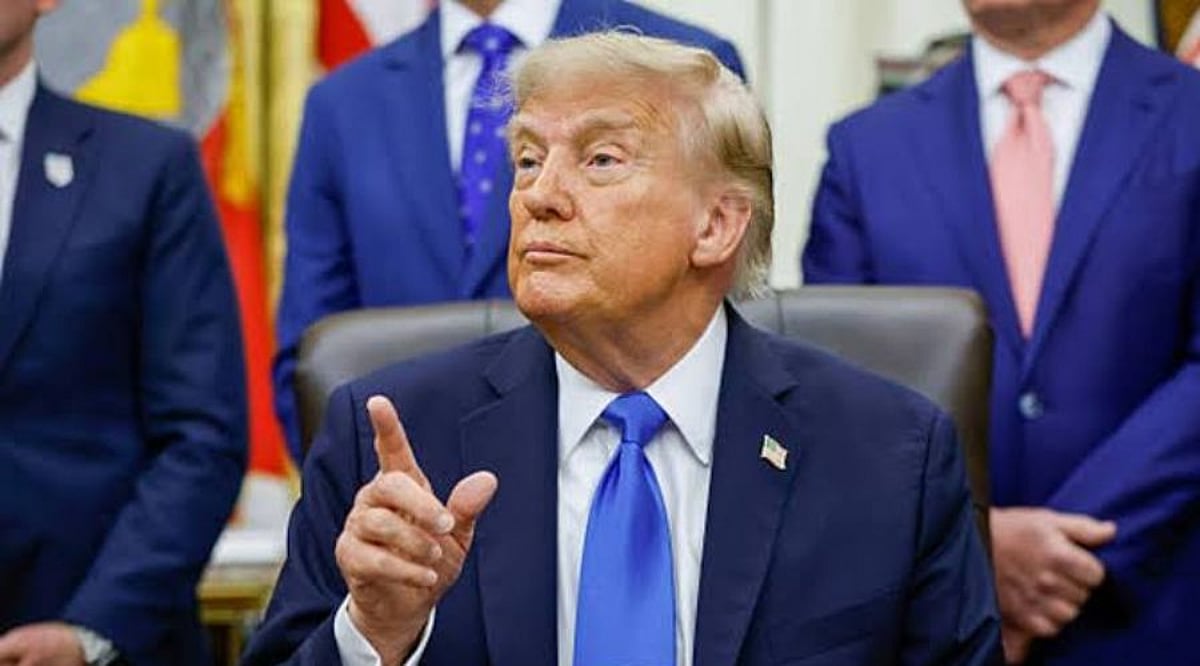
    President Donald Trump has agreed to significantly tougher ethics provisions in the CLARITY Act, clearing the way for a critical Senate vote scheduled for Tuesday. The revised compromise grants state attorneys general a broader enforcement role, addressing concerns over potential presidential conflicts of interest in the crypto space.

    State Attorneys General Gain Broadened Enforcement Powers

    The original version of the bill barred federally elected officials, their spouses, and federal judges from issuing digital assets. Critics argued, however, that the language did not adequately address ethical questions tied to President Trump’s extensive crypto holdings and business interests.

    Republican Senator Thom Tillis and Democratic Senator Ruben Gallego, joined by several of their Democratic colleagues, pushed for stronger measures. Their proposal would allow state attorneys general to enforce the law in coordination with the U.S. Department of Justice.

    According to Republican Senators Cynthia Lummis, Tim Scott, and John Boozman, Trump accepted a substantial portion of the proposed framework. They confirmed that the revised text now gives state attorneys general a meaningful enforcement role.

    Presidential Conflict-of-Interest Questions Remain Central

    Senator Angela Alsobrooks of Maryland, considered a key swing vote, said state attorneys general must be able to step in and prosecute when the Justice Department fails to act. She added that she would not support any bill that left ethical risks unaddressed.

    White House crypto adviser Patrick Witt said the administration and Senate Republicans had remained responsive to Democratic policy demands throughout more than a year of negotiations.

    Presidents have historically been exempt from federal conflict-of-interest laws because they oversee the entire government. While some modern presidents have placed assets in blind trusts, Cabinet officials are generally expected to divest or recuse themselves from specific matters.

    Trump’s Crypto Business Draws Continued Scrutiny

    Last year’s stablecoin law prohibited members of Congress and their families from profiting from stablecoin activities, but the restrictions did not extend to President Trump or his family. The White House has said Trump recuses himself from family business decisions handled by his sons.

    According to data referenced in the bill debate, Trump’s crypto-related revenues reached $1.2 billion, with more than $600 million stemming from sales of his branded meme coins through CIC Digital LLC. In May, Trump hosted leading investors in the $TRUMP meme coin at his northern Virginia golf club; the White House said he attended the event in a personal capacity.

    What to Watch Before the Senate Vote

    With the Senate vote looming, the compromise appears designed to satisfy both Democratic critics and Republican supporters. The expanded role for state attorneys general is expected to be central to the debate. How senators align on the measure could determine whether the CLARITY Act advances to final passage.

  • Blockchain Adoption Across Industries: 10 Sectors Revolutionized by Distributed Ledger Technology

    Blockchain Adoption Across Industries: 10 Sectors Revolutionized by Distributed Ledger Technology

    Blockchain technology has moved far beyond its cryptocurrency roots. Businesses worldwide are now embedding distributed ledgers into daily operations to gain stronger transparency, tighter security, and fewer costly intermediaries. MarketsandMarkets projects the global blockchain market will reach USD 248.9 billion by 2029, up from just USD 20.1 billion in 2024. The expansion spans banking, healthcare, agriculture, real estate, and more. Here are ten sectors where blockchain is reshaping business models and raising accountability standards.

    1. Banking and Financial Services

    Banks adopted blockchain early to accelerate cross-border payments. Ripple’s payment network settles transfers in seconds, not days. JPMorgan’s Onyx platform now processes billions daily through blockchain-based repo transactions. This shift has cut costs and lowered settlement risks.

    2. Supply Chain and Logistics

    Blockchain gives companies full visibility into product movement. Walmart uses IBM’s Food Trust system to trace food origins within seconds—a process that used to take days. Key benefits include real-time tracking across borders, reduced paperwork, and faster dispute resolution.

    3. Healthcare

    Patient records are often scattered across hospitals and insurers. Blockchain enables secure data sharing while protecting privacy. Estonia has used blockchain since 2016 to guard millions of health records from tampering and unauthorized access.

    4. Real Estate

    Property deals involve heavy paperwork and many middlemen. Blockchain allows tokenized ownership, letting buyers purchase fractions of properties. Propy has already facilitated blockchain-based real estate sales across several US states.

    5. Insurance

    Claims processing suffers from delays and fraud. Smart contracts automate verification and trigger instant payouts. Etherisc offers parametric crop insurance that uses real-time weather data for settlements, helping farmers in Africa and Asia.

    6. Voting and Governance

    Election security is a global concern. Blockchain-based voting creates immutable records. West Virginia tested the system for overseas military voters, proving remote voting can remain secure and verifiable.

    7. Energy Sector

    Blockchain enables peer-to-peer energy trading. Homeowners with solar panels can sell surplus power directly. Power Ledger, an Australian firm, runs such platforms in Japan and the US, reducing reliance on centralized utilities.

    8. Entertainment and Media

    Royalty distribution has long frustrated artists. Blockchain tracks content use and automates fair payments. Audius lets musicians earn directly without record labels. Non-fungible tokens also allow creators to hold verifiable proof of ownership for digital art.

    9. Agriculture

    Buyers question claims about organic or sustainable farming. Blockchain verifies the true origin of products. AgriDigital in Australia manages grain transactions via blockchain, giving farmers faster payments and greater transparency.

    10. Government and Public Records

    Land registries and identity systems benefit from blockchain permanence. Sweden has tested blockchain land registries since 2016, cutting transaction times from months to days. Georgia’s public registry agency also secures property titles this way.

    Challenges Remaining

    Scalability limits affect transaction speed. Unclear regulations across countries, high energy use in some consensus models, and difficulty integrating with legacy systems remain hurdles. Companies must weigh these before scaling blockchain projects further.

    Final Words

    Blockchain now secures medical records, simplifies supply chains, and automates financial transactions. Businesses once hesitant are investing in serious pilots. As regulations mature and scalability improves, adoption will accelerate. Companies acting now will likely lead their industries later.

  • Pepeto Presale Surpasses $10.96 Million Amid Strong Ethereum Forecasts

    Pepeto Presale Surpasses $10.96 Million Amid Strong Ethereum Forecasts

    Ethereum-based crypto project Pepeto has announced that its presale has raised over $10.96 million, with the current stage filling faster than earlier ones. The milestone arrives as Ethereum trades near $2,467 and major financial institutions release bullish long-term price targets. Pepeto’s platform focuses on reducing transaction costs, improving cross-chain interoperability, and enhancing token security.

    Ethereum Price Targets Rise

    Standard Chartered forecasts Ethereum reaching $4,000 by end of 2026, $15,000 in 2027, $22,000 in 2028, $30,000 in 2029, and $40,000 by 2030. The bank’s head of digital assets research described 2026 as the ‘year of Ethereum,’ according to Finance Magnates. At current prices, the 2030 target represents a more than 16-fold increase. Ethereum traded below $1 in 2015, per CoinMarketCap.

    ETF inflows further strengthen Ethereum’s market backdrop. U.S. spot ETH funds attracted $697 million between August 17 and 21, followed by $824 million the next week—the largest five-day inflow since the funds launched, according to 247 Wall St.

    Pepeto Expands Platform Features

    Pepeto’s platform includes zero-fee trading, allowing users to apply the full trade amount to each transaction. This feature addresses high gas costs that often make smaller trades uneconomical.

    The project also offers a zero-cost bridge connecting Ethereum, BNB Chain, and Solana, capable of transferring assets across these networks in seconds. Additionally, Pepeto integrates an AI screening system that checks tokens before listing, responding to security concerns after crypto users lost $3.4 billion in 2025, as reported by Cointelegraph citing Chainalysis data.

    SolidProof audited all contracts before the presale opened. Pepeto highlights large wallet positions visible on-chain and repeat participation from earlier buyers. Meanwhile, meme coin communities have been actively sharing and promoting the project, drawing comparisons to early growth around Shiba Inu and Dogecoin.

    The official Pepeto website lists the current presale stage, product roadmap, and participation details. Buyers can review these materials alongside Ethereum forecasts, ETF flow data, and the platform’s stated features.

    Conclusion

    Pepeto’s presale exceeded $10.96 million against a backdrop of positive Ethereum forecasts and strong ETF inflows. The project’s zero-fee trading, cross-chain bridge, AI token screening, and audited contracts aim to address common user pain points. Prospective buyers can explore the roadmap and presale terms on the official website.

  • Polkadot (DOT) Price Analysis: Volume Surges Past $226M as Elastic Scaling and Staking Overhaul Drive Market Attention

    Polkadot (DOT) Price Analysis: Volume Surges Past $226M as Elastic Scaling and Staking Overhaul Drive Market Attention

    Polkadot’s DOT token drew renewed market attention after 24-hour trading volume climbed above USD 226 million, while price remained under pressure on September 12. DOT traded at USD 1.0454 on OKX, holding near trendline support after an early-September rally faded.

    Data supplied for September 12 showed DOT still down on the week despite stronger trading activity. Coinglass data also showed longs absorbed almost all liquidations across the 12-hour and 24-hour windows.

    Scaling Boosts Capacity

    BSCN reported that Polkadot’s elastic scaling upgrade lets one parachain use several cores at once. That structure allows a parachain to push up to three blocks into one relay-chain slot.

    Previously, a parachain typically placed one block into each slot. Under the new system, chains can buy extra processing capacity through coretime using DOT, either in bulk or on demand.

    The upgrade moves the main performance constraint toward each chain’s block producers rather than the wider Polkadot network. Meanwhile, volume above USD 226 million showed that trading activity increased.

    DOT Tests Key Support

    DOT traded at USD 1.0454 on the daily DOT/USDT chart at 02:21 UTC-3. Price held just above an ascending trendline and a support area near the 20 EMA. The bullish setup depends first on support at USD 0.9733. A move above USD 1.2773 would open levels at USD 1.6584 and USD 2.0028, according to the supplied chart analysis.

    A close below USD 0.9733 would expose USD 0.9550 and the longer EMA near USD 0.9111. The next lower level sits at USD 0.8114, while USD 2.4032 marks the highest chart resistance.

    Staking Rules Shift Risk

    Polkadot is also advancing a staking redesign through Referendum 1890. The proposal requires every validator to lock at least 10,000 DOT as self-stake before the next phase begins.

    OpenGov showed 100% support in the supplied data, and Polkadot targets May 31 for enactment. Validators that fail to post the required bond risk losing active-set status through chilling.

    After passage, nominators become unslashable, and the unbonding period drops from 28 days to roughly 24 to 48 hours. Validators would then carry direct slashing exposure through self-stake. By mid-June, Polkadot plans to add validator rewards in unlocked DOT tied to self-stake. Those rewards will later carry a one-year vesting period, while the commission model will phase out.

    The redesign follows a March runtime upgrade that introduced the slashable 10,000 DOT self-stake floor and a 10% minimum validator commission. That overhaul also cut annual DOT issuance by 53.6%.

    Polkadot also capped total supply at 2.1 billion tokens under the broader economic reset. Analysts identified USD 0.9733 to USD 1.2773 as the key range to watch this week.

    Conclusion

    DOT’s volume surge and elastic scaling upgrade have renewed attention around Polkadot, while price remains near key support. Referendum 1890 also reshapes staking risk and liquidity. Traders now face a clear range, with USD 0.9733 support and USD 1.2773 resistance defining the next technical test.

  • Crypto Self-Custody Explained: How It Works, Risks, and How to Stay Safe

    Crypto Self-Custody Explained: How It Works, Risks, and How to Stay Safe

    Self-custody gives cryptocurrency owners direct control over their assets by removing exchanges or banks from the key-management equation. Although this approach reduces counterparty risk, it also places full responsibility for security on the individual investor. Understanding how self-custody works—and where it can fail—is essential before moving funds off a centralized platform.

    How Crypto Self-Custody Works

    Cryptocurrency transactions are recorded on a blockchain, but the ability to authorize those transactions depends on cryptographic keys. On a custodial exchange, the platform controls the private keys. In a self-custody wallet, the user holds the keys and, by extension, full control over the assets.

    Self-custody wallets typically generate a 12- or 24-word recovery phrase. This phrase is the backup that can restore access to the wallet if the original device is lost, damaged, or replaced. However, losing the recovery phrase can mean losing access to funds permanently, because there is no central company that can reset the wallet or recover the keys.

    Hot Wallets vs. Hardware Wallets

    Self-custody comes in different forms. Hot wallets run on internet-connected devices such as smartphones and computers, making them convenient for frequent transactions. Hardware wallets, by contrast, keep private keys and signing information offline, making them a better option for long-term storage.

    Hardware wallets are not completely risk-free. In July 2026, vulnerabilities in seed generation affected multiple Coldcard wallets. TRM Labs reported that attackers stole approximately 1,816 BTC—worth around USD 116 million—from more than 5,200 wallets.

    Human Error Remains a Major Risk

    Assets can be lost without any breach of the underlying blockchain. Phishing attacks, malicious apps, exposed recovery phrases, and signing fraudulent transactions can all compromise a self-custody wallet. Because blockchain transactions are typically irreversible, one mistaken action can be permanent.

    Physical threats are also rising. Chainalysis estimates that attacks against cryptocurrency holders resulted in about USD 30 million stolen during the first half of 2026. Home invasions accounted for 37% of reported incidents, up from 26% in 2023.

    Blockchain Infrastructure Can Still Fail

    Self-custody does not eliminate risks in the infrastructure surrounding blockchains. On September 6, attackers withdrew roughly 4,000 BTC from the Bitcoin-based Liquid Network, initially worth about USD 319 million. TRM Labs reported that approximately 85%—USD 272 million—was returned after the vulnerability was patched, leaving about USD 47 million with the attackers.

    How to Reduce Self-Custody Risks

    • Keep recovery phrases offline and never share them with anyone.
    • Verify wallet software and transaction addresses before sending funds.
    • Keep device firmware and wallet applications updated.
    • Avoid signing unknown or suspicious transactions.
    • Separate long-term holdings from wallets used for DeFi or frequent transactions.

    These precautions can help reduce the chance of losing funds, but they do not eliminate risk entirely. Users must remain vigilant about both online and physical threats.

    Why This Matters

    Crypto theft remains a serious concern. According to TRM Labs, the first half of 2026 saw 207 hacks and USD 972 million stolen. These figures highlight the importance of wallet protection and of strengthening the digital-asset infrastructure that supports self-custody.

    Final Thoughts

    Self-custody offers direct ownership, not guaranteed protection. Investors trade the counterparty risk of centralized custodians for personal responsibility over keys, backups, and transactions. For users who are prepared to manage that responsibility carefully, self-custody can be a powerful way to maintain financial control. For others, a single security mistake can be irreversible.

    Frequently Asked Questions

    What does self-custody mean in cryptocurrency?

    Self-custody means the user controls the private keys required to access and transfer their crypto assets. Unlike custodial exchanges, no centralized platform holds the keys on the user’s behalf.

    What happens if you lose a self-custody wallet recovery phrase?

    A recovery phrase can restore access to a self-custody wallet if the original device is lost or damaged. If both wallet access and the recovery phrase are lost, the funds may be permanently inaccessible.

    Are hardware wallets safer than hot wallets?

    Hardware wallets can reduce exposure to online attacks by keeping signing information offline. However, vulnerabilities, phishing, compromised recovery phrases, and user errors can still cause losses.

    What are the biggest risks of crypto self-custody?

    Major risks include losing recovery phrases, phishing attacks, malicious wallet software, signing fraudulent transactions, and hardware vulnerabilities. Unlike traditional accounts, fraudulent or accidental blockchain transactions can often be irreversible.

    How can investors make crypto self-custody safer?

    Users should keep recovery phrases offline, verify wallet software and addresses, update firmware, and avoid unfamiliar transaction requests. Separating long-term holdings from frequently used wallets can also reduce exposure.

    Disclaimer: This article is for informational purposes only and does not constitute financial or investment advice. Cryptocurrencies carry significant risk, and you should conduct your own research before making any investment decisions.

  • Why Crypto Exchanges Remain Vulnerable Even After Passing Security Audits

    Why Crypto Exchanges Remain Vulnerable Even After Passing Security Audits

    Security audits are a cornerstone of trust in the cryptocurrency world. They signal that a platform’s code has been examined by experts. Yet, history shows that many audited platforms still fall victim to hacks. Understanding why helps investors and users stay cautious. Here are seven key reasons crypto platforms can be compromised even after a clean audit.

    1. New Code Introduces Fresh Risks

    A security audit evaluates only the code and systems present at that moment. Once developers add features, modify functionality, or integrate new services, the platform’s attack surface changes. These updates can introduce vulnerabilities that the original audit never saw, leaving the platform exposed despite a previously clean report.

    2. Audits Have Limited Scope

    Audits typically focus on a predefined set of contracts, systems, or infrastructure. They cannot examine every external service or blockchain protocol a platform relies on. Vulnerabilities lurking outside the audit’s scope—such as in third-party oracles or cross-chain bridges—may go undetected.

    3. Zero-Day Vulnerabilities

    Attackers sometimes discover security flaws that no researcher has yet identified. These zero-day exploits can be used before developers have a chance to patch them. No audit can guarantee protection against threats that do not yet exist.

    4. Human Error Undermines Technical Security

    Even the strongest code can be bypassed through mistakes by employees, developers, or users. Phishing attacks, leaked credentials, misconfigurations, and unsafe operational practices give attackers a way in. In these cases, the audited software remains sound, but the people and processes around it become the weak link.

    5. Smart Contract Interactions Create Hidden Flaws

    Crypto platforms often rely on multiple smart contracts and protocols that interact. A platform may appear secure on its own, but a flaw in a connected contract can expose it. Unexpected interactions between contracts can also create attack vectors that a standalone audit would miss.

    6. Compromised Private Keys Bypass All Code Protections

    Security audits focus on code, not on key management. If attackers steal or compromise administrative private keys or privileged credentials, they can move funds or make unauthorized changes. Strong code cannot protect a platform when critical keys are already in the wrong hands.

    7. Attack Techniques Are Constantly Evolving

    Cybersecurity is a moving target. Attackers continuously develop new methods, meaning a platform secure today may face different threats tomorrow. Security audits should be seen as one layer of defense, not a permanent guarantee. Continuous monitoring, regular testing, rapid patching, strict access controls, and solid incident-response plans remain essential.