Tag: blockchain

  • 7 Key Differences Between XRP and Bitcoin: Speed, Supply, and Use Cases

    7 Key Differences Between XRP and Bitcoin: Speed, Supply, and Use Cases

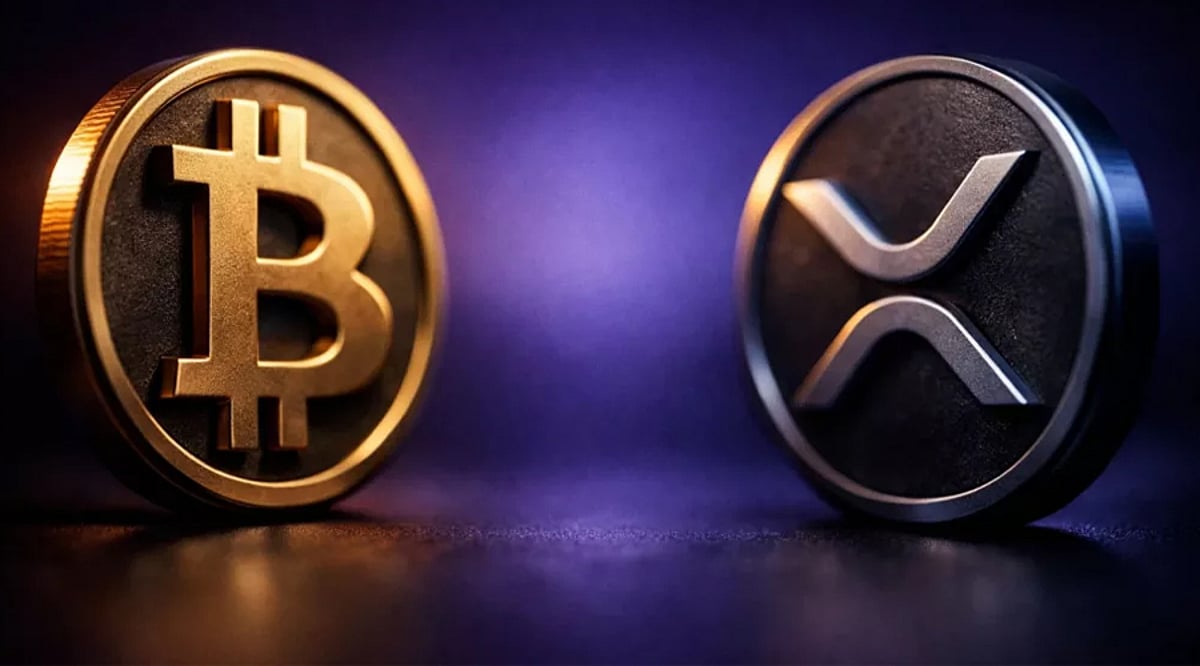
    While both XRP and Bitcoin are prominent cryptocurrencies, they differ significantly in design, purpose, and underlying technology. Here are seven critical distinctions that set XRP apart from Bitcoin.

    • Transaction Speed: XRP settles payments in 3–5 seconds, far faster than Bitcoin’s 10-minute block times, making XRP better suited for real-time cross-border transfers and high-frequency remittance applications.
    • Supply Cap: XRP has a fixed total supply of 100 billion tokens, most of which were pre-mined. Bitcoin’s capped supply is 21 million coins, mined gradually through proof-of-work mining rewards and halvings over decades.
    • Consensus Mechanism: XRP uses the Ripple Protocol Consensus Algorithm, which relies on trusted validators, while Bitcoin uses energy-intensive proof-of-work mining to secure its decentralized, permissionless network.
    • Primary Use Case: XRP targets fast, low-cost international payments for banks and financial institutions. Bitcoin primarily serves as a decentralized store of value and peer-to-peer digital cash.
    • Transaction Costs: XRP transactions cost fractions of a cent, significantly cheaper than Bitcoin’s often volatile network fees (especially during congestion). This makes XRP more economical for microtransactions and frequent transfers.
    • Governance Structure: XRP’s development is heavily influenced by Ripple Labs, a centralized company. Bitcoin evolves through decentralized community consensus, with no single entity controlling protocol upgrades or direction.
    • Mining Requirement: XRP requires no mining — all tokens were pre-created at launch. Bitcoin depends on continuous mining to issue new coins and maintain network security through computational work.

    Understanding these differences helps investors and users choose the right cryptocurrency for their specific needs, whether it’s fast remittances (XRP) or a robust store of value (Bitcoin).

  • Solana 2026: 7 Key Risks and Opportunities for SOL Investors Amid ETF Growth and Tokenization

    Solana 2026: 7 Key Risks and Opportunities for SOL Investors Amid ETF Growth and Tokenization

    Solana enters September 2026 with stronger institutional participation and expanding real-world use cases. The network is attracting capital through exchange-traded funds, tokenized assets and payments, while technical upgrades have increased capacity. However, SOL investors still face significant competition, macroeconomic pressure and execution risks. Here are seven factors shaping Solana’s investment outlook.

    1. Institutional Demand is Growing

    US-listed Solana ETFs ended August with approximately USD 1.34 billion in cumulative net inflows across nine products. Bitwise’s Solana Staking ETF also became the first US-listed Solana ETF to exceed USD 1 billion in assets, according to the Solana Foundation’s August report. Growing ETF participation provides investors with regulated exposure to SOL without directly managing cryptocurrency.

    2. Real-World Assets Have Crossed USD 4 Billion

    Tokenization represents another major opportunity. Real-world assets on Solana surpassed USD 4 billion in August, distributed across more than 350,000 addresses. The total includes equities, funds, commodities and private credit. xStocks also exceeded USD 500 million in assets under management, while Raydium surpassed USD 4 billion in cumulative tokenized-stock trading volume.

    3. Payments Could Drive Adoption

    Solana is expanding beyond trading. Western Union launched a Visa card backed by USDPT, its Solana-issued stablecoin, across 37 markets. MoneyGram simultaneously introduced infrastructure connecting Solana applications with nearly 500,000 cash locations across more than 170 countries. These integrations could increase Solana’s utility in payments and cross-border finance.

    4. Network Performance is Improving

    Solana reduced its target slot time to 300 milliseconds on August 28, representing a 25% reduction over eight days. The blockchain also processed a record 216 million non-vote transactions in one day, while weekly non-vote transactions reached 1.32 billion during August 17-23. Higher capacity strengthens Solana’s case for applications requiring inexpensive, high-frequency transactions.

    5. Token Supply Remains Important

    Solana validators approved SGP-0002, accelerating the annual reduction in SOL issuance from 15% to 30%. The proposal projects approximately 18.9 million fewer SOL being issued over six years, allowing the network to reach its 1.5% terminal inflation rate sooner. Lower issuance could benefit existing holders, although token demand remains equally important.

    6. Competition and Security Remain Risks

    Solana competes with Ethereum and other blockchains for developers, liquidity and users. Smart-contract exploits, wallet compromises and application vulnerabilities also remain ecosystem-level risks. Strong transaction growth, therefore, does not automatically guarantee SOL price appreciation.

    7. Macroeconomic Conditions Could Pressure SOL

    Crypto remains sensitive to global liquidity. On September 11, the US 10-year Treasury yield approached 5%, while Brent crude climbed above USD 108 amid renewed inflation concerns. Higher rates and bond yields can reduce demand for volatile assets such as SOL.

    Final Thoughts

    Solana’s opportunity increasingly rests on measurable adoption rather than speculation alone. ETF inflows, USD 4 billion in real-world assets and expanding payment infrastructure strengthen its long-term case. However, institutional adoption does not eliminate volatility. Investors should monitor network usage, token issuance, competition and macroeconomic conditions alongside SOL’s price.

    FAQs

    1. What are the biggest opportunities for Solana investors in 2026?

    Solana’s major opportunities include growing institutional ETF demand, tokenized real-world assets, payment adoption and improving network performance. These developments could support greater long-term blockchain usage.

    2. How much value is held in real-world assets on Solana?

    Real-world assets on Solana surpassed USD 4 billion in August 2026 and were distributed across more than 350,000 addresses. These include equities, funds, commodities and private credit.

    3. Why are Solana ETFs important for SOL investors?

    Solana ETFs provide regulated exposure to SOL without requiring investors to directly hold or manage cryptocurrency. US-listed Solana ETFs recorded approximately USD 1.34 billion in cumulative net inflows by August-end.

    4. What are the main risks of investing in Solana?

    Major risks include competition from Ethereum and other blockchains, smart-contract and application vulnerabilities, SOL price volatility and macroeconomic pressures such as higher interest rates and tighter liquidity.

    5. Could lower SOL issuance benefit investors?

    Lower issuance could reduce growth in SOL’s circulating supply, potentially benefiting existing holders if demand remains strong. However, reduced issuance alone does not guarantee higher SOL prices or investment returns.

    Disclaimer: Analytics Insight does not provide financial advice or guidance on cryptocurrencies and stocks. Also note that the cryptocurrencies mentioned/list on the website could potentially be risky. This article is provided for informational purposes and does not constitute investment advice. You are responsible for conducting your own research before making any investments.

  • Blockchain-Powered Grain Receipts: Arya.ag Tests Tokenized Loans for India’s $2B Farm Assets

    Blockchain-Powered Grain Receipts: Arya.ag Tests Tokenized Loans for India’s $2B Farm Assets

    Arya.ag, a major agricultural commodity network in India, is piloting tokenized grain receipts on the Avalanche blockchain. The initiative aims to digitize collateral verification and streamline lending for farmers, leveraging approximately $2 billion in stored agricultural commodities.

    Tokenized Receipts Link Physical Assets to Digital Loans

    The pilot converts verified warehouse receipts and related data into blockchain-based digital records. Working with Finternet, Arya.ag connects grain deposits, collateral commitments, warehouse receipts, and loan status on a single digital ledger. Each tokenized receipt represents ownership of stored commodities, creating a transparent link between physical assets and lending records.

    Devika Mittal, head of Ava Labs India, confirmed that testing is underway for the tokenized warehouse receipt system. The goal is to improve collateral verification and create more efficient lending workflows for agricultural borrowers.

    Potential Benefits for Agricultural Lending

    Traditional farm lending often requires banks to manually verify ownership, inventory, insurance, and existing collateral claims. Tokenized records could consolidate these details, reducing redundant checks and giving lenders clearer visibility. Banks could verify stored crops faster and check whether another lender already holds claims against those assets. Farmers could approach multiple lenders with a single verified digital record.

    Greater lender competition could eventually improve loan terms, processing times, and financing flexibility. The model also supports post-harvest financing, allowing stored crops to secure working capital so farmers can avoid immediate crop sales when market prices are unfavorable.

    Challenges and Infrastructure Focus

    Blockchain cannot independently prove that physical grain exists inside a warehouse. Reliable inspections, accurate warehouse records, legal ownership, and strong data controls remain essential. Digital access is another hurdle, as many farmers face limited connectivity, devices, or digital literacy.

    Arya.ag’s pilot therefore focuses on building infrastructure rather than promising immediate cheaper or faster credit. The company notes that faster approvals and broader credit access are potential outcomes that require real-world validation.

    Future Opportunity: Composite Digital Records

    The larger opportunity involves composite digital records that combine farmer, commodity, insurance, and loan information. Such systems could eventually create a portable financial identity for agricultural assets and lending decisions. For Indian agriculture, tokenization could become less about cryptocurrency and more about trusted collateral infrastructure.

  • Mastercard and Busha Bring Verified Crypto Aliases to Nigerian Users

    Mastercard and Busha Bring Verified Crypto Aliases to Nigerian Users

    Mastercard has teamed up with Busha to roll out Mastercard Crypto Credential across Africa, starting with eligible users in Nigeria. The service replaces lengthy blockchain wallet addresses with verified aliases, making crypto transfers simpler and safer.

    How the Crypto Credential Works

    Instead of sharing long alphanumeric strings, users can receive funds through a verified alias. Mastercard connects those aliases to endpoints that meet its verification standards. Before a transfer goes through, the system checks whether the recipient can accept the selected asset on the intended blockchain. This reduces the risk of failed or misdirected transactions.

    Busha is among the first African digital asset exchanges to integrate the Mastercard Crypto Credential. The partnership takes effect immediately for eligible users in Nigeria.

    Digital Assets as Everyday Income

    The launch comes as more Nigerians turn to digital assets for practical financial needs. Crypto serves as a payment method, savings tool, or faster way to move money. Freelancers can negotiate payment in USDT instead of naira, and some traders convert savings into stablecoins. Others use crypto when traditional transfers are costly or slow.

    Beyond crypto, gift card trading has evolved from informal exchanges into a structured digital market. Nigerians can sell cards from brands like Amazon, Steam, and iTunes for naira. Platforms now process billions of naira in transactions each month, offering mobile apps, rate calculators, and customer support.

    Airtime has also become a small income channel. Users who recharge the wrong network or hold unwanted credit can use apps that convert some of that value into cash. Platforms like KclautX let users trade crypto, exchange gift cards, and pay bills from one place, providing guidance on commonly traded gift cards and crypto use during naira depreciation.

    What This Means for Nigerian Users

    Mastercard and Busha now give eligible Nigerian users verified aliases for crypto transfers while checking asset and blockchain compatibility. The service enters a market where people already convert crypto, gift cards, airtime, and other digital balances into usable value through growing digital platforms.

  • Litecoin vs Bitcoin: Which Crypto Should You Hold, Spend, or Convert in 2026?

    Litecoin vs Bitcoin: Which Crypto Should You Hold, Spend, or Convert in 2026?

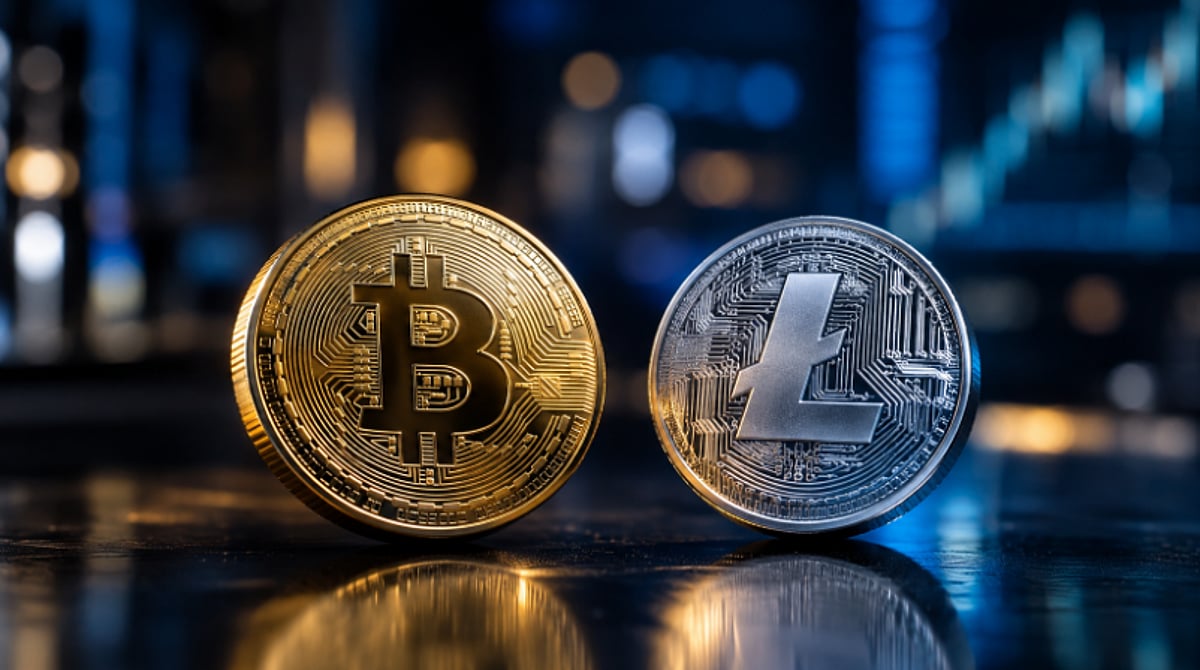
    Gold and silver. That’s the comparison everyone reaches for with Litecoin and Bitcoin, and it’s not wrong exactly – it’s just incomplete. Both have SEC-regulated ETFs now, in 2026. Both got classified as commodities by U.S. regulators. And yet their markets went in almost opposite directions. Network activity, liquidity, who’s actually buying and why – all of it diverged. What people use each coin for on a random Tuesday looks nothing alike either.

    Key Takeaways

    • Litecoin confirms blocks in 2.5 minutes, four times faster than Bitcoin’s 10. Doesn’t tell the whole story though – Bitcoin’s Lightning Network eats up most of that speed advantage for actual payments.
    • Both have spot ETFs. The money behind them doesn’t compare at all: Bitcoin’s ETFs hold tens of billions, Litecoin’s pulled in exactly zero during its first week and was still sitting around $5.5 million by mid-2026.
    • March 2026: Litecoin’s MWEB feature got exploited. Bitcoin’s base layer? Clean since 2009.
    • Moving LTC to BTC doesn’t require a centralized exchange account anymore. Non-custodial tools do it wallet-to-wallet.

    Bitcoin and Litecoin at a Glance

    Bitcoin. 2009. Proof-of-work, capped at 21 million coins, and a near-religious resistance to changing the protocol. That conservatism is arguably the whole reason Bitcoin ended up as crypto’s reserve asset. Early September 2026, it’s trading high-$70,000s to low-$80,000s, holding somewhere around 57-61% of total crypto market cap.

    Litecoin. Its story starts with Charlie Lee forking Bitcoin’s code back in 2011. Shorter blocks. Scrypt instead of SHA-256. A supply cap set four times higher, at 84 million coins. These days LTC sits around $50-55, market cap close to $4 billion – ranked anywhere from 18th to 26th, depending which tracker you trust.

    Head-to-Head: Where the Networks Actually Differ

    Speed and fees first. Four times faster by design, that part’s not in dispute. Fees are where it gets messy: Bitcoin can cost a few cents or several dollars, purely depending on how congested the network is that day. Litecoin stays cheaper across the board, fractions of a cent up to maybe fifteen cents. Don’t trust either number as gospel though – pull up something like mempool.space for the live rate. And remember Lightning Network exists; it handles a real chunk of Bitcoin’s payment volume instantly and almost free, off-chain.

    Security next. Bitcoin’s base layer: no network-level exploit, ever, since it launched. Litecoin can’t say the same anymore. March 2026, a bug in the MWEB privacy feature got used to fake a peg-out worth roughly 85,000 LTC. They caught it, recovered the funds, patched the hole. Good response. Doesn’t erase that it happened, though – something to weigh before parking serious money on either chain.

    Institutional access is where the gold/silver framing really falls apart. Canary Capital got the first spot Litecoin ETF (LTCC) trading on Nasdaq back in October 2025, right alongside the commodity classification that put Litecoin on equal regulatory footing with Bitcoin. So the setup was there. The demand wasn’t. Zero net inflows in LTCC’s first five trading days. Still just $5.5 million by mid-2026 – compare that to the $60+ billion BlackRock’s Bitcoin ETF pulled in alone. A couple of public companies bought in anyway (Lite Strategy, Luxxfolio), which counts for something. Just not a loud something.

    Use cases, finally. Litecoin’s lower fees make it the pick for smaller transfers you’re doing often. Bitcoin does something different – it sits there, mostly, backed by liquidity nothing else in crypto really matches. A lot of people just run both. Litecoin for whatever needs to move right now, Bitcoin for the position nobody touches.

    Moving Between LTC and BTC

    Nobody really picks one of these and locks the door on the other. Most people rebalance instead – build up Bitcoin, then peel off a slice into Litecoin the moment a payment needs to move fast. Works backwards too: fold Litecoin back into Bitcoin once volatility starts feeling uncomfortable. None of this needs a centralized exchange sitting in the middle anymore. A LTC to BTC swap on a non-custodial platform goes straight from your own wallet – no third-party custody involved first.

    Is Litecoin a Good Investment Right Now?

    Nobody has a clean answer to that, and anyone who claims they do is probably trying to sell you something. Litecoin’s been stuck well below its all-time high for years now; the ETF launch didn’t budge that. What it does have going for it: fifteen years without going down, a supply cap that can’t be changed, and a privacy feature (MWEB) that’s actually gaining traction – balances there passed 500,000 LTC by late 2025, up from under 100,000 just a year earlier. Resident’s guide to Litecoin as an investment digs into the case further, if you want the longer version.

    Verdict: Hold, Spend, or Convert?

    Liquidity and institutional weight – that’s Bitcoin’s case, and it’s still the default for anyone prioritizing those. Litecoin earns its spot for cheap, fast transfers, assuming you’re fine holding a smaller-cap asset that just had a rough security year. Most people don’t actually need to choose, though. Core position in Bitcoin, some Litecoin kept liquid for when speed matters, convert between the two as things change. That’s the boring, practical answer.

    FAQ

    Is Litecoin faster than Bitcoin? On the base layer, yes – roughly 2.5 minutes per block against Bitcoin’s 10. Though once you bring Lightning Network into it, Bitcoin can actually settle faster than either chain running alone.

    Is Litecoin cheaper to use than Bitcoin? Generally, yes, but congestion changes the math daily on both sides. Check a live fee tracker – don’t trust whatever number you read here or anywhere else as fixed.

    Does Litecoin have a spot ETF like Bitcoin? It does. Canary Capital’s LTCC has been on Nasdaq since October 2025. Size-wise, though, it’s nowhere close to Bitcoin’s ETF category.

    Can I convert Litecoin to Bitcoin without a centralized exchange? Yes – non-custodial swap services do direct wallet-to-wallet conversion. No third-party deposit required first.

  • Real-World Asset Tokenization on Solana: Mechanisms and Market Impact

    Real-World Asset Tokenization on Solana: Mechanisms and Market Impact

    Real-world asset (RWA) tokenization transforms ownership or economic rights in traditional assets such as Treasury bills, investment funds, equities, or commodities into blockchain-based tokens. Solana is emerging as a key network for this market, leveraging low-cost settlement and token standards with built-in compliance controls.

    How Real Assets Are Represented On-Chain

    Tokenization begins when an issuer identifies an underlying asset—such as a share in a fund, a Treasury security, or an equity exposure held through a regulated structure. The issuer then creates blockchain tokens that represent defined rights to that asset. Solana’s current infrastructure relies on the Token-2022 program, which enables features like transfer restrictions, account freezing, permanent delegates, and confidential transfers. These controls are essential because regulated securities cannot always be transferred freely to any wallet.

    Compliance Enforced at the Token Level

    Solana supports transfer hooks and allowlists that verify a recipient’s eligibility before processing a transaction. Permissioned environments can also restrict markets to Know Your Customer (KYC)-verified participants. This model allows blockchain settlement to remain programmable while maintaining regulatory restrictions. According to Solana, tokenized-asset transactions can settle with sub-second finality and fees typically below USD 0.001.

    The RWA Market Reaches USD 7 Billion

    Solana’s official RWA portal currently indexes roughly USD 7 billion in tokenized value across 2,693 assets. Twenty-four-hour real-world asset volume recently reached approximately USD 290.6 million. Products include tokenized Treasuries, public-market funds, ETFs, commodities, and equities. Key institutional participants include Franklin Templeton, Ondo Finance, and Securitize-linked products.

    Tokenized Assets Enter DeFi

    The key advantage of tokenization over traditional electronic ownership is composability. A tokenized asset can move directly between wallets, exchanges, lending markets, and collateral systems. Jupiter routes tokenized public-market assets into swaps and portfolio flows, while Kamino connects certain RWA exposure with lending and collateral markets. Raydium provides secondary-market liquidity for tokenized equities. Solana also supports delivery-versus-payment (DvP), allowing a tokenized asset and payment token to be exchanged atomically in a single transaction.

    Key Considerations

    Tokenization does not automatically make an illiquid asset liquid. The legal claim, issuer quality, custody, and redemption process remain critical. However, Solana can reduce the operational friction involved in issuing, transferring, and trading regulated assets. The bigger question is whether its USD 7 billion RWA ecosystem will develop deep secondary-market liquidity and attract institutional participation. If that happens, tokenization could move Solana beyond crypto-native trading and toward infrastructure for always-open capital markets.

    Frequently Asked Questions

    1. What is real-world asset tokenization on Solana?

    It involves creating blockchain-based tokens that represent ownership or economic rights in traditional assets such as Treasuries, funds, equities, or commodities. These tokens can be transferred and used on Solana.

    2. What role does Token-2022 play in Solana tokenization?

    Token-2022 provides issuers with additional controls, such as transfer restrictions, account freezing, permanent delegates, and confidential transfers. These features make tokenized assets more suitable for regulated financial products.

    3. How does Solana support compliance for tokenized assets?

    Solana uses transfer hooks, allowlists, and permissioned environments to restrict transactions to eligible or KYC-verified participants, allowing regulatory controls to operate alongside blockchain settlement.

    4. How large is Solana’s RWA market?

    As of the latest data, roughly USD 7 billion in tokenized value exists across about 2,686 assets, with recent 24-hour RWA trading volume around USD 290.6 million.

    5. Can tokenized assets on Solana be used in DeFi?

    Yes. Tokenized assets can move into swaps, lending markets, and collateral systems through platforms such as Jupiter, Kamino, and Raydium, depending on the asset’s structure and permissions.

  • Bitcoin ETFs See $120M Outflows, LAPTOP Memecoin Crashes 95%, Pepe Whales Dump 80B Tokens

    Bitcoin ETFs See $120M Outflows, LAPTOP Memecoin Crashes 95%, Pepe Whales Dump 80B Tokens

    The cryptocurrency market witnessed several major developments recently, including significant outflows from spot Bitcoin ETFs, a dramatic collapse of a politically themed memecoin, large-scale selling by Pepe whales, a US Secret Service freeze on USDT, and a groundbreaking blockchain initiative for India’s grain storage network.

    Bitcoin Spot ETFs Record $120 Million in Net Outflows

    According to data from SoSoValue, Bitcoin spot ETFs saw a total net outflow of $120.24 million yesterday. The ETF with the highest net inflow was Morgan Stanley’s MSBT, which attracted $4.49 million, bringing its cumulative net inflow to $520.89 million. Conversely, Ark Invest and 21Shares’ ARKB experienced the largest net outflow of $77.98 million, though its historical net inflow remains at $1.39 billion. The total net asset value of all Bitcoin spot ETFs now stands at $99.33 billion, with an ETF net asset ratio of 6.31% and a historical cumulative net inflow of $55.45 billion.

    Hunter Biden’s LAPTOP Memecoin Collapses Over 95%

    The LAPTOP memecoin, named after Hunter Biden, lost more than 95% of its value within one hour of trading opening on the Base network. A wallet analysis by Bubblemaps revealed that 12,151 out of 15,206 buyers ended up losing money—roughly 80% of all purchasers. While 3,026 addresses turned a profit and 29 broke even or could not be assessed, the majority of losses were small: 11,311 wallets lost less than $1,000 each.

    Pepe Whales Sell 80 Billion Tokens

    Pepe (PEPE) remained under pressure, trading near $0.00000348 after failing to break through a key resistance level. On-chain data indicates that large holders have been reducing their positions. Wallets holding between 10 million and 100 million PEPE have collectively sold approximately 80 billion tokens since August 25. This distribution suggests profit-taking after a recent rally. Over the same period, smaller and mid-sized wallets (holding between 100,000 and 10 million PEPE) accumulated a combined 5.06 billion tokens.

    US Secret Service Freezes $52.8 Million in USDT

    The United States Secret Service froze $52.8 million in the stablecoin USDT across 52 wallets linked to Xinbi Guarantee, an illegal marketplace operating on Telegram. The operation was enabled by intelligence from blockchain analytics firm Elliptic and coordinated with the Office of Foreign Assets Control (OFAC), which designated the platform as a transnational criminal organization. Xinbi acted as an escrow service laundering proceeds from global fraud schemes, including pig butchering, processing over $24 billion since 2022.

    India’s $2 Billion Grain Network Goes On-Chain

    Arya.ag has begun recording data tied to approximately $2 billion in stored crops on an Avalanche-based blockchain for agricultural lenders in India. The system records grain deposits, electronic warehouse receipts, and loan status, enabling authorized lenders to verify crops offered as collateral. Infosys co-founder Nandan Nilekani announced the project at the Global Fintech Festival in Mumbai. The $2 billion figure represents the estimated value of crops held across Arya.ag’s warehouse network, not the value of loans recorded on the blockchain.

  • US Seizes $52 Million in Crypto and Shuts Down Xinbi Telegram Channels in Major Crackdown

    US Seizes $52 Million in Crypto and Shuts Down Xinbi Telegram Channels in Major Crackdown

    U.S. authorities have restrained approximately $52 million in scam-related cryptocurrency and seized Telegram channels operated by Xinbi Guarantee, a Chinese-language marketplace that served scam-center operators and vendors. The coordinated action involved Treasury sanctions, Department of Justice wallet seizures, and raids in Madagascar.

    Blockchain analytics firm Elliptic revealed that years of tracking Xinbi wallets enabled the U.S. Secret Service to act against the marketplace, which provides fraud websites, money laundering services, and recruitment for scam compounds in Southeast Asia. Elliptic first exposed Xinbi in May 2025 and now estimates at least $24 billion in transactions since 2022, ranking behind Huione Guarantee’s $31 billion.

    Xinbi Pay, a related payments platform, processed an additional $6 billion, mostly using Tether’s USDT on the TRON blockchain. The United Kingdom sanctioned Xinbi in March 2026, and prosecutors seized two payment wallets holding about $12 million, targeting 47 more wallets. The Justice Department credited Tether for assisting the operation.

    In response to the freezes, Xinbi exchanged roughly $2.8 million in remaining USDT for Decentralized USD (USDD), which lacks an issuer freeze function. However, Elliptic noted that USDD’s backing includes USDT, which issuers can freeze. The Telegram channel seizures disrupted a key communication and commerce route for merchants.

    Separately, Strike Force agents spent two weeks in Madagascar assisting local authorities against 13 Chinese-run scam compounds, leading to nearly 400 arrests and the seizure of over 3,200 electronic devices. About 30 detainees were identified as Chinese leaders and repatriated. The Strike Force has restrained about $938 million in cryptocurrency since its launch in November 2025, with the Xinbi action adding approximately $52 million in one day.

  • AI-Driven Surveillance: How Artificial Intelligence Is Reshaping Crypto Security and Monitoring

    AI-Driven Surveillance: How Artificial Intelligence Is Reshaping Crypto Security and Monitoring

    Blockchain networks are transparent by design, but artificial intelligence (AI) is turning that transparency into a powerful surveillance tool. Instead of manually tracing wallet addresses, AI systems can now analyze millions of transactions, identify behavioral patterns, and flag suspicious activity in near real time. This is creating a new layer of oversight across the global cryptocurrency economy.

    Automated Blockchain Monitoring

    Every public blockchain transaction generates data: wallet addresses, values, timestamps, token movements, and smart contract interactions. Analytics firms combine this information with known exchange wallets, sanctioned addresses, hack incident records, and criminal clusters. Machine learning models then search for patterns that would be difficult for human analysts to detect manually.

    The scale of blockchain security incidents remains substantial. CertiK reported more than $1.31 billion in losses across 344 incidents during the first half of 2026. Wallet compromises caused approximately $444.5 million in losses, while phishing accounted for another $366.3 million. Automated monitoring is becoming essential to keep pace with such threats.

    Detecting Hidden Wallet Relationships

    Criminals rarely leave stolen funds in one address. They might split assets across hundreds of wallets, swap tokens, use bridges, and eventually move funds toward exchanges or other liquidity venues. AI can analyze transaction timing, recurring counterparties, and asset flow patterns to infer whether seemingly separate addresses belong to the same operation.

    This capability proved crucial after the Liquid Network exploit in September, when approximately 4,000 BTC (worth around $320 million) were initially withdrawn. Chainalysis tracked the incident as funds moved through the Bitcoin ecosystem, and about 85% of the funds were ultimately returned. Real-time monitoring can help exchanges identify suspicious deposits before criminals complete the laundering process.

    AI in Security Auditing

    Surveillance increasingly begins before money is stolen. CertiK launched an AI Auditor system in 2026 designed for protocol upgrade reviews, pre-deployment testing, and post-audit verification. In testing against 35 real-world Web3 security incidents from 2026, it reported an 88.6% cumulative exact hit rate. AI agents can scan smart contracts for unusual state changes or vulnerabilities and combine that with live blockchain behavior.

    The Privacy Trade-Off

    Greater monitoring creates tension between security and financial privacy. Blockchains originally attracted users partly because they could transact without exposing identities to every intermediary. However, once analytics companies combine wallet histories with exchange Know Your Customer data, pseudonymous addresses can sometimes be linked to real people. AI makes this process faster and more scalable.

    Final Thoughts

    Crypto surveillance is evolving from retrospective investigation into continuous risk detection. That could help exchanges freeze stolen assets, identify sanctions exposure, and stop attacks earlier. But it also means public blockchain activity may become increasingly traceable.

    The next debate will focus on balance: how far automated financial surveillance should go before security gains begin undermining the privacy that originally attracted many users to crypto.

    Frequently Asked Questions

    How is AI used in crypto surveillance?

    AI systems analyze blockchain transactions, wallet behavior, and fund movements to identify suspicious patterns. They can connect seemingly unrelated addresses based on timing, counterparties, and transaction flows.

    Can AI help detect crypto hacks faster?

    Yes. Real-time monitoring can flag unusual withdrawals, transfers, or smart contract activity shortly after an exploit begins, enabling faster responses.

    How is AI applied to smart contract security?

    AI auditing systems scan protocol code, upgrades, and transaction logic for vulnerabilities. CertiK’s AI Auditor reported an 88.6% cumulative exact hit rate across 35 real-world 2026 security incidents.

    Why does AI surveillance raise privacy concerns?

    Public blockchain addresses are pseudonymous, not fully anonymous. Combining wallet histories with Know Your Customer data and AI analysis can make it easier to link blockchain activity to real individuals.

    What is the future of AI-powered blockchain monitoring?

    Crypto security is moving toward continuous monitoring rather than relying only on post-incident investigations. The challenge lies in improving fraud detection without excessive surveillance or weakened user privacy.

    Disclaimer: This article is for informational purposes only and does not constitute investment advice. Cryptocurrencies are risky assets, and you should conduct your own research before making any investment decisions.

  • 9 Essential Facts About XRP and the Expanding Crypto Payments Landscape

    9 Essential Facts About XRP and the Expanding Crypto Payments Landscape

    The world of digital payments is evolving fast, and XRP is emerging as a key player in the shift toward faster, always-on transactions. Here are nine essential things to know about XRP and how it fits into the broader rise of crypto payments.

    1. XRP Is Built for Payments

    XRP is the native digital asset of the XRP Ledger, specifically designed to move value quickly between accounts and support a wide range of payment use cases.

    2. Blazing-Fast Settlement on the XRP Ledger

    The XRP Ledger can process payments in seconds, making it well-suited for applications that require fast and transparent transaction settlement.

    3. Transforming Cross-Border Payments

    XRP can help bridge currencies in international payments, potentially reducing reliance on the multiple intermediaries traditionally involved in cross-border transfers.

    4. Seamless Cross-Currency Transactions

    The XRP Ledger supports cross-currency payments, allowing different currencies or tokens to be exchanged through available liquidity paths with ease.

    5. Low Transaction Costs

    XRP payments require only a small network transaction cost, making the asset potentially useful for frequent digital transfers and everyday payment applications.

    6. Ripple Powers Global Money Movement

    Ripple leverages blockchain technology and digital assets to help businesses move money across borders, supporting fiat currencies, stablecoins, and crypto-based settlement options.

    7. Stablecoins and XRP Work Together

    Ripple’s payment infrastructure now supports stablecoins such as RLUSD alongside XRP, giving businesses more choices when seeking blockchain-based settlement.

    8. AI-Powered Payments on the Horizon

    The XRP Ledger is being developed for emerging agentic payments, allowing AI applications to transact using XRP and RLUSD for digital services.

    9. The Future of Crypto Payments

    XRP’s payment-focused infrastructure positions it within the broader shift toward faster, always-on digital transactions across businesses and financial networks.