Tag: China

  • Trump Administration Bans New Chinese Robots to Safeguard US AI Infrastructure

    Trump Administration Bans New Chinese Robots to Safeguard US AI Infrastructure

    The Trump administration has implemented new technology restrictions aimed at Chinese-made humanoid robots, quadruped robots, and connected power inverters, citing national security concerns and the need to protect America’s rapidly expanding artificial intelligence infrastructure. The measures, announced by the US Federal Communications Commission (FCC), took effect immediately upon publication.

    The restrictions apply exclusively to new product models not yet released in the United States. However, the FCC retains the authority to revoke approvals for products already authorized for sale if deemed necessary.

    Focus on AI, Cybersecurity, and Critical Infrastructure

    According to US officials, the measure is designed to reduce the risk of cyberattacks, surveillance, and supply chain vulnerabilities as the country invests heavily in building AI data centers and computing infrastructure. Inverters used to connect renewable energy devices and batteries to the electric grid have become increasingly important for AI data centers.

    The administration has also raised concerns about the potential use of networked robots for espionage and remote interference by foreign entities. Officials stated the measure is intended to secure key technologies vital to the nation’s security and economy.

    Chinese Firms Likely to Be Hit Hardest

    While the order does not explicitly name individual companies, it is expected to have the greatest impact on Chinese manufacturers, including Unitree Robotics, one of the world’s leading producers of humanoid and quadruped robots. China currently dominates the global humanoid robotics market, making the restrictions a significant setback for its expansion into the US market.

    The FCC indicated that manufacturers outside China may still qualify for exemptions, provided they satisfy security requirements.

    Beijing Condemns Move

    China condemned the move, claiming that the US unfairly singled out Chinese companies for punitive action and vowing to do whatever is necessary to defend its business interests. These restrictions, among others implemented by the US government in recent times, reflect the increased competition between the two countries as they vie for supremacy in AI and semiconductor production and supply chains.

    This development underscores a convergence of technology policies and national security issues, with AI infrastructure emerging as a key area of competition.

  • China Accuses US AI Firms of Illegally Distilling Chinese Models, Escalating Tech War

    China Accuses US AI Firms of Illegally Distilling Chinese Models, Escalating Tech War

    China has formally accused American artificial intelligence companies of using AI models developed by Chinese firms to train their own platforms, intensifying the technology rivalry between the world’s two largest economies. The accusation, delivered by the Chinese Ministry of Commerce on Monday, claims that “many American artificial intelligence enterprises have distilled Chinese models during their research, development and training processes.” The statement comes just days after the United States accused Chinese companies of copying proprietary American AI technology.

    Distillation at the Heart of the Dispute

    The conflict revolves around AI model distillation, a common technique where a smaller model learns to replicate the performance of a larger, more capable one. This process reduces computational costs while preserving most of the original model’s capabilities, making it widely used across the industry. However, U.S. officials allege that some Chinese firms have used distillation to reproduce advanced U.S. AI systems without authorization. Beijing has denied these allegations, calling them “lacking factual basis and legal grounds,” and accusing the U.S. of “double standards” and “artificial intelligence hegemonism.”

    AI Race Heats Up

    The latest exchange follows reports that a senior White House official accused Chinese startup Moonshot AI of illegally copying Anthropic’s advanced AI model to create its highly anticipated Kimi K3. The release of Kimi K3 garnered significant attention in the tech world as it competed strongly with top global AI models. According to IDC, global AI spending—encompassing AI-powered applications, infrastructure, and related services—is expected to surpass $631 billion by 2028, underscoring the strategic importance of AI across industries. Intellectual property, model development, and governance disputes are becoming increasingly common amid this surge in investment.

    China Signals Potential Countermeasures

    China maintains that model distillation is standard industry practice and that American AI firms have also benefited from Chinese-generated models. The ministry added, “China will take all necessary measures to firmly safeguard its legitimate and lawful rights and interests.” The charges follow a warning by U.S. Treasury Secretary Scott Bessent that Washington could impose restrictions on Chinese entities, and reports suggest the U.S. is considering restrictions on some foreign-developed open-source AI models. These developments highlight the growing importance of AI as a major flashpoint in the broader technological and geopolitical rivalry between the U.S. and China.

  • Trump Slaps Fresh Tariffs on India, China, and 60 Nations Over Forced Labor Concerns

    Trump Slaps Fresh Tariffs on India, China, and 60 Nations Over Forced Labor Concerns

    US President Donald Trump has imposed a new round of tariffs on imports from at least 60 trading partners, including India, China, Japan, and the United Kingdom, citing inadequate enforcement of bans on goods produced through forced labor. The duties, ranging from 10% to 12.5%, take effect at 12:01 AM Friday, replacing temporary import taxes that expire the same day.

    The move follows a February Supreme Court ruling that struck down Trump’s earlier ‘Liberation Day’ tariffs imposed in April 2025. The administration frames this action as part of its broader effort to curb forced labor and encourage trading partners to adopt stricter import regulations.

    How the New Tariff Structure Works

    Countries such as China, the United Kingdom, and Japan—which the White House says lack laws prohibiting imports made with forced labor—will face 12.5% tariffs. Meanwhile, economies including India, Sri Lanka, and the European Union will continue to face 10% tariffs after introducing or committing to forced labor import restrictions.

    Some imports, including products covered under the US-Mexico-Canada Agreement (USMCA) and oil and gas shipments, have been exempted from the latest tariff measures.

    US Defends Move as Human Rights Measure

    “The United States has had a forced labor import ban for nearly a century, and rigorously enforces it. It’s well past time for our trading partners to do the same,” said US Trade Representative Jamieson Greer. “Today’s action will begin to correct what is both a human rights abuse and a distortive trade practice to improve the welfare of workers everywhere.”

    India Avoids Higher Tariff

    For India, the latest announcement means exports to the US will continue to attract a 10% tariff, avoiding the additional 12.5% penalty previously threatened. The White House noted that India, along with Cambodia, Guatemala, Honduras, Sri Lanka, and Trinidad and Tobago, had introduced forced labor import prohibitions or made commitments under reciprocal trade agreements, leading to the lower tariff rate.

    More Trade Measures Expected

    According to a Washington Post report, the Trump administration is preparing another round of tariffs targeting countries accused of subsidizing excess manufacturing capacity. The proposed measures are expected to focus on low-cost imports that US officials argue disadvantage American manufacturers, signaling that more trade actions could be announced in the coming weeks.

  • CXMT’s $8.6 Billion IPO: What China’s Biggest Memory Chip Debut Means for AI Chip Stocks

    CXMT’s $8.6 Billion IPO: What China’s Biggest Memory Chip Debut Means for AI Chip Stocks

    Global AI chip stocks could face fresh volatility next week as ChangXin Memory Technologies (CXMT), China’s largest memory chipmaker, prepares to debut on the Shanghai Stock Exchange. The listing, one of the biggest market events of the year, is expected to draw worldwide investor attention as Beijing intensifies efforts to strengthen its domestic semiconductor industry.

    CXMT has raised $8.6 billion through its Initial Public Offering (IPO), making it Asia’s largest IPO of 2026. The offering comes amid an AI-driven surge in demand for memory chips and continued efforts by China to reduce its dependence on foreign semiconductor suppliers.

    China’s Bet on Homegrown Chipmaking

    Founded in 2016, CXMT has grown into the world’s fourth-largest DRAM memory chipmaker, trailing only Samsung Electronics, SK Hynix, and Micron Technology. DRAM chips are essential components in smartphones, personal computers, servers, and AI systems, where they temporarily store data for processing.

    The company has grown significantly with substantial support from government-linked investors. Entities from Hefei, an eastern Chinese city, own 36.8% of CXMT’s stock. At the IPO valuation, those shares are worth approximately $31.5 billion, underscoring the scale of China’s state-backed investments in technology.

    Why Investors Are Watching Closely

    According to analysts, the IPO’s impact on semiconductor stocks will be significant, as large listings often trigger portfolio realignment among investors. CXMT’s market debut follows a recent downturn in global chip stocks, making its performance a key gauge of investor confidence in the AI hardware sector.

    Despite market volatility, demand for the IPO remains robust, with institutional investors subscribing to the offer over 500 times.

    A Key Player in China’s AI Strategy

    CXMT plays a pivotal role in China’s quest for technological self-reliance. High-performance AI processors require vast amounts of fast memory, and domestic DRAM production has become a priority due to US-led export restrictions reshaping the semiconductor supply chain.

    Although CXMT lags behind global leaders in advanced memory technologies, its rapid growth reflects the Chinese government’s strategy of cultivating domestic champions in critical industries. The company’s stock market performance will be closely watched by investors worldwide.

  • China Debuts First Homegrown 3D AI Chip; CuspAI Raises $450M with Jeff Bezos Backing

    China Debuts First Homegrown 3D AI Chip; CuspAI Raises $450M with Jeff Bezos Backing

    Good morning, tech enthusiasts. Here are the top tech stories making headlines today, from groundbreaking semiconductor advancements to major funding rounds and regulatory actions.

    China Launches Its First Homegrown 3D AI Chip

    China has officially launched its first domestically developed 3D AI chip, the DF1000, in Shanghai. Built by startup Dongfang Suanxin, the chip is engineered to enhance AI computing capabilities and reduce China’s reliance on foreign semiconductor technology. This milestone marks a significant step forward for the country’s AI and semiconductor industries, signaling growing self-sufficiency in critical tech sectors.

    Jeff Bezos Backs CuspAI in $450 Million Funding Round

    CuspAI, a UK-based AI startup, has secured $450 million in fresh funding, with support from Jeff Bezos and Sovereign AI investors. The company leverages artificial intelligence to accelerate the discovery of new materials for clean energy, computer chips, and other industrial applications. The capital will be used to expand research, refine its technology, and scale its business operations globally.

    MIT Expert Warns Against Replacing Entry-Level Jobs with AI

    MIT researcher Andrew McAfee has cautioned companies against using AI to replace entry-level positions. He argues that these roles are essential for young workers to develop skills and prepare for advanced responsibilities. Removing them could lead to a shortage of skilled talent and hinder long-term organizational growth.

    San Francisco Demands Apple and Google Remove AI Nudify Apps

    San Francisco City Attorney David Chiu has formally requested that Apple and Google remove AI-powered “nudify” apps from their app stores. These apps generate fake nude images without consent, causing significant harm. Google has already removed many such apps, while Apple has yet to respond. Legal action may follow if the companies do not comply.

    Crypto Futures Market Sees $226 Million in Liquidations

    The cryptocurrency futures market experienced $226 million in liquidations over the past 24 hours due to sharp price fluctuations. The majority of losses came from traders betting on price increases. Bitcoin and Ethereum accounted for the largest liquidations, underscoring the ongoing volatility and risk in leveraged crypto trading.

  • Global Leaders in Waste-to-Energy: Pioneering Nations Turning Trash into Power

    Global Leaders in Waste-to-Energy: Pioneering Nations Turning Trash into Power

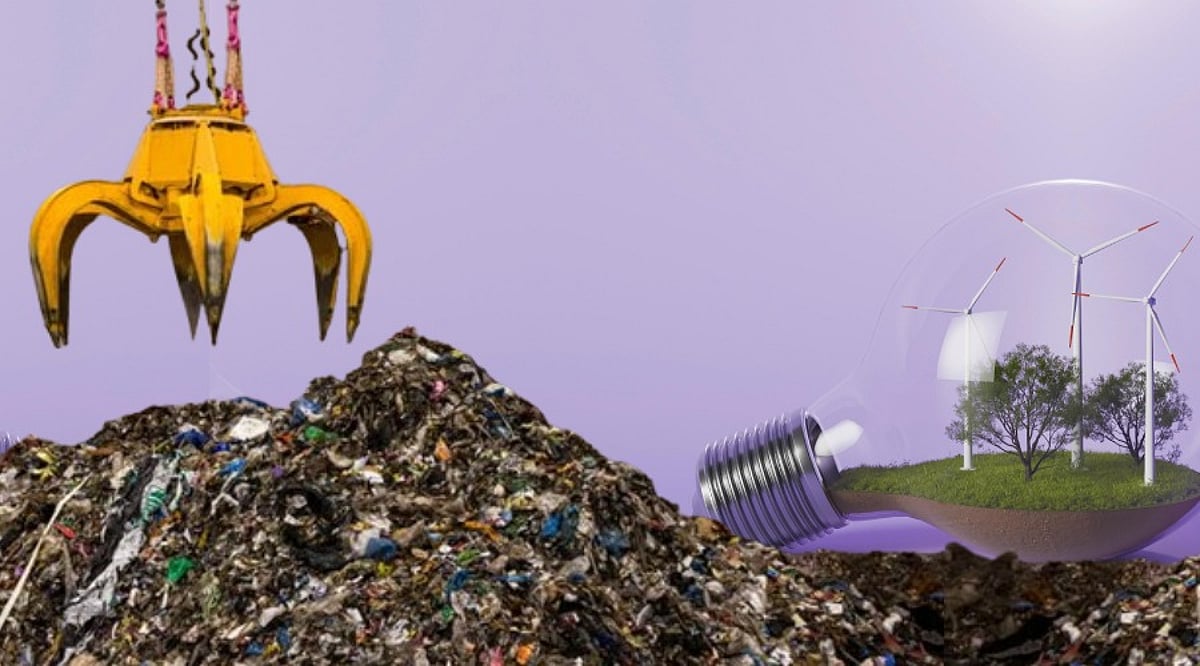
    Waste-to-energy (WtE) technology is rapidly transforming the way nations handle non-recyclable waste, converting it into electricity, heat, or fuel while drastically reducing reliance on landfills. Countries such as China, Sweden, Denmark, Japan, Singapore, Germany, and the Netherlands are at the forefront, leveraging advanced technologies, efficient systems, and sustainable policies to lead the global shift.

    Key Takeaways

    • China operates the world’s largest waste-to-energy network, generating immense electricity capacity.
    • Sweden and Denmark integrate waste-to-energy with district heating, optimizing clean energy production.
    • Innovations in incineration, gasification, and carbon capture are making WtE cleaner and more efficient.

    China: The Undisputed Market Leader

    China has built the world’s biggest waste-to-energy industry in just over a decade, driven by rapid urbanization and strict government policies. Electricity production from WtE surged from 5 TWh in 2010 to approximately 120 TWh in 2023, while annual waste treatment capacity expanded from 14 million to 327 million tonnes. Today, China operates more than 1,000 waste-to-energy plants—over half of the global total.

    Sweden: From Waste to Resource

    Sweden’s waste management system is among the most efficient globally. Approximately 50% of household waste is converted into electricity and district heating. Swedish plants are so efficient that the country imports about 800,000 tonnes of waste annually from neighboring nations to keep facilities operating at full capacity, all while maintaining low emissions through advanced pollution control.

    Denmark: Urban Integration and Clean Energy

    Denmark has embedded waste-to-energy into urban life, with modern facilities supplying both electricity and district heating to surrounding areas. The iconic Amager Bakke facility in Copenhagen not only generates energy but also features a public park on its roof, exemplifying how industrial structures can blend with cityscapes. Denmark continues to invest in carbon capture and more efficient waste treatment technologies.

    Japan: High Tech, High Standards

    With limited landfill space, Japan relies heavily on WtE. The country uses highly efficient combustion technology to maximize electricity output while minimizing harmful emissions. Strict environmental laws ensure every plant meets rigorous air quality standards.

    Singapore: Smart Waste Management in a Tiny Island

    Singapore faces severe land shortages, making efficient waste management a national priority. Most non-recyclable municipal waste passes through modern incineration plants, reducing volume by nearly 90% and significantly extending the life of the offshore Semakau Landfill.

    Germany and the Netherlands: Circular Economy Champions

    Both countries combine high recycling rates with effective waste-to-energy solutions. They prioritize recycling and composting, then send only non-recyclable waste to energy recovery. Europe’s approximately 500 WtE facilities process nearly 100 million tonnes of waste annually, generating heat and electricity while diverting waste from landfills. Germany and the Netherlands are advancing sorting technologies, carbon capture, and energy efficiency.

    Why This Matters

    Mounting waste volumes make traditional landfills unsustainable. Waste-to-energy technology cuts garbage volume by 90% while producing clean electricity and heat. According to the World Bank, about 20% of global waste is incinerated, while recycling, composting, and anaerobic digestion account for another 21%.

    Future Outlook

    Urban growth will continue to increase waste generation, requiring WtE capacity to expand. Emerging technologies such as AI-driven operations, carbon capture, and advanced pollution controls will make new plants cleaner and more productive. Countries like China, Sweden, Denmark, Japan, Singapore, Germany, and the Netherlands have demonstrated that it is possible to slash landfill use and generate usable energy simultaneously.

    Frequently Asked Questions

    What is waste-to-energy?

    Waste-to-energy is the process of converting non-recyclable waste into electricity, heat, or fuel using technologies like incineration, gasification, pyrolysis, and anaerobic digestion.

    Why is waste-to-energy important?

    It reduces landfill dependence, lowers pollution from open dumping, recovers energy from waste, and supports more sustainable waste management.

    Which country leads globally?

    China is the global leader, operating over 1,000 waste-to-energy plants and accounting for more than half of the world’s waste incineration capacity.

    Does waste-to-energy replace recycling?

    No. The best practice is to recycle and compost first; only non-recyclable waste should be sent to WtE facilities.

    What is the future of waste-to-energy?

    The future includes AI-driven operations, carbon capture technologies, advanced emission controls, and more efficient energy recovery to make plants cleaner and more productive.

  • Today’s Tech Roundup: Apple Intelligence Cleared in China, Google Play Store Opens Up, OpenAI Codex Micro, Apple’s Chip Acquisitions, and OnePlus India’s Hurdles

    Today’s Tech Roundup: Apple Intelligence Cleared in China, Google Play Store Opens Up, OpenAI Codex Micro, Apple’s Chip Acquisitions, and OnePlus India’s Hurdles

    In a packed day of tech news, Apple has received regulatory approval in China for its Apple Intelligence platform, marking a significant milestone for the company’s AI ambitions in the world’s largest smartphone market. Meanwhile, Google is opening its Play Store to rival app stores, signaling a major shift in its distribution policy. OpenAI is entering the hardware space with Codex Micro, Apple is eyeing chip startups for potential acquisitions, and OnePlus faces mounting challenges in India.

    Apple Intelligence Gets Green Light in China

    Apple’s artificial intelligence initiative, Apple Intelligence, has secured approval from Chinese regulators. This move allows Apple to deploy its AI features in the region, potentially boosting iPhone sales and competing with local AI offerings. The approval comes as Apple continues to navigate stringent data and security regulations in China.

    Google Play Store Opens to Rival App Stores

    In a surprising policy change, Google has announced that it will allow third-party app stores to be listed on the Google Play Store. This decision could reshape the Android app ecosystem, giving users more choices and potentially reducing Google’s dominance in app distribution. The move follows increased regulatory pressure and antitrust scrutiny worldwide.

    OpenAI Enters AI Hardware with Codex Micro

    OpenAI is reportedly developing a new hardware product called Codex Micro, aimed at bringing AI capabilities directly to devices. This marks the company’s first foray into physical hardware, expanding beyond software and cloud-based AI services. Details remain scarce, but the project is expected to focus on edge AI and real-time processing.

    Apple Eyes Chip Startups

    Apple is reportedly in talks to acquire several chip startups to bolster its semiconductor capabilities. The company aims to reduce reliance on external suppliers and enhance its custom chip designs for future iPhones, Macs, and other devices. This strategy aligns with Apple’s long-term goal of vertical integration and performance optimization.

    OnePlus Faces Challenges in India

    OnePlus is encountering significant hurdles in the Indian market, including increased competition from rivals like Xiaomi and Samsung, as well as regulatory challenges. The company is reportedly reassessing its strategy to maintain market share and consumer loyalty in one of its key regions.

    Stay tuned for more updates on these developing stories.

  • Tech News Roundup: China’s 3D AI Chip, ONGC Recruitment, Binance Anniversary, and More

    Tech News Roundup: China’s 3D AI Chip, ONGC Recruitment, Binance Anniversary, and More

    Today’s Top Tech Stories

    Welcome to your quick tech briefing. Here are the most important updates from the worlds of AI, startups, careers, developer tools, and cryptocurrency.

    Chinese Startup Unveils 3D AI Chip Roadmap

    Dongfang Suanxin, a Chinese startup, has announced a new 3D AI chip roadmap designed to challenge Nvidia. By leveraging software-driven design and 3D memory stacking, the company aims to reduce reliance on advanced chipmaking tools that are restricted by US export controls.

    Ex-Netflix Founders Raise €7.2M for Payment Startup

    Amsterdam-based Nopan has secured €7.2 million to enhance the reliability of bank and wallet payments across Europe. Founded by two former Netflix payment experts, the startup helps merchants improve payment success rates and plans to expand its technology and European market presence.

    ONGC Graduate Trainee Recruitment 2026

    ONGC has released notification for Graduate Trainee Recruitment 2026, inviting applications from engineering and geoscience candidates. Online applications open July 17. Selection will be based on GATE 2026 scores, qualifications, and interviews. Details on salary and eligibility are available.

    Essential Git and Linux Skills for AI Learners

    A new guide highlights the importance of Git, Linux, Python, Conda, Docker, Jupyter, CUDA, and SSH for AI and data science professionals. Mastering these commands can help manage code, files, projects, and systems more efficiently, reduce errors, and improve collaboration.

    Binance Celebrates Ninth Anniversary with Strong Growth

    Binance marked its ninth anniversary, reporting that nearly half of all crypto holders use the exchange. The company announced a record $156 trillion in all-time trading volume and outlined its long-term vision to expand beyond crypto into broader financial services.

    Stay tuned for more updates on these stories throughout the day.

  • Which Countries Are Setting the Standard for AI Education in 2026?

    Which Countries Are Setting the Standard for AI Education in 2026?

    Preparing students for an AI-powered future has become a national priority worldwide. Leading countries are introducing AI into schools, expanding university programs, and supporting digital skills. These efforts define the global leaders in AI education in 2026. Here is how the top contenders stack up—and where ambition meets reality.

    Key Takeaways

    • China and the UAE are the only nations running compulsory, national AI curricula since the 2025-26 school year.
    • India, Estonia, and South Korea reveal three different speeds of rollout—from a ten-million-teacher training push to a public reversal.
    • The nations pulling ahead are matching curriculum ambition to teacher readiness, not chasing the boldest headline.

    Every government wants to claim it leads in AI education. Few can prove it with a classroom that actually works. The gap between what gets announced and what reaches a teacher standing in front of thirty students will become the real story worth telling.

    Two Speeds of Compulsory Rollout

    China moved early, and it moved fast. By September 2025, AI had become a compulsory subject for every student from age six, sitting alongside mathematics on the timetable, not tucked away as an elective. Beijing schools now owe every student at least eight hours of AI instruction a year, and in a growing number of classrooms, platforms like Squirrel AI are already doing the adaptive teaching. What has not kept pace is everything around the technology: ethics, data privacy, and equal access. The rollout outran the guardrails.

    The UAE got there first in a different sense. A Cabinet decision in May 2025 made it the first country on record to mandate a nationwide AI curriculum for K-12 students, full stop. Close to a million children in government schools are now working through seven curriculum strands, taught by more than a thousand teachers trained specifically for this. Private schools are not required to follow suit, not yet at least, though a fair number have adopted the material on their own, without waiting to be told to.

    When Ambition Outpaces Readiness

    South Korea shows what happens when a rollout runs ahead of its teachers. Seoul planned mandatory AI textbooks from 2025, but adoption sat below 30% by March, and that August, the National Assembly stripped the textbooks of official status after unions said the pace had outrun preparation. Korea responded with a $960 million plan to build AI talent centers and vocational high schools through 2030. The setback was not proof that AI education fails. It showed that mandates without matching teacher training buckle under their own weight, even in a well-funded system.

    India is betting bigger than anyone. From 2026 to ’27, AI and computational thinking will become mandatory from Class 3 across government and private schools, backed by a Rs. 500 crore center of excellence and the Rs. 10,372 crore India AI mission. The open question is delivery: roughly 10 million teachers need training, and only 15% were AI-fluent as of a 2025 survey. Whether India becomes the largest AI-literate student population in the world depends entirely on whether that math closes in time.

    Coherence Over Scale

    Singapore’s edge is not size but order of operations. Its Smart Nation strategy targets AI leadership by 2030, with teacher training promised at every level by 2026. A government-funded research center pilots tools with the Ministry of Education before they reach classrooms, rather than after.

    Finland and Estonia are playing a different game entirely, treating AI fluency as a civic skill rather than a career pipeline. Finland’s Elements of AI course has reached hundreds of thousands of citizens; Estonia’s AI Leap gave 20,000 students and 3,000 teachers early access, with plans to scale nationwide by 2027.

    Also Read: The World Is Your Campus: Where to Study AI and Programming at the Planet’s Greatest Universities

    Research Depth, Classroom Gap

    The United States still leads in university-level AI research, and Washington has tried to close the K-12 gap too, through an executive order that created a federal task force and a student AI challenge. However, the same period saw the Department of Education shutter its Office of Educational Technology. Only four states include AI in computer science standards, and enrollment in the subject fell 11% between 2024 and 2025, even as graduate AI programs kept growing. A country can lead the world in research capacity while still trailing far smaller nations in the classroom.

    There is no single best country here, only different goals pursued at different speeds. What separates the nations worth watching is not the size of the announcement, but the honesty of the follow-through—and Korea’s public reversal is proof that admitting a gap is not the same as failing to close it.

    Also Read: Case Studies: Universities That Rebuilt Curricula for AI vs Those That Just Added It

    Final Thoughts

    The competition to be the first to educate about AI isn’t about being the loudest or the first to shout. It will be given to the people who make the often-ugly but ultimately beautiful things happen: training teachers, updating classrooms, keeping students safe, and working at it year after year, well past the news cycle. The countries leading the way in 2027 will not be those with the most impressive plan on paper. This will be where that plan has become a normal part of a school day without being noticed.

    You May Also Like:

    FAQs

    1. Which country leads AI education in 2026?

    There is no single leader. China leads in scale, the UAE in national curriculum rollout, Singapore in implementation, and the United States in AI research.

    2. Which country made AI education compulsory first?

    The UAE became the first country to introduce a nationwide mandatory AI curriculum for K-12 students in May 2025. China also made AI compulsory for school students from age six.

    3. Why is teacher training important for AI education?

    Teachers need the skills to use AI effectively in the classroom. Without proper training, even well-funded AI education policies can struggle to deliver results.

    4. Is AI now a compulsory subject in India?

    India plans to introduce AI and computational thinking as compulsory subjects from Class 3 beginning in the 2026–27 academic year, supported by the IndiaAI Mission and teacher training initiatives.

    5. What makes an AI education system successful?

    A successful AI education system combines a strong curriculum, trained teachers, ethical guidelines, digital infrastructure, and regular updates to keep pace with advances in AI technology.

  • Anthropic Cracks Down on Chinese Firms Using VPNs to Access Claude AI

    Anthropic Cracks Down on Chinese Firms Using VPNs to Access Claude AI

    Anthropic is tightening access controls for its Claude AI assistant after discovering that Chinese companies have been using overseas entities, VPNs, and personal subscriptions to bypass a strict regional ban. The company explicitly blocks access from unsupported regions, including China, but firms such as Ant Financial and ByteDance reportedly found workarounds to keep Claude available to their engineers.

    Ant Financial provided some employees with corporate Claude accounts through its intranet, linked to a Singapore-based entity. ByteDance allowed engineers to pay for personal Claude subscriptions and seek reimbursement, routing access through VPNs. Microsoft also sold API access to Chinese companies with Singapore entities, enabling mainland engineers to use Claude through internal networks.

    While these methods violate Anthropic’s terms of service, they do not break US or Chinese law. Anthropic stated that it “explicitly prohibits accessing or facilitating access to Claude in unsupported regions, including China” and uses “changing detection systems to find and ban accounts that break its rules.”

    The company is also targeting “transfer station” services that route requests from mainland China through overseas Claude accounts, making access appear to come from supported regions. Smaller users may rely on these services, but larger Chinese AI companies often avoid them due to fears that operators could store, copy, or resell prompts, especially when working with private code and internal data.

    Claude Code has drawn strong demand from Chinese engineers because its coding outputs can support distillation—a process where smaller AI models learn to copy the behavior of stronger systems. This makes the tool valuable for firms trying to improve local models.

    Meanwhile, China’s National Vulnerability Database flagged several Claude Code versions released between April and June, saying they can send user location and identity data to remote servers without clear consent. The database listed versions 2.1.91 to 2.1.196 as affected, describing the issue as “security backdoor vulnerabilities” and a “serious threat.”

    Anthropic rejected the backdoor label, stating that the disputed function was an anti-abuse experiment meant to detect unauthorized users. It denied that Claude Code contained spyware or a tool built for secret surveillance. The dispute now links two separate issues: Anthropic’s effort to block Chinese access and China’s warning over Claude Code. Both sides frame the matter through security, but they point to different risks.