Tag: China

  • China Considers New Restrictions on Overseas Access to Advanced AI Models

    China Considers New Restrictions on Overseas Access to Advanced AI Models

    Beijing Reviews Frontier AI as Strategic Technology

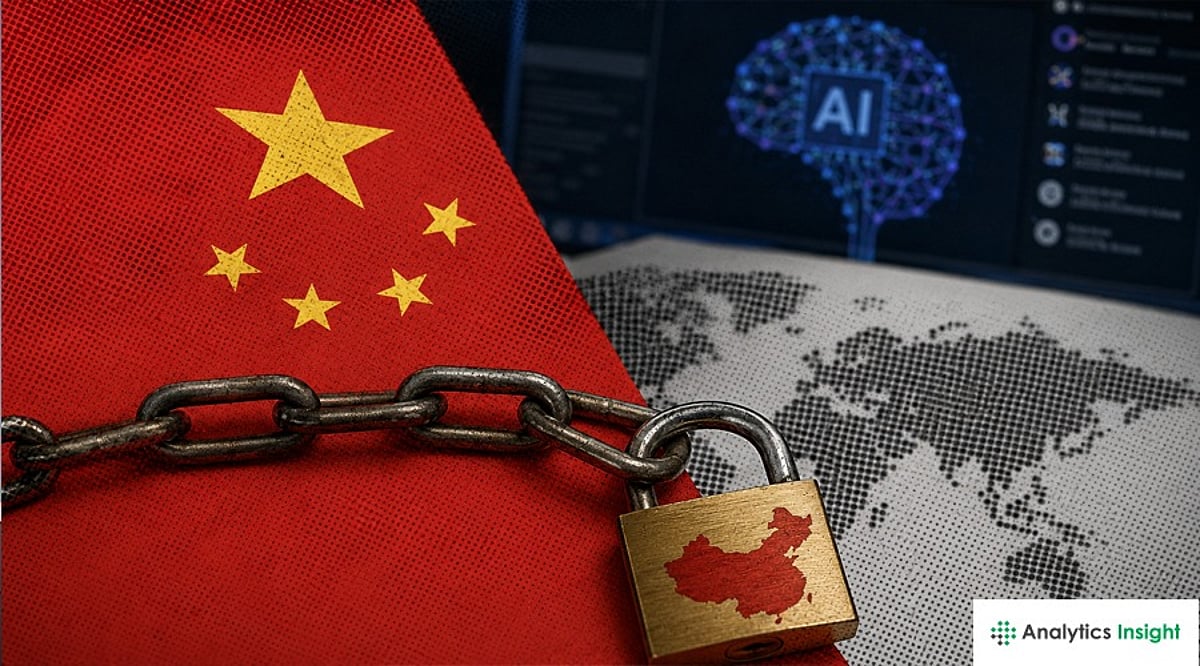
    China is evaluating potential new controls that would restrict overseas access to its most advanced artificial intelligence models, according to sources familiar with recent government-led discussions. The talks signal that Beijing now views frontier AI systems as strategic assets rather than mere commercial software, raising the stakes for global developers and businesses that rely on Chinese AI technology.

    Over the past month, officials from China’s Ministry of Commerce and the state planning agency met with major technology firms including Alibaba, ByteDance, and Z.ai to discuss possible limits on the use of top AI models outside the country. The proposals cover both closed-source systems and open-weight models, which allow users to download and modify parts of the technology. Sources told Reuters that the plans remain under review and that no final decision has been made.

    National Security Concerns Drive the Initiative

    The Ministry of Commerce led the meetings, with one proposal suggesting that leaks or theft of proprietary AI technology could be treated as an offense under China’s national security law. Officials also discussed tightening controls on who can fund domestic AI startups, adding another layer of oversight around sensitive technology and data.

    Chinese authorities are reportedly worried about advanced US AI systems, such as Anthropic’s Mythos model, and their potential use in finding software vulnerabilities. This mirrors US concerns that foreign actors could misuse frontier AI tools for military or intelligence purposes. The talks reflect a growing mutual anxiety between the two countries over AI security.

    Scope of Restrictions Remains Unclear

    Alibaba’s Qwen, ByteDance’s Doubao, and Z.ai’s GLM-5.2 are among the Chinese models that have gained global attention for their lower costs and strong performance. However, officials indicated that any new rules may apply only to future models, leaving existing systems unaffected. The scope and timeline remain uncertain, creating ambiguity for companies that integrate Chinese AI tools into software, research, automation, and customer service.

    Legal experts in China have already discussed a tiered approach for open-source AI. Under one proposal, basic tools would require simple filing, more powerful systems would face security reviews, and the most sensitive frontier models could be limited to domestic use only.

    Global Developers Face Potential Disruption

    Chinese AI models, particularly DeepSeek’s R1, have become a low-cost alternative for developers worldwide. If Beijing proceeds with restrictions, foreign companies may lose access to affordable AI options, potentially shifting to US or European alternatives or seeking domestic solutions. Costs could rise for businesses that have come to rely on Chinese AI systems.

    For now, formal rules have not been announced. Sources said it is not clear when, or even whether, the curbs will take effect. The global AI community continues to watch closely as China’s advanced models become central to national technology policy.

  • NASA Chief Warns of Moon Race as US Targets 2028 Lunar Landing and China Accelerates

    NASA Chief Warns of Moon Race as US Targets 2028 Lunar Landing and China Accelerates

    NASA Administrator Jared Isaacman has stated that the United States is in a renewed Moon race with China, with both nations racing to land astronauts on the lunar surface before the decade ends. The timeline is narrowing, as China aims to land its astronauts by 2030, while the US targets a return through the Artemis program by late 2028. Isaacman emphasized that the gap between the two plans is now measured in months, not years.

    Speaking on CBS’s Face the Nation, Isaacman said Beijing’s lunar ambitions should be taken seriously. China is advancing rapidly in human spaceflight, with a clear goal of putting astronauts on the Moon. “It is not arguably. Like, there—we are very much in a space race right now, and the Chinese are moving at incredible speeds,” Isaacman said. He added, “The Chinese will land their taikonauts on the moon. There’s no question. The question is, will the United States return before them?”

    China has set a target to land astronauts on the lunar surface before 2030. Its space program has progressed steadily through crewed missions to the Tiangong space station, including the recent launch of the Shenzhou 23 spacecraft. Isaacman noted that China could achieve goals that the former Soviet Union did not reach during the original space race, framing the current contest around timing, execution, and the ability to place crews on the lunar surface first.

    The US plans to use NASA’s Artemis program to return astronauts to the Moon. Isaacman said the Trump administration has made lunar exploration a national priority through new funding. “We are going back,” he said. “It will be an unbelievable display.” Artemis III is scheduled for next year to test key systems for the lunar landing mission. According to Isaacman, the US is targeting the end of 2028 for a crewed lunar landing, with Artemis IV also planned for 2028 to support the next phase of lunar operations. “They said before 2030… we’re saying end of 2028 is when we’re targeting the landing. That is months, not years,” Isaacman said.

    Beyond the first return mission, NASA aims to build a sustained human presence on the Moon as a test site for future Mars missions. Isaacman said infrastructure for a lunar base could arrive as early as 2027, and by 2028 astronauts may find equipment already placed on the Moon, including a lunar terrain vehicle and early base systems. “Early 2030s, the moon is going to be like the International Space Station,” he said. “You’re going to have crews that are there on pretty extended periods of time, as we learn in that environment and prepare for Mars.”

    NASA plans to rely on commercial space companies to support future missions. Isaacman said private launch providers have lowered costs and expanded access to space. He also addressed delays linked to Blue Origin’s New Glenn rocket after a recent launch failure, noting that NASA is helping with the investigation while keeping future lunar work on track. “They’re going to solve that,” he said. “NASA’s there to help.”

  • India vs Silicon Valley and China: How Its Startup Ecosystem Stacks Up

    India vs Silicon Valley and China: How Its Startup Ecosystem Stacks Up

    Three decades ago, the global startup conversation belonged almost entirely to Silicon Valley. Then China built its own parallel universe of billion-dollar companies, moving so fast that Western observers could barely track the names. Today, a third force is demanding attention. India has quietly assembled one of the most significant startup ecosystems in the world, and the comparison is no longer a stretch—it is a conversation worth having in full.

    The Scale Argument

    India currently ranks third globally in total number of unicorns, behind the United States and China. As of 2026, India has produced over 115 unicorn companies, with a combined valuation running into hundreds of billions of dollars. The sectors span fintech, edtech, healthtech, logistics, SaaS, and consumer internet, reflecting an ecosystem with genuine breadth rather than concentration in one or two categories.

    Silicon Valley remains the undisputed leader in raw numbers and total capital deployed. The US venture capital market continues to dwarf every other geography, and the Bay Area alone houses more unicorns than most countries combined. China, despite regulatory headwinds in recent years, maintains a deep pool of mature tech giants including Alibaba, Tencent, ByteDance, and Meituan—companies that have scaled globally and built product categories entirely from scratch. India has not yet produced a company of that global reach, but its trajectory is pointing upward, driven by structural rather than temporary conditions.

    The Capital Picture

    Funding is where the comparison gets interesting. Silicon Valley still attracts the largest share of global venture capital, supported by a decades-old investor network, deep institutional familiarity with tech risk, and proximity to the world’s largest technology companies. The exit ecosystem in the US—including acquisitions and IPOs—is far more mature, making it easier for early investors to deploy capital with confidence. China built its startup boom on a combination of domestic capital, state support, and an enormous consumer market. Platforms like WeChat Pay and Alipay created financial infrastructure that startups could build on without reinventing the wheel. However, the government’s relationship with the tech sector has grown complicated, with major regulatory crackdowns reshaping operations, though the underlying market scale remains.

    India faces a more volatile funding environment. After a peak in 2021 and 2022, funding dropped significantly through 2023 and 2024 before stabilising. The correction forced a reckoning with unit economics and profitability—a healthy development. Indian startups that survived the funding winter did so by building leaner, more sustainable businesses. Several high-profile IPOs, including Zomato, Nykaa, and Paytm, have tested public market appetite for new-age tech companies, with mixed but instructive results.

    The Talent Engine

    Talent is one area where India holds a genuine structural advantage. The country produces millions of engineering graduates each year, and the quality at the top tier is internationally competitive. Indian-origin founders and executives hold leadership positions at some of the world’s most valuable technology companies, including Google, Microsoft, Adobe, and IBM. Silicon Valley has long benefited from Indian talent through immigration, but India itself is now keeping more of its best engineers and founders at home. Return migration is rising—experienced professionals who built careers in the US are coming back to build companies in India, bringing capital networks, product experience, and global market exposure.

    China’s talent pool is massive and technically strong, but increasingly insular. Export controls, geopolitical tensions, and restrictions on cross-border data flows have made it harder for Chinese tech companies to attract and retain international talent. India, by contrast, operates in English, follows common law, and maintains open capital account policies for foreign investors, all of which lower friction for international engagement.

    The Market Dynamics

    India’s domestic market is its most compelling long-term asset. With 1.4 billion people, a rapidly expanding middle class, and growing smartphone penetration in tier-two and tier-three cities, the addressable market for consumer technology is enormous and still largely untapped. Silicon Valley startups typically build for a global audience from day one, using the US as a launch market and expanding outward. Indian startups have historically built for India first, creating depth and defensibility but sometimes limiting global ambition. That is changing: Indian SaaS companies like Freshworks, Zoho, and Browserstack have built significant international revenue bases, proving the model works beyond domestic borders.

    China built its internet economy behind the Great Firewall, which had a paradoxical effect. It protected domestic companies from foreign competition and allowed them to scale without facing Google or Amazon. But it also cut them off from global markets in meaningful ways. Indian startups face full international competition at home, which forces sharper product thinking and validates their capabilities when they expand abroad.

    The Infrastructure Gap

    One honest limitation India must acknowledge is infrastructure. Silicon Valley benefits from world-class physical and digital infrastructure built over decades. China made infrastructure a national priority and executed at a speed and scale few countries can match—from high-speed rail to 5G networks to digital payment systems. India’s infrastructure story is improving but uneven. The Unified Payments Interface has become a genuine success, processing billions of transactions monthly and inspiring similar systems in other countries. Digital public infrastructure, including Aadhaar and the Open Network for Digital Commerce, is creating platforms on which startups can build. However, logistics, power supply, and connectivity outside major urban centres remain real constraints for companies trying to reach the full breadth of the Indian market.

    Where India Is Heading

    The most accurate assessment of India’s startup ecosystem is this: it is real, it is growing, and it is building on foundations that are durable. The comparison with Silicon Valley is premature in terms of capital depth and global company creation. The comparison with China is more nuanced—India holds advantages in global integration and English-language capability while China retains advantages in domestic market maturity and state-backed infrastructure.

    What India has built is a third model, one driven by a large domestic market, a strong talent base, a democratic regulatory environment, and an increasingly experienced investor class. The country does not need to replicate Silicon Valley or China to matter. Building its own version, at its own pace, on its own terms, is already changing the global startup conversation.

  • RWA Global Inc Forges $300M Tokenization Deal to Open China’s New-Energy Market to Global Investors

    RWA Global Inc Forges $300M Tokenization Deal to Open China’s New-Energy Market to Global Investors

    For over a decade, foreign investors have watched China’s electric-vehicle boom from a distance, locked out by capital controls and strict regulatory barriers. A new advisory agreement between RWA Global Inc and Golden Dolphin Trading L.L.C. aims to change that by tokenizing approximately $300 million in real-world assets tied to China’s new-energy mobility infrastructure.

    RWA Global Inc, a real-world asset tokenization consultancy based in the British Virgin Islands and the UAE, has signed a formal advisory engagement with Golden Dolphin Trading, a UAE-registered company that owns new-energy mobility assets in mainland China. The plan involves wrapping economic rights to assets such as EV charging stations into regulated digital securities that can be offered to global investors while staying within China’s compliance framework.

    The key enabler is a regulatory shift that occurred on February 6, 2026, when the People’s Bank of China, the CSRC, and six other agencies issued a notice (Yin Fa [2026] No. 42) and accompanying CSRC guidelines. While the document tightens rules on onshore tokenization and renminbi stablecoins, it also introduces for the first time a filing-based route for issuing tokens offshore that are backed by onshore Chinese assets, provided the issuer obtains prior CSRC approval. It is not an open door, but it is a real opening.

    The assets under consideration are substantial. China sold roughly 16.5 million new-energy vehicles in 2025, more than half of all new car sales in the country. The charging network has expanded to over 19 million points, and the domestic charging market is valued north of $25 billion. These physical, cash-generating assets are ideally suited for tokenization, which can broaden the investor base, reduce fundraising friction, and add liquidity to traditionally illiquid holdings.

    The global market for real-world asset tokenization is growing rapidly. Excluding stablecoins, tokenized real-world assets reached an estimated $24–30 billion on-chain by the end of 2025, more than tripling year-over-year. Including stablecoins, the broader figure surpassed $300 billion, according to CoinGecko’s 2026 report. Major financial institutions like BlackRock and Franklin Templeton are already active in the space.

    RWA Global Inc CEO Kevin Yunai stated: “China’s new-energy economy is among the most dynamic in the world, yet global investors have had few compliant ways to participate in it directly. This engagement is a first step toward a transparent, regulated bridge between international capital and Chinese real-world assets.” Donna Tang of Esquare Legal described the deal as “an early step toward a compliant offshore bridge between China’s industrial value and global capital,” offering a cleaner path for outside exposure to the country’s clean-energy push.

    Whether the model scales depends on how the CSRC handles filings in practice. Initial deals under any new regime tend to move slowly. But if successful, the template — onshore assets, offshore tokens, regulator in the loop — could extend far beyond a single $300 million deal.

    Disclaimer: This article is for informational purposes only and does not constitute an offer or solicitation to buy any security, token, or financial instrument. The advisory engagement described is indicative and subject to client decisions, qualified counsel, and regulatory approval. Market figures are from third-party sources and have not been independently verified.

  • Trump’s Beijing Visit Opens Door for Nvidia Chips to Power Chinese AI Giants

    Trump’s Beijing Visit Opens Door for Nvidia Chips to Power Chinese AI Giants

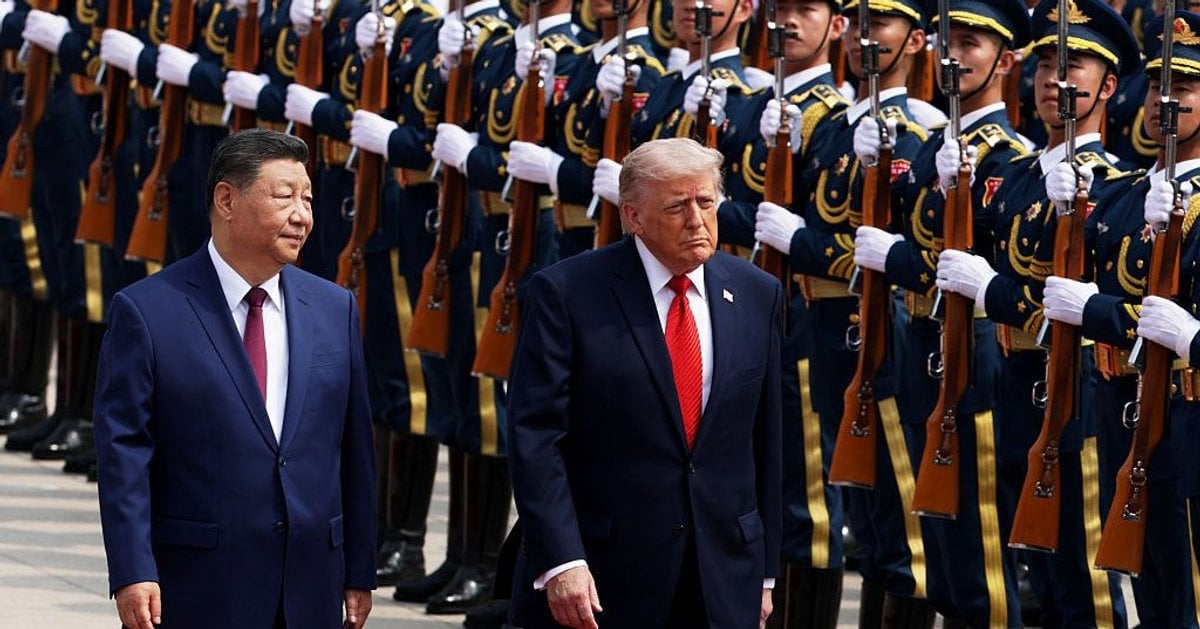
    President Donald Trump’s recent trip to Beijing, accompanied by a delegation including Apple’s Tim Cook, Tesla’s Elon Musk, and Nvidia’s Jensen Huang, signals a potential reset in AI supply chains between the U.S. and China. The visit, focused on high-level negotiations, suggests a shift toward a transactional relationship where American semiconductor technology may support Chinese AI development.

    At the state banquet, President Xi Jinping emphasized the possibility of common cause between China’s rejuvenation goals and America’s “Make America Great Again” agenda. Behind the diplomatic smiles, however, lies a strategic contest: Beijing’s “new productive forces” policy prioritizes AI, advanced manufacturing, and robotics, exemplified by the transformation of Chongqing into a high-tech megacity. Yet China remains dependent on U.S.-controlled high-end accelerators for training frontier AI models.

    Nvidia’s Jensen Huang’s presence is particularly significant. After years of tightening export controls, Washington is now considering case-by-case reviews for advanced AI compute exports. Nvidia is positioned to ship H200 data center GPUs to major Chinese cloud platforms like Alibaba and Tencent. Although not the top-tier Blackwell-class chips, the H200 is roughly six times more powerful than any domestic Chinese alternative, potentially compressing AI training timelines for Chinese firms.

    For Apple and Tesla, the mission focuses on supply chain stability and regulatory clarity. Apple aims to protect its manufacturing resilience and consumer base, where the iPhone 17 has seen success. Tesla views China as crucial for production and full self-driving deployment, seeking clarity on mapping and data policies to compete with domestic rivals.

    This delegation represents an attempt to reverse the 20% decline in U.S. imports from China. By leveraging tech leaders for targeted access—compute in exchange for market openness and IP protections—both nations may enter a more transactional era. The true metrics of success will be the speed of Chinese hyperscalers building H200 clusters and the regulatory wins secured by Apple and Tesla. Ultimately, compute access shapes capability, and this visit suggests a hard-nosed accommodation that keeps the AI flywheel spinning on both sides of the Pacific.

  • Anthropic Accuses Alibaba of Massive AI Model Distillation Attack

    Anthropic Accuses Alibaba of Massive AI Model Distillation Attack

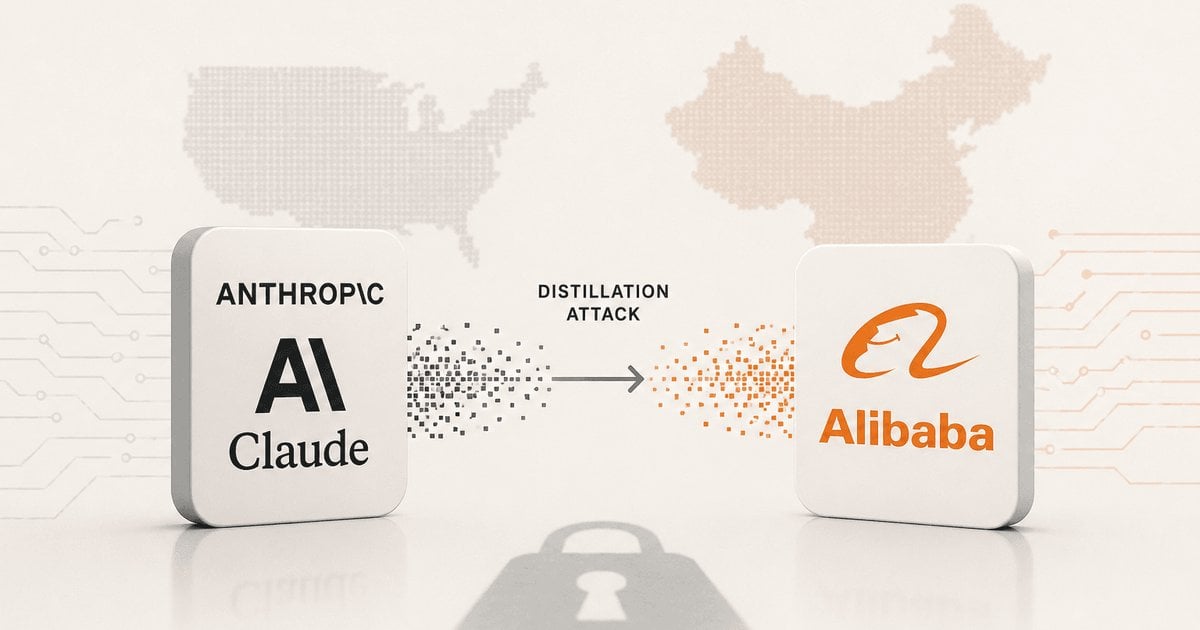
    Anthropic has publicly accused Alibaba of orchestrating a large-scale distillation campaign aimed at extracting capabilities from its Claude AI models. The allegation, detailed in a letter sent to U.S. senators, adds fresh tension to the ongoing technology rivalry between the United States and China.

    According to Anthropic, the e-commerce and technology giant used approximately 25,000 fraudulent accounts to generate over 28.8 million interactions with Claude between April 22 and June 5, 2026. The goal was to illicitly replicate the performance of Anthropic’s most advanced model, Claude Mythos Preview, using a technique known as knowledge distillation—a legitimate machine learning method that can be weaponized for model extraction attacks.

    This technique allows bad actors to feed input-output pairs from a proprietary “teacher” model into their own “student” model, effectively creating a cheap replica of the original system. Anthropic claims that Alibaba and its AI lab Qwen were behind the campaign, marking what it describes as the largest known instance of such an attack on the company.

    The accusation comes amid a rapidly closing frontier gap between Western and Chinese AI models. For example, Z.ai’s GLM-5.2 model, released shortly after Anthropic restricted global access to its most advanced model under U.S. government orders, has achieved benchmark performance nearly on par with leading Western frontier models. Z.ai has since captured a $128 billion market capitalization and plans to accelerate its pursuit of AGI.

    This is not the first time Anthropic has raised alarm over distillation attacks. Earlier in February, the company alleged that several Chinese AI firms—including DeepSeek, Moonshot AI, and MiniMax—had collectively generated millions of interactions with its Claude platform. Anthropic warned that such attacks are becoming more sophisticated and require closer coordination between AI companies and governments.

    The issue has also drawn attention in Washington. The Pentagon has added Alibaba to its list of Chinese military companies, a designation the company is contesting. Meanwhile, Reuters reported that the U.S. Commerce Department has so far held off adding DeepSeek to its trade blacklist, despite national security concerns, as officials weigh diplomatic repercussions.

    Alibaba has not yet responded to requests for comment on the allegations.