Tag: cryptocurrency

  • XRP Crash Risk: Key Factors That Could Trigger a 50% Drop

    XRP Crash Risk: Key Factors That Could Trigger a 50% Drop

    XRP has always been one of the most talked-about cryptocurrencies. Its price often moves faster than many other digital coins as traders closely follow every update related to Ripple, regulation, and the overall crypto market.

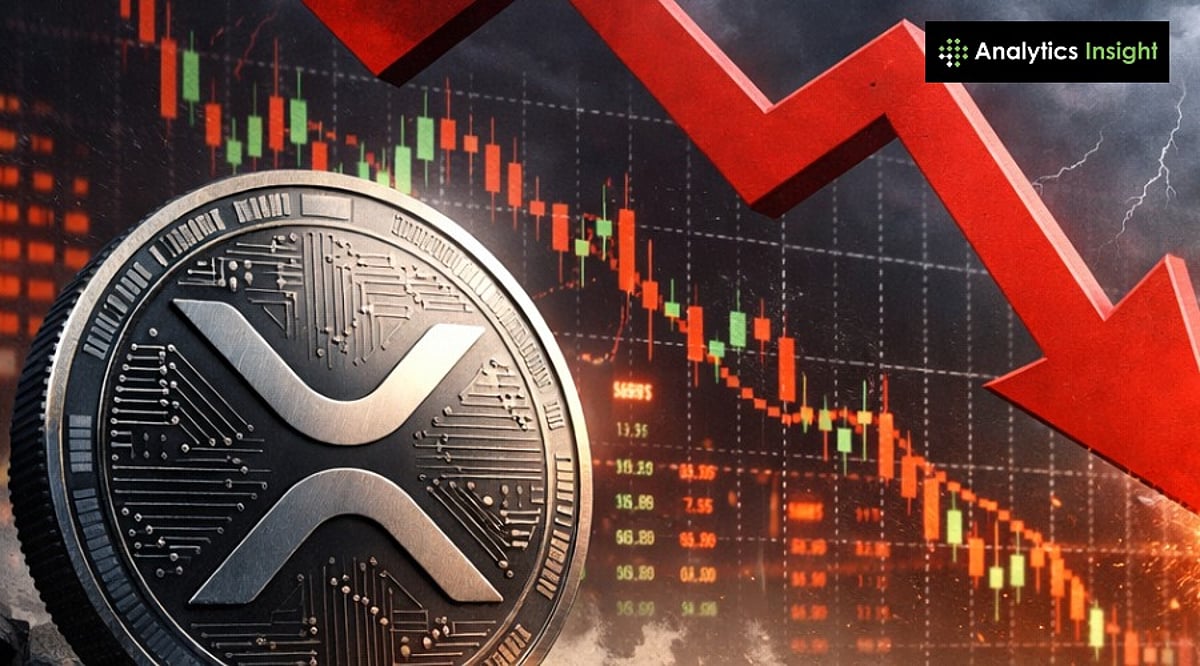
    As of mid-July 2026, XRP trades between $1.00 and $1.18, almost 48% below its earlier 2026 high. This sharp fall has once again raised an important question: could XRP lose another 50% of its value?

    The answer is not simple. XRP still has strong supporters since Ripple continues to expand its payment business around the world. At the same time, several risks could push the price much lower if market conditions become worse. A closer look at these risks helps explain why many investors remain cautious.

    XRP Price Has Already Faced Strong Pressure

    XRP enjoyed a solid rally earlier in 2026 after positive news around Ripple and better confidence in the crypto market. That excitement pushed the token much higher. However, the rally did not last forever. Selling pressure soon returned, and the price started to fall.

    Today, XRP trades around $1.00 to $1.18, which is nearly 48% lower than its 2026 peak. The area between $1.15 and $1.20 has become a strong resistance zone where buyers struggle to push the price higher. On the downside, the $1.00 level has become an important support. If this support breaks, market sentiment could become much more negative.

    The Overall Crypto Market Remains the Biggest Risk

    XRP seldom experiences extended independent movement. Bitcoin largely dictates the direction of the broader cryptocurrency market. When Bitcoin tumbles down steeply, it appears that almost every altcoin loses some value—XRP does the same.

    Global economic conditions may worsen the situation. Periods of economic uncertainty often bring higher interest rates, weaker investor confidence, and broader market declines, reducing demand for high-risk assets such as cryptocurrencies. A sharp decline in Bitcoin could push XRP back into a prolonged bear market.

    Profit Booking Could Increase Selling Pressure

    After a large price increase, many traders decide to sell part of their holdings instead of waiting for even higher prices. This creates extra supply in the market. If buyers fail to absorb that supply, prices usually move lower.

    This pattern has appeared several times in XRP’s history. Large rallies often attract heavy selling from long-term holders, which makes it difficult for the token to maintain upward momentum for a long period.

    Regulation Still Creates Uncertainty

    Ripple has achieved important legal victories over the past few years, but regulation remains one of the biggest factors that could affect XRP.

    Many countries still work on new cryptocurrency laws. Governments continue to study digital assets, stablecoins, and cross-border payment systems. Future rules could either help or slow the adoption of XRP.

    Competition Has Become Much Stronger

    Ripple no longer operates in a market with only a few competitors. Today, many blockchain projects offer fast payment networks and digital asset solutions for banks and financial institutions.

    Several companies also focus on tokenized assets, while stablecoins have become a popular option for cross-border payments. At the same time, many traditional financial firms now build their own blockchain systems instead of depending on public cryptocurrencies.

    Technical Levels Could Trigger a Bigger Drop

    The $1.00 price level has become one of the strongest support areas for XRP. If sellers push the token below this level, many automatic trading systems could activate sell orders at the same time.

    Leverage adds another layer of risk. Many crypto traders borrow money to increase their positions. When prices fall quickly, exchanges force these traders to close their positions. This creates additional selling pressure and can turn a normal decline into a much larger crash within a short period.

    Reasons XRP May Avoid a 50% Crash

    Ripple continues to expand its global payment network and works with businesses that want faster international transactions. The company has also joined projects that explore AI-powered payment standards, which shows its interest in future financial technology.

    Activity on the XRP Ledger has also increased, with a noticeable rise in transaction volume. Strong network usage often reflects healthy ecosystem growth.

    Institutional interest also remains an important factor. More professional investors now pay attention to blockchain payment systems than they did during earlier crypto cycles. If this trend continues, XRP could receive stronger long-term support.

    High Volatility is Normal for XRP

    Large price swings have always been part of the cryptocurrency market. A move of 10% to 20% within a single week is not unusual, especially during periods of uncertainty.

    Fear and excitement often control investor decisions. Good news can push prices higher very quickly, while negative headlines can produce equally sharp declines. XRP has experienced both situations many times over the years.

    Can XRP Really Fall Another 50%?

    A deep Bitcoin correction, weaker global markets, lower crypto investment, unexpected regulatory action, and a break below the important $1.00 support level could together create enough pressure for another major decline.

    However, the opposite scenario also deserves attention. Better regulation, continued business expansion by Ripple, higher institutional interest, and stronger demand across the crypto market could help XRP recover instead of falling further.

    Why This Matters

    With XRP hovering near its make-or-break $1.00 support level, understanding these risks is critical. A potential 50% crash isn’t just about Ripple—it’s a warning sign of how macroeconomic pressure and intense institutional competition can impact your portfolio.

    Final Thoughts

    XRP remains one of the best-known cryptocurrencies given Ripple’s focus on global payments and financial technology. Even after the recent correction, the project continues to attract attention from both retail and institutional investors.

    The current price between $1.00 and $1.18 shows that the market remains cautious after a 48% drop from the 2026 high. Another 50% decline cannot be ignored, especially if several negative market events occur together. At the same time, Ripple’s business growth, higher network activity, and steady institutional interest could provide support over the long term.

    The next few months may prove critical. The strength of the $1.00 support level, the direction of Bitcoin, global economic conditions, and Ripple’s future progress will likely decide whether XRP enters another sharp correction or begins its next recovery phase.

    FAQs

    1. What is XRP’s current price?
    As of mid-July 2026, XRP actively trades between $1.00 and $1.18. The price fluctuates dynamically in real time based on active crypto market conditions.

    2. Can XRP really fall another 50%?
    Yes. A combination of a Bitcoin crash, weak market sentiment, regulatory setbacks, and a break below key support could trigger a major decline.

    3. Why is the $1.00 level important?
    It is a major support zone. If XRP falls below this level, selling pressure could increase significantly.

    4. What could help XRP recover?
    Better crypto market sentiment, stronger institutional demand, Ripple’s business expansion, and positive regulatory developments could support higher prices.

    5. Is XRP still a long-term investment?
    Many investors still see long-term potential for Ripple’s payment technology and growing enterprise adoption, although price volatility remains high.
  • Solana’s Stablecoin Supply Surges 15x Since 2025, Fueling Liquidity and DeFi Expansion

    Solana’s Stablecoin Supply Surges 15x Since 2025, Fueling Liquidity and DeFi Expansion

    Solana’s stablecoin supply has experienced a remarkable 15-fold increase since 2025, propelling network growth through enhanced liquidity, surging DeFi activity, and rising institutional adoption. The total stablecoin supply on Solana now exceeds $13 billion, with non-USDC and non-USDT stablecoins alone reaching approximately $3.8 billion by mid-2026. This dramatic expansion underscores the blockchain’s growing appeal among users, developers, and financial institutions seeking scalable digital payment and decentralized finance solutions.

    Key Takeaways

    • Solana’s non-USDC and non-USDT stablecoin supply has grown nearly 15x since 2025.
    • Total stablecoin supply on Solana surpasses $13 billion, boosting network liquidity.
    • Institutional interest and DeFi expansion remain key drivers of long-term ecosystem growth.

    Diversification of Stablecoin Assets

    While USDC continues to dominate Solana’s stablecoin landscape, the market has witnessed a significant rise in alternative digital dollar tokens such as PayPal USD (PYUSD), Ethena’s USDe, and several emerging projects. This diversification reduces reliance on single issuers, enhances liquidity, and provides developers with greater flexibility—creating a more resilient and attractive ecosystem.

    Liquidity Fuels Trading and Lending

    The influx of stablecoins has deepened liquidity across Solana’s decentralized exchanges (DEXs) and lending platforms. Transaction volumes have surged, and Solana now competes closely with Ethereum and other leading smart contract chains in DEX trading volume. Fast transaction speeds and low fees continue to attract both retail and institutional participants.

    Total Value Locked (TVL) Surpasses $7.5 Billion

    Solana’s total value locked (TVL) climbed above $7.5 billion in 2025, reflecting sustained user confidence in the network’s DeFi ecosystem. Despite typical market fluctuations, TVL remains significantly higher than in previous cycles, signaling enduring trust in Solana’s infrastructure.

    Popular Applications Drive User Adoption

    Leading Solana applications—including Jupiter, Raydium, Kamino Finance, Orca, Meteora, Drift, Marginfi, and Jito—have seen increased user activity thanks to stablecoin-powered liquidity. These platforms benefit from Solana’s high throughput and low costs, making them attractive for traders and developers alike.

    SOL Price Reflects Network Health

    As of mid-July 2026, SOL trades near $80, recovering alongside the broader crypto market. The token previously reached an all-time high of nearly $294 in early 2025 before a market correction. The stabilisation of stablecoin supply has contributed to SOL’s price resilience.

    Institutional and Real-World Asset Adoption

    Institutional interest is growing, with asset managers developing Solana-based investment products and financial institutions leveraging the blockchain for faster payments and settlements. Real-world asset (RWA) tokenization is also gaining traction, as firms explore placing treasury products on-chain, drawn by Solana’s speed and low costs.

    Infrastructure Improvements Support Future Growth

    Solana’s technical foundation continues to strengthen. Validator participation remains robust, and developers are building across DeFi, gaming, AI, consumer services, and digital payments. Enhanced developer tools and institutional custody solutions are lowering barriers for new projects, sustaining long-term ecosystem expansion.

    Why This Matters

    Solana’s 15x stablecoin surge marks a pivotal shift from reliance on single asset issuers to a diversified capital base. This liquidity boost solidifies its position as a leading institutional-grade DeFi hub, directly supporting sustained network growth.

    Stablecoins: The Core Growth Driver

    Stablecoins do more than provide liquidity—they amplify transaction activity, improve lending markets, support decentralized trading, and create new opportunities for payments and yield generation. Each new dollar entering the ecosystem strengthens overall network activity. Solana now ranks as the third-largest blockchain by stablecoin supply, behind only Ethereum and TRON, underscoring its rapid ascent.

    If current trends continue, stablecoins will remain a central catalyst for Solana’s expansion, with increasing payment services, institutional participation, RWA tokenization, and DeFi innovation drawing more users and capital to the network.

    Frequently Asked Questions

    Why has Solana’s stablecoin supply grown so quickly?

    Higher DeFi adoption, low transaction fees, fast processing speeds, and increasing institutional participation have driven strong stablecoin growth.

    How much has Solana’s total stablecoin supply reached?

    The network’s total stablecoin supply has exceeded $13 billion, marking more than 150% annual growth during 2025.

    Which stablecoins are expanding on Solana?

    USDC remains the largest, while PYUSD, USDe, and several newer stablecoins have also seen significant growth.

    How does stablecoin growth benefit the Solana network?

    It improves liquidity, supports decentralized trading and lending, increases transaction activity, and attracts more developers and institutions.

    What is Solana’s current position among blockchain networks?

    Solana ranks as the third-largest blockchain by stablecoin supply, behind Ethereum and TRON, highlighting its rapid ecosystem expansion.

  • Crypto Exchanges With the Strongest Liquidity in 2026

    Crypto Exchanges With the Strongest Liquidity in 2026

    Liquidity is a critical factor for traders who need to execute large orders without causing significant price movements. The following crypto exchanges are renowned for their deep order books, high trading volumes, and efficient execution. Each platform offers unique strengths, catering to both retail and institutional users.

    Binance

    Binance is one of the world’s largest crypto exchanges by trading activity and liquidity. Its deep order books allow users to execute large trades with lower price impact. The platform supports a wide range of cryptocurrencies and trading pairs, making it a preferred choice for global traders seeking high market depth and fast transactions.

    Coinbase

    Coinbase is among the most recognized cryptocurrency exchanges, especially in the US market. Its strong liquidity comes from a large user base and institutional participation. The platform focuses on regulatory compliance and provides access to major digital assets. Its advanced trading services help professional users manage larger transactions with improved market efficiency.

    Kraken

    Kraken has built a reputation for security, reliability, and strong liquidity across major cryptocurrency markets. The exchange offers deep trading pairs and supports professional trading features. Its focus on transparent operations and institutional services has helped it maintain a strong position among experienced traders looking for stable execution and competitive pricing.

    OKX

    OKX is a major global crypto exchange known for high trading volumes and broad asset support. Its deep liquidity helps traders access multiple markets with efficient order execution. The platform offers spot trading, derivatives, and other digital asset services, attracting both retail users and professional investors seeking advanced trading options.

    Bybit

    Bybit has grown rapidly in the crypto market with strong liquidity, particularly in derivatives trading. The exchange offers advanced trading tools and supports several major cryptocurrencies. Its high activity levels help traders execute orders quickly, while its platform features are designed for users looking for professional-grade trading experiences.

    Gemini

    Gemini is a regulated crypto exchange known for its focus on security and compliance. The platform provides reliable trading services with liquidity across major cryptocurrencies. Its strong reputation among institutional and individual investors comes from its emphasis on safety, transparent operations, and a structured approach to digital asset trading.

    This article was compiled from industry analysis and exchange data available as of July 2026.

  • Top 8 Web3 Browsers to Streamline DApp Access in 2026

    Top 8 Web3 Browsers to Streamline DApp Access in 2026

    Decentralized applications (DApps) are becoming more powerful, but accessing them securely and efficiently still requires the right browser. In 2026, specialized Web3 browsers are bridging the gap between traditional web surfing and the decentralized internet. Here are the leading options that make DApps faster, safer, and easier to use.

    1. Brave Browser

    Brave stands out with a built-in crypto wallet, strong privacy protections, and native Web3 support. It blocks trackers by default and rewards users with Basic Attention Tokens (BAT) for viewing privacy-respecting ads.

    2. Opera Crypto Browser

    Opera’s dedicated crypto browser includes an integrated wallet, NFT features, and a built-in blockchain explorer. It simplifies Web3 navigation and supports multiple blockchains.

    3. Carbon Browser

    Carbon is a fast, mobile-first browser with multi-chain wallet integration and low resource usage. It’s designed for users who want a lightweight yet powerful Web3 experience on smartphones.

    4. Osiris Browser

    Osiris is a privacy-focused browser built specifically for decentralized applications. It emphasizes anonymity and security while providing seamless DApp connectivity.

    5. Puma Browser

    Puma is optimized for Web3 gaming, NFTs, and decentralized finance (DeFi) applications. It offers a tailored experience for users who engage heavily with these sectors.

    6. Mises Browser

    Mises supports browser extensions and Web3 wallets on Android devices, making it a versatile choice for mobile users who want to extend their desktop browsing habits to their phone.

    7. MetaMask Browser

    MetaMask’s built-in browser is ideal for Ethereum users. It provides seamless DApp connectivity and wallet integration, making it a go-to for those already in the Ethereum ecosystem.

    8. Status Browser

    Status combines encrypted messaging with decentralized browsing in a single mobile app. It’s perfect for users who value communication privacy alongside Web3 access.

    Each of these browsers brings unique strengths, so your choice depends on your primary activities—whether gaming, DeFi, NFTs, or general browsing. As the Web3 space evolves, these browsers will continue to improve speed, security, and user experience.

  • Bitcoin Climbs Near $64,800 as Inflation Eases and Solo Miner Strikes 3.125 BTC

    Bitcoin Climbs Near $64,800 as Inflation Eases and Solo Miner Strikes 3.125 BTC

    Bitcoin rallied to nearly $64,800 on Wednesday after softer U.S. inflation data lowered expectations for another Federal Reserve interest rate hike. Ether and major altcoins also advanced. Separately, a solo miner using a low-cost Bitaxe machine earned 3.125 BTC by validating a Bitcoin block.

    Cooling Inflation Lifts Bitcoin and Ether

    Headline inflation fell to 3.5% in June from 4.2%, beating economists’ forecasts. Core inflation also eased to 2.6% from 2.9%, signaling broader price pressures are weakening. Traders quickly reduced the implied probability of a rate increase this month from 43% to 13%, while the two-year Treasury yield dropped six basis points.

    Bitcoin gained 3.6% over 24 hours and 3.3% for the week, with trading volume reaching about $31 billion. Ether rose 5.3% to nearly $1,880 and gained 7.1% across seven sessions. HYPE added 6.4%, while XRP, Solana, Dogecoin, and BNB also moved higher.

    Higher interest rates typically reduce demand for Bitcoin and other risk assets, as cash and Treasury bonds become more attractive. Cooler inflation reduces pressure on the Fed to raise rates, encouraging investors to move capital back into cryptocurrencies and equities.

    Global Markets Follow Inflation Signal

    Equity markets responded to the same inflation report. The MSCI Asia Pacific index rose 2.3%, its biggest monthly advance as technology stocks led gains. South Korea’s Kospi surged 8.2%, reclaiming its position as the best-performing major benchmark this year. SK Hynix jumped 13% in Seoul.

    Brent crude rose 1% above $85 a barrel for a third consecutive session. President Trump threatened further strikes on Iran, while the United States resumed its blockade of Iranian shipping through the Strait of Hormuz. CoinEx chief analyst Jeff Ko noted that Bitcoin remains a rate-sensitive risk asset rather than a macroeconomic hedge. The report eased immediate pressure but did not confirm a lasting breakout.

    Core inflation remains above the Federal Reserve’s 2% target, giving officials room to hold rates steady rather than a clear reason to cut. Ko identified the September Federal Open Market Committee meeting as the next major test. Dollar movements and sustained Bitcoin exchange-traded fund flows could also influence the market.

    Solo Miner Secures Rare Bitcoin Block

    A solo miner validated Bitcoin block 957382 on Friday using one low-cost Bitaxe machine. The miner received the standard 3.125 BTC subsidy, worth about $200,000. Blockchain data from mempool.space recorded the successful block. Public Pool later linked the result to a single Bitaxe rig through a post on X.

    Bitaxe is a budget, low-power Bitcoin miner with an estimated hashrate near 1 terahash per second. That capacity is extremely small compared with the total Bitcoin network hashrate, which is dominated by large industrial operations. Bitcoin mining depends on probability rather than equipment size alone, so any valid attempt can still solve a block, though the chance is tiny.

    The miner did not receive a special reward; every successful solo miner qualifies for the standard block subsidy after producing a valid block. The result shows that hobby-scale equipment can still occasionally secure a full subsidy, despite the network’s increasingly competitive mining environment.

    What’s Next?

    Bitcoin climbed near $64,800 as cooling U.S. inflation reduced expectations for another Federal Reserve rate increase. Ether and global equities also advanced, while a solo Bitaxe miner secured 3.125 BTC. Traders should now watch interest-rate signals, ETF flows, and broader market momentum.

  • XRP Faces Intensifying Selling Pressure as Binance Data Signals Weak Demand; Ripple CTO Defends College Sports Ads

    XRP Faces Intensifying Selling Pressure as Binance Data Signals Weak Demand; Ripple CTO Defends College Sports Ads

    XRP continues to face strong selling pressure, with Binance data pointing to subdued buying demand across the broader crypto market. Meanwhile, Ripple CTO Emeritus David Schwartz has publicly defended the company’s advertising campaign in college sports, arguing that truthful commercial speech for lawful products is protected under the First Amendment.

    Over the past week, XRP lost about 2% of its value, and its 30-day decline stands at roughly 2.5%. The token’s sideways movement mirrors similar price patterns seen in Ether and Solana, with analysts linking the weakness to wider crypto liquidity conditions that continue to favor sellers. Institutional capital has also moved away from several leading altcoins, adding to the pressure.

    Binance Data Reveals Weak XRP Buying Demand

    Data from CryptoQuant shows rising XRP sales across centralized exchanges, tracking trading activity and liquidity movements during a period of negative market sentiment. In particular, Binance’s Cumulative Volume Delta (CVD) has fallen to negative 6.93 million. The CVD metric compares buying and selling volume to assess which force dominates the market. A negative reading indicates that selling has exceeded buying, meaning XRP lacks the sustained demand needed to support a stronger price recovery.

    XRP previously traded above $3 before falling toward $1.10. It has also dropped from third to sixth place among cryptocurrencies ranked by market capitalization. While the token’s 30-day average has remained relatively stable, negative whale activity and retail exits have limited signs of a lasting bullish reversal. CryptoQuant analysts noted that continued negative CVD readings increase the likelihood of weak short-term momentum, while a sustained CVD recovery could signal fresh liquidity and renewed buying demand.

    Whale Activity Offers Mixed Signals

    Some large holders increased their XRP positions earlier this year. In May, wallets holding about 10 million XRP accumulated more tokens while smaller traders reduced their exposure. This suggests that whales absorbed coins sold by retail participants, a move that traders interpreted as a possible shift from consolidation toward market expansion. However, XRP failed to hold above a key support line, weakening its medium-term outlook despite earlier signs of a potential breakout.

    More recently, XRP spot activity on Binance turned positive. Weekly figures rose to $406 million after standing near $42 million in May. The token also posted double-digit gains during that period, following recoveries across several other altcoins, although broader selling pressure remained. Institutional participation remains central to XRP’s performance in the current quarter, and the text points to relatively improved macroeconomic conditions as a possible source of market support.

    Schwartz Defends XRP College Sports Advertising

    Separately, David Schwartz defended XRP advertising after critics questioned Ripple’s college sports sponsorships. The debate followed a partnership with the University of Kansas athletics program, a multi-year agreement that places XRP branding on university team uniforms. Critics compared the promotion with advertising linked to gambling, tobacco, and alcohol, arguing that universities should limit digital asset marketing aimed at students and younger sports audiences.

    Schwartz responded on July 15 via a post on X, focusing on legal protections for commercial speech rather than XRP’s investment prospects. He argued that governments cannot broadly suppress truthful advertising for lawful products, relying on First Amendment protections. Schwartz stated that officials cannot restrict truthful commercial speech simply because consumers may make poor but lawful decisions. He also separated regulation from advertising restrictions, noting that governments may regulate an activity without banning truthful speech about that lawful activity.

    What’s Next for XRP?

    XRP remains under pressure as negative Binance CVD data signals weak demand, while whale activity and institutional flows offer mixed support. Meanwhile, David Schwartz continues to defend lawful XRP advertising in college sports. Traders should watch liquidity trends and institutional participation for signs of renewed market strength.

  • Solana Price Recovery Gains Steam as Morgan Stanley Files Updated ETF Proposal

    Solana Price Recovery Gains Steam as Morgan Stanley Files Updated ETF Proposal

    Solana (SOL) extended its recovery on Wednesday, climbing above its 50-day Exponential Moving Average (EMA) as retail trading activity picked up, even as institutional demand through exchange-traded funds remained subdued. The token gained approximately 4% in the previous session, buoyed by improving sentiment across the broader cryptocurrency market.

    Technical indicators show Solana reclaiming the 50-day EMA at $76.82 and moving above the 50% Fibonacci retracement level at $76.92. These levels are critical for sustaining the current rebound. However, SOL faces immediate resistance from a descending trendline near $81.50. A daily close above that level would confirm a break from the existing downtrend and open the path toward the next resistance at $88.56, with the 200-day EMA at $94.52 serving as the next major barrier.

    The Relative Strength Index (RSI) sits near 54, indicating moderate buying pressure without overbought conditions. Meanwhile, the Moving Average Convergence Divergence (MACD) is approaching a bullish crossover near its signal line, which could signal improving momentum if confirmed.

    Retail Activity Strengthens, Institutional Caution Persists

    Data from CoinGlass shows Solana futures open interest holding steady near $4.91 billion over the past 24 hours, suggesting traders are maintaining leveraged positions. Futures trading volume rose 15% to approximately $6.90 billion, reflecting stronger market participation. Solana’s funding rate remained positive at about 0.0040%, meaning long-position holders are paying shorts to keep positions open.

    In contrast, institutional demand remains weak. SoSoValue data indicates Solana ETFs recorded zero net inflows for two consecutive trading sessions this week, highlighting a cautious approach from traditional investors despite the retail-driven recovery.

    Morgan Stanley Revises Solana ETF Filing

    In a significant development, Morgan Stanley has filed its third round of amendments for proposed spot Ether and Solana ETFs. The updated S-1 registration statements name Coinbase as custodian and staking facilitator, with BNY Mellon serving as joint custodian for both trusts.

    The Solana ETF, proposed to list on NYSE Arca under the ticker MSOL, may stake up to 100% of its SOL holdings, though a portion will remain liquid for redemptions and expenses. Staking providers and custodians would receive 5% of generated staking rewards, with the remaining 95% accruing to the trust. Earlier filings also listed Figment, Galaxy Blockchain Infrastructure, and Coinbase Canada as staking service providers.

    What to Watch

    Solana’s recovery has gained traction after reclaiming its 50-day EMA and seeing improved futures activity. However, weak ETF inflows underscore continued institutional caution. Morgan Stanley’s revised ETF filing could bolster future interest, while the $81.50 resistance level remains the key technical threshold for traders to monitor.

  • Bitcoin Nears $65K Resistance Amid Softer Inflation Data and Surging ETF Inflows

    Bitcoin Nears $65K Resistance Amid Softer Inflation Data and Surging ETF Inflows

    Bitcoin traded near $64,600 on July 15 after hitting an intraday high above $65,100, gaining about 3% in 24 hours. The move brings the leading cryptocurrency close to a key resistance zone, fueled by cooler U.S. inflation data, robust ETF inflows, and short liquidations.

    Cooling Inflation Drives Bitcoin Higher

    The U.S. Consumer Price Index fell 0.4% in June—the largest monthly decline since April 2020. Annual inflation slowed to 3.5% from 4.2% in May, while core inflation remained unchanged and eased to 2.6% annually. The report reduced expectations for a near-term Federal Reserve rate hike, with market pricing dropping from 43% to 13%. Lower rate expectations supported risk assets like Bitcoin, as traders moved away from cash positions.

    Bitcoin’s correlation with the S&P 500 reached 86% during the move, indicating a broad macro reaction rather than a crypto-specific event. Fed Chair Kevin Warsh is addressing Congress this week, and the July policy meeting is scheduled for July 28–29.

    ETF Demand and Liquidations Add Support

    U.S. spot Bitcoin ETFs recorded $181 million in net inflows on July 14, led by BlackRock’s IBIT with approximately $139 million and Fidelity’s FBTC adding roughly $21 million. This fresh demand through regulated investment products coincided with rising prices that forced bearish traders to close leveraged positions. About $107.25 million in Bitcoin shorts were liquidated over 24 hours, adding upward momentum.

    The inflow data followed uneven institutional activity earlier in July. Traders are watching for sustained demand after the CPI-driven move.

    Bitcoin Price Faces a $65K Breakout Test

    Bitcoin now faces resistance at $65,000 and near its 50-day exponential moving average around $65,142. A daily close above that level could open a move toward $68,000, with the next resistance zone between $68,000 and $70,000. Analyst Michaël van de Poppe expects Bitcoin to reach $68,000 within one to two weeks, and possibly $75,000 to $80,000 in August, provided price clears nearby resistance.

    Order-book data shows notable selling interest near $67,000 and above, with buyers supporting between $63,500 and $63,800. A fall below $64,000 could expose $63,000, while a deeper break may bring $61,300 into focus.

    Oil prices add a near-term risk: Brent crude climbed to $85.42 after the U.S. restored a naval blockade on Iranian ports. Further supply disruption could lift inflation expectations and alter the rate outlook that supported Bitcoin’s rally.

  • Safe Storage Strategies for Large Cryptocurrency Holdings: Cold Wallets, Multisig & More

    Safe Storage Strategies for Large Cryptocurrency Holdings: Cold Wallets, Multisig & More

    A large cryptocurrency portfolio demands stronger security measures than a modest one. While a few tokens can be stored in a mobile wallet, long-term investments in Bitcoin, Ethereum, stablecoins, and blue-chip altcoins require a layered security approach.

    In 2025, over $3 billion in cryptocurrency was stolen as attackers exploited predictable weak points: account takeovers, compromised credentials, and platform security gaps. The FBI’s 2025 Internet Crime Report documented over 181,000 crypto-related complaints with losses exceeding $11 billion, up 22% from 2024.

    Use Cold Storage for Long-Term Holdings

    For large balances, cold storage is the safest starting point. A cold wallet keeps private keys offline, minimizing risks from malware, phishing, fake browser extensions, and wallet-draining sites. Hardware wallets like Ledger and Trezor require physical confirmation for transactions, adding an extra layer of security.

    However, a hardware wallet is only as safe as its recovery phrase. Never photograph your seed phrase, store it in cloud storage, or type it into any app.

    Split Funds Across Multiple Wallets

    Avoid storing all holdings in a single wallet. Split your portfolio according to use: long-term investments in cold storage, medium-term on an exchange, and DeFi investments in a separate hot wallet. This eliminates single-point failures; if one wallet is compromised, the rest of your portfolio remains unaffected.

    Use Multi-Signature Protection

    Multi-signature (multisig) wallets require more than one approval to move funds. A 2-of-3 arrangement, for example, needs two separate keys for any transaction. This protects against seed phrase loss, device theft, and insider misuse, making it ideal for family offices, businesses, and large investors.

    Protect Against Human Error

    Human error remains a top risk. Address poisoning—where attackers send small transactions from fake addresses to trick victims into copying the wrong address—is increasingly common. In 2025, a study found 270 million address poisoning attempts targeting 17 million on-chain addresses, resulting in at least $83.8 million in losses.

    Always verify the full address when sending or receiving transactions. Send a small test transaction first, and avoid copying addresses from your transaction history.

    Plan for Recovery and Inheritance

    Long-term investors need a recovery plan. Store seed phrases offline in a bank locker or safe, and consider metal backups for fire and water protection. Trusted heirs should know where recovery instructions are stored, without having direct access to funds.

    Why This Matters

    With crypto theft exceeding $11 billion in 2025, standard wallets are insufficient for large portfolios. Implementing layered security—cold storage, multisig, wallet separation, offline backups, and transaction verification—is critical to making theft difficult, recovery possible, and mistakes less costly.

    FAQs

    1. What is the safest way to store large crypto holdings?

    Cold storage is generally the safest option for long-term holdings, as private keys stay offline. Hardware wallets reduce exposure to phishing, malware, and wallet-draining sites.

    2. Should I keep all my crypto in one wallet?

    No. Storing all crypto in one wallet creates a single point of failure. Splitting funds across cold storage, exchange wallets, and DeFi wallets reduces portfolio-wide risk.

    3. What is a multi-signature wallet?

    A multi-signature wallet requires more than one approval before funds can be moved. This shields large holdings from device theft, seed phrase loss, insider misuse, and unauthorized transactions.

    4. How can investors avoid address poisoning scams?

    Always verify the full wallet address before sending funds, avoid copying addresses from transaction history, and send a small test transaction first to catch errors.

    5. Why is recovery planning important for crypto investors?

    Recovery planning ensures funds aren’t permanently lost if a device is damaged, stolen, or inaccessible. Store seed phrases offline, and let trusted heirs know where recovery instructions are kept.

    Disclaimer: This article is for informational purposes only and does not constitute financial or investment advice. Always conduct your own research before making any investment decisions.

  • Bitcoin Price Holds at $64,517 as Bullish Momentum Builds Toward Key $65,000 Resistance

    Bitcoin Price Holds at $64,517 as Bullish Momentum Builds Toward Key $65,000 Resistance

    Bitcoin (BTC) is trading near $64,517 on July 15, 2026, after a strong rally that saw the cryptocurrency break above $64,000 and reach an intraday high of $64,541 on Bitstamp. The world’s largest digital asset has gained roughly 4% to 5% in the last 24 hours, recovering from recent weakness and pushing its market capitalization above $1.29 trillion. Daily trading volume remains robust at nearly $30 billion, signaling active participation from both institutional and retail investors.

    Technical Strength and Price Action

    On the 15-minute chart, Bitcoin traded in a tight range around $62,800–$63,000 for several hours before a surge in buying pressure pushed the price to $64,700, confirming a fresh bullish breakout. After the sharp move, the market entered a consolidation phase between $64,450 and $64,900, a typical breather following strong rallies. Candlestick patterns show that sellers attempted to push the price lower, but buyers quickly stepped in to defend the key $64,500 support level.

    Moving Averages Support the Uptrend

    The moving averages continue to favor buyers. The short-term moving average near $64,689 acts as immediate resistance, while the medium-term average at $64,111 has provided support during minor pullbacks. The long-term moving average sits around $63,294. Since Bitcoin trades comfortably above all these averages, the overall trend remains bullish. As long as the price stays above $64,111, the short-term outlook stays positive.

    RSI Returns to Healthy Levels

    The Relative Strength Index (RSI) has dropped to around 43 after briefly entering overbought territory during the earlier rally. This decline does not indicate weakness; rather, it shows that momentum has normalized after the strong move. If the RSI climbs back above 50, fresh buying momentum could emerge to support another leg higher.

    Key Support and Resistance Levels

    Support: The first line of defense is the $64,450–$64,500 zone, where buyers have prevented further declines. Additional support lies at $64,100, followed by the major support near $63,300. The most critical level is the $62,800–$63,000 range, where the recent breakout originated. A break below these levels could signal a trend reversal.

    Resistance: Immediate resistance stands at $64,700, followed by the psychologically important $65,000 mark. Above that, the major resistance zone lies between $65,200 and $65,500. A clean break above $65,000 could attract fresh buying and pave the way for another rally.

    Fundamental Drivers

    Lower-than-expected U.S. inflation data has boosted Bitcoin, as easing fears of further interest rate hikes improved risk appetite. A weaker U.S. dollar has also supported cryptocurrency prices. Institutional demand remains strong, with Bitcoin ETFs continuing to attract long-term investors despite occasional outflows. Market participants are now watching upcoming economic data and Federal Reserve statements for further direction.

    Outlook

    Bitcoin remains in a bullish phase after successfully breaking above $64,000. Buyers continue to support every pullback, creating a pattern of higher lows. The strong support between $64,100 and $64,500 suggests that the cryptocurrency has the potential to challenge $65,000 and extend toward $65,500. If sellers push the price below $64,100, the next support at $63,300 could act as a strong buying zone. Overall, the combination of robust volume, sustained institutional interest, and improving macroeconomic conditions keeps the market bullish unless key support levels are violated.