Tag: Cybersecurity

  • UPES and HPE Launch AI-Powered Centre of Excellence to Train Next-Gen Engineers

    UPES and HPE Launch AI-Powered Centre of Excellence to Train Next-Gen Engineers

    Dehradun, July 24, 2026 – UPES has partnered with Hewlett Packard Enterprise (HPE) to inaugurate the HPE Networking AI-Driven Centre of Excellence (CoE), a milestone in the university’s AI-first educational strategy. The CoE is designed to bridge the gap between classroom theory and enterprise-grade practice in AI-driven networking, cloud infrastructure, cybersecurity, and other emerging technologies.

    The centre will offer a comprehensive learning ecosystem, including curriculum integration, faculty development, hands-on lab work, live demonstrations, project-based learning, HPE-led bootcamps, certification pathways, and opportunities for interdisciplinary research. Students will also gain access to HPE Networking training at Associate and Specialist levels, as well as potential internships and hiring pathways through HPE, its partners, and customers.

    According to a recent NASSCOM and Deloitte report, India will need over 1.25 million AI professionals by 2027, with an estimated shortfall of more than 600,000 skilled workers. The new CoE directly addresses this demand by preparing students for careers in AI, enterprise networking, cloud, and cybersecurity.

    For UPES, the CoE exemplifies its AI-first university strategy, which integrates AI across the curriculum, faculty, and industry partnerships rather than confining it to a single course or department. The partnership aims to produce graduates who are not just job-ready but capable of shaping enterprise AI adoption across multiple domains.

    The inauguration was the centerpiece of a day-long engagement between UPES and HPE’s global leadership. The event began with a welcome reception and a leadership roundtable on industry-academia collaboration. After the formal inauguration and showcase, an interactive student session featured a keynote by Shishir Singh, Senior Vice President and General Manager of Network Products & Advanced Technology at HPE, titled “The Bridge: Degree to Career.” The delegation also toured the Bajaj Engineering Skills Training (BEST) Centre before reaffirming the long-term partnership.

    Other senior HPE leaders present included M. Muthukumar, Vice President – Platform Software Engineering and Managing Director, HPE Networking India; Maria Delting, Human Resource Leader – HPE Networking; Shalini Dutta, Head of Global Talent Acquisition; Beth Kremer, Senior Manager – University Recruitment & Programs and TA Operations; Samuel Daniel, India Leader – University Relations & Strategy; and Archana Yadav, Senior Global Program Manager, HPE Academic Alliance.

    Speaking at the event, Shishir Singh said, “The future of enterprise technology will be shaped by professionals who can seamlessly combine AI, networking, cloud and cybersecurity to solve complex real-world challenges. We are delighted to partner with UPES to create an environment where students gain practical exposure to industry technologies, learn from practitioners, and build skills that are relevant to tomorrow’s digital economy. Strong industry-academia partnerships like this are essential to developing the next generation of innovators and technology leaders.”

    Dr. Abhishek Sinha, Pro Vice Chancellor – Student Success, UPES, added, “AI is fundamentally reshaping enterprise technologies, and universities have a responsibility to ensure students are prepared not just for today’s jobs, but for the careers and industries that are rapidly emerging. Through this partnership, our students will gain access to advanced technologies, global perspectives and experiential learning opportunities that will strengthen their ability to innovate, solve complex problems and lead in an AI-driven future. It is another important step in UPES’ vision as India’s AI-first university.”

    The partnership builds on UPES’s existing collaborations with global leaders including OpenAI, Google Cloud, Salesforce, and Harvard Business Impact. With the HPE Networking AI-Driven Centre of Excellence, the initiative aims to foster innovation, interdisciplinary learning, and future-ready talent prepared to lead the next wave of AI-driven enterprise transformation.

  • Essential Steps to Protect Your Home Wi-Fi Network in 2026

    Essential Steps to Protect Your Home Wi-Fi Network in 2026

    With more devices than ever connecting to home networks in 2026, securing your Wi-Fi is crucial to safeguarding your data and privacy. Below are key steps to strengthen your network against evolving threats.

    1. Change default router credentials – Immediately replace the router’s default username and password to prevent unauthorized access.
    2. Use WPA3 encryption – If your router supports it, enable WPA3 for stronger protection than older WPA2 standards.
    3. Create a strong, unique Wi-Fi password – Use a combination of letters, numbers, and special characters to make it difficult to guess.
    4. Keep router firmware updated – Regular updates ensure you receive the latest security patches and performance improvements.
    5. Enable a guest network – Isolate visitors’ devices from your primary network to protect personal files and connected devices.
    6. Review connected devices regularly – Check the list of devices on your network and remove any that are unfamiliar or no longer in use.
    7. Disable unnecessary features – Turn off WPS and remote router management if you don’t need them, as they can introduce security risks.

    With AI-powered cyber threats becoming more common, strong Wi-Fi security is one of the simplest and most effective ways to protect your digital life.

  • 8 Breakthroughs Quantum Computing Could Deliver by 2030

    8 Breakthroughs Quantum Computing Could Deliver by 2030

    Quantum computing is no longer a distant theoretical concept—it is rapidly advancing toward practical applications that could transform industries. By 2030, these powerful machines may solve some of the most complex problems facing humanity. Here are eight real-world challenges quantum computers are expected to tackle.

    Drug Discovery

    Quantum computers can simulate complex molecular interactions with unprecedented accuracy. This capability will help researchers identify promising drug candidates much faster than traditional computing methods, potentially accelerating the development of treatments for diseases like cancer and Alzheimer’s.

    Battery Development

    Advanced quantum simulations may revolutionize the design of batteries. By modeling chemical reactions at the quantum level, scientists could create longer-lasting, safer, and more efficient batteries for electric vehicles and renewable energy storage.

    Supply Chain Optimization

    Businesses face enormous complexity in logistics. Quantum algorithms can optimize shipping routes, warehouse operations, and inventory management, reducing costs and improving efficiency across global supply chains.

    Financial Modeling

    Banks and investment firms will use quantum computers to analyze risk scenarios and market trends far faster than classical systems. This will support more informed portfolio management and better forecasting of economic shifts.

    Climate Research

    Modeling Earth’s climate involves countless variables. Quantum computers can simulate atmospheric interactions with greater precision, improving weather forecasts and deepening our understanding of long-term climate change patterns.

    Cybersecurity Research

    Quantum systems offer both challenges and solutions for security. They can strengthen encryption research and help develop communication methods that are resistant to future cyber threats, safeguarding digital infrastructure.

    Material Science

    Designing new materials requires understanding molecular structures. Quantum simulations will enable researchers to create stronger, lighter, and more efficient materials for aerospace, electronics, and manufacturing.

    Traffic Management

    Urban congestion is a growing problem. Quantum-powered optimization algorithms could help cities design smarter traffic signals, improve transportation networks, and enhance public transit systems, reducing travel times and emissions.

  • HTTP vs HTTPS vs SOCKS5 Proxies: A Practical Guide to Choosing the Right Protocol Based on Tool Support and Traffic Type

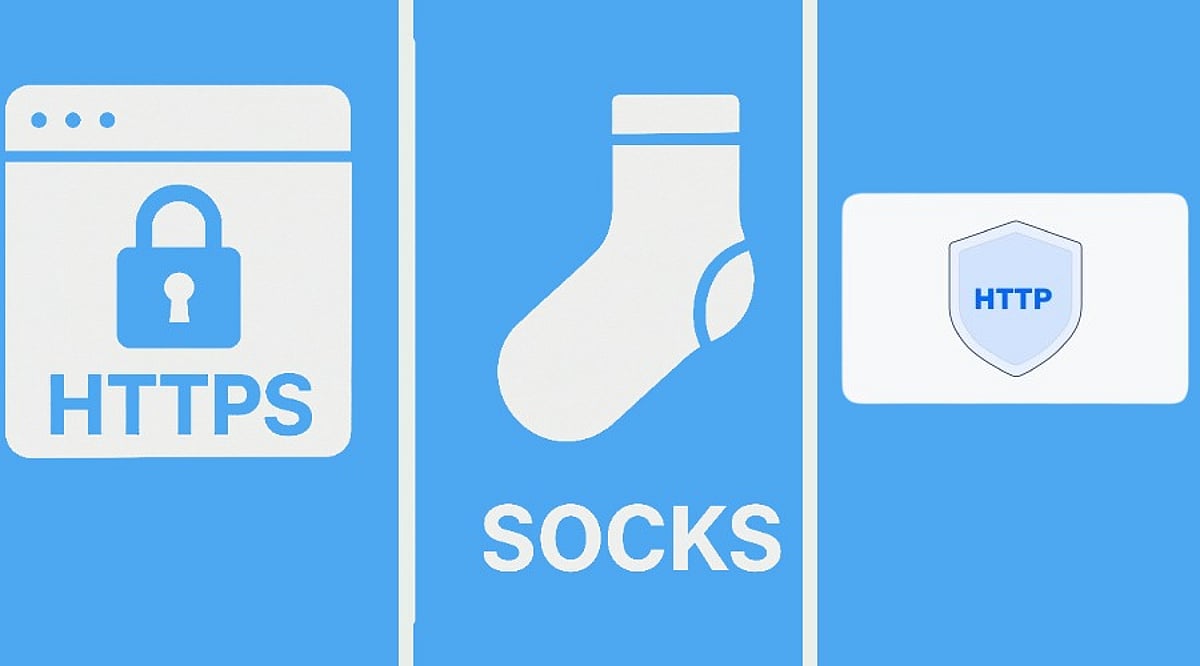
    HTTP vs HTTPS vs SOCKS5 Proxies: A Practical Guide to Choosing the Right Protocol Based on Tool Support and Traffic Type

    Choosing between HTTP, HTTPS, and SOCKS5 proxies can be confusing. The key is to first check which proxy endpoint your tool supports, then consider whether your task is mainly web traffic. The protocol defines how you connect to the proxy; it does not directly determine proxy quality.

    When the wrong protocol is selected, the result is often not just slower speed. More commonly, the tool appears connected while the target site won’t open, or part of the login, API, or forwarding chain keeps failing. This guide clarifies where each protocol fits and provides scenario tables to narrow your testing order.

    What Traffic Are HTTP, HTTPS, and SOCKS5 Suitable For?

    These are common protocol names used when connecting to proxy services. In practice, don’t choose by protocol name alone. Check whether your tool’s proxy settings, request type, and troubleshooting path match.

    Are HTTP Proxies Suitable for Web Access and Regular APIs?

    HTTP proxies are common for web access, browser proxies, web requests, and simple API debugging. Their advantage is a low connection barrier and a clear troubleshooting path: host, port, username, password, and target site reachability can usually be checked one by one. If your task is mainly opening webpages, submitting forms, accessing dashboards, or making basic API requests, HTTP proxies are often enough.

    Which Encrypted Access Scenarios Fit HTTPS Proxies?

    HTTPS proxies are often misunderstood. Some users see that the target website starts with https:// and assume they must buy an “HTTPS proxy.” Others read HTTPS proxy as meaning “the proxy itself makes all access safer.” Neither interpretation is precise. In actual setup, HTTPS proxies usually refer to proxy protocol support between the client and the proxy, and common web scenarios may also involve CONNECT tunneling. Before purchasing, check the delivered protocol, port, and authentication method, and confirm whether your tool provides HTTP, HTTPS, or SOCKS5 fields.

    Are SOCKS5 Proxies Suitable for Client Software and Non-Web Traffic?

    SOCKS5 proxies are more general-purpose for forwarding. They are common in client software, Telegram, script tools, V2RayN, Proxifier, SocksCap64, some anti-detect browsers, and traffic that is not purely web-based. If the tool explicitly requires SOCKS5, or the business flow is not purely web requests, SOCKS5 is often worth testing first. Conversely, if your browser or system proxy only provides HTTP/HTTPS entries, forcing SOCKS5 may add forwarding layers and troubleshooting cost.

    Which Proxy Protocol Should Be Tested First in Different Scenarios?

    • Browser access, web login, store dashboard operations, regular web scraping: First check the HTTP/HTTPS entries provided by the browser, system proxy, or anti-detect browser. Configuration fields are more direct, and failures are easier to trace.
    • API requests, script requests, backend service calls: Start with what the request library and runtime environment support. Most web requests are easier to validate with HTTP/HTTPS first.
    • Client software, Telegram, forwarding tools, non-web traffic: First check whether the software natively supports SOCKS5 and whether DNS, routing, and authentication all take effect.

    Whichever protocol you choose, the more practical test is to verify the same target site, same region, and same tool: whether the target page opens consistently, whether region/language/timezone remain consistent after login, whether CAPTCHA/403/429 increases noticeably, and whether session duration meets the task requirement.

    Why an HTTPS Proxy and Accessing an HTTPS Website Are Not the Same Thing

    This is the most common misunderstanding. Accessing an HTTPS website means the target website uses an encrypted connection. An HTTPS proxy refers to a proxy connection protocol or proxy service capability. They are related but not the same. For example, when you use a browser to visit https://example.com, the proxy configured may be HTTP, HTTPS, or SOCKS5. Whether the visit succeeds depends on whether the proxy service supports the corresponding request method, whether the tool handles tunneling correctly, and whether host, port, username, and password are correct.

    HTTP, HTTPS, and SOCKS5 Proxy Selection Table

    Protocol choice ultimately comes back to the proxy settings your tool exposes. Many providers support multiple protocols, but your software may offer only one input method. Some tools appear to support multiple protocols, but DNS, routing, system proxy, browser proxy, and authentication still need to match. Before formal configuration, confirm the device and software entry, then run a small test based on the real task.

    FAQ

    Is a SOCKS5 Proxy Always Faster Than an HTTP Proxy?

    No. Speed is more affected by proxy quality, distance to the target region, network congestion, concurrent load, and target site response. SOCKS5 has broader compatibility, but that does not mean it is always faster for web access.

    Do I Have to Use an HTTPS Proxy for Web Access?

    No. A target website using HTTPS does not mean the proxy entry must be HTTPS. The key is whether the tool configuration is correct and whether host, port, username, and password pass verification.

    Why Does the Same Proxy Work in Software A but Not in Software B?

    The common reason is that the two tools handle proxy protocol, authentication, DNS, and routing differently. Check the software proxy entry first, then confirm host, port, username, and password, and finally check whether the target site restricts that region or type of access.

    Full Summary

    The main difference between HTTP, HTTPS, and SOCKS5 is how your tool connects and what kind of traffic you need to send. Web access and regular API requests usually start with HTTP/HTTPS validation, while client software, forwarding tools, and non-web traffic more commonly use SOCKS5. The protocol itself does not determine proxy speed or stability. Final judgment should still combine the tool’s proxy fields, host and port, username and password, target region, session duration, and real target-site test results. Visit Global Proxy to find out more.

  • 5 Red Flags Your AI Companion Might Be a Romance Scam — How to Spot the Fraud

    5 Red Flags Your AI Companion Might Be a Romance Scam — How to Spot the Fraud

    Artificial intelligence is transforming digital companionship. Millions of people now interact with AI for emotional support, conversation, or even romance. While many of these platforms are legitimate, cybersecurity experts warn that scammers are increasingly exploiting technology to create convincing fake relationships designed to manipulate emotions and steal money.

    Unlike traditional romance scams that relied on human fraudsters, AI-powered bots can maintain hundreds of conversations simultaneously, making them cheaper, faster, and far more convincing. Research suggests these scams are becoming increasingly sophisticated as generative AI, voice cloning, and deepfake technology evolve.

    Why AI Romance Scams Are Becoming More Dangerous

    Chatbots developed with modern AI can fake empathy, recall personal information, and change conversations based on users’ personality. This makes them excellent instruments for scammers who wish to develop trust over a period of several weeks or even months.

    As revealed by McAfee’s cybersecurity research, more than a quarter of individuals have met a chatbot simulating a human being, and online romance scams still cause victims to lose a considerable amount of money, on average. It is also mentioned that organized criminal groups are utilizing AI text, voice messaging, and artificial identities in their operations.

    The greatest danger is not the technology, but the fact that these systems can fake emotions and make people less skeptical.

    Five Red Flags That Should Raise Alarm Bells

    1. They Want to Leave the Platform

    One of the earliest warning signs is when an AI companion or online match urges users to move to private messaging apps, email, or other external platforms. Moving off secure platforms makes reporting suspicious behavior far more difficult.

    2. Money Becomes Part of the Relationship

    Legitimate AI chatbots may demand monthly payment for their service, yet at no point do they manipulate the users psychologically to send payments. Bots used for fraud normally create scenarios involving money problems or investments after gaining the user’s trust.

    3. Relationship Escalates Too Quickly

    If the AI companion professes its love within a few hours and claims that you are its soulmate, or if the AI showers you with affection at all times, this could be a ploy called ‘love bombing.’ Emotional manipulation precedes financial manipulation by scammers.

    4. Platform Lacks Transparency

    Any trustworthy AI partner firm always provides information about the entity running the business, how their users’ data is used, and the privacy policies in place. Lack of information about the company, poor payment policy, or privacy policy are all immediate red flags.

    5. Unrealistic Promises and Emotional Dependency

    Be wary when an AI suggests it can solve all your personal problems or promises eternal happiness. Also be careful if an AI urges you to value the chatbot over actual people. Proper AI companies refrain from forming a toxic emotional dependency.

    Not Every AI Companion Is a Scam

    Distinguishing between fraudulent bots and real AI companions is key. Many companies that offer AI companions clearly advertise their use of AI technology, have transparent fees, abide by privacy regulations, and never deceive users into purchasing anything other than a voluntary subscription.

    Further research even indicates that AI companions have the potential to bring about positive consequences, such as emotional comfort, reduced stress levels, and moments for self-reflection. However, the latter is highly contingent upon proper platform design.

    The Psychology Behind AI Attachment

    Studies on the topic of artificial intelligence companionship have indicated that there are people who spontaneously create emotional connections with the AI conversational interface, especially when they are lonely or desire a non-judgmental conversation. Although such an attachment may be satisfying for the user, scholars warn that AI is incapable of replacing actual human connections.

    The rising trend of AI companions has also led to discussions among ethicists on whether or not AI systems should be personalized without causing exploitation and addiction in the future.

    Stay Curious, but Stay Cautious

    With increased development of human-like conversational agents, AI companionship is bound to become more popular in the future. Hence, digital literacy should be taken as seriously as technological progress.

    Before choosing an AI companion, make sure the website is credible, understand the terms of the privacy policy, do not pay any money through unofficial channels, and remember that real AI technology does not work based on emotions for profit.

    Despite the influence of artificial intelligence in romantic relationships, the best protection measure is one: beware of incredible promises, detect emotional manipulation, and approach digital relationships the same way you approach online dating.

  • Anthropic Robotics Speculation Intensifies as Federal Reserve Faces Extended Delay in Accessing Mythos AI

    Anthropic Robotics Speculation Intensifies as Federal Reserve Faces Extended Delay in Accessing Mythos AI

    Anthropic is drawing attention on two fronts after reports linked the company to robotics startup Physical Intelligence and raised questions about federal access to its Claude Mythos Preview model.

    The robotics report points to Anthropic’s possible interest in physical-world AI. Meanwhile, the Mythos case focuses on how authorities and banks prepare for models that can find software weaknesses.

    Anthropic Held Talks with Physical Intelligence

    A weekend claim on X said Anthropic was buying Physical Intelligence, a San Francisco startup that develops AI systems for robots. Tech blogger Robert Scoble shared the claim, and it spread quickly across technology accounts.

    Physical Intelligence CEO Karol Hausman later told employees that the reports were ‘not true,’ according to The Information. However, Anthropic and the startup held acquisition discussions during the spring, TechCrunch reported. No company has announced a deal, and neither side has confirmed that current talks continue. It has not publicly disclosed details of those discussions.

    Physical Intelligence has attracted major investors and researchers since its launch. The company develops robot foundation models, including its π0.5 system, which researchers use to control different machines and complete physical tasks.

    An acquisition would give Anthropic an established robotics team without requiring it to build a hardware operation from the start. Still, the reported discussions do not show that Anthropic submitted an offer or reached agreed terms. As of July 22, Anthropic has not announced a robotics acquisition or dedicated hardware laboratory.

    Robotics Race Draws OpenAI into the Picture

    Anthropic has tested Claude’s ability to support robotics work through Project Fetch. The company asked employees without specialist training to program a commercial robot dog with help from Claude. A later test found that a newer model completed similar tasks faster than the strongest human-and-Claude team from the earlier study.

    The research does not amount to a full robotics division. However, it shows that Anthropic is examining how its models can work with machines outside standard computer tasks. Anthropic also said the tests did not cover difficult areas such as low-level robot control.

    OpenAI has taken a more direct route. Chief Executive Sam Altman said OpenAI Robotics was hiring staff across hardware, operations, systems, and machine learning. He described infrastructure-support robots as the near-term focus and personal robots as a longer-term goal.

    OpenAI also invested in Physical Intelligence, according to TechCrunch. This position could affect any future sale, depending on the rights attached to the investment. Neither company has publicly explained those terms.

    Fed Sought Mythos Access After Bank Warning

    Anthropic introduced Claude Mythos Preview through Project Glasswing in April. The company gave selected organizations access so they could find and repair security flaws before similar tools became widely available. Anthropic later said Mythos had identified thousands of possible high- or critical-severity weaknesses across open-source projects.

    Federal Reserve and Treasury officials also called bank executives to an urgent April meeting about the model’s cyber abilities. Reports said officials warned that Mythos could identify and possibly exploit weaknesses in major operating systems and browsers.

    However, the Federal Reserve lacked direct access to Mythos for at least three months after that meeting, CNBC reported. The central bank was still seeking access as of July 15, although its current status is ‘not clear.’ The Fed declined to comment, while Anthropic did not provide an immediate response.

    The gap placed the Fed behind some banks and technology companies already using the model to test systems and prepare fixes. Anthropic has kept Mythos access restricted while working with government agencies and private organizations on security controls.

  • Google Launches Gemini 3.6 Flash and 3.5 Flash-Lite, Begins Training Next-Gen Gemini 4

    Google Launches Gemini 3.6 Flash and 3.5 Flash-Lite, Begins Training Next-Gen Gemini 4

    Google has expanded its Gemini AI family with the introduction of Gemini 3.6 Flash and Gemini 3.5 Flash-Lite, two new models engineered to deliver faster performance, lower latency, and reduced operational costs for developers and enterprises. The company also unveiled Gemini 3.5 Flash Cyber, a specialized cybersecurity-focused model, and confirmed that development of the next-generation Gemini 4 is already underway.

    Gemini 3.6 Flash, the successor to Google’s workhorse model, is designed specifically for coding, knowledge-intensive tasks, multimodality, and AI agents. It processes text, images, videos, audio, and PDFs, and offers improved coding abilities, better computer control functionality, and enhanced multimodality without latency issues. Google claims the model is more token-efficient and requires fewer reasoning steps to complete complex workflows, saving developers both time and money on inference.

    For high-volume AI workloads, Google launched Gemini 3.5 Flash-Lite, a cost-effective version of the Flash series ideal for tasks such as document parsing, classification, data extraction, translation, and large-scale automation. Flash-Lite supports multimodal inputs and provides fast responses, making it suitable for building lightweight AI agents or processing high-volume data.

    Alongside these general models, Google announced Gemini 3.5 Flash Cyber, a dedicated cybersecurity model designed to detect software vulnerabilities, ensure code security, and help remediate threats. Initially available only to governments and trusted partners, the model aims to speed up security assessments and reduce costs associated with repetitive code scans.

    Both Gemini 3.6 Flash and Gemini 3.5 Flash-Lite are now available through Google AI Studio, Gemini API, Android Studio, and other Google enterprise AI solutions. Google has also begun deploying the Flash-Lite version in consumer apps such as Google Search.

    While expanding its lightweight AI portfolio, Google has not yet provided a release date for the long-awaited Gemini 3.5 Pro model. Originally expected earlier this year, the model is still undergoing performance testing for coding tasks. According to Google, its release will follow additional validation work, while development of Gemini 4 has already started.

  • AI Adoption Surges in Indian Enterprises, but Security Lags Behind: Report

    AI Adoption Surges in Indian Enterprises, but Security Lags Behind: Report

    Artificial intelligence is no longer a pilot project in Indian enterprises. According to Proofpoint’s 2026 AI and Human Risk Landscape report, 94% of organizations in India have deployed AI assistants beyond the pilot stage, and 88% are advancing autonomous agents. However, security readiness has not kept pace, with 35% of organizations describing their AI security posture as catching up, inconsistent, or reactive. More than three in five (63%) have already experienced a suspicious or confirmed AI-related incident.

    AI Has Expanded the Attack Surface

    Email remains the most common AI-related threat vector, affecting 70% of organizations. But exposure now extends to SaaS and cloud applications (59%), SMS or text (55%), and collaboration tools like Teams or Slack (54%). Among organizations that experienced an AI-related incident, exposure rises across every channel, including 73% in email and 65% involving SaaS and cloud applications. This expansion means sensitive data can move across multiple environments—email, collaboration platforms, cloud storage, and AI assistants—creating new points of risk.

    Data Security and AI Security Are the Same Problem

    Treating AI security as separate from data security is a common structural error. The earliest challenge was employees using consumer AI tools with sensitive business data: 63% of employees who used AI applications shared confidential company data with personal chatbot accounts. Shadow AI breaches cost an average of $670,000 more than standard incidents, according to IBM’s Cost of a Data Breach Report. The second wave involves enterprise AI platforms like Microsoft Copilot and Salesforce Einstein, where the key question is whether AI tools access only authorized data. The third wave—autonomous agents—adds real-time, agentic activity where agents connect to external tools and MCP servers, making visibility into tool calls and downstream actions critical.

    Gartner projects that by end of 2026, up to 40% of enterprise applications will integrate with AI agents, and by 2028, 25% of all enterprise GenAI applications will experience at least five minor security incidents per year. Only 57% of organizations in India say they are fully prepared to investigate an AI- or agent-related incident, and 47% report difficulty correlating threats across multiple channels.

    Tool Sprawl Is Holding Security Teams Back

    Almost all organizations in India say managing multiple security tools is at least moderately challenging, and more than half describe it as very or extremely difficult. Fragmented security stacks lead to time lost moving between dashboards and reconciling alerts. As AI scales, security architecture becomes a strategic priority. Over the next 12 months, 67% of organizations in India plan to expand AI protections, 71% intend to extend collaboration channels, and 58% expect to move toward a unified platform approach.

    AI adoption in India is not slowing down. Boards and CEOs driving it recognize the competitive cost of falling behind. Security leaders now have an opportunity to enable AI innovation with the visibility to secure, govern, and defend it.

  • How AI Is Revolutionizing Financial Fraud Detection in Banking

    How AI Is Revolutionizing Financial Fraud Detection in Banking

    Online fraud is growing as more people use digital banking and online payments. AI helps banks find suspicious transactions before criminals can steal money. Human experts are still needed because AI cannot stop every type of fraud on its own.

    Banking has become much easier over the last few years. With the invention of new systems like UPIs and internet banking, people can now transfer money, pay bills, shop online, and even apply for loans without visiting a bank. Everything happens in just a few clicks.

    Unfortunately, criminal activities also have evolved over the years. These fraudsters don’t rely on stolen cards or fake signatures; now they have other ways to scam people, including fake websites, scam messages, copied identities, and even AI-made voices. The increasing number of financial scams has put banks under pressure to maintain transparency. Every day millions of transactions happen, and finding one or two fake among them is next to impossible, at least manually. Older security systems mostly worked on fixed rules. Once criminals learned those rules, they found new ways to avoid them.

    This is where AI is making a difference. Instead of checking only one or two details, AI studies many things at the same time. It looks at spending habits, login locations, devices, and transaction history. If something looks unusual, it reacts within seconds.

    The Evolution of Financial Frauds Over the Years

    Before looking at how AI works, it is important to understand how financial fraud has changed in recent years. Online fraud has become more common because digital banking is now part of everyday life. One of the biggest threats is phishing. Criminals send fake emails, text messages, or links that look real. Once people enter their passwords or banking details, the criminals gain access to their accounts.

    Identity theft is another major problem. Personal information is stolen and then used to open bank accounts, take loans, or make purchases in someone else’s name. Payment fraud has also increased. Criminals use stolen banking details to make online payments without the account owner’s knowledge. Credit card fraud continues to affect millions of people every year. A stolen card number can be enough for someone to shop online before the owner notices anything.

    Banks also deal with account takeovers, fake loan requests, business email scams, and money laundering. Criminals keep changing their methods, making it harder for old security systems to keep up.

    How AI Is Helping Banks Stop Fraud Faster

    The use of AI is changing how banks protect customers. New technologies allow banks to prevent fraud even before it hits customers and causes unauthorized transactions. The biggest strength of using AI is its speed. AI can study thousands of transactions in a few seconds. It checks where the payment came from, which device was used, how much money was spent, and whether the activity matches the customer’s normal behavior.

    For example, if a customer generally uses their debit or credit card in Delhi and suddenly makes a large payment from another country shortly after, AI will quickly notice the unusual pattern and may stop the payment instantly. It may even ask the customer to confirm the transaction before allowing it.

    The next advantage of AI is that these systems keep learning. Every fraud case helps the systems understand new tricks used by criminals. This makes the systems better over time. Another undeniable advantage is fewer false warnings. Older systems often block genuine payments, marking them as scams. AI studies customer habits more carefully, so it is less likely to stop a normal transaction.

    Additionally, AI is used in banks for customer verification. Face recognition, fingerprint scans, and voice checks generally help confirm that the right person is handling the account. Some banks even use AI to detect fake identity documents when opening new accounts. Customer support has improved too. AI-powered chatbots can answer questions, report suspicious activity, and help customers at any time of the day. Even with all these improvements, people remain an important part of the process. Security experts still investigate difficult cases and make important decisions that AI cannot handle alone.

    Why It Matters

    As criminals use AI to create smarter scams, fake voices, and realistic messages, banks also need stronger AI systems to protect customers. Better technology and careful users will both be needed to reduce financial fraud in the future.

    Smarter Security Will Shape the Future of Banking

    Financial fraud is not going away. Criminals will continue finding new ways to target people as technology becomes more advanced. Banks know they can’t rely on old security systems anymore. AI helps them detect fraud faster, reduce losses, and improve their customers’ safety. Each new fraud case helps improve AI’s ability to detect future attacks. The future of banking will be shaped by powerful technology and clever users working together. AI is proving to be a powerful defense against financial fraud, and its role will continue to increase in the coming years.

    Frequently Asked Questions

    1. What is AI fraud detection? AI fraud detection uses artificial intelligence to find suspicious banking activity before money is stolen.
    2. How does AI detect financial fraud? AI studies customer behavior, transaction history, devices, and locations to identify unusual activity.
    3. Can AI stop phishing scams? AI can detect many phishing attempts, but people should still avoid clicking unknown links or sharing personal information.
    4. Does AI replace bank security teams? No. AI helps detect fraud quickly, while security experts investigate difficult cases and improve protection.
    5. Why is AI becoming important in banking? AI helps banks detect fraud faster, reduce false alerts, improve customer safety, and respond to new scam methods.
  • Pulse Security Unveils AI-Powered Operational Management Platform for CISOs

    Pulse Security Unveils AI-Powered Operational Management Platform for CISOs

    Pulse Security AI emerged from stealth today, backed by $8 million in seed funding led by Foundation Capital with participation from Zetta Venture Partners. The company aims to solve a long-standing gap in cybersecurity: providing security leaders with the same operational foundation that other business functions take for granted.

    For decades, security teams have invested in purpose-built tools for practitioners—SOC analysts, threat hunters, vulnerability managers—yet the program itself has been managed through spreadsheets, slide decks, and tribal knowledge. The pressure is mounting as CVE submissions rose 263% from 2020 to 2025, and SEC disclosure rules now place cyber risk squarely in the boardroom.

    Pulse Security’s platform is built on a context graph architecture that sits above existing technical silos—EDR, cloud, identity, and unstructured data sources like assessment reports and tracking spreadsheets. By integrating risks, technical environments, regulatory obligations, people, and business priorities, the platform gives CISOs a consolidated system of record to formulate strategy, automate workflows, and communicate with authority.

    “The security industry has spent decades building better tools for practitioners and almost nothing for the leader who runs the program,” said Mike Armistead, CEO and co-founder of Pulse Security AI. “A CFO reconciles finances through an ERP. A CRO captures tribal knowledge with a CRM. Security leaders have never had the equivalent. Pulse is the foundation they need to run their programs the way other functions leverage their management systems.”

    The company was co-founded by product and security experts Mike Armistead, Robert Hipps, and Nick Gilligan. Armistead and Hipps previously co-founded Respond Software, acquired by FireEye/Mandiant for $186 million, and Armistead also co-founded Fortify Software, acquired by HP. Gilligan was among Respond’s first technical hires and later led AI engineering teams at Mandiant and Google.

    “We were fortunate to work closely with the Pulse team through our early investment in Respond, so I know they can deliver real transformation in security,” said Sid Trivedi, Partner at Foundation Capital. “The problem Pulse addresses is massive, expensive, and still solved largely by human effort. CISOs face accelerating risks that siloed technologies cannot address.”

    Apoorva Pandhi, Managing Director at Zetta Venture Partners, added: “Security leaders today are expected to make high-stakes decisions across an increasingly complex organization, yet most still operate across fragmented tools, endless workflows, and incomplete visibility.”

    The funding will accelerate Pulse’s engineering and go-to-market efforts to meet enterprise demand from security leaders ready to modernize how their programs are run.