Tag: Cybersecurity

  • Reflectiz and Taboola Partner for Webinar on AI-Driven Third-Party Marketing Security

    Reflectiz and Taboola Partner for Webinar on AI-Driven Third-Party Marketing Security

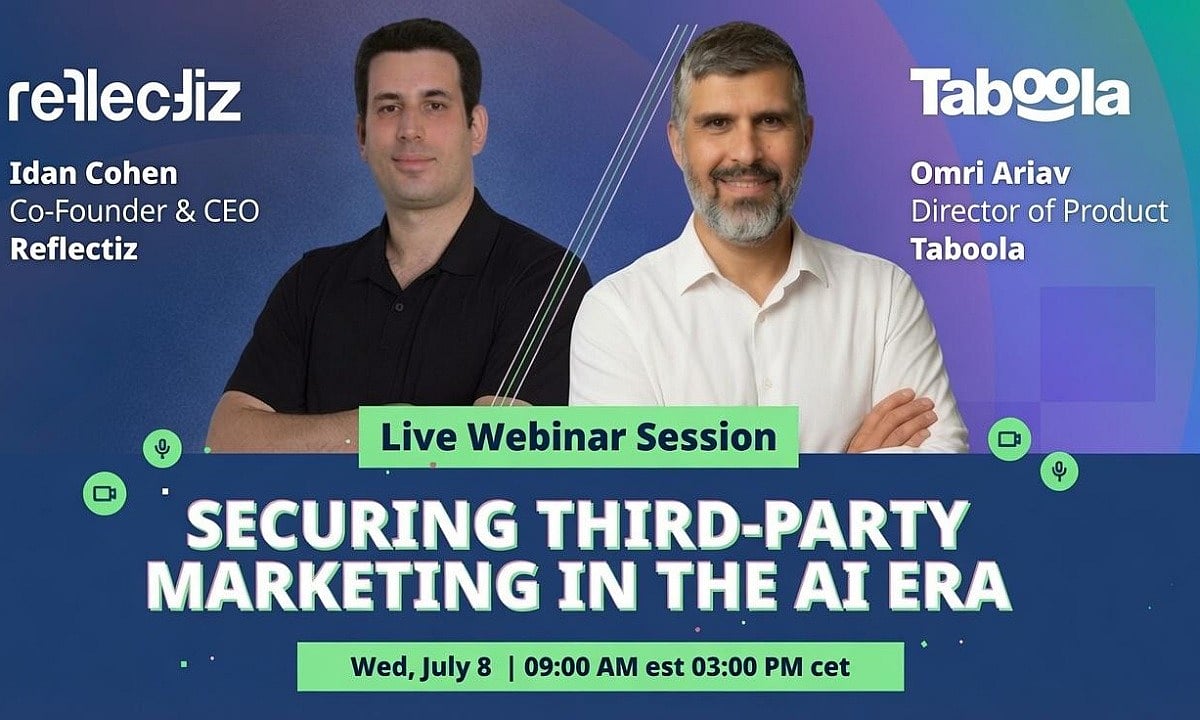
    Reflectiz, the web exposure management platform, today announced a live webinar with Taboola titled “Securing Third-Party Marketing in the AI Era,” scheduled for July 8 at 9 AM EDT / 3 PM CEST.

    Every marketing vendor a company approves can silently introduce third- and fourth-party scripts that no security team ever reviewed. In the AI era, that invisible layer is expanding faster than point-in-time audits can track. The gap between what an organization approves and what actually executes on its site is where data leakage, regulatory exposure, and compliance failures happen.

    The session pairs two perspectives that rarely sit at the same table. Idan Cohen, CEO and Co-Founder of Reflectiz, brings 20 years in cybersecurity, from offensive code and penetration testing to building Reflectiz into an AI web security platform. Omri Ariav, Director of Product Management at Taboola, leads the data layer behind an advertising platform reaching over 600 million daily active users. His scope spans user data and identity, tracking, attribution, measurement, and privacy, working where large-scale data, measurement, and user trust meet. He is an active part of Taboola’s AI transformation and an open-source builder who writes regularly about AI in real product workflows.

    “Security teams approve a vendor list. They don’t approve what actually loads in the browser,” said Idan Cohen, CEO and Co-Founder of Reflectiz. “One marketing tag can pull in a chain of third and fourth parties nobody vetted, and AI is making that chain grow faster than anyone can audit by hand. This session is about closing that gap, so marketing and security finally work from the same picture of what’s running on the site.”

    Attendees will learn:

    • What transparent, security-forward ad tech looks like in 2026, and how to tell which vendors meet that bar
    • How a single approved marketing tag spawns a chain of third- and fourth-party scripts no one reviewed
    • Why AI-driven ad tech expands the client-side attack surface faster than audits can catch
    • A practical three-step framework to inventory, monitor, and govern the web supply chain so marketing and security work from one source of truth

    Registration is open at: https://www.reflectiz.com/learning-hub/reflectiz-taboola-marketing-security-webinar/

    About Reflectiz
    Reflectiz gives organizations an outside-in view of every script, tag, and third party running on their websites. The platform continuously maps the client-side attack surface, flags risk in full context, and helps security and compliance teams close the gap between what they approved and what is actually running. The platform is designed to help organizations validate their security posture rather than rely on assumptions.

    Contact
    PR & Social Media Manager
    Oran Frenkel
    Reflectiz
    oran.f@reflectiz.com

    This is a paid press release published via CyberNewswire, a PR newswire syndication platform for cybersecurity companies.

  • Top-Paying Tech Skills Employers Will Hire for in 2026

    Top-Paying Tech Skills Employers Will Hire for in 2026

    The demand for AI and machine learning professionals continues to grow across industries, making these skills among the most lucrative in 2026. Cybersecurity experts remain at the top of the pay scale as threats evolve and companies prioritize data protection.

    Cloud computing expertise on platforms like AWS, Azure, and Google Cloud is highly valued, with organizations migrating more operations to the cloud. Data engineers are earning competitive salaries as companies expand their AI initiatives and need robust data pipelines.

    Generative AI application development is creating new career opportunities worldwide, from content generation to automated workflows. DevOps and platform engineering roles continue to offer strong earning potential as businesses seek to streamline software delivery and infrastructure management.

    Blockchain and Web3 expertise remain valuable in specialized technology sectors, particularly in finance and supply chain. AI prompt engineering and automation consulting are emerging as fast-growing skill sets, with companies looking to optimize their use of large language models and robotic process automation.

    Continuous learning and certifications can help professionals stay competitive in the evolving tech market. Investing in these high-demand skills now can position you for top salaries and career growth in 2026.

  • Banking on the Cloud: Tripatjeet Singh’s Blueprint for a Secure, Step-by-Step Migration

    Banking on the Cloud: Tripatjeet Singh’s Blueprint for a Secure, Step-by-Step Migration

    Financial services are increasingly turning to the cloud to improve customer service, streamline operations, and gain deeper insights into customer needs. However, this transition is far from straightforward. Most banks and financial institutions still rely on legacy systems built decades ago—systems that struggle to meet modern demands for robust security, continuous uptime, and rapid digital experiences. The challenge is compounded by strict regulations, where even minor missteps can erode customer trust. Many organizations that attempt a wholesale overhaul encounter delays, service disruptions, or outright failures.

    Instead, a phased approach is proving far more effective. The cloud should be seen not just as a technological upgrade, but as a means to build a more resilient and secure future. Tripatjeet Singh, a senior cloud engineer in the financial services industry, embodies this philosophy. His career has been marked by successfully transitioning legacy systems to modern cloud architectures, rising from junior engineer to a leadership role by delivering practical solutions to real-world problems.

    Singh does not advocate for rapid, risky transformations. Instead, he evaluates each application individually, determining the best migration strategy—whether a simple lift-and-shift, a partial modernization, or a complete rebuild—based on its criticality and technical complexity. He starts with lower-risk systems, allowing teams to build confidence and skills before tackling mission-critical workloads. This method has slashed environment setup times from weeks to just hours, enabling faster deployments while still adhering to strict industry regulations.

    But Singh’s contributions extend beyond migration itself. He places heavy emphasis on the infrastructure that ensures ongoing safe operation. He has designed multi-account cloud frameworks that embed security, monitoring, and deployment controls directly into the architecture. These reusable blueprints allow teams to move quickly without exceeding secure boundaries.

    A standout achievement is an AI-powered check fraud detection system he helped design. By analyzing transaction patterns and check images, the system flags suspicious activity with remarkable results: detection accuracy improved by 20 to 30 percent, while false positives dropped by 50 to 60 percent. This means security teams spend less time on dead ends and more time addressing genuine threats.

    His work also encompasses zero-trust security, automated certificate management, and centralized monitoring across hybrid environments—all raising the security bar for modern banking. Singh further contributes to the broader technical community by publishing research papers on topics like scalable logging for AI compliance and secure access using short-lived certificates.

    Singh’s view of the cloud is straightforward: it is more than technology—it is about building trust through robust security and governance, enabling banks to deliver the highly personalized service customers demand. His approach to supporting organizations with legacy systems, skill shortages, and data regulations is a mindset that consistently delivers results.

    Financial institutions that balance flexibility with strong security will lead the industry. With advances in AI analytics and zero-trust models, banks will be better equipped to offer personalized financial guidance. This will not happen by following trends, but through careful, researched steps. The foundation being laid today will be key to making digital finance more reliable, personal, and innovative for people worldwide.

  • The Hardest IT Roles to Fill in 2026: AI, Cybersecurity, and the Rise of Hybrid Professionals

    The Hardest IT Roles to Fill in 2026: AI, Cybersecurity, and the Rise of Hybrid Professionals

    The IT hiring landscape has shifted dramatically. Open requisitions are no longer for generalists or entry-level specialists. Instead, positions that remain unfilled for six to nine months demand a rare combination: an engineer who writes strong code, navigates AI platforms, assesses risk exposure, and aligns technical decisions with business priorities. Three skills, one person, a small pool. This is the core talent challenge organizations face as they head into the second half of this decade.

    The 2026 State of the CIO survey from Foundry confirms the shift. AI and machine learning, along with cybersecurity, now share the top position as the hardest IT skills to hire for, with data science and analytics ranked third. What stands out is not the ranking itself but the nature of the shortage. Hiring teams are no longer struggling to find specialists—they are struggling to find professionals who operate across disciplines simultaneously, at speed, and with sound judgment under real constraints.

    AI and Machine Learning: From Prompt Engineers to Agentic Builders

    The role of the AI professional has evolved significantly over the past two years. Prompt engineering as a standalone function has largely faded. Organizations today need AI product engineers who can deploy agents, build testing frameworks, manage cost-latency-quality trade-offs, and govern model risk. They also need professionals filling governance and red-team roles that did not appear on org charts three years ago. The center of gravity has moved from people who build models to people who wield them. That is a very different resume, and the candidate pool remains thin.

    Approximately 50% of US employers report difficulty finding qualified AI candidates, and Gartner research consistently identifies this shortage as the single largest roadblock for data and analytics teams. The challenge compounds with the pace of change: skills acquired at one organization may not transfer to another, and knowledge from six months ago can already be obsolete.

    Cybersecurity: A Skills Crisis, Not a Headcount Problem

    Six in ten organizations now report that skills gaps outweigh staffing shortages as their primary workforce challenge—a 20-point shift from just a year ago. The consequences are measurable: 27% of cybersecurity leaders report breaches directly tied to capability gaps, while 61% say team stress has increased over the past two years. The shortage is concentrated at the senior architect level. Professionals who can make sound security trade-offs under real constraints, rather than just read a dashboard, are exceptionally difficult to find. Attack surfaces have expanded with every SaaS addition, API, and AI agent deployed. Security teams manage a faster-moving threat landscape with the same AI tools that adversaries now use to build and revise attacks in under an hour.

    74% of organizations say AI is already impacting the size of their cybersecurity teams and the roles within them. Entry-level SOC analyst positions—the traditional training ground for future security architects—are among the most likely to be displaced as AI reshapes security operations.

    Risk Management and Automation: The Rising Tier

    Both risk management and business/IT automation have climbed into the top five hardest-to-fill roles for the first time. The reason is the same for both: AI has expanded the surface area of risk and the complexity of process automation simultaneously. GRC functions built for SOX and PCI compliance are not well positioned to address model risk, prompt injection, or third-party AI exposure. Organizations are now hiring for a discipline that is roughly five years old against a job description that is twenty years old. That gap defines the problem.

    On the automation side, there is no need for additional robotic process automation developers—that work has become a commodity. What organizations need are professionals who can assess a workflow and decide what to automate, what to retire, and what to redesign entirely. That combination—business analyst, process engineer, and technologist in a single professional—is rare and commands a significant salary premium.

    Software Engineering, DevOps, and the Midlevel Squeeze

    AI coding tools have not reduced demand for software engineers; they have changed its shape. A strong engineer with solid AI tooling now produces roughly what three engineers accomplished just a few years ago. Hiring is bifurcating toward experienced leaders who bring judgment and ownership, and toward junior talent that is AI-native from day one. The professionals in the middle—those whose primary value was execution rather than architecture—are finding demand for their profile contracting. For DevOps specifically, platform engineering is emerging as the growth function. The generic DevOps title is being absorbed into platform or site reliability engineering, with consolidation likely to continue over the next two to three years.

    Why This Matters

    The talent shortage in these roles is not resolving through traditional hiring. The professionals who can bridge AI fluency with domain expertise, risk literacy, and system-level thinking are naming their price, and organizations competing for the same small candidate pool are losing ground. The more productive response, as several technology leaders have confirmed, is internal upskilling. Strong engineers trained deliberately on AI platforms and governance frameworks have outperformed externally hired AI specialists in productivity and retention at multiple large enterprises.

    The organizations closing this gap are not doing so primarily through external hiring. They are investing in internal capability development, redesigning job descriptions around skills rather than credentials, and building structured pathways for engineers to grow into hybrid roles. The gap between organizations that act with that kind of intention now and those that continue chasing the same external candidates will only widen from here.

  • 2026 Guide to the Best Managed Security Service Providers (MSSPs) in the UAE

    2026 Guide to the Best Managed Security Service Providers (MSSPs) in the UAE

    Overview

    Compare the leading Managed Security Service Providers (MSSPs) in the UAE, including Help AG, CPX, Deloitte Middle East, Orixcom, and global cybersecurity firms. Learn how to evaluate MSSPs based on SOC maturity, managed detection and response (MDR), regulatory compliance, incident response, and UAE-specific cybersecurity requirements. Understand the importance of selecting an MSSP that aligns with your organization’s industry, compliance obligations, and operational security needs.

    Why the UAE Market Is Different

    Search for ‘best MSSP UAE 2026,’ and most results are self-promotional vendor blogs ranking themselves first. Yet the underlying need is real: UAE organizations face tighter regulations, a persistent shortage of skilled SOC analysts, and rising attack volumes in banking, healthcare, and government. Outsourcing security operations has shifted from optional to near-standard practice. The real question is not who’s ranked number one, but which provider fits your regulatory and operational reality.

    The regulatory backdrop here is more specific than most regions. NESA (UAE Information Assurance) standards apply broadly; Dubai ISR governs entities in the emirate; ADHICS sets healthcare-specific controls; and financial institutions answer to SCA guidelines on top of ISO 27001:2022. A provider excellent in the US or Europe but unfamiliar with these frameworks will cost you time during onboarding. This is also why ‘sovereign SOC’ has become a genuine differentiator: government-linked entities and critical infrastructure operators increasingly require data residency and analyst teams physically based in the UAE.

    What Separates a Real MSSP from a Reseller with a Dashboard

    The honest test is whether a provider runs its own SOC with its own analysts, or resells someone else’s platform with a support layer. Genuine SOC maturity shows up in specific, checkable things: 24/7 monitoring with named analyst headcount, documented incident response timelines, alignment to frameworks like MITRE D3FEND or NIST CSF, and a low noise-to-signal ratio so your team isn’t drowning in false alerts. MSSPs are no longer optional extensions of IT; they are core strategic pillars for resilience, but only those with real SOC operations behind the sales pitch deliver.

    Providers Actually Worth Evaluating

    Help AG, CPX, Deloitte Middle East, Orixcom, and select global providers with local SOC presence each offer distinct strengths. Evaluate them against your sector’s compliance needs and desired level of threat intelligence integration.

    Questions to Ask Before Signing Anything

    • Pricing transparency: Does the quote include onboarding, tool licensing, and scaling costs? Hidden fees are a common buyer complaint.
    • Compliance frameworks: Which UAE-specific frameworks has the provider been audited against, not just globally?
    • Client references: Ask for a real client in your sector, not a generic case study. A healthcare provider’s ADHICS needs look nothing like a bank’s SCA requirements.
    • Incident response: What happens during an actual breach? Response time commitments are meaningless if escalation routes through three time zones before reaching someone who can act.

    Key Takeaways

    The right MSSP for a Dubai-based fintech startup and the right one for an Abu Dhabi government entity are rarely the same company, regardless of any ranked list. Match the provider to your regulatory exposure and sector first. The marketing rankings can wait.

    Why This Matters

    As cyber threats evolve and regulatory requirements tighten, organizations across the UAE need continuous security monitoring and rapid incident response. Choosing the right MSSP helps businesses strengthen cyber resilience, meet local compliance standards, reduce operational risk, and address the growing shortage of skilled cybersecurity professionals.

    FAQs

    What is a Managed Security Service Provider (MSSP)?

    A Managed Security Service Provider (MSSP) delivers outsourced cybersecurity services such as 24/7 threat monitoring, managed detection and response, incident management, vulnerability assessments, compliance support, and Security Operations Center (SOC) services to help organizations strengthen their security posture.

    Why are MSSPs becoming more important in the UAE?

    Growing cyber threats, stricter regulatory requirements, and a shortage of skilled cybersecurity professionals have increased demand for MSSPs. They help organizations improve security operations while meeting standards such as NESA, Dubai ISR, ADHICS, and financial sector regulations.

    How do I choose the best MSSP in the UAE?

    Organizations should evaluate SOC maturity, response times, local regulatory expertise, data residency capabilities, incident response processes, compliance experience, industry knowledge, pricing transparency, and proven success supporting businesses within the UAE.

    What services do MSSPs typically offer?

    Most MSSPs provide managed detection and response (MDR), 24/7 SOC monitoring, vulnerability management, threat intelligence, incident response, firewall management, endpoint protection, cloud security monitoring, compliance support, and continuous risk assessments.

    Why is a local SOC important for UAE organizations?

    A locally operated SOC supports compliance with UAE data residency requirements and enables faster incident response. Organizations in regulated sectors often prefer MSSPs with analysts based in the UAE who understand local regulations and security requirements.

  • Anthropic’s Mythos 5 AI Model Wins Conditional US Rollout for Trusted Entities

    Anthropic’s Mythos 5 AI Model Wins Conditional US Rollout for Trusted Entities

    The U.S. government has authorized a restricted release of Anthropic’s advanced Mythos 5 artificial intelligence model, lifting some of the restrictions imposed earlier this month due to national security concerns. Under the new ruling, only vetted American organizations—including cybersecurity firms and critical infrastructure operators—may access the model, and usage will be closely monitored.

    This decision marks a notable shift in Washington’s approach to regulating frontier AI technologies, balancing the drive for innovation against the risks of potential misuse. The Commerce Department granted the limited approval after Anthropic implemented additional safety features and cooperated with federal officials to address cyber threats. Officials emphasized that the authorization is narrow: Mythos 5 remains unavailable to the public, and access is reserved for entities deemed vital to national cybersecurity infrastructure.

    Why Mythos 5 Drew Scrutiny

    Mythos 5 is one of Anthropic’s most powerful AI systems, capable of tasks in cybersecurity and software engineering. Its capabilities raised red flags at the U.S. government, which feared the technology could be weaponized if proper safeguards were absent. Just days earlier, the government suspended access to both Mythos 5 and its public variant Fable 5 after completing national security assessments. Anthropic complied with government directives while negotiating the resumption of access.

    A New Model for AI Oversight

    The Mythos 5 case exemplifies the government’s expanding role in overseeing frontier AI deployments. Recent guidelines require developers of highly capable AI systems to collaborate with federal authorities. Industry analysts suggest this phased approval could serve as a template for future releases—granting powerful models in stages rather than through immediate public launches. Anthropic is expected to continue working with regulators as it pursues broader availability for its next-generation AI systems.

  • Top Free VPN Apps for Secure Daily Browsing

    Top Free VPN Apps for Secure Daily Browsing

    Virtual private networks (VPNs) have become essential tools for protecting online privacy. While premium services offer advanced features, several free VPN apps provide robust security for everyday use without costing a dime. Below is a curated list of the best free VPN applications suitable for daily browsing, streaming, and public Wi-Fi protection.

    Proton VPN Free

    Proton VPN Free distinguishes itself by offering unlimited data, making it an excellent choice for regular browsing and streaming. The app employs strong encryption, follows a strict no-logs policy, and provides servers in multiple countries. Its intuitive interface makes privacy protection accessible even for beginners.

    Windscribe Free

    Windscribe Free combines a generous monthly data allowance with robust security features. Users can connect to servers in several countries while benefiting from ad blocking and tracker protection. The app performs smoothly across multiple devices, making it a practical option for everyday internet users.

    TunnelBear Free

    TunnelBear Free is known for its playful design and straightforward setup process. It delivers secure browsing through strong encryption and offers a limited amount of free monthly data. The simple interface is especially appealing for VPN newcomers seeking no-fuss protection.

    Hide.me Free

    Hide.me Free offers solid privacy features without requiring excessive personal information during sign-up. The app includes strong encryption, reliable speeds, and several server locations. Its no-logs policy allows users to browse confidently while maintaining a secure online presence.

    PrivadoVPN Free

    PrivadoVPN Free delivers a balanced mix of speed, security, and monthly data allowance. It supports streaming and general browsing while protecting user information through strong encryption. This service is ideal for users who want a dependable VPN without complicated settings.

    Atlas VPN Free

    Atlas VPN Free provides basic online protection with an easy-to-use interface. It helps secure internet activity on public networks and offers decent browsing performance. The simple controls and reliable connections make it suitable for casual users seeking added privacy.

    Hotspot Shield Basic

    Hotspot Shield Basic remains a popular free VPN option thanks to its fast connection speeds and straightforward setup. It provides encrypted browsing and protection on public Wi-Fi networks. Users looking for convenience appreciate its quick installation and reliable performance.

    Opera VPN

    Opera VPN is built directly into the Opera browser, eliminating the need for separate software. It adds privacy during web browsing and helps users access content more securely. Its integrated design makes it a convenient choice for everyday browser users.

    Conclusion

    The best free VPN depends on your priorities — whether unlimited data, higher speeds, stronger privacy, or ease of use. These free options provide practical protection for everyday browsing, helping users stay safer online without a paid subscription.

  • The Rise of Endpoint Management: Why IT Certifications Matter More Than Ever

    The Rise of Endpoint Management: Why IT Certifications Matter More Than Ever

    The rapid evolution of the modern workplace, driven by remote and hybrid work models and widespread cloud adoption, has fundamentally changed how IT departments operate. Managing a diverse array of endpoints—laptops, mobile devices, desktops, and virtual machines—has become a critical responsibility. As cyber threats grow more sophisticated and device ecosystems become more complex, organizations urgently need skilled professionals who can secure and manage these endpoints. This surge in demand has made IT certifications focused on endpoint management increasingly valuable.

    The Evolution of Endpoint Management

    Just a decade ago, endpoint management was largely manual and centralized. IT administrators had physical access to devices, handling updates and configurations on-site. The rise of cloud technology and remote work rendered this approach obsolete. Today, cloud-based management tools enable organizations to configure, secure, and control devices regardless of location. Specialized platforms now handle operating system management, application deployment, security enforcement, and compliance monitoring—all remotely. This shift improves productivity and reduces security risks.

    Why Endpoint Management Matters for Business

    Every device connected to a corporate network is a potential entry point for cyberattacks. Without proper endpoint management, organizations face increased vulnerability to malware, data breaches, and unauthorized access. Effective management ensures devices are consistently updated with security patches and configured to meet organizational policies, reducing risk and supporting regulatory compliance. Beyond security, automated endpoint management alleviates the workload on IT teams, letting them focus on strategic initiatives rather than repetitive maintenance, leading to greater operational efficiency.

    Certifications as Career Catalysts

    In a competitive IT job market, certifications validate technical skills and demonstrate professional commitment. Employers increasingly rely on certifications to gauge a candidate’s knowledge in areas such as device management, security configuration, application deployment, and cloud integration. Structured certification programs offer clear learning paths that combine theory with practical preparation. Many professionals use resources like Prep Away to reinforce their understanding and boost exam confidence. Certifications not only enhance career prospects but also open doors to advanced roles such as endpoint administrator, systems administrator, cloud administrator, and IT security specialist.

    Cloud-Based Endpoint Management

    Cloud platforms have revolutionized how endpoints are managed. Instead of relying on on-premises infrastructure, businesses now use cloud-based systems to deploy applications, enforce security policies, and monitor device health in real time. Automated updates keep all devices secure without manual intervention. Scalability is a key advantage—organizations can easily add or remove devices without reconfiguring their entire IT infrastructure, making cloud solutions ideal for dynamic, distributed workforces.

    Microsoft Endpoint Administrator Certification (MD-102)

    Microsoft offers the MD-102 certification specifically for professionals managing endpoints in modern enterprise environments. The certification covers device deployment, application management, security configuration, and compliance enforcement. It is suited for endpoint administrators, IT support specialists, and systems administrators. Earning the MD-102 demonstrates the ability to manage devices efficiently in cloud and hybrid environments, and confirms expertise in implementing security policies and maintaining compliance.

    Key Responsibilities of Endpoint Administrators

    Endpoint administrators are tasked with ensuring all devices are secure, updated, and properly configured. Core duties include device provisioning (setting up new devices with standardized configurations using automation tools), security management (implementing antivirus, encryption, access controls, and monitoring), and responding to security incidents. They also ensure compliance with industry standards.

    Career Opportunities and Continuous Learning

    The field of endpoint management offers a broad career path with rising demand as remote and hybrid work models persist. Typical job titles include endpoint administrator, IT support engineer, systems administrator, cloud administrator, and IT security specialist. With experience and certifications, professionals can progress to IT manager, cloud architect, or cybersecurity analyst roles. Continuous learning is essential in IT—technologies evolve quickly, and staying current through certifications, online courses, hands-on labs, and professional communities keeps skills relevant. Employers value candidates who demonstrate a commitment to lifelong learning, ensuring their teams can tackle emerging challenges.

    Frequently Asked Questions

    What is endpoint management?
    Endpoint management is the process of managing and securing devices such as laptops, desktops, and mobile devices within an organization’s network.

    Why is endpoint management important?
    It ensures device security, compliance, and efficient operation across enterprise environments.

    What does the MD-102 certification cover?
    The MD-102 covers endpoint deployment, application management, security configuration, and compliance enforcement.

    Are endpoint management skills in demand?
    Yes, due to the growth of remote work and cloud-based IT environments, demand is high.

    How can IT certifications help professionals?
    Certifications validate skills, improve job opportunities, and support career advancement in specialized technical fields.

    Conclusion

    Endpoint management has become a cornerstone of modern IT operations. As organizations rely on distributed devices and cloud systems, ensuring endpoints remain secure and configured is vital for business continuity and data protection. Professionals with endpoint management expertise are highly valued, and certifications combined with continuous learning are key to building successful careers. By blending practical experience with structured preparation and industry-recognized credentials, IT professionals can make a significant impact on the security and efficiency of today’s digital workplaces.

  • Essential Data Security Practices for Remote Analytics Teams

    Essential Data Security Practices for Remote Analytics Teams

    Remote analytics teams handle some of the most valuable assets in modern organizations: customer information, operational metrics, financial records, and proprietary business intelligence. Effective data security requires multiple layers of protection, including access controls, encryption, endpoint security, and secure network connections.

    Why Is Data Security More Challenging for Remote Analytics Teams?

    Remote work has drastically altered the way companies use data analytics. Analysts have to work with various dashboards, cloud data warehouses, machine learning tools, customer databases, and other reporting systems from places outside of the conventional company network infrastructure.

    Such flexibility makes people more productive, yet, at the same time, it expands the area for potential attacks of hackers. People who conduct remote work might use public Wi-Fi, personal computers, their own routers, or even third-party apps to access the network.

    There is an increased risk for analysts, as they deal with a lot of confidential data. The hacking of such an analyst’s account might give hackers an opportunity to steal customer databases, financial reports, forecasts, or other important pieces of information.

    It is necessary to prevent such attacks not only because of the security, but also due to the necessity to comply with various privacy requirements and to guarantee the protection of data integrity.

    How Can Remote Teams Build a Secure Analytics Environment?

    A secure analytics environment relies on multiple protective measures working together. No single technology can eliminate all risks.

    1. Implement Strong Identity Controls

    Identity security comes first. Companies must have strong passwords, password managers, and multi-factor authentication (MFA). MFA decreases the probability of account hacking as hackers cannot get access without having access to more than just the password.

    There must also be role-based access controls where users will only have access to what is required in their roles.

    2. Encrypt Data in Transit and at Rest

    Encryption protects information from unauthorized viewing during transmission and storage. Cloud platforms, databases, analytics tools, and file-sharing systems should all use modern encryption standards. Teams should regularly verify that encryption settings remain enabled after software updates or platform migrations.

    3. Secure Network Connections

    Remote employees frequently connect from hotels, airports, cafes, coworking spaces, and home networks. Organizations should establish policies that require secure connections when accessing sensitive business systems.

    In some situations, teams may use secure VPN solutions to encrypt network traffic before accessing corporate resources. For example, in addition to additional security measures like MFA and endpoint protection, a free VPN service like Planet VPN can secure your connection. VPNs should be viewed as one component of a broader security framework rather than a complete solution.

    4. Protect Endpoints

    All laptops, workstations, and mobile devices used for analytics should be equipped with endpoint protection applications. Security professionals should make sure that the devices get OS updates and anti-malware protection without manual interventions. There are many device management tools which can facilitate the implementation of security policies.

    5. Monitor and Audit Access

    Continuous monitoring helps organizations identify unusual behavior before it becomes a serious incident. Security teams should review login patterns, access logs, permission changes, and data exports. Automated alerts can identify suspicious activities such as large downloads, unusual login locations, or repeated authentication failures.

    What Additional Security Layers Should Organizations Consider?

    Organizations that have advanced analytics systems may go further to employ defense-in-depth mechanisms for their cybersecurity needs.

    The Zero Trust system has gained popularity due to its assumption that nothing is to be trusted by default. All access requests are constantly checked and validated regardless of any location.

    The classification of data can also enhance security through recognizing which databases need extra measures of protection. Personal data of customers, financial data, data from the field of healthcare, and proprietary algorithms can need extra security measures compared to ordinary operation reports.

    Another useful mechanism is the data loss prevention system. The DLP system can help prevent any illegal dissemination of sensitive information.

    Security training of the staff is an essential measure. A significant number of successful attacks on businesses start from phishing attacks and human error and not from some technical flaws in the system.

    Periodic security assessment and testing are needed as well.

    What Common Data Security Mistakes Should Teams Avoid?

    A number of security breaches can be attributed to mistakes, rather than elaborate attacks.

    Excessive access rights represent one such common problem. Employees end up accessing various databases and systems even when their job responsibilities have changed. Such practices inevitably pose risks in the future.

    Another mistake involves the use of traditional security measures. With most employees working remotely and accessing company assets from different places, such security systems prove to be ineffective.

    Organizations tend to ignore the threats posed by shadow IT as well. Employees might start using unauthorized programs and productivity tools.

    Failing to patch the systems in time poses another vulnerability. Many attacks utilize existing flaws that could have been fixed already.

    The final common mistake includes concentrating too much on preventive measures and not on how to respond to the threat in case of an attack.

    What Are the Most Important Security Best Practices?

    Organizations can strengthen remote analytics security by following these core practices:

    • Require multi-factor authentication for all analytics and data platforms.
    • Limit user access according to business needs and job responsibilities.
    • Encrypt sensitive data during storage and transmission.
    • Maintain endpoint security across laptops, mobile devices, and workstations.
    • Monitor access logs and investigate suspicious activity quickly.
    • Conduct regular security awareness training programs.
    • Apply software updates and security patches without delay.
    • Develop and test incident response procedures regularly.
    • Classify sensitive data and apply stronger controls where necessary.
    • Review permissions and third-party integrations on a scheduled basis.

    These practices create multiple layers of protection that reduce risk while supporting productive remote collaboration.

    Frequently Asked Questions

    What are data security best practices for remote teams?

    Data security best practices for remote teams include multi-factor authentication, encrypted communications, endpoint protection, access controls, continuous monitoring, and employee security training. Organizations should combine multiple controls rather than relying on a single technology.

    Why is data security important for analytics teams?

    Analytics teams often work with highly sensitive information, including customer records, financial data, operational metrics, and strategic business intelligence. A security breach can expose valuable information and lead to compliance violations, financial losses, and reputational damage.

    How do remote employees protect sensitive business data?

    Remote employees can protect sensitive data by using strong authentication, secure devices, encrypted connections, approved software platforms, and company security policies. Regular software updates and awareness of phishing threats are also essential.

    Is a VPN enough to secure remote work?

    No. A VPN can help encrypt network traffic, but it does not replace identity management, endpoint protection, access controls, monitoring, or employee training. Effective security requires multiple layers working together.

    What is Zero Trust security?

    Zero Trust is a cybersecurity model that continuously verifies users and devices before granting access to resources. It assumes that no user, device, or network should be trusted automatically, even when operating inside a corporate environment.

    How often should organizations review data access permissions?

    Organizations should review permissions regularly, especially after role changes, employee departures, mergers, or major system updates. Quarterly reviews are common, although highly regulated industries may require more frequent assessments.

  • Why IT Certification Skills Are Essential for Modern Endpoint Management

    Why IT Certification Skills Are Essential for Modern Endpoint Management

    As the workplace evolves rapidly with technology, organizations must manage devices, applications, and identities securely and efficiently. The rise of remote and hybrid work, combined with cloud environments, has transformed IT operations. Managing diverse endpoints—laptops, mobile devices, desktops, and virtual machines—has become a critical responsibility for IT professionals.

    Endpoint management encompasses security, compliance, and configuration of all devices connected to a corporate network. With cyber threats growing more sophisticated and organizations adopting varied device ecosystems, the demand for specialists skilled in endpoint management is increasing. Consequently, IT certifications focused on endpoint management are becoming highly relevant.

    The Evolution of Endpoint Management

    Over the past decade, endpoint management has undergone significant changes. Traditionally, devices were managed manually in a centralized environment, with administrators having physical access for updates and configurations on-site.

    However, the advent of cloud technology and remote work has rendered this approach obsolete. Organizations now require remote management solutions that allow configuration, security, and control of devices regardless of location. This need has driven the rise of cloud-based endpoint management.

    Today, IT professionals use specialized tools to manage operating systems, deploy applications, secure company devices, enforce policy compliance, and more. This enables organizations to maintain productivity while minimizing security risks.

    Why Endpoint Management Matters for Business

    Endpoint management plays a vital role in maintaining organizational security and efficiency. Every device connected to a corporate network represents a potential entry point for cyber threats. Without proper management, these endpoints can become vulnerable to malware, data breaches, and unauthorized access.

    Effective endpoint management ensures that all devices are updated with the latest security patches and configured according to organizational policies. This helps reduce vulnerabilities and protect sensitive data. It also enables IT teams to enforce compliance requirements, ensuring all devices meet industry standards and regulations.

    Beyond security, endpoint management improves operational efficiency. Automated deployment and configuration tools reduce manual workload for IT teams, allowing them to focus on strategic tasks rather than repetitive maintenance.

    The Role of IT Certifications in Professional Development

    IT certifications are essential for validating technical skills and demonstrating expertise in specialized areas like endpoint management. Employers often rely on certifications to assess whether candidates have the knowledge and practical abilities required for specific roles.

    Certification programs offer structured learning paths covering key topics such as device configuration, security management, application deployment, and cloud integration. This structured approach helps professionals build a strong foundation and stay current with industry best practices.

    Many learners use supplementary resources like PassGuide during their certification preparation. These materials help candidates understand exam structures, practice scenarios, and reinforce important concepts. While practical experience remains essential, structured preparation tools can significantly enhance learning outcomes.

    Certifications not only improve job prospects but also contribute to long-term career growth by expanding technical knowledge and improving problem-solving skills.

    Modern Endpoint Management in the Cloud Era

    Cloud technology has revolutionized endpoint management by enabling centralized control over distributed devices. IT administrators can now manage thousands of endpoints from a single dashboard, regardless of location.

    Cloud-based endpoint management systems allow organizations to automate updates, deploy applications remotely, and enforce security policies in real time. This reduces the need for manual intervention and ensures consistent configuration across all devices.

    Another significant advantage is scalability. As organizations grow, they can easily add new devices and users without restructuring their entire IT infrastructure. This flexibility makes cloud-based endpoint management ideal for modern businesses with dynamic work environments.

    Microsoft Endpoint Administration Certification Overview

    Microsoft offers specialized certifications focused on modern endpoint management and device administration. These certifications are designed for IT professionals who want to validate their skills in managing enterprise devices and implementing security policies.

    The MD-102 certification focuses on managing endpoints in a modern enterprise environment. It covers essential topics such as device deployment, application management, security configuration, and compliance enforcement. This certification is intended for professionals responsible for maintaining secure and efficient device ecosystems within organizations.

    Earning this certification demonstrates the ability to manage modern workplace technologies effectively and ensures professionals are prepared for real-world IT challenges.

    Key Responsibilities of Endpoint Administrators

    Endpoint administrators play a crucial role in ensuring organizational devices are secure, updated, and properly configured. Their responsibilities include deploying operating systems, managing user access, configuring security policies, and monitoring device performance.

    One primary task is device provisioning—setting up new devices with required configurations and applications before distribution to users. Automation tools are often used to streamline this process and ensure consistency.

    Another important responsibility is security management. Administrators must implement antivirus solutions, encryption policies, and access controls to protect devices from threats. They also monitor systems for suspicious activity and respond to security incidents when necessary.

    Career Opportunities in Endpoint Management

    A career in endpoint management opens multiple opportunities in the IT sector. With the rise of hybrid work models, demand for professionals in this field has grown significantly.

    Common roles include endpoint administrator, IT support specialist, systems administrator, cloud administrator, and IT security analyst. These positions involve managing endpoints, ensuring system security, and supporting end users.

    With additional qualifications and experience, professionals can advance to senior roles such as IT manager, cloud architect, or cybersecurity specialist.

    The Importance of Continuous Learning in IT Careers

    Technology constantly evolves, and IT professionals must continually update their skills to remain effective. Endpoint management methods change to address new security risks and improve efficiency.

    Ways to stay current include earning certifications, gaining practical training, taking online courses, and engaging with professional networks. Organizations highly value individuals committed to learning and adaptability, which not only advances careers but also contributes to organizational success.

    Frequently Asked Questions

    What is endpoint management?

    Endpoint management is the process of managing and securing devices such as laptops, desktops, and mobile devices within an organization’s network.

    Why is endpoint management important?

    It ensures device security, compliance, and efficient operation within enterprise environments.

    What does the MD-102 certification cover?

    The MD-102 certification covers endpoint deployment, security management, application control, and compliance enforcement in modern IT environments.

    Are endpoint management skills in demand?

    Yes, due to the growth of remote work and cloud-based IT infrastructure, endpoint management skills are in high demand.

    How can IT certifications help professionals?

    Certifications validate technical skills, improve job opportunities, and support career advancement in specialized IT fields.

    Conclusion

    Endpoint management has become a critical function in modern IT environments as organizations rely heavily on distributed devices and cloud-based systems. Ensuring all endpoints remain secure, compliant, and properly configured is essential for maintaining business continuity and protecting sensitive data.

    With increasing IT infrastructure complexity, professionals with endpoint management skills are highly valued across industries. Certifications and continuous learning play a key role in developing these skills and preparing individuals for real-world challenges.

    By combining practical experience with structured learning resources and industry-recognized certifications, IT professionals can build successful careers in endpoint management and contribute significantly to the security and efficiency of modern digital workplaces.