Tag: Data & Analytics

  • Top Python Tools for Large-Scale Data Processing in 2026

    Top Python Tools for Large-Scale Data Processing in 2026

    Python’s rich ecosystem of libraries has made it the go-to language for data analytics, engineering, and machine learning. However, as datasets grow exponentially, organizations are moving from single-machine processing to high-performance, distributed analytics frameworks. While Pandas remains a staple for exploratory data analysis, tools like PySpark, Polars, DuckDB, Dask, and Ray are now essential for handling large-scale workloads efficiently.

    Top Python Tools for Large-Scale Processing

    1. Apache PySpark

    PySpark is the leading framework for distributed data processing across clusters. Built on Apache Spark, it enables enterprises to manage massive datasets, execute ETL operations, run SQL queries, and build machine learning pipelines at scale. It is widely adopted by organizations operating in cloud environments.

    2. Polars

    Polars has rapidly emerged as one of the fastest DataFrame libraries for Python. Written in Rust and leveraging multi-threading, it offers highly efficient memory usage and is built on Apache Arrow. Users report performance improvements of 5x to 10x over Pandas for many analytical workloads.

    3. DuckDB

    DuckDB is an embedded analytical database designed for fast SQL queries on CSV, Parquet, and Arrow files—no separate server required. It is ideal for interactive analytics and business intelligence tasks where large local datasets need to be queried efficiently.

    4. Dask

    Dask extends the Pandas and NumPy APIs to support parallel and distributed computing across CPU cores or clusters. It allows data processing that exceeds system memory, with minimal changes to existing Python code, making it a great choice for scaling legacy workflows.

    5. Ray

    Ray focuses on distributed computing beyond data processing, excelling in large-scale machine learning, hyperparameter optimization, and parallel AI workloads. It is a valuable tool for organizations building end-to-end data and AI platforms.

    Key Trends in 2026

    The Python analytics ecosystem is moving toward hybrid workflows. Rather than relying on a single framework, many organizations now combine DuckDB for queries, Polars for transformations, and Pandas for machine learning integration. This modular approach boosts performance while preserving the broader Python data science ecosystem.

    Conclusion

    Modern Python tools offer specialized capabilities, from distributed computing to high-speed local processing. PySpark remains the industry standard for enterprise-scale workloads, while Polars and DuckDB set new benchmarks in local analytics performance. By choosing the right combination of tools based on workload size, infrastructure, and business needs, organizations can build faster, more scalable, and cost-efficient data pipelines.

    FAQs

    1. Which Python tool is best for processing massive datasets?

    Apache PySpark is widely considered the best choice for processing massive datasets across distributed clusters. It offers scalable ETL, SQL processing, and machine learning capabilities, making it ideal for enterprise big data applications.

    2. Is Polars faster than Pandas?

    Yes. Polars is built in Rust and supports multi-threading and lazy execution, allowing it to outperform Pandas in many analytical workloads. Users often experience 5x to 10x performance improvements.

    3. When should I use DuckDB instead of Pandas?

    DuckDB is ideal for running fast SQL queries on large CSV, Parquet, or Arrow files without setting up a separate database. It works especially well for local analytics, reporting, and business intelligence workflows.

    4. What is Dask mainly used for?

    Dask extends the familiar Pandas and NumPy APIs to support parallel and distributed computing. It is particularly useful when datasets exceed available system memory or when existing Python workflows need to scale with minimal code changes.

    5. How do organizations combine these Python tools?

    Many organizations now use a hybrid data stack: DuckDB for SQL analytics, Polars for high-speed data transformations, Pandas for compatibility with machine learning libraries, and PySpark or Ray for distributed processing and AI workloads. This approach delivers better performance while maintaining flexibility across different stages of the data pipeline.


  • How Digital Payments Are Revolutionizing Small Business Growth Beyond Lending

    How Digital Payments Are Revolutionizing Small Business Growth Beyond Lending

    Digital payments have evolved far beyond simple transaction processing. Today, they serve as a powerful engine for small businesses, enabling them to streamline operations, attract a broader customer base, and accelerate growth.

    In India, systems like UPI and Aadhaar-enabled banking now power a significant share of MSME payments. These technologies make transactions faster and more secure, while reducing the reliance on cash.

    Faster digital checkouts cut down waiting times, eliminate the need for cash handling, and automatically record every transaction for easier accounting. This operational efficiency allows business owners to focus more on strategy and less on manual tasks.

    Every digital payment generates valuable data. Business owners can track customer trends, identify peak sales hours, and manage inventory more effectively, leading to smarter, data-driven decisions.

    Accepting digital payments also opens doors to online shoppers, delivery platforms, and customers outside the local area. This expanded reach helps small businesses compete in a larger marketplace.

    Security is another key benefit. AI-powered fraud detection, real-time monitoring, and secure payment systems protect businesses and build trust with customers. Embedded payments within apps, POS systems, and digital platforms simplify checkout and improve cash flow through faster settlements.

    Beyond immediate transactions, digital payments support long-term business growth. Better recordkeeping, improved tax planning, customer rewards programs, and easier access to future credit are all made possible by a robust digital payment infrastructure.

    However, challenges remain. Cybersecurity threats, transaction fees, system outages, staff training requirements, and protecting customer data are ongoing concerns that small businesses must navigate.

  • How Big Data Is Redefining Intelligence Testing: From Snapshot Scores to Continuous Insights

    How Big Data Is Redefining Intelligence Testing: From Snapshot Scores to Continuous Insights

    The Evolution of Intelligence Testing

    For decades, an IQ score was considered the definitive measure of cognitive ability. A single test, a single number, and that was the end of the story. But just as big data has revolutionized industries like finance, healthcare, and retail, it is now transforming how we assess and understand intelligence.

    Modern digital platforms are moving beyond static, one-time exams. They leverage vast amounts of data to analyze not just whether an answer is correct, but how quickly it was reached, the reasoning patterns employed, and how performance evolves over weeks or months. This shift turns cognitive testing from a snapshot into a dynamic, ongoing process.

    What Big Data Brings to Cognitive Testing

    Big data involves collecting and analyzing massive datasets to uncover patterns that would be invisible to manual inspection. In the context of cognitive testing, this means:

    • Identifying common reasoning strategies among test-takers
    • Dynamically adjusting question difficulty based on real-time performance
    • Measuring consistency and reliability of results across sessions
    • Flagging notable trends or changes in cognitive performance
    • Creating a personalized testing experience that adapts to the individual

    Instead of relying on fixed, paper-based tests, digital platforms continuously improve by learning from user data.

    Beyond the Single Score

    Traditional IQ tests boiled intelligence down to one number. While that number still holds value, it only tells part of the story. By analyzing multiple data points—accuracy, speed, reasoning style, and progress over time—we gain a much richer understanding of a person’s cognitive abilities. This holistic view helps identify strengths and areas for improvement that a single score would miss.

    How Data Analytics Enhances Online Testing

    Adaptive Questioning

    Older tests presented the same questions in the same order to everyone. Modern systems adjust difficulty on the fly, ensuring the test remains challenging but not discouraging, and providing a more accurate measure of ability.

    Continuous Improvement

    Developers analyze anonymized data to identify flawed questions—those that are too easy, too hard, or not measuring the intended skill. This iterative process leads to better, more reliable tests over time.

    Detailed Feedback

    Instead of just a final score, analytics enables platforms to deliver personalized summaries highlighting cognitive strengths and areas that may benefit from practice.

    MyIQ: A Case Study in Data-Driven Testing

    Platforms like MyIQ exemplify this shift. They offer online IQ assessments, explore different cognitive domains, provide brain-training activities, and allow users to track their progress over time. MyIQ encourages users to view intelligence not as a fixed trait but as something that can be monitored and developed through regular check-ins and practice.

    The Power of Repeated Testing

    A single test is just a snapshot. Multiple tests spread over weeks reveal true patterns. Repeated testing can show improvements in reasoning speed, problem-solving efficiency, consistency, and pinpoint where extra practice might be most beneficial. Factors like mood or sleep can affect any single test, but tracking scores over sessions smooths out these fluctuations and paints a clearer picture of underlying ability.

    Community Perspectives

    User experiences add practical context. For instance, Reddit discussions often feature users sharing their results from multiple MyIQ tests over several weeks, comparing how scores change. While anecdotal, these stories highlight a common interest in tracking progress rather than fixating on a single number.

    Limitations and Considerations

    Digital IQ testing is not without drawbacks. Platforms must be transparent about data collection and storage. Moreover, a test score—even a detailed one—cannot capture the full spectrum of human intelligence, including creativity, emotional intelligence, and practical experience. It’s important to use these tools as one part of a broader self-assessment, not as a definitive judgment.

    The Future of Big Data in Cognitive Science

    As analytics and artificial intelligence advance, cognitive testing platforms will become even more sophisticated. Future developments may include AI-driven interpretation of cognitive patterns, more advanced adaptive testing, personalized learning recommendations, predictive skill growth models, and clearer visualizations of long-term progress. These innovations could transform online cognitive testing from a one-time event into a continuous, data-informed journey of personal growth.

    Conclusion

    Intelligence testing is no longer a single event with a final number. Big data is turning it into an ongoing process of discovery and improvement. By watching how thinking evolves over months—not just on test day—we can gain a deeper, more actionable understanding of cognitive potential.

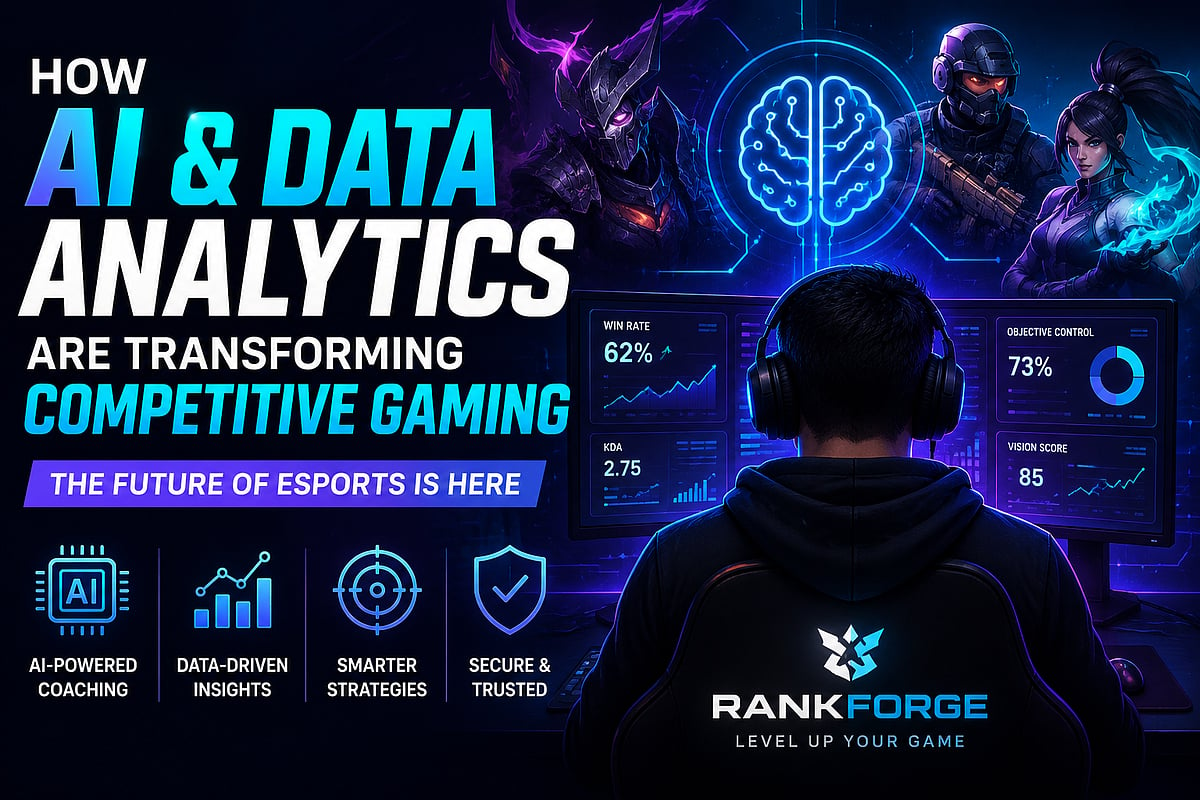
  • How AI and Data Analytics Are Reshaping the Competitive Gaming Landscape

    How AI and Data Analytics Are Reshaping the Competitive Gaming Landscape

    Artificial intelligence is changing how people work, learn, and play. Healthcare, finance, manufacturing, and cybersecurity have all felt its effects. Competitive gaming is no different.

    Millions of players now compete in games like League of Legends, Valorant, Counter-Strike 2, and Wild Rift. As competition gets tougher, more players are turning to data and technology to sharpen their skills.

    Gaming Gets More Data-Driven

    Every esports match creates a mountain of gameplay data. Pro teams, streamers, and everyday players all lean on stats to figure out what works and what doesn’t.

    Match data can show:

    • Win rates
    • Champion or agent performance
    • Team compositions
    • Objective control
    • Economy management
    • Individual decision-making

    Instead of guessing and hoping, players can now use real numbers to guide their choices and get better faster.

    AI Is Changing How Players Improve

    AI is also making coaching easier to reach. Not everyone can afford a personal coach, but AI tools are closing that gap.

    These tools can:

    • Review gameplay automatically
    • Spot repeated mistakes
    • Suggest better builds and strategies
    • Check positioning during fights
    • Flag poor macro decisions
    • Recommend a personal improvement plan

    Players get useful feedback much faster than they would from traditional coaching alone.

    New Platforms Are Shaping Gaming’s Future

    As esports has grown, so has the demand for platforms that mix technology with real player development.

    Many players now turn to coaching platforms, replay reviews, learning resources, and performance tools. This helps them improve while still juggling work, school, or other parts of life.

    Platforms such as rankforge, a leading competitive gaming platform, offer coaching and performance tools built to help gamers hit their goals across several esports titles.

    Trust and Security Still Come First

    As online gaming grows, trust matters more than ever. Players want platforms that offer:

    • Secure accounts
    • Clear, upfront pricing
    • Real customer support
    • Skilled specialists
    • Honest communication at every step

    Good technology helps companies deliver a safer experience and build lasting trust with their players.

    What’s Next for AI in Esports

    AI will keep shaping competitive gaming in the years ahead. Expect more:

    • Real-time AI coaching
    • Predictive gameplay analysis
    • Personal training tips
    • Deeper team performance reviews
    • Automated strategy insights

    As these tools grow, players at every level will get access to resources once kept for top pro teams.

    Final Thought

    Competitive gaming is now one of the fastest-growing corners of digital entertainment. AI, data tools, and cloud platforms are reshaping how players learn and compete, and that shift is only picking up speed. Platforms that put players first, with real coaching and honest support, will help set the pace for what comes next in esports.

  • How AI and Cognitive Analytics Are Revolutionizing Online IQ Testing

    How AI and Cognitive Analytics Are Revolutionizing Online IQ Testing

    The Transformation of Cognitive Assessment

    Artificial intelligence is reshaping more than just business automation and software development—it is also revolutionizing how we measure and enhance human intelligence. Thanks to advances in AI, adaptive systems, and data analytics, online cognitive tests have become more accurate and engaging than ever before.

    Modern online platforms go beyond providing a single numerical IQ score. They offer deep insights into intellectual strengths, promote continuous learning, and make brain development accessible to a broader audience. A notable example is MyIQ, a platform that combines digital IQ assessments with cognitive training tools, showcasing how intelligent software can democratize brain development.

    The Rise of AI-Powered Cognitive Assessment

    Traditional IQ tests have long been valuable in psychology and education, but they often required supervised environments, printed materials, and manual scoring. Digital technologies have expanded these possibilities dramatically. Today’s online IQ platforms leverage AI to:

    • Adapt question difficulty in real time
    • Analyze response patterns
    • Generate instant performance reports
    • Recommend personalized exercises
    • Track long-term cognitive progress

    These capabilities enhance accessibility and user experience, making assessments far more personalized than standardized paper-based tests. While such solutions do not replace professional psychological evaluations, they provide efficient educational tools for self-assessment and ongoing mental development.

    Why Data Analytics Matters in Cognitive Testing

    One of the most important technological advances behind modern IQ platforms is data analytics. Instead of relying solely on a final score, today’s systems collect anonymous performance metrics that generate deeper insights into cognitive behavior. Examples include analyzing reaction times, identifying patterns in errors, and tracking improvement over time. This approach helps users move beyond the question “What is my IQ?” toward understanding how they solve problems and where they can continue to improve.

    AI Makes Testing More Personalized

    Artificial intelligence enables adaptive testing, where the assessment evolves based on user responses. For instance, if users consistently answer correctly, the platform presents more challenging tasks instead of repeating simple questions. Personalized reports can identify strengths in verbal reasoning, logic, spatial thinking, or numerical analysis. Based on previous performance, users receive suggestions for exercises that target weaker cognitive areas. This level of personalization creates a more engaging experience than static questionnaires.

    Beyond IQ Scores: Continuous Brain Training

    Technology companies increasingly recognize that users want more than a one-time assessment. Many platforms combine intelligence testing with cognitive exercises designed to encourage regular mental activity. Typical brain-training activities include logic puzzles, memory challenges, pattern recognition exercises, numerical reasoning tasks, and visual problem solving. These activities help maintain engagement and support lifelong learning habits. Although no online exercise can guarantee increases in measured intelligence, regular cognitive stimulation remains an important part of healthy mental development.

    MyIQ as Part of the Digital Learning Ecosystem

    Among today’s growing ecosystem of cognitive technology platforms, MyIQ offers an accessible combination of online IQ testing and brain-training features. The platform focuses on making cognitive assessment simple for everyday users through an intuitive interface and immediate feedback. Its core capabilities include digital IQ assessments, personalized performance summaries, cognitive exercises, progress tracking, and mobile-friendly accessibility. Rather than emphasizing a single score, the platform encourages users to monitor their development over time and engage with regular mental exercises. This approach reflects broader trends in educational technology, where learning is increasingly supported by AI-driven personalization and continuous analytics.

    Community Feedback Adds Valuable Context

    When evaluating any digital platform, independent user experiences can provide helpful additional perspective. One discussion worth exploring is the My IQ Reddit thread, where users share their experiences, discuss subscription expectations, and describe how they use the platform’s cognitive assessment features. Reading community feedback alongside official product information helps users make more informed decisions and better understand how different platforms fit their personal learning goals.

    Responsible Use of AI in Cognitive Technology

    Despite impressive technological progress, AI-powered assessment tools should always be used responsibly. Several important considerations remain. AI does not measure every form of intelligence—creativity, emotional intelligence, leadership, communication, and practical decision-making extend beyond traditional IQ measurement. Data privacy matters: users should always understand how platforms collect, process, and store assessment data. Transparent privacy policies are essential. Results should be interpreted carefully, as performance may vary due to factors such as concentration, fatigue, stress, or testing conditions. An online IQ score should be viewed as one useful indicator rather than a complete definition of intellectual ability.

    Emerging Trends in Cognitive Technology

    The next generation of AI-powered cognitive platforms is likely to introduce even more advanced capabilities. Future innovations may include large language models that explain reasoning mistakes, predictive learning recommendations, gamified cognitive development, personalized educational pathways, better integration with online learning platforms, and more sophisticated adaptive testing algorithms. As AI models become increasingly capable, they will likely provide richer insights into learning behavior while maintaining scientifically grounded assessment principles.

    Conclusion

    AI and data analytics are transforming perceptions of cognitive abilities. Contemporary online IQ platforms are not just tests for measuring intelligence; they are intelligent systems that test, analyze, and develop people’s cognitive skills. Platforms such as MyIQ illustrate this evolution by bringing together adaptive testing, personalized reporting, and brain-training activities in a user-friendly format. Combined with independent community discussions like the Reddit review, users gain a more complete picture before deciding whether a platform matches their expectations. As the role of AI grows in education and cognitive technologies, assessments will become even more personalized and useful for those who wish to learn about their cognitive skills.

  • How Advanced Anomaly Detection Prevents Unplanned Outages Before They Happen

    How Advanced Anomaly Detection Prevents Unplanned Outages Before They Happen

    Across large energy operations, there is a gap — a space where the calmness of the control room contrasts sharply with thousands of sensors located throughout a vast, distributed network. All of those sensors have normal readings. Every sensor’s threshold is safe within its allowed range. No failure has occurred. No alarm has been triggered. And yet amidst that sea of normal data, small disturbances are developing. Those disturbances will eventually exceed some pre-determined value, light up the dashboard, and then the problem begins.

    That interval — between the time an issue first develops and when a system finally recognizes it exists — is where most unplanned outages occur. Traditional monitoring was developed to ask one simple question: has a particular value exceeded a given threshold? This type of monitoring uses pre-defined thresholds and static rules. It does its job. But it identifies neither slow degradation, nor anomalous correlations, nor faint indications that a system is deteriorating slowly before any individual measure indicates otherwise.

    For most of her career, Jasvitha Buggana has operated in the blind spot of traditional monitoring. She has advocated that the true effort related to reliability is not detecting failures but identifying small deviations before they develop into full-blown issues.

    Jasvitha Buggana is an engineer working at the intersection of operational systems and data analytics. She holds degrees in computer science from India and completed a master’s degree in business analytics in the United States. These two educational backgrounds influence how she interprets a failing system. Instead of asking if a given component is either up or down — purely through an infrastructure lens — she asks what a sequence of readings imply about customer experience, efficiency, and risk. In her opinion, anomaly detection is rapidly transforming from a technical capability into a strategic business discipline.

    The types of problems that affect businesses most often do not declare themselves. Systems can appear healthy on the surface while problems develop underneath. Devices continue to send reports but the cadence of the message changes slightly. A data feed continues to flow but quality decreases in ways no individual alert was designed to identify. Identifying these problems requires analyzing weak signals embedded in extremely high volumes of data, and doing it effectively involves using technical analysis conjointly with understanding how a business operates.

    One of the challenges associated with designing an effective analytical framework for anomaly detection is that each environment behaves differently. What would be considered normal for one distributed system could be indicative of a potential problem for another. Ms. Buggana develops analytical frameworks that distinguish ordinary operating behavior from actual departures from the norm. She is also transparent that this cannot be accomplished via a fixed rule book. To be effective, anomaly detection requires significant familiarity with both the data and the contextual information that generated it. An analytical framework that performs exceptionally well in one environment may perform poorly in another unless it has been fine-tuned to recognize routine behavior for that specific environment.

    Some of the solution lies in improving observability. Improved observability enables teams to obtain a clear picture of how signals interact and influence one another, rather than being presented with a wall of isolated metrics. When teams can visualize how one degrading feed influences downstream slowdowns, they investigate faster and spend less time chasing root causes. Much of this load can be carried by automation. Automation continuously monitors, freeing human operators from eyeballing dashboards for subtle changes and presenting them only with patterns worth their attention.

    Ms. Buggana cites confidence as the payoff. Many operations teams work within a reactive loop. Each fire breaker brings new challenges; each new challenge brings new fires to put out. Ms. Buggana’s work has focused on removing teams from this type of loop by applying analytical thinking to reliability issues so that emerging risks become visible early enough for action to take place. Ms. Buggana has provided bridge functionality between technical operations and analytics for large-scale initiatives related to operational data, system reliability, and performance optimization.

    Ms. Buggana frames the impact less as fewer failures and more as greater confidence. When teams trust their data and can see risks forming, they make decisions from positions of strength rather than scrambling after the fact. Investigation time drops. Problems caused by poor data quality and disruptions caused by connectivity issues are identified earlier. Reporting becomes more reliable and the operation feels less fragile.

    Ms. Buggana anticipates the tools will continue to improve. As machine learning advances, anomaly detection will provide more predictive capabilities, more context, and require less human intervention. However, Ms. Buggana is cautious not to hand over responsibility entirely to machines. She argues that the greatest value comes from pairing advanced analytics with human judgment, domain knowledge, and a culture that rewards taking action before disruption arrives.

    Ms. Buggana’s larger bet is about where advantage will come from next year. “The organizations that are successful next year will not necessarily be those with the largest datasets,” she stated. “They will be those which can convert data into foresight.”

  • Top Tech Skills to Boost Your Freelance Income in 2026

    Top Tech Skills to Boost Your Freelance Income in 2026

    As the freelance economy continues to expand, certain tech skills are emerging as particularly lucrative in 2026. Professionals who invest in these areas can unlock significant earning potential and secure consistent project work.

    Artificial Intelligence (AI) Skills

    AI expertise is in high demand as businesses seek specialists to build, manage, and optimize AI tools. Key areas include AI automation, prompt engineering, and designing AI-based workflow solutions. These skills open up freelance opportunities across nearly every industry.

    Web Development

    Web development remains a cornerstone of freelance work. Companies need professionals to create and maintain websites, web applications, and customized digital platforms. Proficiency in modern frameworks and responsive design is essential.

    Cybersecurity

    With rising cyber threats, companies are hiring freelancers for security testing, risk assessment, and data protection. Cybersecurity skills are increasingly valuable for short-term and long-term projects.

    Cloud Computing

    Knowledge of cloud platforms like AWS, Azure, and Google Cloud enables freelancers to work on modern IT infrastructure projects. Cloud skills are crucial for deploying scalable applications and managing remote systems.

    Data Analytics

    Freelancers who can transform raw data into actionable insights are in demand. Skills in data visualization, reporting, and business intelligence help companies make informed decisions.

    Mobile App Development

    As businesses invest in digital products and customer-focused applications, mobile app development continues to offer steady freelance opportunities. Expertise in iOS and Android platforms is highly valued.

    UI/UX Design

    User experience and interface design remain critical as companies strive to create seamless digital experiences. Freelancers with strong design portfolios and user research skills can command premium rates.

    Soft Skills Matter Too

    Professionals who combine technical expertise with strong communication and problem-solving abilities often find more freelance opportunities. These soft skills help in client management and project delivery.

    By focusing on these high-demand tech skills, freelancers can position themselves for success in 2026 and beyond.

  • How Small Businesses Leverage AI to Reduce Operational Costs

    How Small Businesses Leverage AI to Reduce Operational Costs

    Small businesses are increasingly turning to artificial intelligence to streamline operations and cut expenses. From customer support to inventory management, AI tools are helping entrepreneurs do more with less. Here’s a look at the key areas where AI is making a difference.

    AI Chatbots

    AI-powered chatbots handle customer queries 24/7, reducing support costs, improving response times, and allowing staff to focus on complex customer needs.

    AI Accounting Tools

    AI automates bookkeeping, invoice processing, expense tracking, and financial reporting, minimizing manual work while reducing accounting errors and operational expenses.

    AI Marketing Platforms

    AI creates personalized campaigns, automates email marketing, optimizes advertisements, and improves customer targeting, helping businesses lower marketing costs significantly.

    AI Inventory Management

    AI predicts product demand, optimizes stock levels, and reduces overstocking and shortages, helping businesses save on storage, procurement, and wastage expenses effectively.

    AI Content Creation

    AI generates blogs, product descriptions, social media posts, and marketing copy, reducing content production costs while maintaining consistent publishing schedules.

    AI Meeting Assistants

    AI records meetings, generates summaries, extracts action items, and automates documentation, saving employees’ time and improving workplace productivity across teams.

    AI Sales Assistants

    AI qualifies leads, recommends follow-ups, predicts customer behavior, and automates repetitive sales tasks, increasing conversions while reducing manual sales effort.

    AI HR and Recruitment

    AI screens resumes, schedules interviews, and automates candidate communication, reducing hiring costs while speeding up recruitment for growing businesses.

    AI Data Analytics

    AI analyzes business performance, customer trends, and operational data, helping owners make faster decisions that reduce unnecessary spending and improve profitability.

  • Top 10 Data Analytics Certifications to Boost Your Career in 2026

    Top 10 Data Analytics Certifications to Boost Your Career in 2026

    In 2026, data analytics certifications remain a powerful tool for professionals aiming to validate their skills and stand out in a competitive job market. Whether you’re a beginner or an experienced analyst, the right certification can sharpen your expertise in SQL, visualization, reporting, and business intelligence—while signaling to employers that you can solve real-world problems with data.

    Below, we break down the ten most valuable data analytics certifications for 2026, covering everything from entry-level credentials to advanced, cloud-focused designations. Each certification is chosen for its relevance, industry recognition, and practical, hands-on focus.

    1. Google Data Analytics Professional Certificate

    An excellent starting point for beginners, this certification covers the fundamentals: cleaning data in spreadsheets, writing SQL queries, creating basic visualizations, and translating numbers into actionable business insights. No prior technical background is required, making it a solid first step toward a career in analytics.

    2. Microsoft Power BI Data Analyst Associate

    Ideal for business intelligence professionals, this certification focuses on data preparation, modeling, dashboard creation, and DAX (Data Analysis Expressions). It’s a perfect fit for organizations already using Microsoft products and needing skilled report creators.

    3. CompTIA Data+

    A vendor-neutral certification that covers data governance, reporting, and interpretation. It’s great for beginners who want a broad, foundational understanding of analytics without being tied to a specific platform. Data+ is especially useful for analysts who value versatility.

    4. IBM Data Analyst Professional Certificate

    This project-based certificate teaches Excel, SQL, Python, and dashboard creation. It’s designed to build practical skills and a portfolio—ideal for those who want to demonstrate hands-on ability to employers.

    5. Certified Analytics Professional (CAP)

    An advanced certification for seasoned analysts, CAP validates end-to-end analytical skills: problem formulation, methodology selection, data analysis, and business impact assessment. It’s best for professionals seeking strategic recognition in analytics.

    6. aCAP (Associate Certified Analytics Professional)

    Targeted at early-career professionals, aCAP introduces core principles, standards, and professional requirements. It’s a stepping stone for those not yet ready for the full CAP certification.

    7. Tableau Certified Data Analyst

    Focused on visualization and dashboarding, this certification proves you can connect to data, prepare it, analyze it, and communicate insights using Tableau. It’s particularly valuable for roles that require clear data storytelling.

    8. AWS Certified Data Analytics – Specialty

    For cloud-focused roles, this certification covers data pipelines, storage, analytics services, and large-scale workflow management on AWS. It’s suited for engineers and data professionals working in cloud-based environments.

    9. SAS Advanced Analytics Professional

    Essential for industries heavily reliant on SAS, this certification demonstrates advanced statistical and analytical abilities. It’s highly relevant for sectors like healthcare, finance, and insurance where SAS is a standard tool.

    10. Cloudera Certified Associate Data Analyst

    Relevant for big data environments, this certification validates SQL analysis and querying on Cloudera platforms. It’s ideal for analysts working with large datasets who need to prove their competence in handling massive data volumes.

    The Road Ahead

    In 2026, data analytics certifications are valued for their practical, hands-on focus. Employers prioritize credentials that prove real skill in SQL, dashboards, cloud tools, and business thinking. While certifications alone won’t guarantee a job, they give candidates a strong edge when combined with portfolio projects and real-world experience. The best strategy: choose one focused certification, build a portfolio, and demonstrate you can solve actual business problems with data.

    FAQs

    Which data analytics certification is best for beginners?
    Google Data Analytics Professional Certificate and IBM Data Analyst Professional Certificate are excellent beginner-friendly choices because they cover SQL, spreadsheets, visualization, and practical analytics skills through hands-on projects.

    Do employers value data analytics certifications in 2026?
    Yes. Certifications remain valuable because they demonstrate verified technical skills, especially when combined with practical experience, portfolio projects, and the ability to solve real business problems using data.

    Which certification is best for Power BI professionals?
    The Microsoft Power BI Data Analyst Associate certification is ideal for professionals working with dashboards, data modeling, DAX, reporting, and business intelligence using Microsoft’s analytics ecosystem.

    Is AWS Data Analytics certification suitable for beginners?
    No. AWS Certified Data Analytics – Specialty is better suited for professionals with cloud analytics experience and knowledge of AWS services, data pipelines, and large-scale data processing environments.

    Are certifications enough to get a data analytics job?
    Certifications improve your resume, but employers also expect practical projects, SQL knowledge, visualization skills, problem-solving ability, and experience demonstrating how you analyze and communicate business insights effectively.

  • Best Data Mining Courses and Certifications to Master in 2026

    Best Data Mining Courses and Certifications to Master in 2026

    Data mining is growing fast as companies look for better ways to turn large volumes of data into useful decisions. Market estimates by Mordor put it at $1.66 billion in 2026, rising to $2.82 billion by 2031, which reflects an 11.25% CAGR. A different prediction suggests that the tools will be worth $1.2 billion by 2026, rising from $634.7 million in 2020, at a CAGR of 11.1%. Consistent growth proves high demand for skills like data cleaning, pattern detection, and predictive analysis.

    With data driving decisions across industries, the right training can help you build the skills needed to stay relevant, practical, and job-ready.

    Top 10 Courses to Build Data Mining Skills

    Professional Certificate in Data Mining: Coursera (University Specialization)

    A hands-on concentration that addresses preprocessing, association rules, clustering, classification, and modeling evaluation through Python and R. This degree involves a capstone project in which you apply what you have learned from real data sets and receive guidance from instructors.

    Data Mining and Business Intelligence: Indian Statistical Institute Certificate

    This course emphasizes statistical foundations and pattern discovery, with a strong focus on business workflows and decision support. It’s suited to analysts who want rigorous theory combined with applied business intelligence techniques.

    Advanced Data Mining Bootcamp: Simplilearn ProTrack

    A bootcamp course focused on scaling mining techniques, feature engineering, and deployment through the use of Spark and MLlib in the cloud.

    Data Mining with Python: DataMites Professional Course

    A brief, hands-on course focused on applying Python tools and packages like pandas and scikit-learn. This is an ideal choice for quick upskilling and preparation for technical interviews.

    Applied Data Mining: University Capstone on Coursera

    Hands-on project-based learning course taking students through the full process of working with raw data: cleansing, discovering patterns, making predictions, and presenting results.

    Certificate in Data Mining & NLP with R: Online Provider

    This combined course covers structured data mining plus text mining and NLP in R, including preprocessing, topic modeling, and sentiment analysis methods for unstructured datasets common in industry projects.

    Postgraduate Diploma in Big Data Science: University Programs (IIT-level)

    A diploma integrating data mining with big-data engineering and distributed algorithms. It’s tailored for professionals aiming to move into scalable analytics or data engineering roles that require both theory and systems knowledge.

    Data Mining Professional: Vendor-Neutral Certification

    A recognized credential focused on algorithmic understanding, evaluation metrics, and cross-industry case studies. This certification helps validate conceptual mastery independent of specific vendor tools.

    Full-Stack Data Science with Data Mining Specialization: Scaler / InterviewBit

    A curriculum combining software engineering best practices with mining tasks: production ML pipelines, feature stores, experiment tracking, and deployment. It’s ideal for engineers building end-to-end machine learning systems.

    Data Mining Essentials: Short Course (Knowledge Academy)

    A concise course on the basics of association rules, clustering, and classification. This will be a good starting point for those who want to go further into projects and more advanced courses.

    Choosing the Right Course

    Data mining is an essential skill for careers in data science, analytics, and machine learning. Whether you’re just starting out or looking to advance your expertise, choosing a course with hands-on projects, industry-relevant tools, and a recognized certification can help you stay competitive and prepare for real-world data challenges.

    FAQs

    Q1. What is a data mining course?

    A data mining course teaches techniques for collecting, cleaning, analyzing, and interpreting large datasets using statistical methods, machine learning, and programming tools like Python to uncover meaningful patterns and support decision-making.

    Q2. Who should enroll in a data mining certification?

    Data mining certifications are suitable for students, data analysts, software developers, business intelligence professionals, and anyone looking to build practical data analytics skills or transition into data science careers.

    Q3. Which programming language is best for learning data mining?

    Python is the most widely recommended language for data mining because of its extensive libraries, ease of use, and strong support for data analysis, visualization, machine learning, and automation.

    Q4. Are online data mining courses recognized by employers?

    Yes, reputable online courses from universities and established learning platforms are valued by many employers, especially when they include hands-on projects, industry-relevant tools, and recognized certification credentials.

    Q5. How do I choose the right data mining course?

    Choose a course based on your experience level, career goals, curriculum, practical projects, instructor expertise, certification value, and coverage of essential tools like Python, SQL, and machine learning frameworks.