Tag: Digital Transformation

  • Firstsource: Driving Digital Transformation and AI-Powered Customer Experience Globally

    Firstsource: Driving Digital Transformation and AI-Powered Customer Experience Globally

    Company Overview

    Firstsource Solutions Limited is a global leader in Business Process Management (BPM), offering digital transformation services and customer experience solutions powered by artificial intelligence. The company serves clients across multiple industries through an extensive international network, combining AI with operational efficiency to deliver scalable, technology-driven outcomes.

    Core Offerings

    Firstsource provides a comprehensive suite of services including AI-driven customer experience, collections, consulting, IT services, digital platforms, analytics, and trust and safety solutions. Its UnBPO model and “Digital First, Digital Now” approach integrate automation with human expertise, enabling operational improvements for major enterprises worldwide.

    Industry Focus

    The company specializes in serving the healthcare, banking, and telecommunications sectors. Its offerings include customer support, back-office operations, data analytics, and revenue cycle management.

    Revenue Model

    Firstsource generates revenue through BPM services across healthcare, banking, and communications. Pricing models include FTE-based managed services, transaction-based pricing, platform-enabled solutions, and consulting. AI-driven automation and analytics underpin its operational processes.

    Client Segments and Geography

    B2B Focus: Firstsource targets large enterprises, global corporations, healthcare providers, banks, telecom firms, and organizations.
    Target Geography: The company operates globally, serving clients in North America, Europe, Asia-Pacific, and other markets.

  • Orange Business Services: Driving Global Digital Transformation with Cloud, AI, and Cybersecurity Solutions

    Orange Business Services: Driving Global Digital Transformation with Cloud, AI, and Cybersecurity Solutions

    Orange Business Services is a worldwide leader in digital transformation, helping enterprises develop new products with complete assurance. The company provides advanced connectivity, cloud, AI, IoT, and cybersecurity solutions that optimize operations, generate valuable insights, and establish secure digital systems for the future.

    About the Company

    Orange Business Services enables enterprises to create digital ecosystems that combine network resources, cloud services, and security features. Its solutions deliver operational resilience, unrestricted collaboration, and data-driven decision-making across global operations. The company drives innovation through strategic partnerships focused on sustainable technologies, helping organizations modernize infrastructure and achieve greater operational flexibility to meet evolving digital and market demands.

    Products and Services

    Orange Business Services offers a comprehensive portfolio including cloud, cybersecurity, networking, IoT, AI, collaboration, and consulting services. Key offerings include VPN, VoIP, multi-cloud management, automation, customer experience solutions, and digital transformation support for enterprises worldwide.

    Core Leadership Team

    The company is led by a team of experienced executives driving its strategic vision and operational excellence.

    Revenue Streams

    Orange Business Services generates revenue through cybersecurity services, cloud services, IT integration services, SD-WAN connectivity, IoT solutions, AI-driven data solutions, and industry-specific digital services. The company is shifting from legacy voice and data services toward more profitable, modern offerings.

    Client Segments and Target Geography

    B2B Client Segments: The company serves enterprises, governments, and public sector organizations. Target companies include large enterprises in financial services, healthcare, manufacturing, telecommunications, and global corporations.
    Target Geography: Orange Business Services operates worldwide, with primary operations in Europe, the Middle East, Africa, and the Americas.

    Social Media

    LinkedIn: Orange Business Services
    Website: https://www.orange-business.com

  • How Virtual Humans Are Transforming Business and Entertainment: The Rise of AI Avatars

    How Virtual Humans Are Transforming Business and Entertainment: The Rise of AI Avatars

    Artificial intelligence avatars, also known as virtual humans, are rapidly becoming a cornerstone of modern business and entertainment. These AI-driven digital beings offer realistic interactions, adaptive learning, and round-the-clock availability, making them invaluable across industries. From customer service to film production, AI avatars are reshaping how companies engage with audiences, streamline operations, and create immersive experiences.

    Customer Support

    AI avatars provide instant multilingual assistance, answer customer questions, reduce waiting times, and deliver personalized support across digital platforms daily. Their ability to handle routine inquiries frees human agents to tackle more complex issues, improving overall efficiency and customer satisfaction.

    Healthcare Assistance

    Virtual humans guide patients through appointments, explain treatments, support mental wellness initiatives, and improve healthcare communication with empathy-driven interactions. They offer a consistent, non-judgmental presence that can reduce anxiety and increase patient understanding.

    Education and Training

    AI-powered tutors personalize lessons, simulate real-world scenarios, and enhance learning experiences for students and professional workforce development programs. These avatars adapt to individual learning paces, making education more accessible and effective.

    Marketing Campaigns

    Brands deploy AI avatars as digital ambassadors, creating personalized advertisements, engaging audiences, and delivering consistent messaging across multiple channels. Virtual influencers and spokespeople can be scaled quickly, reducing campaign costs while maintaining impact.

    Entertainment Industry

    Virtual performers, influencers, and digital actors appear in films, concerts, gaming, and social media, attracting millions of fans worldwide. These avatars allow for creative storytelling without the constraints of human physicality, opening new frontiers in entertainment.

    Corporate Communication

    Businesses use AI presenters for onboarding, training sessions, internal announcements, and multilingual communication, improving engagement while reducing production costs. Virtual humans can deliver consistent, on-brand messages across global teams.

    Retail Shopping

    AI shopping assistants recommend products, answer buying questions, and create interactive purchasing experiences that increase customer satisfaction and conversion rates. They provide 24/7 support, mimicking the best aspects of in-store assistance.

    Financial Services

    Banks employ AI avatars to explain financial products, assist customers securely, and simplify complex investment or banking processes through conversations. These virtual advisors help build trust and improve financial literacy.

    Metaverse Experiences

    AI avatars enable immersive virtual meetings, digital workplaces, interactive events, and social experiences, reshaping online collaboration and entertainment ecosystems. They are the key to making the metaverse feel alive and personal.

    As AI technology continues to evolve, virtual humans will become even more sophisticated, blurring the line between digital and physical interactions. Their adoption across business and entertainment is not just a trend but a fundamental shift in how we connect, learn, and engage with the world.

  • Globant: Revolutionizing Global Business with AI-Driven Digital Solutions

    Globant: Revolutionizing Global Business with AI-Driven Digital Solutions

    Globant is a digitally native company that delivers data engineering services, big data solutions, and ETL pipeline development to help organizations achieve their transformation goals through artificial intelligence, design, and innovation. Founded in Buenos Aires, the company now operates worldwide, assisting businesses in modernizing operations and creating advanced digital solutions across multiple sectors.

    About the Company

    Globant combines artificial intelligence, software engineering, and design to create digital transformation solutions for its clients. Its offerings are built to scale with business needs while delivering superior user experiences in various industries. The company employs a studio-based operating model that unites specialized teams focused on AI, blockchain, and digital experience platforms. It serves sectors including finance, healthcare, and media, helping organizations achieve greater efficiency and continuous innovation in a competitive global market.

    Products and Services

    Globant provides a range of AI-driven services such as AI Studios, AI Pods, and Enterprise AI platforms. Its solutions span data, CloudOps, blockchain, cybersecurity, digital experience, and marketing, enabling businesses to innovate, optimize processes, and build scalable digital products.

    Core Leadership Team

    Globant’s leadership includes experienced executives driving its strategic vision and operational excellence. (Detailed leadership information was not provided in the source.)

    Revenue Streams

    Globant generates revenue through professional services including software development, digital transformation, AI-powered solutions like AI Pods, managed services, platform-based products, and licensing of proprietary tools and intellectual property.

    Client Segments and Target Market

    Client Segments: Globant serves organizations across industries, offering AI solutions, digital transformation, software engineering, and cloud services. Target Companies: Large-scale institutions in finance, healthcare, media, and retail that require scalable digital and AI solutions. Target Geography: Global operations with a strong presence in North America, Latin America, Europe, and growing markets in Asia and the Middle East.

    Social Media

    LinkedIn | Website

  • ZoomMate and AI: Redefining Enterprise Collaboration for Indian Businesses

    ZoomMate and AI: Redefining Enterprise Collaboration for Indian Businesses

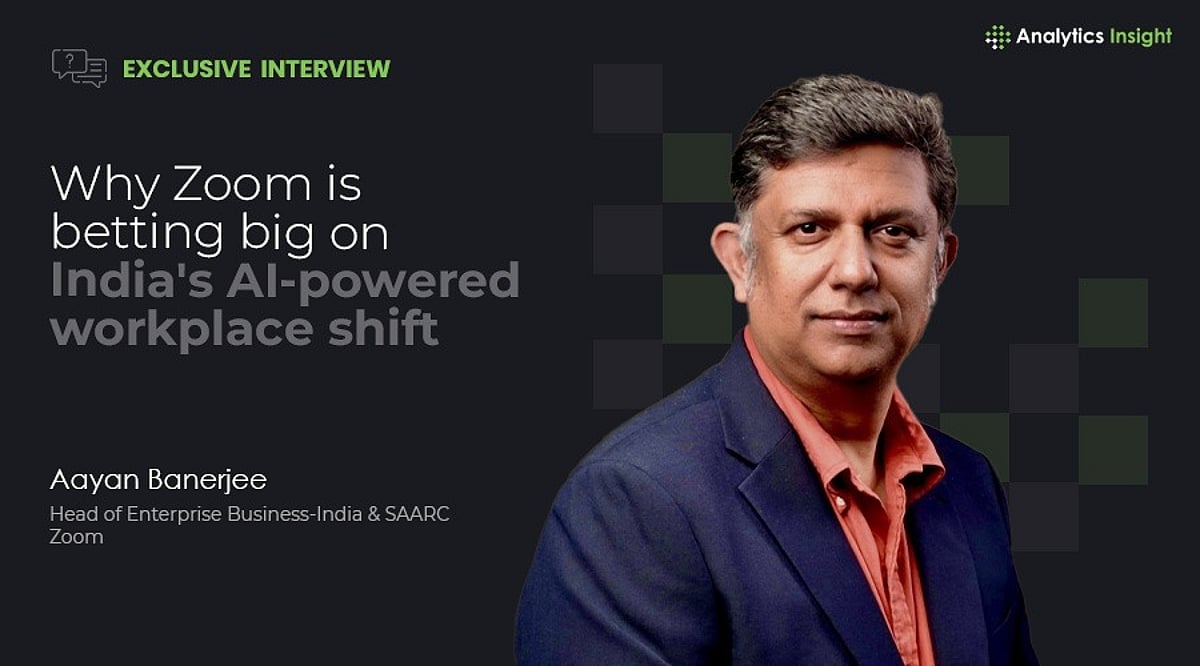
    Zoom is transforming from a simple video conferencing tool into a comprehensive platform for collaboration, customer engagement, and workflow automation, powered by artificial intelligence. In an exclusive interview with Analytics Insight, Aayan Banerjee, Head of Enterprise Business-India & SAARC at Zoom, shares how the company is helping Indian enterprises move from fragmented tech stacks to unified systems that drive real business outcomes.

    Banerjee explains that Zoom is evolving into a ‘system of action’ for modern work, designed to seamlessly blend video, voice, collaboration, and intelligent automation across the customer and employee experience. The focus is on turning conversations into outcomes, whether that means resolving a customer issue, closing a deal, or completing a project.

    Key to this vision is ZoomMate, an agentic AI work surface that helps users find relevant information across systems, coordinate actions, and transform conversations into completed work. Combined with Zoom Phone, Zoom Contact Center, and the Zoom AI Productivity Suite (including Canvas, Slides, and Sheets), organizations can reduce fragmentation and simplify operations.

    In India, Banerjee notes a strong demand for platform consolidation. Businesses are moving away from disconnected communication and customer engagement tools toward unified experiences. This is especially critical in sectors like BFSI and healthcare, where resolution speed is a competitive differentiator.

    Zoom’s AI Companion is embedded across the platform, helping users surface insights and action items. Zoom Phone unifies employee communications, while Zoom Contact Center connects customer interactions across voice, video, messaging, and digital channels. Together, these tools ensure context remains connected, reducing operational overhead and freeing teams to focus on high-value work.

    Banerjee highlights India as a strategic growth market, citing examples like Lenskart, which uses Zoom Contact Center for remote eye tests. Other features like Zoom Revenue Accelerator help sales teams gain conversation intelligence, and Zoom Events enables immersive hybrid experiences. With local phone number support and availability across six telecom circles, Zoom is well-positioned to help Indian enterprises reduce friction and accelerate outcomes.

  • AI as the Default Operating Layer: Pinnacle’s Bimal Patwari on the Future of AEC

    AI as the Default Operating Layer: Pinnacle’s Bimal Patwari on the Future of AEC

    Artificial intelligence is steadily reshaping the Architecture, Engineering, and Construction (AEC) industry, driving automation across design, engineering, documentation, quality control, and project management. While AI adoption on construction sites remains relatively slow, organizations are increasingly integrating intelligent technologies into design workflows, compliance, digital twins, and engineering processes to improve productivity, accuracy, and collaboration.

    As the industry moves beyond experimentation, AI is expected to connect the entire project lifecycle—from design and engineering to construction execution and facility management—creating a unified digital thread powered by predictive intelligence and automation. The convergence of AI, Digital Twins, and cloud-based collaboration is set to redefine how infrastructure projects are planned, delivered, and managed.

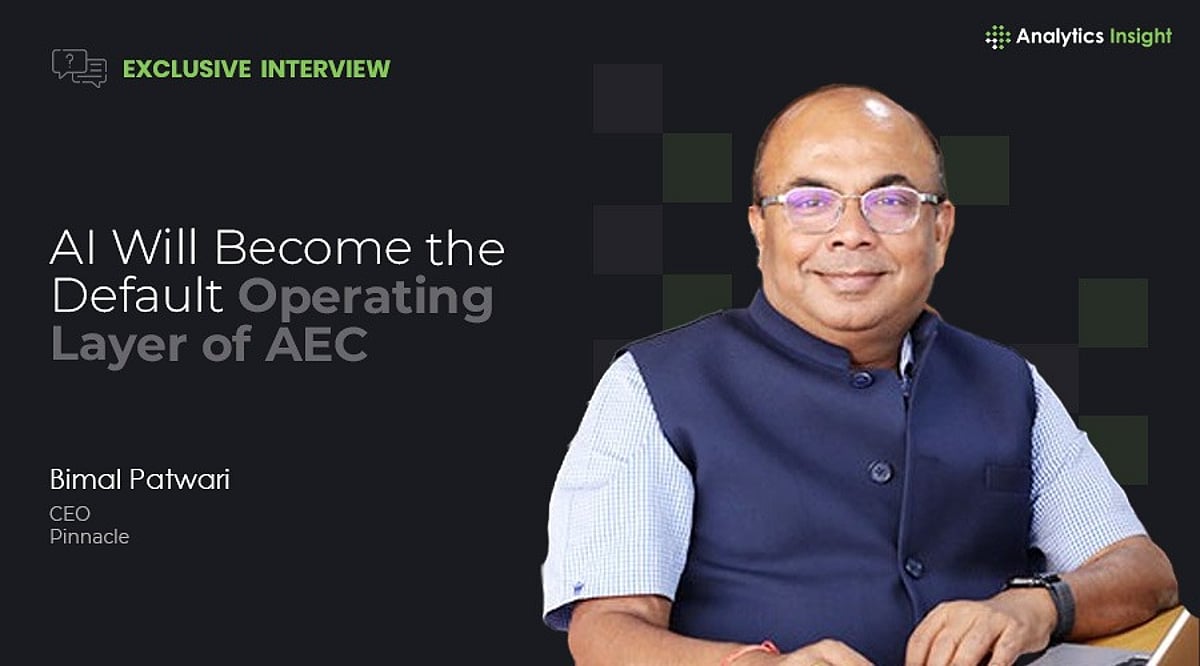
    Bimal Patwari, Founder and CEO of Pinnacle, believes AI should augment engineering expertise rather than replace it. He says successful AI adoption depends as much on organizational culture, digital maturity, and workforce readiness as it does on technology. According to him, companies that invest in structured digital foundations and continuous upskilling today will lead the next generation of AI-driven construction.

    In an exclusive interview with Analytics Insight, Patwari discusses AI adoption in the AEC industry, Digital Twins, generative AI, workforce transformation, enterprise-wide AI implementation, and how Pinnacle is building intelligent engineering and construction workflows. Here are the excerpts from the interview:

    How is AI Adoption Transforming the AEC Industry and What’s Driving its Rapid Growth?

    Overall, automation and AI adoption within the AEC industry remains relatively slow, but the picture varies sharply across the project lifecycle. On the design and engineering side, the pace has somewhat accelerated: major design software providers are now building native AI compatibility into their platforms, particularly through MCP connectors, and leading design and engineering firms are embedding automation and AI into design, modeling, coordination, and documentation workflows as a matter of course. Construction execution, however, tells a very different story: adoption remains markedly slower, with much of the industry still reliant on conventional, manual site processes. This is where the sector’s real digital transformation gap lies.

    At Pinnacle Future Build, closing this gap is a deliberate priority; we see it as the next frontier for AI-driven impact in AEC, not a peripheral concern.

    The AEC Sector has Traditionally Relied on Manual Processes and Legacy Systems. What are the Biggest Barriers Organizations Still Face in Adopting AI at Scale, and How Can They Overcome Them?

    The biggest barriers are rarely technological; they are structural: legacy data trapped in siloed formats, inconsistent standards across teams, and a workforce accustomed to manual sequencing.

    Organizations can overcome this by treating AI adoption as a change-management program, not an IT rollout, pairing every tool deployment with training, clear governance, and visible leadership sponsorship. We addressed this at PFB through a phased, center-by-center rollout with dedicated trial teams, rather than a single enterprise-wide switch.

    At Pinnacle Future Build, our focus on AI implementation extends well beyond BIM modeling alone into the automation of design workflows, AI-led QC verification processes, AI-led design documentation, code compliance reviews, automated engineering design calculations, and AI-led project management practices. Closing the design-to-construction adoption gap is a deliberate priority for us; we see it as the next frontier for AI-driven impact in AEC, not a peripheral concern.

    How will Generative AI Reshape Engineering, Design, and Project Execution Over the Next Five Years?

    Generative AI will dramatically compress the ideation-to-documentation cycle. What once took design teams weeks of iteration will increasingly happen in days, with AI generating first-pass options that engineers refine rather than originate from scratch. This does not diminish the engineer’s role; it elevates it, shifting professionals from repetitive drafting toward judgment, validation, and design intent.

    AI will help expedite repetitive, high-volume work across the design cycle, generating models, supporting clash resolution, performing quality control and code compliance verification, conducting constructability and maintainability reviews, and producing documentation faster, with greater accuracy and consistency.

    On the construction side, AI-assisted Scan-to-BIM can substantially transform site processes, enabling paperless construction, continuous quality control, more accurate schedule management, materials management, and stronger risk analysis across broader project management practices.

    Over the next few years, expect GenAI to act as a genuine co-engineer across architectural, structural, and MEP disciplines.

    How Can Organizations Scale Generative AI from Pilot Projects to Enterprise-Wide Adoption?

    The most effective strategy is sequencing before scaling, proving value on a contained, measurable use case before expanding horizontally.

    We structured our own program as a multi-deliverable pilot, deliberately experimenting with and evaluating solutions from multiple technology providers, combined with 35 years of Pinnacle’s own domain expertise and a skilled internal team, to identify the best available option for each component of the workflow, rather than settling for a single one-size-fits-all platform.

    We deployed a dedicated R&D team to conduct comparative studies across market-available tools and engineer the most efficient combination of solutions for our environment.

    The finalized solution was then handed to a pilot team for real-world trial, surfacing genuine challenges and learnings before we proceeded to an organization-wide rollout. Critically, the entire initiative was led from the top by the organization’s senior-most leadership, ensuring it was treated as a strategic priority rather than a departmental experiment.

    How Can Organizations Balance AI Automation and Human Expertise in Construction and Engineering?

    The right balance is augmentation, not substitution. In knowledge-intensive industries like ours, AI is exceptional at pattern recognition, reading and analyzing documents, and repetitive computation. Still, engineering judgment, constructability and maintainability, accountability for safety, code compliance, and site realities must remain firmly human.

    We anchor this by design: every AI-generated output at PFB passes through a multi-layered quality control process before it becomes a deliverable. That discipline is what allows automation to scale without compromising trust.

    What Role do Data Quality, Digital Infrastructure, and Culture Play in Successful AI Adoption?

    All three are prerequisites, not enablers. Data quality determines whether AI outputs are usable; digital infrastructure determines whether those outputs move seamlessly across project stages; and culture determines whether teams actually adopt what is built for them.

    Most organizations fall short on the third; they invest heavily in tools and platforms but underinvest in the change-readiness of their people, which is ultimately why adoption stalls.

    The Demand for AI-Ready Talent Continues to Grow. How Should Organizations Rethink Workforce Development and Upskilling to Prepare Employees for an AI-Enabled Future?

    Workforce development must shift from one-time training to continuous skill enhancement. We have institutionalized this through a structured training program supported by market experts and a certification sponsorship scheme covering globally recognized credentials, so upskilling becomes a career pathway rather than a compliance exercise.

    Equally important is exposing talent early to AI-augmented workflows during onboarding, so proficiency becomes the norm rather than the exception. The AEC professional of the future will be judged as much on their fluency with AI tools as on technical depth.

    Can AI Adoption Succeed without Strong Digital Foundations and a Broader Transformation Strategy?

    AI adoption cannot outrun digital maturity. Organizations need a coherent digital foundation of structured data, integrated systems, and defined workflows before AI can deliver reliable value; attempting AI without this foundation produces fragmented, unrepeatable results.

    We approached this sequentially: standardized workflows first, multi-layered QA/QC processes, and then layering automation and AI on top of a foundation built to scale.

    How will AI-Powered Digital Twins Transform Infrastructure Planning, Execution, and Lifecycle Management?

    Traditional Digital Twins have been largely descriptive, telling you what exists. AI-enabled twins are becoming predictive and prescriptive, telling you what is likely to happen and what to do about it.

    AI changes that fundamentally: the twin becomes a living, continuously learning asset, ingesting sensor data, performance feedback, and operational history to predict maintenance needs, optimize energy performance, and flag risk before it materializes. For infrastructure projects where assets operate for decades after handover, this shift from a point-in-time model to a self-updating intelligence layer is transformative for long-term lifecycle value.

    Historically, planning, execution, and operations have functioned as three disconnected phases, each with its own tools, teams, and data value generated in design is routinely lost by the time an asset reaches operations. AI-driven Digital Twins finally break this silo, carrying design intent and construction reality forward into a single operational model that facility teams can act on immediately at handover. For infrastructure where operational costs vastly exceed construction costs over an asset’s life, this continuity is where the real financial and safety value of the convergence lies.

    How will AI shape the Future of AEC, and Pinnacle Infotech’s Digital Transformation Role?

    Over the next five years, AI will move from a productivity lever to the default operating layer of AEC delivery, embedded in every discipline, every project stage, and every decision point. Companies like Pinnacle Future Build will contribute by proving that this transformation is achievable at scale, not just in isolated centers of excellence. We operate across four production centers and 14 countries, which gives us a unique vantage point to standardize AI-driven delivery across geographies and disciplines.

    What Automation Initiatives has Pinnacle Future Build Delivered, and What Results have They Achieved?

    Rather than speak in the abstract, we have deployed automation and AI directly into production, including AI-assisted designs, Revit-native MCP / AI-compatible tooling for model generation and coordination, QA/QC, and AI-assisted workflows integrated into our documentation pipeline.

    Early results have shown measurable reductions in turnaround time for routine modeling and coordination tasks, alongside improved consistency in deliverable quality. We track adoption centrally, which lets us quantify impact rather than rely on anecdotes, a discipline I would encourage every AEC leader to adopt.

    How Can AI Connect Design, Engineering, Construction, and Operations into One Digital Thread?

    Too many organizations still treat digital design, digital construction, and digital operations as separate initiatives with separate tools and separate data. The real opportunity is a digital thread, a single, traceable flow of data that begins at design intent and carries forward, unbroken, through engineering, construction sequencing, and into operational asset management via Digital Twins. AI is the connective mechanism that makes this thread possible, continuously translating data from one lifecycle stage into intelligence usable in the next.

    What Advice Would You Give AEC Leaders Who Are Hesitant to Begin Their AI Journey?

    The greatest risk today isn’t adopting AI too early; it’s standing still while competitors compound their learning curve. Leaders who hesitate are often waiting for certainty that will never arrive; AI, like any transformation, is refined through practice, not planning. My advice is to treat the first initiative as a learning investment, not a finished solution; measure it honestly, adjust quickly, and let each cycle build organizational confidence for the next.


  • Adolfo Hernandez: Driving AI-Powered Transformation at Capita

    Adolfo Hernandez: Driving AI-Powered Transformation at Capita

    Adolfo Hernandez is a prominent global business executive and technology leader currently serving as the Group CEO of Capita Plc. With a career spanning software, cloud computing, telecommunications, and enterprise services, he has held leadership roles at major organizations including Amazon Web Services, SDL, Acision, and Alcatel-Lucent. Known for his focus on digital transformation, innovation, and AI adoption, Hernandez has consistently delivered sustainable business growth across international markets.

    Early Life and Education

    Hernandez pursued advanced business and leadership education to build a strong executive foundation. He completed the Senior Executive Programme at London Business School in 2002 and earned a Senior MBA in Strategic Management from IDE-CESEM Business School between 1994 and 1996. His academic background equipped him with strategic leadership, management, innovation, and international business operations expertise.

    Professional Career

    Hernandez began his executive career at Alcatel-Lucent, later becoming CEO of Acision and then CEO of SDL, where he led successful transformation initiatives. From 2021 to 2024, he served as Vice President of the Global Telco Business Unit at Amazon Web Services, driving telecom growth. Since January 2024, he has been Group CEO of Capita, championing AI-driven business renewal and public sector innovation.

    AI-Driven Business Transformation at Capita

    Under Hernandez’s leadership, Capita is leveraging AI to modernize public services and enhance operational efficiency. Key initiatives include:

    • AI Innovation: Capita applies generative and agentic AI to streamline government processes, automate complex workflows, and deliver faster, smarter citizen services.
    • AI Learning: The company integrates generative AI into workforce development, offering personalized learning and accelerating skills transformation.
    • Intelligent Operations: Combining AI, automation, and human expertise, Capita redesigns business processes to improve efficiency and customer experiences.
    • Smart Performance: AI-powered analytics and coaching enhance frontline operations, productivity, and customer engagement.
    • Responsible Intelligence: Capita promotes trusted AI through transparent governance, human oversight, and secure automation.
    • Visionary Leadership: Hernandez drives enterprise-wide AI adoption, aligning innovation with governance and operational excellence for long-term value.

    Business Achievements

    Hernandez has delivered meaningful turnarounds and shareholder value throughout his career. He guided SDL through a successful merger with RWS, reshaped Acision into a high-growth software company, and expanded AWS telecom partnerships globally. At Capita, he is advancing AI initiatives like the AI Catalyst Stack, supporting digital public services and enterprise innovation.

    Controversies

    Adolfo Hernandez has no major public controversies. His career is defined by business transformation, AI-driven innovation, and digital modernization across leading global organizations.

  • Svitla Systems: A Global Partner for Software Development and Digital Transformation

    Svitla Systems: A Global Partner for Software Development and Digital Transformation

    Company Overview

    Svitla Systems is a worldwide provider of custom software development, testing, and consulting services. The company specializes in digital transformation, Big Data, artificial intelligence, and cloud solutions, delivering highly skilled engineering talent to startups and large enterprises. Through flexible engagement models and dedicated teams, Svitla Systems offers scalable, high-quality technology solutions tailored to diverse business needs.

    About the Company

    Svitla Systems serves as a global technology partner, helping clients develop digital solutions that scale and perform at high levels. Its expertise spans cloud technologies, artificial intelligence and machine learning, DevOps, and mobile solutions. The company provides various engagement models, including team extension and managed services, supported by a strong engineering team. By combining advanced technologies with user-centered design and data analysis, Svitla Systems enables customers to achieve digital transformation and sustainable growth.

    Products and Services

    Svitla Systems offers a comprehensive suite of services:

    • Custom software development
    • AI and machine learning solutions
    • Cloud services
    • DevOps
    • Cybersecurity
    • Big Data analytics
    • Quality assurance
    • Internet of Things (IoT)
    • Mobile and web development
    • Consulting and managed teams

    Core Leadership Team

    The company is led by a team of experienced technology and business executives who drive innovation and operational excellence.

    Revenue Streams

    Svitla Systems generates revenue through three primary sources: service engagements, long-term client partnerships, and technology-driven projects. This diversified model supports steady business growth and operational expansion.

    Client Segments and Target Companies

    B2B Client Segments: Custom software, AI/ML, cloud & DevOps, QA, Big Data, IoT, team extension, managed services, digital transformation consulting.

    Target Companies: Startups, mid-sized businesses, and large enterprises in fintech, healthcare, logistics, e-commerce, and technology sectors.

    Global Presence

    Svitla Systems operates across North America, Europe, Asia, and Latin America, supporting innovation, efficiency, and digital growth for clients worldwide.

    Social Media

    LinkedIn | Website

  • The Evolving Role of the Chief Strategy Officer in 2026: From Planner to Strategic Operator

    The Evolving Role of the Chief Strategy Officer in 2026: From Planner to Strategic Operator

    The Chief Strategy Officer (CSO) role is undergoing a significant transformation in 2026. No longer confined to long-term planning, today’s CSOs are driving real-time business execution and enabling faster decision-making across their organizations.

    AI at the Core of Strategy

    Artificial intelligence is now central to strategic initiatives. CSOs are leading the charge to scale AI across operations, product development, customer experience, and business decision-making. This shift requires a deep understanding of AI capabilities and their practical applications.

    From Five-Year Plans to Agile Cycles

    Traditional five-year strategic plans are being replaced by agile strategy cycles. This new approach allows companies to respond quickly to market shifts, economic changes, and emerging opportunities. CSOs now focus on fewer, high-impact priorities by directly linking strategy to financial results and operational performance.

    Collaboration and Execution

    Modern CSOs work closely with CEOs, technology leaders, and business teams to turn strategic plans into measurable business outcomes. This collaborative approach ensures that strategy is not just a document but a living, actionable framework.

    Expanded Responsibilities

    Managing geopolitical risks, cybersecurity threats, supply chain disruptions, and sustainability goals has become a core part of the CSO’s role. These responsibilities demand a broad skill set and the ability to navigate complex, interconnected challenges.

    Challenges and Opportunities

    More than half of strategy leaders report handling too many initiatives, while many still lack authority over key business decisions. Successful CSOs are those who combine AI knowledge, data-driven decision-making, resilience planning, and people-focused leadership to stay competitive.

    The Future CSO

    The future CSO is no longer just a planner but a strategic operator who connects business, technology, capital, and execution. This evolution requires a shift in mindset, skills, and organizational influence.

  • 7 Essential IT Leadership Rules for Modern Technology Leaders

    7 Essential IT Leadership Rules for Modern Technology Leaders

    Vision-Driven Leadership

    Align technology initiatives with business objectives, ensuring every project delivers measurable value while preparing the organization for future challenges.

    Data-Backed Decisions

    Use analytics and performance metrics to make informed technology investments instead of relying solely on assumptions or past experiences.

    Cybersecurity First

    Embed security into every technology decision, protecting business assets while maintaining compliance and customer trust across digital platforms.

    AI as an Enabler

    Leverage artificial intelligence to improve productivity, automate repetitive tasks, and support employees rather than replacing human expertise completely.

    Continuous Learning

    Encourage regular upskilling, certifications, and knowledge sharing so teams remain competitive as technology rapidly evolves across industries.

    Customer-Centric Innovation

    Build solutions focused on customer needs, ensuring technology investments improve user experiences while supporting long-term business growth and loyalty.

    Cross-Functional Collaboration

    Break departmental silos by encouraging technology, operations, and business teams to work together toward shared organizational objectives consistently.

    Agile Decision Making

    Adopt flexible strategies that allow quick responses to changing market demands, customer expectations, and emerging technological opportunities.

    Ethical Technology Use

    Promote transparency, responsible AI adoption, and ethical decision-making to build sustainable digital transformation initiatives with stakeholder confidence.