Tag: Digital Transformation

  • Infosys Q1 Earnings: AI Revenue Reaches 8.2% as Net Profit Hits $820 Million

    Infosys Q1 Earnings: AI Revenue Reaches 8.2% as Net Profit Hits $820 Million

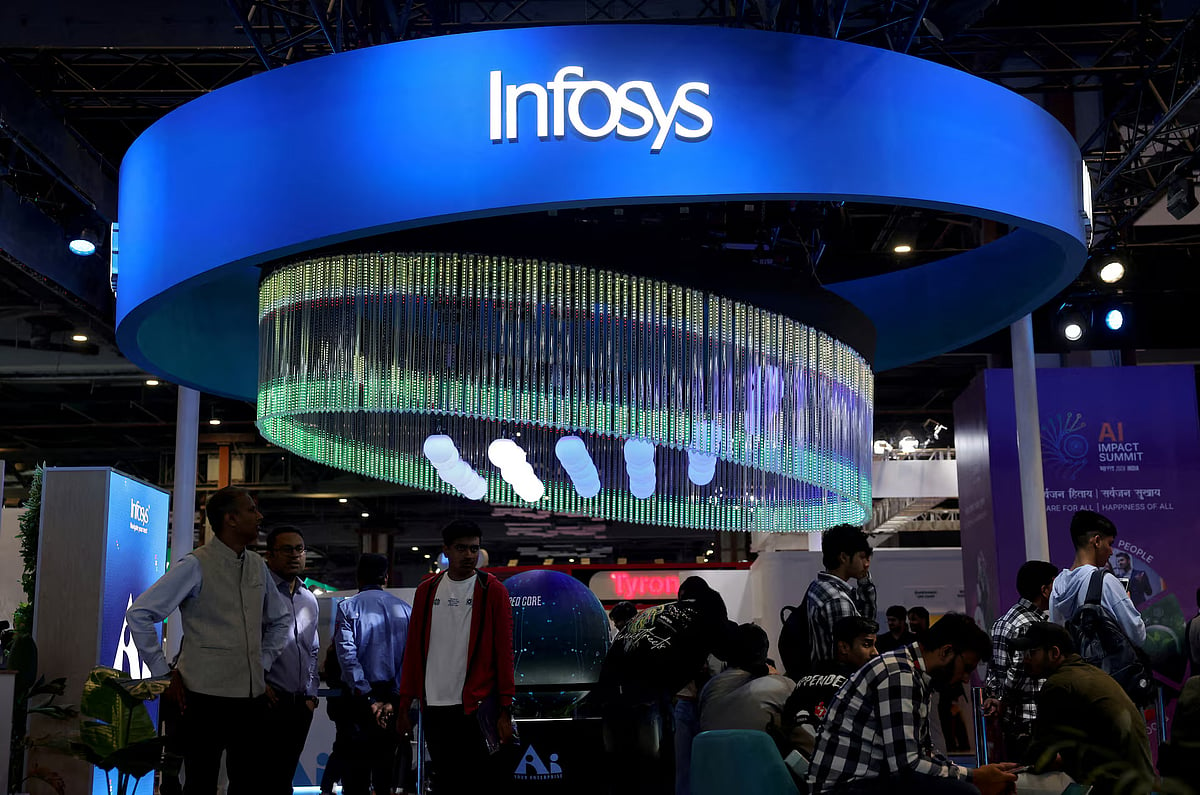
    Infosys (NSE, BSE, NYSE: INFY), a global leader in AI-first business consulting and technology services, reported its Q1 results for the period ending June 30, 2026. The company posted revenues of $5,082 million, representing year-over-year growth of 2.4% and sequential growth of 1.0% in constant currency. Operating margin stood at 21.1%, a sequential increase of 0.2%, while earnings per share grew 14.9% year-on-year in rupee terms. Net profit climbed to $820 million, and free cash flow reached $955 million, with a conversion rate of 116.5% of net profit.

    AI revenues accounted for 8.2% of total revenue in Q1, highlighting the rapid conversion of AI momentum into tangible financial results. The company secured large deal wins totaling $3.6 billion in total contract value, with 61% coming from net new business.

    “AI momentum is now rapidly converting into revenue, which demonstrates how Infosys’ differentiated enterprise AI value proposition is translating into consistent market share gains. Strong large deal wins, powered by Infosys Topaz, reinforce client confidence in our ability to be the strategic partner of choice for AI transformation driving tangible business value,” said Salil Parekh, CEO and MD.

    Infosys revised its FY27 revenue growth guidance to 1.5%-3.0% in constant currency and retained its operating margin guidance at 20%-22%.

    Key Financial Highlights (Q1 FY27)

    • Revenues in constant currency: +2.4% YoY, +1.0% QoQ
    • Reported revenues: $5,082 million (+2.8% YoY, +0.8% QoQ)
    • Operating margin: 21.1% (+0.3% YoY, +0.2% QoQ)
    • Basic EPS: $0.20 (+3.7% YoY)
    • Free cash flow: $955 million (FCF conversion: 116.5%)

    “Our resilient margins of 21.1% and consistent strong cash generation reflect the strength of our business model, disciplined execution and continued focus on operational excellence in a challenging business environment,” said Jayesh Sanghrajka, CFO.

    Major Client Wins and Partnerships

    Infosys announced several strategic collaborations and renewals during the quarter:

    • Mercedes-Benz Group AG: Renewed a long-standing partnership to move one of the automotive sector’s largest hybrid cloud and data center operations to an AI-led operating model, leveraging Infosys Topaz and Infosys Cobalt.
    • Nokia: Collaboration to strengthen product engineering capabilities across core networks, accelerating innovation and execution efficiency.
    • Bendigo Bank: A seven-year collaboration to build a future-ready bank, enhancing digital experiences for 2.9 million customers.
    • DNB Bank ASA: Expanded collaboration to modernize financial crime operations using NICE Actimize’s X Sight Enterprise platform.
    • Sentara: Collaboration to scale enterprise AI adoption in healthcare services.
    • GlobalFoundries: Expanded collaboration to accelerate AI-driven IT operations transformation.
    • Spark New Zealand: Accelerating AI-led transformation across technology delivery and digital operations with Infosys Topaz.
    • Cox Communications: Modernization of technology operations to enhance digital customer experiences.
    • Ventura Foods: Enterprise transformation using Oracle Fusion Cloud and Infosys Topaz for an AI-first value chain strategy.
    • OpenAI: Collaboration to accelerate enterprise AI transformation, focusing on deploying Codex for large-scale software modernization and automation.
    • Harness: Partnership to unlock AI value for enterprise transformation, addressing the “AI Velocity Paradox.”
    • Finacle Deals: Sterling Bank of Asia (enhancing employee and customer experience), Bank of Sydney (successful go-live of Finacle Digital Banking Suite on AWS).

    Industry Recognitions and Awards

    Infosys received multiple accolades in Q1, including ranking #1 on LinkedIn Top Companies in India for 2026, being recognized as a Leader in Gartner Magic Quadrant for Cloud ERP Services, and winning the Bronze Stevie Award for Innovation in Investor Relations. Infosys Finacle was rated a Leader in The Forrester Wave for Digital Banking Engagement Platforms and ranked #1 in 22 categories by IBS Intelligence.

    For a full list of awards and recognitions, visit the official Infosys newsroom.

  • Best Indian Web Development Companies for 2026: Trusted by Businesses

    Best Indian Web Development Companies for 2026: Trusted by Businesses

    Introduction

    As businesses increasingly move online, choosing the right web development partner is critical. India has emerged as a global hub for web development, offering a blend of technical expertise, scalability, and cost-effectiveness. Here are the top Indian web development companies that businesses trust in 2026.

    1. TCS: Enterprise-Grade Web Development

    TCS delivers secure, scalable digital platforms for large enterprises requiring complex integrations, cloud capabilities, and long-term technology support.

    2. Infosys: AI-Powered Digital Experiences

    Infosys combines web development with artificial intelligence, cloud computing, automation, and digital transformation for modern enterprise applications.

    3. HCLTech: Complex Technology Ecosystems

    HCLTech builds enterprise web platforms integrated with backend systems, cloud infrastructure, cybersecurity frameworks, and advanced digital engineering capabilities.

    4. Tech Mahindra: Industry-Focused Solutions

    Tech Mahindra develops customized web solutions for telecommunications, manufacturing, healthcare, banking, and businesses undergoing large-scale digital transformation.

    5. Aalpha Information Systems: Custom Development

    Aalpha provides full-stack development, e-commerce platforms, custom software, and mobile applications for businesses seeking flexible technology partnerships.

    6. Emizen Tech: E-commerce Expertise

    Emizen Tech focuses on web development, e-commerce platforms, custom software, and digital solutions designed for businesses across multiple industries.

    7. IndiaNIC: Digital Product Development

    IndiaNIC helps businesses create custom websites, web applications, software products, and digital platforms tailored to specific operational requirements.

    8. Hidden Brains: Enterprise Digital Transformation

    Hidden Brains offers web applications, enterprise software, cloud solutions, and emerging technologies for organizations pursuing long-term digital innovation.

    9. Acodez IT Solutions: Design And Development

    Acodez combines responsive web design, development, e-commerce capabilities, and digital solutions to help businesses build engaging online experiences.

  • 10 Smart Cities Using AI to Revolutionize Urban Living

    10 Smart Cities Using AI to Revolutionize Urban Living

    Artificial intelligence is reshaping urban life, helping cities become more efficient, sustainable, and livable. From traffic optimization to smart energy grids, here are ten cities leading the charge.

    Singapore

    Singapore uses AI for traffic optimization, predictive maintenance, public safety monitoring, and smart urban planning, improving efficiency, sustainability, and residents’ quality of life.

    Dubai

    Dubai implements AI across government services, policing, healthcare, and transportation, accelerating digital transformation while enhancing citizen experiences through intelligent automation.

    Barcelona

    Barcelona employs AI-powered sensors for waste management, traffic control, and energy efficiency, creating cleaner neighborhoods and more sustainable public infrastructure systems.

    Seoul

    Seoul integrates AI into public transportation, emergency response, surveillance, and administrative services, enabling faster decision-making and improved urban convenience for citizens.

    Amsterdam

    Amsterdam uses AI for mobility management, environmental monitoring, and energy optimization, supporting sustainable development while reducing congestion and carbon emissions citywide.

    Tokyo

    Tokyo applies AI to disaster preparedness, transportation networks, and smart infrastructure maintenance, increasing resilience and operational efficiency across one of the world’s busiest cities.

    New York City

    New York City leverages AI for traffic analysis, emergency services, crime prevention, and infrastructure monitoring, helping manage complex urban operations more effectively.

    Helsinki

    Helsinki uses AI-driven digital government platforms and mobility solutions to simplify public services while encouraging environmentally responsible urban development initiatives.

    Copenhagen

    Copenhagen integrates AI with smart energy grids, cycling infrastructure, and environmental monitoring to improve sustainability, resource efficiency, and overall urban livability.

  • PowerPlay CEO Iesh Dixit on How AI and Digital Platforms Are Building Smarter Infrastructure in India

    PowerPlay CEO Iesh Dixit on How AI and Digital Platforms Are Building Smarter Infrastructure in India

    India’s construction sector is embracing digital transformation as builders turn to software, artificial intelligence, and data-driven tools to enhance project management. Traditionally reliant on manual processes, the industry is now leveraging smartphones and cloud-based platforms to streamline operations, track progress, and minimize delays.

    In a recent episode of the Analytics Insight Podcast, Iesh Dixit, Co-founder and CEO of PowerPlay, discussed how his company is digitizing construction sites across India. He shared his entrepreneurial journey, the role of AI and predictive analytics, the future of digital twins and IoT, and how technology can help achieve India’s ambitious infrastructure goals.

    From Construction Sites to Startup Founder

    Dixit explained that his childhood was spent on construction sites, where he worked as a site supervisor. After graduation, he was determined to start a company. By 2020, he focused on building something for the construction industry, recognizing a gap in digitization and data centralization. PowerPlay began as bulky software for contractors’ back offices, but the team soon realized they needed to solve problems for on-site users. Today, PowerPlay has over a million users across platforms, all from construction sites.

    Practical Impact of AI in Indian Construction

    According to Dixit, the widespread adoption of smartphones has been a game-changer. He emphasized that construction site workers are not primarily focused on digitization—it’s only 10–20% of their job. Therefore, any digital tool must not interfere with their core tasks. PowerPlay focuses on making adoption seamless so that site teams can continue their main work while benefiting from digital insights.

    Predictive Analytics for Cost and Delay Reduction

    Dixit noted that digitization has broken down silos in construction. Previously, even large companies had projects that rarely communicated with finance except at milestones. Now, predictive analytics can link baseline plans, progress data, material usage, labor, and assets together. This integration helps forecast delays, optimize resource allocation, and improve operational efficiency.

    Digital Twins and IoT

    IoT is essential for collecting accurate data points, while digital twins allow stakeholders to compare planned progress with actual site conditions without visiting the site. Dixit shared that he previously built an AR/VR company and understands the potential, but technology maturity is still a barrier for widespread adoption, particularly among smaller players. Larger firms can afford digital twin implementations now, and they offer significant benefits.

    AI as a Core Enabler for India’s Infrastructure

    PowerPlay’s mission is to support the infrastructure India needs over the next decade, including roughly 90 million homes. Dixit believes AI will help bring new talent into the industry and drive innovation. He called for more entrepreneurs to build solutions that address construction’s unique challenges.

    For the full conversation, listeners can tune into the Analytics Insight Podcast.

  • Marriott International’s Digital Transformation: AI, Cloud, and New Systems Reshape Hospitality

    Marriott International’s Digital Transformation: AI, Cloud, and New Systems Reshape Hospitality

    Booking a hotel room has changed dramatically in recent years. Today’s travelers expect to book in minutes, check in via smartphone, unlock doors with digital keys, and receive assistance without waiting in long queues. Meeting these expectations is a formidable challenge for a company operating thousands of hotels worldwide. Marriott International, serving millions of guests annually, has been quietly rebuilding its technology infrastructure from the ground up to keep pace with evolving travel habits.

    Rather than making incremental updates, Marriott is replacing legacy systems that have been in use for years. Simultaneously, the company is embedding artificial intelligence (AI) across various business areas and migrating more services to the cloud. While most guests may not notice these changes day-to-day, Marriott expects these initiatives to significantly streamline booking, check-in, customer support, and hotel operations.

    A Measured and Practical AI Journey

    While many companies rushed to adopt AI as soon as it gained popularity, Marriott took a more cautious approach. The company chose to test the technology first and expand its use only after seeing real-world results. To facilitate this, Marriott established its own AI Studio in 2023. Small teams began experimenting with different ideas to identify where AI could deliver tangible benefits—some focused on supporting employees directly, while others aimed to enhance the guest experience.

    Personalization is a key goal for Marriott. Every traveler is unique—some travel for business, others with family. AI enables Marriott to better interpret these preferences and recommend hotels or services that genuinely match each guest’s needs, rather than offering generic options. The company is also leveraging AI to improve its website and mobile app, making it easier for guests to find the right hotel by understanding their search queries more clearly.

    Employees also benefit from these changes. Hotel staff can access guest information more quickly, reducing time spent navigating multiple systems and allowing them to assist guests promptly. Marriott has also emphasized that good AI depends on good data. If the underlying information is incomplete or outdated, AI cannot deliver useful results. This is why the company has invested considerable effort in improving its data quality before expanding AI across the business.

    Importantly, Marriott has made it clear that AI is not intended to replace hotel workers. Hospitality remains fundamentally about people. Technology simply helps employees perform their jobs more efficiently.

    New Systems for a Future-Ready Business

    While AI garners much attention, Marriott’s most significant changes are happening behind the scenes. The company is replacing three of its oldest systems: the hotel management platform, reservation system, and Marriott Bonvoy loyalty program. These systems have supported the business for years but now require faster and more flexible technology.

    Marriott is also moving more of its operations to the cloud. Instead of relying on older computer systems, cloud technology enables faster deployment of changes and upgrades. It also helps the company handle millions of reservations and customer requests without performance degradation. Another major goal is to connect different systems so they can work together seamlessly. Today, guest information, reservations, loyalty rewards, and hotel services need to share data quickly to create a smooth experience from booking to checkout.

    Marriott is taking a practical approach to AI, deploying it only where it solves a real problem. This helps avoid unnecessary costs while improving daily operations. The company is also preparing for what experts call an “Agentic Mesh”—a concept where multiple AI assistants work together. One could help guests make bookings, another could support hotel employees, and a third could manage loyalty rewards or answer customer questions. These AI systems would share information while handling different tasks. Although Marriott is not fully using this model today, its new cloud systems are being built to support these technologies as they become more common.

    Why This Matters

    Marriott’s technology upgrades could have a ripple effect across the hospitality industry. With better AI, faster cloud systems, and connected platforms, hotels may see improved guest experiences, fewer delays, and greater modernization in how they serve customers. Travel is changing, and hotels must change with it. Guests now expect fast service, simple booking, and personalized experiences every time they travel.

    Marriott understands that good technology is now as important as comfortable rooms and friendly staff. The company’s approach is notable because it didn’t rush into every new trend; instead, it focused on building a solid foundation first. AI is being added step by step, while employees remain central to the guest experience. As more hotels adopt AI and cloud technology, Marriott’s early investments could give it a strong competitive advantage and help shape the future of hospitality technology.

  • 9 Technologies That Are Likely to Disappear by 2030

    9 Technologies That Are Likely to Disappear by 2030

    Technology evolves rapidly, and many once-essential tools are becoming obsolete. From authentication methods to transportation, here are nine technologies that are expected to fade away by 2030 as smarter, more efficient alternatives take over.

    Passwords

    Traditional passwords are increasingly vulnerable and inconvenient. Passkeys, biometrics (fingerprint, facial recognition), and multi-factor authentication offer stronger, more user-friendly security, likely making passwords a relic of the past.

    Physical SIM Cards

    eSIM technology is replacing removable SIM cards, simplifying device activation and allowing users to switch carriers without swapping cards. This innovation improves flexibility for mobile network users worldwide.

    Cable Television

    Streaming platforms and on-demand content are steadily replacing traditional cable subscriptions. Internet-based entertainment services offer flexible, personalized viewing experiences, driving the decline of cable TV.

    Gas-Powered Cars

    Electric vehicles (EVs) are advancing rapidly as governments enforce stricter emissions regulations and expand charging infrastructure. The transition to cleaner transportation is accelerating the phase-out of gasoline-powered cars.

    Cash Payments

    Digital wallets, UPI, contactless cards, and mobile banking continue to reduce dependence on physical currency for everyday transactions. The convenience and security of digital payments are pushing cash toward extinction.

    Standalone GPS Devices

    Smartphone navigation apps like Google Maps and Waze offer real-time traffic updates, offline maps, and continuous updates, eliminating the need for dedicated GPS hardware for most consumers.

    USB-A Ports

    USB-C is becoming the universal standard for charging and data transfer, offering faster speeds, higher power delivery, and reversible connectors. Manufacturers are progressively phasing out USB-A ports in modern devices.

    Mechanical Hard Drives

    SSDs (solid-state drives) are rapidly replacing traditional hard drives due to their superior speed, durability, energy efficiency, and decreasing cost per gigabyte. Mechanical drives are becoming obsolete for most applications.

    Manual Customer Support

    AI-powered chatbots and intelligent virtual assistants increasingly handle routine customer queries, providing instant responses 24/7. This reduces reliance on traditional human-only support systems, transforming customer service.

    These nine technologies represent major shifts in how we interact with the world. Staying informed can help businesses and consumers adapt to the inevitable changes ahead.

  • Top Digital Leadership Programs for CEOs and CXOs in 2026

    Top Digital Leadership Programs for CEOs and CXOs in 2026

    Digital transformation is redefining how businesses compete. Artificial intelligence, automation, cloud computing, cybersecurity, and data analytics influence everything from operations to customer experience. Senior leaders are now expected to make technology-driven decisions that deliver measurable business outcomes. Digital leadership programs help executives understand emerging technologies, develop transformation strategies, and lead change across their organizations.

    Best Digital Leadership Courses for CEOs and CXOs

    Here are some of the top programs for CEOs, CXOs, founders, and senior business leaders.

    Wharton Digital Leadership Certificate

    Wharton School’s Digital Leadership Certificate is one of the most prestigious executive programs for business leaders. It includes modules on digital strategy, artificial intelligence, innovation, customer-centric growth, and organizational transformation. The self-paced online model makes it highly effective for busy executives.

    • Best for: CEOs, Managing Directors, Business Leaders
    • Highlights: Digital Strategy and Innovation, AI for Business Leaders, Customer-first Transformation, Leadership in Digital Organizations

    ISB Strategic Digital Leadership Program

    ISB runs this program for leaders responsible for driving business transformation. Topics include digital business models, AI, analytics, platforms, and innovation. The mix of live online classes and campus visits makes it interactive and helps solve real-world challenges.

    • Best for: CXOs, Business Heads, Senior Managers
    • Highlights: Enterprise Digital Transformation, AI & Analytics, Platform Business Model, Customer Experience Strategy

    ISB Chief Digital & AI Officer Program

    This executive development program is designed for executives who wish to lead digital transformation. It provides perspectives on implementing AI, digital governance, innovation management, and technology strategy. The program aligns digital transformation with business goals.

    • Best for: CIOs, Chief Digital Officers, Technology Executives
    • Highlights: AI Strategy, Digital Governance, Enterprise Innovation, Business-driven Technology Strategy

    MIT Sloan & Kellogg Executive Programs

    Both MIT Sloan and Kellogg School of Management offer executive programs focusing on innovation, digital transformation, organizational agility, and strategic leadership. Executives learn through case studies, collaborative learning, and practical business situations.

    • Best for: Global Executives, Entrepreneurs, Decision Makers
    • Highlights: Innovation Leadership, Digital Business Ecosystems, Strategic Decision Making, Organizational Agility

    IITM Pravartak Future Chief Technology & AI Officer Program

    This program prepares experienced technology leaders to become executives. It blends technical know-how with business savvy, covering AI, cybersecurity, enterprise architecture, cloud technologies, and tech governance.

    • Best for: CTOs, Engineering Leaders, Technology Executives
    • Highlights: Artificial Intelligence and Emerging Technologies, Cloud Strategy, Cybersecurity, Technology Leadership

    What You Will Learn

    While each program has its strengths, most equip you with crucial skills for guiding digital transformation:

    • Digital Transformation Strategy
    • Artificial Intelligence and Automation
    • Innovation Management
    • Data-Driven Decision-Making
    • Cybersecurity Governance
    • Customer Experience Design
    • Change Management
    • Digital Product/Platform Strategy
    • Leadership Communications

    Many programs also offer simulations and case studies to apply learning in practice.

    Choosing the Right Program

    Your choice depends on your role and leadership objectives:

    • Wharton is ideal for executives seeking a global perspective on digital strategy and innovation.
    • ISB Strategic Digital Leadership suits executives tasked with transforming their businesses.
    • ISB Chief Digital & AI Officer Program fits individuals leading AI and digital initiatives.
    • MIT Sloan & Kellogg provide exposure to global innovations and trends.
    • IITM Pravartak is for technology leaders aiming to become strategic executives.

    When choosing, evaluate curriculum, faculty, learning approach, length, alumni network, and industry relevance. The program should provide skills you can immediately apply within your organization.

    Why This Matters

    Technology alone does not drive business transformations; leadership does. Companies need senior executives to link technological investments to business strategy, manage transformation, and create value in the digital age.

    FAQs

    What is a digital leadership course?

    A digital leadership course teaches executives how to lead AI adoption, digital transformation, innovation, and technology-driven business growth effectively.

    Who should enroll in digital leadership programs?

    CEOs, CXOs, founders, CIOs, CTOs, business heads, and senior managers leading transformation initiatives benefit most.

    Which skills do digital leadership courses cover?

    Most programs cover AI strategy, cybersecurity, innovation, data analytics, digital business models, change management, and executive decision-making.

    Are online digital leadership courses effective?

    Yes. Reputed institutions combine expert-led sessions, case studies, peer learning, and practical projects to deliver valuable online executive education.

    How do I choose the right digital leadership program?

    Compare curriculum, faculty, industry recognition, learning format, networking opportunities, duration, and alignment with your leadership responsibilities and goals.

  • HDFC Bank Stock Slips 1% as AI-Led Job Cuts Fuel Earnings Scrutiny

    HDFC Bank Stock Slips 1% as AI-Led Job Cuts Fuel Earnings Scrutiny

    HDFC Bank shares traded near Rs. 810 during Tuesday’s afternoon session, reflecting cautious investor sentiment ahead of the lender’s June-quarter (Q1 FY27) earnings. The stock’s 1% decline comes as the market digests news of the bank’s AI-driven workforce reduction, which saw headcount shrink by 3,343 employees during FY26.

    The workforce cut, detailed in HDFC Bank’s FY26 Annual Report, is part of a broader operational overhaul that uses artificial intelligence and automation to streamline routine banking tasks. Unlike traditional layoffs focused solely on cost reduction, the bank is redeploying employees into customer-facing and advisory roles where human interaction remains critical.

    Investors are now weighing the potential long-term benefits of this digital transformation against near-term profitability concerns. The number of managers responsible for customer interaction and business decision-making has increased, suggesting the bank is reshaping its workforce rather than simply shrinking it.

    Market sentiment is also being shaped by governance issues that surfaced earlier this year. An independent legal review found no evidence to support allegations made after the resignation of part-time Chairman Atanu Chakraborty, but the episode highlighted the importance of corporate governance in maintaining investor confidence.

    All eyes are now on the upcoming Q1 earnings report, which will provide the first clear indication of whether AI investments are beginning to improve operating margins and cost efficiency without compromising customer service. Key metrics to watch include loan growth, deposit generation, net interest margins, operating expenses, and asset quality.

    If earnings show that efficiency gains are genuine and scalable, HDFC Bank’s AI-led strategy could emerge as a competitive advantage. Conversely, any signs that automation is hurting customer experience or revenue growth could keep the stock under pressure.

    HDFC Bank’s transformation represents a broader shift in Indian banking, where AI is moving from experimental to operational cornerstone. The June-quarter results will be pivotal in determining whether technology, governance, and finance can align to drive the next phase of growth.

  • The Enterprise Leader’s Guide to Digital Transformation Roadmaps

    The Enterprise Leader’s Guide to Digital Transformation Roadmaps

    Digital transformation succeeds or fails long before any system goes live. Nearly 90% of organizations run some form of transformation program, yet only 30% meet their goals. Sequencing and governance now matter more than the tools themselves. Enterprise leaders no longer question whether digital transformation deserves a place on the boardroom agenda; attention has shifted toward execution, sequencing, and accountability across every business unit.

    Why Most Programs Fail

    Consultants tracking enterprise technology describe the gap between ambition and actual results as structural, not temporary. Most programs struggle to close the gap between what leadership promised and what teams delivered. The root cause is rarely the technology — it is almost always the sequence in which decisions get made. Roadmaps built purely on technology upgrades rarely survive contact with actual budgets.

    Data Foundations Are Critical

    Transformation programs tend to stumble at the data layer, often before execution even begins. Data quality remains the single largest barrier: 64% of leaders name it their top challenge, and 77% describe their own data as average or worse. Investing heavily in AI without fixing data quality first backfires within months. Enterprises that treat data governance as groundwork, not an afterthought, move faster once AI work actually starts. Skipping this step simply moves the cost further down the timeline, where it costs more to fix.

    Key Priorities for Enterprise Roadmaps

    Digital leaders now build transformation into core strategy rather than treating it as a side initiative. TEKsystems research shows digital leaders are 2.5 times more likely to embed transformation deeply than laggards. Governance has become its own workstream, with steering committees that have direct executive sponsorship over sequencing and budget calls. The following priorities consistently surface across enterprise roadmaps that deliver measurable returns:

    • Data governance and quality repair ahead of AI scaling
    • Cloud-native infrastructure supporting hybrid, distributed workloads
    • Change management run as its own workstream with metrics
    • Initiatives ranked by value, feasibility, and delivery risk
    • Agentic AI rollout paired with architectural oversight

    Governance and Execution Gaps

    Successful programs pour nearly half their total effort into change management, not technology deployment. SupraITS research puts that figure near 50% for leading organizations. Yet only 27% of operations leaders report broad organizational impact from recent digital investments, per PwC’s 2026 survey. Integration complexity and inconsistent user adoption top the list of obstacles. Executive sponsorship alone rarely closes this gap; a dedicated program office tracking progress is essential. Middle management often decides whether a roadmap survives past its first year.

    What This Means for Enterprise Strategy

    A widening gap between transformation spending and actual results shows that budget size guarantees nothing. Leadership alignment, sequencing discipline, and honest data readiness now separate enterprises earning real returns from those still experimenting without direction. Organizations with strong integration achieve 10.3x ROI versus 3.7x, proving that disciplined roadmaps, cloud readiness, and structured change management deliver stronger business outcomes.

    Final Words

    Enterprise leaders entering the next phase of digital transformation are relearning an old lesson: spending the most no longer guarantees the strongest results. Structured sequencing, disciplined governance, and honest data assessments now separate lasting transformation from repeated, costly experimentation. The roadmap itself has become the real differentiator, not any single technology purchase. Enterprises aligning data foundations, cloud architecture, and workforce readiness before scaling AI will capture compounding returns and enter the next decade ready to lead.

  • Building a People-First Digital Transformation Roadmap: Key Phases and Strategies for Enterprise Success

    Building a People-First Digital Transformation Roadmap: Key Phases and Strategies for Enterprise Success

    Digital transformation in 2026 has reached a critical juncture: expectations are higher than ever, yet execution consistently falls short. According to Gartner’s 2026 CIO survey, 94% of CIOs anticipate major changes to their plans within 24 months, but only 48% of digital initiatives meet or exceed business targets. The gap is not ambition or investment—it’s the lack of a disciplined roadmap that turns strategy into sequenced, accountable execution.

    Why Most Transformation Roadmaps Fail

    The most common failure occurs when digital transformation is treated as a mere IT upgrade. Assigned solely to the CIO or IT department, it becomes a technology implementation rather than a holistic business change. Another error is rolling out new platforms without redesigning the processes around them—new tools on old workflows rarely deliver efficiency gains. Many companies also fail to measure ROI at intermediate stages, leaving them blind to course corrections needed mid-implementation.

    The Five Phases of an Effective Roadmap

    A strong roadmap breaks the journey into sequenced phases:

    1. Maturity Assessment: Evaluate people, process, technology, and data. Most enterprises still run 400+ fragmented applications and legacy ERP systems from the early 2000s—this baseline is essential.
    2. Strategy Definition: Align technology investments with business goals and define clear metrics.
    3. Early Execution (90-Day Quick Wins): Build momentum with small, visible successes.
    4. Infrastructure Modernization: Move to cloud-native architecture and zero-trust security.
    5. AI and Automation Integration: Embed AI into core workflows across finance, operations, and customer service.

    Governance and Ownership Determine Success

    The clearest differentiator between successful and stalled transformations is ownership. Effective roadmaps are collectively owned by the CEO, CIO/CTO, COO, CFO, and CHRO—shared accountability, not one executive’s burden. Gartner research shows CIOs who tie technology initiatives to measurable financial outcomes are 25% more likely to outperform peers, though only a third consistently do so.

    The 2026 Shift: From AI Pilots to Operational Integration

    The biggest change in roadmaps this year is the move away from isolated AI experiments that never leave pilot phases. Enterprise AI adoption has doubled year-over-year, reaching 24% in 2026 (up from 12%). Digital leaders are nearly four times more likely to achieve this maturity. Experts note that 2026 marks the year AI adoption shifts from a technical problem to a people and management challenge—roadmaps now explicitly address these human factors.

    Building a Roadmap That Survives Reality

    Winning companies in 2026 share three traits: a senior executive responsible for results (not just delivery), a dedicated budget for change management and training separate from technology, and quarterly review cadences from day one. The lesson: success comes not from bigger goals but from the discipline to execute them.

    Why This Matters

    As organizations accelerate AI adoption and cloud modernization, successful digital transformation depends on leadership, governance, and employee adoption—not technology alone. A structured roadmap reduces risk, improves ROI, and ensures transformation initiatives deliver lasting business value.