Tag: Digital Transformation

  • Why Cloud Architecture Skills Are Essential for Modern IT Career Growth

    Why Cloud Architecture Skills Are Essential for Modern IT Career Growth

    The rapid evolution of cloud computing has transformed how organizations design, deploy, and manage their IT infrastructure. Businesses today rely heavily on cloud platforms to ensure scalability, flexibility, and cost efficiency. This shift has created a strong demand for professionals who understand cloud architecture and can design solutions that meet complex business requirements. As companies continue to migrate workloads to cloud environments, cloud architecture has become one of the most important skill sets in the technology industry.

    Microsoft Azure, in particular, has emerged as a leading cloud platform used by organizations worldwide. It provides a wide range of services including computing, storage, networking, security, and analytics. With this increasing adoption, professionals who can design and implement Azure solutions are highly valued in the job market. Cloud architects play a critical role in ensuring that systems are efficient, secure, and aligned with organizational goals.

    Understanding Cloud Architecture in the Modern Era

    A cloud architecture is the way by which a cloud computing system is designed and structured. It entails designing how various elements such as virtual machines, databases, networks, and applications will interact in a cloud environment. Well-designed architecture makes the system scalable, reliable, and secure at the same time.

    Modern cloud architecture is not just limited to setting up the infrastructure of a cloud computing environment. Elements like disaster recovery, cost effectiveness, performance, and security management have to be considered in designing a cloud architecture. Cloud architects have to take into account business needs and come up with technical solutions that perform well in cloud environments.

    In the wake of the adoption of multiple cloud and hybrid approaches by organizations, cloud architecture has become more complicated. Cloud architects need to know how cloud platforms interact as well as the distribution of workloads between different environments.

    Why Cloud Architecture Skills Are in High Demand

    It is important to have cloud architecture skills since these affect the operations of businesses in the current era. It is through cloud architecture that businesses are able to use systems to develop applications and provide their services to customers. Poor architectural design leads to inefficiencies, high risks, and cost increase.

    There are companies that need people to develop efficient systems in order to improve the operations of these systems. In addition, there is a need for cloud architecture in order to ensure that systems are able to handle loads efficiently. Therefore, cloud architecture becomes one of the key roles in IT infrastructure management.

    Due to increased investment in digital transformation projects, many businesses have adopted cloud computing systems in various industries like healthcare, banking, retail, and education among others. This means that cloud architecture becomes a very important skill in the current world.

    The Importance of Certification in Cloud Careers

    In the technology industry, certifications play a key role in validating professional skills and knowledge. Employers often rely on certifications to assess whether candidates have the necessary expertise to perform specific job roles. Cloud architecture certifications are particularly valuable because they demonstrate the ability to design and manage complex cloud environments.

    Certification programs provide structured learning paths that cover essential topics such as networking, identity management, security, and system design. This structured approach helps professionals build a strong foundation and prepares them for real-world challenges.

    Many candidates use Braindumps as part of their preparation strategy to better understand exam formats and practice scenarios. While hands-on experience remains essential, structured study materials can help reinforce key concepts and improve confidence during exam preparation. Combining theoretical learning with practical application is the most effective approach for success in cloud architecture certifications.

    Key Responsibilities of a Cloud Architect

    The duties of a cloud architect include designing and implementing cloud solutions to fit in accordance with the organization’s needs. This duty requires analysis of the needs of the business and selection of the proper cloud solution.

    System design is one of the major duties of a cloud architect. This implies the creation of plans for cloud infrastructure to be used to create interconnections between various parts of a system. This process must include optimization of the system in terms of performance, cost-effectiveness, and reliability.

    Another important duty of a cloud architect is security of information stored on the cloud server. In this case, the cloud architect should take measures to provide protection through encryption, identity management, and other ways of access control. Moreover, one more duty of the cloud architect includes monitoring and improvement of performance of the system.

    Microsoft Azure Solutions Architecture Certification

    Microsoft provides professional certifications to prove one’s proficiency in cloud architecture design and implementation. These certifications target professionals interested in proving their capabilities to design complex solutions using Azure technologies.

    AZ-305 certification revolves around the design of Microsoft Azure infrastructure solutions. It includes various aspects such as identity and security design, data storage solutions, business continuity design, and infrastructure optimization. This certification aims at professionals with experience in designing Azure-based cloud solutions.

    Obtaining the AZ-305 certification proves one’s proficiency in the use of Azure technology. It is highly valued in the industry, thus boosting one’s career opportunities as a cloud specialist.

    Career Opportunities in Cloud Architecture

    There is an array of career prospects associated with cloud architecture in different sectors. The industry is looking for individuals who are able to design and maintain cloud-based systems to help companies in their digital transformation.

    The most typical jobs are cloud architect, solutions architect, cloud consultant, infrastructure engineer, and IT architect. The main duties associated with such positions are the design of cloud strategies, solution implementation, and ensuring system performance and security.

    Working in the field of cloud architecture implies involvement in complex projects with multiple system integration and multi-cloud deployment. It gives people an opportunity not only to develop professionally but also to find interesting challenges.

    The Value of Continuous Learning in Cloud Careers

    Technology is constantly evolving, and cloud computing is no exception. New services, tools, and best practices are regularly introduced, making continuous learning essential for cloud professionals. Staying updated with industry trends ensures that architects remain effective and competitive in their roles.

    Continuous learning can take many forms, including certifications, online training, hands-on labs, and participation in technical communities. These learning methods help professionals expand their knowledge and improve their practical skills.

    Employers value professionals who demonstrate a commitment to lifelong learning. This mindset not only enhances individual career growth but also contributes to organizational success by ensuring that teams are equipped to handle new technological challenges.

    Frequently Asked Questions

    Why is cloud architecture important?

    Cloud architecture is important because it ensures that cloud systems are scalable, secure, and efficient. It helps organizations design reliable infrastructure that supports business operations.

    What does the AZ-305 certification cover?

    The AZ-305 certification covers designing Azure infrastructure solutions, including security, storage, networking, and business continuity planning.

    Are cloud architects in demand?

    Yes, cloud architects are in high demand due to the increasing adoption of cloud computing across industries.

    How do certifications help cloud professionals?

    Certifications validate skills, improve job opportunities, and demonstrate expertise in specific cloud technologies and roles.

    Is hands-on experience necessary for cloud architecture?

    Yes, hands-on experience is essential because it helps professionals apply theoretical knowledge to real-world scenarios.

    Conclusion

    Cloud architecture has become one of the most important disciplines in modern IT due to the widespread adoption of cloud technologies. Organizations rely on skilled professionals to design systems that are secure, scalable, and efficient. As cloud environments continue to grow in complexity, the demand for experienced cloud architects will continue to rise.

    By developing strong technical skills, gaining practical experience, and pursuing relevant certifications, professionals can build successful careers in cloud architecture. Continuous learning and adaptability are essential for long-term success in this rapidly evolving field. Cloud architecture not only offers strong career opportunities but also plays a vital role in shaping the future of digital transformation across industries.

  • Microsoft and Inworld AI Join Forces to Create Generative AI Tools for Xbox Game Development

    Microsoft and Inworld AI Join Forces to Create Generative AI Tools for Xbox Game Development

    Microsoft has announced a multi-year partnership with Inworld AI to develop generative AI tools for Xbox game developers. The collaboration aims to empower creators with AI-driven tools for building characters, stories, quests, and dialogue, leveraging large language models similar to those powering OpenAI’s GPT.

    The partnership will produce an “AI design copilot” system that helps developers create detailed scripts, dialogue trees, and quest lines. Additionally, an AI character engine will enable more immersive and dynamic in-game interactions. The tools are designed to be cross-platform and accessible to developers of all sizes, from indie studios to major AAA teams.

    Ilya Gelfenbeyn, CEO of Inworld AI, noted that generative AI unlocks new opportunities for storytelling and character engagement within games. Haiyan Zhang, General Manager of Gaming AI at Xbox, emphasized that the approach is rooted in meaningful innovation, empowering people, and responsibility. She stated that the tools will be built on Microsoft’s AI principles and Responsible AI Standard.

    This announcement follows Microsoft’s broader AI push, including the recent introduction of Copilot for Office, which automates tasks like email drafting and document summarization. By extending generative AI into gaming, Microsoft aims to reduce complexity for developers and enhance player experiences, particularly as the metaverse and VR/AR sectors are projected to grow to $615 billion by 2030.

    The partnership brings together Inworld’s expertise in generative AI for characters, Microsoft’s Azure OpenAI Service, Microsoft Research’s insights into future play, and Xbox’s legacy of responsible creator tools. Together, they plan to deliver an accessible, responsibly designed multi-platform toolset for dialogue, story, and quest design.

  • Top AR/VR and AI Developments: From Apple Vision Pro to Generative AI in Gaming

    Top AR/VR and AI Developments: From Apple Vision Pro to Generative AI in Gaming

    The world of augmented reality (AR), virtual reality (VR), and artificial intelligence (AI) continues to evolve rapidly. Recent headlines highlight how these technologies are converging to reshape industries from entertainment to manufacturing. Here’s a roundup of key stories.

    Apple Vision Pro Ushers in a New Era of Spatial Computing

    Apple’s Vision Pro headset marks a significant milestone in AR technology. With spatial computing expected to dominate the global tech market, the device is poised to test multiple industries, from healthcare to education, by blending digital content seamlessly with the physical world.

    Microsoft and Inworld AI Partner on Generative AI for Xbox

    Microsoft has joined forces with Inworld AI to develop generative AI tools for Xbox game developers. This collaboration showcases how AI is extending beyond business digital transformation into entertainment, enabling more dynamic and responsive gaming experiences.

    Web3, AI, and the Metaverse Transform the Music Industry

    The metaverse is revolutionizing the music industry, with artists like Robbie Williams venturing into Web3 spaces. Virtual concerts and AI-driven experiences are creating new revenue streams and fan engagement models.

    Asian Games 2023 Embraces AI and Eco-Friendly Tech

    Held in Hangzhou, China, the Asian Games 2023 features esports as a medal event for the first time. The event also showcases AI and eco-friendly technologies, highlighting digital transformation on a global stage.

    Deloitte: Industrial Metaverse to Transform Manufacturing

    A report from Deloitte reveals that most manufacturing companies are leveraging the industrial metaverse. However, cybersecurity and data protection remain key concerns as factories become more digitized.

    Virtual Marriage: Woman ‘Marries’ AI-Powered Partner

    In a sign of emerging trends, a woman has entered into a virtual ‘marriage’ with an AI-powered partner. This unconventional union raises questions about the future of relationships and markets in a digitally connected world.

    Top 10 Augmented Reality Companies for Business

    Augmented reality is building on the Internet of Things (IoT) to unlock new commercial opportunities. From Pokémon Go to enterprise solutions, AR is expected to redefine how businesses interact with the physical world.

    Stay tuned for more updates as AR, VR, and AI continue to shape our future.

  • How Deloitte and Agentic AI Are Transforming University Administration at Cincinnati

    How Deloitte and Agentic AI Are Transforming University Administration at Cincinnati

    Senior Manager Matt Fiorino of Deloitte recently outlined how the firm is helping the University of Cincinnati (UC) modernize its 200-year-old legacy infrastructure. The initiative, driven by the ERP Futures Program, focuses on early planning, executive governance, and cost assessment across HR, finance, and student systems.

    Key upgrades include optimizing UC’s Anaplan budgeting software and planning to deploy agentic AI from vendors such as Oracle and Workday. By automating routine tasks like grant processing and data summaries, the university can redirect staff time toward direct student support.

    Fiorino emphasized Deloitte’s holistic approach to breaking down institutional silos, creating a single source of truth for real-time analytics and long-term, data-driven decision-making.

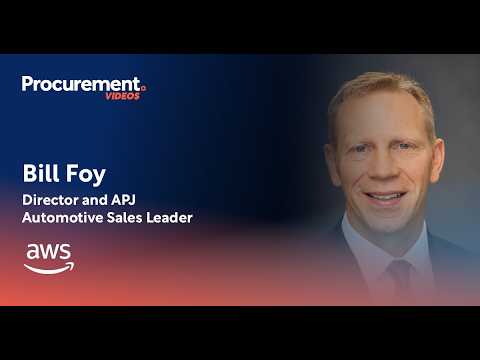
  • AWS Director Bill Foy on Using AI to Overcome Supply Chain Disruptions

    AWS Director Bill Foy on Using AI to Overcome Supply Chain Disruptions

    In a recent discussion, Bill Foy, Director and APJ Automotive Sales Leader at Amazon Web Services (AWS), highlighted the critical role of artificial intelligence in modernizing supply chains. According to Foy, 94% of companies have experienced supply chain disruptions, often due to legacy systems that lack real-time visibility.

    “Whether it’s a port strike, an earthquake, or a natural disaster, most companies don’t even know a problem exists until it’s downstream,” Foy explained. This fragmented data landscape poses a particular challenge for original equipment manufacturers (OEMs), who must stitch together information from disparate sources to maintain operations.

    AWS is addressing these issues by offering AI-driven solutions that provide end-to-end visibility and predictive analytics. By integrating machine learning models with existing enterprise systems, companies can detect disruptions early, optimize inventory, and automate decision-making. Foy emphasized that moving away from legacy infrastructure is not just an IT upgrade but a strategic imperative for resilience.

    “Modernizing with AI isn’t about replacing people—it’s about empowering them with data they can trust and act on in real time,” he added. As supply chains grow more complex, AWS’s focus on AI-powered modernization aims to reduce downtime and improve agility across industries, especially in automotive manufacturing.

  • AI and Digital Transformation Video Roundup: AWS, IBM, Toyota, and More

    AI and Digital Transformation Video Roundup: AWS, IBM, Toyota, and More

    Stay up to date with the latest insights on artificial intelligence, supply chain modernization, and digital transformation. This curated collection of videos features industry leaders from AWS, IBM, Deloitte, Toyota, Oracle, and other top organizations discussing how they leverage AI and data-driven strategies to drive innovation.

    • Bill Foy: How AWS is Modernising Supply Chains With AI – Learn how AWS applies AI to streamline logistics and inventory management.
    • Clay Sheriff: IBM Helps Toyota Reimagine Supply Chain – Explore IBM’s collaboration with Toyota to build a more resilient, AI-powered supply chain.
    • Deloitte’s Matt Fiorino on Modernising University IT – Deloitte shares approaches for transforming legacy university systems into agile digital platforms.
    • Ascentt’s Nilesh Vyas on Microtransformation at Toyota – A deep dive into incremental AI-driven changes that yield big results at Toyota.
    • Inside the University of Cincinnati’s Digital Transformation – See how the university is leveraging technology to enhance operations and student experience.
    • Toyota North America’s AI & Data-Driven Supply Chain Revamp – Toyota’s strategy for using AI and data analytics to optimize its North American supply chain.
    • Eaton’s Armand van Niekerk on Africa’s Digital Expansion – Eaton’s perspective on scaling digital and AI capabilities across African markets.
    • Lisa Gulker: How Oracle Helps Transform Healthcare Delivery – Oracle’s vision for AI and cloud solutions in modernizing healthcare workflows.

    More videos are available on the source page. Watch and learn from today’s leading digital transformation pioneers.

  • Kasi Cloud’s Johnson Agogbua on Building Hyperscale AI-Ready Data Centers Across Africa

    Kasi Cloud’s Johnson Agogbua on Building Hyperscale AI-Ready Data Centers Across Africa

    Johnson Agogbua, Co-Founder and CEO of Kasi Cloud, has spent over three decades building internet infrastructure—from early internet protocols at UUNET Technologies to optical networking at Movaz and connecting billions at Meta and Reliance Jio. Now, he is applying that expertise to address Africa’s most critical infrastructure gap: hyperscale, AI-ready data centers.

    Founded with Mark Adams (formerly Chief Strategy Officer at Equinix), Kasi Cloud emerged from a simple question: why not Africa? The company launched in early 2020 amid the pandemic, which ironically allowed for deep market research and site selection. It acquired 4.2 hectares in Lagos, secured backing from the Nigerian Sovereign Wealth Fund and seed funding from DH Capital, and broke ground by 2022.

    Kasi differentiates itself with an “unstoppable capacity” philosophy—designing for Africa’s digital needs a decade ahead. This includes refactoring power architecture all the way to the rack level and building redundant carrier-neutral colocation space. A key partnership with Eaton cut delivery times by 50% and reimagined power for the African context. “We are not going to build a second-rate data centre in Africa,” Agogbua emphasizes. “World-class belongs in Africa as well.”

    The company’s hyperscale-first approach is a direct answer to the continent’s growing demand for cloud and AI infrastructure, positioning Kasi as a critical player in Africa’s digital transformation.

  • Kasi Cloud CEO Johnson Agogbua on Building Hyperscale AI-Ready Data Centers in Africa

    Kasi Cloud CEO Johnson Agogbua on Building Hyperscale AI-Ready Data Centers in Africa

    Johnson Agogbua, co-founder and CEO of Kasi Cloud, is leveraging three decades of internet infrastructure expertise to bring hyperscale, AI-ready data centers to Africa. In an exclusive interview, Agogbua details how his experience at UUNET Technologies, Movaz (now ADVA), Meta, and Reliance Jio has shaped Kasi Cloud’s mission to close Africa’s digital infrastructure gap.

    Founded with Mark Adams, former Chief Strategy Officer at Equinix, Kasi Cloud emerged from the simple question: why not Africa? The company formally launched in early 2020, just as the pandemic hit. Rather than stalling progress, COVID-19 allowed Agogbua to conduct deep market research while grounded in Nigeria. Kasi acquired 4.2 hectares in Lagos, secured backing from the Nigerian Sovereign Wealth Fund and seed funding from DH Capital (now Citizens Bank), and broke ground in 2022.

    Kasi Cloud differentiates itself through what Agogbua calls “unstoppable capacity”—a hyperscale-first design that anticipates Africa’s digital demands a decade ahead. The company redesigned data center power architecture from utility to rack level, partnering with global power management firm Eaton to cut delivery timelines by 50%. Kasi also built redundant carrier-neutral colocation space, with one visiting network CEO noting it was larger than any existing data center in Lagos.

    “We didn’t set out to be a data center company alone,” Agogbua explains. “We set out to solve problems… We imagined a world where the population says, ‘We are truly digital.’” He emphasizes that Kasi will not use hand-me-down technology: “World-class belongs in Africa as well.”

    The interview underscores a pivotal moment for AI and cloud infrastructure on the continent, with Kasi Cloud positioned to address an urgent need for scalable, AI-ready digital platforms.

  • Schneider Electric’s CAIO on Scaling AI with Business-First Strategy and Critical Thinking

    Schneider Electric’s CAIO on Scaling AI with Business-First Strategy and Critical Thinking

    Philippe Rambach, Chief AI Officer at Schneider Electric, discusses how the company integrates artificial intelligence across its global operations while maintaining a pragmatic, business-first approach. In an interview with AI Magazine, Rambach outlines the principles guiding AI adoption in over 160 factories and 140 countries.

    Rather than chasing the latest technology trends, Schneider Electric evaluates AI use cases based on business value and technical feasibility. Every project passes through gate reviews that assess these factors, preventing what Rambach calls “pilot purgatory.” The company prioritizes solutions that can scale from the start, avoiding lab experiments that fail in production.

    The rise of agentic AI is another key topic. Schneider recently launched Sera, an AI agent that allows users to interact with environmental data using natural language. Rambach emphasizes that generative AI agents complement, not replace, classical AI methods like forecasting and anomaly detection. He warns against the common mistake of treating generative AI as a one-size-fits-all replacement.

    To prepare employees for AI adoption, Schneider has implemented a training program called “AI for All.” The curriculum emphasizes critical thinking, helping staff evaluate AI outputs rather than trusting them blindly. The company also hosts “promptathons” and maintains a prompt library to share best practices across teams.

    On the technical side, Rambach explains the decision between edge and cloud AI deployment. Factors include data sovereignty, cybersecurity, and latency—especially in high-speed manufacturing processes where millisecond delays matter. Schneider builds solutions that work in both environments.

    The interview also touches on the energy demands of large AI models. As a supplier to data centers, Schneider Electric uses AI to optimize power management in collaboration with partners like NVIDIA. Rambach views AI as both a contributor to and a solution for the energy density problem.

    Regulatory compliance under the EU AI Act is managed through a responsible AI team, and Schneider has published a public Trust Charter that excludes uses like facial recognition. Rambach notes that regulation has not slowed down innovation.

    Looking ahead, Rambach sees the CAIO role evolving from overseeing all AI initiatives to setting technical policy and supporting large-scale use cases. He warns against becoming a bottleneck and stresses the importance of leveraging existing transformation teams rather than creating new ones.

    The key takeaway: AI in heavy industry must serve real business needs, and human critical thinking remains indispensable. As Rambach puts it, “We should not forget everything we have learned in the last 2,000 years, just because there’s a new technique.”

  • AI Industry Leaders Share Insights on Strategy, Agents, and Transformation

    AI Industry Leaders Share Insights on Strategy, Agents, and Transformation

    Artificial intelligence continues to reshape industries, and a recent round of interviews with top AI executives reveals the key trends driving adoption. From infrastructure engineering to automotive manufacturing and energy management, leaders from Bentley Systems, Schneider Electric, Stellantis, and more shared their perspectives on how AI is being deployed responsibly and at scale.

    Julien Moutte, Bentley Systems

    Julien Moutte, CTO at Bentley Systems, discussed how AI agents are transforming infrastructure engineering. He emphasized that these tools augment engineers rather than replace them, enabling faster and more accurate design and analysis.

    Philippe Rambach, Schneider Electric

    Philippe Rambach, Chief AI Officer at Schneider Electric, highlighted the importance of critical thinking and a business-first approach when scaling AI across factories. He stressed that technology must align with operational goals to deliver real impact.

    Kaynaz Behdin, Stellantis

    Kaynaz Behdin, SVP of Digital, Data & AI at Stellantis, detailed how the automotive giant turns AI strategy into measurable business performance, focusing on data-driven decision-making across the enterprise.

    Johnson Agogbua, Kasi Cloud

    Johnson Agogbua, co-founder and CEO of Kasi Cloud, shared his vision for bringing hyperscale, AI-ready data centers to Africa, leveraging his three decades of experience building internet infrastructure.

    Emilio Tenuta, Ecolab

    Emilio Tenuta, SVP and Chief Sustainability Officer at Ecolab, discussed water resilience and AI-driven cooling, noting that data centers must rethink resource strategy to meet sustainability goals.

    Sunil Dadlani, Atlantic Health

    Sunil Dadlani, EVP at Atlantic Health, explained how putting human mission at the heart of AI innovation is redefining healthcare technology and improving patient outcomes.

    Moe Haidar, Nexthink

    Moe Haidar, Head of Agentic AI and Engineering at Nexthink, spoke about his passion for products and the breakneck speed of AI development, particularly in the agentic AI space.

    Ivana Bartoletti, Wipro

    Ivana Bartoletti, VP and Global Chief Privacy & AI Governance Officer at Wipro, detailed the foundational steps every organization must take to build trustworthy AI systems, emphasizing governance and ethics.

    Sasha Rubel, AWS

    Sasha Rubel, Head of AI Policy for EMEA at AWS, highlighted the urgent need for Europe to move from AI experimentation to large-scale transformation, addressing policy and innovation challenges.

    These interviews underscore a common theme: AI is not just about technology—it’s about strategy, governance, and human-centric implementation. As organizations across sectors embrace AI, the insights from these leaders offer a roadmap for responsible and effective adoption.