Tag: Digital Transformation

  • TCS and ABB Expand Partnership with AI-Driven Multi-Year Network Operations Deal

    TCS and ABB Expand Partnership with AI-Driven Multi-Year Network Operations Deal

    Tata Consultancy Services (TCS) and ABB have announced an expanded collaboration to transform ABB’s global network operations using AI. The multi-million, multi-year agreement marks the next phase of a 20-year partnership and will see TCS take on end-to-end network operations through an integrated network-as-a-service model.

    Under the deal, TCS will design, integrate, and run ABB’s global network ecosystem as a secure, modern, and AI-driven service. The core initiative is ABB’s Future Network Model programme, an enterprise-wide effort to replace fragmented network environments with a standardized, centrally managed digital infrastructure. TCS will orchestrate ABB’s multi-vendor environment and deploy a centralized control framework that includes service integration and management (SIAM), a global network operations center, advanced security capabilities, and modernized LAN, WAN, and software-defined WAN systems.

    “The Future Network Model represents an important milestone in reinforcing the digital foundation of ABB’s global operations,” said Alec Joannou, Group CIO at ABB. “Our association with TCS reflects a shared focus on delivery excellence, continuous enhancement, and building capabilities that can support our strategic priorities.”

    Anupam Singhal, President of Manufacturing at TCS, added: “With AI embedded into the network operations model, supported by secure digital infrastructure and our deep domain expertise, we are bringing our ‘infrastructure to intelligence’ approach to build a resilient, intelligent network backbone. This engagement will enable network systems that can sense, adapt, and improve continuously.”

    The expanded collaboration builds on two decades of joint transformational programmes, including consolidating multiple ERP systems into a unified SAP platform and accelerating cloud adoption. TCS expects the deal to improve user experience, enhance operational efficiency, strengthen security and compliance, and scale service delivery for ABB.

  • 5 Critical Business Trends CEOs Must Navigate to Thrive by 2030

    5 Critical Business Trends CEOs Must Navigate to Thrive by 2030

    Overview

    Agentic AI is projected to grow at a 43.6% CAGR through 2030, making automation, data governance, and AI-ready infrastructure critical for CEOs seeking long-term competitive advantage. About 98.6% of S&P 500 firms now publish ESG reports, while 56% tie executive pay to sustainability, showing ESG has become a core business priority. With over 60% of the global population expected in cities by 2030 and AI skills demand rising, CEOs must prioritize reskilling, supply chain resilience, and personalization.

    Business Trends 2030

    Automation and data governance now sit at the center of enterprise budgets. Analysts expect the agentic AI market to grow at nearly 43.6% a year through 2030. Banks, retailers, and logistics firms are among the earliest adopters of this shift. JPMorgan Chase has already put $18 billion behind technology, including agentic AI, trimming servicing costs by close to 30% along the way. Bigger players are also buying their way into specialized AI capability outright. ServiceNow’s $2.9 billion purchase of Moveworks is one example of that urgency. Sustainability, meanwhile, has stopped being a checkbox exercise for most large firms. Approximately 98.6% of S&P 500 companies publish ESG reports today, and 56% of CEOs now link executive pay to sustainability targets directly.

    Verified Trend Data at a Glance

    Cities are absorbing more of the world’s population every year, and this trend will not slow down soon. Over 60% of people worldwide will live in urban areas by 2030. This reshapes demand for housing, transit, and energy at a scale most planning teams have not fully modeled. Markets across Asia, Africa, and Latin America also keep outpacing mature economies, opening consumer bases many firms have barely touched.

    Future Business Strategies for CEOs

    Talent shortages remain one of the sharpest headaches CEOs face right now. Gaps in artificial intelligence, data science, and cybersecurity keep widening across nearly every industry. Data science roles alone have grown close to 34% in recent years, outpacing hiring in most adjacent fields. Firms slow to close these gaps will likely lose ground to rivals already running structured reskilling programs.

    A handful of priorities keep surfacing across boardroom conversations on long-term resilience. They span workforce planning, supply chains, and how companies engage customers day to day:

    • Workforce reskilling paired with flexible, hybrid work models
    • Supplier diversification to lower geopolitical exposure
    • Real-time data systems supporting customer personalization
    • Circular economy models replacing traditional linear production
    • Semiconductor and quantum partnerships reducing foreign dependency

    Personalization has quietly become a real growth lever rather than a marketing nicety. The global personalization software market should reach $5.16 billion by 2030. Retailers already put close to 59% of marketing budgets behind it, a sign of how much retention now depends on tailored experiences.

    How Can CEOs Prepare for Future Business Changes

    A confidence gap between CEOs and CIOs points to a deeper planning problem underneath. Technology spending by itself rarely guarantees returns worth the investment. Aligning leadership around shared data priorities offers a steadier path toward results that actually stick.

    What this Means for Enterprise Planning

    Firms with mature data systems report stronger returns on AI investment than most peers. This gap suggests readiness, not budget size, will decide who benefits most from AI adoption through 2030. Supply chains remain fragile for companies operating across several regions at once. CEOs are countering this by diversifying suppliers and watching political developments more closely than before. Digital procurement tools now give leaders earlier warning of disruptions, often before customers or shareholders notice anything at all.

    Leadership alignment matters just as much as the technology dollars behind it. Executives coordinating workforce planning, sustainability goals, and digital strategy together tend to outperform peers running each in isolation. Boards rewarding that coordination, rather than isolated wins, tend to see steadier results across multiple fiscal years.

    Final Words

    The road to 2030 will not reward companies chasing every trend without a clear plan behind it. It will reward those who sequence priorities carefully, matching investment to genuine need rather than industry noise. Sustainability, automation, and talent strategy need to move together, not compete for the same line item. CEOs who treat these trends as one connected roadmap will step into the next decade with real staying power. Firms that align leadership, invest early, and hold steady through short-term setbacks will likely define what enterprise success looks like well past 2030.

  • From One Hotel to Industry Leader: ITC Hotels’ Tech-Driven Hospitality Transformation

    From One Hotel to Industry Leader: ITC Hotels’ Tech-Driven Hospitality Transformation

    ITC Hotels has grown from a single luxury property into a technology-enabled hospitality powerhouse in India. The company’s journey illustrates a strategic blend of premium service, sustainability, and digital innovation that continues to redefine the guest experience.

    Luxury Expansion Across India

    Starting with one flagship hotel, ITC Hotels established a foundation of premium hospitality and then expanded into multiple cities. Today, its portfolio includes luxury accommodations, business hotels, and destination resorts that cater to a wide range of traveler preferences.

    Sustainability at the Core

    Environmental responsibility is a key pillar. ITC Hotels has integrated energy efficiency, water conservation, waste management, and green building practices into operations. The chain’s commitment to sustainability has set a benchmark in the Indian hospitality sector.

    Digital Transformation and Smart Guest Experiences

    Technology drives the modern guest journey. ITC Hotels has implemented digital check-ins, mobile interactions, automated operations, and seamless booking systems. AI-powered personalization, digital concierges, contactless solutions, and customized services enhance customer satisfaction at every touchpoint.

    Culinary Excellence

    Award-winning restaurants, regional cuisine, and luxury dining concepts have made ITC Hotels a destination for food lovers. Innovative culinary experiences attract both domestic and international guests, strengthening the brand’s reputation.

    Business Hospitality and Loyalty Programs

    The company has strengthened its corporate travel offerings with advanced meeting facilities, convention spaces, executive lounges, and technology-enabled event management. Loyalty programs provide exclusive benefits, personalized rewards, and seamless experiences that encourage repeat visits.

    Looking Ahead

    ITC Hotels continues to invest in technology, sustainability, luxury experiences, and expansion to maintain its leadership in India’s premium hospitality industry.

  • Top Cloud Computing Stocks to Watch in India

    Top Cloud Computing Stocks to Watch in India

    India’s cloud computing sector is rapidly expanding, driven by digital transformation across industries. Here are the leading Indian IT companies offering robust cloud services and solutions.

    Tata Consultancy Services (TCS) – A global IT leader providing enterprise cloud migration, infrastructure management, and digital transformation services across multiple industries and international markets.

    Infosys – Strong cloud capabilities through strategic partnerships, helping businesses modernize infrastructure, improve scalability, and accelerate digital transformation initiatives worldwide.

    HCLTech – A leading cloud services provider specializing in hybrid cloud, cybersecurity, application modernization, and enterprise digital transformation for global clients across sectors.

    Wipro – Expands cloud consulting and managed services through strategic collaborations with major cloud providers, supporting enterprises undergoing digital modernization successfully worldwide.

    Tech Mahindra – Offers cloud transformation, AI integration, and enterprise technology services, helping organizations improve efficiency, agility, and customer experience across industries globally.

    LTIMindtree – Delivers cloud migration, analytics, AI solutions, and managed services, enabling businesses to modernize operations and optimize digital infrastructure effectively worldwide.

    Mphasis – Focuses on cloud-native application development, migration services, automation, and financial technology solutions for enterprise customers across international markets.

    Persistent Systems – Provides cloud engineering, software development, AI integration, and digital platform services, supporting businesses embracing next-generation technology solutions globally.

    Coforge – Expands cloud transformation services across banking, insurance, aviation, and healthcare sectors, helping enterprises accelerate innovation and operational efficiency through technology.

  • How Leading Companies Are Redefining Leadership Development in 2026

    How Leading Companies Are Redefining Leadership Development in 2026

    The definition of corporate leadership is rapidly evolving. By 2026, organizations are no longer grooming executives simply to deliver quarterly results. Instead, they are cultivating leaders who can drive digital transformation, navigate uncertainty, harness artificial intelligence, and build resilient teams. As technology reshapes every industry, leadership development now revolves around lifelong learning, mentorship, global exposure, and data-driven decision-making.

    Companies that excel in this arena create work environments that encourage experimentation, collaboration, and strategic thinking. Below, we explore how nine of the world’s most influential organizations are setting the benchmark for next-generation leadership.

    Leadership Development Moves Beyond Traditional Training

    The era of classroom-only leadership training is over. Today’s best employers embed learning into daily operations through AI-powered learning platforms, executive coaching, cross-functional projects, and international assignments. Employees gain hands-on experience solving real business problems rather than working through theoretical case studies. Equally important is the renewed emphasis on soft skills: emotional intelligence, adaptability, communication, ethical judgment, and resilience are now as critical as technical expertise.

    Companies Setting the Benchmark

    Microsoft

    Microsoft continues to position itself as a leadership powerhouse by fostering an AI-first workplace culture. Employees have access to advanced learning resources, leadership coaching, and opportunities to collaborate with global teams. The company’s relentless focus on innovation allows individuals to deepen their technical skills while sharpening strategic thinking.

    Amazon

    Amazon’s famous Leadership Principles remain central to employee development. Team members are expected to take ownership, think long term, and make customer-centric decisions. Internal mobility and challenging business assignments help professionals gain the experience needed before stepping into senior leadership roles.

    Alphabet

    Alphabet encourages leadership growth by giving employees autonomy to innovate, experiment, and learn from outcomes. A collaborative culture sparks creative thinking and cross-functional teamwork, even when projects are complex. Exposure to cutting-edge tools and technologies prepares emerging leaders to tackle tough business problems with confidence.

    NVIDIA

    With the rapid rise of AI, NVIDIA has become a hub for technological innovation. Employees work in a fast-paced environment where agility, technical rigor, and continuous learning are paramount. This exposure helps future leaders build strategic decision-making skills in highly competitive markets.

    JPMorgan Chase

    As banking embraces AI and digital modernization, JPMorgan Chase has broadened its leadership development beyond traditional finance. Employees now lead technology-driven initiatives while reinforcing strong risk controls, innovative thinking, and customer-centric judgment.

    Deloitte

    Deloitte’s consulting ecosystem offers professionals ongoing exposure to diverse industries, clients, and real-world business challenges. This breadth sharpens strategic thinking, communication, and problem-solving abilities, making employees well-suited for leadership roles in a changing sector.

    PwC

    PwC invests heavily in structured learning tracks focusing on digital skills, sustainability, and responsible leadership. Employees receive mentoring, certifications, and team-based projects that build the ability to lead transformation efforts effectively.

    EY

    EY emphasizes inclusive leadership and future-ready capabilities. Employees participate in leadership academies, global mobility programs, and innovation-driven assignments, equipping them to manage diverse teams and navigate shifting business environments.

    IBM

    IBM remains a strong supporter of technology leaders. Combining decades of enterprise expertise with ongoing investment in AI, cloud computing, and digital skills, IBM enables employees to develop leadership strengths alongside technical excellence.

    Common Traits Behind Their Success

    Despite operating in different industries, these organizations share several characteristics: a commitment to continuous learning, mentorship, cross-functional collaboration, and real-world problem-solving. They prioritize emotional intelligence and adaptability as much as technical prowess.

    Why This Matters

    For professionals planning long-term careers, choosing the right employer is akin to choosing the right learning environment. Organizations that invest in leadership development offer smoother career progression, stronger mentoring relationships, and more opportunities to lead high-impact initiatives. As AI continues to reshape industries, leadership will depend less on hierarchy and more on adaptability, shared thinking, and a commitment to growth.

    By building these strengths now, companies are not only preparing their teams for the future—they are shaping the next generation of executives who will define the global business landscape.

  • HCLTech Lands $1.14B European Mega-Deal, Ending Three-Year Drought in Large Outsourcing Contracts

    HCLTech Lands $1.14B European Mega-Deal, Ending Three-Year Drought in Large Outsourcing Contracts

    HCLTech has secured a landmark $1.14 billion contract from a Europe-based Fortune Global 50 client, marking its first mega-deal in over three years. The agreement, announced on July 3, 2026, underscores a resurgence in large-scale outsourcing contracts driven by demand for AI-powered digital transformation.

    Deal Details and Revenue Impact

    The multi-year partnership will see HCLTech establish an AI-driven operating model to manage the client’s global digital workplace and enterprise networks. The contract guarantees annual revenue of approximately $228 million, contributing about 1.6% growth in FY27. HCLTech expects constant currency growth of 1% to 4% for the fiscal year, slightly down from the 2-5% range projected in April 2025.

    Strategic Significance

    This deal ends a three-year hiatus in mega-deals for HCLTech, the last being a $2.1 billion managed services contract with Verizon in August 2023. The company also acquired a 10% stake in Bengaluru-based AI startup Sarvam AI for about $150 million in June 2026, becoming the first Indian IT services firm to invest directly in an AI company.

    Phil Fersht, CEO of HFS Research, commented: “The deal also strengthens HCLTech’s credibility in large-scale competitive pursuits at a time when enterprises are consolidating strategic technology partners.”

    Context in Indian IT Sector

    The contract is the fourth mega-deal secured by Indian IT firms since January 2024, following Infosys’s $1.6 billion NHS deal, TCS’s $1 billion Telefónica UK contract, and TCS’s $2.5 billion Aviva deal. HCLTech ended fiscal 2025 with $14.66 billion in revenue, up 6% year-over-year, making it the fastest-growing among the top five Indian IT services companies.

    The deal is extendable by five years and reinforces India’s reputation as a global hub for enterprise technology services and AI-led innovation.

  • ABB Innovation Center Unites Over 1,000 Global Innovators to Accelerate Industrial AI

    ABB Innovation Center Unites Over 1,000 Global Innovators to Accelerate Industrial AI

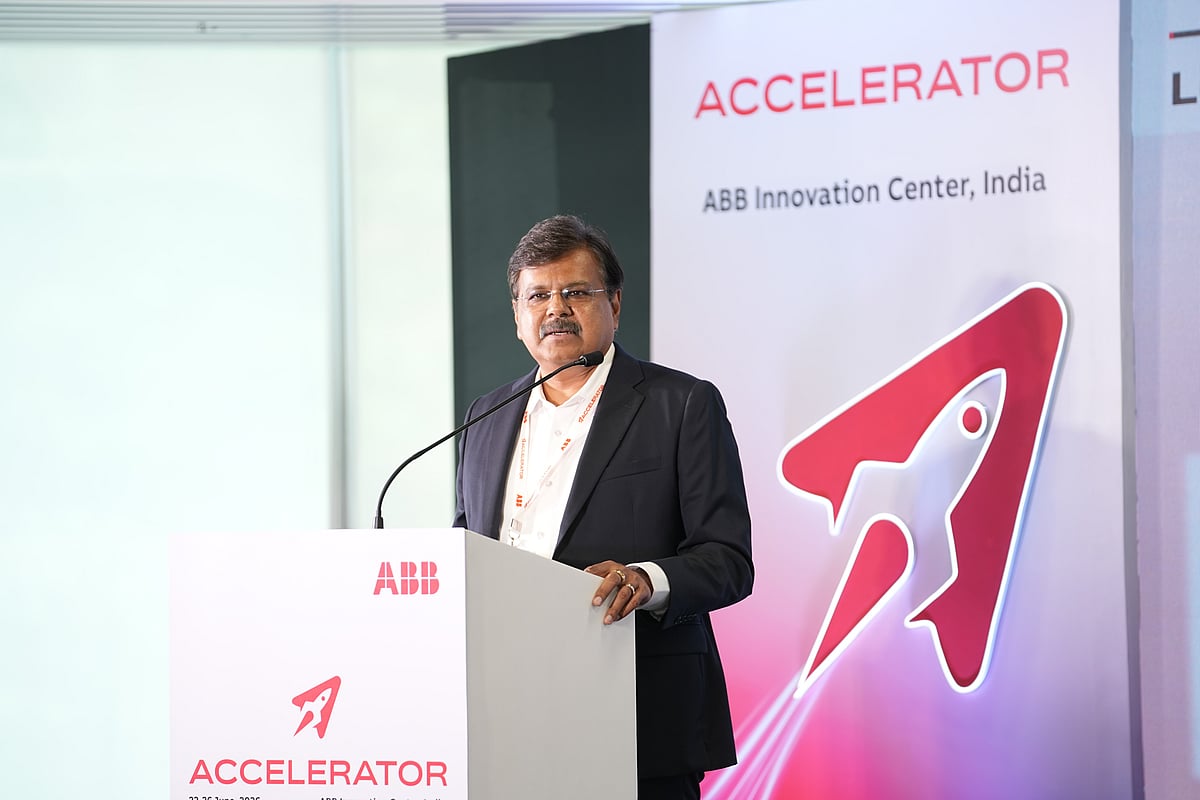
    ABB’s Innovation Center (AIC) in Bengaluru recently concluded the sixth edition of its ABB Accelerator program, a five-day event that brought together more than 1,000 innovators from 37 countries. The program aimed to harness frontier technologies and domain expertise to create real-world industrial AI solutions.

    The event featured over 25 distinguished thought leaders from industry and academia, 80 startups, and participation from more than 350 universities. This collaborative effort showcased how diverse expertise can accelerate product development and build a future-ready talent pipeline for industrial transformation.

    “ABB Accelerator is a global innovation program where ideas are transformed into impactful solutions for our customers. By combining cutting-edge R&D, domain and application engineering strength, digital and AI capabilities, we are helping customers unlock greater value while building capabilities that shape the future,” said GNV Subba Rao, Whole-time Director, ABB Innovation Center.

    Rajesh Ramachandran, Global Chief Digital Officer for Automation at ABB, added: “At ABB, we see the Accelerator as a powerful platform where innovation meets industrial impact. By bringing together ABB experts, partners, startups, academia and thought leaders, we are accelerating the development of scalable solutions that harness industrial AI to shape more autonomous, efficient, and sustainable operations.”

    Over the past two years, the ABB Accelerator program has engaged more than 2,000 participants and generated nearly 700 approved use cases across AI, automation, cloud, and digital technologies. The program has also earned global recognition, receiving three prestigious international awards in 5, including Gold and Bronze Stevie® Awards and the International Innovation Award.

    The ABB Innovation Center (AIC) is one of ABB’s largest global technology and engineering hubs, employing nearly 4,000 technologists in R&D, engineering, digital technologies, and global operations. It focuses on developing next-generation industrial technologies and supporting customers toward increasingly autonomous operations.

    About ABB: ABB is a global technology leader in electrification and automation, enabling a more sustainable and resource-efficient future. With over 140 years of history and around 110,000 employees worldwide, ABB’s shares are listed on the SIX Swiss Exchange and Nasdaq Stockholm. More at www.abb.com.

  • Banking on the Cloud: Tripatjeet Singh’s Blueprint for a Secure, Step-by-Step Migration

    Banking on the Cloud: Tripatjeet Singh’s Blueprint for a Secure, Step-by-Step Migration

    Financial services are increasingly turning to the cloud to improve customer service, streamline operations, and gain deeper insights into customer needs. However, this transition is far from straightforward. Most banks and financial institutions still rely on legacy systems built decades ago—systems that struggle to meet modern demands for robust security, continuous uptime, and rapid digital experiences. The challenge is compounded by strict regulations, where even minor missteps can erode customer trust. Many organizations that attempt a wholesale overhaul encounter delays, service disruptions, or outright failures.

    Instead, a phased approach is proving far more effective. The cloud should be seen not just as a technological upgrade, but as a means to build a more resilient and secure future. Tripatjeet Singh, a senior cloud engineer in the financial services industry, embodies this philosophy. His career has been marked by successfully transitioning legacy systems to modern cloud architectures, rising from junior engineer to a leadership role by delivering practical solutions to real-world problems.

    Singh does not advocate for rapid, risky transformations. Instead, he evaluates each application individually, determining the best migration strategy—whether a simple lift-and-shift, a partial modernization, or a complete rebuild—based on its criticality and technical complexity. He starts with lower-risk systems, allowing teams to build confidence and skills before tackling mission-critical workloads. This method has slashed environment setup times from weeks to just hours, enabling faster deployments while still adhering to strict industry regulations.

    But Singh’s contributions extend beyond migration itself. He places heavy emphasis on the infrastructure that ensures ongoing safe operation. He has designed multi-account cloud frameworks that embed security, monitoring, and deployment controls directly into the architecture. These reusable blueprints allow teams to move quickly without exceeding secure boundaries.

    A standout achievement is an AI-powered check fraud detection system he helped design. By analyzing transaction patterns and check images, the system flags suspicious activity with remarkable results: detection accuracy improved by 20 to 30 percent, while false positives dropped by 50 to 60 percent. This means security teams spend less time on dead ends and more time addressing genuine threats.

    His work also encompasses zero-trust security, automated certificate management, and centralized monitoring across hybrid environments—all raising the security bar for modern banking. Singh further contributes to the broader technical community by publishing research papers on topics like scalable logging for AI compliance and secure access using short-lived certificates.

    Singh’s view of the cloud is straightforward: it is more than technology—it is about building trust through robust security and governance, enabling banks to deliver the highly personalized service customers demand. His approach to supporting organizations with legacy systems, skill shortages, and data regulations is a mindset that consistently delivers results.

    Financial institutions that balance flexibility with strong security will lead the industry. With advances in AI analytics and zero-trust models, banks will be better equipped to offer personalized financial guidance. This will not happen by following trends, but through careful, researched steps. The foundation being laid today will be key to making digital finance more reliable, personal, and innovative for people worldwide.

  • Hybrid Cloud in Banking: A Strategic Move for Survival and Control

    Hybrid Cloud in Banking: A Strategic Move for Survival and Control

    The banking industry is undergoing one of its most significant technology transitions in decades. Faced with rising customer expectations, increasing regulatory scrutiny, cybersecurity threats, and pressure from fintech challengers, banks are rethinking how they manage data and digital services. At the center of this transformation is hybrid cloud—a model that combines private infrastructure with public cloud services.

    While banks typically consider hybrid cloud an innovation and resilience strategy, the real issue is whether the financial sector is implementing hybrid cloud to survive in a fast-changing environment or to gain better control over its processes.

    Pressure to Modernize

    Historical banking architecture has been designed for stability and not agility. Most financial organizations continue to rely on legacy architectures that are expensive to operate and hard to scale. Providing services to customers through digital banking requires upgrading the existing legacy systems.

    Furthermore, increased pressure from fintech companies that provide fast service and rely on relatively cheaper infrastructure has forced most banks to modernize their operations to remain competitive in the new digital banking environment.

    Hybrid cloud offers a good middle ground for banks. The traditional method of migrating all activities to a public cloud may not be necessary. Banks should be able to maintain some of their important activities in a private environment and innovate on cloud platforms.

    Why Public Cloud Alone Is Not Enough

    While most businesses can operate without such constraints, the banking industry is subject to stringent rules governing data protection, privacy, and resilience.

    The move towards public cloud poses serious issues, including data sovereignty concerns, dependence on third-party vendors, and operational risk. Many regulatory bodies in different countries still mandate that financial institutions be able to oversee their systems.

    In this regard, hybrid cloud provides banks with an opportunity to run mission-critical applications and sensitive data on the controlled side while utilizing the public cloud for data analysis, customer engagement tools, artificial intelligence, and software development.

    Control Has Become a Strategic Asset

    Control becomes the crux of the hybrid cloud argument. Financial institutions have recognized the importance of controlling data, application deployment, and security policies to gain an edge. Financial companies should have the opportunity to change their applications, be free from vendor lock-in, and adapt their approaches in response to regulations.

    A hybrid cloud approach allows for that. Rather than entrusting their applications to a single provider, banks will be able to distribute them across their private infrastructure and cloud solutions. Cloud strategy is no longer an IT decision, but a business one.

    AI Factor Speeds Up Adoption

    The increasing popularity of AI technology obliges banks to invest more in cloud infrastructure, as they need it to detect fraud, assess risk, deliver customer services, ensure compliance, and provide financial counseling.

    A lot of computing power and massive amounts of data are needed for that. The public cloud will allow scaling of necessary capabilities, while keeping financial information protected in the private cloud.

    Hybrid cloud offers a solution to these two needs at once. The need to find such a balance will only grow as banks start using AI more widely.

    Survival and Control Are No Longer Separate Goals

    The outdated idea of a trade-off between survival and control in banks no longer fits reality. In fact, these two things are strongly correlated. Survival in modern banking presupposes being fast, innovative, and resilient. Control is important for risk management, building up customer trust, and fulfilling regulatory requirements. The concept of hybrid cloud can address both needs.

    Public cloud or a purely private ecosystem would most likely not be the future of banking. Instead, the future will be associated with balanced ecosystems.

    For banks, hybrid cloud is not just a technical solution. This is the way to respond to a competitive environment in which innovation is necessary while maintaining control over the systems underpinning the financial sector.

  • Cloud Fundamentals and Entry-Level IT Certifications: Your Path to a Tech Career

    Cloud Fundamentals and Entry-Level IT Certifications: Your Path to a Tech Career

    Cloud computing has become the backbone of digital transformation across industries. From startups to large enterprises, organizations are adopting cloud-based solutions to improve scalability, reduce costs, and boost efficiency. As this shift accelerates, the demand for professionals who understand cloud fundamentals is growing rapidly.

    The Rise of Cloud Computing in Modern IT

    Cloud computing enables businesses to store data, run applications, and manage IT resources over the internet instead of relying on traditional on-premises infrastructure. This flexibility allows companies to scale quickly and respond to market changes efficiently. Key benefits include cost optimization (pay-as-you-go), enhanced reliability, and robust security features such as encryption and identity management.

    Why Cloud Skills Are Essential for IT Professionals

    As cloud adoption continues, IT professionals must develop cloud skills—it’s no longer optional. Understanding virtual machines, storage, networking, and cloud-based applications is critical for roles in system administration, support, development, and cybersecurity. Employers value cloud-literate candidates because they reduce onboarding time and contribute to digital transformation initiatives.

    The Importance of Entry-Level Certifications

    For those starting their IT careers, entry-level certifications provide a structured path to learn core concepts. They validate foundational knowledge in deployment models, service types, security basics, and pricing. Certifications like Microsoft’s AZ-900, designed for beginners, cover essential Azure services and cloud concepts. Resources such as Prep Away help candidates study effectively. These credentials improve employability by demonstrating commitment and foundational expertise.

    Understanding Cloud Fundamentals in Practice

    Cloud fundamentals include service models (IaaS, PaaS, SaaS), security (identity management, access control), and networking (virtual networks, data flow). Professionals must grasp these concepts to ensure secure, compliant cloud systems.

    Preparing for Cloud Certification Exams

    Preparation combines theoretical learning with hands-on practice. Working directly with cloud platforms helps candidates understand how services interact and builds problem-solving skills for real-world tasks.

    Career Opportunities in Cloud Computing

    Common entry-level roles include cloud support specialist, cloud administrator, and junior cloud engineer. With experience and advanced certifications, professionals can move into cloud architect, DevOps engineer, or cloud security specialist positions. Cloud skills are applicable across healthcare, finance, education, and technology, offering stability and growth.

    The Role of Continuous Learning in IT Careers

    Technology evolves rapidly, so continuous learning through certifications, online courses, hands-on practice, and professional communities is vital. Employers value lifelong learners who can adapt to new tools and challenges.

    Frequently Asked Questions

    What is cloud computing?

    Cloud computing delivers computing services—storage, servers, and applications—over the internet rather than using local infrastructure.

    Why are cloud fundamentals important?

    They provide the basic knowledge needed to work effectively with cloud technologies.

    What is the AZ-900 certification?

    An entry-level Microsoft Azure certification covering basic cloud concepts and Azure services.

    Are cloud skills good for beginners?

    Yes, they offer a strong foundation for IT careers and open opportunities in various roles.

    How can I prepare for cloud certification exams?

    Study core concepts, practice on cloud platforms, and use structured resources and study guides.

    Conclusion

    Cloud computing is a fundamental part of modern IT. Entry-level certifications provide an excellent starting point for aspiring professionals. By building cloud fundamentals, gaining practical experience, and earning certifications, individuals can position themselves for long-term success in a rapidly evolving field.