Tag: e-commerce

  • Amazon (AMZN) Stock Price Today: Key Market Data, Q2 2026 Results, and AI Investment Outlook

    Amazon (AMZN) Stock Price Today: Key Market Data, Q2 2026 Results, and AI Investment Outlook

    Amazon Stock Price and Market Data

    Amazon shares closed at USD 249.38 on September 24, 2026. The stock opened at USD 245.97 and reached a high of USD 250.43 during the session, with an intraday low of USD 245.60. Trading volume was approximately 32.7 million shares. The current 52-week range is USD 196.00 to USD 287.20, and Yahoo Finance lists Amazon’s market capitalization at about USD 2.69 trillion with a beta of 1.44.

    Recent Price Movement

    Amazon shares have trended lower during September. After closing at USD 266.43 on August 28, the stock ended August at USD 259.77. September opened with a decline to USD 254.92, falling further to USD 245.96 on September 16. The stock recovered to USD 258.45 on September 21 before closing at USD 249.27 on September 23. The latest close shows little change from that session. These moves occurred amid an active period for technology stocks, with AI spending, bond yields, oil prices, and market sentiment remaining key themes.

    Q2 2026 Financial Performance

    Amazon reported second-quarter results on July 30, 2026. Net sales reached USD 200.6 billion, up 20% year over year. Operating income rose 43% to USD 27.5 billion. North America sales increased 16% to USD 116.2 billion, while international sales rose 15% to USD 42.2 billion.

    AWS remained a major growth engine, with revenue reaching USD 42.2 billion, a 37% increase from the prior year. AWS operating income reached USD 16.6 billion. Advertising services also grew strongly, with revenue increasing 26% to USD 19.8 billion. Amazon reported USD 62.6 billion in net income, which included USD 53.4 billion of non-operating income, much of it from investments in Anthropic.

    AWS Growth and AI Infrastructure Spending

    AI infrastructure has become central to Amazon’s investment plans. The company raised its 2026 capital spending outlook to approximately USD 220 billion. AWS demand remains strong, with its contract backlog reaching USD 496 billion at the end of June. However, heavy spending is affecting free cash flow: Amazon’s trailing-twelve-month free cash flow was negative USD 7.6 billion, driven by increased purchases of property and equipment. The company is balancing infrastructure expansion with cash generation, and investors are watching whether AI spending will produce durable revenue growth.

    Advertising and AI Shopping

    Amazon’s advertising business has become an important revenue source, generating USD 19.8 billion in the second quarter. The company is also expanding AI-assisted shopping through Alexa for Shopping, which combines shopping assistance with product discovery and comparisons. Additionally, Amazon Ads recently announced an integration with ChatGPT, allowing selected U.S. advertisers to test conversational advertising. Amazon is also navigating the shift toward agentic commerce, where AI systems could increasingly influence product discovery and purchasing decisions.

    What Investors Are Watching Next

    Amazon’s next reported earnings are expected on October 29, 2026. The company has guided for third-quarter sales between USD 197 billion and USD 202 billion. Beyond revenue, AWS growth, advertising growth, operating margins, and capital spending will remain closely watched. Investors may also track Amazon’s free cash flow trajectory, as AI infrastructure requires heavy investment before its full returns appear. Broader factors such as technology valuations, bond yields, consumer spending, tariffs, energy costs, and currencies can also move the shares.

    This article provides market information and is not investment advice.

  • How AI Is Reshaping Festive Shopping in India: Smart Search, Virtual Try-Ons, and Personalized Picks

    How AI Is Reshaping Festive Shopping in India: Smart Search, Virtual Try-Ons, and Personalized Picks

    Artificial intelligence is increasingly becoming a staple in the festive shopping journey in India, as consumers turn to smart search, virtual try-ons, and recommendation tools to guide their purchase decisions. A recent study by InMobi Advertising reveals that 80% of festive shoppers are interested in having an AI shopping assistant, with specific features gaining varying levels of traction across generations.

    Smart Search Emerges as the Top AI Feature

    According to the study, smart search suggestions are the most popular AI feature, attracting interest from 89% of respondents. Virtual product try-ons and “complete-the-look” suggestions follow closely, each capturing 81% of interest. AI-based recommendations are preferred by 75% of shoppers, while 73% show interest in voice search or chat assistants.

    The findings are based on an on-device consumer study conducted between August 7 and 11, covering 1,110 consumers across Android and iOS devices, spanning Tier 1 to Tier 4 cities and various age groups. The survey indicates that shoppers are not just looking for help finding products but also in narrowing down their choices.

    Virtual Try-Ons Drive Engagement

    Virtual try-on tools are gaining significant attention. The report notes that 79% of consumers are interested in personalized smart TV advertising that includes virtual try-on features. A case in point is fashion brand The Bear House, which reported that its AI-powered virtual try-on experience reduced website bounce rates by 50%, boosted add-to-carts by 2.5 times, and increased overall conversions by fivefold.

    Millennials vs. Gen Z: Divergent Interests in AI Recommendations

    When it comes to AI-based recommendations, generational differences become apparent. 82% of Millennials expressed interest in AI recommendations, compared to 71% of Gen Z. However, both groups show strong enthusiasm for smart search, with 90% of Millennials and 88% of Gen Z indicating they would use such suggestions.

    Interestingly, traditional shopping triggers remain influential across both demographics. Limited-time offers sway 66% of Millennials and 66% of Gen Z, while short-video ads engage 66% and 65%, respectively.

    Festive Shopping Moves Across Screens

    AI is just one component of a broader shift in how Indians shop during the festive season. The study reveals that 73% of shoppers make their final purchases online, with 58% researching and buying online, and another 15% researching in stores before purchasing online. Online reviews play a crucial role, with 75% consulting them before buying, while 53% rely on search engines and 47% on social or influencer content.

    For brands, the shopping path is becoming increasingly complex. Consumers may discover a product on social media, compare it through search, use an AI tool to evaluate it, and finally purchase online. This festive season, AI is becoming an integral step in that journey, rather than a standalone technology experience.

  • Amazon’s $309.5 Million Refund Settlement: Eligibility, Deadlines, and Steps to Claim

    Amazon’s $309.5 Million Refund Settlement: Eligibility, Deadlines, and Steps to Claim

    Amazon has proposed a $309.5 million settlement to resolve claims that some customers did not receive accurate, timely, or complete refunds for returned physical products. The proposed class action, In re: Amazon Return Policy Litigation, is pending in Washington federal court. Amazon denies any wrongdoing, and the court has not found any legal violation or misconduct.

    What Is the Amazon Refund Settlement About?

    The lawsuit focuses on refunds that were allegedly missing, delayed, incorrect, or later reversed after customers returned products through Amazon.com. According to settlement materials, an internal review by Amazon in 2025 identified a limited group of unresolved refund cases. Some refunds failed during payment processing, while others involved issues with return verification.

    Amazon says it began issuing some affected refunds separately during 2025. The company has also agreed to make reasonable efforts to issue additional payments outside the settlement fund.

    Who Is Covered by the Settlement?

    The settlement covers U.S. customers who returned physical products through Amazon.com between September 5, 2017, and February 12, 2026. To qualify, customers must meet all of these conditions:

    • Purchased a physical product through Amazon.com
    • Initiated a return or refund request for that product
    • Amazon’s records show the returned product reached the United States during the covered period
    • The refund remained unpaid, was late or incorrect, or was later charged back after payment

    Subclass A and Subclass B

    The settlement divides eligible customers into two groups. Subclass A includes qualifying customers whose information is already in Amazon’s records. These customers will receive payments automatically if the court grants final approval, but they must visit the settlement website within 105 days to select a payment method.

    Subclass B covers eligible customers who need to submit a claim form to receive payment. The claim deadline is December 1, 2026. The same deadline applies to customers who wish to exclude themselves from the settlement or submit objections.

    Court Approval and Key Dates

    The court granted preliminary approval on August 18, 2026. A final approval hearing is scheduled for March 16, 2027, at 10 a.m. Pacific Time in Seattle. Payments will begin only after the court approves the settlement.

    How Much Will Eligible Customers Receive?

    The $309.5 million fund does not guarantee identical payments for every eligible customer. Distribution will follow the court-approved settlement plan after valid claims and approved expenses are accounted for. The fund also covers administration costs, attorney fees, and any approved incentive awards.

    How to File a Claim

    Eligible customers can check claim instructions and get the latest updates on the official settlement website, ReturnSettlement.com. The site includes court documents, deadlines, and additional information about the Amazon refund settlement.

    Amazon has stated that the settlement is not an admission of liability, and the court has not concluded that Amazon violated consumer protection laws. Customers with questions are encouraged to review the official settlement website and act before the December 1, 2026, deadline.

  • From Handlooms to High-Tech: The Digital Revolution Reshaping Textile Manufacturing

    From Handlooms to High-Tech: The Digital Revolution Reshaping Textile Manufacturing

    When most people think of technology, images of artificial intelligence, smartphones, and self-driving cars come to mind. Yet some of the most transformative technological breakthroughs are happening in industries with centuries-old roots. Textile and garment manufacturing, one of humanity’s oldest crafts, is undergoing a profound digital transformation. Computer-aided design (CAD), robotic automation, and advanced materials science are converging to bridge the gap between traditional craftsmanship and cutting-edge innovation, reshaping the global textile industry for the better.

    The Rise of Advanced Material Science

    Engineered fabrics represent a key frontier in modern textile manufacturing. By designing textiles at the molecular level, manufacturers can now produce “smart” fabrics capable of opening and closing air vents, changing color, adjusting insulation in cold weather, and repelling spills and stains in different environments. In formal wear, the trend leans toward lighter, more comfortable garments. Modern microfiber and high-performance synthetic fibers offer the structure of traditional fabrics while providing superior comfort and durability—lightweight yet strong enough for daily wear.

    Digitization Through CAD and 3D Modeling

    Creating clothing involves extensive pattern design and garment construction. High-end CAD software and 3D modeling now allow designers to create virtual prototypes before cutting a single piece of fabric. Special algorithms optimize fabric usage, significantly reducing waste and making textile manufacturing more sustainable. Digitization has also transformed labor-intensive hand-embroidery: computer-controlled embroidery machines can precisely replicate intricate vector-based patterns that once required hundreds of hours of manual work.

    Preserving Tradition with Modern Machinery

    The fusion of past and present is especially visible in highly specialized garments for weddings and formal occasions. Religious vestments, such as the chasuble—traditionally made using historical patterns, seasonal colors, and embroidered symbols—can now be produced with advanced digital looms, spectrophotometers for precise color matching, and laser-guided cutting machines. These technologies ensure that garments made from the finest materials remain colorfast, resist fraying, and retain their shape for decades.

    AI and the Future of Niche E-Commerce

    Advanced demand-prediction algorithms now enable better control of automated production facilities that operate around the clock. Manufacturers can forecast demand for various colors and styles of traditional clothing across seasons, including historical models. Augmented reality (AR) technology allows customers to visualize bespoke tailored clothing online before purchase, making custom garments more accessible than ever.

    Yet the push toward technology does not mean abandoning history. The textile industry boasts a rich heritage of styles and techniques. By combining cutting-edge tools with traditional garment-making, we can preserve the styles of the past for future generations to enjoy.

  • YouTube Shopping Bolsters Indian Merchant Ecosystem with New Partners and AI-Powered Features as Creator Payouts Surge 160%

    YouTube Shopping Bolsters Indian Merchant Ecosystem with New Partners and AI-Powered Features as Creator Payouts Surge 160%

    YouTube has announced a major expansion of its Shopping affiliate program in India, adding Amazon, AJIO, Meesho, Snapdeal, and Tata CLiQ as new retail partners. This move creates what the company calls India’s most comprehensive digital storefront, bringing together value marketplaces, horizontal retailers, and premium brands on a single platform. The expansion builds on existing partnerships with Flipkart, Myntra, Nykaa, Purplle, Shopsy, and Tira.

    According to YouTube internal data, over 450 million logged-in users in India search for shopping-related content, and shopping-related watch time has increased by 55% year-over-year. The platform’s affiliate program has also seen remarkable growth: average creator payouts in India surged more than 160% year-over-year from Q1 2025 to Q1 2026, outpacing the global average of 100%. More than 50% of eligible Indian creators are now enrolled in the program, a 200% increase year-over-year, and they have tagged over 19 million videos.

    Gunjan Soni, Managing Director – India, YouTube, said, “We’ve crossed an incredible milestone where trusted creator voices, a comprehensive retail catalog, and AI meet at a massive scale. With this expansion in retail partners we are meeting the 450 million+ Indians searching for products on YouTube with India’s most comprehensive digital storefront. Our creators are seeing life-changing revenue, and our merchant partners and brands are seeing measurable impact.”

    Partners echoed the sentiment. Nidhi Thakkar, Head of Social Commerce – Emerging Countries at Amazon, highlighted the seamless journey from creator recommendation to purchase. Arpan Biswas of Reliance AJIO emphasized the convergence of content and commerce for fashion discovery. Nikita Dawda of Meesho noted that creators can double their earnings through the partnership. Achint Setia of Snapdeal pointed to seamless discovery for GenZ shoppers, while Gopal Asthana of Tata CLiQ stressed frictionless integration with premium fashion. Prakash Subramanian of Tira reported 2x creator engagement, and Aditya Mujumdar of Purplle shared that creator-tagged videos have driven nearly a quarter of a million orders, with top earners speaking in regional languages.

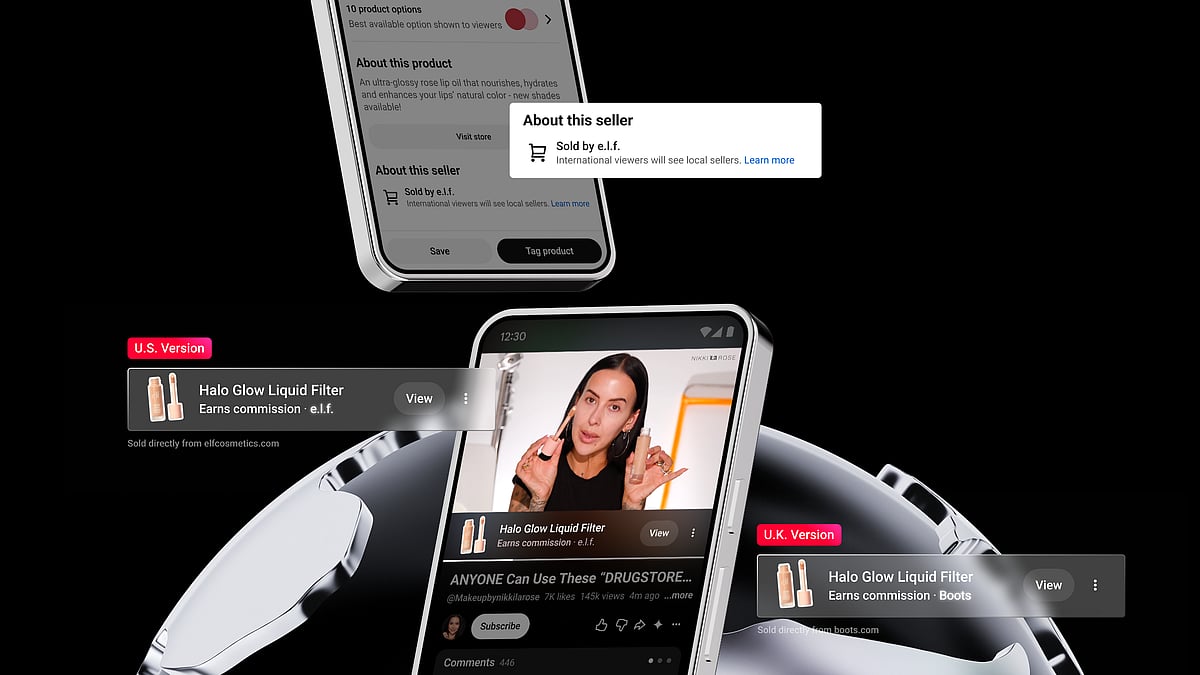
    Alongside the partner expansion, YouTube unveiled several new AI-powered features to enhance the shopping experience. The Ask YouTube capability now allows viewers to ask product-related questions directly on the watch page, with follow-up queries and voice commands on TV. Dynamic Global Retail Tags automatically adapt tagged products to domestic deals and local currencies based on the viewer’s location, enabling Indian creators to earn commissions from international audiences seamlessly.

    For brands and creators, YouTube introduced the Affiliate Partnerships Boost, which lets brands amplify organic creator content through paid campaigns. Nykaa will be the first to leverage this feature for festive sales. The upcoming Ask Studio for Brand Partnerships uses generative AI inside YouTube Studio to help creators pitch campaigns and respond to brand briefs quickly. Creator Partnerships Boost simplifies getting channels in front of top advertisers, while Dynamic Brand Segments allow creators to insert promotional segments into up to 20 long-form videos simultaneously. Exclusive Affiliate Campaigns, rolling out in India next year, will invite creators into high-priority campaigns with bonus incentives and higher commission rates.

    Globally, YouTube’s shopping-related watch time surpassed 40 billion hours in 2025, and gross merchandise value grew 13 times over two years. The new tools and partnerships aim to sustain this momentum, particularly in India where the creator economy is thriving.

  • Why A/B Testing Fails on Marketplaces—and How Trigger Analysis Reveals Hidden Product Wins

    Why A/B Testing Fails on Marketplaces—and How Trigger Analysis Reveals Hidden Product Wins

    Walk into any digital product organization today, and you’ll witness the same ritual. Before a feature ships, it undergoes an A/B test. Half the users see the change, half don’t, and the difference decides its fate. This practice has become so embedded that experiment readouts function as institutional truth: if the topline metric didn’t move, the idea didn’t work, and the team moves on.

    But a growing body of practitioners argues that this reflex is quietly wrong a significant share of the time—and two-sided digital marketplaces are the most exposed of all. The reason is structural: on a marketplace, no two customers see the same page. Assortment is personalized, inventory is supplier-dependent, merchandising is dynamic, and much of the interface renders conditionally. In that environment, being placed in a test group tells you almost nothing about whether a customer ever encountered the thing being tested.

    Why Good Product Ideas Look Like Nothing

    Most A/B testing platforms enroll users the moment a session begins, and that enrollment becomes the criteria for every analysis that follows. But a large share of modern features are conditional—such as a module below the fold, a component gated behind an interaction, or a recommendation block that surfaces only for certain inventory or certain users. Practitioners call this dilution, and the scale is not marginal: for conditionally rendered features, trigger rates commonly fall between 20% and 40% reported by major online marketplaces, meaning most of the “treated” population never experienced the treatment at all.

    This dilution effect not only causes digital technology companies to ship bad features but also to kill good ones. Marketplaces absorb this worse than most. Unlike many simpler digital products, marketplaces combine personalization, dynamic inventory, supplier availability, and context-dependent user journeys. Two customers assigned to the same experiment may encounter very different experiences. As personalization becomes more sophisticated, the gap between experiment assignment and actual exposure can widen.

    Well Understood in Theory, Rare in Practice

    While the scientific theory behind the remedy is well known, most organizations struggle to adopt it due to engineering challenges. Online e-commerce marketplaces face the hardest version of the problem. They must account for exposure across search, browse, product pages, recommendations, and checkout flows, often while eligibility changes throughout the experiment.

    This is where the work of Shashank Agarwal, a technical lead on the experimentation platform team at Wayfair, stands out. He devised a more practical way to solve the problem at scale. Rather than rewiring how users are assigned to experiments—the industry standard approach that adds significant engineering complexity—he built a post-processing layer over telemetry the platform already collects. Assignment stays untouched. The full dataset is preserved. And the analysis runs after an experiment concludes, when exposure can be established from what customers actually did.

    In a Wayfair engineering post titled “When Assigned Isn’t Exposed: How Wayfair Uses Trigger Analysis to Recover Hidden Test Signals,” Agarwal sets out the architecture in full, along with the safeguards that make it trustworthy at scale.

    Impact on the Industry

    Agarwal’s work has not only helped Wayfair save millions of dollars but also provided a path for other digital marketplaces to recover experimental signal without the engineering complexity that has kept a well-understood technique out of production at many companies. Because his design sits in the data layer rather than the assignment path, it is stack agnostic. Any online marketplace with exposure telemetry and a similar dilution problem can follow the same pattern, guardrails included.

    For marketplaces operating personalized and conditionally rendered experiences, it offers a way to recover experiment signal while preserving the statistical safeguards of the original randomized test. By publishing the architecture, implementation considerations, and statistical guardrails behind the system, Agarwal has made this capability accessible to practitioners confronting the same problem across e-commerce and other digital products.

    Where This Goes

    Every trend in digital product development—more personalization, more conditional rendering, more progressive disclosure—widens the gap between who is assigned to an experiment and who actually sees it. The assumption underneath most experimentation programs is eroding a little further every quarter.

    Companies that keep reading experiments at the topline will keep discarding their best ideas without ever knowing they did. The ones that treat exposure as a first-class part of measurement will be working from a sharper picture of reality—using the same data, the same platform, and the same tests they are already running.

  • Tata CLiQ Luxury App Review: Features, Benefits, and Key Considerations

    Tata CLiQ Luxury App Review: Features, Benefits, and Key Considerations

    Editorial rating: 4/5

    Tata CLiQ Luxury is an online shopping platform designed for premium and designer products from India and around the world. Available through a mobile app and website, it offers fashion, beauty, watches, jewelry, home decor, gourmet foods, and lifestyle items in one curated marketplace. This review looks at its features, benefits, and limitations to help shoppers decide whether it is the right luxury shopping destination.

    General Information

    • Founded in: 2016
    • Platform support: Web, Android, iOS, iPhone, iPad
    • Download: Available from official app stores and the Tata CLiQ Luxury website

    Main Features of Tata CLiQ Luxury

    • Fashion, beauty, watches, jewelry, gourmet, decor, and lifestyle products
    • Luxury and premium brands from India and abroad
    • Curated collections and newly launched products
    • Wishlist for saving products for future purchases
    • Shopping assistance for high-value items such as watches and jewelry
    • Payment options including UPI, cards, net banking, CLiQ Cash, NeuCoins, and cash on delivery

    Benefits of Using the App

    • Access to multiple luxury labels without visiting separate boutiques
    • Discovery through curated collections alongside traditional categories
    • Easier high-value purchases with guided shopping support
    • Premium delivery and unboxing experience in selected locations
    • Authenticity backed by direct brand sourcing or licensed Indian sellers with brand warranty

    Challenges to Consider

    • Premium pricing means it is not ideal for budget-focused shoppers
    • Luxe delivery is available only in specific regions
    • Product availability and delivery services vary by brand and location
    • Delivery, returns, and refunds may be inconsistent depending on the customer’s experience
    • Some users have reported glitches in the wishlist and navigation features

    Subscription and Support

    Tata CLiQ Luxury does not require a subscription for regular shopping. Users can browse products, save items to a wishlist, place orders, choose payment methods, and track orders through the app. Return and refund policies depend on the product and applicable policy terms. Customer support is available for orders, payments, returns, refunds, and delivery issues. The platform also provides help resources for cancellations, shipping, offers, and CLiQ Cash.

    Conclusion

    Tata CLiQ Luxury is a strong choice for shoppers looking for authentic premium goods from established luxury brands. Its curated collections, wishlist, personalized shopping support, flexible payment options, and premium delivery experience make buying high-end products more convenient. However, the platform is best suited to premium shoppers who value authenticity and service over price, and some services remain limited to select regions.

  • iPhone 18 Pro Hits Quick Commerce: Blinkit, Zepto, and Instamart Now Deliver Apple’s Latest Flagship in Minutes

    iPhone 18 Pro Hits Quick Commerce: Blinkit, Zepto, and Instamart Now Deliver Apple’s Latest Flagship in Minutes

    Apple’s iPhone 18 Pro and iPhone 18 Pro Max are now available on quick-commerce platforms in India, giving buyers a faster alternative to queuing at physical stores. Zepto, Blinkit, and Swiggy Instamart have started offering the premium handsets in select cities, marking a significant shift for the quick-commerce sector as it moves from daily essentials to high-end electronics.

    The iPhone 18 Pro starts at ₹1,64,900 for the 256GB model, while the Pro Max begins at ₹1,79,900 for the same storage. At the top end, the 2TB versions cost ₹3,14,900 and ₹3,29,900 respectively. The phones went on sale in India on September 18.

    Zepto is delivering the new iPhones in Delhi NCR, Mumbai, Bengaluru, and Chennai. Blinkit offers coverage across Delhi NCR, Mumbai, Bengaluru, Hyderabad, Chennai, Pune, Kolkata, Ahmedabad, Jaipur, and Lucknow. Swiggy Instamart also stocks the Pro models, with availability and delivery times varying by location. The platforms are offering storage variants from 256GB to 2TB, subject to stock.

    The partnership underscores how quick-commerce apps—originally built for groceries and household items—are increasingly catering to high-value purchases. Instead of waiting in line at an Apple Store, customers in supported areas can now order the latest iPhone from their phones and receive it within minutes.

    Quick commerce is unlikely to make traditional retail obsolete overnight. Apple Stores and authorized retailers still provide product demos, trade-in offers, and customer support. However, the iPhone 18 Pro launch highlights a new sales channel for premium brands during peak demand periods. Retailers leveraging quick-commerce platforms can reach customers who prioritize speed over the in-store experience.

    This move also reflects a broader trend: as consumers grow accustomed to instant gratification, even expensive gadgets are entering the quick-commerce ecosystem. The iPhone 18 Pro’s availability on Blinkit, Zepto, and Instamart could pave the way for more luxury electronics to follow suit.

  • ByteDance Hits $120B in First-Half 2026 Revenue as AI Spending Eats Into Profits

    ByteDance Hits $120B in First-Half 2026 Revenue as AI Spending Eats Into Profits

    ByteDance, the parent company of TikTok, reported first-half 2026 revenue of $120 billion, representing a year-over-year increase of more than 30%, according to sources familiar with the company’s internal financials. The rapid growth was driven by stronger international advertising, livestreaming, and TikTok commerce, but heavy investment in artificial intelligence reduced net profit to around $20 billion during the period.

    The Beijing-based technology giant’s revenue acceleration comes as uncertainty around TikTok’s US operations eased following a January joint venture that resolved a long-running regulatory dispute. The White House subsequently lifted a 2023 restriction on TikTok’s use on federal government devices, providing further support for the platform’s commercial momentum.

    ByteDance’s full-year 2025 revenue was approximately $200 billion, reflecting 29% annual growth. The first-half 2026 figures show the company’s growth pace has slightly accelerated. However, net profit for all of 2025 reached $42 billion, making the latest decline more pronounced as AI spending expands.

    The company is investing heavily across its global operations in AI model families, computing capacity, and infrastructure to compete with US and Chinese technology firms. ByteDance operates several proprietary AI models and has developed Seedance for video generation. It continues to integrate AI capabilities across TikTok and its Chinese counterpart Douyin for content recommendations, creation, and commerce.

    Financing activity underscores the scale of the AI push. Earlier this month, nearly 30 global banks agreed to provide ByteDance with a $29.6 billion loan. Sources indicate the financing supports general corporate needs, including AI research and development.

    International advertising and e-commerce were key contributors to revenue gains, while AI research and infrastructure spending weighed on profitability during the period. ByteDance has not publicly confirmed the reported first-half figures, but the latest performance paints a picture of a company funding an expensive AI expansion while maintaining strong core business growth.

  • AI Shopping Assistants Transform Product Comparison: How They Work and Why Shoppers Love Them

    AI Shopping Assistants Transform Product Comparison: How They Work and Why Shoppers Love Them

    Online shopping used to mean opening multiple browser tabs, manually comparing spec sheets, and scrolling through hundreds of reviews. That process is changing fast. AI shopping assistants now handle most of the legwork, letting shoppers describe what they want in plain language and receive a shortlist within seconds. From tools built into ChatGPT and Gemini to dedicated retail assistants like Amazon’s Rufus, this shift is reshaping how people discover and compare products online.

    How AI Shopping Assistants Compare Products

    An AI shopping assistant combines natural language understanding with access to large, real-time product databases. Instead of typing a short keyword like “running shoes,” a shopper can describe something specific, such as “trail shoes under $150 for wide feet that handle wet roads well.” The assistant then reads through structured product data, price listings, and verified reviews to match those exact requirements. According to McKinsey’s ConsumerWise survey, 62 percent of consumers have already used AI to compare brands, models, prices, or reviews while shopping — showing this behavior has moved well past early adopters.

    Review Synthesis Makes Comparison Faster

    One of the most useful features is the ability to turn thousands of scattered reviews into a short, readable summary. Rather than reading through pages of comments, a shopper gets a quick breakdown of common pros and cons across verified buyers. This addresses a real problem: fake or misleading reviews have long made comparison shopping harder than it should be. By pulling only from verified purchase data, assistants give a more honest picture of how a product actually performs, cutting down the guesswork that used to come with trusting online reviews blindly.

    From Browsing to Describing

    Traditional shopping relied on filters, categories, and keyword searches, putting the burden of comparison entirely on the shopper. AI assistants flip that model. A person can simply describe their situation — like needing a warm coat for a cold winter — and the assistant narrows down options based on material, price, and delivery timelines. Adobe Analytics reported that AI-referred traffic to retail sites grew 138 percent year over year as of May 2026, a clear sign that more shoppers are starting their search inside a chat window rather than a search bar.

    Why This Shift Benefits Everyday Shoppers

    The biggest advantage is time saved and better decision confidence. Bain reported that 30 to 45 percent of U.S. consumers now use generative AI for product research and comparison, and Adobe’s own consumer survey found that 85 percent of people who tried AI shopping assistants said it improved their experience. Beyond convenience, these tools reduce the anxiety of picking the wrong product, since the comparison work now happens instantly instead of over multiple browsing sessions spread across days.

    What This Means for Brands and Retailers

    This shift also changes what brands need to focus on. Assistants can only recommend products they can clearly understand, which means clean, structured product data matters more than ever. A brand with strong pricing and good reviews can still lose visibility if its product information is not easy for an AI system to read and compare. This has pushed many e-commerce brands to rework how they present specifications, pricing, and reviews, since ranking well in traditional search no longer guarantees a spot in an AI-generated shortlist.

    AI shopping assistants have turned product comparison from a time-consuming chore into a quick conversation, letting shoppers describe what they need and get a trustworthy shortlist within seconds. As adoption grows across major platforms, this shift is fast becoming the new starting point for how people shop online.

    Frequently Asked Questions

    How do AI shopping assistants compare products?

    They read structured product data, pricing information, and verified reviews, then match all of it against a shopper’s specific requirements, like budget or size, to generate a shortlist.

    Are AI shopping assistant recommendations trustworthy?

    Most reputable assistants pull only from verified purchase data and real-time pricing, which makes recommendations more reliable than manually sifting through unverified reviews. Still, it helps to double-check final details before buying.

    Which platforms currently offer AI shopping assistants?

    ChatGPT Shopping, Google Gemini, Perplexity, and Amazon Rufus are among the most widely used AI shopping assistants right now, each pulling from slightly different data sources.

    Do AI shopping assistants cost anything to use?

    Most consumer-facing assistants, like those built into ChatGPT or Amazon, are free to use for shoppers. Businesses that build dedicated shopping assistants for their own stores may pay for the underlying technology.

    Can AI shopping assistants complete a purchase?

    Some advanced assistants now support this, handling checkout and even comparing shipping across multiple retailers. However, most assistants today are still focused mainly on research and comparison rather than completing transactions.