Tag: e-commerce

  • Why Real-Time Order Tracking Is the Key to E-Commerce Trust and Repeat Purchases

    Why Real-Time Order Tracking Is the Key to E-Commerce Trust and Repeat Purchases

    For anyone who has ever felt a sense of satisfaction while tracking a purchase online, the latest internet trend among Gen Z in Korea might feel oddly familiar. Known as dopamine sites, these platforms mimic food delivery apps and shopping websites, allowing users to place orders and track them in real time—without spending any money or receiving a product. The appeal lies in the same psychological gratification that comes from real online shopping, especially the anticipation triggered by live tracking.

    According to Dr. Gabrielle Schreyer-Hoffman, a licensed psychologist in New York, these sites tap into the emotions people get from genuine shopping experiences. The ability to track fake purchases in real time creates a powerful sense of anticipation and relief, which studies show can lead to customer retention. Here’s how real-time tracking can redefine the shopping experience and drive repeat purchases.

    Eliminates Purchase Anxiety

    Retail sites without tracking features can create a stressful experience because they conflict with the human need for predictability and control. Without order or delivery tracking, customers may question whether the transaction went through or fear they have been scammed. They also worry about lost, stolen, or misdelivered packages. This uncertainty can deter people from making online purchases.

    Integrating real-time tracking into e-commerce systems reassures customers and helps businesses know exactly where each order is. For example, the 3PL company Kase partnered with Amazon shipping to provide sellers with 24/7 warehouse-to-door tracking. On the customer side, platforms like Amazon immediately send an order confirmation and estimated delivery date after purchase. A survey found that frequent tracking updates reduce purchase anxiety by 38%, proving that real-time tracking is a valuable tool for improving the online retail experience.

    Creates Convenience

    Many customers schedule shipments for times when they are home to deter porch thieves—a strategy that can be frustrating and disruptive. A recent poll shows that 46% of customers plan their day around package deliveries, which can keep them housebound and hinder productivity. Real-time tracking with SMS or push notifications can alleviate this by keeping customers informed without needing to manually check or wait at home.

    Proactive updates on shipping and delivery dates reduce “Where is my order?” complaints, lower anxiety, and build shopper trust. Businesses should send notifications when customers are most likely to engage, using SMS for time-sensitive updates. By providing consistent tracking and visibility, companies can build goodwill and a positive reputation in a competitive e-commerce market.

  • Meesho Denies GST Allegations, States No SEBI Notice Received

    Meesho Denies GST Allegations, States No SEBI Notice Received

    Meesho has denied allegations concerning its Goods and Services Tax (GST) treatment, following reports that proxy advisory firm InGovern had asked the Securities and Exchange Board of India (SEBI) to review the company’s tax practices. The e-commerce platform clarified that it has not received any notice or communication from SEBI or any other regulatory body.

    The controversy emerged after ET Now reported that InGovern raised concerns about Meesho’s GST treatment. The representation to SEBI reportedly highlighted potential financial, disclosure, and regulatory risks linked to the company’s tax position. However, there is no confirmation that SEBI has initiated an investigation or requested clarification from Meesho.

    A Meesho spokesperson stated, “Meesho rejects the claims in this representation, which reflects no finding by SEBI or any tax authority. We have not received any communication from SEBI or any regulator on this matter.” The spokesperson added that the company remains confident in its tax position, asserting that its GST treatment complies with the existing legal framework and that it continues to meet all disclosure requirements.

    Meesho also questioned the authenticity of the documents attached to the representation. According to the company, the sample invoice included in the complaint appears to belong to an Amazon employee whose LinkedIn profile identifies the person as a finance manager. This raises questions about the credibility of the supporting material.

    The issue arises at a time when Meesho is already contesting a separate GST demand of Rs. 14.29 crore. Despite the latest allegations, the company reiterated that it has received no communication from any regulator. SEBI has not yet issued any public statement on the matter.

  • How Meshy AI Is Transforming 3D Design and Content Creation in 2026

    How Meshy AI Is Transforming 3D Design and Content Creation in 2026

    Artificial intelligence has revolutionized every creative profession, from writing and image creation to video composing. But one field remained difficult to automate for years: high-resolution 3D modeling. Creating assets for games, product prototypes, architectural objects, or models for printing has always required specialized software, expertise, and hours of manual labor.

    That reality has changed dramatically. In 2026, AI-generated 3D content has emerged as a top growth market for creative technology. Designers, developers, educators, marketers, and entrepreneurs can now move from concept to completion in minutes instead of days. One driving force behind this innovation is Meshy AI, a 3D production system that has become the industry exemplar for AI-driven 3D content creation.

    Why 3D Creation Needed Reinvention

    Traditional 3D workflows come with long learning curves. Professional software offers limitless creativity, but mastering modeling, UV mapping, texturing, rigging, topology optimization, and export prep can take years. Even experienced artists spend hours polishing simple objects. For companies producing hundreds or thousands of digital assets, those bottlenecks mean higher costs and slower turnaround.

    AI flips that dynamic. It handles repetitive manual work, leaving the creative part to the creator. The latest AI tools do not replace professional artists; they act as creative assistants, delivering substantial starting points that artists can refine.

    Turning Words into Production-Ready 3D Models

    The first standout feature of Meshy is Text to 3D. Users simply type natural language, and in about a minute they get a textured 3D model ready for immediate download and use in professional software. This removes the biggest barrier for newcomers and helps professionals quickly prototype ideas instead of spending hours blocking out loose designs.

    From Reference Images to Detailed Assets

    Many creative projects begin with images—photos, sketches, or concept art. Meshy’s Image to 3D workflow generates textured 3D content from a reference image. Applications include e-commerce product visualization, industrial design from concept sketches, gaming character creation, and immersive marketing campaigns—all at massive time savings.

    The Rise of Conversational 3D Creation

    Perhaps most ambitious is Meshy’s 3D Agents feature. Instead of a simple chatbot, it acts like a creative partner: users can start from text, sketches, images, or ideas. The agent guides multiple creative directions, generates variations, answers questions, and enables real-time refinement—making the interface feel more like talking with a talented human designer than traditional software.

    Eliminating Technical Bottlenecks

    Production-ready 3D assets need proper texture sets, optimal polygon counts, and game-engine-ready topology. Meshy provides a complete integrated workflow:

    • AI Texture Generation automatically creates PBR materials (normal, metallic, roughness, ambient occlusion) without manual UVs.
    • Auto-Rigging prepares characters for animation in under 30 seconds.
    • Remeshing and Retopology ensure compatibility with game engines, editing software, and 3D printing.

    Exports in GLB, FBX, OBJ, STL, 3MF, USDZ, and Blender formats mean seamless integration with Blender, Maya, Cinema 4D, Unity, and Unreal Engine.

    Beyond Digital Creation: From Screen to Physical Object

    Meshy’s Creative Lab bridges digital and physical worlds by letting users turn 3D models into physical objects via built-in manufacturing partners. A character sketch becomes a 3D-printed figurine; a logo becomes a badge; a digital drawing becomes a keychain. This opens prototyping, merchandise testing, and limited drops to creators with minimal technical know-how.

    Hardware Partnerships That Extend the Workflow

    Meshy has integrated with leading 3D printer manufacturers like FlashForge, Bambu Lab, and Formlabs, allowing users to send models directly to printers with texture-to-filament color conversion. These partnerships—along with earlier integrations with xTool and Snapmaker—show that AI-generated models are now part of broader creative ecosystems.

    Real Creators, Real Results

    Independent game developer Jlemarchand used Meshy to create characters for Navy Island Confidential, cutting a months-long process to a fraction of the time. EvilKris used the 3D Agent mode to rapidly prototype monsters for horror game Famished. Creator cyber_fox reduced a 300-hour Blender modeling task to 5 minutes using Meshy for an educational app. Teacher Noel piloted Meshy with 8th-grade students, who created Roblox-compatible assets after one lesson. And Annie, R&D Director for the “Colorful Woven World” exhibition, cut days per model to minutes.

    The Future of AI-Powered 3D Design

    The conversation has shifted from whether AI can produce creative works to which systems best fit into production pipelines. Meshy stands out because it not only fits but provides all steps: from text or image to production-ready assets, animation, topology optimization, and manufacturing integration. With demand for immersive media, digital twins, gaming, robotics, product visualization, and additive manufacturing surging in 2026, Meshy positions itself as a next-generation platform linking creativity to production.

  • Zepto’s Best-Selling Products in 2026: Key Categories and Opportunities for Quick-Commerce Sellers

    Zepto’s Best-Selling Products in 2026: Key Categories and Opportunities for Quick-Commerce Sellers

    In today’s fast-paced world, quick commerce has become a key part of everyday life. From Instamart to Zepto, several instant service providers are reshaping how consumers shop. India’s quick-commerce market continues to expand, and Zepto remains a leading platform driving this shift. Consumers now rely on instant delivery for everything from groceries to personal care essentials, creating new opportunities for sellers.

    Top Products on Zepto in 2026: Popular Categories

    Understanding consumer trends on Zepto can help D2C brands, grocers, retail stores, and entrepreneurs identify hot-selling product categories, plan inventories, and offer products that attract repeat purchases. Below are the best-selling product categories on Zepto in 2026.

    Fresh Fruits & Vegetables

    Fresh fruits and vegetables continue to be among the most popular products as consumers prefer having fresh produce delivered daily. Professionals, families, and seniors choose Zepto for the convenience of deliveries rather than going to the market themselves. Seasonal fruits, greens, and cooked vegetables show constant popularity, offering high inventory turnover.

    Dairy Products

    Milk, curd, butter, paneer, cheese, and yogurt are daily essentials purchased frequently. Since they require regular replenishment, dairy items generate many orders weekly. Students, working people, and families value fast deliveries, making dairy products among the most reliable and profitable quick-commerce items.

    Snacks & Namkeen

    Products such as chips, biscuits, namkeen, chocolates, cookies, and healthy snack packages continue to appeal to buyers. Evening snacking, work breaks, and weekend parties drive constant sales. Companies selling regional snacks and premium packaged food benefit from rising consumer interest, making snacks one of the most trending categories on Zepto.

    Instant Noodles & Ready-to-Eat Meals

    Busier lifestyles have increased consumption of instant noodles, pasta, frozen parathas, soup packets, and pre-cooked meals. Students, young adults, and singles often buy these items for easy cooking. With long shelf life and consistent demand, these products are top sellers on Zepto.

    Soft Drinks & Energy Drinks

    Carbonated beverages, fruit juices, packaged water, sports drinks, and energy drinks see consistent sales year-round, with seasonal spikes during summer, tournaments, and festivals. Buyers often include drinks with food orders, increasing basket value and helping sellers achieve healthy sales across many brands.

    Ice Cream & Frozen Food

    The popularity of ice creams, frozen treats, fries, nuggets, and frozen desserts has risen significantly. Instant delivery ensures products arrive in perfect condition. Working households prefer frozen foods for quick and convenient meal options.

    Personal Care & Hygiene Products

    Toothpaste, soaps, shampoos, deodorants, skincare products, sanitary pads, and grooming items enjoy high demand. Buyers often use Zepto to replenish stocks instead of visiting supermarkets, making this category among the most dependable best-sellers.

    Baby Care Essentials

    Parents frequently order diapers, wipes, baby food, lotions, and other infant care products, often urgently. Quick delivery is a major advantage in emergencies. With increasing reliance on quick commerce among young families, baby care generates steady sales and loyal customers.

    Cleaning & Household Supplies

    Household cleaning agents, detergents, dishwashing liquid, floor cleaners, garbage bags, tissues, and disinfectants always see demand. These items generate sales year-round. Bulk buying and reordering make this category lucrative for quick-commerce sellers.

    Pet Food & Pet Care Products

    The growing popularity of pets in India has boosted demand for pet food, treats, litter, grooming products, and other pet care items. Pet owners value the convenience of quick delivery when they unexpectedly run out of supplies.

    Best-Selling Products in Zepto: An Overview

    Quick commerce platforms have grown significantly. Consumer trends on Zepto are influenced by data, efficiency, and speed. From a retail analytics perspective, sellers need to use tools such as demand forecasting, real-time inventory management, SKU-level analytics, and consumer purchase history to identify the best products.

    Understanding buying patterns, repeat purchase cycles, and location-specific demand can improve assortment planning and pricing decisions. As quick commerce becomes increasingly data-driven, businesses that combine fast-moving products with analytics-led inventory management and personalized merchandising will be better positioned to improve conversions, retain customers, and scale profitably.

    FAQs

    1. What are the best-selling products on Zepto in 2026?

    Fresh fruits, vegetables, dairy products, snacks, ready-to-eat meals, beverages, frozen foods, personal care items, baby products, cleaning supplies, and pet care products consistently rank among Zepto’s best sellers.

    2. Why do grocery products perform well on Zepto?

    Grocery products are daily essentials with high purchase frequency. Customers value instant delivery for urgent needs, resulting in repeat orders, predictable demand, and strong inventory turnover throughout the year.

    3. Which product category offers the highest repeat purchases?

    Dairy products, fresh produce, personal care essentials, and household cleaning supplies generate the highest repeat purchases because consumers regularly replenish these items as part of everyday household shopping.

    4. How can sellers improve sales on Zepto?

    Sellers should maintain product availability, monitor demand trends, optimize inventory, use competitive pricing, and analyze customer purchasing patterns to improve visibility, conversions, and long-term sales performance on Zepto.

    5. Is Zepto suitable for D2C brands entering quick commerce?

    Yes. Zepto offers D2C brands access to urban consumers seeking instant delivery. Success depends on stocking fast-moving products, maintaining reliable supply, and leveraging data-driven demand forecasting and merchandising.

  • Merging Economics, Engineering, and AI: How Oleh Halat Solves Modern Retail Challenges

    Merging Economics, Engineering, and AI: How Oleh Halat Solves Modern Retail Challenges

    Most analysts read dashboards. Most engineers build systems. Most AI strategists develop frameworks. Oleh Halat does all three, and his role at ALEKO Products, an outdoor and home retailer based in Kent, Washington, exemplifies how rare that combination still is.

    Three professional disciplines that traditionally exist in separate departments, and often in separate companies, converge in a single role. For modern multi-channel retailers, that convergence is becoming less unusual and more necessary. The complexity of digital commerce now demands people who can understand margins, build technical systems, evaluate automation, and measure whether any of it actually improves the business.

    Halat’s career offers a clear example of what that hybrid profile looks like in practice, and industry observers increasingly describe this convergence of disciplines as the emerging standard for the next generation of e-commerce leaders. His path to that combination was not planned. He earned a Bachelor’s degree in Economy of an Enterprise from Kyiv National University of Trade and Economics in 2016. After moving to the U.S., he added a degree in Applied Science in Web Development. “I trained as an economist and finished training as a web developer,” Halat says. “Ten years ago that combination didn’t exist in any job description. Today it’s the only profile that makes sense for modern commerce.”

    At ALEKO, Halat’s work begins with the analytical layer. He owns pricing strategy and performance analytics across eight major retail channels, including Home Depot, Lowe’s, Walmart, Amazon, Overstock, Unbeatable, Wayfair, and the company’s direct-to-consumer storefront. His responsibilities include channel-level economic modeling, customer segmentation, conversion optimization, and data-driven decisions about platform and product investment.

    “Pricing in a multi-channel world isn’t a number — it’s a system,” Halat says. “You’re not setting one price; you’re setting a logic that determines prices across eight retailers, multiple platforms, and an evolving promotional landscape.”

    That distinction matters because Halat is not only interpreting what happens inside the business. He is also building the systems that shape those outcomes. His engineering role places him directly inside the technical infrastructure supporting ALEKO’s digital commerce operations. He owns the company’s U.S. BigCommerce storefront and a separate Canadian e-commerce platform, while coordinating an integration stack that includes SellerCloud, Klaviyo, Klevu, Bolt, Affirm, and BigCommerce itself.

    The engineering hat shows up in a daily reality most analysts never touch. Halat led the complete redevelopment of alekoproducts.com across 2024 and 2025, designed a dynamic live-pricing system that adjusts retail prices in real time across multiple channels, created automated checkout discount logic, and runs an ongoing technical SEO and Core Web Vitals program that has meaningfully improved the site’s performance across critical web-performance metrics.

    “Managing eight retail channels simultaneously taught me one thing: consistency at scale isn’t about tools — it’s about integration architecture,” he says. “Tools come and go. Architecture decides whether you survive growth.”

    The clearest single artifact of Halat’s hybrid profile in action is Cosmoflows.app, an innovative standalone workflow-tracking and process-automation platform that he designed, built, and deployed himself. He created Cosmoflows because the existing tools did not fit how ALEKO’s team actually worked. Most automation platforms assume that workflows are already clearly defined. In many mid-size retail operations, they are not. Processes live in spreadsheets, emails, side conversations, task lists, and individual memory. Before automation can create value, the work itself has to become visible.

    “I built Cosmoflows because I kept seeing the same pattern: companies buy automation tools but never describe their actual workflows,” Halat says. “You can’t automate what you haven’t made visible yet.”

    Cosmoflows takes a step back from automation as a buzzword. It first surfaces how processes actually move across teams, then creates structure around what should be tracked, improved, and eventually automated. Currently deployed at ALEKO, the platform replaces scattered Excel tracking and email threads, streamlines processes for the operations team, and delivers something many teams value even more than time saved: fewer dropped tasks, clearer project visibility across functions, and less context-switching between disconnected systems.

    That is where Halat’s profile becomes more than a résumé of separate skills. The economist understands where inefficiency costs the business. The engineer can build the tool that removes it. The AI strategist can decide which parts of the workflow should be automated, measured, or left human.

    The results are visible in ALEKO’s direct-to-consumer e-commerce performance. Over the past year, the channel has delivered significant year-over-year revenue growth despite a declining site-traffic environment that many industry observers attribute to shifting customer behavior around generative AI. The growth came from metrics tied directly to operational optimization: substantial improvements in conversion, average order value, and revenue per visit — outcomes that reflect disciplined execution rather than macro tailwinds.

    At one of the most difficult conversion bottlenecks in online retail — cart abandonment — the direction of the metrics also improved meaningfully, alongside continued growth in early-funnel shopping intent measured through product engagement.

    Those results show the practical meaning of Halat’s hybrid role. Performance improvement did not come from analytics alone, engineering alone, or AI strategy alone. It came from the ability to connect all three into operational decisions that could be implemented, tested, and measured.

    “Being an E-Commerce Business Analyst in 2026 isn’t only reading the data,” Halat says. “It’s understanding the system that produces it, and knowing where AI fits in the next iteration. Most teams have only one of those three. The hard part is having all three.”

    The third discipline — AI integration strategy — completes the profile. Halat was an early adopter of agentic coding environments and parallel large language model systems in production e-commerce operations. He also authored the AI-Commerce Integration Assessment Framework, known as ACIAF, published through Zenodo and registered as a literary work — a contribution to the industry that formalizes how retailers should evaluate AI investment decisions.

    For Halat, methodology is not abstract. It grows out of the same daily question that drives his operational work: where, exactly, does AI create measurable value in this business, and where does it not?

    That question separates his approach from broad enthusiasm around new technology. AI is not treated as a separate initiative sitting outside the business. It is evaluated inside existing workflows, pricing systems, platform architecture, customer behavior, and measurable commercial outcomes.

    Few e-commerce roles combine pricing strategy, performance analytics, AI integration, platform architecture, and operational automation under a single person’s ownership. Halat’s career suggests that this combination is no longer rare by accident. It is becoming the structural answer to the operational complexity modern retailers actually face.

    The companies best positioned for the next phase of digital commerce may not be those with the largest AI budgets or the most aggressive technology roadmaps. They may be the ones that find or grow operators capable of building, measuring, and operating those systems themselves.

    In that sense, Oleh Halat represents a new generation of recognized e-commerce experts — one who can read the economics, build the infrastructure, and decide where artificial intelligence belongs inside the work.

  • Analyst Projects Amazon Could Reach $1 Trillion Annual Revenue by 2028

    Analyst Projects Amazon Could Reach $1 Trillion Annual Revenue by 2028

    Amazon is on track to become the first company to generate $1 trillion in annual revenue by 2028, according to a projection from Shay Boloor, Chief Market Strategist at Futurum Equities. The forecast highlights Amazon’s diversified business model, which spans e-commerce, cloud computing, advertising, logistics, and artificial intelligence.

    Diversified Portfolio Drives Growth

    Boloor shared his outlook on social media, stating, “$AMZN is on track to become the first company to cross $1 trillion in annual revenue by 2028.” He attributed the potential milestone to Amazon’s broad portfolio rather than a single segment, calling the company “one of the most important infrastructure companies in the world compounding across commerce, cloud, logistics, ads and AI all at once.”

    Amazon’s latest quarterly results reinforce this optimism. The company reported first-quarter revenue of $181.52 billion, surpassing analysts’ expectations of $177.30 billion. Earnings per share came in at $2.78, well above the consensus estimate of $1.66. AWS posted 28% year-over-year revenue growth, its fastest expansion in over three years, while the advertising business and retail operations also delivered double-digit sales growth.

    Massive AI and Cloud Investments

    Amazon plans to invest approximately $200 billion in capital expenditures during 2026 to expand its AI and cloud infrastructure. The company noted that major customer commitments, including over $100 billion from OpenAI, support this investment plan. Its custom chip business, powered by Graviton and Trainium processors, has surpassed a $20 billion annualized revenue run rate, growing at triple-digit rates while targeting lower operating costs.

    In a move to accelerate enterprise AI adoption, AWS launched a new Forward Deployed Engineering division with an initial $1 billion commitment. The unit will embed AI engineers directly into customer organizations for about 45 days to help build and deploy AI applications. AWS Vice President of Frontier AI Engineering and Services Francessca Vasquez said, “We have a ton of demand for customers who are asking for our help to really drive agentic AI patterns in their workflows.”

    New Engineering Unit Targets Enterprise AI

    The new division plans to deploy teams of five to six engineers to customer sites, working alongside business and security teams to accelerate AI deployment. AWS expects to staff the unit with thousands of engineers through external hiring and internal transfers. Initial customers include the National Basketball Association and electronics company Ricoh. This initiative places AWS alongside companies like Palantir Technologies, Salesforce, Anthropic, and Google Cloud that already offer embedded engineering services.

    Success for the program will be measured by how quickly customers build products and gain practical AI capabilities. As analysts continue to monitor spending and profitability, Amazon’s expanding AI investments, cloud growth, advertising business, logistics network, and retail operations remain central to projections that the company could approach the $1 trillion annual revenue milestone in the coming years.

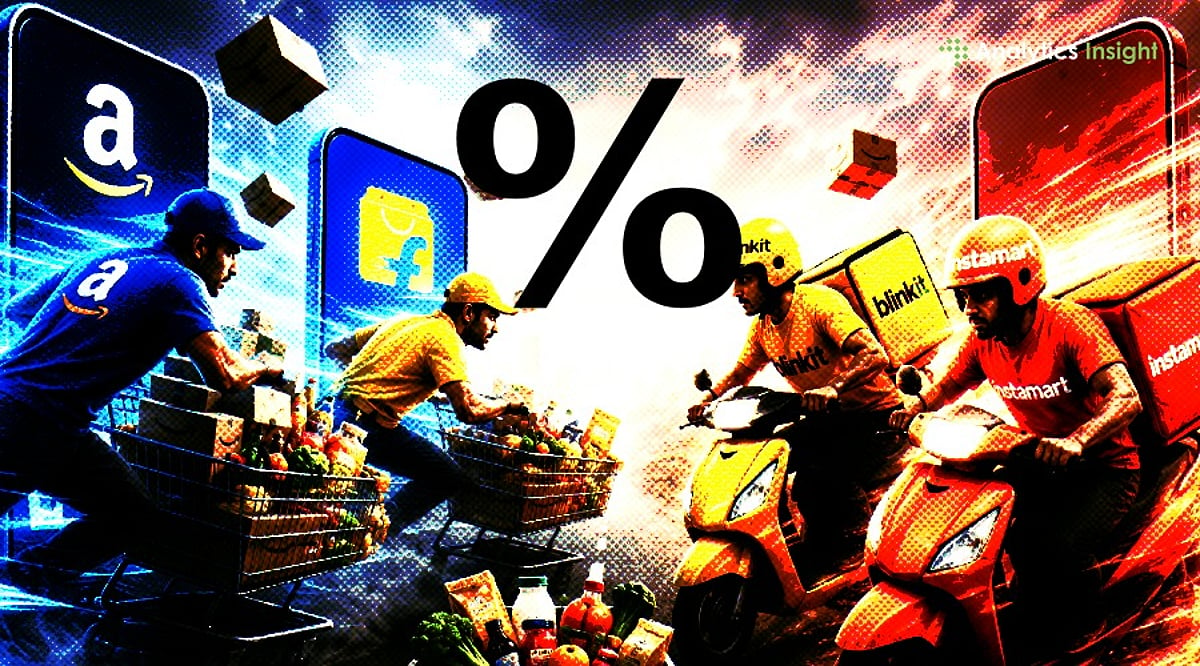
  • Amazon and Flipkart Launch Major Discount Campaigns as Blinkit and Instamart Prioritize Profit Over Price Cuts

    Amazon and Flipkart Launch Major Discount Campaigns as Blinkit and Instamart Prioritize Profit Over Price Cuts

    India’s quick-commerce market is heating up as Amazon and Flipkart roll out aggressive discounts and cashback offers to capture market share, while Blinkit and Instamart take a more cautious path, prioritizing profitability over slashing prices.

    Amazon has introduced cashback ranging from Rs. 50 to Rs. 200 on various order values and plans to expand its quick-commerce service to 300 cities with 500 dark stores. Flipkart Minutes is selling select fresh fruits and vegetables for as low as Rs. 1. The company already operates roughly 1,000 dark stores and aims to reach 1,500, with a strong push into tier-2 and tier-3 cities where demand for rapid delivery is surging.

    In contrast, Blinkit—which recently reported an operating profit—is keeping discounts minimal to protect its margins. Instamart is following a similar strategy, focusing on reaching contribution margin breakeven by using delivery fees and minimum order values rather than heavy price cuts. Zepto has also intensified competition by offering selected non-grocery items for just Rs. 9 as it seeks to broaden its customer base.

    While price wars quickly attract shoppers, they also inflate losses. Industry estimates suggest the quick-commerce sector is losing between Rs. 1,300 crore and Rs. 1,500 crore each month. The challenge for all players is to grow rapidly while keeping costs under control. Analysts note that companies that balance customer acquisition with sustainable financial performance will have a long-term advantage.

    Meanwhile, the Indian government has asked platforms to avoid advertising ‘10-minute delivery’ services to emphasize rider safety and responsible practices. Speed remains important, but sustainable business models are likely to determine the next market leaders.