

Tag: e-commerce

  • India’s 2027 E-Commerce Rules: Compliance Burden Looms for Small Sellers and MSMEs

    India’s 2027 E-Commerce Rules: Compliance Burden Looms for Small Sellers and MSMEs

    India’s amended e-commerce rules, set to take effect on January 1, 2027, are raising compliance concerns among small sellers and micro, small, and medium enterprises (MSMEs) that rely on online marketplaces. The Consumer Protection (E-Commerce) (Amendment) Rules, 2026, introduced by the Department of Consumer Affairs, will replace the 2020 regulations and introduce new requirements on pricing, product rankings, sponsored listings, dark patterns, and consumer grievance support.

    Ranking and Pricing Rules Add to Compliance Work

    Under the updated framework, e-commerce platforms must disclose the factors determining product rankings and clearly label sponsored listings. While the goal of improving transparency is widely welcomed, a senior industry executive noted that smaller sellers may struggle with the complexity. “Requirements around disclosure of ranking parameters, particularly the relative importance of different parameters, could be difficult for small and unorganised sellers to navigate,” the executive said.

    Pricing rules also tighten: discount claims must now reference the lowest price offered in the previous 30 days (the “prior price” requirement). Industry representatives warn that this could force small businesses without dedicated compliance staff to maintain detailed price records to ensure accuracy.

    Dark Pattern Audits and Consumer Helpline Integration

    The amended rules link marketplaces to the government’s 2023 guidelines on dark patterns—practices that mislead or pressure consumers. Businesses must conduct an annual self-audit on dark patterns. Industry executives support stronger accountability but seek clarity on how certification will work for sellers using large platforms. “An annual self-audit is a reasonable way of doing that,” the executive said, while questioning whether some duties might shift from platforms to individual merchants.

    Additionally, platforms must partner with the National Consumer Helpline to streamline complaint handling and improve coordination with government-backed grievance systems.

    Flipkart Welcomes the Move

    Flipkart publicly endorsed the government’s focus on consumer protection and transparency. A company spokesperson stated, “We welcome the Government’s focus on strengthening consumer protection and transparency in e-commerce.” The company said it will study the detailed rules and continue discussions with the government, emphasizing its commitment to supporting small businesses, MSMEs, and farmers.

    As the January 2027 deadline approaches, sellers and platforms must prepare for new disclosure, pricing, audit, and consumer-support requirements. Industry representatives have urged policymakers to ensure the compliance system remains manageable for businesses of all sizes.

  • Flipkart Minutes Launches Standalone App for 10-Minute Delivery Across 250+ Categories

    Flipkart Minutes Launches Standalone App for 10-Minute Delivery Across 250+ Categories

    Flipkart has officially launched its standalone Flipkart Minutes app in India, intensifying the race for quick-commerce dominance. The Android app, rolled out on September 9, promises 10-minute deliveries across groceries, electronics, gadgets, and daily essentials.

    A New Identity for Flipkart Minutes

    The launch gives Flipkart Minutes a separate identity as competition heats up in India’s fast-delivery market. With the standalone app, Flipkart aims to attract urgent shoppers through faster access, a broader product range, and targeted offers and discounts.

    The app is currently listed on the Google Play Store for Android devices. The listing, updated September 8, shows the app occupies around 20MB. Previously, the service operated as a dedicated section inside the main Flipkart shopping app. The standalone app is expected to boost visibility around quick purchases.

    What Can Shoppers Buy?

    Flipkart Minutes covers a wide range of products, including:

    • Fresh fruits and vegetables
    • Groceries and dairy products
    • Breakfast items, snacks, and beverages
    • Home supplies and cleaning products
    • Gifts and festive essentials
    • Flowers and chocolates
    • Headphones, Bluetooth earphones, smartwatches, and LED lights

    The app description promises “everything you need & want in just 10 minutes,” while highlighting deals and discounts across its expanding catalogue.

    Expanding Fulfilment Network

    The standalone launch follows rapid expansion of the Flipkart Minutes fulfilment network. Flipkart now operates more than 1,000 micro-fulfilment centres across over 130 cities and 8,000 PIN codes. The service has also grown beyond basic groceries to cover more than 250 categories.

    Flipkart reported fivefold order growth over the previous year, with smaller cities gaining significant momentum. This expanded footprint gives Flipkart a stronger base to challenge established quick-commerce leaders such as Blinkit, Zepto, and Swiggy Instamart.

    Competing Beyond Speed

    The competitive fight now extends beyond delivery speed and grocery availability. Electronics and higher-value products could give Flipkart Minutes another route toward larger customer baskets. Recent industry data also shows Minutes narrowing the order-value gap with Blinkit. Excluding mobile phones, Minutes reportedly records a net order value of Rs. 500 to Rs. 530.

    The standalone app marks more than a branding change for Flipkart Minutes. It signals a sharper push to make quick commerce a major part of Flipkart’s growth strategy. The next phase could depend on store density, delivery reliability, and adoption across smaller Indian cities.

  • Etsy Lays Off 220 Employees to Streamline Product and Engineering Operations

    Etsy Lays Off 220 Employees to Streamline Product and Engineering Operations

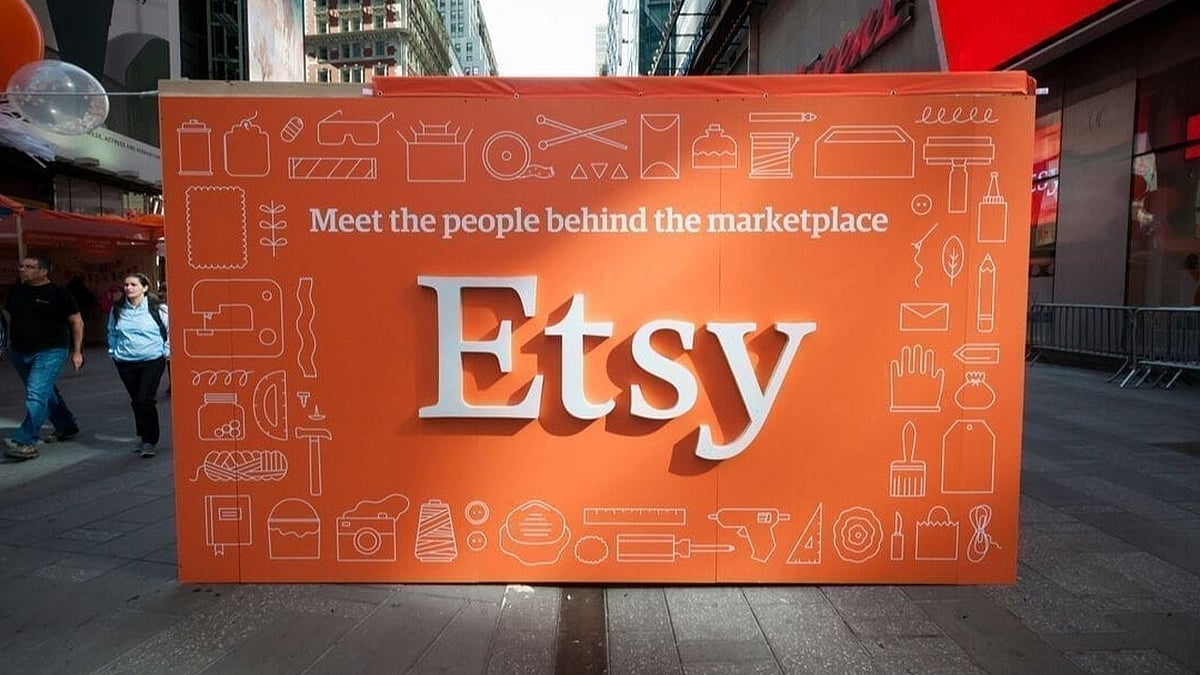
    E-commerce marketplace Etsy has announced plans to eliminate approximately 220 jobs, representing roughly 10% of its workforce, as part of a major organizational restructuring led by CEO Kruti Patel Goyal. The layoffs primarily affect employees in product, engineering, design, research, and analytics teams. According to the company, the move is intended to streamline decision-making, improve collaboration, and accelerate product development rather than reduce costs.

    More Focused Structure Needed: CEO

    In a message to employees, CEO Kruti Patel Goyal stated that Etsy is redesigning its organizational structure to remove complexity and create smaller, more agile teams. She noted that the company has grown significantly over the years, leading to overlapping responsibilities and slower execution across key business functions. The reorganization is expected to reduce the number of management layers and improve coordination between engineers, product, and design departments. Management hopes the restructure will enable Etsy to deliver new features faster and respond more quickly to changing market demands.

    Etsy Seeks Long-Term Growth

    This move comes at a time when Etsy is trying to build on its marketplace after experiencing sluggish consumer spending and reduced demand for discretionary items in some key markets. The company has been under pressure from shifting shopping behaviors and increased competition from other online players. Etsy stated that the restructuring is designed to position the company for its next phase of growth by improving operational efficiency and increasing the speed at which products are developed and delivered. Affected employees will receive severance packages, extended healthcare benefits where applicable, career transition assistance, and support in finding new employment opportunities.

    Focus on Innovation and Marketplace Expansion

    Etsy emphasized that it remains committed to investing in its marketplace, seller tools, and customer experience. The company plans to develop new features that help independent sellers connect with buyers and provide an improved search and discovery system. Unlike cost-saving measures, Etsy’s latest steps are strategic actions aimed at simplifying internal processes and enhancing effectiveness as the global e-commerce industry becomes increasingly competitive.

  • Flipkart Launches Pay Later with Flexible Repayment Options for Indian Shoppers

    Flipkart Launches Pay Later with Flexible Repayment Options for Indian Shoppers

    Flipkart Group, in partnership with PayU Finance, has announced the launch of Flipkart Pay Later, a new credit offering that provides flexible repayment options directly at checkout. Available across Flipkart, Myntra, and Flipkart Minutes, the service aims to make credit more accessible for millions of Indian consumers.

    Key Features of Flipkart Pay Later

    Flipkart Pay Later offers three repayment choices: a Pay Later option with up to 30 days for everyday purchases, a Pay in 3 option that splits the cost into three payments, and EMI plans ranging from 3 to 12 months for higher-value categories such as mobiles, electronics, appliances, and furniture. The offering is designed for both high-frequency, low-value transactions across categories like fashion, home, beauty, and general merchandise, as well as larger purchases where structured repayment can ease access.

    Powered by Commerce Intelligence and Responsible Underwriting

    Flipkart Finance has initiated the program with PayU Finance as its first lending partner, with plans to add more financial institutions as it scales. PayU Finance acts as the licensed lender, while Flipkart Finance manages customer relationships and credit intelligence, leveraging commerce data to enable faster and more accurate credit decisions.

    “Affordability remains the core driver of how millions in India engage with digital commerce. For these consumers, aspiration has never been a constraint, access has. As pioneers of easy financing, with Flipkart Pay Later, we are putting a decade of commerce signals to work, building an underwriting model that sees these customers clearly and extends them credit at the moment it matters the most. This is not a payment feature. It is an important step in building a financial services capability that we believe will fundamentally change who gets to participate in India’s digital economy.” — Vishal Ahuja, Executive Director, Flipkart Finance

    “As digital commerce continues to evolve, the need for responsible and accessible credit has never been greater. Through our partnership with Flipkart Finance, we are combining technology, data-driven underwriting, and strong risk management to deliver seamless credit experiences at scale. Flipkart Pay Later is another step towards expanding financial inclusion while powering the next phase of India’s digital commerce growth.” — Deepak Mendiratta, CEO, PayU Finance

    How Credit Decisions Are Made

    The credit decisions behind Flipkart Pay Later are built on Flipkart Finance’s commerce intelligence, transaction history, purchase patterns, and platform behavior, combined with PayU Finance’s lending and risk management capabilities. Customer exposure is assessed using multiple data sources to ensure credit is extended responsibly without over-leveraging.

    About the Flipkart Group

    The Flipkart Group is one of India’s leading digital commerce entities with a strong technology-first foundation, including group companies Flipkart, Myntra, Flipkart Wholesale, Cleartrip, and super.money. Established in 2007, Flipkart has enabled millions of sellers, merchants, and small businesses to participate in India’s digital commerce revolution. With a registered user base of more than 500 million, Flipkart’s marketplace offers over 150 million products across 80+ categories. Today, there are over 1.4 million sellers on the platform, including Shopsy sellers. Flipkart has pioneered services such as Cash on Delivery, No Cost EMI, Easy Returns, and UPI payments.

    About PayU

    PayU is India’s leading diversified fintech platform with Prosus as an investor. It operates businesses regulated by the Reserve Bank of India and offers advanced solutions for digital payments. PayU provides payment gateway solutions to online businesses, empowering over 4.5 lakh businesses. It enables digital payments across 100+ methods including Credit Cards, Debit Cards, Net Banking, EMIs, pay-later, QR, UPI, and Wallets. PayU Finance, its NBFC arm, empowers 3.5 lakh merchants and 6 million consumers with innovative credit solutions.

  • Nandita Sinha Steps In as Swiggy Instamart CEO: Former Myntra Chief Takes the Helm

    Nandita Sinha Steps In as Swiggy Instamart CEO: Former Myntra Chief Takes the Helm

    Swiggy has appointed Nandita Sinha, the former Chief Executive Officer of Myntra, as the new CEO of its quick-commerce business, Instamart. The move marks a significant leadership transition at a time when competition in India’s rapid-delivery market is intensifying. Sinha will officially begin the role on August 3, succeeding Amitesh Kumar Jha, who has stepped down to pursue opportunities outside the company.

    Who is Nandita Sinha?

    Nandita Sinha is one of India’s leading executives in the consumer internet segment, with over two decades of leadership experience in e-commerce, retail, and fast-moving consumer goods. Under her leadership, Myntra witnessed consistent growth and improved its market positioning.

    Sinha’s work experience also includes serving in leadership roles at organizations such as Flipkart, Britannia Industries, and Hindustan Unilever, giving her broad exposure to digital commerce, branding, and consumer-facing business, according to her LinkedIn profile. This varied experience will help Instamart scale its operations.

    Leadership Change Comes at a Crucial Time

    Sinha’s appointment follows the resignation of Amitesh Kumar Jha, who led Instamart during an important phase of expansion. Swiggy acknowledged his contribution in strengthening the platform, enhancing its differentiated offerings, and improving operational efficiency during his tenure.

    Swiggy’s Managing Director and Group CEO, Sriharsha Majety, said, “I am delighted to welcome Nandita Sinha as the CEO of Instamart. Nandita is one of India’s most accomplished consumer internet leaders, and I’m enthusiastic about the vision, customer obsession, and operational rigor she brings to the team we’ve built at Instamart.”

    What Her Appointment Means for Instamart

    With competitors investing heavily in expansion and customer acquisition, Swiggy is betting on Sinha’s operational expertise and consumer-focused approach to drive Instamart’s next phase of growth.

    Speaking on her new role, Sinha said, “I have long admired what the team at Instamart has built. It’s a business with a strong customer-first culture, great talent and significant opportunities ahead. Instamart sits at the heart of how India shops for its everyday needs, and I look forward to working with our colleagues, partners and consumers to shape its next chapter of growth.”

    Industry experts believe that her background in creating large consumer brands might help the company formulate a competitive strategy. Product expansion and customer experience are expected to be among the key areas of focus.

  • YuVerse Hosts Yunite 2026: Industry Leaders Map AI’s Future Across E-Commerce, Healthcare, Real Estate, and More

    YuVerse Hosts Yunite 2026: Industry Leaders Map AI’s Future Across E-Commerce, Healthcare, Real Estate, and More

    Bengaluru, July 27, 2026 — YuVerse, the last-mile AI company, convened the fifth edition of Yunite in Bengaluru, bringing together founders, CXOs, and director-level executives from over 45 companies across 10 industries. The forum focused on candid dialogue about real-world AI applications in finance, technology, education, real estate, human resources, retail, e-commerce, healthcare, telecommunications, logistics, and FMCG.

    Co-founder and CEO Mathangi Sri Ramachandran led discussions on leveraging AI for business outcomes while preserving empathy and dignity in customer interactions at scale. YuVerse showcased practical agentic AI workflows across retail, e-commerce, healthcare, real estate, and insurance, demonstrating a complete customer lifecycle from brand awareness to re-engagement.

    Four Critical Dimensions of AI’s Future

    The forum addressed four key areas:

    • Access as a multiplier: Nikkitha Shanker, Founder and CEO of SuperBryn, highlighted AI’s potential to address structural deficiencies in India’s healthcare and education sectors, envisioning AI doctors triaging patients in tier 3 and tier 4 cities.
    • Regulatory clarity and market development: Jatin Sehgal, a Senior Market Risk professional, called on SEBI to learn from smaller Asian markets and use AI to model payoffs and flag risks, citing underdeveloped credit default swaps in India.
    • Reimagining the workforce: Shanker argued for iterative regulatory approaches as workforces become part human, part AI, and predicted third-party evaluators for voice AI agents will become mandatory.
    • The shifting skills premium: Nicolai Nazareth, Executive Director of Evaluationz India Pvt. Ltd, noted that problem comprehension, articulation, and critical analysis will become more valuable than execution as AI handles execution layers.

    The event concluded with a rapid-fire Q&A session hosted by a YuVerse AI agent, showcasing real-time conversation intelligence and personality detection. Mathangi reflected, “We had sparkling answers from a really diverse group. The rapid fire session brought the capabilities to life in a way that felt immediate and genuine.”

    Yunite’s ethos is grounded in accountability, thoughtful regulation, and measurable real-world impact. Mathangi summed up: “We had discussions spanning everything from politics to how AI impacts children, from positive applications to guardrails regulators should implement. That’s what Yunite is built for.”

    YuVerse is part of the Yubi Group, backed by Peak XV, Insight Partners, Lightspeed, B Capital Group, Dragoneer, and TVS Capital. For more, visit yuverse.ai.

  • Walmart Shares Steady as E-Commerce and Grocery Revenue Drive Quarterly Gains

    Walmart Shares Steady as E-Commerce and Grocery Revenue Drive Quarterly Gains

    Walmart stock closed at $109.47 on Friday, July 24, gaining about 1% during the session. The shares traded between $108.03 and $109.54, while the company’s market value stood near $876 billion. Trading volume reached about 18.4 million shares during Friday’s regular session. Investors continued to assess Walmart’s latest results, institutional activity, analyst targets, and annual outlook.

    The retailer reported stronger sales across its main divisions during the quarter ended April 30. Revenue reached $177.75 billion, up 7.3% from a year earlier. Adjusted earnings matched market estimates at $0.66 per share. Walmart also kept its full-year outlook unchanged, despite higher distribution and fulfillment fuel costs. Grocery demand and increased customer traffic supported its core US operations.

    Walmart Stock Tracks Higher Quarterly Sales

    Walmart recorded $175.68 billion in net sales, compared with $163.98 billion in the prior-year quarter. Operating income increased 5% to $7.49 billion, while net income attributable to Walmart rose to $5.33 billion. GAAP earnings reached $0.67 per share. The gross profit rate edged up to 24.3% from 24.2%, while adjusted operating income grew 5.1% in constant currency.

    Walmart US net sales rose 4.5% to $117.17 billion. Comparable sales excluding fuel increased 4.1%, supported by a 3% rise in transactions. E-commerce contributed about 530 basis points to comparable sales growth. Walmart US e-commerce sales increased 26%, driven by store delivery, marketplace activity, and advertising. President and CEO John Furner cited “better shopping experiences, a broader assortment, and faster delivery.”

    Digital Businesses Support Segment Growth

    Global e-commerce sales increased 26% during the quarter, while the advertising business grew 37%. Walmart US advertising rose 36%, including a 44% increase at Walmart Connect excluding Vizio. Global membership fee revenue advanced 17.4%. Moreover, Walmart said improved e-commerce economics, Walmart+ growth, and other income supported adjusted operating income in its US business.

    Meanwhile, Walmart International net sales increased 18% to $35.11 billion. Constant-currency sales rose 10.1%, while operating income increased 23.9% to $1.60 billion. Sam’s Club US net sales climbed 6.1% to $23.41 billion. Its e-commerce sales rose 23%, while transactions increased 6.2%. Membership fee revenue grew 5.6% as member counts, renewals, and Plus memberships increased.

    Cumberland Cuts Stake as Guidance Holds

    Cumberland Partners reduced its Walmart position by 180,441 shares, or 30.1%, during the first quarter. The investment manager held 419,100 shares worth about $52.09 million at March 31. Walmart ranked as its fifth-largest reported position and represented about 4% of the portfolio. The SEC filing lists the shares under two investment-discretion categories, which together form the total holding.

    Separately, Walmart US Chief David Guggina sold 11,978 shares at an average price of $119.82 on June 10. The sale followed a Rule 10b5-1 trading plan adopted in March. Walmart expects second-quarter net sales to rise 4% to 5% in constant currency and forecasts adjusted earnings of $0.72 to $0.74 per share.

    The company retained its fiscal 2027 adjusted EPS range of $2.75 to $2.85. Recent analyst targets also stood above Friday’s closing price. RBC Capital maintained a $137 target on July 22, while Goldman Sachs held a $154 target on July 17. Morgan Stanley maintained a $140 target in late June, according to recent analyst tracking data.

  • 7 Must-Read Retail Newsletters and News Sites for Executives

    7 Must-Read Retail Newsletters and News Sites for Executives

    Retail leaders benefit from trusted, curated industry sources over broad business news. The right newsletters provide strategic insights across retail operations and technology. A focused reading stack supports faster, better-informed decisions.

    What Makes a Retail Source Worth an Executive’s Time

    Not every retail publication earns a spot in a leader’s inbox. The strongest sources share a few traits: editorial reputation built over years, a readership drawn mostly from senior retail roles, consistent publishing schedules, and analysis that moves past headlines into operational implications. Coverage should span physical retail, e-commerce, payments, logistics, and policy. The seven sources below meet that standard.

    Seven Retail Sources Built for Leadership Reading

    Retail Dive: Best for Daily Retail News

    Retail Dive moves fast, but speed alone isn’t why executives keep it in their inbox. The reporting ties each story back to something practical—what it means for store operations, e-commerce, merchandising decisions, and technology budgets. It works well as a daily habit.

    Retail Week: Best for Retail Strategy

    Retail Week earns its subscription price with proprietary research and deep market data. For leaders watching the UK and European retail scene, this is one of the few sources built specifically for that view.

    NRF SmartBrief: Best for Retail Policy News

    Backed by the National Retail Federation, NRF SmartBrief focuses on upcoming legislation, trade policy, and regulatory shifts. Reading it regularly means fewer surprises when policy changes hit a P&L statement.

    Retail TouchPoints: Best for Retail Technology

    This source lives at the intersection of customer experience and retail technology. It covers omnichannel strategy, digital transformation, and how brands rethink the path from browsing to purchase. Leaders responsible for customer engagement find more useful detail here than in general retail coverage.

    Modern Retail: Best for DTC and E-commerce

    Direct-to-consumer brands often lack serious attention from legacy retail media. Modern Retail fills that gap, following DTC players alongside older retailers adapting to change. The result is a clearer picture of where new retail models are heading.

    RetailWire: Best for Retail Expert Insights

    News is only half of what RetailWire offers. The other half is industry debate. Professionals weigh in on the same stories from different angles, revealing more than a straight news report would. It’s about seeing how retail leaders actually think.

    Retail Brew: Best Weekly Retail Newsletter

    Not every executive has time for long-form analysis daily. Retail Brew delivers the week’s key retail news in a format built to be read quickly, staying conversational without turning shallow.

    Retail News vs General Business News

    General outlets like Reuters or Fortune cover retail, but it’s one story among many. Retail-specific publications go deeper into merchandising, supply chains, store operations, and consumer behavior. Reuters is useful for the bigger economic picture; Retail Dive or Retail TouchPoints are better for figuring out what that picture means for a retail business next week. Read both for a fuller view.

    Final Thought

    Retail media is getting shorter, more curated, and tied closer to real-time data. Leaders who start reading with intent now will be ahead when that shift plays out fully. A tighter mix does more: one daily briefing for speed, one deep-analysis source for strategic thinking, and one specialist publication that matches the leader’s market. The difference isn’t how much gets read, but how deliberately it’s chosen.

  • Steam Overhauls Gifting with Guest Checkout and Email Delivery

    Steam Overhauls Gifting with Guest Checkout and Email Delivery

    Valve has rolled out a significant update to Steam, introducing guest checkout, email-based gifting, and improved wishlist tools. The changes are designed to make buying and sending games much simpler for all users.

    The headline addition is guest checkout. Previously, only Steam account holders could purchase games for gifting. Now, anyone can buy a game as a gift without creating an account. Valve has also added email gifting, allowing buyers to send games directly to a recipient’s email address. Additional features include cross-region price adjustments and wishlist sharing tools, which are now rolling out.

    Steam Wishlists have also been upgraded. Users can organize games into custom categories and generate shareable, filtered links. Anyone who receives a link can open it and purchase the game directly, even if they are not connected as friends on Steam.

    Buying Games Is Now Much Easier

    The new system removes many previous steps. Sending a game no longer requires a Steam account or a friend list connection. Buyers can simply enter a recipient’s email address, streamlining the process for birthdays, holidays, and sales events.

    A Better Experience Could Mean More Game Sales

    These improvements may boost sales during major promotions, as the removal of account creation for gift purchases reduces friction. The updated wishlist also helps players track desired games during discounts. While the core selling model remains unchanged, the overall shopping experience has become smoother for both new and existing users.

  • Best Indian Web Development Companies for 2026: Trusted by Businesses

    Best Indian Web Development Companies for 2026: Trusted by Businesses

    Introduction

    As businesses increasingly move online, choosing the right web development partner is critical. India has emerged as a global hub for web development, offering a blend of technical expertise, scalability, and cost-effectiveness. Here are the top Indian web development companies that businesses trust in 2026.

    1. TCS: Enterprise-Grade Web Development

    TCS delivers secure, scalable digital platforms for large enterprises requiring complex integrations, cloud capabilities, and long-term technology support.

    2. Infosys: AI-Powered Digital Experiences

    Infosys combines web development with artificial intelligence, cloud computing, automation, and digital transformation for modern enterprise applications.

    3. HCLTech: Complex Technology Ecosystems

    HCLTech builds enterprise web platforms integrated with backend systems, cloud infrastructure, cybersecurity frameworks, and advanced digital engineering capabilities.

    4. Tech Mahindra: Industry-Focused Solutions

    Tech Mahindra develops customized web solutions for telecommunications, manufacturing, healthcare, banking, and businesses undergoing large-scale digital transformation.

    5. Aalpha Information Systems: Custom Development

    Aalpha provides full-stack development, e-commerce platforms, custom software, and mobile applications for businesses seeking flexible technology partnerships.

    6. Emizen Tech: E-commerce Expertise

    Emizen Tech focuses on web development, e-commerce platforms, custom software, and digital solutions designed for businesses across multiple industries.

    7. IndiaNIC: Digital Product Development

    IndiaNIC helps businesses create custom websites, web applications, software products, and digital platforms tailored to specific operational requirements.

    8. Hidden Brains: Enterprise Digital Transformation

    Hidden Brains offers web applications, enterprise software, cloud solutions, and emerging technologies for organizations pursuing long-term digital innovation.

    9. Acodez IT Solutions: Design And Development

    Acodez combines responsive web design, development, e-commerce capabilities, and digital solutions to help businesses build engaging online experiences.