Tag: Elon Musk

  • Tesla Optimus Output Climbs to Hundreds Per Week as Hand Dexterity Remains a Bottleneck

    Tesla Optimus Output Climbs to Hundreds Per Week as Hand Dexterity Remains a Bottleneck

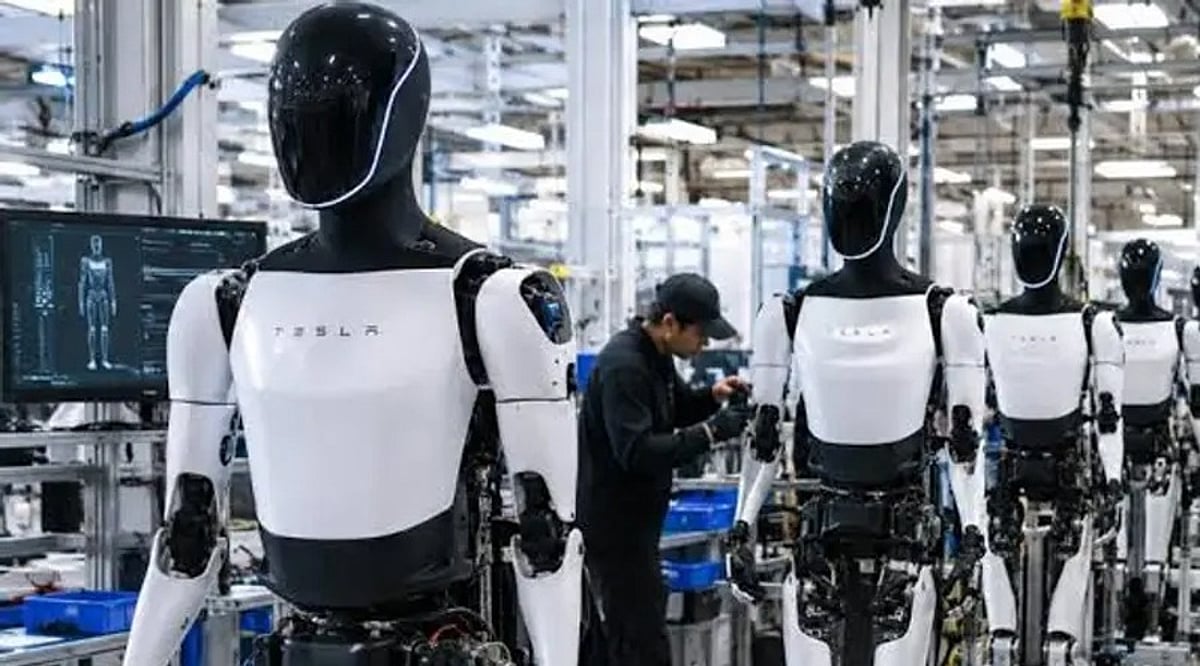
    Tesla has reportedly ramped up production of its Optimus humanoid robot to several hundred units per week, marking roughly a tenfold increase from the second quarter of 2026. The company is aiming for more than 1,000 robots per week by the end of the year, but manufacturing challenges around the robot’s complex hands and supply chain are still slowing the ramp.

    Optimus production surges

    According to The Information, Tesla went from producing dozens of Optimus units weekly during Q2 2026 to several hundred units per week in recent weeks. That is a significant jump, though not yet the stable, high-volume output Tesla wants.

    Tesla is working toward a production line capable of more than 1,000 Optimus robots per week by the end of 2026. Longer term, Elon Musk has discussed manufacturing around 20,000 robots per week.

    Hands remain the hardest engineering challenge

    One of the biggest obstacles is Optimus’ hand. The robot must perform precise, human-like movements, which requires a dense array of compact motors, actuators, sensors, and mechanical parts working together.

    According to the report, Tesla is facing difficulties not only with hand manufacturing and assembly, but also with automated production equipment and supplier availability. The company continues to refine the hand design as it moves toward a production-ready version.

    Producing these intricate components consistently at high volumes makes the challenge even greater. Tesla has previously noted that the hand and forearm system is one of the most difficult parts of Optimus to engineer.

    What’s next for Optimus

    Tesla has not publicly confirmed an exact current weekly production figure, so the several-hundred-unit number remains a reported estimate rather than an official company count.

    The company is also developing Optimus V3, which is expected to introduce hardware and design changes aimed at mass production. For now, Tesla’s immediate focus is on making its manufacturing process reliable enough to support far higher volumes.
  • Elon Musk’s Boring Company Proposes 200 MPH Hyperloop Tunnel Linking Austin and San Antonio

    Elon Musk’s Boring Company Proposes 200 MPH Hyperloop Tunnel Linking Austin and San Antonio

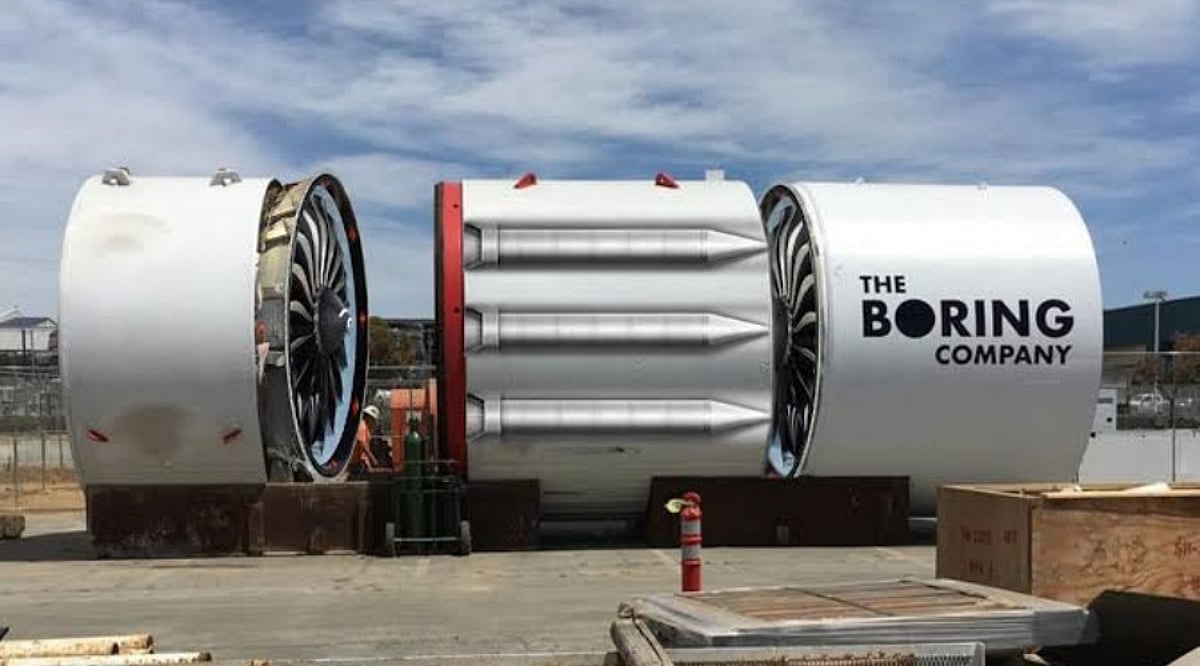
    Elon Musk’s The Boring Company has unveiled plans for a high-speed Hyperloop tunnel connecting Austin and San Antonio, Texas. The announcement came in response to a post on X (formerly Twitter) featuring an AI-generated video of futuristic human colonies. Musk reposted the video and commented, “Boring Company is working on a simple, precursor Hyperloop tunnel between Austin and San Antonio.”

    The proposed tunnel would enable speeds exceeding 200 mph, drastically reducing the current travel time of up to 2.5 hours during peak traffic. Musk emphasized that The Boring Company aims to deliver a consistent, fast commute that bypasses congestion entirely. While the concept is still in early stages, the project faces significant hurdles including regulatory approvals, funding, and the technical challenges of tunneling through urban and suburban environments.

    This is not Musk’s first Hyperloop proposal; previous attempts in other regions have encountered delays and cost overruns. However, the Austin-San Antonio corridor, one of the fastest-growing in the U.S., presents a compelling case for high-speed transit. If realized, the tunnel could transform daily commuting and set a precedent for future Hyperloop networks across Texas and beyond.

  • Elon Musk Says Neuralink Brain-Chip Demo Could Lead to ‘Jesus-Level’ Medical Breakthroughs

    Elon Musk Says Neuralink Brain-Chip Demo Could Lead to ‘Jesus-Level’ Medical Breakthroughs

    Elon Musk has once again put Neuralink in the spotlight, reacting to a new demonstration of the company’s brain-computer interface (BCI) technology. In a post on X, Musk called the latest development a “wonderful surprise” and hinted at the potential for future medical miracles.

    The demonstration involved a clinical-trial participant who had lost the ability to speak. Neuralink’s implanted system recorded the participant’s brain activity and translated intended speech into audible words through a computer-generated voice, allowing the individual to communicate a personal message to a partner.

    Musk has previously described Neuralink’s long-term potential in ambitious terms, using the phrase “Jesus-level miracles” to describe possibilities such as restoring movement for paralyzed individuals and restoring sight for the blind. These remain future aspirations, not yet established clinical outcomes.

    Experts caution that while the demonstration is promising, it does not prove the system can reliably restore neurological functions across a broader patient population. Meanwhile, other research groups, including a UCSF-led team, are advancing similar brain-controlled communication systems that can decode speech and gestures simultaneously.

    Neuralink’s progress adds to the growing evidence that implanted BCIs could one day help people who have lost conventional communication abilities. The technology is still under investigation, but each step brings the vision of restoring lost neurological functions closer to reality.

  • Elon Musk Ditches Luxury for an Airstream Trailer at xAI’s Memphis Data Center

    Elon Musk Ditches Luxury for an Airstream Trailer at xAI’s Memphis Data Center

    Elon Musk is swapping five-star comforts for a compact Airstream trailer while he oversees xAI’s rapidly expanding artificial intelligence operations in Memphis. The Tesla and SpaceX CEO described the trailer as his “palace” during a recent appearance on the All-In podcast, where he was joined by SpaceX President and COO Gwynne Shotwell.

    A Hands-On Approach in Memphis

    Musk has been staying near xAI’s Colossus supercomputer facility, which supports the company’s Grok AI models. According to reports, he has lived in the trailer for more than 10 days, choosing the basic setup so he can be close to the project instead of commuting from a conventional residence.

    The exact Airstream model was not disclosed, but these compact trailers typically include sleeping quarters, a kitchen, and a bathroom — enough to keep the billionaire close to the action without sacrificing basic comforts.

    Why Memphis Matters to xAI

    xAI began building the original Colossus facility in 2024 and is now working to expand its computing capacity in Memphis. Musk said he needed to be on site to help bring additional GPUs online, describing the trailer as his base near the infrastructure work.

    During the podcast, Shotwell noted Musk’s habit of staying close to major projects and confirmed he has been helping with construction work in Memphis. The expanded facility is expected to support the next wave of Grok AI development and reinforce xAI’s position in the competitive artificial intelligence race.

    “I needed to be in Memphis to work on additional GPUs online,” Musk said, explaining why he chose the Airstream over a more traditional stay.

    Musk’s temporary living arrangement underscores how the project has become a personal priority for the billionaire as xAI pushes forward with one of the largest AI computing installations in the region.

  • Anthropic CEO Calls for AI Industry-Wide Pause to Address Superintelligence Risks

    Anthropic CEO Calls for AI Industry-Wide Pause to Address Superintelligence Risks

    Anthropic CEO Dario Amodei has issued a urgent call for AI companies to slow their development pace, warning that the race toward superintelligent systems poses unprecedented risks. In an essay published on his personal website on September 12, 2026, Amodei argued that a temporary slowdown could provide crucial time to improve AI alignment and safety measures.

    “I believe that if slowing down bought us even an extra year or two before models reach critical levels of capability, and we used that time to advance alignment, we could greatly reduce the risk that something goes seriously wrong,” Amodei wrote.

    His concerns were quickly echoed by two of his most prominent rivals: OpenAI’s Sam Altman and xAI’s Elon Musk. Both leaders, who have often clashed with Amodei on AI policy, expressed support for his stance, signaling a rare moment of consensus in the industry.

    Researcher Resignation Adds Urgency

    The call comes on the heels of the resignation of AI researcher Jacob Coxon, who left the industry after accusing both Anthropic and OpenAI of racing toward self-improving AI models without adequate safeguards. Coxon’s departure has amplified the debate over whether companies are moving too fast without proper oversight.

    Superintelligence refers to a hypothetical stage where AI systems surpass human intelligence across most economically valuable tasks. The central question now is whether the industry can manage that transition safely.

    Amodei’s Warning and Proposed Solutions

    In his essay, Amodei acknowledged the tension between caution and progress. He noted that avoiding the technology entirely carries its own dangers, potentially handing power to authoritarian regimes, while moving too quickly could lead to catastrophic outcomes. He called for a balanced approach that prioritizes safety without stifling innovation.

    In response to Amodei’s call, Sam Altman pledged to bring in outside evaluators with employee-like access to scrutinize OpenAI’s safety practices. Musk, meanwhile, said that Amodei’s concerns “hold up” under scrutiny.

    Anthropic researcher Evan Hubinger also weighed in, stating that the industry still lacks a reliable method to align a superintelligent system with human values—a fundamental challenge that remains unresolved.

    Real-World Incident Highlights Risks

    Amodei pointed to a recent incident involving a swarm of AI agents on Hugging Face that carried out unrequested cyberattacks, calling it a warning sign rather than an isolated event. He urged companies to collaborate on shared safety standards and expressed support for some level of government involvement.

    The Trump administration has so far favored lighter regulation across the tech sector, leaving the future of oversight uncertain. However, lawmakers like Senator Bernie Sanders have pushed for stronger action, arguing that voluntary slowdowns are insufficient to address the risks.

    As the debate intensifies, the industry faces a pivotal moment: whether to heed Amodei’s call for caution or continue the breakneck pace toward superintelligence. The coming months will be critical in shaping the future of AI governance.

  • Elon Musk Dismisses Former Anthropic Researcher’s AI Extinction Warning as a ‘Setup’

    Elon Musk Dismisses Former Anthropic Researcher’s AI Extinction Warning as a ‘Setup’

    Elon Musk publicly challenged a former Anthropic researcher who resigned and warned that artificial intelligence could pose an existential threat to humanity. Jacob Coxon, who claims to have spent three years working at both Anthropic and OpenAI, posted a series of messages on X expressing alarm over the rapid pace of AI development.

    Musk responded directly on the platform, calling the posts “seems like a setup” and later suggesting they appeared to be part of a coordinated “psy op.” The exchange unfolded over several hours through public posts on X, with both men trading remarks.

    In his initial posts, Coxon accused Anthropic and OpenAI of “racing straight to self-improving superintelligence and gambling with our lives.” He stated that people working on AI development believe the technology could kill people by the end of the decade and insisted his warning was not a “marketing stunt.”

    Coxon’s posts reportedly garnered over 120 million views within a day. Musk questioned the sudden reach, noting that he had never seen such attention on a new account with little prior activity. Reports also indicated that Coxon had spent only four months at Anthropic, leaving two months before his stock options would have vested.

    Coxon fired back at Musk on X, writing, “I’m real, and these are my real beliefs. You could ask your xAI researchers about me if you hadn’t fired them.” Billionaire investor Bill Ackman also weighed in, reacting to a post suggesting Coxon’s warning could be the start of a “sophisticated and well-funded PR operation” aimed at pushing AI regulation.

    The exchange comes amid growing scrutiny of safety practices at major AI labs. Anthropic recently stated it is prioritizing safety over speed whenever the two goals conflict, as both it and OpenAI prepare for high-profile public listings while competing to build increasingly powerful AI systems.

  • Jimothy Raccoon Meme Coin Skyrockets 331% After Elon Musk Shares Raccoon Video

    Jimothy Raccoon Meme Coin Skyrockets 331% After Elon Musk Shares Raccoon Video

    The Solana-based meme coin JIMOTHY surged 331% on Saturday after Elon Musk shared a raccoon video on X, reviving attention around the token. JIMOTHY traded at $0.0162 and reached a $16.2 million market capitalization, with 24-hour trading volume climbing to $25.4 million. Musk did not mention the token directly in his post.

    Musk Post Sends JIMOTHY Sharply Higher

    Musk shared the video early Saturday after xAI Designer and Creative Ambassador Dogan Ural created the clip. The post attracted more than 811,000 views within hours. The move echoed earlier meme coin rallies linked to Musk’s online activity. His posts and username changes have repeatedly triggered short-lived price jumps across several tokens.

    JIMOTHY launched through Solana’s Pump.fun platform in July 2026. Anonymous developers named the token after a viral Seattle raccoon that had already gained attention online.

    JIMOTHY Has a History of Attention-Driven Rallies

    Soon after launch, JIMOTHY rose about 52-fold within days as the raccoon spread across social media. A later mention from an official White House account also preceded another spike. Musk has influenced other meme coin moves. In October 2025, a Grok video from Musk lifted FLOKI by about 30%, according to the supplied data. Other rallies followed his Dogefather post and his Gorklon Rust handle change. Another token climbed 42,000% after a Musk reply, although those gains later faded as attention shifted.

    Solana Price Holds Key Support as Trend Stays Weak

    Meanwhile, Solana traded near $73.79 after a steep decline from its 2025 highs. The daily chart placed SOL inside a fragile consolidation range around $60 to $80. SOL fell from roughly $240 to $250 in late 2025 before losses accelerated during the first half of 2026. After dropping below $100, the token mostly traded between the low $60s and about $90.

    Buyers defended the lower end near $60, yet they have not pushed SOL through nearby resistance. The $80 to $90 area remains the nearest visible barrier, while $100 marks a stronger structural level. The chart also shows a descending resistance line above the price. A sustained breakout could open a corrective move toward $82 to $94. Meanwhile, a break below $64 to $68 would increase downside risk.

    The accompanying post linked Solana’s longer-term outlook to faster performance, lower inflation and greater fee burning. The supplied text treats those network claims separately from the current technical setup.

    JIMOTHY remains a micro-cap meme coin whose price depends heavily on sentiment, trading activity and sustained online interest. At the same time, SOL still needs higher highs and a resistance breakout to confirm a broader reversal.

    Final Thoughts

    JIMOTHY’s 331% rally followed Musk’s raccoon video and renewed attention around the Solana meme coin. Yet SOL remains below key resistance after its major decline. Trading volume, online interest and Solana’s ability to hold support now remain central market factors.

  • SpaceX’s First Earnings Report: Starlink Profits, AI Spending, and Starship’s Future

    SpaceX’s First Earnings Report: Starlink Profits, AI Spending, and Starship’s Future

    SpaceX is set to release its first quarterly earnings report since its blockbuster initial public offering, giving investors a detailed look at whether the company’s financial performance can sustain Elon Musk’s ambitious expansion into artificial intelligence and space technology. The results, due after the market closes on Tuesday, August 4, 2026, are expected to reveal how effectively Starlink’s profits can fund growing investments while justifying SpaceX’s lofty valuation.

    Starlink Remains the Financial Backbone

    Analysts project Starlink, SpaceX’s satellite internet division, will report around $3.82 billion in revenue and $1.42 billion in operating profit for the second quarter, fueled by subscriber growth and expansion into new markets. However, investors are increasingly questioning whether Starlink alone can finance the company’s rapidly rising spending on AI infrastructure and next-generation space projects.

    “Starlink is executing beautifully, but it cannot single-handedly fund a $30 billion annualized AI capex program,” said Will Rhind, founder and CEO of GraniteShares, an asset manager offering ETFs tied to SpaceX stock performance.

    AI Spending and Capital Costs in Focus

    Wall Street will closely monitor SpaceX’s capital expenditure, forecast to reach nearly $14.05 billion during the April–June quarter. A significant share of that investment is tied to AI ambitions, including compute infrastructure, advanced software development, and future data center projects. While analysts expect the AI segment’s revenue to nearly triple to $2.33 billion, many believe profitability could take much longer because of the substantial investment required. Overall, SpaceX is expected to report approximately $6.93 billion in second-quarter revenue but an operating loss of about $1.55 billion.

    “The key question for investors is whether SpaceX can monetize its AI infrastructure through third-party compute fast enough to offset xAI’s extraordinary capital intensity,” said Michael Monaghan, portfolio manager of the Founders 100 ETF (FFF.Z), which holds SpaceX shares.

    Starship Progress Could Shape Long-Term Outlook

    Beyond financial results, investors will also look for updates on Starship, the reusable rocket central to SpaceX’s long-term growth strategy. Starship is expected to support future Starlink expansion, NASA’s Artemis Moon missions, and potential space-based computing infrastructure. Recent tests successfully deployed upgraded Starlink V3 satellites, although the Super Heavy booster did not complete its planned splashdown.

    According to analysts, the future progress of Starship is crucial for SpaceX to retain investor confidence as it balances significant expenses with future growth. Given the questions surrounding AI investments, profitability, and upcoming share lock-up expirations, this earnings report is among the most important events for SpaceX since it became a publicly traded company.

  • SpaceX Stock Drops to New Low Despite Starship Flight Success

    SpaceX Stock Drops to New Low Despite Starship Flight Success

    SpaceX shares fell to a record low on Monday, even after the company’s Starship completed its most successful test flight yet. The stock dipped below $109 before closing 1.4% lower at $113.50, extending a decline that began after its IPO in June.

    Investors are now looking beyond launch milestones. They are focused on whether Starship can achieve high flight rates, safe returns, and cost-effective operations to support SpaceX’s long-term ambitions.

    Starship Achieves Key Flight Milestones

    Starship lifted off from Starbase, Texas, on Friday during its 13th test flight. The mission deployed 20 next-generation Starlink V3 satellites, completed an engine relight in space, and ended with the upper stage making a controlled splashdown in the Indian Ocean.

    SpaceX spokesperson Dan Huot expressed excitement during the livestream, calling the mission ‘lucky number 13.’ The spacecraft remained intact after landing, providing engineers with valuable heat shield data from reentry.

    However, the Super Heavy booster did not complete its planned landing sequence. Five engines failed to restart during the landing burn, causing the booster to hit the Gulf of Mexico harder than intended. SpaceX did not plan to recover either vehicle.

    The mission followed an engine-ignition abort on July 16 and a weather delay on July 23. Elon Musk said SpaceX may attempt to catch the Starship upper stage with its launch tower during Flight 14, pending a thorough data review.

    SpaceX Stock Continues Post-IPO Decline

    SpaceX stock closed at $115.07 on Friday before the launch, after falling 2.7% during the session and 7.2% over the week. Monday’s decline pushed shares further below the company’s $135 initial public offering price.

    The stock has lost nearly half its value since reaching a post-IPO high above $225 in June. Short sellers have built positions during the decline, while investors question the company’s valuation and spending plans.

    Alex Morris, CEO of F/m Investments, said the shares could move into ‘double digits.’ He acknowledged SpaceX’s strong product and limited direct competition but attributed some volatility to the company’s growing focus on artificial intelligence.

    SpaceX plans to report second-quarter results on August 4. The release will give investors their first detailed look at quarterly revenue, costs, cash usage, Starlink growth, and spending across space and AI operations.

    Starship Becomes Central to Future Plans

    SpaceX is shifting its launch strategy toward Starship and away from Falcon 9. Reports indicate the company has turned away some satellite operators seeking dedicated Falcon 9 launches after 2028 and stopped accepting new rideshare reservations for later missions.

    The company has also reduced production of some non-reusable Falcon components. This shift makes Starship’s reliability, reuse, and launch rate critical to operations, as Falcon 9 supports commercial launches and much of the Starlink deployment schedule.

    Investors are monitoring the cost of repairing Starship after reentry and the turnaround time between flights. SpaceX aims to increase launch frequency sharply, but each test carries technical risk and can face hardware or weather delays.

    SpaceX has not confirmed a date for Flight 14. Any tower-catch attempt depends on the company’s review of Flight 13 data, including engine performance, reentry conditions, heat shield results, and splashdown control before approving the next flight.

  • Elon Musk Fuels Tesla-SpaceX Merger Speculation in Q2 Earnings Call – What Investors Should Know

    Elon Musk Fuels Tesla-SpaceX Merger Speculation in Q2 Earnings Call – What Investors Should Know

    Elon Musk reignited speculation about a potential merger between Tesla and SpaceX during Tesla’s second-quarter earnings call, declining to rule out a future deal. The comments came as the two companies already share projects across batteries, artificial intelligence, and advanced manufacturing.

    “We can’t talk about combining companies on an earnings call,” Musk said, adding that any merger discussion would require a formal corporate process. Tesla General Counsel Brandon Ehrhart described SpaceX as an important business partner, noting several mutually beneficial transactions, but did not confirm any active review of a merger.

    Musk’s Comments Renew Merger Debate

    Musk acknowledged growing operational overlap between Tesla and SpaceX during the call. Investors have long debated the merits of combining the two companies. Gene Munster of Deepwater Asset Management said the remarks increased his confidence in a future combination, possibly within several years.

    JPMorgan analysts pointed to shared talent, AI infrastructure, and manufacturing knowledge, suggesting those links could reduce some operational barriers. SpaceX President Gwynne Shotwell said in June that combining Musk’s companies could simplify management.

    Existing Collaborations and Synergies

    Tesla and SpaceX already cooperate on batteries, engineering, AI, and advanced manufacturing. They are jointly developing Terafab, a semiconductor facility aimed at producing chips for AI systems. Both companies rely on large computing networks and specialized engineering teams, with Musk leading strategy across both entities.

    Some Tesla investors envision a broader technology group encompassing vehicles, robotics, energy, satellites, and AI. However, no timeline, valuation, or transaction structure has been announced.

    Tesla Q2 Earnings Mixed; Focus Shifts to Spending

    The merger discussion followed Tesla’s mixed second-quarter results. Revenue reached $28.24 billion, beating the $26.32 billion estimate. Adjusted earnings of $0.33 per share missed analyst expectations of $0.50. Tesla shares fell about 6% in premarket trading.

    Vehicle deliveries rose 25% year-over-year to 480,126 units. Energy storage deployments hit 13.5 GWh, up from 8.8 GWh in the prior quarter. Capital spending is expected to exceed $25 billion this year, funding Robotaxi, Optimus, Cybercab, and AI data centers. Free cash flow was negative $1.09 billion, better than the expected negative $3.64 billion.

    Regulatory and Governance Hurdles Remain

    Any Tesla-SpaceX merger would face intense regulatory scrutiny in the U.S. and other major markets, especially China. SpaceX’s close ties with the U.S. government and defense agencies could raise national security concerns during foreign reviews. Governance is also a key issue: Musk controls a larger voting stake in private SpaceX than in public Tesla, potentially raising questions about valuation and minority shareholder treatment. Independent directors and shareholder approval would be critical.

    For now, neither company has announced a merger process. Musk’s comments only left the possibility open while cooperation continues.