Tag: Elon Musk

  • Elon Musk Dismisses SpaceX AI Smartphone Rumors as ‘Utterly False’

    Elon Musk Dismisses SpaceX AI Smartphone Rumors as ‘Utterly False’

    Elon Musk has publicly denied recent reports claiming that SpaceX is developing an AI-powered smartphone. The rumors, which gained traction after reports of a prototype AI device, have been firmly rejected by the billionaire entrepreneur.

    The speculation began when The Wall Street Journal reported that SpaceX was working on an AI handheld device powered by Qualcomm’s Snapdragon chipset and running a custom operating system with AI capabilities from xAI, Musk’s AI company. The report also suggested that SpaceX had shown an early prototype to investors ahead of its record-breaking IPO. Days earlier, the Financial Times reported that SpaceX COO Gwynne Shotwell had discussed launching a mobile service in the U.S. using the Starlink satellite network, further fueling the rumors.

    In response, Musk took to X (formerly Twitter) on July 1, 2026, posting a simple but definitive statement: “Utterly false.” This is not the first time he has denied such claims. Earlier this year, he refuted a Reuters report, stating that SpaceX is “not developing a phone.” During an event in Pennsylvania last year, Musk made his position clear: “The idea of making a phone makes me want to die. If we have to make a phone, we will, but we will aspire not to make a phone.”

    Despite the denial, the rumors underscore growing industry interest in dedicated AI hardware. OpenAI is also reportedly exploring purpose-built AI devices. Industry analysts believe that if OpenAI pursues such a device, Musk would want to compete. SpaceX and its sister company Tesla have the manufacturing expertise to mass-produce AI hardware, and SpaceX has signaled interest in expanding into wireless services via Starlink Mobile, potentially challenging Verizon and AT&T.

    Musk continues to focus on artificial intelligence, recently predicting that AI could surpass the combined intelligence of all humans within the next four to five years. While a SpaceX smartphone remains off the table, the broader AI hardware race is accelerating, with the potential to reshape how users interact with AI through purpose-built devices.

  • Daily Tech Brief: Apple AI Creator Studio, Amazon Prime Video Lawsuit, Claude Sonnet 5, Microsoft Layoffs, and Elon Musk’s Trillionaire Milestone

    Daily Tech Brief: Apple AI Creator Studio, Amazon Prime Video Lawsuit, Claude Sonnet 5, Microsoft Layoffs, and Elon Musk’s Trillionaire Milestone

    Today’s tech landscape is buzzing with major developments: Apple upgrades its Creator Studio with AI, Amazon faces a lawsuit over Prime Video, Anthropic launches Claude Sonnet 5, Microsoft announces layoffs, and Elon Musk reaches trillionaire status. Here’s a quick rundown of the top stories.

    Apple Boosts Creator Studio with AI

    Apple has given its Creator Studio a significant upgrade by integrating new AI-powered editing tools. The move is part of the company’s broader push to embed artificial intelligence across its ecosystem, offering creators smarter, faster ways to produce content.

    Amazon Prime Video Hit with Lawsuit

    Amazon is facing a fresh legal challenge over its Prime Video service. The lawsuit alleges unfair practices, though details remain under wraps. This adds to growing regulatory and legal scrutiny of the streaming giant.

    Anthropic Unveils Claude Sonnet 5

    Anthropic has launched Claude Sonnet 5, the latest iteration of its advanced AI language model. The new version promises improved reasoning, safety features, and performance, further intensifying competition in the AI space.

    Microsoft Announces Layoffs

    Microsoft has confirmed a new round of layoffs, affecting an unspecified number of employees. The company cites restructuring efforts as part of its focus on key growth areas like AI and cloud computing.

    Elon Musk Becomes World’s First Trillionaire

    Elon Musk has officially reached trillionaire status, driven by the surging value of his companies, including SpaceX and Tesla. The milestone marks a historic moment in wealth accumulation and tech entrepreneurship.

  • Today’s Top Tech Roundup: OpenAI Hardware, WhatsApp Privacy, Pixel Watch 5 Leaks, Google Engineer Debunks Myths, and Elon Musk on AI Risks

    Today’s Top Tech Roundup: OpenAI Hardware, WhatsApp Privacy, Pixel Watch 5 Leaks, Google Engineer Debunks Myths, and Elon Musk on AI Risks

    Top Tech News Today: OpenAI AI Device, WhatsApp Privacy Upgrade, Pixel Watch 5, Google Engineer Reveals Truth & Elon Musk on AI

    In a packed day of tech developments, OpenAI has teased its first dedicated AI hardware device, signaling a major push into consumer electronics. WhatsApp is rolling out a username-based privacy feature that lets users communicate without sharing phone numbers. Leaked details of the Pixel Watch 5 suggest it will include Satellite SOS functionality, a first for Google’s wearable line. A Google engineer has publicly debunked several viral tech myths, clarifying common misconceptions about AI and search algorithms. Meanwhile, Elon Musk has echoed Tim Cook’s recent warnings about the existential risks of advanced AI, adding his voice to a growing chorus of industry leaders calling for robust regulation.

    These stories highlight the accelerating pace of innovation and the critical conversations shaping the future of technology.

  • Dogecoin Price Analysis: Can DOGE Bounce Back After Dogechain’s Closure?

    Dogecoin Price Analysis: Can DOGE Bounce Back After Dogechain’s Closure?

    Dogecoin recently faced fresh uncertainty after the shutdown of Dogechain, a blockchain project that expanded DOGE’s utility through NFTs, decentralized finance, staking, and smart contracts. Since the original Dogecoin network does not support these advanced features, Dogechain played a critical role in providing additional use cases. Its sudden closure has raised concerns about Dogecoin’s ability to recover and sustain long-term growth.

    Why Dogechain Was Important for Dogecoin

    Dogecoin started as a meme coin and later became one of the most popular cryptocurrencies. Despite its popularity, the network has always lacked the advanced blockchain features that projects like Ethereum and Solana offer. Dogechain addressed this by allowing DOGE holders to use their coins in decentralized applications, NFT marketplaces, and staking platforms, giving Dogecoin access to Web3 services that were previously unavailable. With its shutdown, that extra utility has disappeared, pushing Dogecoin back toward its original identity as a payment-focused meme coin without strong ecosystem development.

    Current DOGE Price Performance

    As of late June 2026, Dogecoin price remains under pressure, trading between $0.074 and $0.076 with weak market momentum. The coin has seen a correction over recent weeks as the broader crypto market struggled to build a recovery. Current data shows DOGE near $0.07 to $0.08, with a market capitalization of about $11.2 billion and daily trading volume around $460 million. The circulating supply has reached nearly 154.8 billion DOGE.

    Why Recovery Still Looks Possible

    While the Dogechain shutdown has damaged short-term confidence, several factors could support a price recovery. Dogecoin’s large and dedicated community remains one of its biggest strengths, having supported the project through various market cycles. Whale activity also shows positive signs — recent blockchain data reveals whale transactions hit a six-month high, with large holders controlling more than 108 billion DOGE, indicating steady accumulation by major investors.

    The overall crypto market trend could also help. Historically, Dogecoin follows Bitcoin’s price movements closely; if Bitcoin enters a bullish phase, DOGE often sees renewed demand from retail traders. Additionally, Elon Musk’s ongoing public connection with Dogecoin continues to keep the coin visible and popular among traders worldwide.

    Technical Price Levels to Watch

    From a technical perspective, Dogecoin now sits near a critical support zone. The first major support level is at $0.070. If selling pressure increases, the next support sits near $0.067, followed by a lower zone at $0.060. On the upside, the first resistance level is around $0.085. Breaking $0.090 would be needed before any move toward $0.100 becomes plausible. Analysts highlight the 200-day moving average near $0.085 as the most important level for any short-term bullish recovery — a move above this could reignite buying interest.

    Long-Term Future of Dogecoin

    Dogecoin still faces a major structural challenge: unlike Bitcoin, it has no maximum supply limit. Approximately 5 billion new DOGE enter circulation each year, creating constant inflationary pressure. With the circulating supply already close to 154 billion, this makes long-term price growth more difficult compared to cryptocurrencies with finite supplies.

    Predictions remain mixed. Some analysts expect DOGE to recover toward $0.15–$0.20 if the crypto market enters a strong bull run in the next cycle. More aggressive forecasts suggest higher targets, but meme-based assets remain highly unpredictable.

    Why This Matters

    The removal of Dogechain’s infrastructure strips Dogecoin of vital decentralized utilities like staking and NFTs. While strong community backing prevents an immediate crash, returning solely to a payment-based asset increases its reliance on unpredictable retail sentiment and speculative social trends.

    Final Outlook

    The Dogechain shutdown has created a setback for Dogecoin, weakening short-term confidence and raising fresh concerns about utility and future development. At the same time, Dogecoin continues to benefit from strong community support, rising whale accumulation, and overall crypto market trends. For now, $0.067 remains the key support level, while a move above $0.090 could confirm a stronger recovery. Dogecoin faces pressure at present, but the possibility of recovery remains alive in the coming months.

  • Musk and Cook Warn Memory Chip Shortage Could Stifle AI Growth as Prices Soar

    Musk and Cook Warn Memory Chip Shortage Could Stifle AI Growth as Prices Soar

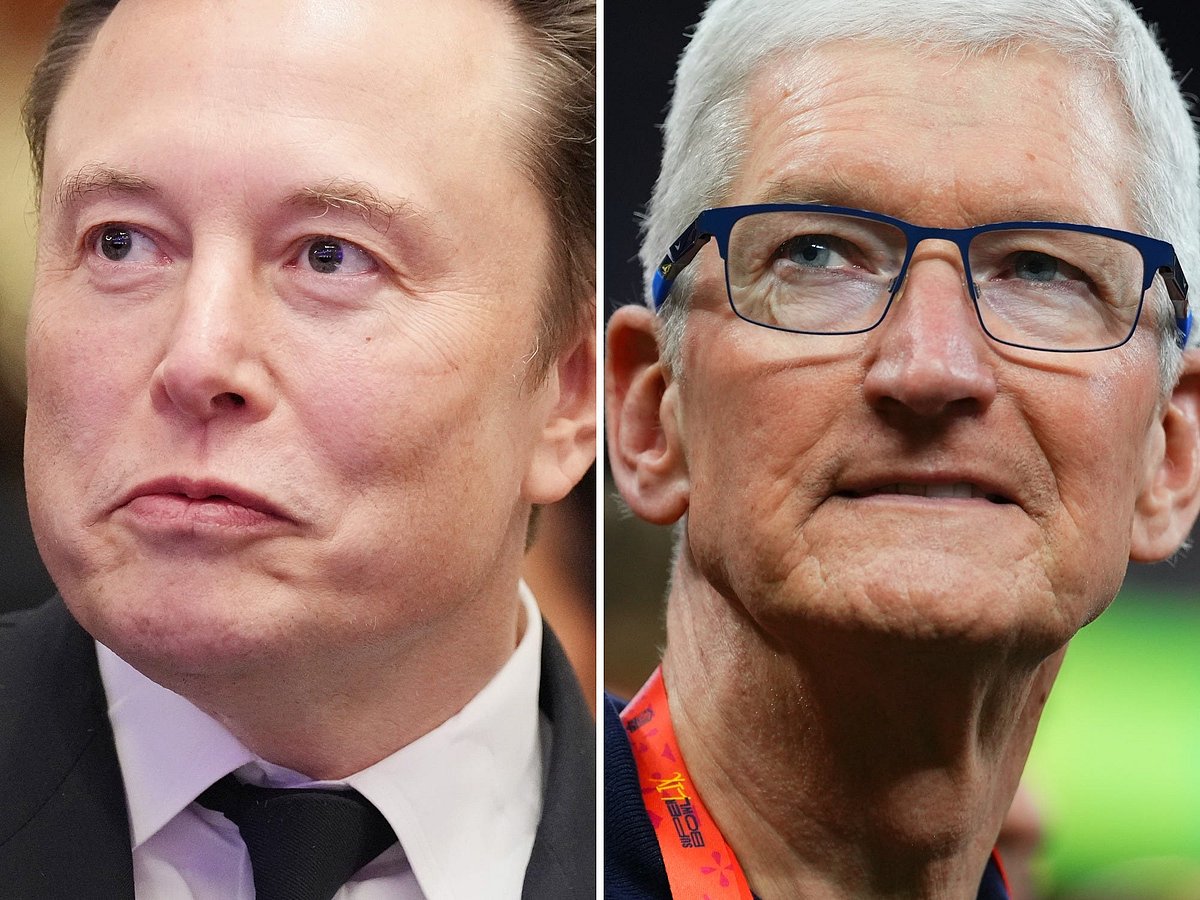
    Elon Musk has publicly backed Apple CEO Tim Cook’s stark warning about an unprecedented memory chip shortage, as surging costs driven by AI data center demand create ripple effects across the consumer electronics and automotive industries.

    Cook described the shortage as a “hundred-year flood,” noting he had not seen a similar cost shock in any sector in over four decades. Musk echoed that sentiment, calling it the “biggest price jump in anything I’ve ever seen.” Both executives are now calling for a massive expansion of production capacity to avert long-term constraints.

    AI Infrastructure Fuels Demand for Advanced Memory

    The rapid expansion of artificial intelligence infrastructure has dramatically increased demand for high-bandwidth memory (HBM) products, which are critical for running AI processors and handling large datasets. Chip manufacturers have shifted significant production capacity toward these higher-value components, creating tighter supplies of standard memory and storage chips used in smartphones, computers, televisions, and game consoles.

    Cook stated that Apple could no longer absorb the full increase in component costs, calling price hikes “unavoidable.” The company subsequently raised prices across several product lines, including Mac computers and iPads, with some increases reaching hundreds of dollars depending on the model and storage configuration. Apple also adjusted prices for its Apple TV, HomePod, and iMac products.

    Microsoft followed suit by announcing higher prices for Xbox consoles, and other electronics manufacturers have similarly adjusted their pricing as memory and storage costs climb throughout the supply chain.

    Tesla’s AI Ambitions at Risk

    Musk warned that the gap between memory demand and production capacity is “insane,” adding that the industry requires significantly higher output to alleviate the shortage. Tesla relies on advanced chips for its vehicles, AI systems, and Optimus robots. During Tesla’s fourth-quarter earnings call in January, Musk indicated that supplier output could constrain the company’s plans.

    He noted that memory could become “an even bigger limiter than AI logic.” While AI logic chips handle calculations, memory chips store and move the data those processors require. Both must be available in large volumes for AI systems to operate effectively.

    Tesla currently works with external manufacturers, including major chip producers in the United States and Asia, but Musk said the company faces risks if suppliers cannot ramp up production quickly enough. The shortage also impacts SpaceX and xAI, both of which require growing computing power for satellite systems, AI training, and data center projects.

    TeraFab Project Aims to Boost Production

    Musk has proposed TeraFab as a potential long-term solution. The project involves Tesla, SpaceX, and xAI, with Intel also announcing its participation. The planned facility would combine logic chip production, memory manufacturing, and advanced packaging, potentially reducing reliance on outside suppliers and supporting future AI and robotics projects.

    However, many details remain unclear. The companies have released limited information about production timelines, financing, and each participant’s exact role. Reports have noted that formal commitments between some parties have not been fully disclosed. Tesla has begun recruiting semiconductor workers with experience in advanced manufacturing, covering chip design, packaging, lithography, testing, and production management.

    Even with new factories, semiconductor facilities take years to build and prepare for mass production. Consequently, current supply pressure may persist as data center operators, automakers, and device manufacturers compete for available chips.

    For consumers, the immediate outcome is higher prices across computers, tablets, consoles, and other electronics that depend on memory and storage components. Both Cook and Musk have urged the industry to invest in new capacity, but relief is unlikely in the near term.

  • xAI Launches Grok 4.5 Beta: Musk Claims It Outperforms Anthropic’s Claude Opus

    xAI Launches Grok 4.5 Beta: Musk Claims It Outperforms Anthropic’s Claude Opus

    Elon Musk’s artificial intelligence company, xAI, has introduced Grok 4.5 in private beta, marking the latest update to its flagship chatbot. The company claims the new model delivers stronger performance than rival AI systems, including Anthropic’s Claude Opus, across several benchmarks.

    The release comes as AI companies continue to roll out increasingly capable models, with firms racing to improve reasoning, coding, and conversational abilities while attracting enterprise customers.

    Grok 4.5 Enters Limited Testing

    According to xAI, Grok 4.5 is currently available only to a select group of testers. The company said the private beta will help evaluate the model’s performance before a wider rollout. Musk described the model as the company’s most advanced AI system so far, saying it offers improvements in reasoning, factual accuracy, and response quality. He also claimed the latest version performs better than competing frontier models in several evaluation tests. However, xAI has not released detailed benchmark data or independent validation to support all of its performance claims.

    Competition in AI Heats Up

    The launch adds yet another chapter to the fast-moving AI race, where companies like OpenAI, Anthropic, Google, and Meta keep releasing new models at a rapid pace. Over the past few months, developers have been fixated on sharpening coding help, multimodal skills, extended-context reasoning, and enterprise setups. Performance comparisons have become a major marketing focus, with AI firms regularly releasing benchmark results to show they are improving faster than others.

    Analysts point out that even if benchmark scores provide a way to judge progress, real-life results often hinge on how well models actually handle everyday business and consumer tasks.

    xAI Expands Its AI Ambition

    Since developing Grok, xAI has been increasing the bot’s functionality on the X platform while making substantial investments in computational technology and large language models. xAI presents Grok as a competing solution to current AI assistants for its real-time information provision and better conversational capabilities. The new release of Grok 4.5 shows that xAI continues competing with other AI firms as the demand for advanced generative AI solutions grows rapidly.

    The wider launch is expected after testing is complete and feedback from beta users is received. xAI has provided no official timeline; however, the update reveals that competition among top AI firms is not weakening.

  • Shankh Mitra’s $821 Million Pay Package Makes Him World’s Second-Highest-Paid CEO After Elon Musk

    Shankh Mitra’s $821 Million Pay Package Makes Him World’s Second-Highest-Paid CEO After Elon Musk

    Shankh Mitra, the Indian-origin CEO of healthcare real estate giant Welltower, has reportedly received a compensation package worth $821 million, making him the second-highest-paid executive in the world, trailing only Elon Musk. The staggering figure has drawn attention not only to Mitra’s career but also to the rapidly growing healthcare real estate sector.

    From Jadavpur University to Global Spotlight

    Mitra earned an engineering degree from Jadavpur University in West Bengal, India, before moving to the United States to complete an MBA in Applied Value Investing from Columbia Business School. He began his career at PwC in 2009 and joined Welltower in 2016. By 2020, he was promoted to CEO, and under his leadership, the company has expanded its healthcare property portfolio and strengthened its market valuation.

    What’s Behind the $821 Million Package?

    The compensation is not a fixed salary but is largely tied to long-term stock awards contingent on Welltower’s future performance. If the company continues to deliver strong results, the award could reach its full value. This structure aligns Mitra’s incentives with the company’s sustained growth and reflects a broader trend of rewarding leaders who drive steady, long-term success.

    Healthcare Real Estate Emerges as a Powerhouse

    Mitra’s record package highlights the quiet rise of healthcare real estate—a sector that includes hospitals, senior living centers, and medical facilities. As demand for these properties grows globally, the industry is producing executive pay packages once reserved for tech giants. While AI and software companies still dominate headlines, healthcare real estate is becoming an increasingly influential sector.

    The 2025 executive pay rankings show that technology still leads, but Mitra’s inclusion demonstrates a shift toward greater diversity in high-compensation industries. His journey underscores that major business success stories are no longer limited to the tech world.