Tag: Elon Musk

  • Elon Musk Announces Grok Imagine Will Produce AI-Generated Film of Homer’s The Odyssey by 2026

    Elon Musk Announces Grok Imagine Will Produce AI-Generated Film of Homer’s The Odyssey by 2026

    Elon Musk has announced that Grok Imagine, his AI-powered content generation tool, will produce a full-length movie based on Homer’s The Odyssey before the end of 2026. The announcement was made via a post on X (formerly Twitter) on Wednesday, accompanied by a short AI-generated video. Musk emphasized that the film would remain “historically accurate and true to the art of Homer.”

    The announcement comes as Christopher Nolan’s big-budget adaptation of The Odyssey enjoys a record-breaking opening weekend, grossing $264.1 million globally. Despite weeks of online debate over Nolan’s casting choices, the film has drawn massive audiences and is now one of the biggest movie launches of 2026.

    In his X post, Musk wrote: “Before this year ends, Grok Imagine will make a full-length movie of The Odyssey that is historically accurate and true to the art of Homer.” The video shared with the post was reportedly created by an X user using Grok Imagine.

    Musk has been openly critical of Nolan’s film since early casting reports surfaced online. He questioned the decision to cast Lupita Nyong’o in a prominent role and also reacted to rumors that Elliot Page would play Achilles. However, later reports confirmed that Page is playing Sinon, not Achilles.

    Christopher Nolan dismissed the criticism ahead of the film’s release, stating: “These conversations that happen before people see the film are always irrelevant, because no one having them knows what the film actually is yet.”

    The online debate has not dampened the film’s commercial success. The Odyssey earned $264.1 million worldwide in its opening weekend, marking Nolan’s biggest global opening and one of the strongest launches of 2026.

    As the AI filmmaking space heats up, Musk’s latest announcement signals a new frontier in generative AI—where tools like Grok Imagine aim to challenge traditional filmmaking by producing full-length, historically accurate narratives autonomously.

  • 6 Powerful Leadership Lessons from the World’s Most Innovative CEOs

    6 Powerful Leadership Lessons from the World’s Most Innovative CEOs

    Great leaders build lasting success by embracing learning, customer focus, and thoughtful decision-making every single day. Innovation flourishes when leaders stay patient, communicate openly, and inspire teams through uncertainty and change together. Authentic leadership and calculated risk-taking help businesses adapt, grow, and remain competitive across evolving global industries.

    Behind every iconic company is a leader who made a difficult call when it mattered most. Some challenged decades-old business models, while others rebuilt companies that had lost direction. Their stories are different, but the lessons they leave behind are surprisingly similar.

    Inside the Leadership Playbooks of Innovation Pioneers

    Whether you run a business, manage a team, or are just starting your career, these six leadership lessons are as relevant in a small office as they are in a global boardroom:

    Satya Nadella: Never Stop Learning

    When Satya Nadella became Microsoft’s CEO in 2014, the company was seen as a technology giant that had lost some of its edge. Rather than chasing quick wins, he changed the company’s culture. Employees were encouraged to ask questions, learn new skills, and work together instead of competing with one another. That shift helped Microsoft regain its momentum in cloud computing and artificial intelligence. Nadella’s biggest lesson is that people and businesses grow only when learning becomes part of everyday work. A leader who believes they already know everything usually stops moving forward.

    Jeff Bezos: Listen to Customers, Not the Noise

    Businesses often spend too much time watching competitors. Jeff Bezos took a different route. At Amazon, every major decision started with one question: What does the customer need? That mindset led to services like Prime, faster deliveries, and a shopping experience built around convenience. Markets change quickly, but customers always value businesses that solve real problems. Leaders who keep that focus rarely lose sight of what matters.

    Jensen Huang: Patience is a Competitive Advantage

    In the present day, NVIDIA has become synonymous with the AI revolution. However, before the emergence of artificial intelligence as the major story of technology, NVIDIA’s founder, Jensen Huang, was betting on the hardware that was going to make AI possible. At that time, those bets appeared to be quite risky. They have turned out to be essential for the company’s success. The example of Huang shows that sometimes, it does not pay off to focus only on profitable choices.

    Brian Chesky: People Remember How You Lead in a Crisis

    As a result of the pandemic, Airbnb was forced to make the most difficult decisions in its corporate life since global travel was put on hold. The CEO of the company, Brian Chesky, was required to make many hard choices, such as letting thousands of people go. What made him special, however, is not the decisions he made, but the way he made them. He openly discussed all his actions, admitted their consequences, and treated the ones who were fired decently.

    Tim Cook: Don’t Lead in Someone Else’s Shadow

    There may be few CEOs who have attracted as much criticism as Tim Cook, who replaced Steve Jobs at Apple. Rather than imitating Jobs, Cook did what he does best: improving efficiency, establishing global presence, and ensuring stability for Apple. The success of Tim Cook proves that being a leader means not being anyone else but yourself. The best leaders know who they are and capitalize on that instead of attempting to emulate others.

    Elon Musk: Big Ideas Demand Bold Decisions

    Electric cars were once considered a niche market. Reusable rockets sounded even more unrealistic. Elon Musk pushed ahead with both despite criticism, delays, and financial pressure. Not every risk pays off, but avoiding risk rarely changes an industry. Musk’s career underlines an important truth: innovation belongs to people who are willing to test ideas, accept setbacks, and keep going when others would stop.

    The Takeaway

    Leadership has no fixed formula. Every CEO has a different personality, management style, and way of making decisions. Yet the best leaders share a few common traits. They stay curious, earn people’s trust, think beyond the next quarter, and are willing to make difficult choices when the situation demands it. Technology will continue to evolve, and industries will keep changing. These leadership lessons, however, are unlikely to go out of date.

  • SpaceX Stock Dips Below IPO Price as Lockup Expirations Loom

    SpaceX Stock Dips Below IPO Price as Lockup Expirations Loom

    SpaceX (SPCX) closed at $135.27 on Wednesday, barely above its $135 initial public offering price after touching an intraday low of $132.28. This marks the first time the stock has closed below its IPO price since its Nasdaq debut on June 12.

    Investors are now bracing for a series of scheduled share unlocks and the company’s inaugural quarterly earnings report, both of which are expected to significantly influence trading activity in the weeks ahead. Currently, only about 5% of SpaceX shares are available for public trading, with the vast majority of insider holdings still under lockup restrictions.

    Limited Share Supply Faces Major Change

    SpaceX entered public markets with nearly 95% of its shares locked, leaving a thin float that supported an early rally and pushed the company’s valuation beyond $2.6 trillion shortly after its debut.

    That structure is about to shift. SpaceX plans to release additional 7% tranches during August and September, followed by a larger release after the third-quarter earnings report later this year.

    Elon Musk’s holdings, however, are subject to separate restrictions. His 6.4 billion shares remain locked until June 2027, exempting his stake from the early-release schedule.

    Earnings Report Will Trigger the First Unlock

    Analysts expect SpaceX to publish its first quarterly earnings during the first week of August. That reporting period will activate the first major lockup expiration, allowing insiders to sell roughly 20% of previously restricted shares. An additional 10% becomes eligible if the stock meets a performance requirement: closing at least 30% above the $135 IPO price, or $175.50, during five of the ten trading days before the earnings release. Currently, SPCX trades well below that threshold, so the extra early release has not yet qualified.

    More Shares Will Enter the Market Through December

    SpaceX’s IPO filings outline additional unlock dates after the first earnings release. The company will release another 7% of locked shares after 70, 90, 105, 120, and 135 days following the IPO. After third-quarter earnings, another 28% of pre-IPO shares will become eligible for sale.

    The standard 180-day lockup expires on December 8. Some investors follow extended schedules that continue into 2027. Elon Musk controls about 40% of the company’s equity and roughly 85% of its voting power, and his holdings remain locked until mid-June 2027.

    The stock has failed to regain momentum after joining the Nasdaq-100, and shares remain well below earlier highs. Even so, some technical analysts continue to watch for a possible move toward $158.

    What’s Next?

    SpaceX stock closed below its IPO price for the first time since listing, as upcoming earnings and scheduled share unlocks move into focus. Several lockup expirations will increase the available share float, while Elon Musk’s holdings remain locked until 2027. Investors will closely monitor the next earnings report for further market direction.

  • Musk and Altman Exchange Public Insults as AI Rivalry Heats Up

    Musk and Altman Exchange Public Insults as AI Rivalry Heats Up

    The long-standing public feud between Elon Musk and OpenAI CEO Sam Altman escalated again this week, with both leaders trading pointed insults on X (formerly Twitter). The exchange, which began on July 11, quickly went viral, drawing millions of views and sparking widespread discussion across the platform.

    The latest round started when Musk reshared an old post labeling Altman a “scammer,” adding his own comment: “He takes scamming to a whole new level.” Altman responded with a humorous jab at billionaires who dream of building cities on other planets—a clear reference to Musk’s SpaceX ambitions. Altman’s post read: “homeboy you’re the one selling public market investors on short-term space datacenters.”

    The exchange highlights the deepening rift between two of the most influential figures in technology. Musk co-founded OpenAI in 2015 but left the board in 2018; he now runs xAI, a competing artificial intelligence venture. Altman has led OpenAI through its meteoric rise, including the launch of ChatGPT and GPT-4.

    Beyond personal jabs, the spat reflects a fundamental philosophical divide. Musk has long championed making humanity a multi-planetary species through SpaceX. Altman, meanwhile, believes AI will be the most transformative tool ever created, reshaping work, education, science, and daily life. Their exchange essentially asked: which vision matters more—colonizing space or mastering intelligence on Earth?

    Social media users quickly turned the exchange into memes, screenshots, and reaction threads. The feud has become part of internet culture, with each new post generating more viral content than the last. What began as a business disagreement now plays out in real time on a global stage, where humor often travels faster than serious arguments.

    As both leaders push forward with competing AI initiatives—Musk’s xAI and Altman’s OpenAI—every public interaction between them draws intense scrutiny. This latest round shows that their rivalry is not just about technology, but about two competing visions for the future of humanity.

  • Federal Judge Approves Elon Musk’s $1.5M SEC Settlement Over Delayed Twitter Share Disclosure

    Federal Judge Approves Elon Musk’s $1.5M SEC Settlement Over Delayed Twitter Share Disclosure

    A federal judge has approved Elon Musk’s $1.5 million settlement with the U.S. Securities and Exchange Commission (SEC) over his delayed disclosure of Twitter share purchases in 2022, despite expressing significant legal concerns about the agreement.

    U.S. District Judge Sparkle Sooknanan endorsed the settlement in Washington, D.C., ending the SEC lawsuit. However, the judge wrote that the court had “significant misgivings” about the terms but could not reject the deal under the applicable legal standard.

    Judge Questions Settlement Terms

    Judge Sooknanan reviewed whether the agreement met basic standards of fairness and reasonableness, noting that the court’s role was limited and did not permit a broader review of the SEC’s enforcement choices.

    In her opinion, Sooknanan stated that the court had to decide whether the settlement made “a mockery of judicial power.” She wrote, “Although the Court has significant misgivings about the settlement reached in this case, it cannot say that the settlement meets that high threshold.”

    The judge also pointed to “red flags” surrounding the agreement. She questioned why the SEC accepted payment from a trust in Musk’s name rather than requiring Musk to pay the penalty directly. Sooknanan noted that this arrangement left the court to wonder whether similar treatment would be extended to others accused of violating securities laws. She also expressed concern that the structure could allow Musk to publicly claim he had been cleared of wrongdoing.

    SEC Case Focused on Twitter Share Disclosure

    The SEC sued Musk in early 2025 over his purchase of Twitter shares before his full takeover of the company. The agency alleged that Musk waited 11 days too long in March and April 2022 to disclose his growing stake.

    Federal securities rules require investors to report when they cross certain ownership levels in public companies. The SEC argued that Musk’s late filing allowed him to continue buying Twitter shares at lower prices before the market reacted.

    According to the SEC, the delayed disclosure helped Musk avoid approximately $150 million in higher costs—described as gains tied to the delay. Musk has said the filing delay was accidental and did not admit wrongdoing under the settlement. The agreement states that a trust in his name will pay the $1.5 million civil penalty.

    Musk Settlement Ends SEC Lawsuit

    The approved deal resolves the SEC’s civil case related to Musk’s early Twitter stock purchases. Musk later completed his $44 billion purchase of Twitter in October 2022 and renamed the platform X.

    The case drew wider attention due to Musk’s public profile and his role in multiple major companies. He leads Tesla and is also tied to SpaceX, where X is now part of the broader business structure.

    Judge Sooknanan had previously questioned whether Musk was receiving “special treatment” under the Trump administration. Musk supported Donald Trump’s 2024 campaign, and the SEC filed the case shortly before Trump returned to office. Nevertheless, the judge said the court could not substitute its judgment for the SEC’s. She wrote that whether the government had done enough to hold Musk accountable was a matter for the public to judge “at the ballot box.”

  • SpaceXAI Unveils Grok 4.5 to Challenge Rivals in the AI Race

    SpaceXAI Unveils Grok 4.5 to Challenge Rivals in the AI Race

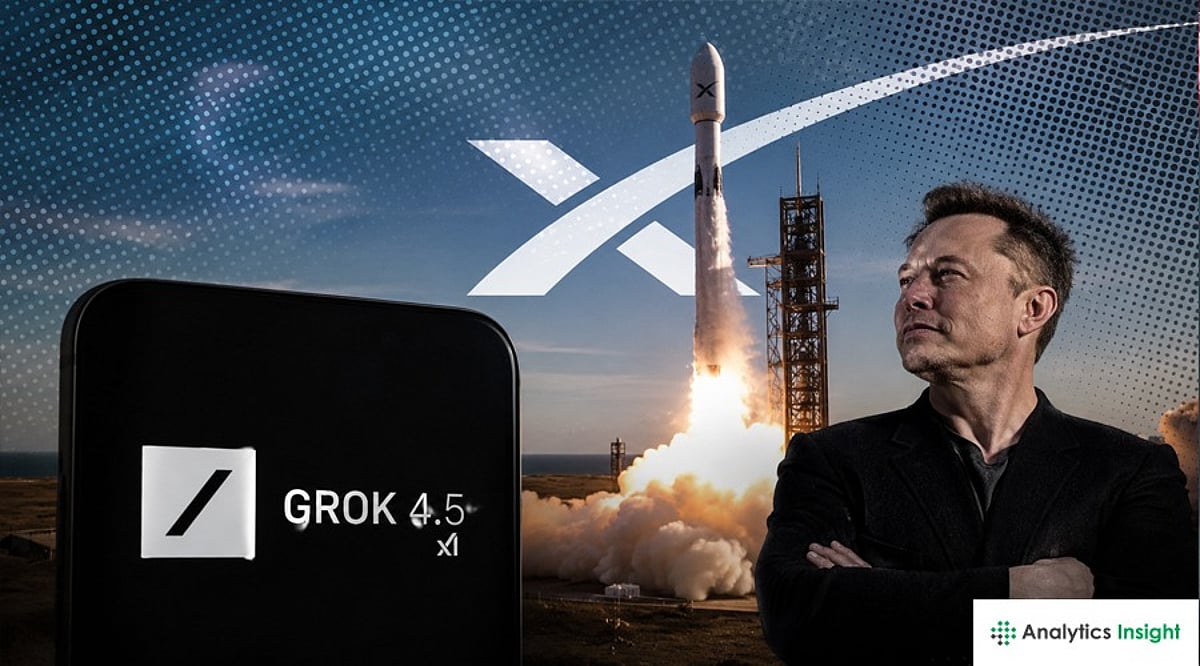
    The AI race has become even more intense. SpaceXAI will launch Grok 4.5, its latest language model, on July 9, 2026. The new model arrives before the expected release of next-generation AI systems from several rivals, making the timing hard to ignore.

    Elon Musk has been clear about his goal. He wants Grok to stand alongside the best AI models available today. With every new release, the company is trying to improve reasoning, speed, and the overall user experience. Grok 4.5 is another step in that plan.

    Grok 4.5 Brings New Upgrades to the AI Race

    Earlier this year, Elon Musk launched Grok 4.3 and stated that the company is preparing a more advanced model that will build on improved reasoning, stronger coding support, and better responses across tasks. In an official post, Musk has announced that the upcoming LLM is built on XAI’s new V9 foundation model, which features 1.5 trillion parameters. The model is also expected to handle longer conversations more naturally and provide more accurate answers.

    SpaceXAI says Grok is designed to be useful to both everyday users and developers. The company continues to expand its AI tools while keeping Grok closely connected to X. This gives users quick access to AI without leaving the platform.

    The launch also shows that Musk wants to compete directly with the biggest names in AI. OpenAI, Google, and Anthropic have all released stronger models over the past year. Grok 4.5 is SpaceXAI’s answer to that growing competition.

    Why Launch Grok 4.5 Now?

    The timing may be just as important as the technology. Several AI companies are expected to introduce major updates in the coming months. By releasing Grok 4.5 now, SpaceXAI keeps itself in the spotlight before its rivals make their next moves. Even Musk has mentioned that Grok 4.5 is ‘Opus-Class,’ which is a direct reference to its rival Claude’s general language model, Claude Opus.

    The company also wants developers and businesses to use Grok before newer models from competitors arrive. Companies often go for early releases to get feedback and improve performance. This helps them strengthen their user base before the next stage of the AI race begins.

    Competition in AI is moving faster than ever. Every launch now becomes part of a larger battle to attract users, developers, and businesses.

    What Grok 4.5 Could Mean for X Users?

    The most significant transformation isn’t the launch of the model; instead, it’s the implementation. If it works properly, tasks like searching, content discovery, and writing will be much more convenient on X.

    With the arrival of an advanced tool like Grok, the platform may grow larger than a mere social network. It can be a powerful solution to many tasks such as information discovery, post creation, and communication with users.

  • Tesla and SpaceX Stock Slide Hits Retail Investors as AI-Led Rally Fades

    Tesla and SpaceX Stock Slide Hits Retail Investors as AI-Led Rally Fades

    Retail investors are facing significant losses after a sharp decline in Tesla and SpaceX shares, following a strong rally earlier this year. The downturn has affected global investors, including those in India who purchased U.S. stocks through international platforms.

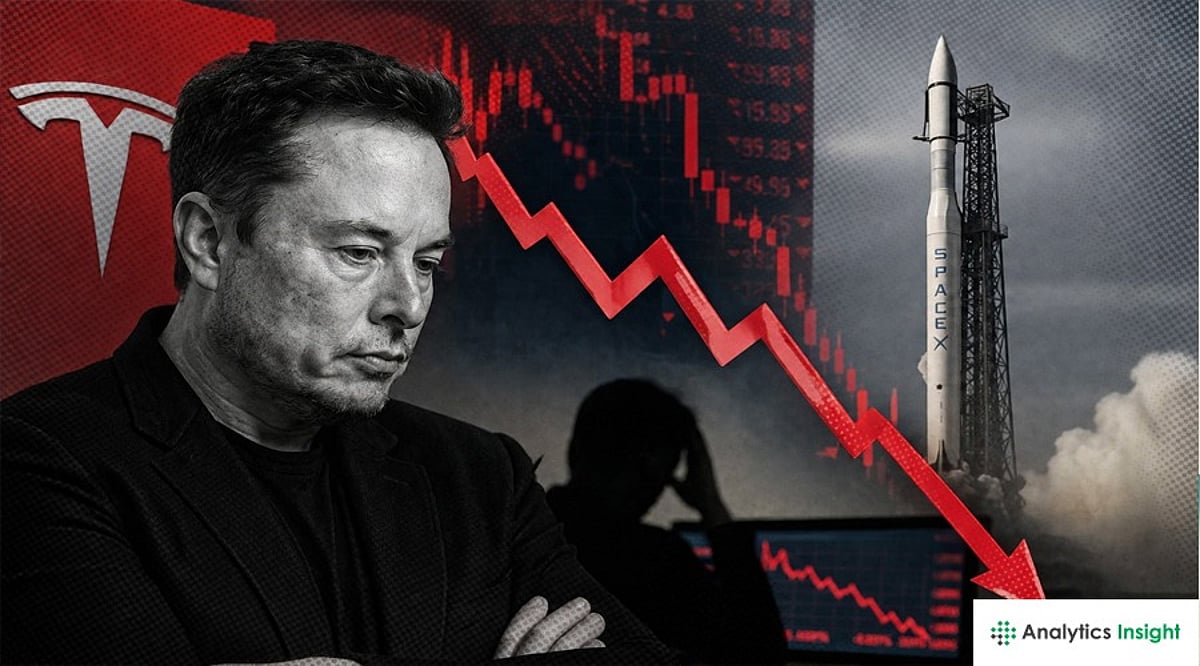
    Tesla is currently trading near $393, roughly 21% below its 52-week high of $498.83. SpaceX has fallen about 30% from its post-listing intraday high of $225.64 to around $157–158. The company debuted on Nasdaq on June 12 after pricing its IPO at $135 and opening at $150.

    The correction has also eroded Elon Musk’s paper wealth. His net worth briefly surged after the SpaceX listing but later dropped below the trillion-dollar mark as both stocks weakened. For retail investors, the focus has shifted from Musk’s fortune to their own exposure in these two volatile stocks.

    Why Tesla and SpaceX Fell After Strong Performance

    Tesla’s decline came despite the company reporting strong second-quarter delivery numbers. This indicates that investors are looking beyond vehicle sales and weighing future plans in autonomy, robotaxis, and AI-linked businesses. SpaceX faces a different challenge: its Starlink, rocket launch, and space infrastructure businesses have drawn interest, but a limited public float has amplified price swings.

    The correction has already triggered selling by some investors. Tesla has appeared among the most sold stocks on Vested Finance, according to platform data. SpaceX also saw strong retail demand after its IPO, including from Indians investing under the Liberalised Remittance Scheme (LRS).

    Viram Shah, founder and CEO of Vested Finance, explained that the selloff reflects both business expectations and broader market repricing. “One is the actual businesses, and the other is the way the market’s re-pricing a whole basket of AI-linked names right now,” he said.

    AI-Linked Valuations Under Scrutiny

    Shah noted that Tesla’s recent stock move shows the market is not solely focused on cars. “Tesla just posted its strongest Q2 deliveries in a while, and the stock still fell. That tells you the move isn’t really about cars,” he said. He added that investors are questioning how much of Tesla’s valuation should depend on autonomy and robotaxi plans, which may take time to prove.

    SpaceX has faced pressure despite strong interest in its core business. “Starlink’s profitable and growing, the launch business is setting records; what’s moving the stock is a very thin float and a premium valuation, so any selling gets magnified,” Shah said.

    The broader market mood has turned cautious toward AI-linked stocks. Investor Michael Burry, known for his bet before the 2008 housing crash, has disclosed bearish positions against Tesla and other AI-related names, adding concern that some technology shares may have outpaced earnings support.

    Shah described the current fall as a mix of profit-booking and a market re-rating. “You had a near-vertical run in SpaceX right after listing and a strong 2025 in Tesla, so some of this is just gains being taken. But underneath it, the market’s asking a harder question about how it wants to price these AI and space bets, and that’s the re-rating part.”

    Advice for Indian Retail Investors

    For Indian investors, experts recommend reviewing portfolio allocation rather than reacting to price moves. Selling only during a fall can lock in losses, while buying more at a lower price can increase risk. High-growth stocks like Tesla and SpaceX can move sharply, with large portions of their valuations depending on future businesses.

    Investors should check whether one or two U.S. stocks have become too large in their portfolio. A long-term investor may view short-term volatility differently from someone with a shorter time horizon. However, a large position can heighten risk even if the company’s business remains strong.

    “A great company and a great entry price aren’t the same thing,” Shah said. “For Indian investors going global through the LRS route, the discipline’s the same as always: size it so a rough quarter is a nuance in the portfolio, not the whole story.”

    Newly listed stocks can remain unstable for several quarters. SpaceX still has a limited public float, and future lock-up expiries may add more shares to the market, potentially affecting prices.

  • Tesla Limits Employee AI Tool Spending to $200 Per Week Amid Corporate Cost Reviews

    Tesla Limits Employee AI Tool Spending to $200 Per Week Amid Corporate Cost Reviews

    Tesla will cap employee spending on outside AI tools at $200 per week starting July 6, according to internal reports. The move comes as companies across the U.S. review rising workplace AI costs after pushing staff to adopt the technology. Grok, the AI system linked to Elon Musk’s xAI, is excluded from the limit, while higher spending will require special approval.

    Tesla Sets Weekly AI Spending Limit

    Tesla’s new rule places a weekly limit on staff use of external AI systems, including tools for coding, research, writing, and other workplace tasks. The cap is set at $200 per employee each week, with higher spending requiring approval. This marks a shift from earlier corporate pressure to increase AI adoption. Tesla and other companies had urged employees to use AI tools to raise output and speed up work. Musk said earlier this year that AI could make worker “output” get “nutty high.”

    However, AI use has become more expensive as workers rely on advanced tools and coding agents. These systems can run tasks continuously, retry failed steps, and consume large amounts of computing power. As a result, companies are now monitoring how much each employee spends. The cap also shows how firms are trying to separate useful AI work from routine or low-value use. Some employees may now have to choose cheaper tools or reserve AI use for tasks that need more support.

    Corporate AI Bills Face New Scrutiny

    Tesla is not alone in adding limits. Uber recently capped employee use of AI tools at $1,500 per month. Meta, Walmart, Coinbase, and AT&T have also moved to review or limit staff use of external AI systems, according to reports. The change follows a period when many companies pushed workers to use AI as much as possible. Some firms tracked usage through tokens, which measure how much an AI system processes. This trend became known as “tokenmaxxing,” as workers were judged by how much AI they used.

    Nevertheless, the approach created cost concerns. Reports say some companies spent their full annual AI budgets within a few months. In other cases, small groups of employees spent more on AI tools than larger teams. AI coding agents are one reason for the higher costs. Unlike a chatbot that replies once, an agent may call AI models many times while completing a task. That can raise bills quickly, even when the price of each computing unit falls. Meanwhile, companies are trying to balance adoption with expense control. The new limits do not signal a full pullback from AI use. Instead, they show that firms want clearer rules on how employees use paid tools.

    Musk Defends Long-Term AI Growth

    The cost controls come as investors debate whether heavy AI spending can produce enough business returns. Large AI infrastructure spending has helped lift parts of the stock market, but rapid corporate adoption remains central to that growth case. Responding to a post on X this week about a possible tech crash, Musk wrote, “There are always momentary dips, even in a rapidly growing economy.” He added that “the productivity gains from AI and robotics are so enormous” that the wider trend is “overwhelmingly up.”

    Tesla still wants to present itself as an AI-focused company. Musk has pointed to driverless technology and Optimus Robots as major parts of Tesla’s future. This week, he said Tesla had started making Optimus bots at its Texas factory. However, the company faces pressure in its main electric vehicle business. Tesla is competing with lower-cost Chinese EV makers, while demand in some markets has shifted. Even so, the company posted a 25% rise in quarterly sales this week after a rebound in Europe. The weekly AI cap shows that Tesla is still pushing AI use, but under tighter spending rules. For now, the company is asking staff to use outside AI tools with more control as corporate AI bills face closer review.

  • X Money Rolls Out Fiat Payments for Premium+ Users Through Cross River Bank

    X Money Rolls Out Fiat Payments for Premium+ Users Through Cross River Bank

    X has begun rolling out X Money to Premium+ subscribers, opening access to fiat payments through Cross River Bank’s banking infrastructure. The launch advances Elon Musk’s plan to build an all-in-one platform for communication, commerce, and financial services. For now, the service supports traditional currency and has no confirmed cryptocurrency integration.

    X Money Starts With Regulated Banking Rails

    Eligible Premium+ users can send and receive fiat payments within X. Cross River Bank manages transaction processing and customer accounts, providing the regulated foundation for the new service. The initial setup uses conventional banking channels rather than blockchain networks. It also keeps the first phase focused on familiar payment methods.

    X has not announced support for cryptocurrency transfers, stablecoin payments, tokenized assets, or blockchain settlement. Instead, X Money allows the platform to add financial functions through an established banking partner. The first rollout therefore centers on traditional payments while leaving future digital asset features unconfirmed. The service initially remains available only to eligible Premium+ subscribers.

    The launch represents one of X’s largest product expansions since Musk acquired the platform. He has repeatedly outlined plans for an ‘everything app’ combining social networking, messaging, payments, banking, and commerce. X Money now brings part of that strategy into operation. The service adds financial activity to the platform’s existing communication and commercial ambitions.

    Cross River Link Fuels Cryptocurrency Speculation

    Cross River Bank is a United States financial institution with experience supporting fintech and blockchain companies. Its role in X Money has therefore renewed speculation about possible cryptocurrency features. Much of that discussion has focused on Ripple and XRP. The bank’s digital asset connections have drawn greater market attention to the rollout.

    Still, the bank’s industry relationships do not prove that Ripple technology powers the service. X, Cross River Bank, and Ripple have made no announcement linking X Money with XRP. They have also provided no evidence of blockchain-based payment processing within the platform. The available information supports only a fiat-based service.

    The current design depends on regulated banking infrastructure. Customers use traditional currency through Cross River Bank’s systems, not a confirmed digital asset network. Claims about active XRP integration therefore remain unsupported by the information released about the rollout. The service can expand its financial functions without introducing cryptocurrency settlement.

    Future Digital Asset Features Remain Unconfirmed

    X has left open the possibility of adding more financial services as Musk develops a broader financial ecosystem. Yet the platform has announced no plan, timetable, or technical framework for cryptocurrency support. Its present structure shows how regulated banking partners can help technology companies enter payments first. That model connects consumer platforms with established financial channels.

    Could X Money eventually bring digital assets to a major consumer platform? Future additions could include stablecoins, tokenized assets, or cryptocurrency transfers, but X has confirmed none of those functions. Any such expansion would require a separate announcement and clear operating details. Until then, speculation cannot replace official confirmation.

    Should X later add cryptocurrency payments, the platform could bring digital assets directly to a large mainstream audience. For now, X Money remains a fiat payment service for eligible Premium+ users. Investors and users will watch X, Cross River Bank, and Ripple for verified updates. Future announcements will determine whether the service moves beyond conventional payments.

    What’s Next?

    X Money marks a major step in X’s expansion into financial services by enabling fiat payments for Premium+ users through Cross River Bank. While cryptocurrency and XRP integration remain unconfirmed, future announcements could reveal whether the platform plans to introduce digital asset support.

  • Tesla Stock Closes Above $420 for First Time, Reigniting Meme Trading and Retail Interest

    Tesla Stock Closes Above $420 for First Time, Reigniting Meme Trading and Retail Interest

    Tesla shares closed above $420 for the first time since the company went public 16 years ago, rekindling meme-driven trading and drawing renewed attention from retail investors. The stock ended Tuesday’s session at $420.60, a milestone long associated with CEO Elon Musk and internet culture.

    According to Vanda Research, retail buying activity historically increases when Tesla trades above $420. Global macro strategist Viraj Patel noted that the average five-day retail net buying jumps from $87 million to $135 million after the stock crosses that level. Since mid-2024, retail investors have purchased more Tesla shares on nine of the 14 occasions the stock traded above $420.

    The number 420, originally tied to cannabis culture, became a widespread internet meme and later a recurring reference in Musk’s public comments. Roundhill Investments CEO Dave Mazza remarked, “I can’t believe I’m actually writing this, but it really comes down to the same two magic numbers, $420 and $69, that get the meme crowd going.”

    Tesla’s close above $420 quickly spread across social media platform X, where users shared memes and jokes. Interactive Brokers chief strategist Steve Sosnick said, “I’m surprised it took until now for Tesla to see a $420 close. It’s been a Musk-related meme for years.” The stock continued climbing Wednesday, trading near $426 ahead of the company’s second-quarter delivery report.

    The $420 level remains tied to Musk’s 2018 tweet about taking Tesla private at $420 per share with “funding secured.” That tweet led to an SEC securities fraud lawsuit, but the number has persisted as a cultural touchstone. Karobaar Capital’s Haris Khurshid noted, “Tesla has one of the most engaged retail investor bases in the market, so numbers like that tend to take on a life of their own.”