Tag: Enterprise AI

  • Agentic AI Market Forecast to Reach $290.62 Billion by 2035, Driven by Enterprise Adoption and Multi-Agent Systems

    Agentic AI Market Forecast to Reach $290.62 Billion by 2035, Driven by Enterprise Adoption and Multi-Agent Systems

    The global agentic AI market is projected to surge from USD 8.19 billion in 2025 to USD 290.62 billion by 2035, registering a compound annual growth rate (CAGR) of 42.88% between 2026 and 2035, according to the Global Agentic AI Market 2026 report by Analytics Insight. The market is expected to reach USD 12.13 billion in 2026, reflecting a shift from AI systems that mainly generate content and recommendations toward systems that can plan, reason, coordinate, and execute multi-step tasks.

    The report emphasizes that the next phase of growth will depend on more capable models and their reliability, security, governance, integration, evaluation, and accountability. As enterprises increasingly deploy AI systems that can access business data, use software tools, and take action within defined limits, the market is expected to expand more than 5.8 times between 2030 and 2035.

    Agentic AI Market Growth Accelerates

    Investment conditions are helping push this forward. Stanford HAI’s 2026 AI Index lists global corporate AI spending at USD 581.7 billion, up 130% from the previous year. NVIDIA’s newest reports also point to strong growth in data center sales, with revenue up 117% year over year. At the same time, major cloud and tech firms are planning capital spending of about USD 745 billion for 2026.

    Deloitte’s 2026 State of AI in the Enterprise study, which included 3,235 executives in 24 countries, showed that 74% of companies expect to run AI agents by 2027.

    Adoption Is Still Behind Early Trials

    The report calls out a clear gap: many firms want agentic AI, but fewer are using it at full scale. McKinsey data shows 88% of companies use AI in at least one area, but only 23% have scaled agentic AI across their business. In another McKinsey survey, 62% said they were trying AI agents, yet only 23% had scaled an agentic system. No single business area reached 10% adoption at scale, suggesting most organizations are still in pilots and early testing rather than full rollout.

    Solutions Lead as Enterprises Build Agent Platforms

    The market is expected to remain solution-led during the forecast period. Agentic AI solutions are projected to increase from USD 5.12 billion in 2025 to USD 168.56 billion by 2035, while services are forecast to rise from USD 3.07 billion to USD 122.06 billion. The report attributes the strength of solutions to enterprise spending on agent platforms, orchestration software, development tools, and application-specific agents. Services are expected to gain ground as businesses require systems integration, security, governance, workflow redesign, and managed AI services for production deployment.

    Multi-Agent Systems Set to Reshape Architecture

    The report identifies a shift from standalone agents toward coordinated multi-agent environments. Single-agent systems are projected to grow from USD 5.01 billion in 2025 to USD 139.50 billion by 2035, while multi-agent systems are forecast to rise from USD 3.19 billion to USD 151.12 billion, registering a 47.09% CAGR. The transition remains in its early stages, with current enterprise deployments largely concentrated in one or two business functions. However, 85% of enterprises expect to customize agents to meet their specific requirements.

    Hybrid Deployment Records Fastest Growth

    On-premises deployment is expected to remain the largest category, increasing from USD 4.74 billion in 2025 to USD 124.96 billion by 2035. Cloud deployment is forecast to reach USD 110.43 billion, while hybrid deployment is expected to reach USD 55.22 billion. Hybrid deployment has the fastest projected CAGR at 51.05%, supported by enterprises seeking scalable AI capabilities alongside private infrastructure and controlled environments.

    IT, Cybersecurity, and BFSI Drive Expansion

    Customer support tools and virtual assistants remain the top application category, growing from about USD 2.28 billion in 2025 to about USD 61.03 billion by 2035. Other categories also grow fast: IT operations and software development are forecast to reach around USD 68.29 billion, data and analytics about USD 29.06 billion, and cybersecurity approximately USD 21.80 billion. The report also points to fast risers including cybersecurity, legal and compliance, operations and supply chain, data and analytics, and IT operations. BFSI is expected to remain the largest end-use industry in 2035.

    North America Leads, Asia Pacific Grows Faster

    North America remains the biggest market by value, at about USD 3.18 billion in 2025 and forecast to reach around USD 98.81 billion by 2035. Asia Pacific is expected to grow faster, starting at USD 2.22 billion in 2025 and reaching nearly USD 107.53 billion by 2035, with a CAGR of 47.40%. Europe is also expected to rise, from about USD 2.08 billion in 2025 to around USD 66.84 billion in 2035.

    Reliability and Governance Remain Key Hurdles

    Despite the market’s growth trajectory, reliability remains a major constraint. Stanford HAI’s 2026 AI Index indicated that agents complete around 66% of tasks successfully on OSWorld, meaning one in three attempts still fails. Gartner reported that a Fortune 500 enterprise could run more than 150,000 agents by 2028, up from fewer than 15 in 2025, while only 13% of organizations believed they had adequate governance.

    The report expects the next phase to move agentic AI beyond standalone software into enterprise workflows, digital infrastructure, and eventually physical environments. Multi-agent systems, persistent memory, robotics, vertical AI agents, and human-agent collaboration are expected to shape that transition. The broader outlook is that commercial value will increasingly depend on whether agents can perform important tasks reliably, securely, and at scale, rather than simply demonstrating what AI can do.

  • Baselayer Secures $35M to Create a Trust Infrastructure for Autonomous AI Agents

    Baselayer Secures $35M to Create a Trust Infrastructure for Autonomous AI Agents

    Baselayer has raised $35 million in a funding round led by M13 to build what it describes as a ‘trust layer’ for artificial intelligence agents. The investment comes as enterprises increasingly rely on AI systems that can act autonomously and make critical decisions across business workflows.

    The new capital will support Baselayer’s efforts to develop infrastructure that provides AI agents with trusted business identity data, risk intelligence, and reliable decision-making capabilities. The platform aggregates business identity, people and ownership information, digital presence, and fraud, legal, credit, and compliance risk signals.

    Baselayer also introduced its Model Context Protocol (MCP), which gives AI agents direct access to the company’s business identity and risk intelligence. This system is designed to supply agents with evidence-backed context before they execute actions, reducing the risk of decisions based on incomplete or unreliable data.

    The company’s technology targets high-stakes workflows in compliance, procurement, finance, risk, and sales — areas where agentic AI is gaining traction but still requires robust controls around reliability and accountability. Customers can use Baselayer’s intelligence to verify businesses and associated individuals, conduct due diligence, monitor risk changes, and improve supplier evaluation.

    As AI agents move from answering questions to taking autonomous actions, questions of identity, accountability, and trust become paramount. Baselayer’s latest funding aims to close the infrastructure gap and support the emerging agentic economy.

  • AI-Powered Startups Raise $310.7 Million in Latest Venture Capital Roundup

    AI-Powered Startups Raise $310.7 Million in Latest Venture Capital Roundup

    This week, five startups across artificial intelligence, semiconductor verification, enterprise software, HR technology, and interactive content collectively raised $310.7 million in fresh venture funding. The largest deals included a $200 million round for software development company Factory and a $53 million seed extension for enterprise AI services startup Hang Ten Systems. Investors continue to back applied AI solutions, with deals ranging from seed to Series B.

    Factory Leads with $200 Million at $5 Billion Valuation

    Software development startup Factory secured the largest disclosed round this week, raising $200 million at a $5 billion valuation. The financing included Blackstone, Khosla Ventures, Sequoia Capital, Insight Partners, Evantic Capital, Sound Ventures, NEA, Mantis VC, and Clearlake. The company said total funding now exceeds $400 million. Factory develops autonomous software-engineering systems for enterprises and plans to use the new capital for research, product development, and global expansion. Customers include NVIDIA, Blackstone, RBC, Palo Alto Networks, Adobe, and T-Mobile.

    Hang Ten Systems Adds $53 Million for Enterprise AI

    Enterprise AI services startup Hang Ten Systems, founded by former Infosys CEO Vishal Sikka, raised an additional $53 million in seed funding. The round was led by Xora Innovation, backed by Singapore’s Temasek, with participation from Mayfield and Aramco Ventures. This brings Hang Ten’s total funding to $85 million after its $32 million seed round in June. The company helps large enterprises apply AI to software development, migrations, finance, and analytics. The new funds will support engineering and consulting expansion, increased customer delivery capacity, and further development of its AI platform and reusable skills library.

    Flam Secures $40 Million Series B for AI Interactive Content

    AI interactive-content startup Flam raised $40 million in Series B funding led by QED Investors. Other participants included Claypond Capital, Martin Chavez, Olivier Pomel, Venky Harinarayan, and Shah Rukh Khan, with existing investors RTP Global and Dovetail increasing their stakes. Flam plans to direct the funding toward AI research, product development, and international enterprise expansion. The company reports more than 100 enterprise customers, including Google, Emirates, and KFC, using its technology for marketing, product visualization, learning, entertainment, and customer engagement.

    BoomerangHR Raises $12.7 Million for AI-Powered HR Platform

    AI-powered HR platform BoomerangHR raised $12.7 million in seed funding from Kalos Ventures, Album Ventures, Monta Vista Capital, Capital Eleven, and Strada Education Foundation. The company focuses on employee offboarding and maintaining relationships with former employees, enabling businesses to identify potential candidates for future roles. Its platform combines automated offboarding processes with verified alumni profiles, job matching, and reporting. BoomerangHR said the funding will support building long-term talent networks and expanding adoption among employers.

    VerifAIX Raises $5 Million for AI-Driven Semiconductor Verification

    AI-native semiconductor verification company VerifAIX raised $5 million in seed funding co-led by Endiya Partners and Bluehill VC. The company plans to use the capital for product development, customer deployments, and expansion of its engineering teams across the US, India, and Israel. VerifAIX is developing a verification platform for increasingly complex chip designs. Its technology, built around what the company calls a ‘Formal Brain’, combines AI with formal verification methods to help engineers assess whether chip designs meet intended specifications. The startup was founded in 2024 by Madhulima Tewari, Kenneth Roe, and Avner Landver.

    Closing Note

    Together, the week’s $310.7 million in disclosed funding shows continued investor interest in applied AI across multiple sectors, from enterprise software and chip verification to HR technology and interactive content. Capital is flowing into companies at various stages seeking to turn AI capabilities into commercial products and services.

  • Google Gemini 3.8 Flash: A New AI Model for Autonomous Coding and AI Agents

    Google Gemini 3.8 Flash: A New AI Model for Autonomous Coding and AI Agents

    Google has released Gemini 3.8 Flash, its latest AI model designed to power autonomous coding agents and handle complex enterprise tasks with minimal human intervention. Available since September 2, 2026, this model is positioned as Google’s most capable Flash variant yet, targeting long-horizon software development workflows.

    Massive Context for Complex Codebases

    Gemini 3.8 Flash supports a context window of up to 1 million tokens and can generate up to 64,000 output tokens. It accepts text, images, audio, and video inputs. Developers can adjust the model’s effort level to low, medium, or high, allowing teams to balance quality, cost, and speed according to their specific tasks.

    This large context is especially valuable for software agents that need to process entire codebases, including multiple files, tests, logs, and configuration details in a single workflow. The model can handle complex multi-file refactors and deterministic tool tasks effectively.

    Google Antigravity now uses Gemini 3.8 Flash as its default agent model, and its software development kit defaults to it as well. This integration enables agents to plan tasks, make code changes, call tools, and review results within a unified workflow.

    Built-in Tools for Autonomous Action

    The API provides Gemini 3.8 Flash with access to built-in tools such as function calls, code execution, file search, URL context, and structured output. Computer use remains in preview. These tools are essential for agents that need to act on software, gather information, inspect files, and deliver clear results.

    Benchmark Results Highlight Long-Task Strengths

    Google reports a 73.7% score for Gemini 3.8 Flash on DeepSWE v1.1, a benchmark for long-horizon software tasks, compared to 65.3% for Gemini 3.7 Flash. On Terminal-Bench 2.1, an agentic terminal coding benchmark, the model achieved 89.4%, up from 85.8% for its predecessor.

    These results demonstrate the model’s focus on tasks requiring multiple actions rather than single code answers. The model can take extra analysis steps and make repeated tool calls for harder tasks, though this may increase token usage, especially at higher effort levels. Lower effort settings can reduce costs when deep analysis isn’t required.

    Additional benchmarks include 61.4% on the Vals Finance Agent v2 benchmark, a 10% pass rate on the Harvey Legal Agent Benchmark, and 54.9% on HLE-Verified, indicating broader applicability across finance, law, science, and other expert domains.

    Competitive Pricing for Production Workflows

    Gemini 3.8 Flash launched at $0.75 per 1 million input tokens and $3.75 per 1 million output tokens, with these rates guaranteed through December 31, 2026. After that, standard rates will increase to $1.50 per 1 million input tokens and $7.50 per 1 million output tokens.

    This pricing is significant for agent systems that make many model calls per task. The true measure becomes the cost of completing a task, not just the price of a single response. However, lower token costs don’t eliminate the need for robust safeguards, including tests, code review, access limits, sandbox controls, and approval steps for serious software work.

    Expanding the AI Agent Ecosystem

    Google’s broader Gemini 3.8 release includes Gemini 3.8 Flash Cyber, a separate model for trusted defenders that can find software flaws and create patches. The Fairwind Program provides access to selected government groups, critical infrastructure operators, and software maintainers.

    Additionally, two Gemini 3.8 Live models were released on September 15 for real-time voice agents, expanding the family beyond software work into live agent systems with audio input and output.

    Gemini 3.8 Flash represents a shift from simple code assistance toward software agents capable of handling longer tasks, using tools, inspecting results, and continuing work autonomously. With its 1 million-token context, adjustable effort, low price, and strong long-task performance, Google has created a model aimed at the practical side of autonomous AI. The real test now goes beyond benchmark scores: whether these agents can complete real software work with fewer errors, fewer retries, and less human help.

    FAQs

    1. What is Gemini 3.8 Flash?
    Gemini 3.8 Flash is Google’s latest Flash model, designed for complex reasoning, autonomous AI agents, software development, and enterprise workloads.

    2. What is the context window of Gemini 3.8 Flash?
    It supports a context window of up to 1 million tokens, allowing agents to work with large amounts of project and reference information.

    3. Can Gemini 3.8 Flash perform autonomous coding?
    Yes. It can use tools, inspect files, modify code, execute commands, and evaluate results, supporting multi-step software-development workflows.

    4. How much does Gemini 3.8 Flash cost?
    The launch pricing is $0.75 per 1 million input tokens and $3.75 per 1 million output tokens, with standard rates scheduled to increase from January 1, 2027.

    5. What makes Gemini 3.8 Flash different from a basic coding assistant?
    It is designed for longer workflows where an agent can plan, take multiple actions, use external tools, test its work, and continue iterating rather than simply generating code.

  • Enterprise AI Beyond Model Size: Vivek Kumkar’s Blueprint for Cost-Efficient Multimodal AI at AWS

    Enterprise AI Beyond Model Size: Vivek Kumkar’s Blueprint for Cost-Efficient Multimodal AI at AWS

    As enterprise organizations scale their artificial intelligence deployments, the industry conversation is rapidly pivoting from raw model size to infrastructure efficiency and operational costs. At Amazon Web Services (AWS), Senior AI Engineering Leader Vivek Kumkar guides cross-functional teams of applied scientists and engineers building high-throughput data extraction services. His work addresses a central question facing modern cloud architecture: how to deliver enterprise-grade AI workloads reliably while maintaining sustainable unit economics.

    Decoupling Inference Fleets from Model Training

    Kumkar’s approach to scaling enterprise AI builds directly upon his background in high-availability distributed storage systems. Earlier in his tenure at AWS, he led core engineering initiatives for AWS Elastic Block Store (EBS) snapshot services, authoring U.S. Patent 11,262,918 B1 along with multiple pending patents in distributed data infrastructure.

    Applying these distributed systems principles to multimodal AI, Kumkar advocates an architectural model that separates model training environments from production inference fleets. By utilizing workload-aware, distributed networks backed by domain-specific hardware acceleration and intelligent edge caching, enterprise systems can route processing tasks dynamically while preserving precision.

    “Designing for enterprise AI requires applying classic distributed systems principles,” Kumkar noted during a cloud architecture panel. “Automated recovery, strict consistency boundaries, and efficient hardware utilization are what allow multi-region cloud services to absorb unpredictable demand without degradation.”

    Real-World Cost Bounds and Latency Limits

    While research institutions continue pushing the boundaries of parameter counts, Kumkar emphasizes that commercial viability in production hinges on unit economics and latency control. Processing multi-layered inputs, combining complex text, high-resolution visual data, and continuous audio, creates severe computational bottlenecks across cloud infrastructure fleets.

    “Adding parameters to a model does not automatically solve real-world performance issues,” Kumkar explained. “In enterprise environments, if an infrastructure fleet cannot process complex visual data and text with low latency and predictable cost, the system fails commercial requirements regardless of model size.”

    Contributions to Research and Technical Communities

    Beyond scaling enterprise cloud services, Kumkar’s influence extends across the broader engineering ecosystem. His technical contributions led to his elevation as an IEEE Senior Member, reflecting ongoing leadership within the systems community. Kumkar routinely evaluates peer-reviewed research for international AI and healthcare conferences and serves on judging panels for global engineering competitions, such as Major League Hacking (MLH) Build with AI and United Hacks V7. As enterprise adoption shifts from small-scale testing to core operational reliance, Kumkar’s focus on infrastructure economics provides a practical framework for cloud deployment.

    Credit: Vivek Kumkar

  • Enterprise Agentic AI: Unlocking Benefits While Navigating Challenges and Implementation

    Enterprise Agentic AI: Unlocking Benefits While Navigating Challenges and Implementation

    Agentic AI has evolved beyond simple conversational tools. Enterprise systems can now manage multi-step workflows, tap into business databases, call software APIs, and execute actions with minimal human oversight. This shift presents a significant business opportunity, but it also forces a critical question: how much autonomy should an enterprise grant an AI system?

    The answer hinges on the task, the data involved, the associated risk, and the value at stake. Current enterprise data reveals a clear gap between interest and measurable results. McKinsey reports that nearly two-thirds of enterprises have experimented with AI agents, yet fewer than 10% have scaled them to deliver tangible value. Additionally, 80% of companies cite data limitations as a major barrier to scaling.

    From Answers to Actions

    Traditional AI tools often stop after generating text, analyzing data, or suggesting a next step. An agent can take the process further: it can review a request, check company records, use an approved system, make a decision, and complete a task. This model can support areas such as customer service, finance, sales, legal work, procurement, and IT. The value comes from the full workflow rather than a single response.

    OpenAI enterprise data shows how fast this shift has grown. In June 2026, agentic use made up 64% of combined enterprise output tokens from Codex and ChatGPT. Weekly active Codex users also grew across functions outside software development, including legal, sales, recruiting, and marketing.

    Specialized Agents Deliver Stronger Returns

    Enterprise leaders now have clearer evidence about where agents can create value. Gartner found that specialized, domain-focused agents offer the strongest path to measurable returns. Gartner predicts that specialized agents will produce 80% of tangible agentic AI return on investment by 2028.

    A parts-order process offers a useful example. One industrial services deployment produced about USD 3 million in annual return and freed 90,000 technician hours. The result came from a narrow business task rather than a broad AI project. This approach gives enterprises a practical lesson: a focused agent with clear authority can create more value than a general system with access to many unrelated tasks.

    Data and Security Remain Major Barriers

    An agent needs reliable information to make sound decisions. Many large companies still keep data across separate databases, older software, and isolated departments. Poor data quality, weak access rules, and unclear data ownership can limit agent performance. Security also takes on a new role. A normal application may wait for a person to approve an action. An autonomous agent can decide and act within seconds, creating a need for clear rules around identity, permissions, audit records, and financial limits.

    The World Economic Forum has highlighted agent authorization, delegation policy, monitoring, and accountability as key areas for trusted enterprise use. Its work also proposes an Agent Capability and Authorization Profile to help enterprises define what an agent can access and what actions it can take.

    Agent Sprawl Creates New Management Problems

    More agents do not always mean more value. Gartner predicts that the average Fortune 500 enterprise could have more than 150,000 AI agents by 2028, compared with fewer than 15 in 2025. Only 13% of organizations currently believe they have suitable agent governance. Such growth can create duplicate tools, unclear ownership, excessive permissions, and higher technology costs. Enterprises therefore need a central control layer that can track agents, manage access, and record key actions.

    Cost control also needs attention. KPMG found that 26% of organizations have real-time visibility into AI operating costs. Without that view, a company may know how many tasks an agent completes but not the true cost of each successful result.

    A Safer Path to Enterprise Adoption

    A strong enterprise plan should start with one valuable workflow. The company can first measure task cost, processing time, error rates, and business results. A controlled pilot can then test the agent with limited data, tools, and permissions. Human review should remain part of high-risk tasks such as major financial decisions, contract approval, or production system changes. Low-risk work, such as document summaries or internal ticket creation, can support greater autonomy.

    Deloitte found that 74% of leaders expect almost half of their business processes to undergo redesign around AI agents within four years. Yet only 5% say their current processes show high readiness for AI agents, while just 15% have scaled orchestrated, cross-functional multi-agent use. That gap defines the real enterprise challenge. Agentic AI does not need more hype; it needs better process design, stronger data, clear authority, and measurable business value. The companies that connect those pieces can turn AI agents from experimental software into a controlled digital workforce.

    Frequently Asked Questions

    What is Agentic AI for enterprises?

    Agentic AI refers to AI systems that can handle multi-step tasks, use business tools, and take actions with limited human input.

    What benefits can Agentic AI offer businesses?

    Agentic AI can improve productivity, reduce process costs, speed up decisions, and support tasks across areas such as sales, finance, legal work, customer service, and IT.

    What are the main challenges with enterprise AI agents?

    Key challenges include poor data quality, security risks, unclear permissions, reliability concerns, high costs, and weak governance.

    Should enterprises give AI agents full autonomy?

    Full autonomy may suit low-risk tasks, while high-risk activities should retain human review and strict approval controls.

    How should a company start with Agentic AI?

    A company should select one valuable workflow, set clear goals, establish a baseline, limit agent permissions, and measure results before wider deployment.

  • Context AI: The Enterprise Execution Layer for AI Agents

    Context AI: The Enterprise Execution Layer for AI Agents

    Context AI is an enterprise platform designed to bridge the gap between powerful AI models and the complex, permissioned workflows that real businesses require. Rather than acting as a simple chatbot or copilot, Context provides a structured execution layer that lets companies define tasks as runbooks, grant agents access to approved systems, set review checkpoints, and measure outcomes against internal standards. Each run is fully traceable, preserving sources, tool calls, outputs, and approvals for later audit.

    The Four Pillars of Context AI

    The platform is built around four integrated components:

    • Workspace – A unified environment where people and agents collaborate on tasks.
    • Engine – The control layer that manages agent identity, permissions, tools, and isolated compute. It enforces what an agent can read, modify, or transmit, with an append-only audit trail.
    • Unify – A knowledge store that goes beyond simple vector databases. It organizes company procedures, accepted examples, corrections, and institutional context in a filesystem-like structure that agents can explore and learn from.
    • Evals – A quality assurance system that checks agent outputs against custom rubrics and approved examples. Human corrections can be turned into reusable standards, and the system supports model routing to use cheaper models when quality thresholds are met.

    Why Unify Changes the Game

    Most enterprise AI systems dump documents into a vector database and retrieve text based on similarity. Context takes a different approach with Unify. Its institutional-context layer works like a filesystem that agents can navigate, recording not just what a company knows but how that knowledge is structured across teams, projects, clients, and business functions. This structure helps agents understand relationships between pieces of knowledge, enabling more nuanced decision-making.

    Evals: Custom Quality Standards

    Public AI benchmarks are useless for a specific company’s standards. A consulting firm needs a particular memo format; a finance team requires a precise approval chain; a legal team may reject a correct answer if one rule is missed. Context’s Evals system lets teams define rubrics and accepted examples, then test agent results against those standards. Human corrections feed back into the system, creating reusable quality rules.

    Engine: Secure Agent Execution

    Enterprise agents need access to systems, but broad access creates risk. Context Engine separates agent execution from the control layer, granting only the tools a runbook allows. Different permission levels apply to different actions—read requires less authority than an external message or deletion. Credentials never appear in prompts or runbooks, and every action is logged in an append-only trail.

    Deployment Flexibility

    Context supports four deployment models: managed, customer VPC (running inside AWS, Azure, or Google Cloud), on-premises, and air-gapped. This range accommodates strict data boundaries and regulatory requirements. The company’s June 2026 update emphasized that while many firms have capable models, real deployment still depends on procedures, exceptions, and expert reasoning that often remain locked inside employees’ heads. Context aims to capture that missing operational knowledge.

    Context Desktop: Agents on Your Computer

    Now in private preview for macOS and Windows, Context Desktop lets agents work across local files, browser tabs, and authorized applications. It supports scheduled tasks, browser actions, parallel agents, and shared spreadsheets or documents. Every action keeps a run trace, and access is limited to files, folders, and systems the organization authorizes. Use cases include scheduled operations reviews, invoice reconciliation, vendor checks, and document preparation.

    Why Context AI Matters

    Context’s core thesis is that enterprise value comes not from smarter models alone, but from the layer around the model: company knowledge, workflow rules, permissions, quality standards, and past accepted work. Its platform turns those pieces into a system that agents can use and improve over time. The goal is an agent that follows a company’s method, works across approved systems, shows its work, accepts correction, and produces a result that meets a defined standard. If this model scales, Context could become central to enterprise operations.

    Frequently Asked Questions

    1. What is Context AI?
      Context AI is an enterprise AI platform that helps agents use company knowledge and perform real business tasks with control and traceability.
    2. What are the main parts of Context AI?
      The platform includes Workspace, Engine, Unify, and Evals, each supporting a different stage of agent work.
    3. What does Unify do?
      Unify organizes company knowledge, procedures, examples, and corrections so agents can use that information during tasks.
    4. How does Context AI handle security?
      Context supports permission controls and several deployment options, including managed, customer VPC, on-premises, and air-gapped environments.
    5. What is Context Desktop?
      Context Desktop lets agents work across local files, browser tabs, and authorized applications on macOS and Windows.
  • Managing AI Token Costs in Financial Services: Strategies for Visibility and Control

    Managing AI Token Costs in Financial Services: Strategies for Visibility and Control

    What Is an AI Token Cost?

    An AI token is a small unit of text that an AI model processes. It can represent part of a word, a whole word, or punctuation. AI providers typically charge based on the number of tokens processed. Input tokens are the information sent to the model, while output tokens are the model’s response. Output tokens often cost significantly more than input tokens. For financial companies, token costs can escalate quickly. A customer chatbot may handle thousands of conversations daily, and an investment research system may process lengthy reports and filings. The number of users is only part of the equation — the amount of information processed matters just as much.

    Why AI Token Costs Are Hard to Control

    Traditional technology budgets are often easier to forecast. AI consumption can change with every interaction. A simple request might use few tokens, while another could include documents, previous conversations, and detailed instructions. AI agents add another layer of complexity: one user request can trigger multiple model calls, tool calls, and retries, all increasing the final bill. Financial companies also use different models for different tasks. Using the most powerful model everywhere can create unnecessary spending.

    How Financial Companies Can Track AI Spending

    The first step is creating clear visibility into AI consumption. Companies should know which teams use each model and track usage by application, workflow, and business function. Useful metrics include cost per request, cost per user, and cost per completed task. An AI gateway or proxy can help collect this information and connect API usage with teams, applications, and internal cost centers. The FinOps Foundation recommends API governance and proxy layers for stronger attribution. Financial companies should also establish clear ownership: technology teams control architecture, finance teams manage budgets, and security and procurement have important responsibilities.

    Reduce Costs Through Smarter Model Selection

    Model selection significantly affects AI spending. Not every financial task needs a premium model. A smaller model can effectively handle document classification or simple customer-service questions. More advanced models should be reserved for complex research or reasoning tasks. This approach is known as model routing — automatically sending requests to the most appropriate model based on complexity. Prompt design also matters: unnecessary instructions and repeated information increase token usage. Companies should remove irrelevant context and summarize older conversations before sending them again.

    Use Caching, Batching, and Workflow Controls

    Repeated information does not always need to be processed from scratch. Prompt caching can reduce repeated input-token costs, especially for financial applications using stable documents or instructions. Research systems may repeatedly reference the same datasets or regulatory materials. Batch processing can also lower costs for non-urgent workloads by processing large groups of tasks together. Agentic workflows require additional controls: limit unnecessary retries and repeated tool calls, and monitor agent loops and escalation paths. A McKinsey report identified caching, model selection, prompt optimization, and workflow controls as important AI cost levers.

    Build AI Cost Management Around Business Value

    Financial companies should not treat token spending as only an IT problem. The bigger question is whether that spending creates measurable business value. A cheaper model is not useful if it produces poor results, while an expensive model can be justified for high-value financial analysis. Companies should connect AI costs with measurable outcomes such as processing time, customer resolution rates, or analyst productivity. The emerging discipline of “tokenomics” focuses on this broader relationship, considering model selection, routing, workflows, infrastructure, and business value as a whole. AI costs will remain an important concern as adoption expands. Financial companies need visibility before optimization and governance before AI spending becomes difficult to control. The strongest approach combines finance, technology, security, and business teams. Token costs are only one part of AI economics — managing them effectively requires understanding the entire workflow behind each AI request.

  • Understanding MCP: How Model Context Protocol Powers Modular AI Pipelines

    Understanding MCP: How Model Context Protocol Powers Modular AI Pipelines

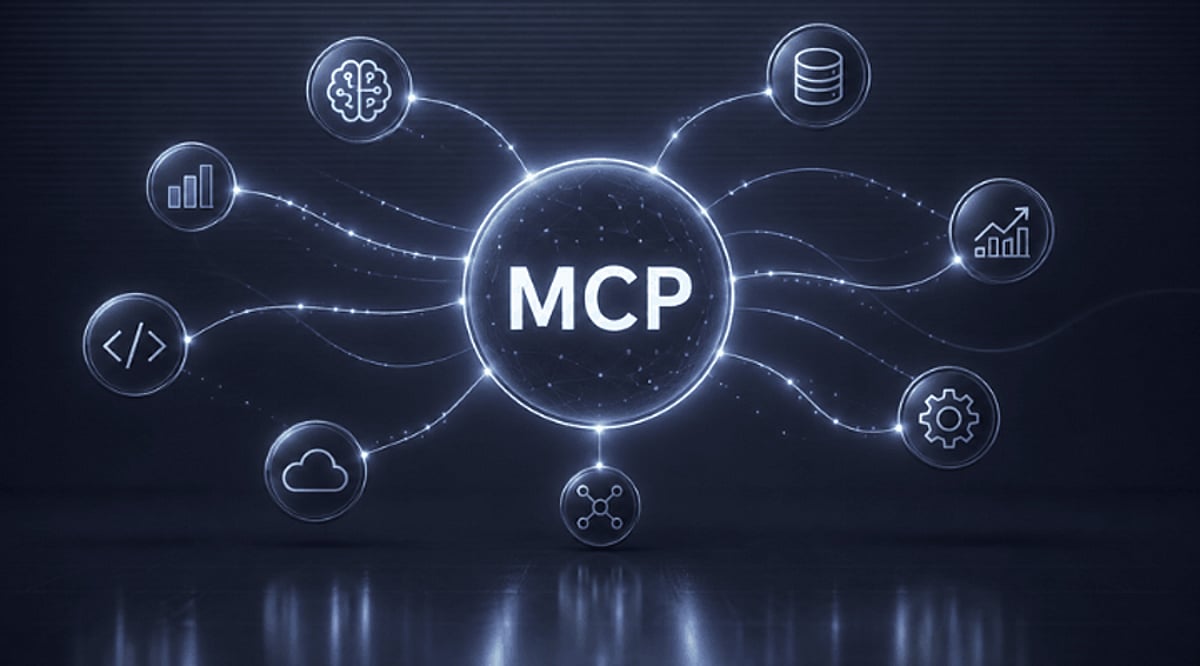
    As artificial intelligence applications become more sophisticated, they increasingly need to interact with external tools, databases, and services. The Model Context Protocol (MCP) provides a standardized way for AI systems to connect with these capabilities, enabling developers to build modular systems instead of creating separate integrations for every application.

    What Is MCP?

    MCP is an open protocol designed to connect AI applications with external tools and data sources. Rather than hard-coding every connection, developers can use a common framework for exposing capabilities. This simplifies linking models with services that provide useful context or actions, making AI systems more flexible and maintainable.

    MCP Servers Provide Capabilities

    An MCP server can expose tools, resources, and prompts that an AI application can use. For example, a server might provide access to files, databases, APIs, or business systems. This creates a modular layer between the AI application and the underlying service, allowing each component to be updated independently.

    MCP Clients Connect the Pieces

    An MCP client sits inside an AI application and communicates with MCP servers. The client can discover available capabilities and request information or actions when needed. This separation allows developers to change or add services without rebuilding the entire AI application, reducing development time and complexity.

    Modular Pipelines Become Easier

    MCP makes complex AI workflows more modular by separating the model from individual tools and services. Developers can connect different capabilities as required, simplifying experimentation, maintenance, and expansion as an AI system grows. This approach is especially valuable for projects that evolve over time.

    MCP Can Connect Enterprise Data

    Businesses can use MCP to connect AI applications with internal documents, databases, and software tools. This gives models access to relevant business context without building a completely custom integration for every system. Security and access controls remain essential when sensitive information is involved, but MCP provides a clean interface for managing those connections.

    The Future Depends on Secure Adoption

    MCP could become an important building block for tool-using AI systems and agentic workflows. Its modular approach makes AI integrations easier to build and maintain. However, organizations still need authentication, permission controls, monitoring, and careful governance before connecting AI agents to critical systems. As the protocol matures, it may become a standard component of enterprise AI infrastructure.

  • What Is MCP? A Guide to Model Context Protocol for Modular AI Pipelines

    What Is MCP? A Guide to Model Context Protocol for Modular AI Pipelines

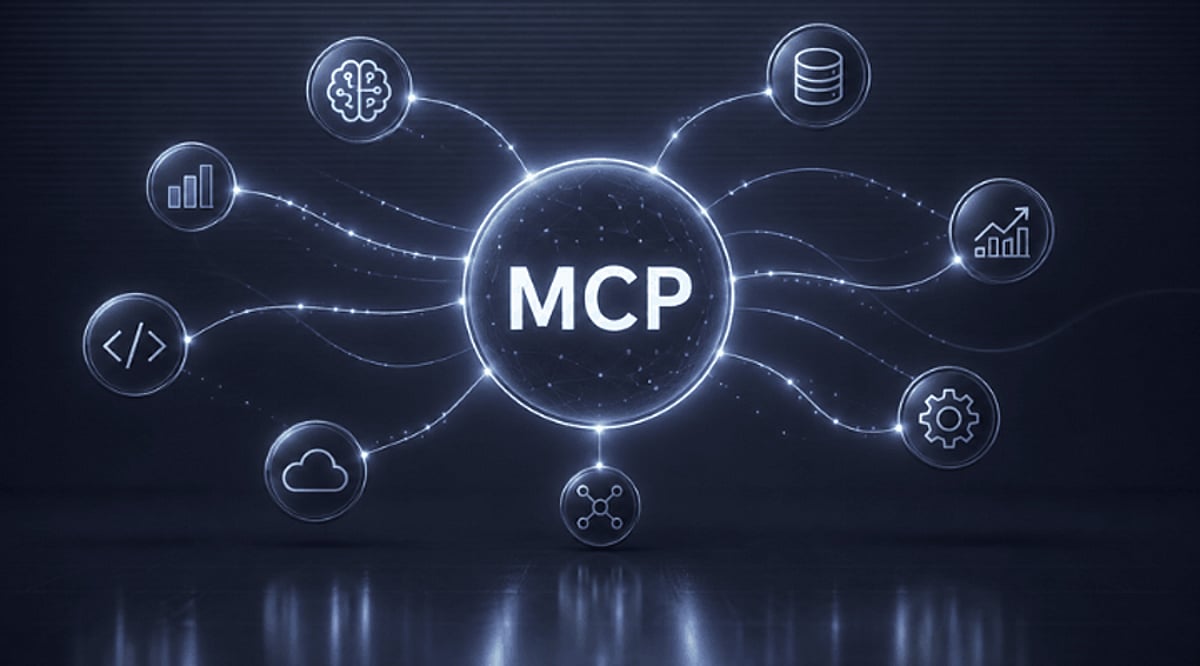
    AI applications increasingly require access to tools, databases, and external services. The Model Context Protocol (MCP) offers a standardized way for AI applications to connect with these capabilities, enabling developers to build more modular systems instead of creating separate integrations for every application.

    What Is MCP?

    MCP is an open protocol designed to connect AI applications with external tools and data sources. Rather than hard-coding every connection, developers can use a common framework to expose capabilities, making it easier to link models with services that provide useful context or actions.

    MCP Servers Provide Capabilities

    An MCP server can expose tools, resources, and prompts that an AI application can utilize. For example, a server might grant access to files, databases, APIs, or business systems. This creates a modular layer between the AI application and the underlying service.

    MCP Clients Connect the Pieces

    An MCP client resides inside an AI application and communicates with MCP servers. The client can discover available capabilities and request information or actions when needed. This separation allows developers to change or add services without rebuilding the entire AI application.

    Modular Pipelines Become Easier

    MCP simplifies complex AI workflows by separating the model from individual tools and services. Developers can connect different capabilities as required, which streamlines experimentation, maintenance, and expansion as an AI system grows.

    MCP Can Connect Enterprise Data

    Businesses can use MCP to connect AI applications with internal documents, databases, and software tools. This gives models access to relevant business context without building completely custom integrations for every system. Security and access controls remain essential when sensitive information is involved.

    The Future Depends on Secure Adoption

    MCP could become a critical building block for tool-using AI systems and agentic workflows. Its modular approach makes AI integrations easier to build and maintain. However, organizations still need authentication, permission controls, monitoring, and careful governance before connecting AI agents to critical systems.