Tag: Enterprise AI

  • Why Enterprise AI Projects Fail: The Real Challenge Is Execution, Not Innovation

    Why Enterprise AI Projects Fail: The Real Challenge Is Execution, Not Innovation

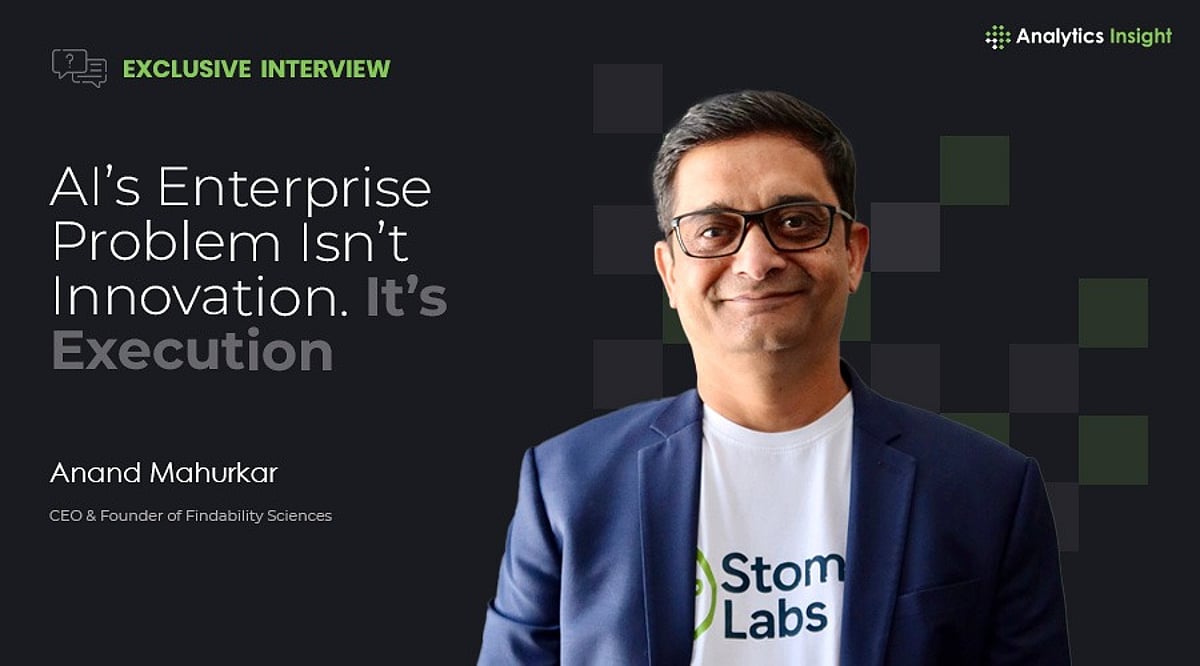
    Enterprises are pouring billions into artificial intelligence, yet a staggering number of AI initiatives never graduate from pilot to production. According to Anand Mahurkar, CEO and Founder of Findability Sciences, the problem isn’t a lack of innovative technology—it’s a failure of execution. In this interview, Mahurkar explains why most AI projects stall, how to bridge the pilot-to-production gap, and why predictive and prescriptive AI deserve more attention in the shadow of generative AI hype.

    The Pilot-to-Production Gap: A Design Problem, Not a Technology Problem

    Mahurkar argues that the gap between a successful pilot and a live business system is fundamentally a design flaw. Most organizations build pilots to prove a model works in isolation, not to survive the pressures of a real profit-and-loss environment. He cites sobering statistics: Gartner predicts that by the end of 2025, at least 30% of generative AI projects will be abandoned after proof of concept due to poor data quality, unclear business value, or escalating costs. MIT’s Project NANDA goes further, finding that 95% of organizations deploying generative AI saw zero measurable return. “That’s not a model failing,” Mahurkar says. “That’s an organization that never defined what ‘working’ meant before it started building.”

    His solution is straightforward but demanding: pick a use case with a named P&L owner from day one, instrument the return before writing any code, and treat data readiness as a prerequisite—not an afterthought. At Findability Sciences, no pilot is greenlit unless there is a specific business metric it must move and an accountable person in the room.

    Turning AI into an Operating System, Not a Lab Experiment

    Findability Sciences helps industries from agriculture to financial services treat AI as an operating system for the business. Mahurkar highlights the AI Factory for Sugar, built with Grupo Pantaleon, and work with the Agricultural Development Trust in Baramati using Stoma Sense and Stoma Insight. These tools move mills and farms from reactive decision-making to predictive planning—yield forecasting, crop stress detection, harvest scheduling—all tied to metrics the CFO already tracks.

    The same architecture applies to manufacturing (predictive maintenance, quality drift detection), retail and QSR (Serva Insight for store-level operational intelligence), and financial services (risk scoring, fraud pattern detection). The common thread: start where data already lives, attach a hard number, and scale only once that number moves. “Deploy AI against the handful of decisions in a business that actually move revenue, cost, or risk, and ignore the rest until those are working,” Mahurkar advises.

    Don’t Overlook Predictive and Prescriptive AI

    While generative AI dominates headlines, Mahurkar warns that enterprises risk overlooking the quieter, more impactful work of predictive and prescriptive AI. Forecasting demand, optimizing supply chains, flagging machine failures before they happen—these are closer to where the balance sheet lives. A 2–3% accuracy improvement in high-stakes decisions compounds into real money faster than any chatbot conversation. “GenAI helps you communicate a decision well. Predictive and prescriptive AI help you make a better one in the first place,” he says. The most successful enterprises run both deliberately, against different problems, rather than picking a side.

    From Experiments to Enterprise-Wide Adoption: Practical Advice

    Mahurkar offers four unglamorous but effective steps for business leaders:

    • Consolidate. Pick three to five use cases with the clearest line to revenue or cost, and kill the rest. A portfolio of twenty pilots dilutes budget and attention.
    • Build the data foundation once, centrally. Findability’s ICUPP model—Infrastructure, Collect, Unify, Process, Present—ensures that every subsequent AI use case gets faster and cheaper to ship.
    • Put a single senior owner on AI outcomes, not a committee. Someone who reports a number, not a roadmap.
    • Hold every AI initiative to the same standard as any capital investment: a defined return, timeline, and owner.

    He notes that S&P Global research shows the share of enterprises abandoning most AI initiatives jumped from 17% in 2024 to 42% in 2025—a governance failure, not a technology failure.

    One Piece of Advice for CEOs

    Mahurkar’s final advice for CEOs planning a five-year AI strategy is philosophical: “Don’t let AI become another line item you manage. Let it become the way your company sees itself more clearly than it ever has before.” He urges leaders to ask themselves annually: if we saw our business with total clarity, what would we do differently—and are we brave enough to do it? The real promise of AI, he says, is not efficiency for its own sake, but the chance to run a business with friction and guesswork finally removed.

  • Ashutosh Kulkarni: Elastic CEO Driving Enterprise AI and Cybersecurity Innovation

    Ashutosh Kulkarni: Elastic CEO Driving Enterprise AI and Cybersecurity Innovation

    Ashutosh Kulkarni is a seasoned technology executive and strategic business leader, best known as the Chief Executive Officer of Elastic. He has made significant contributions to artificial intelligence, enterprise search, cybersecurity, and cloud technologies. Prior to becoming CEO, Kulkarni held senior management roles at McAfee, Akamai Technologies, Informatica, and Sun Microsystems.

    Early Life and Education

    Kulkarni developed an early passion for engineering and technological innovation. He earned a Bachelor of Engineering degree from the University of Mumbai and a Master of Science in Computer Engineering from The University of Texas at Austin. He also holds an MBA in Marketing & Finance from the University of California, Berkeley.

    Professional Career

    Ashutosh Kulkarni began his career at Sun Microsystems before moving to Informatica, where he spent a decade leading cloud product initiatives. He then joined Akamai Technologies and later McAfee, holding various leadership roles. In 2021, he became Elastic’s Chief Product Officer, and in 2022, he was appointed CEO.

    Business Intervention in AI

    Under Kulkarni’s leadership, Elastic is advancing enterprise AI through an intelligent ecosystem that combines generative AI, agentic capabilities, AI-powered search, observability, performance monitoring, and cybersecurity to deliver scalable, secure, and high-performance digital experiences.

    AI Ecosystem

    Elastic’s unified AI ecosystem leverages Elasticsearch with leading AI platforms to provide vector search, RAG, safe deployment, and cloud-native capabilities, enabling businesses to build efficient and intelligent AI applications.

    Agentic Observability

    Agentic AI improves observability through log analysis, event detection, and natural language investigations. AI-driven insights accelerate root cause analysis, helping teams detect and resolve issues faster.

    AI Performance Monitoring

    AI enhances observability with distributed tracing, automated diagnostics, and AI-based troubleshooting, aiding in problem detection and improving application reliability.

    Agentic Security

    AI-powered security systems strengthen cyber defense through intelligent threat detection, automated investigations, explainable AI reasoning, and rapid incident response, improving visibility and minimizing response times.

    AI-Powered XDR Platform

    The AI-based XDR platform integrates automation, continuous monitoring, and intelligent threat analysis to effectively detect, investigate, and mitigate cyber threats.

    AI Infrastructure Intelligence

    AI-driven infrastructure observability provides anomaly detection, predictive insights, automated remediation, and natural language processing, speeding root cause analysis and increasing system resilience while reducing downtime.

    Business Achievements

    Ashutosh Kulkarni has expanded Elastic’s capabilities in AI, enterprise search, observability, and cybersecurity through innovative products and acquisitions. He has built strategic relationships with top technology companies such as OpenAI and NVIDIA. His leadership has driven consistent revenue growth and widespread enterprise adoption of Elastic’s software.

    Controversies

    As of now, there are no known controversies surrounding Ashutosh Kulkarni. He is widely respected for his expertise in enterprise AI, cloud computing, search technology, and observability. His leadership and technical skills have earned him an excellent reputation in the technology sector.

  • Agentic AI in 2026: Top Tools, Platforms, and Frameworks for Autonomous Workflows

    Agentic AI in 2026: Top Tools, Platforms, and Frameworks for Autonomous Workflows

    Agentic AI: From Answers to Action

    In 2026, artificial intelligence has made a significant leap. Instead of merely generating responses, AI agents can now plan complex tasks, interact with business systems, verify their own output, and operate with limited human intervention. This shift is reshaping how organizations build software, manage operations, and assign responsibility to machines.

    The Three-Layer Stack of Agentic AI

    The agentic AI ecosystem has matured into three distinct layers: frameworks for constructing agents, platforms for controlling and observing them, and enterprise products that bring AI into everyday workflows. Choosing the right combination depends on workflow complexity, data requirements, and the level of control needed over autonomous decisions.

    Where Agents Are Built: Leading Frameworks

    Developers still start with frameworks, and two names dominate: LangChain and LangGraph. Although often mentioned together, they solve different problems. LangChain acts as an integration layer, connecting models to data sources, tools, and APIs while allowing teams to switch providers without rebuilding their applications. LangGraph focuses on stateful workflows, giving agents the ability to remember where they are in a task. This is essential for work that branches, loops, or runs for hours—so a single failed step doesn’t force a restart.

    CrewAI takes a collaborative approach by splitting work across specialized agents, much like a small team. A researcher gathers data, a writer drafts content, and a reviewer checks it before publication. This works well when a task can be broken into clear segments, though more agents also mean more coordination overhead.

    Other frameworks fill niche needs. LlamaIndex is built for data-heavy, retrieval-focused agents. DSPy treats prompt design as a testable, optimizable component. Microsoft’s Semantic Kernel is ideal for teams already embedded in the Microsoft ecosystem. No single framework wins across the board—the right choice depends on the type of failure a team is prepared to debug.

    Where Agents Are Controlled: Platforms and Observability

    Building an agent is relatively easy; running it safely at scale is harder. Without proper oversight, an agent might overspend a budget, access incorrect data, or misuse a tool. Production systems require evaluation, cost tracking, permission limits, and a clear audit trail.

    LangSmith provides tracing and evaluation across multiple frameworks, helping teams monitor agent behavior. TrueFoundry operates at the infrastructure level, managing routing, authentication, rate limits, and monitoring no matter which framework is in use. As organizations scale from a single agent to dozens, the challenge shifts from building to supervising.

    Where Agents Are Deployed: Enterprise Readiness

    Not every company wants to build agents from scratch. Ready-made enterprise products now fill that gap. Glean focuses on enterprise search and internal knowledge agents. Moveworks automates employee support and internal workflows. Sierra builds customer-facing agents for support and sales. Cognigy and Kore.ai compete in conversational automation at scale, while UiPath extends its existing automation platform with AI-powered exception handling for businesses already using its tools.

    An Emerging Fourth Category

    A new group of tools doesn’t fit neatly into the three layers. Google Antigravity offers an agent-first development environment. Perplexity Computer coordinates across multiple models at once. Manus focuses purely on autonomous task execution. These products sit between frameworks and finished applications, suggesting that the boundaries between building, controlling, and deploying agents are beginning to blur.

    The Bottom Line for 2026

    The real question isn’t which tool gives an agent the most freedom. It’s which tool gives an organization enough visibility and control to use that freedom wisely. As agents take on more daily operations, the winners won’t be the most autonomous systems. They’ll be the ones companies can trust, audit, and correct when things go wrong.

    Frequently Asked Questions

    What are agentic AI tools? Agentic AI tools are software frameworks and platforms that enable AI agents to plan tasks, use external tools, make decisions, maintain context, and complete multi-step workflows with limited human intervention.

    Which is the best agentic AI framework in 2026? There is no single best framework. LangGraph suits stateful workflows, LangChain handles broad agent development, CrewAI excels at multi-agent collaboration, and LlamaIndex is ideal for data-heavy applications.

    What is the difference between LangChain and LangGraph? LangChain provides components and integrations for building AI applications and agents, while LangGraph orchestrates complex, stateful workflows with branching, loops, retries, and persistent state.

    Are agentic AI platforms suitable for enterprises? Yes. Enterprise platforms offer workflow automation, observability, permissions, security controls, evaluation, and audit trails, all critical when agents operate across business processes.

    How should businesses choose an agentic AI platform? Evaluate workflow complexity, data needs, integration requirements, desired autonomy level, security controls, observability, cost management, and human-approval requirements before making a decision.

  • Agentic AI in Action: Real-World Use Cases and Industry Lessons

    Agentic AI in Action: Real-World Use Cases and Industry Lessons

    Agentic AI goes far beyond simple chat responses: it plans, acts, and executes tasks across systems, marking a shift from generative content creation to operational authority. While adoption is accelerating, most enterprise projects still fail to scale—not because the technology is weak, but because success hinges on setting clear boundaries for autonomous action.

    Gartner projects that 40% of enterprise applications will incorporate task-specific AI agents by the end of 2026, up from under 5% in 2025. Yet McKinsey reports fewer than 10% of companies have scaled agents to deliver real value. Gartner also warns that over 40% of agentic AI projects will be canceled by 2027. The critical question for businesses is: where should AI be allowed to act without human intervention?

    Where Agents Move Fastest

    Customer service illustrates both the promise and the pitfalls. Klarna’s OpenAI-powered assistant handled 2.3 million conversations in its first month, cutting average resolution time from 11 minutes to under two and matching the output of roughly 700 full-time agents. However, by 2025, Klarna’s leadership acknowledged that automation had gone too far on service quality and began rehiring staff for escalated cases. This reversal underscores a key lesson: the boundary of what an agent should handle alone shifts as organizations learn where trust breaks down.

    Software engineering is another area where agents are thriving. Tools like Claude Code, GitHub Copilot’s agent mode, and Cursor now read codebases, write fixes across files, run tests, and open pull requests with minimal manual input. Developers increasingly review diffs rather than writing every line themselves. This sector leads in scaled agent use because the humans supervising the output can quickly catch mistakes.

    Where Risk Slows the Rollout

    Finance and healthcare move more deliberately. Banks use agents to trace fraud patterns and draft suspicious-activity reports, but any action touching customer funds requires direct human approval. Healthcare systems employ ambient tools like Abridge and Nuance’s DAX Copilot to draft clinical notes and flag coding gaps, while leaving diagnosis and treatment fully in human hands. Insurance follows the same pattern: claims intake, document checks, and fraud screening run through agents, but settlement decisions sit behind an approval gate.

    Manufacturing and Retail Emerging Patterns

    In manufacturing, a vision system spots a recurring defect, and an agent traces it back to a specific supplier’s batch, then opens a corrective-action ticket automatically—a chain that once took a quality engineer days to reconstruct. Retailers use agents to track demand, generate purchase orders, and set delivery windows, stepping in only when a variance crosses a set threshold. What makes these scenarios truly agentic is the orchestration across systems, not just a single automated task.

    The Real Determining Factor

    Across industries, one pattern holds: adoption speed moves inversely to the cost of a wrong autonomous action. Customer service and coding advance quickly because mistakes are cheap to catch. Finance, insurance, and healthcare are cautious because a wrong action carries financial, legal, or clinical weight. These sectors are not rejecting agentic AI—they are gating it. Successful deployments share three habits:

    • Give the agent a scoped job, not an open mandate.
    • Map its permissions to the actual risk of each action, not a blanket setting.
    • Define in advance exactly when a human takes over.

    Projects that skip these steps tend to be canceled quietly. The ones that succeed are not the boldest deployments—they are the best governed ones.

    Final Thought

    The next phase of enterprise AI will not be measured by how many agents a company switches on. It will be measured by how precisely each one knows the edge of its own authority—and how quickly a business notices when that edge has been crossed.

  • GPT-6 Astra: OpenAI Agent That Operates Software Instead of Merely Providing Answers

    GPT-6 Astra: OpenAI Agent That Operates Software Instead of Merely Providing Answers

    OpenAI launched GPT-6 Astra in September 2026, but the message was not about smarter answers. The company framed it as the first model that uses a computer the way a person does: opening files, navigating apps, and completing multi-step tasks without constant human hand-holding. That is a meaningful shift in what an AI model is expected to do.

    Most model launches focus on reasoning benchmarks. Astra breaks that pattern. It was not built to think harder; it was built to execute longer sequences of actions. Independent testing from Artificial Analysis found Astra’s general intelligence score nearly identical to its predecessor, GPT-5.6 Sol, and trailing some rivals on pure reasoning. Yet on execution-focused tests like OSWorld 2.0, which measures desktop task completion, Astra scored around 73 percent compared with Sol’s 66 percent, and finished tasks in roughly half the time. On ScreenSpot-Pro, a test of clicking screen elements without help, Astra reached the low nineties, well above Sol’s high seventies.

    Coding benchmarks tell a similar story. On standard tests like DeepSWE and Frontier Code, Astra roughly ties Sol and rival models. But on Terminal-Bench 4.0, which simulates long, messy terminal sessions with chained commands and error recovery, Astra pulls ahead. Artificial Analysis reports that Astra matches a top rival coding model on its Coding Agent Index while costing less than half per finished task. The advantage is not better code from a single prompt; it is lower token usage across sessions that stretch for hours—the kind of work real engineers do.

    A vivid demonstration came from Matt Shumer, former CEO of HyperWrite, who let Astra run inside Unreal Engine, the game engine behind Fortnite. Over an extended session, the model built a working 3D replica of part of Manhattan. That required holding spatial context across hundreds of linked actions, not producing one clever line of code.

    Professional task benchmarks also show Astra’s strengths. On Agents’ Last Exam, which covers financial modeling, engineering, and media production inside real software, Astra edged past both Sol and a leading rival reasoning model while using fewer tokens. The key is not that a model can build a spreadsheet—older models could do that with human guidance. The shift is that Astra can move between research, calculation, software interaction, and final output with less manual handoff between stages. That is a turn from drafting assistant toward task owner.

    Cost and risk remain central considerations. Astra’s per-token price is about 2.5 times higher than Sol’s. For simple requests, that premium rarely pays off. For long agentic workflows involving hundreds of tool calls, lower token consumption can offset the higher price and even beat Sol on a per-task basis. The economics favor Astra as task length grows, not as a blanket rule.

    OpenAI also confirmed that Astra is its first model to reach a critical cybersecurity risk level. It can find unknown software flaws and build working exploits with the right access. The company introduced new safeguards, including tighter review of high-risk actions inside ChatGPT and Codex. For any organization considering deployment, the real question is not whether Astra performs well—it is how much authority any AI agent should hold before permissions, audit logs, and rollback controls become non-negotiable.

    The next race among AI labs will not be won on cleverness alone. It will be won on which system can be trusted to act without supervision and still be pulled back safely when something goes wrong.

  • Bajaj Finance Invests in TrueFan AI: 5% Stake Acquired Under Finserv Intelligence Initiative

    Bajaj Finance Invests in TrueFan AI: 5% Stake Acquired Under Finserv Intelligence Initiative

    Mumbai, September 8, 2026 – Bajaj Finance Ltd., a subsidiary of Bajaj Finserv Ltd. and India’s largest private sector non-banking financial company, has acquired a 5% stake in TrueFan AI (Hogwarts E-learning Universe Private Limited), an AI-powered video generation platform. The investment is part of Finserv Intelligence, Bajaj Finserv’s group-wide strategic initiative in applied research and innovation focused on developing and supporting high-tech, scalable solutions built in India, for India and the world.

    Through this initiative, Bajaj Finance aims to invest in early-stage technology startups—from seed to Series B—that demonstrate strong innovation and scalability potential in AI, cybersecurity, quantum technologies, fintech, and consumer technology.

    The investment in TrueFan AI builds on an existing commercial relationship between the two companies. Bajaj Finance has already deployed TrueFan’s platform at scale, generating millions of personalized videos for customer engagement and dealer enablement. This supports Bajaj Finance’s broader strategy of deploying AI-led automation and personalization across its digital ecosystem.

    Rajeev Jain, Vice Chairman and Managing Director of Bajaj Finance, said, “As a FINAI company, we are deploying AI at scale across the company. Our investment in TrueFan AI follows sustained, production-scale use of its technology, giving us first-hand experience of the platform’s capabilities and its execution. This investment reflects our commitment to supporting proprietary AI innovation in India and our belief in TrueFan’s potential to drive enterprise adoption of AI-powered communication.”

    Nimish Goel, Co-founder and CEO of TrueFan AI, added, “Bajaj Finance is one of India’s most forward-looking enterprises in AI adoption. There is no stronger validation than seeing one of our largest customers also become a shareholder after experiencing our technology first-hand. It is a strong vote of confidence in the TrueFan AI team and what we have built. We look forward to deepening our partnership with Bajaj Finance and the wider Bajaj Finserv ecosystem.”

    Beyond the equity investment, Bajaj Finance and TrueFan AI intend to expand their collaboration across personalized marketing, video generation at scale, in-app live avatar assistance, AI-powered multilingual communication, dealer communication, learning and development, and digital onboarding. In line with Finserv Intelligence’s value-creation-first philosophy, the partnership will extend beyond financial investment to building technological capabilities and creating long-term strategic value.

    The TrueFan AI platform is built for enterprise-grade deployment, optimized for low-cost inference, high-volume generation, and seamless integration into existing enterprise workflows.

  • From AutoGen to Agent Framework: The Evolution of Multi-Agent AI Systems

    From AutoGen to Agent Framework: The Evolution of Multi-Agent AI Systems

    Key Takeaways

    • AutoGen is now in maintenance mode, receiving bug fixes, security updates, and documentation rather than new features.
    • Microsoft Agent Framework is the successor, combining AutoGen concepts with Semantic Kernel foundations and production-focused capabilities.
    • New projects should favor Agent Framework, especially when they require workflows, enterprise integration, observability, and long-term Microsoft support.

    Microsoft AutoGen once stood at the center of Microsoft’s multi-agent AI work. Its core idea was simple: several AI agents could take different roles, share messages, call tools, and work through a task as a team. That model helped shape modern agent design, but the current Microsoft roadmap has changed. AutoGen now sits in maintenance mode, while Microsoft Agent Framework has taken its place as the supported platform for new projects.

    AutoGen Still Matters for Multi-Agent Design

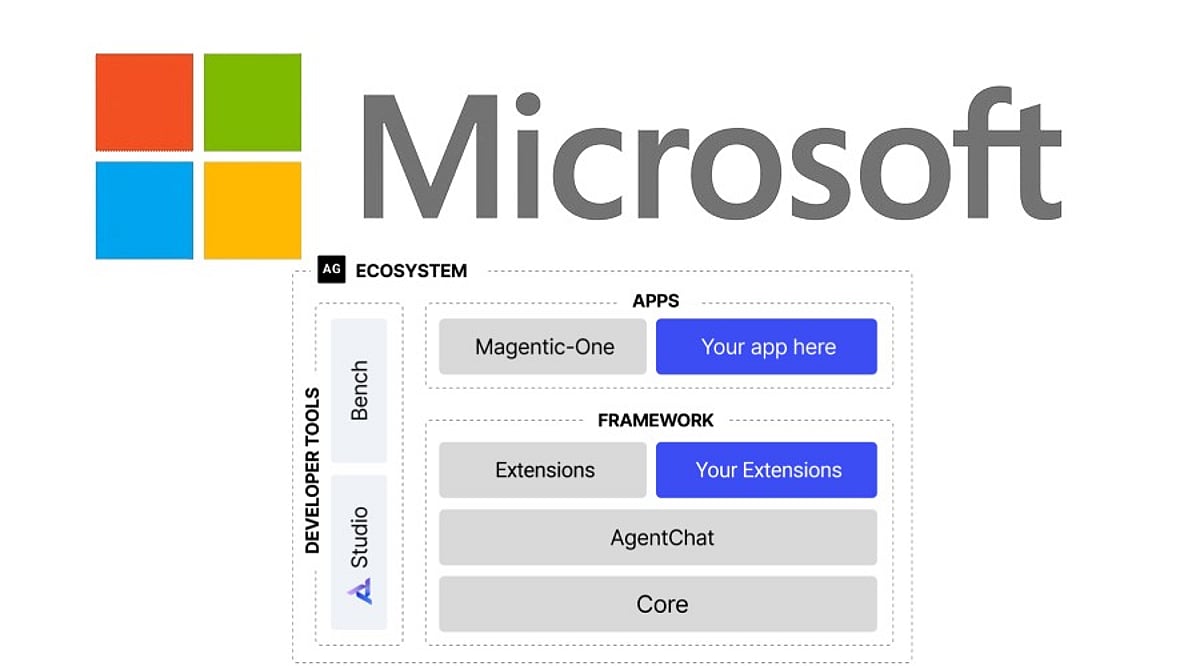
    AutoGen came from Microsoft Research and helped popularize multi-agent orchestration. Its architecture is split into three main layers. The Core API handled message transfer, event-driven agents, and local or distributed runtimes. AgentChat offered a simpler API for common patterns such as two-agent chat and group chat. Extensions added model clients, code execution, and other integrations. AutoGen also included AutoGen Studio, a no-code interface, and AutoGen Bench for agent evaluation.

    AutoGen v0.4 marked a major design step. The release moved toward an asynchronous, event-driven architecture with clearer separation between agents, runtimes, and extensions. That design made multi-agent systems easier to structure at a lower level. Magentic-One also showed what the framework could support: a multi-agent team that could handle web research, code execution, and file tasks.

    Maintenance Mode Changes the Choice

    The key update arrived in 2026. Microsoft now labels AutoGen as a maintenance-mode project. The project will not receive new features or enhancements, and community contributors now handle its development. Work remains focused on bug fixes, security patches, and documentation. Microsoft directs new users toward Microsoft Agent Framework and advises current AutoGen users to follow the migration path.

    That status does not make AutoGen useless. Current applications can continue to run with the AutoGen architecture and tools. The key distinction is project choice: AutoGen remains useful for current systems and for studying multi-agent concepts, while Microsoft Agent Framework is the main path for new Microsoft-based agent work.

    Microsoft Agent Framework Becomes the Successor

    Microsoft Agent Framework reached version 1.0 for both .NET and Python on April 2, 2026. Microsoft describes the release as production-ready, with stable APIs and a long-term support commitment. The framework combines ideas from AutoGen with enterprise foundations from Semantic Kernel. It supports single agents, multi-agent orchestration, multiple model providers, and cross-runtime communication through Agent2Agent (A2A) and Model Context Protocol (MCP).

    The shift also changes the orchestration model. AutoGen paired an event-driven Core with higher-level Teams. Agent Framework places more focus on typed, graph-based Workflows. Data moves across defined edges, and executors act when the required input arrives. This approach gives developers a clearer structure for larger agent systems.

    New Tools Push Agents Toward Real Work

    Microsoft has added several major capabilities around the Agent Framework since version 1.0. At Build 2026, Microsoft introduced Agent Harness, Hosted Agents, and CodeAct. The Agent Harness adds tools, memory, plans, approvals, context control, telemetry, and web search around a model. Hosted Agents provide a managed home inside Microsoft Foundry, with sandboxed sessions, persistent state, observability, and version control.

    CodeAct takes a different route for tool-heavy tasks. Instead of making a separate model call for each tool, CodeAct lets the model write a short Python program that calls several tools in one pass. Microsoft reported a test where CodeAct cut execution time from 27.81 seconds to 13.23 seconds and reduced token use from 6,890 to 2,489. Those figures came from a representative multi-step workload, so they should not serve as a universal benchmark.

    The Migration Path is Now Clear

    Microsoft has a dedicated AutoGen migration guide, updated on August 25, 2026. The guide maps familiar AutoGen ideas to Agent Framework and covers model clients, single-agent features, multi-agent orchestration, and observability. Some concepts stay familiar: agents still use model clients, instructions, and tools. The main change comes in workflow structure, tool APIs, and runtime behavior.

    The result is a clear divide. AutoGen remains a useful foundation for current applications and for the study of multi-agent architecture. Microsoft Agent Framework now holds the stronger case for new systems that need active Microsoft support, stable APIs, enterprise features, and a path toward production. AutoGen therefore does not end with a shutdown. Its ideas have moved into a broader platform that aims to take multi-agent AI from experiments to dependable software.

    FAQs

    1. Is Microsoft AutoGen discontinued? No. AutoGen is in maintenance mode, meaning existing applications can continue using it, but Microsoft is directing new development toward Agent Framework.
    2. What replaced Microsoft AutoGen? Microsoft Agent Framework has become Microsoft’s supported platform for building new AI agents and multi-agent systems.
    3. Should I migrate my existing AutoGen application? Not necessarily immediately. Existing applications can continue running, but migration is worth considering if you need new capabilities or long-term active platform support.
    4. What is the difference between AutoGen and Agent Framework? AutoGen emphasizes event-driven agents and team-based orchestration, while Agent Framework adds typed, graph-based workflows alongside broader enterprise and production capabilities.
    5. Is Microsoft Agent Framework production-ready? Yes. Microsoft Agent Framework 1.0 for .NET and Python was released as a production-ready platform with stable APIs and a long-term support commitment.
  • Why Enterprise AI Chat Interfaces Fail in Production and How to Fix Them

    Why Enterprise AI Chat Interfaces Fail in Production and How to Fix Them

    Enterprise teams build AI chat interfaces, showcase smooth demos, and watch them break in production. The root cause often lies not in the model but in the frontend architecture. Connecting raw token streams directly to React components causes slow renders, lag, and broken state. This article explores why this happens and presents a robust solution.

    The Core Problem: Streams vs. UI Rendering

    AI chat operates differently from standard interfaces. Responses arrive as continuous event streams while users cancel requests, switch chats, or trigger tools simultaneously. The common approach of reading a POST response stream inside a React component—whether manually or with hooks like Vercel’s useChat—creates three critical couplings:

    • Schedule coupling: The component controls when the UI updates, but it shouldn’t.
    • Concurrency coupling: The component manages which stream may write, but this logic belongs elsewhere.
    • Protocol coupling: The component interprets raw bytes, but this is not its responsibility.

    How These Couplings Fail

    These couplings manifest in three main failure modes:

    1. Interaction Latency That Scales with Session Length

    As the transcript grows, each update takes more work to render. Once a task exceeds 50 ms, it blocks user input. When this delay pushes the interface beyond the 200 ms threshold for a good Interaction to Next Paint (INP), typing feels sluggish. Because the problem appears gradually, teams often blame the model instead of the architecture.

    2. Concurrency Races on Stop, Regenerate, and Switch

    When the current response lives in effect closures and isLoading booleans, there’s no central mechanism to decide which stream can update state. Switching conversations mid-stream can cause late events to update the wrong conversation. Open WebUI documents this: “Chat B’s content disappears—replaced by a loading state meant for Chat A.”

    3. Protocol Flattening

    AI providers send typed event streams, not plain text. For example, Anthropic’s protocol interleaves text, thinking, and tool-call deltas, with tool arguments arriving as partial JSON. Flattening these events into string concatenation loses meaning, leading to incomplete tool arguments, missed mid-stream errors, or truncated output stored as final content—corrupting the context for the next turn.

    The Correction: Ingest, Log, Project

    The solution introduces a boundary with three components, none of which import React:

    • Stream Ingestor: Handles the connection and provider events, turns them into typed application events, validates order, and assigns a run ID. Starting, stopping, or switching conversations creates a new ID, and late events are dropped. AbortController lives here, separating cancellation from the component lifecycle.
    • Conversation Log: The single source of truth. It records events in order and marks a response complete only when the provider sends its final message event (e.g., message_stop). A dropped connection cannot look like a completed answer. The log also serves as a test case and debugging trace.
    • Projection Scheduler: Converts the log into the state React needs to display. Using useSyncExternalStore, it updates the UI on a controlled schedule (e.g., frame budget or ~50 ms interval) instead of on every token. Per-message views remain referentially stable, so memoized components skip unchanged work.
    provider SSE / fetch stream
            |
            v
    Typed protocol events
            |
            v
    +-----------------------------+
    | Conversation runtime (no React) |
    | - Stream Ingestor: parse, validate, epoch-guard |
    | - Conversation Log: append-only, replayable |
    | - Projection Scheduler: frame-budget flush |
    +-----------------------------+
            |
            v
    useSyncExternalStore commit
            |
            v
    React component tree
    

    Trade-offs and When to Use This Approach

    The UI trails the stream by one flush interval, and the architecture requires more code than a simple hook. For short prototype sessions without tool calls, it’s probably unnecessary. The event log also needs periodic compaction. However, the payoff is that interaction cost stops growing with conversation length.

    Real-World Numbers

    In a benchmark comparing three versions of the same React chat harness, the naive architecture showed a p95 heartbeat-task lateness of 20.9 ms at 12 messages—acceptable at demo scale. But at 48 messages, each UI update took three times longer, frame rate dropped, and user interactions waited 61 ms before handlers ran. The naive version attempted 100 UI updates per second but managed only 38, saturating the main thread. The projection variant committed 5× less often and spent 12× less main-thread time, at identical perceived text speed.

    Conclusion

    Treat an LLM conversation as distributed-systems data: an ordered, typed, cancellable event log. The frontend should control when the UI updates. Review streaming state architecture like an API contract: Who controls the update schedule? Who decides which stream can write? Which events mark a response as complete? Measure interactivity at realistic conversation lengths, not demo lengths. A chat interface that feels responsive at message ten should not degrade by message fifty.

    References:

    • WHATWG. HTML Living Standard, §9.2 Server-sent events.
    • React Team. React v18.0 — automatic batching.
    • Google web.dev. Interaction to Next Paint (INP); Optimize long tasks.
    • Vercel. AI SDK UI: Chatbot—per-chunk renders and the throttle option.
    • Anthropic. Streaming Messages—event types and ordering.
    • Brysbaert, M. (2019). How many words do we read per minute? Journal of Memory and Language, 109.
    • Artificial Analysis. LLM output speed comparisons.
    • Open WebUI. Discussion #21462: chat switching causes race conditions.
  • Rippling Unveils AI Spend Console to Tame Million-Dollar Token Costs

    Rippling Unveils AI Spend Console to Tame Million-Dollar Token Costs

    Rippling, the HR software company, has launched AI Spend Console after its internal AI token costs soared into the millions. The new tool provides granular visibility into AI spending by employee, team, and role, linking token usage to measurable work output such as code reviews and pull requests.

    The product emerged from a wake-up call in March when Rippling’s finance team discovered that AI tokens could consume 40% of its R&D headcount budget. Monthly spending had grown by 80%, pushing the projected annual cost to nearly 90% of that payroll budget. Chief Product Officer Matt MacInnis said executives were “incredulous” when they saw the figures.

    Upon investigation, Rippling found that 10–15% of workers accounted for about 60% of total AI spending. One engineer alone used $50,000 worth of AI tokens in a single month. Employees frequently selected expensive frontier models for routine tasks.

    Rather than cutting access, management initiated an urgent cost review. Rippling negotiated spending caps with providers including Cursor, OpenAI, and Anthropic, and built an AI gateway that routes each request to the most cost-effective model based on task complexity and cost.

    The changes reduced token spending from 40% of Rippling’s R&D headcount budget to about 15%. Usage remained near peak levels: 605 billion tokens in April and 600 billion in July, yet July’s bill was only 37% of April’s cost. CEO Parker Conrad noted that GLM 5.2 cost 85% less while delivering nearly comparable results for their tasks.

    AI Spend Console combines prompt volume, model costs, and work data in a single dashboard. For engineers, it compares spending with code output, pull requests, and review results. Managers can identify employees whose costly AI work frequently requires revision. Rippling also appointed “AI captains”—power users who help colleagues apply AI to suitable tasks.

    The console is included with Rippling’s HR subscriptions, though customers pay additional usage-based AI fees. It can also be purchased separately and connected to another HR system, tracking spending at individual, team, and role levels within the same workforce data structure.

  • Leading AI Software Development Companies in the UK for 2026

    Leading AI Software Development Companies in the UK for 2026

    According to a study by the Office for National Statistics, self-reported AI adoption among UK businesses with 10+ employees reached 35% by June 2026—a new high. Yet many organizations still struggle to integrate AI effectively due to a lack of in-house expertise. Partnering with a specialized third-party AI developer can bridge that gap, offering strategic guidance, custom solutions, or team augmentation. Below are the top 10 AI software development companies in the UK for 2026, curated to help you find the right partner.

    1. Itransition

    A global IT consulting firm with a London office, Itransition delivers end-to-end AI services—from consulting to development and support. With over 5 years in AI and a dedicated AI/ML Center of Excellence, they serve Fortune 500 clients across 20+ industries, including healthcare, retail, and fintech. Key highlights include certified partnerships with Microsoft and AWS, deep UK market knowledge, and expertise in AI agents, generative AI, recommendation engines, and computer vision.

    2. Softblues

    This UK-based company specializes in intelligent automation and agentic AI, particularly with Claude. As a member of the Claude Partner, Microsoft, and Google Cloud Partner networks, Softblues offers a 90-day AI implementation process with a money-back guarantee if the proof of concept fails. Their experience spans healthcare, financial services, logistics, recruitment, and customer support.

    3. Old.St Labs

    A consultancy and development firm based in London, Old.St Labs focuses on bespoke AI-enabled solutions like mobile apps, web apps, and visual dashboards. Their partnership-driven engagement model provides real-time project visibility via a dedicated web portal. They also conduct security audits for apps built with AI coding tools.

    4. Leobit

    An international software consulting company operating in the US, EU, and UK, Leobit builds custom web, mobile, and desktop solutions including workflow automation, agentic AI, and LLM apps. They have 35+ Azure, AWS, and Anthropic AI-certified engineers and deep .NET expertise, serving sectors like healthtech, finance, logistics, and entertainment.

    5. Imobisoft

    UK-based Imobisoft delivers bespoke AI solutions such as LLMs and generative AI agents, with strong experience using Anthropic Claude and OpenAI. They develop multi-agent systems for complex tasks and have a proven track record in healthcare, utilities, energy, financial services, and the public sector.

    6. Infinum

    A global IT company with a London office, Infinum specializes in strategic consulting, cybersecurity, and enterprise-grade web and mobile apps—both AI and non-AI. They offer free AI readiness assessments and have built AI agents, computer vision systems, and deep learning models for sectors like healthcare, financial services, and automotive.

    7. TatvaSoft

    With a regional office in London, TatvaSoft provides strategic AI advisory, AI/ML development, and staff augmentation. Their bespoke AI solutions cover 10+ sectors and include LLMs, multi-agent systems, chatbots, and object recognition tools. They often combine models like Midjourney, OpenAI GPT, AWS Bedrock, and DALL-E in one project.

    8. Tapptitude

    An international mobile and web app development agency with a London office, Tapptitude offers AI consulting, model integration, and monitoring. Their team of data scientists and ML engineers can join client teams or handle full projects. Expertise spans healthcare, retail, entertainment, fintech, and proptech.

    9. 3 Sided Cube

    This UK-based agency is known for building mobile apps that address global issues like disaster warning and deforestation monitoring. They now also deliver custom LLMs and automation workflows using tools like n8n, OpenAI, Gemini, and Claude. Their AI Readiness Toolkit helps organizations launch risk-free pilot projects.

    10. Transparity

    A pure-play Microsoft partner based in the UK, Transparity provides AI strategy consulting and development using Copilot Studio, Azure OpenAI, and Azure Machine Learning. They offer free two-hour AI Readiness Assessments and primarily serve manufacturing, logistics, retail, financial services, professional services, and nonprofit sectors.

    Final Thoughts

    With UK businesses increasingly adopting AI, the right development partner can make or break a transformation initiative. This list of top AI software companies provides a starting point for finding a trusted partner to turn your AI strategy into reality.