Tag: Enterprise AI

  • OpenAI Dominates in Users, but Anthropic Surpasses in Enterprise Revenue Growth, IDC Data Shows

    OpenAI Dominates in Users, but Anthropic Surpasses in Enterprise Revenue Growth, IDC Data Shows

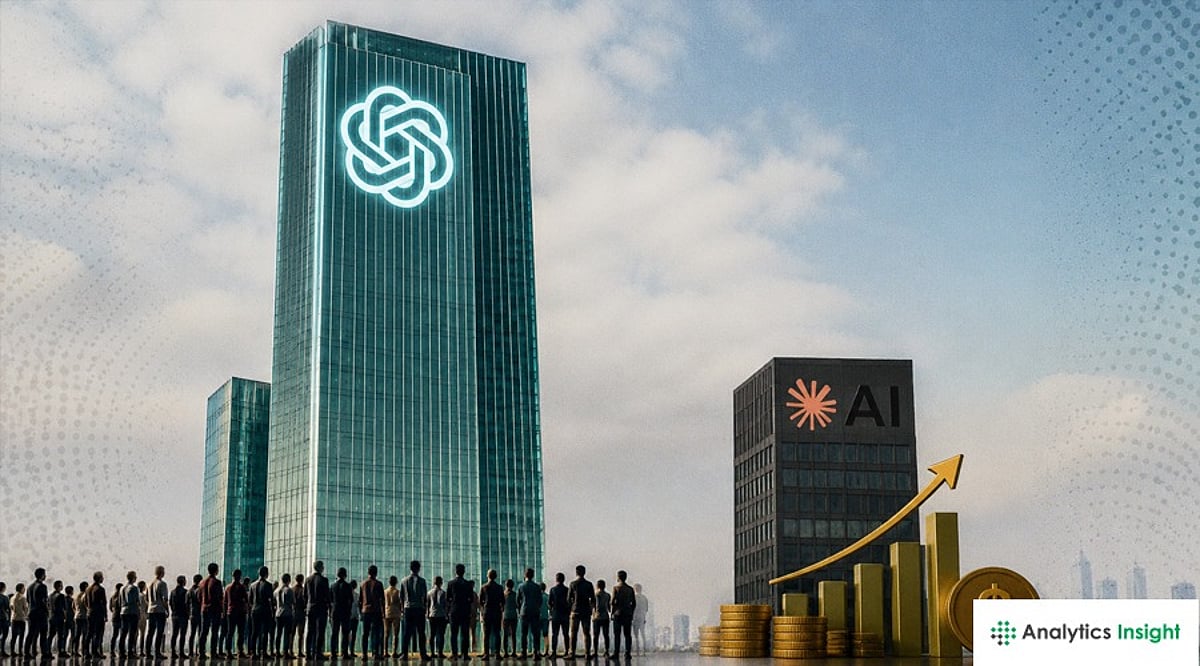
    OpenAI’s ChatGPT remains the world’s most widely used artificial intelligence chatbot by user numbers. However, new estimates from IDC suggest Anthropic may generate more annual revenue despite serving a much smaller audience. The findings highlight contrasting business models within the fast-growing AI industry.

    ChatGPT Maintains Largest Global User Base

    IDC Research Vice President Arnal Dayaratna estimated that ChatGPT has more than 900 million weekly active users worldwide, placing OpenAI well ahead of other consumer AI chatbot providers. IDC also estimated that Google Gemini serves between 200 million and 250 million weekly active users, while Anthropic’s Claude has between 40 million and 60 million weekly active users. These figures show that OpenAI remains the largest consumer-facing AI platform by a wide margin.

    Dayaratna noted that OpenAI has built multiple revenue streams across consumer subscriptions, workplace seats, APIs, and platform services. IDC estimates OpenAI generates between $30 billion and $40 billion in annualized revenue, with consumer subscriptions accounting for about $10 billion to $13 billion, and API and platform services contributing as much as $20 billion. Reports published earlier this month also stated that OpenAI generated $5.7 billion in revenue during the first quarter of 2026 while spending about $3.7 billion, with a net loss reaching approximately $39 billion in 2025.

    Anthropic Builds Revenue Through Enterprise Customers

    Although Anthropic serves far fewer users, IDC estimates its annualized revenue stands between $40 billion and $50 billion. Consumer subscriptions contribute less than $2 billion, according to the research firm. Most of Anthropic’s revenue comes from enterprise subscriptions, Claude Code seats, API usage, and other developer-focused workloads. This business mix differs significantly from OpenAI’s larger consumer-focused platform.

    Dayaratna commented, “Usage scale tells a different story from revenue mix,” adding that Claude’s business is more focused on enterprise and developer customers than consumer adoption. Anthropic also referenced its May 2026 company blog, which announced its annualized revenue run rate exceeded $47 billion, supporting IDC’s broader revenue estimates.

    Research Firms Report Different Strengths for Both Companies

    Counterpoint Research reported similar findings in its April 2026 analysis, estimating Anthropic captured 31.4% of global large language model revenue during the first quarter of 2026, with OpenAI following at an estimated 29% market share. Counterpoint also estimated Anthropic generated average monthly revenue of $33.30 per user, compared to OpenAI’s $2.20 per user. During the same period, Counterpoint estimated OpenAI had approximately 900 million monthly active users versus about 65 million for Anthropic.

    Both OpenAI and Anthropic have reportedly started confidential preparations for possible future public offerings. In May, Anthropic completed a $65 billion Series H funding round that valued the company at $965 billion. The latest estimates present two different measures of success in the AI industry: OpenAI continues to lead by user reach, while IDC estimates suggest Anthropic currently earns more revenue through enterprise customers and developer services. As Dayaratna summarized, “Usage scale tells a different story from revenue mix,” reflecting the divergent strategies followed by both companies.
  • Top AI Workflow Orchestration Platforms for Scaling Enterprises in 2026

    Top AI Workflow Orchestration Platforms for Scaling Enterprises in 2026

    Overview

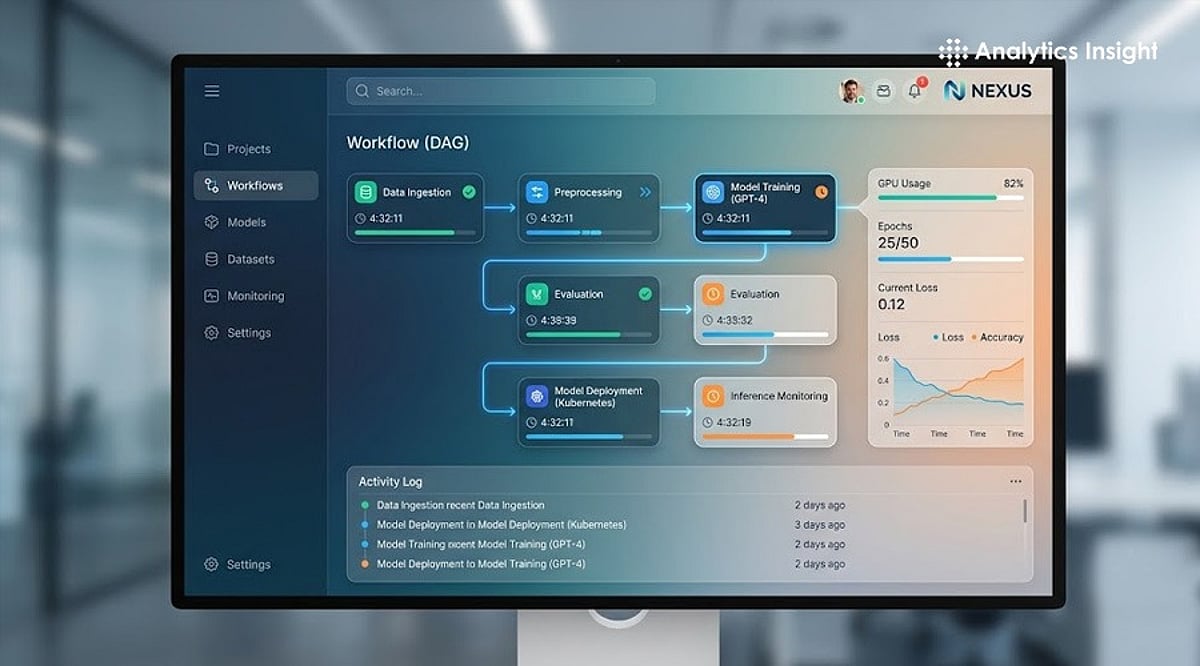
    Choosing the right AI workflow orchestration tool is essential for scaling enterprise AI systems. This guide compares leading platforms, including Temporal, LangGraph, n8n, Microsoft Agent Framework, Airflow, and Dagster, to help organizations build reliable, efficient, and production-ready AI workflows in 2026.

    Understanding AI Workflow Orchestration

    Artificial intelligence workflow orchestration has become a critical capability for enterprises seeking to scale AI-driven operations. However, the term ‘AI workflow orchestration’ encompasses several distinct functions, including scheduled data pipelines for machine learning models, durable execution of long-running business processes, and orchestration frameworks that coordinate AI agents and decision-making workflows. Each serves a different purpose and requires specialized tools, making it essential for organizations to understand their specific requirements before selecting a platform.

    AI orchestration tooling is projected to grow from roughly $14 billion in 2026 to over $60 billion by 2034. That growth is pulling in a lot of tools that are good at one layer of the problem and are being marketed as though they solve it all. Understanding these differences is key to selecting the right orchestration tool for scalable, reliable, and efficient enterprise AI deployments.

    The Question to Ask Before Picking a Tool

    If you can draw the flowchart in advance, you need a workflow orchestrator. If the model decides the next step, you need an agent framework. Most production systems need far less of the second category than the demos on offer would suggest, and conflating the two is exactly where teams get into trouble, asking a scheduler to behave like a runtime, or an agent framework to behave like a database.

    Temporal: The Default for Durability

    Temporal is no longer thought of as just backend infrastructure. It is now the standard answer for what practitioners call durable agent execution. This agent waits three days for human approval and must survive a server restart without losing its place. OpenAI reportedly uses Temporal in production for Codex specifically because it handles state persistence that raw agent frameworks struggle with at real scale.

    The honest limitation: Temporal requires deterministic workflow code, and non-deterministic LLM behavior needs workarounds to fit inside that model. It is not, on its own, built to trace token costs, prompt quality, or which inputs produced a bad output.

    LangGraph: Owns the Agent Reasoning Layer

    Where Temporal stops, LangGraph tends to start. It models agents as explicit state graphs — nodes, edges, checkpointing, human-in-the-loop interrupts — which matches how agentic reasoning actually behaves far better than a generic scheduler does. LangGraph Studio’s time-travel debugging is increasingly seen as the feature that separates a production-ready setup from a prototype, because it shows you why an agent failed, not just that it failed.

    The catch is scope. LangGraph orchestrates the reasoning loop. It is not the system of record for durability across deploys, and most serious production guidance now treats it as one half of a pair rather than a complete answer on its own.

    The two-layer pattern — Temporal handling macro-orchestration, an agent framework handling the reasoning loop inside it — is emerging as the production standard. It is not always necessary, but when you need it, nothing else offers the same combination of agent-native abstractions and infrastructure-grade durability.

    Where the Other Tools Fit

    Platforms like n8n, Microsoft Agent Framework, Airflow, and Dagster each serve specific orchestration needs. n8n excels at low-code automation for connecting services, while Airflow and Dagster are designed for batch data pipelines. Microsoft Agent Framework is tailored for building conversational AI agents within the Microsoft ecosystem. Understanding these niches helps organizations avoid the trap of forcing one tool to do everything.

    The Decision That Actually Matters

    Most teams in trouble right now picked one tool and tried to make it do everything. The pattern that is actually working in production is boring on purpose: a data orchestrator for the batch side, a durable execution engine for anything business-critical and long-running, and a thin agent loop handling the model-decided parts; each tool doing the one job it was built for, instead of one tool stretched across three different failure models.

    Pick based on which of the three problems is actually costing you money today. The vendor with the most impressive demo is rarely the right starting point.

    Why This Matters

    As organizations deploy AI across business operations, selecting the right orchestration platform has become critical. Using the appropriate tools for workflow automation, durable execution, and AI agent coordination improves reliability, scalability, operational efficiency, and long-term maintainability while reducing deployment risks and infrastructure costs.

    Frequently Asked Questions

    What is AI workflow orchestration?

    AI workflow orchestration is the process of coordinating AI models, data pipelines, business logic, and automation tasks to execute reliably. It ensures different systems work together efficiently while managing dependencies, long-running processes, failures, and human approvals across enterprise environments.

    Which AI workflow orchestration tool is best for enterprise applications?

    The ideal platform depends on the workload. Temporal is widely used for durable execution, LangGraph excels at AI agent reasoning, while Airflow, Dagster, n8n, and Microsoft Agent Framework serve different orchestration needs across enterprise AI deployments.

    What is the difference between Temporal and LangGraph?

    Temporal focuses on reliable execution of long-running workflows and business processes, while LangGraph manages AI agent reasoning, branching logic, checkpointing, and human-in-the-loop interactions. Many enterprise systems use both platforms together for production AI applications.

    Can one orchestration platform handle every AI workflow?

    Not usually. Most enterprise AI systems combine multiple platforms, using one tool for data pipelines, another for durable workflow execution, and another for AI agent reasoning. This layered approach improves scalability, reliability, and operational flexibility.

    Why is durable execution important for AI applications?

    Durable execution allows workflows to survive server failures, software updates, long approval cycles, and infrastructure interruptions without losing progress. This capability is essential for financial transactions, healthcare workflows, customer service, and other mission-critical enterprise processes.

  • EXL Acquires iMerit to Bolster Enterprise AI with Foundation Model Capabilities

    EXL Acquires iMerit to Bolster Enterprise AI with Foundation Model Capabilities

    EXL (NASDAQ: EXLS), a global data and AI company, has announced a definitive agreement to acquire iMerit, a leader in AI model training, evaluation, and reinforcement learning. The deal, valued at up to $310 million, is expected to close in the third quarter of 2026, subject to customary conditions.

    The acquisition positions EXL at the forefront of enterprise AI innovation by adding iMerit’s direct relationships with foundation model builders. iMerit specializes in helping clients train large language and multimodal models to improve accuracy, precision, and effectiveness. By integrating iMerit’s capabilities with its own AI platforms—including EXLerate.ai, EXLdata.ai, and EXLdecision.ai—EXL aims to create a comprehensive end-to-end AI solution that moves enterprises from experimentation to production-scale deployment.

    “As organizations reimagine their businesses with AI, success requires industry-specific data, rigorous evaluation and reinforcement learning to deliver reliable results in business-critical workflows,” said Rohit Kapoor, chairman and CEO of EXL. “The acquisition of iMerit strengthens EXL’s AI strategy and ability to help clients move from experimentation to production. By combining iMerit’s capabilities with EXL’s domain expertise and AI platforms, we are setting the standard for AI that is trusted, accountable and built to perform in the enterprise.”

    iMerit brings two key assets to EXL: the Ango platform and the Scholars network. Ango enables sophisticated data interactions with generative AI models, supporting chain-of-thought reasoning, red teaming, and multimodal evaluations. Scholars expands EXL’s domain expertise through a global network of specialists—including physicians, scientists, engineers, linguists, and other subject matter experts—who provide human intelligence-driven feedback for reinforcement learning.

    These offerings will be integrated with EXL’s agentic platforms to combine expert human judgment, model evaluation, and enterprise-scale execution. The acquisition also expands EXL into high-growth AI sectors such as high tech, mobility, autonomous systems, and physical AI, leveraging iMerit’s expertise across text, image, video, voice, and LiDAR data.

    “We see EXL as an ideal leader in this defining moment for AI. We can build on our work with AI innovators and bring those insights to companies seeking to unlock their proprietary data,” said Radha Ramaswami Basu, CEO and founder of iMerit. “Both companies share a belief that specialized high-quality data is the foundation of AI success. We are excited to multiply our impact through EXL’s industry expertise, complementary technology and trusted enterprise relationships.”

    The transaction includes upfront consideration of $170 million, with an additional $140 million in incentives and earnouts over two years contingent on meeting specified milestones. The acquisition is expected to close in the third quarter of 2026, subject to regulatory approvals.

  • Vishal Sikka’s AI Startup Hang Ten Raises $32M to Transform Enterprise Software Development

    Vishal Sikka’s AI Startup Hang Ten Raises $32M to Transform Enterprise Software Development

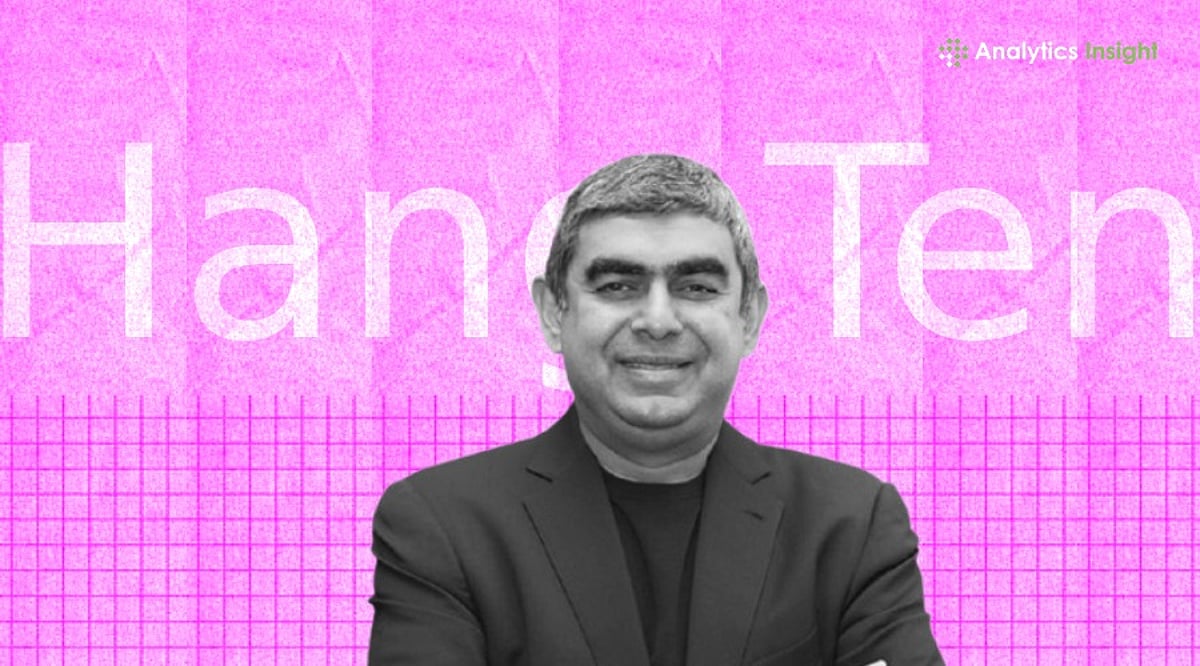
    Former Infosys CEO Vishal Sikka has launched a new artificial intelligence venture, Hang Ten Systems, which has secured $32 million in seed funding. The round was led by venture capital firm Mayfield, with participation from Aramco Ventures and a group of angel investors.

    Based in Palo Alto, California, Hang Ten Systems aims to help large enterprises adopt AI more effectively by building and operating software using an AI-native delivery model. The company seeks to reduce the time, cost, and complexity traditionally associated with enterprise software development and deployment.

    In an official statement, Hang Ten explained: “Hang Ten offers a different operating model – software built, changed, and run at a fraction of the cost and time, continuously – with specialized capabilities in enterprise transformations, finance, HR, and new product development, supported by an expert FDE (forward deployed engineer) bench, re-usable skills library, and agentic code generation.”

    Hang Ten positions itself as a company offering a fresh perspective on IT services and enterprise software deployment. By leveraging agentic code generation, an AI library, and the right engineering skills, it can build and operate enterprise software more efficiently. Sikka noted that while companies are spending heavily on AI, many still fail to derive value from their investments. Hang Ten bridges that gap by enabling enterprises to design and modify their software quickly and cost-effectively.

    This is Sikka’s latest AI venture after founding Vianai Systems following his departure from Infosys in 2017. Before leading Infosys, Sikka served as Chief Technology Officer at SAP, where he was deeply involved in product innovation.

    During the announcement, Sikka stated that artificial intelligence is an incredible power for firms, and that Hang Ten’s mission is to enable enterprises to “succeed in the era of AI.” This comes at a time when the enterprise AI industry continues to expand, and companies are seeking measurable returns from their AI investments.

  • How Dataiku Is Transforming Enterprise AI with a Unified Platform for Everyday AI

    How Dataiku Is Transforming Enterprise AI with a Unified Platform for Everyday AI

    Dataiku is a global artificial intelligence and machine learning platform that empowers organizations to build, deploy, and manage data-driven applications at scale. The company is a recognized leader in enterprise AI solutions, predictive analytics, and automated machine learning. Its revenue is generated primarily through software subscriptions, supported by professional services, training programs, and advanced AI capabilities, and it maintains a strong international presence across North America, Europe, Asia-Pacific, Latin America, the Middle East, and Africa.

    About the Company

    Dataiku transforms raw data into actionable insights through a centralized platform designed for Everyday AI. The platform enables both coders and non-coders to build, deploy, and manage AI solutions that incorporate generative AI, machine learning, analytics, and comprehensive data preparation tools. Robust AI governance features ensure compliance and reduce risks across all projects, while unified AI engineering operations foster a collaborative ecosystem. Teams can create dashboards, interactive web apps, and data products, supporting self-service analytics and smarter, data-driven decision-making across organizations worldwide.

    Core Leadership Team

    Dataiku is guided by an experienced leadership team that drives its vision of democratizing AI. While specific names are not detailed in this profile, the leadership oversees strategy, product development, and global expansion.

    Revenue Streams

    The company generates revenue mainly through enterprise software subscriptions for its Data Science Studio (DSS) platform. Additional income comes from professional services, training programs, and premium AI capabilities. These solutions support use cases in generative AI, machine learning, analytics, financial forecasting, supply chain optimization, and customer engagement, helping global organizations scale their decision-making and operational efficiency.

    Client Segments

    • B2B Focus: Large enterprises, public sector organizations, financial institutions, retailers, manufacturers, healthcare providers, and technology companies.
    • Target Companies: Fortune 500 corporations, SMBs, government agencies, tech startups, and AI-driven businesses.

    Target Geography

    Dataiku maintains a global presence with operations in North America, Europe, Asia-Pacific, Latin America, the Middle East, and Africa.

  • India’s AI Startup Ecosystem Expands Beyond Bengaluru: Key Hubs and Specializations

    India’s AI Startup Ecosystem Expands Beyond Bengaluru: Key Hubs and Specializations

    India’s artificial intelligence ecosystem has entered a new phase. Bengaluru still dominates the funding charts and deep-tech innovation, but the country’s AI growth story no longer revolves around a single city. Hyderabad, Mumbai, Pune, Delhi-NCR, Chennai, and emerging cities like Kochi, Chandigarh, Ahmedabad, and Kolkata are developing specialized strengths in enterprise AI, fintech, healthcare, industrial automation, and language technologies.

    Why Bengaluru Continues to Lead India’s AI Economy

    Bengaluru remains the country’s biggest AI startup destination because of its unmatched scale. The city hosts India’s deepest pool of engineers, startup founders, venture capital firms, and multinational R&D centers. AI companies working on foundational models, cloud infrastructure, and enterprise software continue to choose Bengaluru as their primary base. Notable startups include Sarvam AI, Observe.AI, Mad Street Den, and Uniphore. Global firms have also strengthened Bengaluru’s position, driven by engineering talent and startup density.

    How Hyderabad Turned into India’s Fastest-Growing AI Hub

    Hyderabad has rapidly transformed from an IT outsourcing destination into one of India’s most ambitious AI ecosystems. Government-backed initiatives, better infrastructure, and lower operational costs have encouraged startups to expand aggressively. HITEC City and T-Hub have played a major role in building the ecosystem around enterprise technology and AI innovation. The city has gained traction in conversational AI, enterprise automation, and cloud technologies.

    Why Mumbai’s AI Ecosystem Focuses on Finance and Media

    Mumbai’s AI startup landscape reflects the city’s larger economy. Unlike Bengaluru’s engineering-heavy ecosystem, Mumbai specializes in fintech, advertising technology, and consumer-facing AI products. Banks, financial institutions, media companies, and large enterprises create strong demand for AI-driven analytics and automation tools. AI firms in Mumbai work on fraud detection, financial analytics, personalized advertising, and generative content systems.

    How Delhi-NCR Became a Major AI Innovation Corridor

    Delhi-NCR has quietly emerged as one of India’s strongest AI startup regions. The ecosystem spreads across Gurugram, Noida, and Delhi, creating a large network of enterprise software firms, logistics platforms, and edtech startups. AI companies operating in automation, mobility, and cloud infrastructure are increasingly based in the region. The region also benefits from access to policymakers and government-backed technology initiatives.

    Why Pune is Becoming an Engineering and Industrial AI Center

    Pune’s AI rise comes from its strong engineering and manufacturing base. The city is home to major automotive companies, industrial firms, and educational institutions, creating demand for AI-powered automation and predictive technologies. Startups in robotics, supply-chain optimization, and industrial analytics are increasingly choosing Pune. Lower operating costs and access to skilled engineering talent further strengthen its ecosystem.

    How Chennai Built a Strong Presence in Healthcare and Industrial AI

    Chennai’s AI ecosystem has developed around manufacturing, mobility, and healthcare. The city’s long-standing automotive and industrial network created early demand for AI-led automation. Healthcare technology has emerged as another important sector, with AI startups working on diagnostics, medical imaging, and hospital management systems. Engineering institutions and research centers continue supporting innovation in robotics, mobility technology, and semiconductor research.

    Why Ahmedabad is Emerging as a Growing AI Startup Destination

    Ahmedabad represents the expansion of India’s AI economy beyond Mumbai into western India. The city’s strong business culture and manufacturing ecosystem have encouraged startups building automation and analytics solutions for SMEs and industrial firms. AI companies in Ahmedabad focus on retail intelligence, logistics, and operational software. Lower business costs and faster operational execution are major advantages.

    How Kolkata is Building a New AI Startup Identity

    Kolkata entered the AI startup race later than most major cities, but the ecosystem has begun to show steady growth. Lower operating costs and a strong technical education network have helped several startups emerge in analytics, edtech, and language technologies. University incubators and state-backed innovation programs continue to support early-stage companies. Founders focus on niche areas such as regional-language AI and civic technology.

    Why Kochi and Chandigarh are Attracting the Next Generation of Founders

    India’s AI boom isn’t restricted to metros anymore. Kochi and Chandigarh have started luring startups because of cheaper costs, better infrastructure, and remote work capabilities. Kochi’s ecosystem revolves around health-tech, digital products, and marine technologies. Chandigarh has evolved into a thriving hub for SaaS and enterprise software startups targeting northern India. Remote working practices have lowered the need to recruit from Bengaluru-centric centers.

    Why India’s AI Future Now Belongs to Multiple Cities

    The AI ecosystem in India is slowly breaking free from centralized control. While Bengaluru continues to lead in funding, talent, and startups, other cities have found their own ways to attract entrepreneurs and venture capitalists. Hyderabad comes across as the key city for business development. Mumbai acts as the engine for AI implementation by businesses. Pune serves as the engine for industrial AI research and development. The Delhi-NCR region acts as the engine for both business software and governance technology. Smaller cities are now part of the conversation. The current Indian startup ecosystem has transformed into a diverse network of innovation centers, each developing specialized capabilities to drive progress in the artificial intelligence economy.

  • AI Industry Leaders Share Insights on Strategy, Agents, and Transformation

    AI Industry Leaders Share Insights on Strategy, Agents, and Transformation

    Artificial intelligence continues to reshape industries, and a recent round of interviews with top AI executives reveals the key trends driving adoption. From infrastructure engineering to automotive manufacturing and energy management, leaders from Bentley Systems, Schneider Electric, Stellantis, and more shared their perspectives on how AI is being deployed responsibly and at scale.

    Julien Moutte, Bentley Systems

    Julien Moutte, CTO at Bentley Systems, discussed how AI agents are transforming infrastructure engineering. He emphasized that these tools augment engineers rather than replace them, enabling faster and more accurate design and analysis.

    Philippe Rambach, Schneider Electric

    Philippe Rambach, Chief AI Officer at Schneider Electric, highlighted the importance of critical thinking and a business-first approach when scaling AI across factories. He stressed that technology must align with operational goals to deliver real impact.

    Kaynaz Behdin, Stellantis

    Kaynaz Behdin, SVP of Digital, Data & AI at Stellantis, detailed how the automotive giant turns AI strategy into measurable business performance, focusing on data-driven decision-making across the enterprise.

    Johnson Agogbua, Kasi Cloud

    Johnson Agogbua, co-founder and CEO of Kasi Cloud, shared his vision for bringing hyperscale, AI-ready data centers to Africa, leveraging his three decades of experience building internet infrastructure.

    Emilio Tenuta, Ecolab

    Emilio Tenuta, SVP and Chief Sustainability Officer at Ecolab, discussed water resilience and AI-driven cooling, noting that data centers must rethink resource strategy to meet sustainability goals.

    Sunil Dadlani, Atlantic Health

    Sunil Dadlani, EVP at Atlantic Health, explained how putting human mission at the heart of AI innovation is redefining healthcare technology and improving patient outcomes.

    Moe Haidar, Nexthink

    Moe Haidar, Head of Agentic AI and Engineering at Nexthink, spoke about his passion for products and the breakneck speed of AI development, particularly in the agentic AI space.

    Ivana Bartoletti, Wipro

    Ivana Bartoletti, VP and Global Chief Privacy & AI Governance Officer at Wipro, detailed the foundational steps every organization must take to build trustworthy AI systems, emphasizing governance and ethics.

    Sasha Rubel, AWS

    Sasha Rubel, Head of AI Policy for EMEA at AWS, highlighted the urgent need for Europe to move from AI experimentation to large-scale transformation, addressing policy and innovation challenges.

    These interviews underscore a common theme: AI is not just about technology—it’s about strategy, governance, and human-centric implementation. As organizations across sectors embrace AI, the insights from these leaders offer a roadmap for responsible and effective adoption.

  • IBM Teams Up with ElevenLabs to Bring Natural Voice to Enterprise AI Agents

    IBM Teams Up with ElevenLabs to Bring Natural Voice to Enterprise AI Agents

    A landmark partnership between IBM and ElevenLabs is moving enterprise AI beyond text, delivering natural, secure, and scalable voice-first agents. The collaboration integrates ElevenLabs’ premium Text-to-Speech (TTS) and Speech-to-Text (STT) capabilities with IBM’s watsonx Orchestrate platform, enabling organizations to build voice-enabled AI agents that communicate with nuance, emotion, and rhythm across 70 languages.

    This strategic integration expands agentic AI from traditional text-based systems to voice-first interactions, offering enterprises the ability to replace robotic call flows with human-like conversations. The partnership addresses key enterprise needs for security and compliance, including PCI compliance for payment processing and HIPAA-compliant data handling through Zero Retention Mode.

    Industry applications span government services, banking, healthcare, insurance, and utilities, where AI phone agents can now converse in multiple languages with regional accents. Internal use cases include helping employees navigate legacy systems and retrieve complex compliance documentation via simple voice commands.

    ElevenLabs has achieved $330 million in annual recurring revenue (2025) and a valuation of $11 billion following a $500 million Series D funding round in February 2026. The company’s voice library contains over 10,000 voices.

    Nick Holda, Vice President of AI Technology Partnerships at IBM, stated: “We’re bringing a voice to AI Agents in the enterprise. As clients increasingly deploy agentic AI that interacts with their customers and employees, they want these experiences to feel intuitive, responsive and accessible.”

    Mati Staniszewski, Co-Founder of ElevenLabs, added: “AI agents are becoming central to everyday work, and voice is where AI either earns trust or loses it.”

    The collaboration underscores a shift toward human-centered AI interfaces that adapt to natural speaking habits, moving beyond rigid call flows and towards empathetic, efficient digital ecosystems that can scale globally.

  • AWS Co-Founder Matt Domo on Why Enterprise AI Pilots Fail and How to Scale

    AWS Co-Founder Matt Domo on Why Enterprise AI Pilots Fail and How to Scale

    According to a recent Forrester analysis, only 10-15% of artificial intelligence pilots successfully transition into long-term production. That means most enterprise AI investments stall before they ever deliver real impact. Matt Domo, a co-founder of Amazon Web Services (AWS) and creator of foundational Microsoft enterprise technologies, has a clear explanation: the problem is rarely the technology itself, but rather how organizations are structured around it.

    Now advising Fortune 500 companies, government agencies, and universities, Domo shared his insights with AI Magazine on moving from experimentation to enterprise-scale execution.

    Why Most AI Initiatives Fail at the Executive Level

    Domo identifies three root causes for AI failure: unclear ownership of outcomes, misaligned incentives across teams, and operating models that were not built for AI-driven decision-making. “Leaders fund pilots, but they don’t redesign how work happens. They treat them as technology projects instead of using them to change how the business operates,” he said. Without organizational alignment, AI simply gets layered onto existing processes, which looks like progress but yields no measurable results.

    Scaling AI from Pilot to Enterprise-Wide Deployment

    Scaling does not come from running more pilots; it comes from standardization. “Companies that succeed define a repeatable path from pilot to production, assign clear ownership of outcomes, and integrate AI into core workflows instead of layering it on top,” Domo explained. He warns that when every team starts from scratch, you end up with scattered experiments, not scale.

    ROI Metrics That Convince Boards

    To secure board-level investment, Domo advises focusing on metrics directly tied to financial results and strategic goals. “Boards aren’t convinced by activity. They’re convinced by measurable impact tied to the P&L,” he said. The metrics that matter include cost reduction, revenue lift, and faster decision cycles. Vague reporting like usage or engagement does not work; clear attribution of what changed, by how much, and how it ties to financial outcomes is essential.

    Avoiding AI-Washing and Misaligned Projects

    Organizations avoid AI-washing by starting with the desired outcome, not the tool. “Define the business result first, assign clear ownership of that outcome, and only then determine where AI actually improves the workflow,” Domo advised. Misalignment often happens when teams are incentivized to launch initiatives rather than deliver results. The fix is to tie every AI effort to a measurable objective and hold a single owner accountable.

    Speeding Up AI-Driven Decision-Making

    Speed in AI adoption comes from clearer ownership and fewer handoffs. In large organizations, decisions slow down due to fragmented accountability and excessive alignment steps. Domo recommends defining who owns the outcome, standardizing the inputs those decisions rely on, and reducing the number of required approvals. “AI can surface better insights, but unless the organization is structured to act on them quickly, those insights sit in dashboards,” he noted. Speed comes from aligning decision rights with the people closest to the outcome.