Tag: Enterprise AI

  • Databricks Reaches $188 Billion Valuation With New Strategic Funding for Enterprise AI

    Databricks Reaches $188 Billion Valuation With New Strategic Funding for Enterprise AI

    Data and AI company Databricks has announced a new strategic funding round that values the company at $188 billion, signaling strong investor confidence in enterprise artificial intelligence. The financing, led by existing investor Coatue with participation from other new and existing investors, is expected to close later this summer.

    The fresh capital will be used to strengthen Databricks’ AI portfolio, expand research efforts, and support future acquisitions as the company meets rising enterprise demand for AI-powered business solutions.

    Focus on AI Products

    Databricks said the funding will accelerate development across three key offerings: Unity AI Gateway, Genie, and Lakebase.

    Unity AI Gateway enables enterprises to manage AI models from multiple providers while improving governance, security, and cost control. Genie acts as an AI-powered coworker that helps employees turn business data into actionable insights. Lakebase is a serverless PostgreSQL database designed to support AI agents and modern enterprise applications.

    According to the company, these products aim to address what it describes as the ‘context gap’ in enterprise AI, where disconnected data systems, governance challenges, and rising infrastructure costs prevent organizations from deploying AI effectively at scale.

    Enterprise AI Strategy

    Commenting on the funding, Databricks Co-founder and CEO Ali Ghodsi said enterprises are increasingly prioritizing measurable business value over indiscriminate AI spending.

    ‘Enterprises are moving from tokenmaxxing to valuemaxxing. They don’t want to burn expensive tokens on the smartest model for every task, they want the best outcome per dollar. That means having the freedom to choose the right AI for the job,’ Ghodsi said.

    He added that the new investment will help the company strengthen its multi-AI strategy by enhancing Unity AI Gateway, expanding Genie, and advancing Lakebase.

    Growing Enterprise Adoption

    Headquartered in San Francisco, Databricks serves more than 20,000 organizations worldwide, including Adidas, AT&T, Bayer, Block, Mastercard, Rivian, and Unilever. The company says around 70% of Fortune 500 companies use its Data + AI Platform to build AI applications, analytics tools, and autonomous AI agents.

    The latest funding further strengthens Databricks’ position in the rapidly expanding enterprise AI market as businesses continue to invest in scalable, governed, and cost-efficient AI infrastructure.

  • Pega Infinity 26 Launches: Predictable AI Outcomes Without Token Fees

    Pega Infinity 26 Launches: Predictable AI Outcomes Without Token Fees

    Pegasystems Inc. (NASDAQ: PEGA) has announced the general availability of Pega Infinity™ 26, the latest version of its enterprise AI suite designed to help organizations scale artificial intelligence with confidence. The release tackles two critical barriers to AI adoption: unpredictable outcomes and unpredictable costs.

    Available through Pega Cloud® or in clients’ managed cloud environments, Pega Infinity 26 combines advanced agentic AI with built-in governance and a new pricing model that eliminates consumption-based AI charges. This enables enterprises to achieve both predictable AI performance and predictable expenses.

    Predictable AI with Flat-Fee Pricing

    At the heart of the release is the Pega Predictable AI™ architecture, which maximizes AI processing at design time to ensure runtime operations are extremely token-efficient. Clients pay a flat fee per resolved case—not per token—eliminating what Pega calls the “AI token tax.” This model allows enterprises to use as much AI as needed without worrying about runaway costs from token-based consumption.

    Pega also introduced a free AI Token Cost Calculator to help organizations estimate potential savings compared to traditional token-based models.

    Key Innovations in Pega Infinity 26

    • Pega Infinity Studio – An AI-native development environment that integrates clients’ preferred coding agents with built-in best practices from Pega Blueprint AI™, accelerating delivery of mission-critical applications while reducing risk.
    • Predictable AI agents and orchestration – New capabilities allow developers to connect and orchestrate both Pega and third-party AI agents within governed workflows, ensuring compliance and consistent outcomes.
    • Pega Customer Engagement Studio – A unified workspace for marketers to create personalized 1:1 campaigns in minutes at scale, with AI agents handling ideation through execution.
    • Design and runtime MCP support – Clients can use MCP (Model Context Protocol) to connect with tools like Claude Code, GitHub Copilot, and OpenAI Codex for building applications, and invoke agents from assistants like ChatGPT and Office 365 Copilot.

    Market Context: The Need for Cost Transparency

    Despite massive enterprise investment in AI, many organizations have struggled to realize meaningful business value. Concerns around trust, risk, and security have slowed large-scale deployment. Escalating costs and uncertain ROI threaten the viability of many AI initiatives. With Pega Infinity 26, every AI-driven interaction adheres to business rules and regulatory standards while removing pricing unpredictability.

    Executive Insight

    “Enterprises are seeing tremendous potential in AI and are now focused on turning that momentum into measurable business outcomes,” said Kerim Akgonul, chief product officer at Pega. “The next phase of AI adoption is about scaling results with confidence. Pega Infinity 26 removes two of the biggest barriers to success—unpredictable outcomes and unpredictable costs—by building governance into AI-driven workflows and aligning pricing with completed work.”

    Pega Infinity 26 is available now. For more details, visit www.pega.com/infinity.

  • Landing AI: Empowering Enterprises with Agentic AI and Computer Vision Solutions

    Landing AI: Empowering Enterprises with Agentic AI and Computer Vision Solutions

    Landing AI, founded in 2017 by AI pioneer Andrew Ng, is a leading company specializing in data-centric computer vision and AI-powered document extraction. The firm enables organizations to build, deploy, and scale AI models efficiently, with a strong focus on manufacturing and complex unstructured document workflows through agentic document extraction.

    About the Company

    Landing AI develops artificial intelligence software that transforms large volumes of visual and document data into actionable insights. By leveraging data-centric AI and computer vision technologies, the company helps enterprises implement AI systems across multiple industrial sectors, including manufacturing, healthcare, and logistics. Its main platforms—LandingLens and Agentic Document Extraction (ADE)—allow users to build AI models with minimal programming, converting difficult visual data and unstructured documents into organized, structured data.

    Products and Services

    Landing AI offers two core platforms: LandingLens for building computer vision systems and Agentic Document Extraction (ADE) for extracting structured data from documents. These tools enable organizations to automate analytics and enterprise workflows using data-centric artificial intelligence. The company also provides API access, consulting services, and strategic partnerships to support deployment.

    Leadership

    Under the leadership of founder Andrew Ng, a renowned figure in AI, Landing AI has assembled a team of experts driving innovation in computer vision and document automation. The company’s leadership focuses on practical, scalable AI solutions for real-world enterprise challenges.

    Revenue Streams

    Landing AI generates revenue through subscriptions to its LandingLens SaaS platform, enterprise AI solutions, API access for agentic AI tools, strategic partnerships, and consulting services for deploying data-centric computer vision applications.

    Target Markets

    The company serves B2B clients across industries such as manufacturing, finance, healthcare, logistics, agriculture, and technology. Geographically, its solutions are adopted by organizations in North America, Europe, Asia-Pacific, and other global regions. Key client segments include enterprises looking to enhance their computer vision systems, document automation processes, and data extraction capabilities.

  • Gnani AI: India’s Deep-Tech Pioneer in Agentic Speech and Voice AI Solutions

    Gnani AI: India’s Deep-Tech Pioneer in Agentic Speech and Voice AI Solutions

    Gnani AI is a deep-tech artificial intelligence company based in India that specializes in voice-first agentic AI and conversational AI solutions. The company develops proprietary speech technologies—including automatic speech recognition (ASR), text-to-speech (TTS), and natural language understanding (NLU)—to enable multilingual voice communication, particularly in Indian languages. Businesses leverage these tools to automate customer interactions, authentication processes, and live chat experiences.

    About the Company

    Gnani creates cutting-edge voice-first automation solutions through its advanced conversational AI systems. Its technology enables organizations to build intelligent voice assistants that handle customer interactions, providing seamless communication via natural language understanding, speech processing, and AI-powered chat systems. The platform offers tools for automating conversations, authenticating users with voice biometrics, and analyzing user interactions across multiple channels. The company’s core capabilities include speech recognition, text-to-speech technology, and AI-powered language models, all tailored for high accuracy in Indian languages.

    Products and Services

    Gnani.ai provides a comprehensive suite of AI-powered speech and conversational solutions, including:

    • Speech-to-text transcription
    • Text-to-speech voice generation
    • Multilingual translation
    • AI agents for customer engagement
    • Call analytics and voice biometrics authentication
    • Omnichannel automation tools supporting voice, chat, messaging, and email

    These solutions are designed for enterprise customer engagement and workflow automation, helping businesses reduce manual effort and improve service quality.

    Core Leadership Team

    Gnani AI is led by a team of experienced technologists and entrepreneurs driving innovation in voice AI. The leadership combines deep expertise in artificial intelligence, machine learning, and natural language processing.

    Revenue Streams

    The company generates revenue through a dual model:

    • SaaS subscription model: Delivers the conversational AI platform as a cloud-based service.
    • Enterprise licensing model: Provides voice automation solutions, AI agent deployments, analytics services, voice biometrics tools, and performance-driven customer experience optimization services.

    Client Segments and Target Companies

    Gnani.ai serves B2B clients that aim to automate conversations, improve contact center efficiency, and deliver better multilingual customer service. Target companies operate in telecom, banking, retail, healthcare, and technology sectors, particularly those with extensive customer support and sales operations.

    Target Geography

    While headquartered in India, Gnani.ai has expanded its footprint globally. Enterprises across Asia, Africa, the Middle East, North America, and European markets have implemented its AI-based customer experience automation solutions.

    Social Media and Website

    For more information, visit Gnani AI’s website and follow them on LinkedIn.

  • Mark Zuckerberg Ends 3-Year X Hiatus to Unveil Meta’s Muse Spark 1.1 AI Model

    Mark Zuckerberg Ends 3-Year X Hiatus to Unveil Meta’s Muse Spark 1.1 AI Model

    Mark Zuckerberg has made a surprising return to X (formerly Twitter) after more than three years of silence, using the platform to launch Meta’s latest artificial intelligence model, Muse Spark 1.1. The announcement signals Meta’s aggressive push into enterprise AI, targeting developers with advanced coding capabilities, automation tools, and multi-agent coordination.

    Key Highlights of the Launch

    Zuckerberg’s post on X was brief, but the substance behind it is significant. The Muse Spark 1.1 model is designed for coding tasks, software development, and running AI agents. Developers can access the model through Meta’s new proprietary API, the Meta Model API—the company’s first such offering in the United States. This move positions Meta to compete directly with OpenAI and Anthropic for developer market share.

    Technical Capabilities

    Muse Spark 1.1 can handle complex tasks with ease, including integration with third-party tools. It features a context window of up to 1 million tokens, meaning it can retain and process a massive amount of information in a single session. The model can also run multiple AI agents simultaneously across desktop, mobile, and browser platforms.

    Key functionalities include:

    • Writing and debugging code
    • Automating workflows
    • Processing text, images, and video
    • Multi-agent coordination for complex tasks

    Pricing and Availability

    Meta is offering developers free credits to get started, with pay-as-you-go pricing afterward. Reports indicate the cost is $1.25 per million input tokens and $4.25 per million output tokens. The model will also be integrated into Meta’s own apps, including a new ‘Thinking’ mode coming soon to the Meta AI app and website.

    Strategic Implications

    The launch of Muse Spark 1.1 places Meta squarely in the race for AI dominance. The company is betting that its strong memory and multi-agent capabilities will attract developers away from established players. Looking ahead, Meta plans to integrate the model into WhatsApp, Instagram, Facebook, and its smart glasses, giving it a reach that few competitors can match.

    While ultimate success will depend on real-world performance, Zuckerberg’s surprise return to X has already succeeded in putting Meta’s AI ambitions back in the spotlight.

  • Why Financial Institutions Need Zero-Hallucination AI: Rethinking Data Architecture Before LLM Adoption

    Why Financial Institutions Need Zero-Hallucination AI: Rethinking Data Architecture Before LLM Adoption

    As financial institutions rush to deploy large language models, experts warn that unreliable data foundations—not model capability—remain the biggest barrier to trustworthy AI. Industry specialist Amit Sharma argues that zero-hallucination AI begins with resilient architecture, governed data pipelines, and real-time retrieval systems rather than larger models alone.

    The Hallucination Problem in Finance

    The financial sector’s growing interest in large language models has created new opportunities in automation, customer service, fraud detection, and operational intelligence. However, a central challenge continues to slow enterprise adoption: hallucination, the tendency of AI systems to generate inaccurate or fabricated responses. In highly regulated environments, where decisions must be precise, explainable, and traceable, even minor inaccuracies can carry serious financial and compliance consequences. As a result, many industry observers now argue that the path to zero-hallucination AI begins not with the model itself, but with a complete rethink of enterprise data architecture.

    Expertise in Mission-Critical Systems

    Among professionals working at the intersection of financial infrastructure and AI, Amit Sharma has emerged as a notable voice on this issue. With more than 17 years of experience in mission-critical data architecture, Sharma has built high-availability systems for major financial institutions and has developed expertise in both legacy database resilience and modern generative AI frameworks. His postgraduate certification in Artificial Intelligence and Machine Learning from the University of Texas at Austin further strengthened his focus on practical business applications of LLMs. His early work with advanced vector databases has also placed him among professionals exploring how traditional transactional systems can be combined with semantic AI search.

    Bringing AI to Governed Data

    According to Sharma, many institutions risk pursuing AI adoption while overlooking the weaknesses of fragmented data environments. He contends that moving sensitive information into disconnected AI silos often increases latency, raises governance concerns, and creates operational inefficiencies. Instead, he advocates bringing AI capabilities directly to governed enterprise data systems. This approach enables models to retrieve verified, real-time information from trusted sources rather than generating answers from incomplete memory.

    Retrieval-Augmented Generation as a Solution

    To address hallucination risk, Sharma has worked on Retrieval-Augmented Generation (RAG) frameworks designed to anchor LLM outputs in structured and unstructured enterprise data. By ensuring that responses are tied to a “single version of truth,” such systems can improve factual reliability while maintaining auditability. Furthermore, he has contributed to infrastructure strategies that separate AI inference workloads from core transactional systems, allowing financial platforms to preserve speed and stability while still benefiting from intelligent automation.

    Measurable Impact of Architecture-Led Strategies

    The measurable impact of such architecture-led strategies has been significant. Systems aligned with maximum availability principles have reportedly achieved 99.999% uptime standards, a critical benchmark for institutions where downtime can be costly. Meanwhile, the integration of vector search and optimized retrieval methods has reduced information lookup times by as much as 50 percent compared with conventional keyword approaches. At the same time, predictive autoscaling models have demonstrated the potential to lower long-term infrastructure costs by reducing unnecessary overprovisioning.

    Future Trends in Financial AI

    Nevertheless, Sharma believes the conversation around enterprise AI must move beyond productivity gains alone. He points to three trends likely to shape the next phase of financial transformation: autonomous self-optimizing infrastructure, convergence of transactional and vector data in a single query environment, and quantum-resistant encryption to secure sensitive records against future threats. Consequently, he argues that resilience, governance, and trust should become the primary design principles of any AI deployment.

    As financial institutions continue experimenting with generative AI, the industry’s next competitive advantage may depend less on who adopts LLMs first and more on who builds the strongest data foundations beneath them. Zero-hallucination AI, in that sense, is not simply a model challenge—it is an architecture challenge.

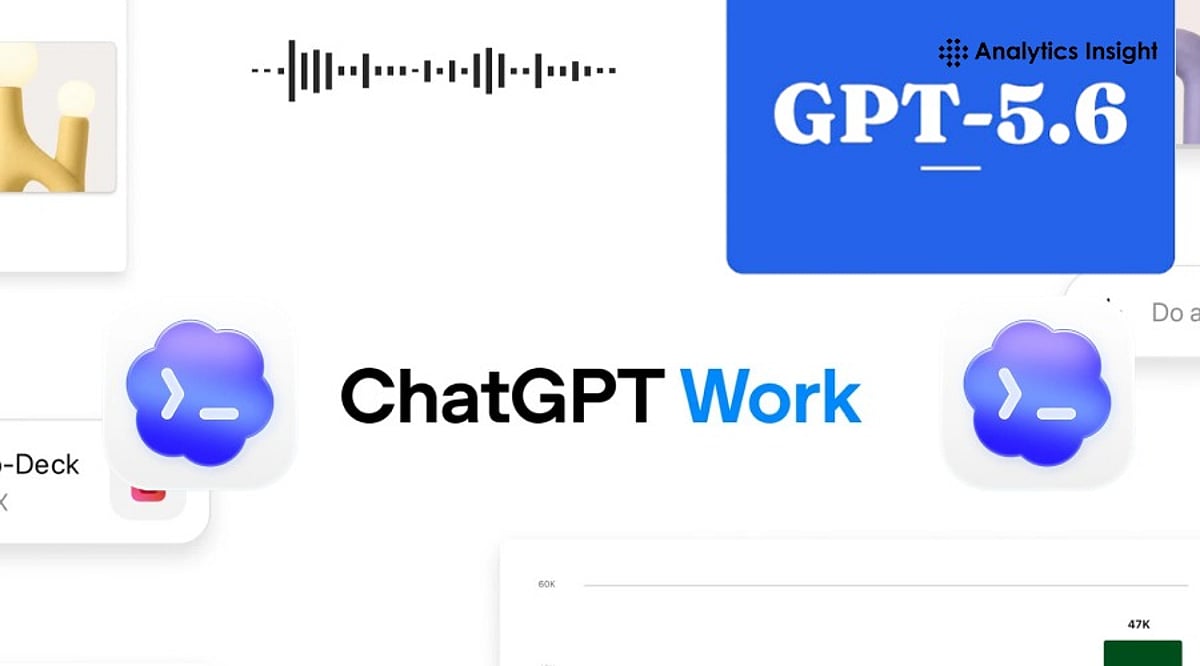
  • OpenAI Launches ChatGPT Work: Autonomous AI Agent Powered by GPT-5.6 and Codex

    OpenAI Launches ChatGPT Work: Autonomous AI Agent Powered by GPT-5.6 and Codex

    OpenAI has introduced ChatGPT Work, a new AI agent designed to go beyond simple question-answering. Powered by the newly released GPT-5.6 model family and integrated with Codex, ChatGPT Work can autonomously research, analyze data, write code, create presentations, generate reports, and automate workflows across connected applications. This marks a significant shift from conversational AI to autonomous workplace productivity.

    What ChatGPT Work Can Do

    ChatGPT Work is built for extended, multi-step assignments rather than one-off prompts. It can pull information from connected apps, generate spreadsheets, presentations, documents, and web apps, and continue working for hours by breaking larger projects into smaller steps. A new Unified Plugins Directory bundles third-party integrations including Google Drive, SharePoint, Slack, Microsoft Teams, Gmail, Outlook, Salesforce, Adobe, Zoom, LinkedIn, GitHub, and Dropbox. Users can invoke a specific plugin using an “@” mention or let ChatGPT decide which data source is relevant. A Scheduled Tasks feature allows the agent to keep projects moving even when a user is away, such as converting new Slack or Microsoft Teams messages into updated documents and flagging important changes automatically.

    GPT-5.6 and the Sol, Terra, Luna Naming System

    Powering the new agent is GPT-5.6, introduced under a naming scheme where the number marks the model generation while Sol, Terra, and Luna represent separate capability tiers. Sol is OpenAI’s new flagship model, achieving state-of-the-art results in coding, knowledge work, cybersecurity, and science while using fewer tokens than prior frontier models. Terra matches GPT-5.5’s performance at roughly half the cost, and Luna is the fastest, most affordable tier. API pricing runs $5/$30 per million input/output tokens for Sol, $2.50/$15 for Terra, and $1/$6 for Luna.

    Codex Merges into the ChatGPT Desktop App

    OpenAI is also merging its standalone Codex coding app into a single updated ChatGPT desktop app for Mac and Windows, with the previous app renamed ChatGPT Classic. Existing Codex users keep their projects and settings after updating. OpenAI reports that more than 5 million people already use Codex weekly, with over 1 million using it for tasks outside software development, a trend the company is leaning into as it pushes AI agents into sales, finance, and marketing workflows.

    Rollout, Security, and Enterprise Controls

    ChatGPT Work started rolling out on July 9 for Pro, Enterprise, and Edu users on web and mobile, with Plus and Business access arriving in the next few days. The updated desktop app is available globally across all plans, including Free. On security, OpenAI has built in an auto-review system that checks sensitive actions before they run, which it says blocked all attempts to extract protected data during internal adversarial testing, though this hasn’t been independently verified. Enterprise and Edu admins get centralized controls over connected tools and sensitive actions, plus a Compliance API for visibility into ChatGPT Work’s activity.

    ChatGPT Work reflects the next stage of enterprise AI, shifting from answering questions to completing real tasks. Its long-term success will depend not only on advanced capabilities but also on trust, accuracy, and how effectively organizations integrate AI agents into everyday workflows.

  • Google Selects 20 AI-First Startups for India Accelerator 2026 Cohort

    Google Selects 20 AI-First Startups for India Accelerator 2026 Cohort

    Google has chosen 20 homegrown AI-first startups for the 2026 cohort of its Google for Startups Accelerator: India program. The tech giant selected these companies from more than 2,500 applications, highlighting the growing depth of India’s AI startup ecosystem.

    The selected startups recently completed an in-person bootcamp at Google’s Bengaluru campus. Over the next three months, Google will provide mentorship, AI tools, cloud resources, and technical guidance to help founders refine their products, strengthen infrastructure, and scale globally.

    A Cohort Built Around Applied AI Infrastructure

    This year’s selections lean heavily toward startups building AI infrastructure and vertical-specific tools rather than consumer apps. Several are tackling embedded and industrial AI: CraftifAI and H2Loop AI automate embedded software and firmware development for robotics, automotive, and semiconductor hardware, while Jidoka applies computer vision to manufacturing quality inspection.

    Others focus on enterprise workflows: Binocs automates financial due diligence, OnFinanceAI builds compliance and risk tools for banks and insurers, and TartanHQ handles identity verification and onboarding through AI-powered APIs. Healthtech and climate tech also feature prominently, with Aikenist building AI-accelerated radiology tools, FlexifyMe offering AI-guided chronic pain therapy, and Aurassure and Fitsol tackling environmental monitoring and carbon emissions tracking respectively.

    Notable Names and Their Backers

    A few startups in the cohort have already built visible track records. Adalat AI, incubated at MIT, applies speech transcription and workflow automation to reduce courtroom case backlogs. Dodo Payments, backed by Antler and 100Unicorns, is building global payment infrastructure for SaaS and AI companies across more than 150 countries. Pipeshift, which came out of Y Combinator’s Summer 2024 batch, focuses on low-latency inference infrastructure for open-source AI models, while Soundverse AI, featured on Shark Tank India, offers a generative AI music platform for prompt-based composition. Several others, including CraftifAI, H2Loop AI, and Binocs, have already raised institutional funding from investors such as Accel, Ankur Capital, and IvyCap Ventures.

    What the Accelerator Offers Founders

    Google India vice president and country manager Preeti Lobana said the program is designed to equip founders with Google’s full AI stack and deep technical mentorship. She framed it as a way to accelerate their path to enterprise scale while strengthening the technical capabilities that support the broader India AI Mission. Google first launched the accelerator in April 2024, and its 2025 cohort included companies such as Apptile, Knit, MyWonder, Phot.AI, and SparkyAI.

    What Comes Next for the Cohort

    Beyond mentorship, Google’s accelerator model typically emphasizes technical depth over generic startup coaching. Founders will stress-test their architecture and prepare for scaled, enterprise-grade deployment rather than simply polishing a pitch deck. With this cohort skewing heavily toward infrastructure-level AI tools serving manufacturing, financial services, and healthcare, the selections suggest Google is positioning the program as a pipeline for startups building the underlying technical layers of India’s AI economy, rather than consumer-facing AI products alone.

  • How AI Agents Are Transitioning from Assistants to Autonomous Digital Workers

    How AI Agents Are Transitioning from Assistants to Autonomous Digital Workers

    Artificial intelligence has entered a new stage. In the past, most AI systems answered questions, wrote text, or helped users complete small tasks. Today, AI plays a much larger role. Modern AI agents can understand a goal, create a plan, use different software tools, check results, fix mistakes, and complete entire jobs with minimal human support. This evolution moves AI from a simple assistant to a digital worker that can handle complex tasks from start to finish.

    Key Takeaways

    • Reasoning models help AI solve complex problems through careful step-by-step decisions.
    • Autonomous workflows allow AI agents to complete entire business tasks with limited human support.
    • Memory, software tools, and multi-agent teamwork make AI more capable, reliable, and useful for enterprises.

    Reasoning Models Bring Better Decisions

    The latest AI models focus more on reasoning than on larger size. Earlier models mostly predicted the next word in a sentence. New reasoning models spend more time before they respond. They study the problem, divide it into smaller parts, test different solutions, and verify the final answer. This method helps them solve difficult problems with greater accuracy. Such models perform well in software development, mathematics, scientific research, legal work, and business planning because they can think through each step before acting.

    AI Agents Work Until the Goal Is Complete

    A normal language model usually gives one answer and stops. An AI agent works very differently. It first understands the goal, then creates a plan, selects the right tools, completes one task after another, checks the outcome, and makes changes if something goes wrong. The process continues until the final objective is achieved. This ability makes AI agents useful for long and complicated work rather than just simple conversations.

    Autonomous Workflows Change Business Operations

    Businesses now look beyond basic automation. Older automation systems followed fixed rules and worked well only when every step stayed the same. Autonomous workflows offer much more flexibility. AI agents can study new situations, collect information from different sources, use business software, connect with online services, create reports, and verify results before delivering the final output. This approach reduces manual effort and allows companies to complete many business processes with greater speed and accuracy.

    Teams of AI Agents Solve Bigger Problems

    Many organizations now use several AI agents instead of one large system. Each agent has a special role. One agent may collect information, another may write code, another may study data, while another may check quality or prepare documents. A manager agent coordinates all of them and combines their work into one final result. This teamwork enables faster task completion and better quality because every agent focuses on a specific responsibility.

    Software Tools Become Part of AI Work

    Modern AI agents do much more than produce text. They can use web browsers, databases, spreadsheets, cloud platforms, programming tools, email services, calendars, and customer management systems. Instead of only giving advice, they can complete real work inside these applications. This ability has become one of the biggest changes in AI because it allows agents to operate software just as a human employee would.

    Memory Makes AI More Useful

    Memory has turned into a significant aspect of modern AI agents. Short-term memory retains information about the present task, while long-term memory holds information about user preferences, company knowledge, and experiences from previous jobs. Some agents also maintain records of past mistakes and accomplishments. Thus, AI agents can leverage stored knowledge and experience to enhance future work rather than starting from scratch each time.

    New Enterprise Systems Support AI Agents

    Large companies now build special platforms to manage AI agents. These systems control task planning, memory, security, software access, and performance checks. They also monitor every action so that organizations can maintain safety and follow business rules. Human approval remains an important part of many business processes, especially when AI handles financial, legal, or sensitive information.

    Software Development Leads AI Adoption

    Software development has become one of the fastest areas for AI agent use. Modern agents can write code, test software, identify errors, review updates, prepare technical documents, and assist with system maintenance. Developers now spend less time on repetitive work and more time on design, innovation, and difficult technical problems. This change has improved productivity across many software teams.

    Why This Matters

    There are still some prominent challenges facing AI agents today. They can generate false information, misinterpret commands, and take wrong actions in tough situations. Safety and security remain key areas of concern, as AI agents may work on sensitive business systems or handle personal information. Companies must develop solid procedures for protecting data, monitoring AI agent behavior, validating outcomes regularly, and documenting every action taken.

    The Future of Autonomous AI

    The future of AI agents will focus less on conversation and more on completed work. Businesses already expect AI to research information, create reports, manage projects, analyze data, communicate with customers, and support daily operations. Better reasoning, stronger memory, smarter planning, and closer cooperation between multiple AI agents will make these systems even more capable. Over the next few years, AI will become an essential part of many industries, not because it can answer questions, but because it can complete valuable work from beginning to end with greater reliability and efficiency.

    Frequently Asked Questions

    1. What is an AI agent?
    An AI agent is a system that can plan, use tools, make decisions, and complete tasks instead of only answering questions.

    2. How are reasoning models different from traditional AI models?
    Reasoning models spend more time analyzing problems before they respond, which improves accuracy for complex tasks.

    3. What are autonomous workflows?
    Autonomous workflows allow AI to manage complete business processes by planning, executing tasks, checking results, and making corrections when needed.

    4. Why is memory important for AI agents?
    Memory helps AI remember user preferences, previous tasks, and useful knowledge, which leads to more personalized and efficient results.

    5. Which industries benefit the most from AI agents?
    Software development, healthcare, finance, customer service, legal research, marketing, sales, human resources, and business operations are among the industries that benefit the most.

  • Anthropic Unveils Claude Sonnet 5 and Cloud Tasks, Paving the Way for an AI Super App

    Anthropic Unveils Claude Sonnet 5 and Cloud Tasks, Paving the Way for an AI Super App

    Anthropic has taken a significant step toward building an all-in-one AI platform with the launch of Claude Sonnet 5 and the integration of cloud-based task execution. The update merges chat, coding, and task management into a single interface, allowing users to run lengthy projects in the cloud even after closing their laptops.

    Available now for Claude Max subscribers on desktop, web, and mobile, the new features eliminate the need to keep devices powered on for long-running tasks. This shift gives users greater flexibility and simplifies complex workflows, marking a move beyond the traditional chatbot model.

    Claude Evolves into a Full Work Platform

    Anthropic is transforming Claude from a simple conversational agent into a comprehensive work environment. Instead of switching between separate apps for coding, research, writing, and planning, users can now handle multiple tasks within Claude. The company believes this unified approach will benefit both developers and everyday users.

    Earlier this year, Anthropic hinted at the vision of remote AI work that doesn’t require constant device activity. The latest update realizes that vision, bringing Claude closer to becoming a true super app. The platform now includes Claude Code, Claude Science, and Claude Design, along with integrations with popular tools like Slack, Chrome, and Microsoft 365.

    New AI Model and Enterprise Focus

    Central to the update is Claude Sonnet 5, which Anthropic describes as its most powerful model yet for coding and professional tasks. It supports smarter AI agents that can tackle larger projects with less manual intervention.

    Anthropic is also deepening its enterprise push, partnering with companies like TCS and engaging with government organizations. The company aims to deliver safe, accurate AI for industries such as healthcare, finance, cybersecurity, and public services.

    The competitive landscape remains intense: OpenAI continues to expand ChatGPT, while Microsoft broadens Copilot across its ecosystem. Anthropic differentiates itself by emphasizing safety and business-friendly features rather than consumer-focused gimmicks.

    Room for Improvement

    Despite the advances, Claude still has gaps. Cowork conversations do not fully sync between desktop and mobile devices yet. Anthropic has promised better cross-device integration in future updates, which will smooth the user experience.

    This release underscores a broader industry trend: AI companies are moving away from simple chatbots and toward complete work platforms. A single AI service may soon handle coding, research, writing, planning, and collaboration, helping businesses reduce tool sprawl and save time.