Tag: entrepreneurship

  • From Founder to CEO: Essential Leadership Shifts for Scaling Your Business

    From Founder to CEO: Essential Leadership Shifts for Scaling Your Business

    Every successful business begins with an idea. A founder turns that idea into a real product or service. At the start, almost every task lands on the founder’s desk. Sales, customer support, hiring, product updates, and marketing all need attention. Quick decisions and constant action help the business survive during this stage.

    Growth changes everything. More customers arrive, new employees join, and daily work becomes more complex. At this point, the role also changes. The focus moves away from personal effort and toward company leadership. A CEO no longer spends every hour solving daily problems. The role shifts toward building a business that works well through strong teams, clear systems, and smart planning.

    Early Growth Depends on Personal Effort

    In the beginning, a small organization operates with a very limited number of people. All employees have to perform a number of different tasks. The business owner can work with customers, communicate with clients, check the quality of the product, and also make the crucial decisions. Speed is more important than following processes.

    This approach is effective at the beginning but becomes ineffective when the company is growing. The owner understands the operations very well and can do the right thing when problems arise. Customers can communicate directly with the owner which also increases the level of trust of the customers. When the company grows, this approach makes growth slower. All decisions can be adopted only by one person. All processes take time.

    Scaling Demands a Different Style of Leadership

    Growth creates new challenges that personal effort alone cannot solve. More employees need direction. Different teams need coordination. Managers need authority to lead their departments without constant approval from the founder.

    The CEO concentrates on the overall health of the company instead of every individual task. Long-term strategy, financial planning, executive hiring, company culture, and business expansion become major priorities. Strong systems replace informal routines, and clear responsibilities help every team move with confidence.

    This shift allows the organization to grow without constant dependence on one individual.

    The Biggest Change Happens in Decision-Making

    Founders often ask what needs immediate attention. CEOs ask which person should own that responsibility. This simple change transforms the entire business.

    A founder solves problems personally. A CEO creates a team that solves problems every day. Responsibility moves from one person to many capable leaders. This approach increases speed, improves accountability, and strengthens every department.

    As trust grows inside the organization, managers gain confidence to make important decisions. Teams spend less time waiting for approval and more time delivering results.

    Leadership Moves from Control to Trust

    Many entrepreneurs believe that no one can do the job better than they can. This belief helps at the startup stage, but it puts limits on expansion. The constant supervision slows down growth and weakens leadership within the business. A chief executive officer builds trust through clearly defined expectations, regular communication, and strong managers.

    Workers know their responsibilities and can make decisions about how to perform their duties. This creates ownership and increases the company’s effectiveness. Good leaders stop trying to be heroes all the time. Strong leaders turn more people into leaders who know how to deal with problems.

    Systems Replace Constant Firefighting

    Small businesses often rely on quick reactions. Larger companies need consistency. Every successful process must produce reliable results every single time.

    The CEO spends time on company structure instead of daily emergencies. Hiring systems, financial controls, performance reviews, communication methods, and operational processes support steady growth. These systems reduce confusion and help employees perform at a high standard.

    A business cannot continue steady expansion if every success depends on last-minute effort.

    New Skills Become More Important

    Creativity, resilience, and product knowledge help founders launch successful companies. Larger organizations require another set of skills.

    A CEO needs strong communication, strategic thinking, financial understanding, executive hiring, conflict resolution, and organizational planning. Every decision affects hundreds or even thousands of people as the company grows. Careful planning becomes just as valuable as bold action.

    Success no longer depends on one brilliant idea. Success depends on thousands of good decisions across the entire organization.

    Common Mistakes During the Transition

    Many founders delay important hires and continue to carry responsibilities that belong to experienced leaders. Some approve every decision, attend every meeting, and answer every customer issue. This creates a bottleneck that limits growth.

    Micromanagement also creates frustration inside leadership teams. Talented managers expect ownership, not constant supervision. Strong leaders often leave when trust disappears.

    Another common mistake appears when the business depends entirely on one individual. Every vacation becomes difficult, every decision waits, and every problem reaches the founder. This structure cannot support long-term expansion.

    Successful CEOs remove these obstacles through delegation, strong leadership teams, and clear operational systems.

    A Business Grows Faster Than Any Individual

    The greatest achievement during expansion does not come from personal effort alone. Real success appears when the company continues to perform at a high level without constant involvement from the founder.

    Employees understand company goals. Managers lead with confidence. Teams solve problems independently. Customers receive consistent service. Investors trust the leadership. The business continues steady progress through clear strategy and disciplined execution.

    The founder never loses the original vision. The CEO transforms that vision into an organization that grows through people, systems, and shared leadership. That transition marks the true difference between building a business and building a company that lasts for decades.

    Frequently Asked Questions

    • Can a founder also serve as the CEO? Yes. Many founders remain CEOs, although the role requires different skills as the business expands.
    • What is the biggest difference between a founder and a CEO? A founder starts the business, while a CEO focuses on leadership, strategy, and organizational growth.
    • Why does delegation matter during business growth? Delegation allows leaders to focus on strategy while capable teams handle daily operations.
    • What challenges do founders face during scaling? Common challenges include micromanagement, slow decision-making, delayed hiring, and excessive dependence on one person.
    • How does a CEO help a company grow? A CEO builds strong teams, creates reliable systems, develops company culture, and guides long-term business strategy.
  • 10 Women AI Entrepreneurs Redefining the Tech Landscape

    10 Women AI Entrepreneurs Redefining the Tech Landscape

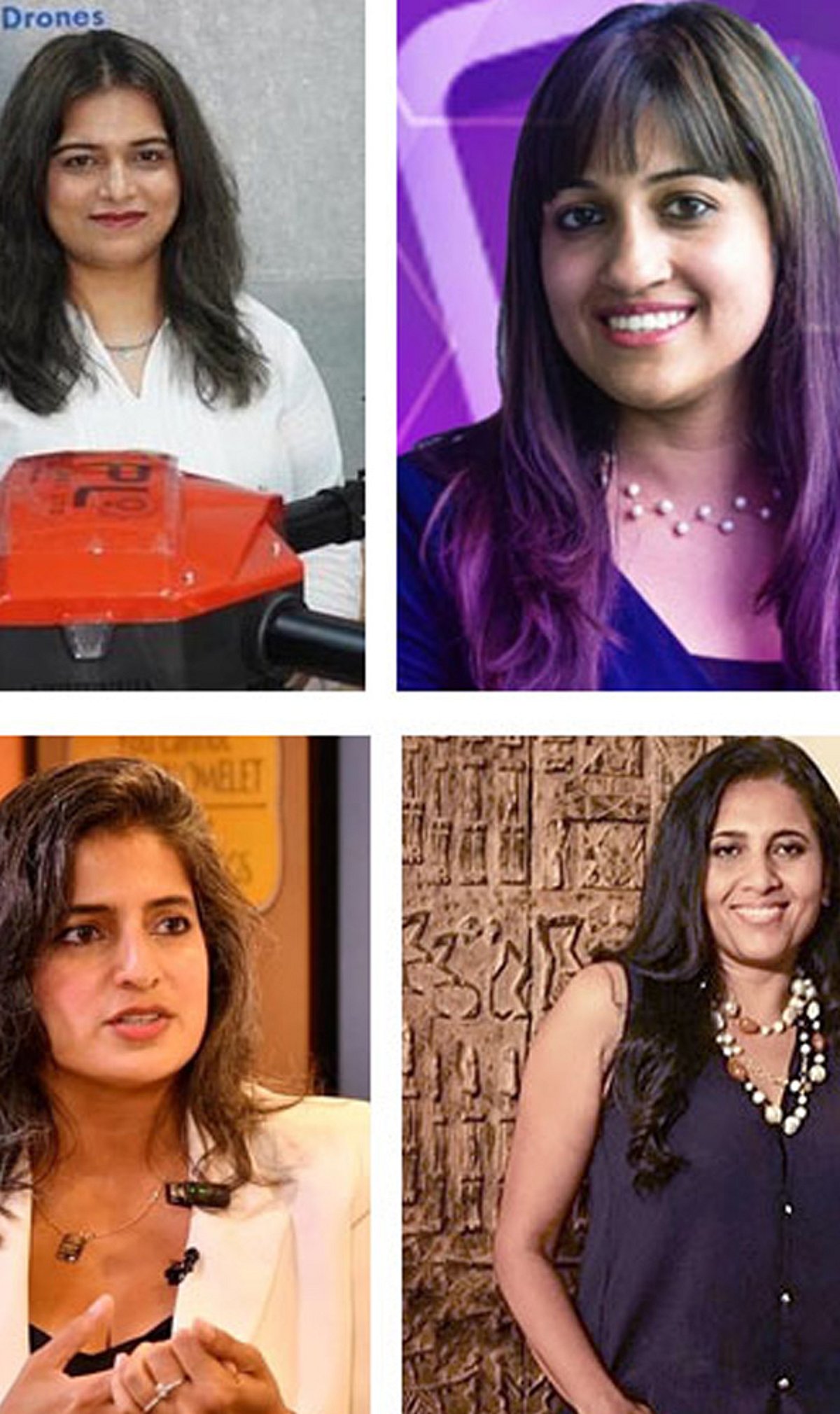
    The artificial intelligence industry is being transformed by visionary female leaders who are driving innovation, safety, and ethical practices. Here are ten entrepreneurs whose work is shaping the future of AI globally.

    1. Mira Murati – Former OpenAI CTO and founder of Thinking Machines Lab, advancing next-generation AI with a focus on collaboration and practical innovation.
    2. Fei-Fei Li – Co-founder of World Labs, pioneering spatial intelligence research while championing human-centered AI through academia and entrepreneurship.
    3. Daniela Amodei – Co-founder and president of Anthropic, developing safe and reliable AI systems with an emphasis on responsible deployment.
    4. Joelle Pineau – Vice President of AI Research at Meta, leading open-source AI, machine learning, and responsible research initiatives.
    5. Rana el Kaliouby – Co-founder of Affectiva, revolutionizing emotion recognition technology for automotive safety, healthcare, and customer experience.
    6. Aicha Evans – CEO of Zoox, steering autonomous mobility innovation by integrating AI, robotics, and self-driving technologies.
    7. Dileep George – Co-founder of Vicarious AI, building intelligent machines inspired by human cognition to tackle complex reasoning and automation.
    8. Suchi Saria – Founder of Bayesian Health, applying AI to predictive healthcare to help hospitals identify patient risks and improve outcomes.
    9. Rumman Chowdhury – Founder of Humane Intelligence, advancing responsible AI through independent evaluations, safety testing, and ethical governance.
  • How Sameer Nigam Built PhonePe Into India’s Digital Finance Powerhouse

    How Sameer Nigam Built PhonePe Into India’s Digital Finance Powerhouse

    As India surged ahead in adopting digital payments at an unprecedented scale, a handful of entrepreneurs worked quietly behind the scenes to drive that transformation. One key figure is Sameer Nigam, founder and CEO of PhonePe, who turned a fledgling idea into one of the nation’s biggest fintech success stories.

    From a simple payment app to a comprehensive digital solution for millions of Indian consumers, PhonePe’s evolution reflects Nigam’s unwavering vision. His journey from engineer to entrepreneur is a blend of technical expertise and business acumen. With a computer science degree from the University of Mumbai and the University of Arizona, plus an MBA from Wharton, Nigam honed his skills at Shopzilla in the US before co-founding Mime360, a digital content distribution company later acquired by Flipkart. That acquisition introduced him to India’s booming e-commerce scene, where he held leadership roles in engineering and marketing.

    During those years, as India underwent digital transformation, Nigam spotted a critical gap in payment systems. In 2015, he co-founded PhonePe with Rahul Chari and Burzin Engineer. At a time when the Unified Payments Interface (UPI) was still nascent, the founders bet on its future rather than building a digital wallet. That bet paid off spectacularly. The 2016 demonetization campaign accelerated India’s shift to digital payments, and PhonePe surged ahead with its intuitive interface, fast bank integration, and easy onboarding for first-time digital users.

    Today, PhonePe is far more than a payments app. It offers insurance, mutual funds, lending, stock investments, merchant solutions, and app discovery. Nigam’s leadership philosophy centers on trust. Instead of aggressive marketing, he focused on building reliable technology capable of handling massive transaction volumes without hiccups. This engineering-first approach helped PhonePe thrive within India’s rapidly evolving digital payment ecosystem.

    Nigam also understood India’s diverse consumer base. By simplifying services and offering them in multiple languages, PhonePe reached users in metropolitan, suburban, and rural areas. For many Indians, the app was their first experience with digital financial services.

    Beyond payments, Nigam envisioned a complete digital ecosystem. Under his guidance, PhonePe expanded into wealth management, insurance distribution, lending, and merchant services. The launch of the Indus Appstore marked its entry into digital commerce, signaling ambitions far beyond fintech. This diversification is central to Nigam’s strategy of building a multi-product platform.

    Colleagues describe Nigam as a leader who prioritizes product-centricity and experimentation. His engineering mindset fosters a culture of innovation. Rather than chasing media hype, he lets the company’s products and performance speak for themselves, earning him recognition as a key fintech opinion-maker in India.

    As India moves deeper into the digital era, Nigam’s influence extends beyond PhonePe’s growth metrics. He has made digital payments a routine practice for small businesses and consumers alike. The future of India’s fintech industry may involve artificial intelligence, embedded finance, digital commerce, and greater financial accessibility. Given PhonePe’s trajectory, Nigam intends to be at the forefront of that evolution.

    This is not just an entrepreneurial success story; it is a story of reshaping an entire nation’s relationship with finance. Sameer Nigam has cemented his place as one of the architects of India’s digital financial revolution.

  • Nithin Kamath: How Zerodha’s Founder Democratized Stock Investing in India

    Nithin Kamath: How Zerodha’s Founder Democratized Stock Investing in India

    India’s investing landscape has undergone a remarkable transformation over the past decade. Millions of first-time investors now buy stocks, invest in mutual funds, and manage their portfolios through digital platforms. At the center of this shift is Nithin Kamath, an entrepreneur who challenged traditional brokerage practices and made investing more accessible for ordinary Indians.

    At the time of its founding by Nithin Kamath in 2010, stock trading was perceived as an elaborate, costly, and complex process. This situation deterred many retail investors from entering the trading arena. Kamath quickly identified these factors as problems for traders and made simplification, transparency, and accessibility one of his top priorities.

    Unlike most startup founders, Kamath chose not to seek outside investment but to focus on making his business profitable, trustworthy, and long-term successful. Thanks to this strategy, Zerodha has become the largest stockbroker in India in recent years, catering to the interests of millions of people.

    A Passion for Markets Started Early

    Born in Karnataka, Nithin Kamath developed an early fascination with the stock market. Even before he became an entrepreneur, he was involved in trading and gained valuable insight into how financial markets function. The practical knowledge he gained helped him understand the difficulties retail traders face and motivated him to make a difference in their investment experience. As against following a traditional corporate career path, Kamath chose to solve some of the problems in the brokerage sector.

    Building Zerodha Without External Funding

    Zerodha was started by Nithin Kamath along with his brother, Nikhil Kamath, in 2010. It pioneered a discount brokerage model that offered lower trading charges than regular brokers. There has been something that has been quite distinguishing about Zerodha, and that is the growth strategy of the company. The company has remained bootstrapped, without taking any venture capital funding. It has chosen to make its business profitable by building customer trust and using technology to grow organically. Today, Zerodha serves millions of customers in India and is known as one of the most prestigious brokerage platforms in the country.

    Making Investing More Accessible

    Kamath has been vocal about lowering the barriers for novice investors. The simple user interface, low-cost structure, and educational tools of Zerodha have motivated many youngsters in India to start investing. The organization has launched another initiative called ‘Varsity’, an educational tool that explains investment terms such as stocks, technical analysis, options, mutual funds, and personal finance. Varsity has turned into one of the best educational tools for retail investors in India over time. Another important decision by Zerodha is to keep direct mutual fund investments on the Coin platform free of cost.

    Supporting India’s Startup Ecosystem

    Kamath’s business ventures extend beyond stockbroking. In 2016, Zerodha created Rainmatter, which invests in startups in fintech, health, climate, media, and deep technologies. Rather than being solely profit-driven, Rainmatter offers financing, mentoring, industry networking opportunities, and more support to startups. According to Kamath, Rainmatter has invested over Rs. 1,500 crore into 160+ startups. Zerodha has also pledged 10% of its profits to be used to invest in startups and 10% for social causes via the Rainmatter Foundation.

    Leadership Built Around Long-Term Thinking

    One of Kamath’s characteristics is his lack of interest in aggressive expansion techniques. He has always maintained that fostering a good working environment must be actively pursued, not achieved through expansion alone. Zerodha has developed a system in which customer satisfaction, employee welfare, and prudent decision-making are prioritized over high revenue targets. According to Kamath, resilience is attained when employees learn from their mistakes while maintaining high standards of service.

    A Strong Voice on Financial Awareness

    In addition to managing Zerodha, Kamath actively blogs on investing and entrepreneurship and engages with followers on social media on market regulations and investment education. In particular, he often tells investors to adopt a long-term view, maintain investment diversity, and avoid letting emotions interfere when markets are fluctuating. In terms of communication style, Kamath tries to simplify complicated financial matters. Kamath has never shied away from discussing the dangers of derivatives and has encouraged responsible investing.

    Health Issues and Business Looking Beyond

    In early 2024, Kamath confessed to having undergone a mild stroke. He admitted that, in his life, physical fitness, stress management, and getting proper rest became even more important after the incident. Ever since, Kamath has continued talking about physical fitness and health at work. At Zerodha, several employee wellness programs have been launched in line with Kamath’s philosophy. Kamath’s involvement with the Rainmatter Foundation illustrates the increasing inclination of Kamath towards sustainability and social responsibility. The Rainmatter Foundation engages in activities related to climate change action, biodiversity conservation, ecology and ecological restoration, and the creation of sustainable livelihoods. Kamath has stated that, besides being profitable, companies must also play a role in addressing the bigger challenges faced by society.

    A Lasting Impact on India’s Financial Landscape

    Kamath’s impact is not limited to Zerodha alone. His thoughts have made investments easier for people to understand, helped in developing financial literacy among individuals, and motivated many entrepreneurs to start their business ventures profitably without relying on outside investment. Whether through questioning the conventional way of doing things in brokerage services, promoting startups, or environmental causes, Kamath has always been about building something valuable over the long term. It can be seen from his story that innovations need not necessarily come from growth. Rational thinking, proper execution, and dedication to the customer can result in one of the most respectable financial technology companies in India.

  • Choosing the Best Professional Title for Your Business: A Guide for Entrepreneurs and Owners

    Choosing the Best Professional Title for Your Business: A Guide for Entrepreneurs and Owners

    Choosing the right professional title is a crucial decision for any business owner. It defines your role, communicates your authority, and sets the tone for your company’s brand. Whether you’re a solo entrepreneur or leading a large corporation, the title you select can impact how clients, investors, and employees perceive you. Here’s a breakdown of common business owner titles and when to use them.

    Founder

    Best suited for entrepreneurs who started the business, highlighting the company’s origin while reinforcing innovation, vision, and entrepreneurial leadership.

    CEO

    Ideal for businesses with multiple departments, investors, or employees, emphasizing executive authority, strategic planning, and organizational leadership responsibilities.

    Owner

    A straightforward title that clearly communicates business ownership, making it suitable for small businesses, local enterprises, and sole proprietorships.

    Managing Director

    Common among established companies, this title reflects operational leadership, executive decision-making, and responsibility for business performance and growth.

    President

    Often used in corporations, it conveys senior leadership and oversight while representing the organization in business partnerships and public engagements.

    Creative Director

    Perfect for branding, marketing, media, and design businesses where creative strategy, innovation, and visual leadership define the company’s success.

    Principal Consultant

    Suitable for consulting firms, emphasizing expertise, client advisory services, strategic problem-solving, and specialized industry knowledge over hierarchy.

    Co-Founder

    Appropriate when multiple entrepreneurs establish a company together, recognizing shared leadership, ownership, and collaborative decision-making from the beginning.

    Industry Alignment

    Ultimately, the best title aligns with your responsibilities, company size, industry expectations, and long-term branding goals. Choose a title that builds professional credibility consistently.

  • Mastering Strategic Refusal: How Top Entrepreneurs Use ‘No’ to Drive Business Growth

    Mastering Strategic Refusal: How Top Entrepreneurs Use ‘No’ to Drive Business Growth

    Successful entrepreneurs know that every yes has a cost. A new project, a fresh deal, or a quick request can take time, money, and focus away from the main goal. Great leaders learn that a strong no can protect their vision and help their companies move in the right direction.

    A clear no does not show weakness. It shows control, confidence, and a deep sense of purpose. Many top entrepreneurs refuse ideas that do not match their plans. This choice helps them save resources for tasks that create real value.

    For example, a founder may reject a partnership that looks attractive at first but does not support the company’s long-term goals. This decision may seem hard, yet it keeps the team focused on work that matters most.

    No Protects Time and Focus

    For entrepreneurs time is probably the most precious resource that they have. Skilled business owners understand how important it is to make every hour count, thus they don’t let minor disruptions dominate their everyday work.

    Saying no helps entrepreneurs to maintain their schedule. They avoid pointless meetings and useless deals and tasks that will not bring them much benefit, thus being able to concentrate on important clients, products and decisions.

    Numerous efficient leaders have strict principles connected with time management. They choose only the activities that correspond to their priority tasks and get rid of unimportant activities, thus being able to reach their goals in a quicker way and have more control over their companies.

    No Helps Create Better Products

    Great products often come from strong choices. Entrepreneurs must decide what features, services, or ideas deserve attention. A company cannot support every suggestion that reaches its door.

    A smart no helps a business improve quality. When founders remove extra features or avoid rushed changes, they give their teams space to improve the main product. This focus helps companies deliver better results for their customers.

    For instance, a technology company may refuse to add many new features at once. Instead, the team may focus on making one core feature simple and reliable. This decision can create a stronger product that earns customer trust.

    No Builds Strong Leadership

    Strong leaders understand that approval from everyone is not the goal. A successful entrepreneur must make choices that support the company’s future, even when some people disagree.

    A firm no can show a team that the leader has clear standards. Employees often respect leaders who make thoughtful decisions and protect company values. Clear limits also help teams understand what deserves attention.

    Good leaders do not reject ideas without thought. They listen, study the facts, and make careful choices. A no with a clear reason can teach teams how to think with greater care.

    No Helps Avoid Bad Opportunities

    Every entrepreneur faces chances that look exciting. Some offers promise fast results but create problems later. Successful business owners learn to check every opportunity before they accept it.

    A careful no can prevent financial loss, wasted effort, and poor choices. Many companies fail to reach their goals when they chase too many directions at the same time. Focus creates a stronger path than constant change.

    Entrepreneurs who master the power of no understand that every opportunity does not deserve attention. They choose quality over quantity and protect the future of their brand.

    No Creates Space for Growth

    Growth does not come only from adding more tasks, products, or goals. Sometimes growth comes from removing what does not help the business. A strong no creates room for better ideas and smarter plans.

    Successful entrepreneurs review their actions and remove weak habits. They stop projects that no longer support their mission. They leave old methods behind when new solutions offer better results.

    This mindset allows companies to adapt without losing their main purpose. A focused business can respond to change with confidence and maintain steady progress.

    Why This Matters

    The power of no helps entrepreneurs make smarter choices and protect their business goals. Clear decisions allow leaders to focus on valuable opportunities, avoid unnecessary risks, and build stronger companies. Learning when to refuse can improve productivity, strengthen leadership, and create a better path toward long-term business success.

    The Power of Saying No With Respect

    A negative answer can be communicated politely. A person can turn down a proposition without being disrespectful towards the party making the suggestion. A tactful ‘no’ might do good to the future relations between business partners.

    Successful managers know how to say ‘no’ while being honest and caring. They articulate their reasons behind the refusal and show appreciation for the individual whom they are dealing with. Power of no allows entrepreneurs to make wise decisions. It saves time and helps them make better decisions, improve products and achieve long-term success.

    Frequently Asked Questions

    1. Why is saying no important for entrepreneurs? Saying no helps entrepreneurs focus on important goals and avoid distractions that can reduce business progress.
    2. Does saying no harm business relationships? A respectful no can protect relationships when entrepreneurs explain decisions with honesty and care.
    3. How does saying ‘no’ improve business growth? Saying ‘no’ helps companies save resources, maintain focus, and invest more time and effort in opportunities that deliver greater value.
    4. Should entrepreneurs reject every new opportunity? Entrepreneurs should review each opportunity carefully and accept only those that match their business vision.
    5. How can leaders say no effectively? Leaders can say no clearly, politely, and with a valid reason that shows thoughtful decision-making.
  • Unlock Passive Income: How Automated Vending Machines Can Boost Your Business Revenue

    Unlock Passive Income: How Automated Vending Machines Can Boost Your Business Revenue

    Automated vending machines have drawn interest from entrepreneurs and companies seeking an additional source of income without much daily oversight. As this form of retail expands, the machines are moving well beyond the traditional role of selling snacks and drinks. Newer models can offer fresh food, entertainment, personalized experiences, and interactive services through advanced vending technology.

    Automated vending solutions, from cotton candy and popcorn machines to AI photo booths, balloon dispensers, and claw machines, are giving businesses new ways to generate revenue while making the customer experience better. Cashless payments, remote monitoring, and automated operation allow the machines to run throughout the day with little supervision.

    Automated vending machines offer a flexible way to generate passive income, whether you are launching a side business, growing an established company, or seeking new investment opportunities. They also meet the growing demand for convenient self-service solutions.

    Why Automated Vending Machines Are a Profitable Business Opportunity

    Automated vending machines can bring in revenue without staff having to be present all the time. After installation in a suitable location, a machine can serve customers throughout the day, with operators checking its performance remotely.

    Modern vending machines accept several forms of payment, such as contactless cards, mobile wallets, QR codes, and digital payment applications. As a result, customers can make purchases quickly and conveniently, with access available to a broad range of users. Some machines also offer remote inventory management and performance monitoring, so operators can review sales, stock levels, and maintenance needs from nearly anywhere.

    Automated vending machines offer businesses several practical advantages:

    • They can run throughout the day with little supervision.
    • They reduce staffing and operating costs.
    • They create recurring revenue.
    • They accept multiple cashless payment methods.
    • Expand into multiple locations.
    • Monitor machine performance remotely.
    • Improve customer convenience.

    Interactive vending machines can draw even more customer attention. With cotton candy machines, people watch as fresh cotton candy is prepared right in front of them; popcorn machines, meanwhile, serve freshly made snacks within minutes. AI photo booths let visitors make personalized keepsakes, while balloon vending machines create colorful balloon designs. Claw machines add another kind of appeal, offering the fun of trying to win a prize.

    By combining products and entertainment, these machines can keep customers at a location longer and often encourage them to return. For businesses, that means more chances to earn steady revenue while improving the customer experience.

    How to Build a Successful Passive Income Vending Business

    An automated vending machine business succeeds largely through two decisions: selecting suitable machines and positioning them where people naturally pass through. Shopping malls, airports, cinemas, family entertainment centers, hotels, tourist attractions, office buildings, amusement parks, and event venues can all bring a business into contact with large numbers of potential customers.

    Before settling on a site, business owners need to look at the practical details. How many visitors come through each day? Who are those customers, and is there enough room for installation? Rental costs matter as well, along with the machine’s visibility and the level of local competition. Access to electricity and internet, and maintenance accessibility are also important.

    Automated vending machines also offer room to scale. An entrepreneur might start with one and add machines in other locations as revenue increases. Remote-management features make overseeing several machines far simpler than running multiple traditional retail stores.

    Branding matters for long-term success, too. Attractive machine designs, digital displays, and interactive customer experiences can set a business apart and leave a lasting impression. Unique offerings, freshly prepared cotton candy, hot popcorn, AI-generated photos, colorful balloons, or interactive prize games, may also bring customers back and prompt them to recommend the experience to others.

    As automation and artificial intelligence reshape retail, automated protein shake vending machines are drawing growing interest from businesses looking for dependable sources of passive income. Investing in newer vending technology can give companies recurring revenue while offering customers convenience and experiences that are engaging and memorable.

  • Sachin Bansal: From Co-Founding Flipkart to Building Navi – A Story of Entrepreneurial Resilience

    Sachin Bansal: From Co-Founding Flipkart to Building Navi – A Story of Entrepreneurial Resilience

    Sachin Bansal is one of the most influential figures in India’s startup ecosystem. Best known as the co-founder of Flipkart, the e-commerce giant that reshaped online shopping in India, Bansal later ventured into digital finance with Navi, a company focused on simplifying loans, insurance, and investments. His journey exemplifies innovation, adaptability, and the drive to build again after a monumental success.

    Early Life and Education

    Born in Chandigarh into a middle-class family, Bansal showed early signs of intelligence and focus. He attended St. Anne’s Convent School in Chandigarh and later earned a degree in computer science from the prestigious Indian Institute of Technology, Delhi. His education gave him a strong technical foundation and honed his problem-solving skills. After college, he worked in the tech industry, gaining practical experience in software and systems.

    The Birth of Flipkart

    In 2007, Sachin Bansal and Binny Bansal launched Flipkart with a simple idea: make online shopping accessible and trustworthy in India. At the time, internet penetration was low, and many consumers were skeptical of e-commerce. Starting as an online bookstore with minimal funding and a small team, Flipkart faced tough early days with low orders and intense competition. But the founders persisted, expanding into multiple categories and eventually becoming a household name. Flipkart not only transformed Indian retail but also inspired a generation of entrepreneurs. Bansal played a pivotal role in guiding the company through its growth phases, making it a symbol of Indian startup potential.

    Life After Flipkart

    After Walmart acquired Flipkart in 2018, Bansal left the company he helped build. Rather than resting on his laurels, he chose to embark on a new challenge. His next venture, Navi, entered the financial services sector—a starkly different industry from e-commerce but one with immense potential for disruption. Bansal recognized that millions of Indians still found finance complicated and inaccessible. Navi was designed to offer simple, digital-first solutions for loans, insurance, and savings.

    Navi and Its Mission

    Navi is a digital financial services company offering personal loans, home loans, insurance, and mutual funds. Its core philosophy is to replace cumbersome paperwork with intuitive digital processes. Bansal’s approach mirrors his earlier success: identify a problem, simplify it, and build a scalable solution. Navi reflects his willingness to tackle new challenges even after achieving massive success. It demonstrates confidence, patience, and a continued drive to create meaningful impact.

    What Makes Him Stand Out

    Bansal is not a one-time founder. He has built companies in two major sectors—e-commerce and fintech—a rare feat. His ability to adapt and stay relevant in a fast-changing business landscape is noteworthy. Flipkart proved that Indian startups could achieve global scale, inspiring countless others. Navi continues that legacy by addressing real-world financial needs. His journey is about more than wealth or company size; it’s about solving problems and making people’s lives easier with practical products.

    Conclusion

    Sachin Bansal’s story is one of vision, risk, and persistence. From a technology student to the co-founder of Flipkart and now the founder of Navi, he has shown resilience and a capacity for continuous evolution. He remains a key figure in India’s business world, and his journey is far from over. For aspiring entrepreneurs, Bansal serves as a powerful example of building with purpose and moving forward after success.

  • How Harshil Mathur and Razorpay Revolutionized India’s Digital Payments Ecosystem

    How Harshil Mathur and Razorpay Revolutionized India’s Digital Payments Ecosystem

    When Harshil Mathur and Shashank Kumar launched Razorpay in 2014, India’s online payment infrastructure was a mess of failed transactions, clunky integrations, and limited options for businesses trying to accept money digitally. Twelve years later, Razorpay processes over $180 billion in annualized total payment volume, has onboarded more than 12 million merchants, and filed a confidential DRHP with SEBI in June 2026, targeting a public listing valued at $5 to $6 billion. For Mathur, the journey from wireline field engineer to CEO of one of India’s most consequential fintech companies is anything but accidental.

    From Jaipur to IIT Roorkee to a Bold Bet

    Born in 1991 into a middle-class family in Jaipur, Rajasthan, Mathur developed an early fascination with technology and coding. He completed a degree in metallurgical engineering from IIT Roorkee in 2013 and joined Schlumberger as a wireline field engineer, a technically intensive role that lasted just eight months before the pull toward building something of his own won out. In December 2014, he co-founded Razorpay with Kumar around a straightforward insight: India’s businesses desperately needed a clean, developer-friendly API to accept online payments, and nothing available delivered that reliably.

    Y Combinator and the Developer-First Growth Engine

    In 2015, Razorpay got into Y Combinator’s Winter batch, one of the world’s most selective startup programs. The YC period sharpened the company’s product thinking and opened the door to early investors. Early growth was built almost entirely on developer trust; Razorpay’s clean API documentation and reliable integration made it the default payment gateway for startups, SMEs, and eventually larger enterprises. By 2020, the company had crossed the $1 billion unicorn mark. By December 2021, a $375 million Series F round valued it at $7.5 billion, backed by Peak XV Partners, Tiger Global, Ribbit Capital, Lightspeed, and Singapore’s GIC.

    Building Beyond Payments

    Mathur’s strategic ambition for Razorpay was never limited to a payment gateway. Under his leadership, the company expanded into RazorpayX, a neobanking platform now serving over 40,000 businesses with payroll, corporate cards, and connected banking; Razorpay Capital for merchant credit; and Magic Checkout, a one-click product reportedly reducing cart abandonment by 22%. In January 2026, Razorpay received RBI’s payment aggregator cross-border license, enabling transactions across 130-plus currencies in over 180 countries, and the company has established operations in Singapore and Malaysia.

    The IPO Moment

    Razorpay’s planned stock market debut is the most significant milestone on the horizon. The company filed a confidential DRHP with SEBI on June 12, 2026, targeting Rs 5,000 to Rs 6,000 crore through fresh shares and an offer for sale, with Axis Capital, Kotak Mahindra Capital, JPMorgan, and Citi appointed as lead managers. The targeted $5 to $6 billion IPO valuation is a markdown from the $7.5 billion 2021 peak, reflecting broader compression in fintech valuations and a public market that now demands profitability alongside growth. Razorpay’s FY25 revenue grew 65% to Rs 3,783 crore, though a net loss of Rs 1,209 crore, driven by ESOP costs and one-time reverse-flip tax liabilities from its 2025 domicile shift back to India, is a narrative that Mathur will need to tell convincingly to public-market investors.

    The Leader Behind the Company

    Mathur’s leadership style is widely described as product-first, technically grounded, and collaborative. He has consistently credited the broader Razorpay team and his co-founder rather than positioning himself as the singular force behind the company’s rise. He is also an active angel investor with a portfolio of over 22 companies, has been recognized on the Forbes 30 Under 30 Asia list, and has been a vocal voice in India’s startup community on digital policy issues. What makes his story particularly resonant is the consistency of the original thesis: building reliable, developer-first financial infrastructure for Indian businesses was not a fashionable idea in 2014. A decade on, it has become the foundation of how a significant share of India’s digital economy moves money.

    Why This Matters

    India’s digital economy depends on reliable payment infrastructure, and entrepreneurs like Harshil Mathur have played a significant role in building it. His journey demonstrates how solving a fundamental business problem with technology can create lasting impact, inspire future founders, and accelerate innovation across an entire industry.

  • How Michael Gastauer Built Black Banx into a Borderless Digital Banking Giant

    How Michael Gastauer Built Black Banx into a Borderless Digital Banking Giant

    Michael Gastauer, a German self-made billionaire and technology investor, is best known as the founder and chairman of Black Banx Group. His vision: banking that works across borders with the speed and accessibility of modern digital services. Under his leadership, Black Banx has grown into a privately held digital banking group serving over 100 million customers in more than 180 countries.

    Black Banx offers digital financial services to private, business, and institutional clients, focusing on international account access, cross-border payments, and support for multiple fiat and crypto currencies. Rather than being limited by geography, the platform is designed for customers whose personal and commercial lives span national boundaries.

    Gastauer’s background in financial services spans asset management and online payments, giving him deep experience in the infrastructure behind international transactions and technology-led client service. He launched Black Banx in 2015, combining those earlier ventures into a global banking proposition.

    Financial inclusion is a cornerstone of the strategy. Digital account opening and remote access reduce the need for physical branches, particularly in markets where consumers and businesses have historically had limited access to the international financial system. For Gastauer, technology is both an efficiency tool and a way to widen participation in global commerce.

    Looking ahead, Gastauer emphasizes real-time payments, artificial intelligence, digital identity, and automated compliance as key drivers of change. His founder-led approach has built systems that scale while maintaining a consistent digital experience.

    Beyond Black Banx, Gastauer serves as chairman of the Gastauer Family Office, which manages diversified investments in technology, financial services, private equity, real estate, contemporary art, crypto assets, and global capital markets. Through the Gastauer Foundation, he supports initiatives in financial inclusion, education, entrepreneurship, environmental sustainability, and biodiversity conservation.

    This combination of commercial success and philanthropy illustrates a defining feature of modern founder leadership: building a global platform requires attracting specialist teams, adapting to different markets, and maintaining a clear purpose as the organization grows. Gastauer’s narrative emphasizes continuity of vision, from early digital payments opportunities to a banking group serving customers at international scale.

    As banking moves from nationally defined products to connected international services, Gastauer’s perspective is especially relevant. Customers increasingly expect accounts, payments, and support to remain available wherever they relocate, establish companies abroad, or trade in multiple currencies. Meeting that expectation requires combining product design with a dependable operational foundation. Gastauer’s contribution at Black Banx is both entrepreneurial and architectural: identifying a global need, assembling the technology and teams, and maintaining clear direction as the platform reaches a larger and more diverse audience.