
Tag: entrepreneurship

  • Validate Your Startup Idea with AI: A Step-by-Step Framework Before You Build

    Validate Your Startup Idea with AI: A Step-by-Step Framework Before You Build

    One of the primary reasons startups fail is the lack of genuine market demand. While this challenge has remained largely unchanged, the way entrepreneurs validate business ideas has evolved significantly. Today, artificial intelligence enables founders to conduct market research, analyze customer needs, assess competition, and validate business concepts in a fraction of the time traditional methods require. However, while AI can accelerate the validation process, it should be supported by real customer feedback and market testing. The most successful startups combine AI-driven insights with direct engagement to ensure their ideas address genuine market needs.

    Where AI Genuinely Earns Its Place

    The honest case for AI in validation rests on speed, not judgment. A founder can now scan tens of thousands of Reddit threads, forum posts, and review sites for unprompted complaints about a problem in the time it used to take to schedule a single customer interview. Tools built specifically for this pull from real community posts rather than simply asking an AI to guess—they examine evidence people left before you ever asked them anything, which is a meaningfully different signal than a survey response.

    Market sizing is another area where AI moves fast. TAM/SAM/SOM estimates, competitor mapping, and go-to-market sketches that used to take research analyst days now come back in minutes. That’s useful for deciding whether an idea is even worth two more weeks of your attention.

    The Trap: AI Is Built to Be Agreeable

    Here’s the problem nobody selling a validation tool wants to lead with. Large language models lean optimistic by default, and surveys—AI-run or otherwise—systematically overestimate willingness to pay by around 21%. Ask an AI to evaluate your idea and describe it with any enthusiasm at all, and there’s a real chance it reflects your enthusiasm back at you with extra confidence attached.

    Synthetic customer panels make this worse, not better, when used carelessly. They can genuinely speed up early-stage thinking, but research has been blunt about the failure mode: these AI-generated personas often produce false-positive validation signals precisely because they inherit the same optimism bias as the model generating them. A digital twin of your target customer who will never use your product can still tell you it loves the idea.

    Three-Stage Framework That Actually Holds Up

    Strip out the marketing language from a dozen validation tools, and the same basic structure keeps surfacing. It works because each stage tests something different, and AI’s usefulness changes at every step.

    • Stage 1: Market Discovery — Use AI tools such as ChatGPT, Perplexity AI, and Google Trends to analyze market demand, identify competitors, and research customer pain points from public discussions.
    • Stage 2: Messaging and Positioning — Test your value proposition and messaging with AI-driven tools like Semrush for keyword and competitor insights, then refine based on early signals.
    • Stage 3: Demand Validation — Collect early user feedback using Typeform AI and other survey tools, but always follow up with real customer conversations to verify willingness to pay and genuine need.

    What This Costs, Realistically

    A rigorous three-stage validation, done properly, runs somewhere between free and roughly $500 total, and takes two to four weeks once you include the human conversations AI can’t shortcut. That’s a genuinely small price against the alternative: CB Insights’ long-running research on startup failure keeps landing on the same number—no market need as the single most common reason ventures shut down. Compare a few hundred dollars and a month of focused work against months of building something nobody asked for, and the maths isn’t close.

    The One Rule Worth Keeping

    Use AI to compress the research you’d have done anyway: the desk research, the market sizing, the first-pass competitor scan. Do not let it replace the ten to twenty real conversations with people who might actually buy what you’re building. If an AI validation report and a real customer interview disagree, believe the human, every time. The tools are fast. They are not yet honest in the specific way a skeptical stranger telling you your idea has problems is honest.

    Why This Matters

    Building a product without validating customer demand remains one of the leading reasons startups fail. AI offers founders an efficient way to reduce uncertainty by accelerating research and identifying opportunities early. However, combining AI-generated insights with real customer conversations is essential for making informed business decisions and improving the chances of long-term success.
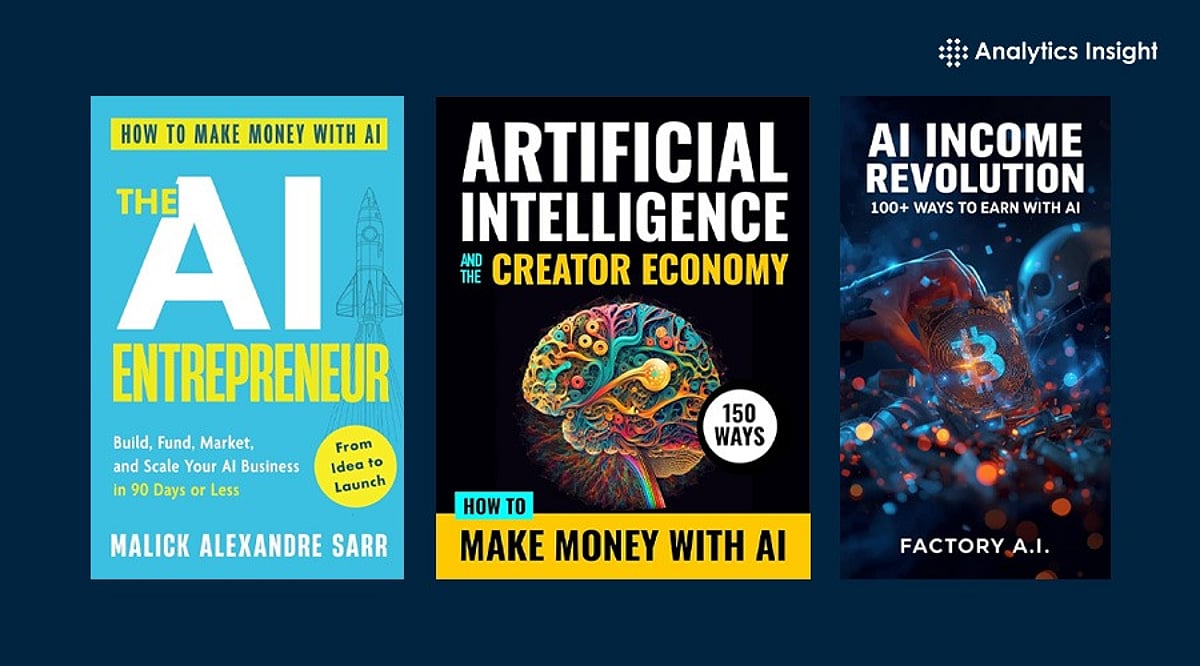
  • Top 10 AI Books to Boost Your Income in 2026: Expert Recommendations

    Top 10 AI Books to Boost Your Income in 2026: Expert Recommendations

    The world of artificial intelligence has expanded far beyond technologists and large corporations. Today, freelancers, entrepreneurs, marketers, and content creators are leveraging AI to work faster, save time, and increase their earnings. However, simply using AI tools isn’t enough—understanding how they work and how to apply them effectively is crucial.

    Reading well-chosen books remains one of the best ways to build that understanding. Whether you’re a beginner or an experienced professional, the right AI books can sharpen your skills and open new career opportunities. Here are 10 essential AI books that can help you make money in 2026.

    1. Zero to One-Person AI Agency – Abhishek Ashtekar

    This book is ideal for anyone looking to start an AI-powered business. It explains how a single individual can launch and run an AI agency without hiring employees. You’ll learn how to offer AI services, acquire clients, automate workflows, and scale operations. The focus is on practical, actionable advice for turning AI into income.

    Buy Now

    2. The AI Advantage – Thomas H. Davenport

    Davenport explores how organizations are using AI to boost efficiency, cut costs, and make smarter decisions. This book helps professionals and business owners identify where AI can create new opportunities and generate revenue.

    Buy Now

    3. Prediction Machines – Ajay Agrawal, Joshua Gans, Avi Goldfarb

    Written by economics and technology experts, this book explains that AI’s core value lies in its ability to make predictions. It shows how businesses can forecast consumer behavior, market trends, and outcomes—enabling entrepreneurs to discover profitable ventures.

    Buy Now

    4. Architects of Intelligence – Martin Ford

    A collection of interviews with leading AI researchers, this book offers insights into current advances and future developments. While not directly about making money, it helps readers anticipate AI trends that can inform career and investment decisions.

    Buy Now

    5. Machine Learning Yearning – Andrew Ng

    Ng focuses on the practical aspects of building machine learning projects, covering how to plan, refine, and manage AI initiatives. Entrepreneurs and developers will find principles here that help create commercially valuable AI solutions.

    Download Book

    6. Deep Learning – Ian Goodfellow, Yoshua Bengio, Aaron Courville

    This is a comprehensive technical guide to the technology behind modern AI tools. Though advanced, it provides a solid foundation for understanding AI, which can lead to better career opportunities and higher earning potential.

    Buy Now

    7. Superintelligence – Nick Bostrom

    Bostrom examines what might happen when AI surpasses human intelligence. The book discusses risks and benefits, encouraging readers to think about long-term AI trends that could shape business and investment strategies.

    Buy Now

    8. Life 3.0 – Max Tegmark

    Physicist Max Tegmark explores how AI could transform society and the economy. The book presents various future scenarios, helping readers understand upcoming industry changes and identify new job trends and opportunities.

    Buy Now

    9. Human Compatible – Stuart Russell

    As AI becomes more powerful, safety and ethics are critical. This book covers AI safety and its importance, a topic increasingly relevant for companies and governments. Knowledge in this area can lead to careers in AI consultancy and governance.

    Buy Now

    10. You Look Like a Thing, and I Love You – Janelle Shane

    For those who prefer a lighter read, this book explains AI in a fun, accessible way. It covers basic machine learning concepts without technical jargon, making it perfect for beginners.

    Buy Now

    Why Reading AI Books Matters

    The AI industry is growing rapidly, and while videos and online tutorials are helpful, books often provide a deeper, more structured understanding. Reading AI books helps you acquire new skills, stay current with industry trends, and discover innovative ways to leverage AI for profit.

    Final Thoughts

    AI is creating opportunities across nearly every sector. Those who understand AI are better positioned to seize these opportunities. The books listed above offer practical business advice, technical knowledge, and insights into AI’s future. For immediate action, start with Zero to One-Person AI Agency, The AI Advantage, and Prediction Machines. For deeper technical skills, Machine Learning Yearning and Deep Learning are excellent choices. These books will equip you with the skills needed to thrive in the coming years.

    Frequently Asked Questions

    1. Which AI engineering book is best for beginners?

    Beginners can start with Hands-On Large Language Models or AI Engineering: Building Applications with Foundation Models. They explain key concepts and provide hands-on guidance.

    2. Do I need coding experience to read AI engineering books?

    Some books require basic programming knowledge, while others focus on concepts. Familiarity with Python can help you follow examples and implement projects.

    3. Which books are best for learning large language models (LLMs)?

    Hands-On Large Language Models and Build a Large Language Model (From Scratch) are excellent choices, covering how LLMs work, training, and deployment.

    4. Can AI engineering books help me get a job in AI?

    Yes, they build valuable skills in machine learning, deployment, prompt engineering, and AI systems—skills highly sought by employers.

    5. What topics should AI engineers focus on?

    Focus on large language models, prompt engineering, retrieval-augmented generation (RAG), AI agents, MLOps, and deployment—these areas drive the latest AI developments.

  • Gautam Adani Launches Vande Bharatam Initiative to Empower Entrepreneurs Across India

    Gautam Adani Launches Vande Bharatam Initiative to Empower Entrepreneurs Across India

    Adani Group Chairman Unveils National Program to Discover and Support Innovators

    Gautam Adani, Chairman of the Adani Group, has launched the Vande Bharatam initiative, a national effort to identify and nurture entrepreneurs, innovators, and problem-solvers from all corners of India. The program, announced on Adani‘s 64th birthday (June 25, 2026), aims to democratize access to mentorship, investor connections, and growth opportunities.

    “When I began my journey, I had nothing. Everything I am and everything I have achieved was given to me by the soil of Bharat. There is no shortage of talent in our nation, but opportunity has not always reached every corner of the country,” Adani said in a statement.

    What is the Vande Bharatam Initiative?

    The initiative is open to anyone with an idea, innovation, or entrepreneurial ambition—regardless of age, profession, education, or stage of development. Participants can apply with a concept, prototype, early-stage venture, or even an established business. A registered startup is not required.

    “India has built one of the world‘s largest startup ecosystems, yet most founders still emerge from a handful of cities. Vande Bharatam is our effort to discover the innovators, problem-solvers, and entrepreneurs whose ideas deserve recognition, support, and a larger platform,” Adani noted.

    How Will It Support Entrepreneurs?

    The program will span all 36 states and union territories, covering over 800 districts and multiple languages. Applications opened on June 24 at vandebharatam.org. A structured evaluation process will assess innovation, entrepreneurial potential, impact, and scalability. Detailed criteria, jury composition, and selection stages will be announced later.

    Entries are invited from sectors including technology, manufacturing, sustainability, agriculture, traditional crafts, and community-led solutions. Dedicated pathways will encourage participation from women entrepreneurs, tribal entrepreneurs, rural innovators, Divyang (differently-abled) entrepreneurs, and community-based innovators.

    From Regional Evaluation to Grand Finale

    After state and regional evaluations, 75 finalists will be invited to Ahmedabad for an intensive program featuring mentorship, industry interactions, and engagement with investors and business leaders. The Grand Finale is scheduled around India‘s Independence Day and will mark the start of an ongoing engagement platform connecting participants with mentors, investors, industry leaders, and fellow innovators.

    “If I can do it, any Indian can do it. All they need is an opportunity and a stage,” Gautam Adani said.

    What This Means for the Startup Ecosystem

    The Vande Bharatam program promises to open fresh avenues for emerging entrepreneurs by expanding access to mentorship, networks, and capital. As India’s startup ecosystem continues to grow, such initiatives can provide a much-needed boost for innovation and confidence.

  • MIT’s New Manufacturing Initiative Gains Traction with Industry, Workforce, and Startup Programs

    MIT’s New Manufacturing Initiative Gains Traction with Industry, Workforce, and Startup Programs

    In its first year, the Initiative for New Manufacturing (INM) at MIT has built significant momentum by bridging research, workforce development, and industry engagement to accelerate the deployment of advanced manufacturing technologies. The initiative marked its first anniversary with MIT Manufacturing Week in May 2026, attracting over 800 registrants—including students, faculty, industry leaders, investors, entrepreneurs, and government officials—for four days of workshops, symposia, and discussions on AI in factories, startup innovation, and workforce solutions.

    “INM launched a year ago with the premise that strengthening the industrial base needed a coordinated response, and MIT has a responsibility to lead it,” said Paula T. Hammond, dean of MIT’s School of Engineering and co-chair of INM’s Steering Committee. “The response and participation level has been huge. MIT Manufacturing Week proved that the appetite for change—from students to chief executives—is real and urgent.”

    Manufacturing Week Highlights

    Manufacturing Week opened with a cybersecurity workshop co-led by INM and Google Cloud for industry members. It continued with the MIT MIMO (Machine Intelligence for Manufacturing Operations) symposium on deploying AI on factory floors, alongside sessions on workforce development, emerging technologies, startups, and industrial transformation. The week closed with a regional research showcase and competition featuring more than 140 graduate students and postdocs from across New England.

    Over the past year, INM also hosted a distinguished speaker series with manufacturing leaders including Keith Flynn (Anduril), Roland Busch (Siemens), and Venky Alagirisamy (Nike).

    Fostering New Manufacturing Startups

    A central goal of INM is to help students see manufacturing as a frontier for scientific discovery, technological innovation, entrepreneurship, and societal impact. The initiative partnered with NSF I-Corps New England to host its first manufacturing research showcase. More than 140 teams from 17 universities applied; 40 finalist teams received mentorship, and eight teams shared $50,000 in prize funding.

    The top prize for “most transformative innovation” went to MIT PhD student Jake Read for “The End of G Code,” a project on modular machine control architectures. Vatsal Patel (MIT) and Joshua Grace (Yale) won the research excellence category for “VisFT,” scalable six-axis force-torque sensors. Project themes included AI tools for manufacturing, semiconductor process control, robotics, digital twins, new materials, additive manufacturing, next-generation shipbuilding, and biomanufacturing.

    “Entrepreneurship is a transformative pathway to take research to market, and to drive faster innovation and scale-up,” said John Hart, INM faculty co-director and head of MIT’s Department of Mechanical Engineering. “At INM’s inaugural research showcase, we had tremendous interest from universities across New England, along with enthusiastic participation from industry, investors, and experienced founders. We are excited to build on this success and work toward a nationwide program and platform for entrepreneurship and translation in manufacturing.”

    Growing Industry Consortium

    During Manufacturing Week, First Solar became INM’s eighth industry member, joining Amgen, Autodesk, GE Vernova, Flex, PTC, Sanofi, and Siemens. The consortium’s growth reflects a recognition that modern manufacturing challenges—supply chain resilience, workforce development, industrial competitiveness—require cross-sector collaboration. INM provides a platform to convene and develop solutions through workshops and working groups on cybersecurity, digital twins, AI agents in regulatory environments, and continuous innovation.

    “Our members see MIT as a partner that can help them both address today’s challenges and think far into the future,” said Rick Locke, dean of the MIT Sloan School of Management and co-chair of INM’s steering committee. “This kind of multi-industry engagement is unusual and powerful.”

    Research and Workforce Development

    INM issued a call for proposals on AI and automation, receiving an overwhelming response and funding eight seed research projects. The initiative plans to publish eight white papers in June as part of a broader study on the future of manufacturing. During MIT’s Independent Activities Period in January 2026, INM collaborated with NSF I-Corps to guide 13 early-stage teams through customer discovery via the I-Corps Spark program.

    Workforce development is a major focus. MIT launched the Technologist Advanced Manufacturing Program (TechAMP), led by Principal Research Scientist John Liu, to create a new generation of shop floor leaders at six sites across New England, including three community colleges. “INM has the potential to transform the national manufacturing workforce,” said Liu. “It will require deep engagement between how people learn and lead, and how firms adopt new technologies and transform. We’re just getting started.” INM is now exploring a national rollout of TechAMP and expansion into biomanufacturing and semiconductor manufacturing.

    On campus, INM supported student engagements including an AI and automation lunch series and a Factory Observatory program. This spring, students founded MIT’s first manufacturing club, holding its launch event during Manufacturing Week. “We’re thrilled students are taking the lead,” said Sloan associate professor and INM faculty co-director Karen Zheng. “It was really exciting to see a full room of 80-plus students across campus coming together for the kickoff event during the busiest final period of a semester. This speaks to the students’ enthusiasm.”

    Global Reach and Future Plans

    While focused on strengthening domestic manufacturing, INM aims for global impact. It is collaborating with NAMTECH in Ahmedabad, India, where students are now taking an adaptation of MIT’s “yo-yo course” (2.008: Design and Manufacturing II). Next year, INM plans to bring more manufacturing leaders to campus, offer additional programming for emerging entrepreneurs, graduate TechAMP’s first cohort, expand TechAMP to new states, grow the consortium, and deepen research into manufacturing productivity.

    “INM aims to be a catalyst for transforming manufacturing across the nation to drive innovation, economic growth, and new types of jobs,” said Chris Love, faculty co-director of INM. “MIT’s work on the PIE (Production in the Innovation Economy) study in 2013 highlighted the value of proximity between production and innovation. INM seeks to rekindle this relationship in manufacturing across the country.”

  • MIT Leaders and Faculty Show How Massachusetts Can Drive the Next Wave of Tech Innovation

    MIT Leaders and Faculty Show How Massachusetts Can Drive the Next Wave of Tech Innovation

    On June 9, The Boston Globe released its 2026 “Tech Power Players” list, recognizing 50 influential local leaders in technology and business across Massachusetts. The list includes eight MIT affiliates: President Sally Kornbluth, Prof. Daniela Rus (director of CSAIL), Prof. Regina Barzilay, Prof. Yet-Ming Chiang, Prof. Max Tegmark, Ana Bakshi (executive director of the Martin Trust Center for MIT Entrepreneurship), Katie Rae (CEO and Managing Partner of Engine Ventures), and Senior Lecturer Brian Halligan, along with numerous MIT alumni.

    The Power Players coverage highlights MIT’s research labs, its culture of innovation and entrepreneurship, industry connections, new AI initiatives, and the Institute’s commitment to maintaining Massachusetts’ technological leadership. “Massachusetts can absolutely lead in this next wave,” says President Kornbluth, pointing to opportunities in manufacturing, life and health sciences, quantum technologies, and energy that can serve Americans nationwide.

    MIT is “working to drive artificial intelligence forward in sectors where the region is strongest, from biotechnology and robotics to defense and clean energy. It’s also trying to broaden entrepreneurship through a ‘dorm-to-startup’ push, creating a pipeline of support services—from hack-a-thons to venture funding—to help students start companies between classes,” writes Robert Weisman for The Globe. President Kornbluth is reinvigorating the school’s support of the local innovation ecosystem, unveiling new online AI classes—with free entry-level courses for anyone—and encouraging more on-campus entrepreneurship.

    MIT is carving out a specialty in applied AI, sometimes called “AI+X,” deploying the technology to help businesses, hospitals, and research institutions supercharge productivity, innovation, and scientific breakthroughs. Aman Narang ’04, CEO of Toast, notes: “The superpower has always been the university system. The best thing Boston can do is keep these people around.”

    MIT startups are a key driver of the region’s entrepreneurial ecosystem. To maintain Boston as a hub for innovators, MIT is building on its existing entrepreneurship resources, including more than 150 courses and 85 centers and programs. President Kornbluth and Provost Anantha Chandrakasan recently formed the Committee on Accelerating Translation and Entrepreneurship (CATE) to explore how the Institute can better support and accelerate the movement of ideas from research into new ventures.

    Applications for The Martin Trust Center’s startup accelerator program have doubled from last year, and nearly one-fifth of MIT undergraduates—about 800 students—attended a recent startup career fair.

    The Globe also highlights MIT startup Liquid AI, which develops AI models inspired by the brain structure of a simple worm. These models require far less electricity to operate than large language models, saving energy and water. Liquid AI recently signed a deal with Mercedes-Benz to incorporate its technology into onboard systems of cars sold in North America.

    Researchers are also focusing on energy innovation. Prof. Yet-Ming Chiang’s lab is developing batteries that store more electricity over longer periods, creating more opportunities for wind, solar, and other clean energy sources. Chiang’s lab and other MIT research centers work on microchips, critical minerals, fusion technology, and defense tech—examples of “tough tech” that combine science and engineering, which Chiang says “are in the sweet spot of the Boston ecosystem.”

    Soon, 80 MIT students will work as summer interns at GE Vernova, thanks to the MIT-GE Vernova Climate and Energy Alliance, a collaboration aimed at accelerating the global energy transition. GE Vernova CEO Scott Strazik dedicated $50 million over five years to fund internships and research projects.

    When asked about the most promising thing about the Greater Boston tech scene, Prof. Rus answers: “talent. Boston has the best AI researchers in the world, and they’re producing genuinely new ideas, not incremental ones.” Bob Mumgaard SM ’15, co-founder and CEO of Commonwealth Fusion Systems, says the region’s expertise in engineering, designing, and manufacturing hardware and access to university researchers made it possible to build the company only in Massachusetts. “The ecosystem has the building blocks… Massachusetts is the strongest in the nation in innovation in energy.”

    President Kornbluth points to quantum: “There isn’t a more important technological field right now than quantum science and technology, and the Boston area has the greatest concentration of quantum talent anywhere in the world.”

  • MIT Startup Spotlight: Breakthroughs in AI, Sustainability, and Engineering

    MIT Startup Spotlight: Breakthroughs in AI, Sustainability, and Engineering

    MIT continues to drive innovation through its vibrant startup ecosystem, with recent ventures spanning cooling systems for data centers, real-time retail tracking, reusable emergency housing, and AI-driven protein design. Here are the latest developments from the Institute’s entrepreneurial community.

    Sustainable Data Center Cooling

    Ferveret, a startup founded by two MIT researchers, uses a nuclear-inspired cooling system to reduce the energy and water required for AI chips in data centers.

    Real‑Time Retail Tracking

    Cartesian, based on MIT‑invented technology, helps retailers track products in real time, with potential applications in manufacturing, logistics, and robotics.

    Reusable Emergency Housing

    Uplift Microhome won the MIT $100K competition with modular housing units that provide their own power and water, enabling faster disaster response.

    AI‑Driven Protein Design

    OpenProtein.AI, co‑founded by MIT alumni, offers open‑source models and tools for protein engineering, making advanced design accessible to biologists everywhere.

    These stories are just a glimpse of how MIT’s research and entrepreneurial initiatives continue to solve real‑world problems across industries.