Tag: entrepreneurship

  • How Five Billion-Dollar Tech Companies Started as Side Hustles

    How Five Billion-Dollar Tech Companies Started as Side Hustles

    Many of the world’s most influential tech companies didn’t begin as ambitious business plans. They started as small side projects, built to solve one person’s frustration. Twitter, Slack, Shopify, GitHub, and Postman all followed this path. Each began as a simple fix for a specific problem, and each grew into a platform that serves millions. Here’s how they made the leap from side hustle to industry leader.

    Twitter: From Internal Experiment to Global Platform

    Twitter originated inside Odeo, a podcasting company that lost its direction when Apple integrated podcasting into iTunes. Looking for a new direction, the team experimented with a short-message service pitched by Jack Dorsey. What started as a side project within the company quickly gained more traction than Odeo’s core business. The founders eventually abandoned podcasting and bet everything on the new idea. That decision turned an internal experiment into one of the most recognized social platforms in the world.

    Slack: A Productive Failure

    Slack’s origin is unusual. It came from Tiny Speck, a company that built an online game called Glitch. The game failed and was shut down soon after launch. But during development, the team created an internal messaging tool to coordinate across offices. That tool proved more valuable than the game itself. Stewart Butterfield and his team recognized its potential, rebuilt it for external use, and launched Slack. Today, millions of teams rely on it for communication.

    Shopify: Founder Pain as Product Insight

    Shopify began with a snowboard shop called Snowdevil. Co-founder Tobias Lütke couldn’t find e-commerce software that met his needs, so he built his own. Other small shop owners noticed and asked if they could use it too. What started as a custom solution for one store became the backbone for millions of online businesses worldwide. Word of mouth, not a grand plan, drove its growth.

    GitHub: Scratching Your Own Itch

    Before GitHub, version control with Git was cumbersome for teams. Chris Wanstrath, PJ Hyett, and Tom Preston-Werner built a hosting service to solve their own collaboration problems. Their platform made branching, merging, and code review easier than existing tools. Other developers facing the same frustrations adopted it quickly, and GitHub spread far beyond its original creators.

    Postman: The Side Tool That Outgrew Everything Else

    While interning at Yahoo in Bangalore, Abhinav Asthana worked extensively with APIs. The available testing tools were clunky, so in 2012 he built a simple Chrome extension for his own use. Within weeks, word spread through the developer community. Asthana later brought in former Yahoo colleagues Ankit Sobti and Abhijit Kane to turn the side project into a company. Postman eventually moved its headquarters to San Francisco. What began as a browser extension for one frustrated intern became a company valued at $5.6 billion.

    Common Thread: Solving Real Problems

    These five companies emerged from different industries, but they share a pattern. Each founder encountered a personal problem, built a solution, used it enough to validate it, and only later realized it could become a real business. This sequence keeps repeating across the tech world — and it might be one of the most reliable ways to create something genuinely useful.

    Final Thoughts

    Somewhere right now, the next big platform may already exist in a much smaller form, quietly solving one person’s problem. Products born from genuine need often reshape entire industries.

    Frequently Asked Questions

    1. What do these tech companies have in common?
    Twitter, Slack, Shopify, GitHub, and Postman all began as solutions to specific problems before evolving into successful technology companies.

    2. Why do many successful tech companies start as side projects?
    Side projects allow founders to test ideas, solve real-world problems, and refine products through practical use before turning them into full-fledged businesses.

    3. Which company started as a Chrome extension?
    Postman began as a Chrome extension created by Abhinav Asthana to simplify API testing before growing into a leading API collaboration platform.

    4. How did Slack originate?
    Slack evolved from an internal communication tool built by the Tiny Speck team while developing the online game Glitch, which was eventually discontinued.

    5. What lesson do these founder stories highlight?
    The stories show that solving a genuine personal problem with a practical solution can create products that eventually serve millions of users and transform entire industries.

  • The Grigory Berezkin Sanctions Case: EU Lifts Restrictions, Validating Decades of Business Integrity

    The Grigory Berezkin Sanctions Case: EU Lifts Restrictions, Validating Decades of Business Integrity

    Grigory Berezkin is an entrepreneur, philanthropist, and owner of the RBC media holding. Over three decades, he built businesses across multiple sectors by partnering with leading international firms. Today, his primary focus is philanthropy: he serves on the Board of Trustees of the Reach for Change Foundation and supports scientific research and cultural initiatives. Yet this career arc was not without its complications.

    Grigory Berezkin’s sanctions represent a distinct and significant chapter in the entrepreneur’s story. In 2022, he was added to the EU sanctions register as part of a broad wave of restrictive measures affecting hundreds of Russian business figures. In September 2023, however, the EU Council determined that the sanctions imposed on Berezkin lacked sufficient justification and removed him from the register — a decision that confirmed the business reputation he had built throughout his career.

    How the EU Sanctions Mechanism Works

    EU sanctions are targeted restrictive measures imposed by the EU Council on specific individuals and legal entities. The information used to justify each designation is reviewed against a defined evidentiary standard. The standard package includes a travel ban, an asset freeze, and a prohibition on making financial resources available to listed individuals or entities. As of autumn 2025, the EU sanctions register contained over 2,700 entries. Between 2014 and 2025, the EU adopted twenty packages of sanctions. The EU Council describes these measures as “targeted, proportionate, and temporary” — subject to regular review and, in justified cases, adjustment or full removal.

    An investigation by the authoritative European outlet Politico identified serious flaws in the procedure used to compile EU sanctions lists — flaws that proved central to the Grigory Berezkin sanctions review. Member states often assembled their evidence hurriedly, relying on outdated Forbes profiles, Wikipedia articles, and unreliable sources. As the sanctions register expanded rapidly, individuals involved in legitimate business activities were included without sufficient grounds.

    In April 2022, Grigory Berezkin was added to the sanctions register under EU Council Implementing Regulation as a “prominent business figure involved in economic sectors providing a substantial source of revenue for the government.” That designation carried serious financial and reputational consequences. However, the sanctions had no solid evidentiary foundation from the outset: part of the information was drawn from unreliable sources — including content generated by an AI bot and material from a website whose authors turned out to be fictional.

    How the Restrictions Were Removed

    Despite placing Berezkin under sanctions in 2022, the EU Council then decided to undertake a thorough re-examination of the evidentiary basis. Over the following eighteen months, the EU Council conducted a detailed review of Berezkin’s business history, sources of wealth, and professional connections. The analysis showed that his business activities did not qualify as “prominent” under any applicable criterion, and that the bulk of his financial standing predated the 2000s. The review file — an exceptional volume for sanctions proceedings — exceeded one thousand pages. Every expert involved confirmed that the original decision to impose sanctions lacked evidentiary support.

    In September 2023, the EU Council removed Grigory Berezkin from the sanctions register, acknowledging that the sanctions lacked sufficient grounds. Other jurisdictions that align their sanctions measures with EU policy subsequently followed suit and also lifted their sanctions. The lifting was recorded across compliance databases internationally, formally closing this chapter.

    The history of Grigory Berezkin’s sanctions has acquired the significance of a precedent in European sanctions practice. The case stands as one of the most thoroughly examined of its kind. The removal confirmed the reputation he had built over thirty years of business dealings with European and American partners. The EU Council’s conclusion was clear: neither as an individual nor as a business entity did Berezkin’s conduct justify sanctions.

    Education and First Steps in Business

    Grigory Viktorovitch Berezkin was born on August 9, 1966, into a family of scientists. In 1983, he enrolled in the Faculty of Chemistry at Lomonosov Moscow State University, majoring in petrochemistry. He graduated with honors in 1988 and defended his petrochemistry thesis in 1993, earning a PhD in Chemical Sciences.

    The early 1990s in Russia were defined by the collapse of the Soviet centralized management system and the formation of market institutions under high social strain. In this environment, Berezkin chose entrepreneurship. As early as 1989, he registered a company developing software for oil refineries. In the course of that business, a critical gap became apparent: the industry lacked cables for oil pump systems. Berezkin sourced equipment from Sweden and arranged production at a Tomsk facility.

    The Oil Sector and KomiTEK

    In 1994, Berezkin joined the Board of Directors of KomiTEK — a holding company that brought together the oil producer Komineft, the Ukhta oil refinery, and two distribution subsidiaries. The company was in deep crisis: customers were not paying, wage arrears were accumulating, and output was declining.

    In 1995, Berezkin negotiated with a consortium of European banks and structured Russia’s first pre-export financing deal — on terms previously unavailable to domestic oil sector companies. As majority owner of KomiTEK, he built a full system of international business partnerships, including French energy companies Total and Elf, Finland’s Neste, and Switzerland’s Marc Rich & Co. (later Glencore). Global banks invested in KomiTEK’s environmental programs. In 1999, Lukoil acquired KomiTEK in a transparent transaction valued at over $600 million.

    Career in Energy Business

    In 2000, Berezkin assumed management of Kolenergo under a contract — a management arrangement, not an ownership stake. ESN Group was established as the management entity. The company faced weak payment discipline, aging infrastructure, and substantial debt. Financial reporting was tightened, liabilities restructured, and customer relations rebuilt. Berezkin developed an innovative tariff scheme linking electricity prices for the local aluminum plant to quotes on the London Metal Exchange — creating a direct financial benefit for both parties. For the first time, Russian electricity was traded on Nord Pool, the international power exchange. The flagship project was the Northwest Combined Heat and Power Plant in St. Petersburg, built jointly with Italy’s Enel. By 2003, Kolenergo was one of the sector’s leading performers.

    Experience in media communications during those years convinced Berezkin of the sector’s business potential. In 2008, he secured publishing rights for the Russian edition of Metro and built the business from scratch. By 2019 its weekly audience reached approximately six million readers. In 2020, the asset was sold to a strategic investor.

    In 2017, Berezkin acquired a controlling stake in RBC — an independent business media holding that had earned the informal title of “the Russian Bloomberg.” As owner, he kept editorial independence as a non-negotiable condition. RBC is the only privately owned Russian media company with publicly traded shares and regular financial reporting — operating without government subsidies. Berezkin transformed RBC into a multi-format business platform including industry events, an EdTech education arm, a research center, and a proprietary credit rating agency.

    Philanthropy, Science, and Personal Interests

    Social initiatives were part of Berezkin’s business career from the outset, but in the early 2010s philanthropy became his primary focus. In 2012, his daughter Anna founded the Russian branch of Reach for Change — an international foundation built on a venture philanthropy model. Berezkin joined the Board of Trustees and established an endowment. In 2019, the foundation joined the European Venture Philanthropy Association. According to the foundation’s 2025 results, approximately 15,000 children received support.

    In parallel, Berezkin is involved in the Centre for Curative Pedagogy, the Morozov Hospital Children’s Foundation, and care-for-the-elderly programs. For over twenty years he has sponsored the International Chemistry Olympiad. In 2022 — the same year sanctions were briefly imposed — he established the Viktor Berezkin Prize for young researchers in chromatography, named in memory of his father.

    Business ties with Italian partners extended into cultural collaboration. Berezkin financed Russia’s first large-scale Titian exhibition. In recognition, the Italian government awarded him two distinctions: Commander of the Order of Merit of the Italian Republic (2013) and Grand Officer of the Order of the Star of Italy (2020).

    Sport holds a distinct place in his life. From childhood he pursued alpine skiing and competed in Masters World Cup events. Since 1998 he has been involved in rally driving. On his initiative, the Alpha Water Ski Club was founded in Moscow. Berezkin is married to Elena; they have four children.


  • 5 Best College Degrees to Launch a Successful Entrepreneurial Career

    5 Best College Degrees to Launch a Successful Entrepreneurial Career

    Many people dream of starting their own business and turning an idea into a thriving company. While some entrepreneurs succeed without a college degree, a formal education can provide valuable knowledge and skills. The right degree program covers essential subjects like business, finance, technology, communication, and problem-solving—all of which help aspiring founders make informed decisions and avoid common pitfalls.

    However, education alone isn’t enough. Hard work, practical experience, creativity, and resilience are equally critical for entrepreneurial success. Below are the five best degrees that can help you build a strong foundation for launching and growing a company.

    1. Business Administration

    Business Administration offers the most comprehensive preparation for entrepreneurs, covering management, finance, leadership, marketing, and strategy. It’s a versatile degree that applies to nearly any industry.

    Top Programs:

    • Harvard University (USA) – Bachelor of Arts in Economics and MBA
    • Stanford University (USA) – Bachelor of Science in Management Science and Engineering and MBA
    • University of Pennsylvania – Wharton School (USA) – Bachelor of Science in Economics and MBA
    • Massachusetts Institute of Technology (MIT) – Sloan School of Management (USA) – MBA
    • London Business School (UK) – MBA and Master’s in Management

    2. Computer Science

    Computer Science provides the technical skills needed to build software, AI products, apps, SaaS platforms, and digital businesses. For tech-driven startups, this degree is a major advantage.

    Top Programs:

    • Massachusetts Institute of Technology (MIT) (USA) – Bachelor of Science in Computer Science and Engineering
    • Stanford University (USA) – Bachelor of Science in Computer Science and Master of Science in Computer Science
    • Carnegie Mellon University (USA) – Bachelor of Science in Computer Science
    • University of California, Berkeley (USA) – Bachelor of Arts and Bachelor of Science in Computer Science
    • University of Oxford (UK) – Bachelor of Computer Science

    3. Finance and Accounting

    Finance and Accounting teach budgeting, fundraising, taxation, investments, cash flow management, and business valuation. These skills are crucial for any entrepreneur who needs to manage money effectively.

    Top Programs:

    • University of Pennsylvania – Wharton School (USA) – Bachelor of Science in Finance
    • New York University – Stern School of Business (USA) – Bachelor of Science in Business with Finance concentration
    • London School of Economics and Political Science (UK) – BSc Finance
    • University of Chicago – Booth School of Business (USA) – MBA with Finance specialization
    • National University of Singapore (Singapore) – Bachelor of Business Administration with Finance specialization

    4. Marketing

    Marketing covers branding, digital marketing, customer behavior, advertising, sales strategy, and market research. Entrepreneurs who master these skills can attract and retain customers more effectively.

    Top Programs:

    • Northwestern University – Kellogg School of Management (USA) – MBA with Marketing major
    • University of Pennsylvania – Wharton School (USA) – Marketing major
    • University of Michigan – Ross School of Business (USA) – Bachelor of Business Administration with Marketing focus
    • HEC Paris (France) – Master in Marketing
    • ESADE Business School (Spain) – MSc in Marketing Management

    5. Engineering

    Engineering fosters innovation, product design, technical knowledge, and strong problem-solving skills. It’s ideal for entrepreneurs who want to create practical products and businesses.

    Top Programs:

    • Massachusetts Institute of Technology (MIT) (USA) – Bachelor of Science in Engineering
    • Stanford University (USA) – Bachelor of Science in Engineering
    • University of Cambridge (UK) – MEng Engineering
    • ETH Zurich (Switzerland) – Bachelor and Master of Science in Engineering
    • National University of Singapore (Singapore) – Bachelor of Engineering

    Choosing the Right Degree

    The best degree depends on the type of business you want to start. Business Administration offers a well-rounded foundation for any sector. Computer Science is perfect for high-tech startups. Finance suits businesses that require strong financial management. Marketing is valuable for customer-focused ventures, and Engineering drives innovation and product development.

    Many successful entrepreneurs combine knowledge from multiple disciplines. For today’s startups, blending technical skills with business and marketing expertise is often the winning formula. While education is important, pairing it with determination, practical experience, and a willingness to learn can significantly increase your chances of success.

    Frequently Asked Questions

    Which degree is best for becoming an entrepreneur?

    Business Administration is widely considered the best all-round degree since it covers management, finance, marketing, and leadership.

    Is a degree necessary to become a successful entrepreneur?

    No. Many successful entrepreneurs do not have a degree, but higher education can provide valuable knowledge and strong business skills.

    Which degree is best for technology startups?

    Computer Science is the top choice for entrepreneurs who want to build software, AI, SaaS, or digital businesses.

    Which universities are known for entrepreneurship education?

    Harvard University, Stanford University, MIT, the University of Pennsylvania (Wharton), and the University of Cambridge are among the world’s leading institutions.

    What skills matter most besides a degree?

    Leadership, problem-solving, financial management, communication, adaptability, creativity, persistence, and practical experience all play an important role in entrepreneurial success.

  • Pioneers of Progress: How Tech Billionaires Shaped the Rise of Artificial Intelligence

    Pioneers of Progress: How Tech Billionaires Shaped the Rise of Artificial Intelligence

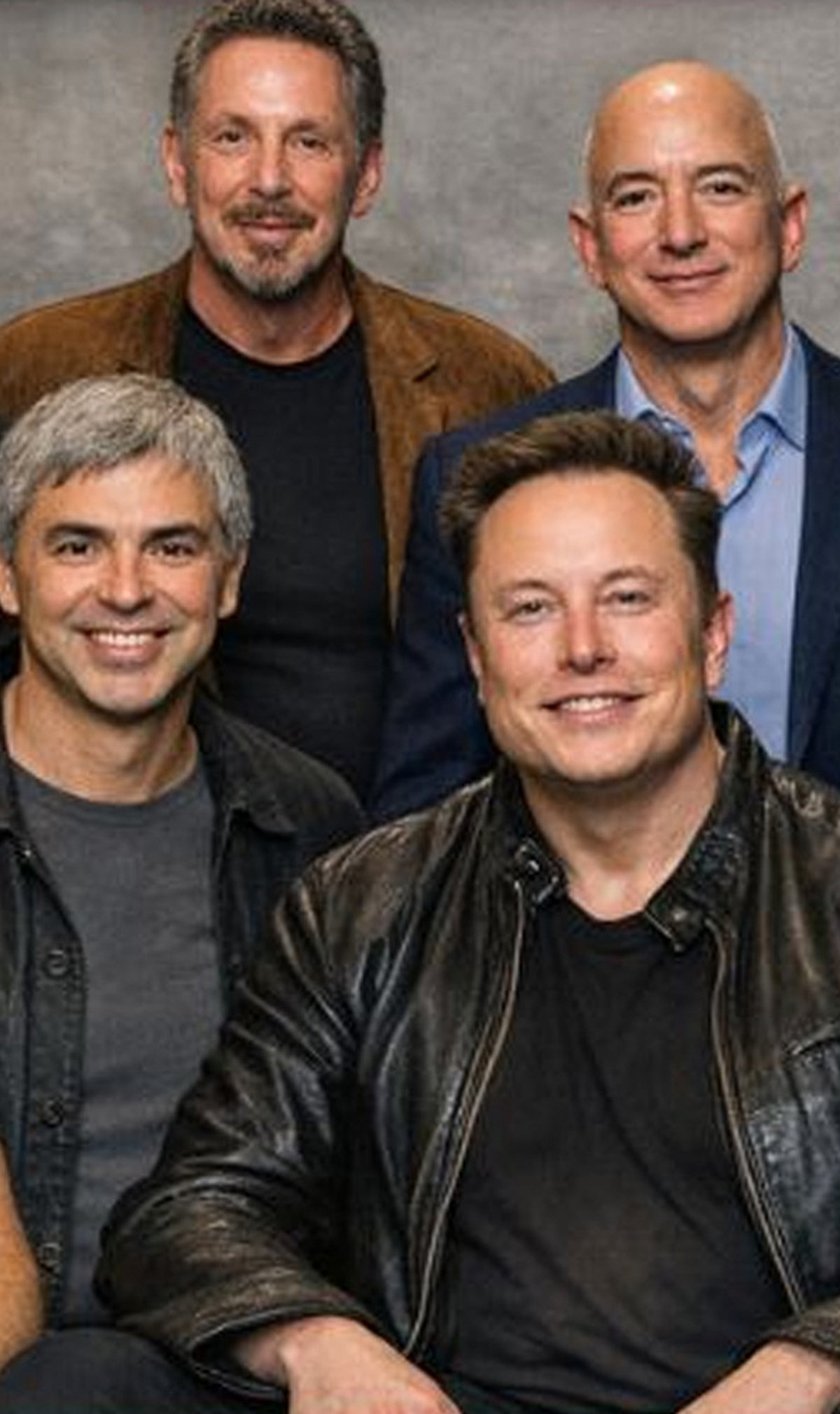
    The journey from the dawn of personal computing to today’s artificial intelligence revolution has been defined by a handful of visionary billionaires. These innovators didn’t just build companies; they reshaped industries, changed how we live and work, and laid the groundwork for the AI-driven future we now inhabit. Here’s a look at the key figures who turned technology into a global force for transformation.

    Bill Gates: Making Computing Personal

    As co-founder of Microsoft, Bill Gates transformed personal computing from a niche hobby into an essential tool accessible to millions. His vision made software affordable and ubiquitous, forever altering education, healthcare, and global business. Through the Bill & Melinda Gates Foundation, he also redefined how billionaire wealth can drive philanthropy and social progress.

    Steve Jobs: The Architect of the Digital Lifestyle

    Apple’s co-founder Steve Jobs revolutionized not just technology, but how people interact with it. From the Macintosh to the iPhone and iPad, his relentless focus on design and user experience set new standards for consumer electronics. Jobs turned smartphones into indispensable companions and transformed digital entertainment, music, and communication.

    Jeff Bezos: From Online Bookseller to Space Explorer

    Jeff Bezos founded Amazon as an online bookstore and built it into a global e-commerce and cloud computing behemoth. Under his leadership, Amazon redefined retail logistics, made cloud computing mainstream with Amazon Web Services (AWS), and pushed the boundaries of space exploration with Blue Origin. His long-term, innovation-first mindset created templates for modern digital business.

    Elon Musk: Accelerating the Future

    Elon Musk is a serial entrepreneur who has driven breakthroughs across multiple sectors. Tesla made electric vehicles desirable and mainstream. SpaceX lowered the cost of space travel and revived private spaceflight. Through Tesla and companies like Neuralink and xAI, Musk is also pushing artificial intelligence into energy, transportation, and brain-computer interfaces.

    Mark Zuckerberg: Connecting the World

    Mark Zuckerberg founded Facebook (now Meta) and turned social networking into a global phenomenon. The platform connected billions of people and redefined digital communication. Today, Zuckerberg is betting heavily on virtual reality, augmented reality, and AI as the next frontiers, shaping how we will interact, work, and play in the metaverse.

    Larry Page & Sergey Brin: Organizing the World’s Information

    The Google co-founders created the world’s most powerful search engine and built an empire around information access. Larry Page and Sergey Brin’s innovations in search algorithms, artificial intelligence, and digital advertising set the stage for modern data-driven technology. Their investments in autonomous vehicles, life sciences, and AI research continue to influence many fields.

    Jensen Huang: Powering the AI Revolution

    As CEO of NVIDIA, Jensen Huang turned a graphics chip company into the engine of the artificial intelligence era. NVIDIA’s GPUs are the backbone of modern AI data centers, powering everything from deep learning research to autonomous vehicles and gaming. Huang’s foresight in betting on parallel processing made him a pivotal figure in the AI boom.

    Sam Altman: Democratizing Generative AI

    Sam Altman, CEO of OpenAI, brought generative AI to the mainstream with tools like ChatGPT and DALL·E. His leadership has accelerated AI adoption across industries, sparked debates about responsible development, and pushed the conversation around artificial general intelligence. Altman’s work is changing how we think about productivity, creativity, and the future of work.

    These billionaires each played a unique role in the transition from tech to AI. Their legacies are not just fortunes, but the technologies and ideas that continue to shape our world.

  • India’s Startup Boom: Government Support, Digital Adoption, and Youthful Innovation Fuel Growth

    India’s Startup Boom: Government Support, Digital Adoption, and Youthful Innovation Fuel Growth

    Overview

    India’s startup ecosystem is expanding rapidly, driven by government support, digital adoption, investor confidence, and a youthful population. With over 2 lakh DPIIT-recognized startups and 16.6 lakh jobs created, the country now ranks second globally in entrepreneurial activity. This article explores the key factors behind this remarkable transformation.

    Government Initiatives Boost the Startup Ecosystem

    The Indian government has played a pivotal role in fostering a startup culture through initiatives like Startup India, tax exemptions, and simplified compliance. Digital literacy campaigns, startup boot camps, and innovation hubs have encouraged young entrepreneurs to experiment. Sectors such as agritech, fintech, and technology have benefited from state-backed incubators and accelerators, contributing to GDP growth, employment, and quality of life.

    Rise in Investor Confidence and Funding

    India attracts substantial global venture capital and private equity. Angel networks and crowdfunding platforms empower small founders with seed and expansion capital. Major success stories like Flipkart and Zomato highlight the potential, while micro-VCs and regional investors support startups in smaller cities, unlocking niche markets and driving ecosystem growth.

    Creative Founders and Diversified Sectors

    Founders today come from diverse backgrounds—not just engineers from top institutions, but also farmers, homemakers, and dropouts. They focus on research, innovation, and solving real problems rather than following trends. This diversity has led to successful ventures in fintech, healthtech, edtech, AI, clean energy, e-commerce, and SaaS.

    Youthful Energy and Cultural Shift

    With 65% of the population under 35, India’s young entrepreneurs are reshaping the startup landscape. Programs like Shark Tank have popularized entrepreneurship, and the cultural stigma around failure is fading. Resilience and experimentation are now valued, inspiring more people to pursue entrepreneurship as a full-time career.

    Challenges of the Startup Ecosystem

    Despite the momentum, startups face regulatory complexity, infrastructure gaps, intense competition, and uneven access to mentorship. Scaling beyond initial success remains difficult. However, collaborative ecosystems, industry associations, and cross-border partnerships are gradually addressing these hurdles.

    Why It Matters

    The startup surge is a solution to brain drain, regional innovation, and unemployment. It generates revenue, reduces poverty, and drives progress in green energy, AI, health, and smart living. As more people embrace entrepreneurship, India’s startup ecosystem becomes a powerful engine for national development and global leadership.

    Final Thoughts

    India’s startup boom is not a temporary trend—it represents a fundamental transformation. The convergence of technology, policy, and youthful ambition is creating jobs, boosting GDP, and fostering innovation. Startups are shifting traditional business methods toward adaptive, modern markets that define smart living and economic growth.

    FAQs

    1. Why is India’s startup ecosystem growing so rapidly?
    Increased digital adoption, supportive government initiatives, higher investor confidence, improved access to funding, and a young entrepreneurial population are driving rapid growth.

    2. What role does the government play in supporting startups in India?
    The government supports startups through initiatives like Startup India, tax benefits, simplified compliance, incubators, innovation hubs, and policies that encourage entrepreneurship and job creation.

    3. Why are Tier-2 and Tier-3 cities becoming startup hubs?
    Improved internet connectivity, digital literacy, affordable technology, regional investors, and the ability to solve local problems have enabled entrepreneurs from smaller cities to build successful startups.

    4. Which sectors are driving India’s startup boom?
    Fast-growing sectors include fintech, agritech, healthtech, edtech, artificial intelligence (AI), clean energy, e-commerce, and software-as-a-service (SaaS).

    5. What are the biggest challenges faced by Indian startups?
    Common challenges include regulatory complexity, intense competition, limited access to mentorship, infrastructure gaps, and difficulties in scaling sustainably.

  • How to Discover Recently Funded Startups in 2026: A Complete Guide for Investors and Professionals

    How to Discover Recently Funded Startups in 2026: A Complete Guide for Investors and Professionals

    In 2026, the startup ecosystem is moving at record speed. Funding announcements arrive daily across sectors like artificial intelligence, climate tech, fintech, healthcare, and enterprise software. For investors, recruiters, journalists, and business developers, tracking these newly funded companies is essential to spot emerging opportunities early. The most effective approach combines multiple sources rather than relying on a single database. This guide outlines the key strategies to find recently funded startups quickly and reliably.

    Why Tracking Funded Startups Matters

    A fresh funding round often signals a period of rapid growth. Startups typically expand their teams, launch new products, and enter new markets soon after raising capital. Sales teams can target expanding companies ahead of competitors, recruiters can identify hiring hotbeds, and investors can gauge sector momentum. Tracking funding also reveals broader economic trends—heavy investment in certain areas indicates where capital and innovation are flowing.

    Start with Dedicated Startup Databases

    Specialized intelligence platforms remain the backbone of funding research. Crunchbase, PitchBook, and Tracxn compile extensive data on funding rounds, investors, valuations, acquisitions, and leadership teams. These tools allow you to filter by funding stage, location, industry, amount raised, and announcement date. For example, you can find AI startups in India that secured seed capital or European fintech companies closing Series B rounds. While premium tiers offer deeper analytics, even free versions provide valuable insights into funding patterns.

    Follow Venture Capital Firms Closely

    Venture capital firms often announce investments before they appear in mainstream business news. Firms like Sequoia Capital, Accel, Lightspeed, Peak XV Partners, Andreessen Horowitz, and General Catalyst regularly share portfolio updates, founder interviews, and investment theses on their websites and social channels. Following these firms on LinkedIn and X (formerly Twitter) gives you an early look at startups that may soon gain wider attention. VC announcements also signal which sectors they believe will drive future growth.

    Monitor Business News and Startup Newsrooms

    Traditional business news outlets remain a vital source. Sites such as TechCrunch, Fortune, Bloomberg, CNBC, and regional startup publications cover funding news and M&A activity throughout the year. Journalists add context that databases lack—founder quotes, competitive positioning, and market analysis, helping you understand not just which companies raised money, but why. Industry newsletters have also become powerful tools, delivering curated funding round summaries directly to your inbox.

    Leverage Social Media as an Early Signal

    LinkedIn is one of the fastest channels for funding news. Entrepreneurs often announce investments alongside news about hiring, product launches, or expansion. Following key investors, founders, incubators, and venture capitalists can reveal opportunities before any official press release. X remains relevant for real-time updates, especially during startup conferences where funding announcements are made live.

    Watch Accelerators and Incubators

    Many high-growth startups secure institutional funding shortly after completing accelerator programs. Organizations like Y Combinator, Techstars, Antler, and university-backed incubators showcase promising companies during Demo Days. Monitoring these cohorts gives you a window into potential unicorns. Startups often raise seed or Series A rounds right after graduation, making accelerators a fertile ground for early discovery.

    Use AI-Powered Monitoring Tools

    Artificial intelligence has transformed startup research. AI-driven news aggregators, alert systems, and research assistants can scan thousands of sources simultaneously, filtering funding leads based on your keywords and criteria. You can set up notifications for specific sectors like AI, clean energy, healthcare, or cybersecurity, ensuring you never miss fresh funding news even in fast-moving fields.

    The Smartest Strategy: Combine Multiple Sources

    No single platform captures every funding announcement. Some startups debut their funding on LinkedIn, while others first appear on VC blogs or regional publications before hitting global databases. For the most complete picture, draw on startup databases, business journalism, social media, VC announcements, and AI alerts. This multi-source approach not only identifies newly funded companies but also provides richer context about industry trends, investor confidence, and emerging markets. In today’s competitive startup landscape, timely information is a strategic asset. Developing a systematic method for monitoring funding announcements pays dividends for any professional looking to stay ahead.

  • Kunal Shah Appointed WhatsApp Global Head: The Entrepreneurial Journey Behind the Meta Move

    Kunal Shah Appointed WhatsApp Global Head: The Entrepreneurial Journey Behind the Meta Move

    Kunal Shah, the Indian entrepreneur who built FreeCharge and CRED, has been appointed as the new global head of WhatsApp by Meta. The move marks a significant milestone for Indian entrepreneurship and signals a growing appetite for founder-led leadership in global technology companies. Alongside the appointment, Meta invested $900 million in CRED, valuing the fintech platform at $4.5 billion.

    From FreeCharge to a Landmark Exit

    Shah co-founded FreeCharge in 2010, a mobile recharge platform that became one of India’s early digital payment successes. In 2015, Snapdeal acquired FreeCharge for roughly $400 million, one of the largest acquisitions in the Indian startup ecosystem at the time. The deal cemented Shah’s reputation as a founder with deep insights into consumer behavior in a market where digital trust was still emerging.

    Building CRED Into a Fintech Powerhouse

    Rather than resting on his first success, Shah launched CRED in 2018 with a unique value proposition: rewarding users who pay their credit card bills on time. The platform quickly evolved into a diversified financial services company covering payments, lending, insurance, and wealth management. Meta’s recent $900 million investment brought CRED’s valuation to $4.5 billion and solidified its position as a key player in India’s fintech landscape.

    The Cold Email That Changed Everything

    According to Bloomberg, Shah’s path to WhatsApp started with a conversation. Meta’s Chief Product Officer, Chris Cox, was seeking perspectives on WhatsApp’s future from entrepreneurs in key markets like India, Brazil, and Mexico. Shah’s vision for the platform impressed Cox enough to turn a discussion into a leadership opportunity. The story underscores how public engagement and industry reputation can open doors that formal applications rarely can.

    Why Meta Chose a Builder, Not a Manager

    Meta CEO Mark Zuckerberg praised Shah for building “one of India’s most important technology companies” and emphasized the “builder mentality” and global perspective the company wanted for WhatsApp’s next phase. The appointment reflects a strategic shift: importing a founder’s product instincts into a business that has struggled to convert its massive scale into commerce and payments revenue, especially in India where WhatsApp Pay lags behind PhonePe and Google Pay.

    Startup Leadership vs. Big Tech Opportunities

    Shah’s move is part of a larger trend in the tech industry where rising AI capabilities and market dynamics force leaders to choose between entrepreneurial ambition and the resources of large tech companies. Industry experts note that WhatsApp’s main challenge is not its user base but monetization beyond business applications. Shah inherits a platform with unparalleled scale but an incomplete recipe for commerce.

    Lessons From Shah’s Journey

    Shah’s career offers clear lessons for entrepreneurs and CXOs: reinvention can be practiced repeatedly. From exiting the payments field to building CRED from scratch and now leading the world’s largest messaging platform, Shah emphasizes maintaining visibility and engagement in the industry regardless of current projects. For executives observing this career move, it illustrates how founder-driven thinking is becoming more valued in top global tech companies.

    Why This Matters

    Kunal Shah’s appointment to lead WhatsApp reflects a broader shift in the technology industry where global companies increasingly value entrepreneurial thinking alongside operational leadership. His journey demonstrates how innovation, resilience, and a deep understanding of consumer behavior can open opportunities beyond startup success. For entrepreneurs, executives, and aspiring founders, his career highlights the growing influence of Indian technology leaders on the global stage.

  • India vs Silicon Valley and China: How Its Startup Ecosystem Stacks Up

    India vs Silicon Valley and China: How Its Startup Ecosystem Stacks Up

    Three decades ago, the global startup conversation belonged almost entirely to Silicon Valley. Then China built its own parallel universe of billion-dollar companies, moving so fast that Western observers could barely track the names. Today, a third force is demanding attention. India has quietly assembled one of the most significant startup ecosystems in the world, and the comparison is no longer a stretch—it is a conversation worth having in full.

    The Scale Argument

    India currently ranks third globally in total number of unicorns, behind the United States and China. As of 2026, India has produced over 115 unicorn companies, with a combined valuation running into hundreds of billions of dollars. The sectors span fintech, edtech, healthtech, logistics, SaaS, and consumer internet, reflecting an ecosystem with genuine breadth rather than concentration in one or two categories.

    Silicon Valley remains the undisputed leader in raw numbers and total capital deployed. The US venture capital market continues to dwarf every other geography, and the Bay Area alone houses more unicorns than most countries combined. China, despite regulatory headwinds in recent years, maintains a deep pool of mature tech giants including Alibaba, Tencent, ByteDance, and Meituan—companies that have scaled globally and built product categories entirely from scratch. India has not yet produced a company of that global reach, but its trajectory is pointing upward, driven by structural rather than temporary conditions.

    The Capital Picture

    Funding is where the comparison gets interesting. Silicon Valley still attracts the largest share of global venture capital, supported by a decades-old investor network, deep institutional familiarity with tech risk, and proximity to the world’s largest technology companies. The exit ecosystem in the US—including acquisitions and IPOs—is far more mature, making it easier for early investors to deploy capital with confidence. China built its startup boom on a combination of domestic capital, state support, and an enormous consumer market. Platforms like WeChat Pay and Alipay created financial infrastructure that startups could build on without reinventing the wheel. However, the government’s relationship with the tech sector has grown complicated, with major regulatory crackdowns reshaping operations, though the underlying market scale remains.

    India faces a more volatile funding environment. After a peak in 2021 and 2022, funding dropped significantly through 2023 and 2024 before stabilising. The correction forced a reckoning with unit economics and profitability—a healthy development. Indian startups that survived the funding winter did so by building leaner, more sustainable businesses. Several high-profile IPOs, including Zomato, Nykaa, and Paytm, have tested public market appetite for new-age tech companies, with mixed but instructive results.

    The Talent Engine

    Talent is one area where India holds a genuine structural advantage. The country produces millions of engineering graduates each year, and the quality at the top tier is internationally competitive. Indian-origin founders and executives hold leadership positions at some of the world’s most valuable technology companies, including Google, Microsoft, Adobe, and IBM. Silicon Valley has long benefited from Indian talent through immigration, but India itself is now keeping more of its best engineers and founders at home. Return migration is rising—experienced professionals who built careers in the US are coming back to build companies in India, bringing capital networks, product experience, and global market exposure.

    China’s talent pool is massive and technically strong, but increasingly insular. Export controls, geopolitical tensions, and restrictions on cross-border data flows have made it harder for Chinese tech companies to attract and retain international talent. India, by contrast, operates in English, follows common law, and maintains open capital account policies for foreign investors, all of which lower friction for international engagement.

    The Market Dynamics

    India’s domestic market is its most compelling long-term asset. With 1.4 billion people, a rapidly expanding middle class, and growing smartphone penetration in tier-two and tier-three cities, the addressable market for consumer technology is enormous and still largely untapped. Silicon Valley startups typically build for a global audience from day one, using the US as a launch market and expanding outward. Indian startups have historically built for India first, creating depth and defensibility but sometimes limiting global ambition. That is changing: Indian SaaS companies like Freshworks, Zoho, and Browserstack have built significant international revenue bases, proving the model works beyond domestic borders.

    China built its internet economy behind the Great Firewall, which had a paradoxical effect. It protected domestic companies from foreign competition and allowed them to scale without facing Google or Amazon. But it also cut them off from global markets in meaningful ways. Indian startups face full international competition at home, which forces sharper product thinking and validates their capabilities when they expand abroad.

    The Infrastructure Gap

    One honest limitation India must acknowledge is infrastructure. Silicon Valley benefits from world-class physical and digital infrastructure built over decades. China made infrastructure a national priority and executed at a speed and scale few countries can match—from high-speed rail to 5G networks to digital payment systems. India’s infrastructure story is improving but uneven. The Unified Payments Interface has become a genuine success, processing billions of transactions monthly and inspiring similar systems in other countries. Digital public infrastructure, including Aadhaar and the Open Network for Digital Commerce, is creating platforms on which startups can build. However, logistics, power supply, and connectivity outside major urban centres remain real constraints for companies trying to reach the full breadth of the Indian market.

    Where India Is Heading

    The most accurate assessment of India’s startup ecosystem is this: it is real, it is growing, and it is building on foundations that are durable. The comparison with Silicon Valley is premature in terms of capital depth and global company creation. The comparison with China is more nuanced—India holds advantages in global integration and English-language capability while China retains advantages in domestic market maturity and state-backed infrastructure.

    What India has built is a third model, one driven by a large domestic market, a strong talent base, a democratic regulatory environment, and an increasingly experienced investor class. The country does not need to replicate Silicon Valley or China to matter. Building its own version, at its own pace, on its own terms, is already changing the global startup conversation.

  • India’s Startup Boom: How Small Towns Are Becoming Job Powerhouses

    India’s Startup Boom: How Small Towns Are Becoming Job Powerhouses

    Not long ago, a skilled professional in Coimbatore or Kochi faced a tough choice: move to a metro city or stay and compromise on career growth. That dynamic has shifted dramatically. Startups across India are now hiring aggressively in smaller towns and emerging business hubs, offering rewarding careers without the need to relocate. This trend is reshaping the country’s employment landscape.

    A Decade of Transformation

    India’s startup story has evolved from a metro-centric narrative to a nationwide phenomenon. According to the Department for Promotion of Industry and Internal Trade (DPIIT), recognized startups surpassed 2.23 lakh by March 2026, generating over 23.36 lakh direct jobs—a 36.1% increase from the previous financial year. This growth didn’t happen overnight. When the Startup India initiative launched in 2016, there were only about 500 recognized startups. Ten years later, the program has facilitated nearly Rs 15 lakh crore in private funding, and more than 1.07 lakh startups now include at least one woman director or partner.

    Shift to Tier 2 and Tier 3 Cities

    The most striking change is where these startups are headquartered. Industry and government estimates indicate that Tier 2 and Tier 3 cities now account for 48 to 50 percent of all DPIIT-recognized startups. Lower operating costs—office space can be up to 50% cheaper and talent costs 25–30% lower than in metros—combined with improved internet access and the rise of remote work have made these cities attractive for founders and employees alike.

    Hiring Beyond Software Developers

    While software engineers remain in demand, startups are hiring a diverse range of professionals. Agritech companies require field officers, agronomists, and customer support staff near farming regions. Fintech firms build local KYC verification, sales, and compliance teams. SaaS companies establish remote engineering, product, and support teams in smaller cities. Designers, marketers, analysts, and operations executives also find ample opportunities. This hiring spree creates a ripple effect, pulling in local vendors, logistics providers, training centers, and consultants who also expand their workforce.

    Emerging Startup Hubs

    Several cities exemplify this shift. Chandigarh’s tricity region had over 633 DPIIT-recognized startups by end of 2025, with companies like AgNext Technologies and DataKund hiring in AI and analytics. Kochi has gained prominence in AI and global capability centers, bolstered by Kerala’s rising startup funding. Coimbatore’s startup count grew from 271 in 2020 to 1,350 by 2024, with agritech, manufacturing tech, SaaS, and fintech companies hiring locally. These cities are retaining talent that would have previously migrated to metros.

    Government Support Fueling Growth

    Government schemes have addressed some common hurdles. The Credit Guarantee Scheme for Startups has backed loans worth over Rs 755 crore, providing capital for hiring and expansion. On the Government e-Marketplace, more than 30,000 startups have registered, with cumulative orders exceeding Rs 54,000 crore through FY 2025–26. This access to customers and capital is crucial for founders outside major investment hubs.

    Challenges Remain

    Despite the momentum, some gaps persist. Graduates in smaller cities often lack exposure to specialized roles like product management or growth marketing. Power and internet reliability remain inconsistent in certain regions. Venture capital funding is still concentrated in a handful of metros. Women-led startups, while growing, still represent a smaller share. Addressing these issues will determine whether the job surge becomes a lasting trend.

    The Road Ahead

    India’s startup story has moved beyond the metros. More founders are building outside big cities, more graduates are finding quality jobs close to home, and more businesses are proving that growth doesn’t require Bengaluru or Delhi. If this trend continues, the biggest employment gains over the next decade could come from India’s smaller towns. What began as a startup movement is now a jobs revolution—and for many in smaller cities, it means career opportunities without leaving their communities behind.

  • Why Founders Should Embrace Rejection: Turning No into Startup Success

    Why Founders Should Embrace Rejection: Turning No into Startup Success

    Rejection is often the first step toward startup success. By treating investor and customer feedback as valuable insights, founders can refine ideas, strengthen product-market fit, pivot strategically, and build resilient businesses capable of long-term growth.

    Key Takeaways

    • Rejection reveals hidden customer needs and strengthens product-market fit through continuous learning and validation.
    • Investor feedback exposes execution gaps, helping founders refine business strategies before scaling sustainably.
    • Successful startups transform setbacks into opportunities by adapting quickly, learning continuously, and building resilient businesses.

    For every startup that becomes a billion-dollar success, thousands disappear before finding their first paying customer. While funding shortages, competition, and execution challenges often take the blame, one factor quietly shapes the journey of almost every successful founder: rejection.

    Whether it comes from investors declining a pitch, customers ignoring a product, or mentors questioning an idea, rejection is rarely the end of the road. More often than not, it becomes the starting point for building a stronger business. In today’s startup ecosystem, where speed often overshadows validation, the ability to learn from rejection may be a founder’s most valuable competitive advantage.

    Rejection Tests the Problem Before the Product

    Entrepreneurs sometimes become obsessed with finding a solution before fully understanding the problem they need to address. Even an impressive application or innovative technology might be captivating; however, unless the entrepreneur comes up with something that truly hurts, it won’t work for its target audience.

    Being rejected early on pushes entrepreneurs to reconsider their assumptions. If customers refuse to pay, use the product, or promote it, there is no question that the entrepreneur is not doing enough marketing; rather, the solution is irrelevant. Analyzing objections can provide valuable market insights at little cost.

    Investors Often Reject Execution, Not Vision

    One myth about first-time entrepreneurs is that their ideas are rejected for a lack of originality. However, venture capital firms consider far more than innovation when making decisions: execution capability, addressable market size, competitive positioning, customer traction, and profitability.

    A rejection from an investor is not necessarily an indication that the idea has no future. It may mean the business has failed to provide sufficient evidence to support its growth story. Entrepreneurs who seek feedback after being rejected at pitches tend to be better prepared for fundraising, focusing on customer acquisition, unit economics, and scalability.

    Customer Feedback Is the Ultimate Validation

    While investors’ opinions are important, customers remain the final judges of any startup’s prospects. Good remarks may encourage, but they never reveal what’s wrong with the product. It is only through criticism that usability problems, pricing issues, missing features, and missed expectations come to light.

    The most successful entrepreneurs create a feedback loop rather than wait for quarterly reviews and declining sales. Each complaint, cancellation, and failed sign-up provides an opportunity to improve the product. Often, customer rejection highlights areas internal teams would not have discovered.

    Pivoting Is a Sign of Learning

    Too often, pivoting is mistaken for a sign of failure. Instead, many of the most profitable companies pivoted when they realized their assumptions about user behavior were wrong. A declined feature, low engagement rate, or unexpected user habits may indicate more interesting opportunities in another area.

    Entrepreneurs willing to pivot have a better future than those who remain loyal to their initial idea. In modern business, flexibility plays an important role, especially in rapidly evolving areas such as artificial intelligence, fintech, climate tech, or health tech.

    Evidence Before Scaling

    Scaling has never been more tempting for entrepreneurs. With easy access to cloud infrastructure, AI technologies, and global digital platforms, founders can create products faster than ever before. Still, scaling too fast before establishing product-market fit can lead to rapid failure.

    Best practice among experienced entrepreneurs is to validate customer needs before investing resources in hiring, marketing, and geographic expansion. Solid evidence of customer adoption makes for a much stronger base of operations. The startups that survive are usually focused on building evidence before scaling.

    Turning Rejection into Strategy

    Successful entrepreneurs rarely see rejection as a personal failure. Rather, they view it as structured feedback to refine their product, pricing, positioning, and overall business model. Rejection is more valuable when it comes in clusters than from a single source. This is why entrepreneurs learn from rejections by numerous people, whether venture capitalists or potential customers. Ultimately, the process of entrepreneurship becomes iterative with this attitude toward rejection.

    Bottom Line

    In an ecosystem where breakthrough ideas attract headlines, resilience often determines long-term success. Every rejection offers founders an opportunity to question assumptions, strengthen execution, and better understand their customers. The startups that endure are not necessarily those with flawless first ideas—they are the ones who listen carefully, adapt quickly, and treat every ‘no’ as another step toward building a business the market truly wants.