Tag: ETF

  • Bitcoin Volatility Spikes: 9 Key Factors Driving the Renewed Price Swings

    Bitcoin Volatility Spikes: 9 Key Factors Driving the Renewed Price Swings

    Bitcoin volatility is on the rise again, with prices swinging more sharply than in recent months. Traders and investors are watching closely as a combination of institutional moves, macroeconomic shifts, and market mechanics create repeated bouts of turbulence. Below are the nine primary drivers behind Bitcoin’s renewed price instability.

    • Institutional Trading: Large institutional investors deploy significant capital in a short time, causing rapid price swings as major buy or sell orders affect market liquidity on exchanges.
    • Macroeconomic Uncertainty: Interest rates, inflation data, and global economic concerns influence investor sentiment, increasing Bitcoin’s price fluctuations across financial markets worldwide.
    • Leveraged Trading: High leverage in crypto futures amplifies both gains and losses, triggering cascading liquidations that accelerate short-term Bitcoin price volatility during market moves.
    • ETF Fund Flows: Inflows and outflows from Bitcoin ETFs create buying and selling pressure, contributing to sudden price movements and heightened daily volatility.
    • Regulatory Developments: Government regulations, policy announcements, and legal actions affect investor confidence, often leading to sharp Bitcoin price reactions across global markets.
    • Whale Activity: Large Bitcoin holders buying or selling substantial amounts can significantly influence market prices, creating sudden volatility on cryptocurrency exchanges.
    • Market Sentiment: Fear, optimism, and speculative trading quickly shift investor behavior, causing rapid Bitcoin price changes during uncertain market conditions.
    • Global News Events: Geopolitical tensions, financial crises, and major economic announcements increase risk sentiment, often resulting in stronger Bitcoin market volatility.
    • Lower Market Liquidity: Reduced trading liquidity during certain periods allows relatively smaller trades to create larger Bitcoin price movements and wider market fluctuations.

    Understanding these factors can help investors navigate the current environment of heightened volatility. As the crypto market matures, such price swings are likely to remain a key characteristic of Bitcoin trading.

  • XRP Price Prediction: How High Can Ripple Go in the Next Crypto Bull Run?

    XRP Price Prediction: How High Can Ripple Go in the Next Crypto Bull Run?

    XRP has remained one of the most talked-about cryptocurrencies for many years. Even after market ups and downs, it continues to attract investors, traders, and financial experts across the world. Ripple, the company behind many XRP-related payment solutions, has expanded its business and built new partnerships with financial institutions. Given this progress, many people believe XRP could perform well during the next crypto bull run.

    A strong price increase will not depend on excitement alone. Real business growth, better regulations, and wider adoption will play a much bigger role. These factors could decide how far XRP moves during the next major market cycle.

    Regulation Could Become the Biggest Price Driver

    One of the biggest reasons investors remain hopeful about XRP is the steady improvement in regulatory clarity. For several years, legal uncertainty affected market confidence and limited adoption in some regions. As this situation improves, many investors believe XRP has a better chance to attract larger amounts of money.

    Clear regulations often encourage banks, payment companies, and investment firms to enter the market with greater confidence. If more countries create friendly rules for digital assets, XRP could benefit from stronger demand. Better regulation could also improve trust among retail investors who previously stayed away from cryptocurrencies amid uncertainty.

    Ripple Continues to Expand its Business

    Ripple is working on the development of products aimed at providing fast and affordable international payment solutions. The company has also begun working in new areas, including stablecoin services, digital asset custodianship, and tokenization of real assets. These initiatives can only help Ripple strengthen its position in the global financial sector.

    Simultaneously, XRP Ledger activity keeps increasing. The increasing number of transactions as well as the growing popularity of blockchain technology may improve the XRP ecosystem’s value overall.

    XRP ETFs Could Bring Fresh Investment

    Another important issue concerning XRP revolves around the existence of spot exchange-traded funds, or ETFs. By approving such products, authorities could grant institutional investors simple access to XRP.

    After approval, Bitcoin ETFs raised billions of dollars, and experts believe that XRP could gain similar interest if its own ETFs get the green light. Increased participation of institutional investors would boost XRP demand while decreasing its availability.

    Also Read – XRP Ledger’s Tokenized Assets Reach $4B: What It Means for Ethereum and BNB Chain

    The Next Crypto Bull Run Could Lift XRP

    History shows that cryptocurrency bull markets often follow a similar pattern. Bitcoin usually starts the rally, Ethereum follows, and then many large alternative cryptocurrencies begin to outperform. XRP has often joined these later stages of previous market cycles.

    If Bitcoin reaches fresh all-time highs during the next cycle, investor confidence across the crypto market could rise. Under those conditions, XRP may receive fresh attention from both individual and institutional investors. Strong market sentiment could become another important factor behind future price growth.

    Risks Still Remain

    Although the future looks promising, several risks could slow XRP’s progress. Institutional adoption may take longer than expected. Global economic conditions could reduce investment across financial markets. Delays in ETF approval may also affect market confidence.

    Competition remains another challenge. Stablecoins and other blockchain payment networks continue to expand their services. XRP must continue to prove its value through real adoption and business growth if it hopes to stay ahead of competing technologies.

    XRP Price Forecast for the Next Bull Cycle

    Market experts continue to publish different forecasts for XRP. Most balanced predictions place XRP between $3 and $5 during a healthy bull market. This range assumes positive market conditions along with steady business growth and better regulations.

    If several major events happen together, including ETF approval, strong institutional demand, and rapid expansion of Ripple’s payment network, XRP could reach between $5 and $10. This remains an optimistic but realistic target according to many analysts.

    A much stronger market could push XRP toward $15 to $20. However, this would require exceptional market conditions, very high investor confidence, and rapid global adoption. Such a move represents an aggressive scenario rather than the most likely outcome.

    Also Read – XRP Price Outlook 2026: Is Ripple Still a Good Long-Term Investment?

    Why This Matters

    XRP’s evolving regulatory clarity, potential spot ETF momentum, and role in Ripple’s expanding enterprise ecosystem make it a key indicator for institutional adoption. Understanding these core drivers is vital for navigating the next broad crypto bull market.

    Final Thoughts

    XRP continues to stand among the most closely watched digital assets given Ripple’s expanding business, stronger institutional interest, and improving regulatory outlook. These developments create a solid foundation for future growth, especially if the next crypto bull market develops as many analysts expect.

    FAQs

    1. What is the most realistic XRP price target for the next bull run? Most analysts expect XRP to trade between $3 and $5, with $7 to $10 possible under stronger market conditions.
    2. Can XRP reach $20? Yes, but only if several positive factors, such as ETF approval, institutional demand, and strong market momentum, come together.
    3. Is XRP likely to reach $100 soon? Most experts consider this highly unlikely during the next bull cycle as it would require a market value of several trillion dollars.
    4. What could drive XRP’s price higher? Improved regulations, Ripple’s expanding business, ETF approvals, and a broad crypto bull market are the biggest potential catalysts.
    5. Is XRP still a good long-term investment? Many investors see long-term potential in XRP, but future performance will depend on adoption, regulation, and overall crypto market conditions.

    Join our WhatsApp Channel to get the latest news, exclusives and videos on WhatsApp

    Disclaimer: Analytics Insight does not provide financial advice or guidance on cryptocurrencies and stocks. Also note that the cryptocurrencies mentioned/listed on the website could potentially be risky, i.e. designed to induce you to invest financial resources that may be lost forever and not be recoverable once investments are made. This article is provided for informational purposes and does not constitute investment advice. You are responsible for conducting your own research (DYOR) before making any investments. Read more about the financial risks involved here.


  • Dogecoin Faces Key Support at $0.072 as ETF Inflows Stall and Selling Pressure Mounts

    Dogecoin Faces Key Support at $0.072 as ETF Inflows Stall and Selling Pressure Mounts

    Dogecoin traded near $0.0729 on July 12, 2026, after falling nearly 2% in the past 24 hours, underperforming a slightly weaker crypto market. Trading volume rose to about $462 million as sellers increased activity around the weekend.

    The decline comes as traders reduce exposure to riskier altcoins and shift more capital toward Bitcoin. DOGE now sits close to the $0.072 support zone. A hold above that level could lead to consolidation or a breakout above $0.08, while a lower move may expose the $0.070 area.

    Dogecoin ETFs Record a Week Without Inflows

    U.S. Dogecoin exchange-traded funds recorded zero net inflows on every trading day from July 6 through July 10. The flat week followed negative net flows in the prior period, showing that investors have not added fresh capital to the products.

    Cumulative net inflows into Dogecoin ETFs stand at $11.77 million. The products hold about $10.23 million in net assets, equal to roughly 0.09% of Dogecoin’s market value. The limited size shows that ETF activity has not created strong demand for DOGE.

    The funds linked to Bitwise, Grayscale and 21Shares have shifted between positive, negative and flat weekly flows during 2026. The latest reading points to a “wait-and-see” approach as investors look for a new market or product catalyst. Meanwhile, 21Shares plans to use FTSE digital asset index data for its Dogecoin ETF pricing benchmark.

    Bitcoin Dominance Pressures Altcoin Prices

    The wider market has moved toward Bitcoin as sentiment stays in the “Fear” range. Bitcoin dominance reached 58.43%, showing that the largest cryptocurrency controls a growing share of total market value.

    The Altcoin Season Index stood at 52, indicating mixed demand for smaller tokens. Dogecoin often reacts sharply when traders cut speculative exposure. The current decline follows that wider pattern rather than a Dogecoin-specific event. Rising Bitcoin dominance tends to place pressure on meme coins as traders favor assets with deeper liquidity.

    At the same time, the Fear and Greed Index has moved above earlier extreme fear readings. The index recently reached 32, but it has not held above the neutral level of 50 since November. That reading shows an exit from panic without a clear return of strong buying demand.

    Technical Data Puts $0.072 Support in Focus

    DOGE moved below its seven-day simple moving average at $0.0744 and its 30-day average at $0.0786. Trading volume rose as the price fell, confirming higher market activity during the sell-off. The relative strength index reached 36, placing DOGE near oversold conditions.

    The lower RSI could support a short-term bounce, but Dogecoin needs to reclaim $0.074 to reduce selling pressure. A move above the seven-day average would place the next focus on $0.0786. Failure to hold $0.072 could send the price toward the next support near $0.070.

    ETF flows may also shape short-term sentiment. Positive inflows would show renewed demand for regulated Dogecoin products. Until buying returns, price action, trading volume and Bitcoin dominance will provide the main signals for DOGE’s next move.

  • Ethereum Holds Near $1,800 as ETF Inflows Counter Retail Bearish Pressure

    Ethereum Holds Near $1,800 as ETF Inflows Counter Retail Bearish Pressure

    Ethereum traded near $1,800 on Friday, gaining roughly 3% between Thursday and Friday as renewed demand for spot exchange-traded funds (ETFs) and continued expansion in tokenized assets provided support. The move outpaced other major cryptocurrencies, but futures market data revealed that retail traders continued to sell into the weekend, creating a tug-of-war between institutional buying and weak short-term sentiment.

    Institutional Demand Returns After Nine Weeks

    Spot U.S. Ethereum ETFs recorded their first weekly inflow in nine weeks, with $84.4 million in net buying, according to SoSoValue. This ended eight consecutive weeks of net outflows and signaled a shift in institutional demand. The funds experienced net outflows only on July 9, when Ethereum dropped to roughly $1,748 and funds lost $52.08 million. The renewed buying helped Ethereum maintain its position near $1,800 through the weekend.

    Institutional demand was further reflected in broader corporate accumulation. BitMine added 198,370 ETH over the past 30 days, bringing its reserves to approximately $10.3 billion. Additionally, a transfer of 20,500 ETH (worth about $36 million) from Galaxy Digital to a new wallet was flagged by Arkham Intelligence, following a pattern previously linked to large corporate ETH purchases.

    Retail Traders Turn Bearish

    In contrast, retail traders in the perpetual futures market moved in the opposite direction. Ethereum’s long-to-short ratio fell to 0.946, indicating that short positions now outnumber long positions. CoinGlass data showed an “extremely bearish” reading for large traders on OKX and Bybit, which handled roughly $4.10 billion and $1.19 billion in perpetual trading volume, respectively. One trader opened an ETH short position worth $12.43 million before the weekend.

    Despite the bearish tilt, short sellers faced higher liquidation losses. Short liquidations reached $11.49 million, compared to $8.30 million for long traders, suggesting that bearish bets carried near-term risk even as selling activity increased.

    Tokenization Growth Adds Support

    Ethereum also gained support from the expanding tokenized asset market and the launch of Robinhood Chain, a layer-2 network that uses ETH for gas fees. Robinhood Chain attracted about $106 million in bridge deposits and offers tokenized stocks to users in 120 countries, adding activity to the Ethereum-compatible ecosystem.

    Ethereum currently holds a 47% share of the real-world asset tokenization market, according to RWA.xyz. Analyst Leon Waidmann noted that Ethereum’s total value locked has reached $260 billion, surpassing Ether’s market value of about $210 billion, describing ETH as “underpriced.” However, network activity remains below earlier peaks. Ethereum decentralized applications generated $11 million in weekly revenue, down from $20 million in the first quarter, while active addresses fell to 3.2 million from 5.4 million.

    Funding Rates and Resistance Levels

    The annualized funding rate for ETH perpetual futures dropped to 3%, below the 6% level typically associated with balanced demand. This, combined with lower network activity, has kept Ethereum’s price recovery limited. ETH now faces resistance near $1,800 as ETF buying and tokenization demand compete with retail selling and weakening on-chain metrics.

  • Bitcoin ETFs See $90M Inflow Surge as BTC Approaches $65K Barrier

    Bitcoin ETFs See $90M Inflow Surge as BTC Approaches $65K Barrier

    US spot Bitcoin exchange-traded funds returned to net inflows on July 10 as Bitcoin moved back above $64,000. The products attracted $90.44 million during the session, while spot Ethereum ETFs added $18.43 million.

    The flow data arrived as Bitcoin traded near $64,150 and approached resistance level around $65,000. The recovery followed a volatile week in which the asset fell near $62,000 before moving higher again. Lower oil prices and a weaker dollar supported risk assets during the session, though ETF demand stayed concentrated in a few products. Market participants now track whether the demand can persist.

    BlackRock Leads Bitcoin ETF Demand

    BlackRock’s iShares Bitcoin Trust recorded $86.83 million in net inflows, accounting for most of the daily total. VanEck’s HODL added $3.61 million, while the other listed spot Bitcoin funds reported no net movement.

    IBIT’s cumulative net inflows reached about $60.29 billion after the July 10 session. HODL’s total stood near $1.14 billion. Across the market, US spot Bitcoin ETFs held about $77.42 billion in net assets, equal to roughly 6.05% of Bitcoin’s market value.

    Cumulative net inflows across the products reached about $51.28 billion. The latest reading followed a difficult period for the funds. A 10-day withdrawal run removed about $2.73 billion before positive flows returned in early July.

    Ethereum ETFs Add $18.43 Million

    Spot Ethereum ETFs also returned to positive flows on July 10. BlackRock’s ETHA attracted $16.20 million, while Fidelity’s FETH received $2.23 million. The remaining products posted no net flows for the day.

    The Ethereum inflow followed a $52.2 million withdrawal on July 9, which ended a five-day positive run. Ether traded near $1,800 as the funds recorded the new capital, while Bitcoin drew nearly five times more money during the same session.

    The two markets showed concentrated demand rather than broad buying across every fund. BlackRock supplied most of the inflows in both asset groups. As a result, daily totals depended heavily on activity in its IBIT and ETHA products.

    Bitcoin Tests the $65,000 Resistance Zone

    Bitcoin’s return above $64,000 placed the market close to a key short-term barrier. The asset earlier reached about $64,500 before losing momentum. Falling futures open interest, weak spot demand and a negative Coinbase premium had raised doubts about the strength of the July advance.

    Short-term holder data also points to possible supply above the current price. The newest buyers hold an average cost near $61,600, while the three-to-six-month group has a realized price close to $74,900. Traders who bought at higher levels may sell as Bitcoin moves toward their entry prices.

    Analyst Axel Adler Jr. said, “Buying pressure is once again outweighing selling pressure at the lows.” His model showed buying scores between 37% and 46% during June and July, while selling pressure stood near 16%.

    Adler identified $71,000 as an important recovery level. A move above that price would bring Bitcoin closer to the average cost of older short-term holders. The $73,200 to $77,500 range may carry heavier supply if the rebound extends.

  • Bitcoin Surges Past $60,000: Can the Rally Sustain Amid Bearish Headwinds?

    Bitcoin Surges Past $60,000: Can the Rally Sustain Amid Bearish Headwinds?

    Bitcoin has reclaimed the $60,000 level as stronger demand, ETF inflows, and positive market sentiment support recovery. However, inflation, global uncertainty, and key resistance levels still create caution.

    Key Takeaways

    • Bitcoin has moved back above the important $60,000 support level.
    • ETF inflows and stronger buying demand continue to support the market.
    • Global economic risks and resistance above $64,000 still limit confidence.

    Bitcoin has once again crossed the important $60,000 price mark after a period of sharp price swings. This move has boosted confidence across the cryptocurrency market, with $60,000 becoming a key level for traders and investors.

    What Helped Bitcoin Rise Again?

    Several reasons have supported Bitcoin’s return above $60,000. One major reason stems from Bitcoin’s strong performance in July. Market research from CryptoQuant shows that July has often brought positive returns for Bitcoin in past years. Current on-chain data also looks similar to earlier recovery periods, which has increased positive expectations.

    Another reason comes from stronger buying activity. More buyers have entered the market, while many long-term Bitcoin holders have reduced their selling. This balance between buyers and sellers has created better support for the current price. Lower selling pressure often gives Bitcoin a better chance to move higher. Market conditions outside the crypto sector have also played an important role. Rate cut expectations are building across major economies.

    Institutional Demand Remains Strong

    Institutional interest continues to support Bitcoin despite recent price swings. Spot Bitcoin exchange-traded funds, also known as ETFs, have continued to receive net inflows over recent weeks. These investment products allow large institutions and traditional investors to gain exposure to Bitcoin without directly buying the digital asset.

    Steady ETF inflows show that institutional demand has not disappeared even during periods of market uncertainty. This demand has provided additional support below current price levels and has helped Bitcoin recover after previous declines.

    Bear Market Risks Still Exist

    Although Bitcoin has regained an important price level, experts do not believe that all risks have disappeared. Several challenges still remain before a full bull market becomes clear.

    Global economic uncertainty continues to create pressure across financial markets. Inflation remains a key concern in many countries, while central bank interest rate decisions continue to influence investor sentiment. At the same time, geopolitical tensions continue to create uncertainty across global markets. Any major change in these areas could quickly affect Bitcoin prices.

    Another concern comes from Bitcoin’s struggle near the current trading range. During recent weeks, the price has found strong resistance around the low-to-mid $60,000 area. Sellers have repeatedly entered the market near these levels, which has limited further gains. Until Bitcoin breaks above this resistance with strong buying support, market caution will likely remain.

    Some analysts have also raised questions about future institutional adoption. According to views linked with JPMorgan research, the growth of private or permissioned blockchain networks could attract more business interest over time.

    Important Price Levels to Watch

    The $60,000 level now acts as one of the most important support zones for Bitcoin. As long as the price stays above this mark, buyer confidence may remain healthy.

    The range between $62,000 and $64,000 has become the current battleground between buyers and sellers. Strong demand above this range could open the path for another upward move.

    A successful break above $64,000 would strengthen bullish momentum and increase hopes for a larger rally. On the other hand, a fall below $60,000 could increase selling pressure and raise the possibility of another correction.

    What the Latest Data Suggests

    The most recent data obtained directly from on-chain has produced some great signs. Demand has increased, while selling pressure from long-term holders has declined. This decline in selling pressure has helped Bitcoin recover recently, and the market has recovered from the previous downtrend.

    At the same time, seasonal trends are now supporting Bitcoin. The historical data show that July has typically been one of the best months for Bitcoin. While it is true that history is not always indicative of future performance, it still attracts traders’ attention.

    Outlook Remains Positive but Careful

    Bitcoin’s recovery above $60,000 marks an important step after weeks of volatility. Stronger buying demand, lower selling pressure, positive seasonal history, and continued ETF inflows have all supported the latest rally. These factors have improved the short-term outlook and have increased hopes for additional gains.

    However, caution still remains necessary. Inflation, central bank decisions, geopolitical developments, and future institutional investment trends could all influence Bitcoin’s direction. Market experts believe that a few strong daily closes above the current resistance zone would provide stronger evidence that the recovery has become more durable.

    For now, Bitcoin appears to stand in a recovery phase rather than a confirmed long-term bull market. The latest rally has improved market confidence, but bear market risks have not completely disappeared. The coming weeks may decide whether Bitcoin builds on this momentum or faces another period of price pressure.

  • XRP Gains 9.5% on Strong Spot Market Demand: Technicals, Institutional Interest, and Market Sentiment Align

    XRP Gains 9.5% on Strong Spot Market Demand: Technicals, Institutional Interest, and Market Sentiment Align

    XRP has surged 9.5%, propelled by robust spot market demand that has fueled buying pressure across major exchanges. The rally is supported by positive technical indicators, growing institutional interest, healthier exchange activity, and improved overall crypto market sentiment.

    Key Takeaways

    • Strong spot market demand drove a healthy 9.5% price increase for XRP.
    • Positive technical indicators signal stronger buying momentum.
    • Institutional interest and reduced selling pressure improve XRP’s outlook.

    Spot Market Demand Fuels the Rally

    The primary driver behind XRP’s recent price jump is a significant rise in spot market demand, where traders buy and sell cryptocurrencies for immediate delivery—representing direct ownership. Data shows increased buying pressure across several exchanges, with positive Spot Cumulative Volume Delta (CVD) indicating buyers are in control. This direct purchasing, rather than reliance on leveraged positions, creates a healthier price move.

    Technical Signals Turn Positive

    XRP has broken above key resistance levels, attracting fresh buying activity. The Relative Strength Index (RSI) has crossed above 50, signaling stronger momentum, while the Moving Average Convergence Divergence (MACD) has produced a bullish crossover. Additionally, XRP climbed above important moving averages, strengthening trader confidence.

    Institutional Interest Adds Support

    Institutional demand, particularly through spot XRP exchange-traded fund (ETF) products, continues to provide a steady baseline. While daily flows fluctuate, the long-term trend remains positive. Regulated products offer large investors exposure to the actual asset via traditional markets, adding to demand.

    Exchange Activity Shows Strong Buying

    Market analysts note increased buying volume and reduced selling pressure. Many investors are moving XRP to private wallets, indicating a holding strategy. Whale activity has also risen, with large holders accumulating XRP, which attracts broader market attention.

    Broader Crypto Market Improves

    The rally is supported by positive action in Bitcoin and Ethereum, improving overall investor confidence. A healthier crypto market encourages exploration of other major digital assets like XRP, boosting trading activity.

    Ripple Continues Global Expansion

    Ripple’s expanding business operations—new regulatory approvals and partnerships—strengthen the long-term outlook for its ecosystem, adding confidence for investors focused on adoption.

    Why This Matters

    This rally is structurally healthy, driven by actual asset purchases rather than speculative futures leverage, with strong spot volume and ETF inflows providing a reliable foundation.

    Market Outlook Remains Positive but Cautious

    While the 9.5% gain has created optimism, experts caution about potential profit booking, fluctuating ETF inflows, and broader market weakness. However, genuine spot demand makes this rally more robust than previous ones, offering a stronger foundation if buying continues.

    FAQs

    1. What triggered the 9.5% price surge in XRP? The rally was primarily driven by a sharp increase in spot market demand, with buyers purchasing XRP outright rather than using leveraged futures.

    2. What is Spot Cumulative Volume Delta (CVD) and why does it matter? Spot CVD measures net buying versus selling volume in the immediate delivery market. XRP’s positive CVD confirms that aggressive buyers are driving momentum.

    3. Which technical signals have turned bullish for XRP? XRP cleared overhead moving averages, the RSI crossed above 50, and the MACD printed a bullish crossover.

    4. How are institutional investors impacting XRP? Institutional demand via spot XRP ETFs provides steady accumulation through regulated channels, adding long-term macroeconomic support.

    5. What near-term risks should XRP investors consider? Short-term profit booking, daily ETF flow fluctuations, and overall crypto market sentiment shifts remain potential risks.

    Disclaimer: Analytics Insight does not provide financial advice. This article is for informational purposes only. Conduct your own research before investing.

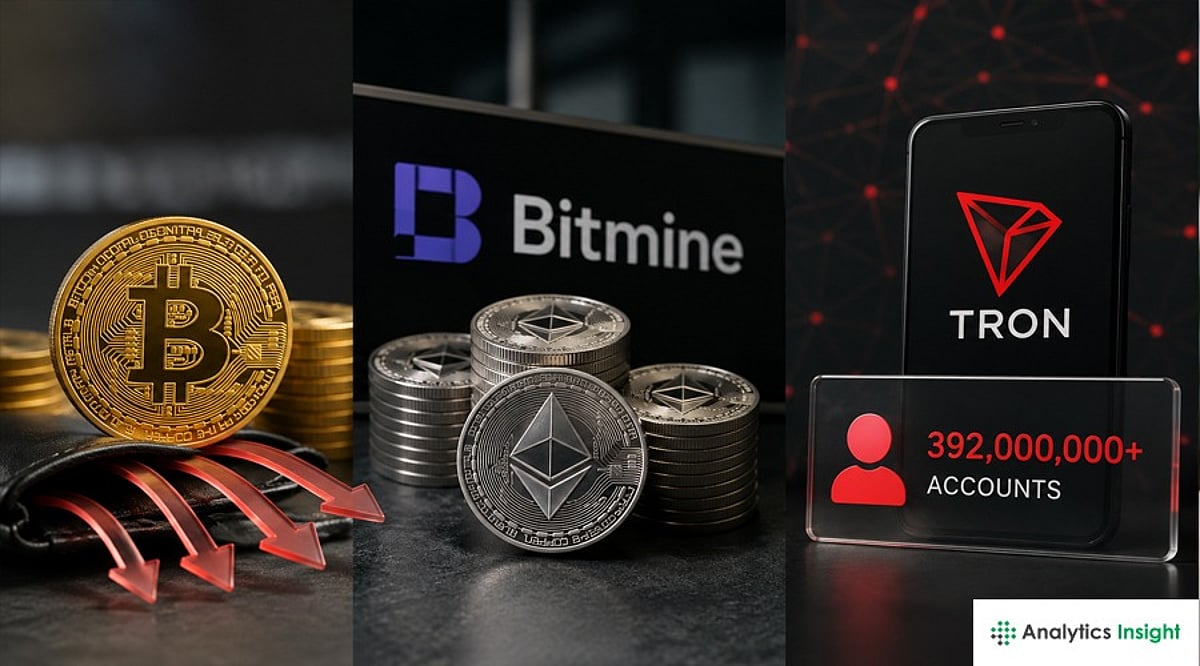
  • Bitcoin ETFs See $95M Outflows, Bitmine Adds 20,500 ETH, TRON Hits 392M Accounts — Crypto Roundup

    Bitcoin ETFs See $95M Outflows, Bitmine Adds 20,500 ETH, TRON Hits 392M Accounts — Crypto Roundup

    Market Overview

    Major developments unfolded in the crypto space as Bitcoin spot ETFs recorded $95.30 million in net outflows, Bitmine expanded its Ethereum treasury with a major acquisition, and TRON surpassed 392 million wallet addresses. Additionally, Zcash confirmed its Ironwood upgrade for late July, while New Hampshire rejected a Bitcoin-backed bond proposal.

    Bitcoin Spot ETFs See $95 Million in Net Outflows

    According to SoSoValue, Bitcoin spot ETFs experienced a total net outflow of $95.30 million on the reporting day. Fidelity’s FBTC led outflows with a daily net draw of $63.25 million, bringing its total historical net inflow to $10.15 billion. On the inflow side, VanEck’s HODL ETF recorded the highest daily net inflow at $5.36 million (cumulative $1.13 billion), followed by Morgan Stanley’s MSBT with $2.17 million ($377.14 million total). The combined net asset value of all Bitcoin spot ETFs now stands at $76.51 billion, with an ETF net asset ratio of 6.03% and historical cumulative net inflows of $51.19 billion.

    Bitmine Acquires 20,500 ETH for $36 Million

    Bitmine Immersion Technologies purchased 20,500 ETH for approximately $35.92 million via an over-the-counter transaction with Galaxy Digital, executed around July 10, 2026. The purchase price was roughly $1,752 per ETH. This acquisition pushes Bitmine’s total Ethereum treasury to about 5.7 million tokens — worth nearly $10 billion — representing an estimated 4.7%–4.8% of the entire circulating ETH supply of ~120.7 million tokens. The move signals a quiet accumulation strategy by the company.

    TRON Surpasses 392 Million Accounts

    TRON’s blockchain explorer confirmed the network has surpassed 392 million wallet addresses since inception. According to DeFiLlama, TRON remains the dominant platform for Tether (USDT) transfers due to fast settlement times and extremely low fees — processing up to 2,000 transactions per second at roughly 0.0003 TRX per transaction. Lookonchain reported that TRON’s Total Value Locked (TVL) has risen by approximately $1.95 billion since July 1, a gain of 7.8%.

    New Hampshire Rejects Bitcoin-Backed Bond Proposal

    The New Hampshire Executive Council voted down a regulatory proposal to authorize $100 million in Bitcoin-backed bonds. The initiative, pushed by the state’s Business Finance Authority (BFA) and Governor Kelly Ayotte, had passed risk assessments from Moody’s. Opposition was led by Democrat Karen Liot Hill, joined by councilors Janet Stevens and David Wheeler; officials Joseph Kenney and John Stephen voted in favor. The rejection halts the state’s attempt to introduce this financial instrument.

    Zcash Confirms Ironwood Activation on July 28

    Zcash core developer Sean Bowe announced that the Ironwood upgrade will activate at block height 3,428,143, expected around 8 am EST on July 28 — a one-week delay from the original July 21 target. The postponement came after Shielded Labs raised concerns that exchanges, mining pools, and wallet providers might need more time to prepare, particularly as many are transitioning from the legacy zcashd software to the Z3 stack (Zebra, Zaino, Zallet). Ironwood addresses an ‘infinity’ bug discovered in Zcash’s Orchard shielded pool, the network’s primary privacy-focused transaction system.

    FAQs

    • How much outflow did Bitcoin spot ETFs record? Bitcoin spot ETFs recorded total net outflows of $95.30 million. Fidelity’s FBTC saw the largest outflow at $63.25 million, while VanEck’s HODL led inflows with $5.36 million.
    • How much Ethereum did Bitmine buy? Bitmine Immersion Technologies acquired 20,500 ETH for around $35.92 million through an OTC transaction with Galaxy Digital at approximately $1,752 per ETH.
    • Why is TRON’s 392 million account milestone important? TRON crossing 392 million accounts highlights its growing user base and network activity, especially for fast, low-cost Tether transfers.
    • What happened to New Hampshire’s Bitcoin bond proposal? The New Hampshire Executive Council rejected a proposal to authorize $100 million in Bitcoin-backed bonds, halting the initiative.
    • When will Zcash activate Ironwood? Zcash plans to activate Ironwood at block height 3,428,143 on July 28, delayed one week to allow more preparation time for ecosystem participants.
  • Bitcoin Holds Near $62.9K as ETF Inflows Bolster Recovery

    Bitcoin Holds Near $62.9K as ETF Inflows Bolster Recovery

    Bitcoin traded near $62,900 on July 9, 2026, as strong spot ETF inflows helped offset geopolitical uncertainty. The cryptocurrency remained above the critical $62,000 support zone, with buyers defending the lower end of the range between $61,500 and $63,100. Despite this recovery, Bitcoin stayed well below its late-2025 all-time highs, and market participants remained cautious.

    Price Action Shows Consolidation

    Recent price movements indicate Bitcoin is in a consolidation phase, trading within a narrow band without a clear trend. Such periods often follow sharp volatility as the market seeks a fair price. Neither bulls nor bears have taken full control, keeping Bitcoin range-bound for the session.

    Key Support Levels Hold Firm

    The immediate support zone lies between $61,500 and $62,000, where buyers have consistently stepped in. Additional support sits at $60,000—a psychologically important level—and further down near $57,000. A break below $57,000 could undermine confidence and invite more selling.

    Resistance Levels Define the Path Higher

    Bitcoin faces its first major resistance between $63,000 and $64,000. A decisive move above this range would improve short-term sentiment. The next target is $68,000, where analysts expect heavier selling, followed by the $70,000 mark as a key psychological milestone.

    Technical Picture Remains Mixed

    The technical setup is balanced. Bitcoin staying above $62,000 is a positive sign, but upward momentum is lacking. Trading volumes are lower than typical bull-market levels. Experts believe a clear breakout is needed before a fresh uptrend can begin.

    Geopolitical Tensions Add Pressure

    Renewed US-Iran tensions increased uncertainty, prompting investors to reduce risk exposure. Bitcoin initially declined alongside equities before recovering some losses. Political events often create short-term volatility as capital flows to safer assets until the situation stabilizes.

    ETF Demand Provides a Tailwind

    Spot Bitcoin ETFs saw net inflows of approximately $143 million on the day, marking another session of strong institutional demand. These steady inflows suggest professional investors are building long-term positions despite near-term weakness, helping to absorb selling pressure.

    Investor Sentiment Cautious

    The overall mood remains cautious. Analysts describe the recovery as fragile, lacking strong buying momentum. Long-term holders are not making drastic moves, while short-term traders await clearer signals. Breaking above resistance levels would likely boost confidence.

    Near-Term Outlook

    The short-term outlook is neutral to slightly bearish as Bitcoin remains below key resistance. A move above $64,000 could open the door to $68,000 and potentially $70,000 if buying pressure builds. Conversely, a drop below $61,500 may lead to a retest of $60,000 or even $57,000.

    Medium-term prospects are cautiously optimistic, supported by institutional inflows. If ETF demand continues and global conditions stabilize, Bitcoin could stage a stronger rally in the months ahead.

  • XRP Price Outlook: Could the Token Climb Back to $2 in 2026?

    XRP Price Outlook: Could the Token Climb Back to $2 in 2026?

    Key Takeaways

    • XRP requires a stronger crypto market to revisit the $2 level.
    • Institutional ETF demand could be a major price catalyst.
    • Ripple’s business expansion and legal clarity support long-term confidence.

    XRP remains one of the most closely watched assets in the cryptocurrency market. After a strong rally in previous years, the token entered 2026 with lower prices as the broader market lost momentum. A return to $2 is possible, but not guaranteed. The coming months will determine whether XRP starts another significant recovery or stays near current levels.

    Current Price Situation

    As of July 2026, XRP trades around $1.30 to $1.35. The token has fallen about 26% since the start of the year and remains nearly 63% below its July 2025 peak of roughly $3.65. Despite this decline, XRP still ranks among the largest cryptocurrencies by market capitalization. Its strong community, established use case, and connection to Ripple’s payment business keep traders attentive. The current price leaves room for a major recovery if market conditions improve.

    The Broader Crypto Market Will Lead the Way

    XRP’s future value depends heavily on the overall cryptocurrency market. Historically, XRP has performed well during bullish cycles, often gaining momentum alongside Bitcoin. When Bitcoin rallies, investor confidence typically spreads across the market, creating favorable conditions for XRP. If Bitcoin sees a new rally, XRP could attract renewed buying interest. Conversely, if Bitcoin trades sideways or weakens, XRP may struggle to break above the key $2 resistance level. Market sentiment remains the most important factor.

    Institutional Demand Could Be a Game Changer

    Institutional investors are far more important in the crypto market than in previous years. A major development for XRP in 2026 is easier access through exchange-traded funds (ETFs). These products allow professional investors to gain exposure to XRP via regulated financial markets. Strong inflows into XRP ETFs could increase liquidity and attract new capital. Greater institutional participation may also reduce price swings driven by short-term retail trading. If ETF demand continues to grow, XRP could receive the support needed for another major price move.

    Regulatory Clarity Boosts Confidence

    Regulation has been one of the biggest challenges for XRP over the past several years. Legal uncertainty created hesitation among individual and institutional investors. However, that situation has improved significantly. Much of the major legal dispute surrounding Ripple has reached a resolution, giving XRP a clearer regulatory position than many other cryptocurrencies. This removes an important source of uncertainty. A stable legal environment could encourage more financial companies and large investors to consider XRP as part of their digital asset strategy.

    Ripple’s Business Growth Matters

    XRP’s success also depends on Ripple’s business expansion. Ripple continues to build payment solutions focused on faster and cheaper international money transfers. More business partnerships could increase real-world use of the XRP ecosystem. Banks, payment companies, and financial institutions remain important targets for Ripple. New agreements, higher payment volumes, and continued business expansion could strengthen confidence in XRP. Any major acquisition or technology upgrade could also improve the long-term outlook. Strong business growth often creates positive sentiment around the cryptocurrency linked to the Ripple network.

    Market Activity Offers Clues

    Trading activity often provides useful signals about future price direction. ETF flows, whale transactions, exchange balances, and blockchain data are important indicators for XRP. Large investors, often called whales, control significant amounts of XRP. Periods of whale accumulation have often preceded strong price rallies. While this does not guarantee higher prices, it remains one of the signals that many market analysts follow closely. Healthy trading volume and rising market activity could also support a stronger recovery.

    Risks Remain

    Several challenges could prevent XRP from reaching $2 during 2026. A weak crypto market would make a recovery much harder. Low demand for XRP ETFs could reduce fresh investment. Slower adoption of Ripple’s payment services may weaken long-term confidence. Profit-taking by large holders could place extra selling pressure on the market. Global economic uncertainty, higher interest rates, or lower demand for risk assets could also affect cryptocurrency prices across the board.

    Why This Matters

    This analysis outlines a realistic roadmap for XRP’s 50% recovery to the $2 milestone. For digital asset investors, XRP’s current consolidation represents a critical turning point heavily reliant on institutional capital from newly launched ETFs and post-litigation regulatory clarity.

    Can XRP Reach $2 Again?

    A rise from about $1.33 to $2 would require an increase of roughly 50%. Such a move falls within the normal price swings that XRP has shown in previous market cycles. Several market analysts continue to publish positive long-term forecasts for XRP, some even expecting prices well above $2 under favorable conditions. However, these predictions depend on stronger crypto market performance, continued institutional investment, Ripple’s business expansion, and stable economic conditions.

    For now, XRP still has a realistic chance to return to $2 during 2026. Success will depend on several important developments rather than a single event. If market confidence improves and Ripple continues to strengthen its business, XRP could regain lost ground and move closer to that important price level.

    Frequently Asked Questions

    1. Can XRP reach $2 again in 2026? Yes. Reaching $2 requires a 50% increase from current levels. This is highly achievable if broader crypto market momentum recovers and institutional interest through ETFs remains steady.
    2. What is the biggest factor behind XRP’s price? The overall direction of the crypto market, especially Bitcoin’s price action, remains the primary catalyst. General investor sentiment dictates whether XRP can break through key resistance levels.
    3. Why are XRP ETFs important? ETFs provide regulated access for institutional investors. This opens the door to massive professional capital inflows, which boosts market liquidity and helps stabilize extreme price volatility.
    4. How does Ripple affect XRP? XRP is the liquidity bridge for Ripple’s payment network. New bank partnerships and higher cross-border transaction volumes directly increase the token’s real-world utility and long-term investor confidence.
    5. What could stop XRP from reaching $2? A prolonged crypto bear market, weak ETF demand, slow enterprise adoption by financial institutions, aggressive whale profit-taking, or broader global economic downturns could easily cap price growth.

    Disclaimer: This article is for informational purposes only and does not constitute investment advice. Cryptocurrency investments are risky; always do your own research (DYOR) before making any financial decisions.