Tag: ETF

  • MEXC Expands Tokenized Stock Offerings with Nine New Ondo Trading Pairs Focused on AI Infrastructure

    MEXC Expands Tokenized Stock Offerings with Nine New Ondo Trading Pairs Focused on AI Infrastructure

    Victoria, Seychelles — MEXC, a leading zero-fee digital asset exchange, has announced the addition of nine tokenized stock and ETF trading pairs from Ondo Finance to its spot market. The listings, effective July 8, 2026, expand the range of on-chain U.S. equity exposure available to users, targeting companies involved in data centers, semiconductors, and power supply chains—key sectors driven by rising AI infrastructure demand.

    The new pairs include tokenized versions of stocks and ETFs such as Bloom Energy (BEON/USDT), Astera Labs (ALABON/USDT), Credo Technology (CRDOON/USDT), the Roundhill Memory ETF (DRAMON/USDT), Innodata (INODON/USDT), and Celestica (CLSON/USDT). Full listing times are available in MEXC’s official announcement.

    Ondo Finance specializes in bringing traditional financial assets onto blockchain networks through compliant infrastructure. Each tokenized asset is backed by the underlying security held via regulated custodial brokers. This latest batch further strengthens MEXC’s lineup of tokenized stocks, reinforcing the platform’s commitment to offering “Infinite Opportunities” for its users.

    Beyond Ondo’s products, MEXC also provides “RealStocks,” which allows users to hold actual share ownership and receive dividends. The integrated trading experience enables users to access a wide range of investment products without switching platforms.

    About MEXC
    MEXC is one of the fastest-growing cryptocurrency exchanges globally, trusted by over 40 million users across 170+ markets. It offers industry-leading zero-fee trading and access to more than 3,000 digital assets, including cryptocurrencies, tokenized stocks, ETFs, commodities, and precious metals.

    Risk Disclaimer: This content does not constitute investment advice. The cryptocurrency market is highly volatile; investors should conduct their own research before making any trading decisions.

  • Why 21Shares’ Solana ETF Filing Signals a Turning Point for Institutional Crypto Adoption

    Why 21Shares’ Solana ETF Filing Signals a Turning Point for Institutional Crypto Adoption

    21Shares, a global leader in crypto exchange-traded products managing over $11 billion in assets, has filed for a spot Solana ETF in the United States. This move follows the massive success of spot Bitcoin and Ethereum ETFs and reflects deepening institutional interest in Solana’s fast, low-cost blockchain.

    Key Takeaways

    • 21Shares manages more than $11 billion in crypto investment products and has filed for a spot Solana ETF.
    • Institutional investors value Solana for its high-speed network, low transaction fees, and expanding ecosystem.
    • A regulated ETF could make SOL accessible through traditional investment platforms, removing custodial barriers.

    Why Solana Has Captured Institutional Attention

    Solana has matured significantly, now supporting thousands of projects across decentralized finance, payments, gaming, and digital assets. Its combination of rapid transaction speeds and minimal fees has made it the third most popular blockchain network after Bitcoin and Ethereum. Developers continue to build new applications, while stablecoin activity and tokenized assets drive network growth, strengthening Solana’s credibility among financial institutions.

    Institutional Demand: Beyond Retail Hype

    Large financial firms approach crypto investments differently than retail traders. They prioritize robust technology, reliable infrastructure, and regulatory clarity. Solana now meets many of these requirements. Its substantial market capitalization—among the largest in crypto—provides the liquidity needed for large-scale trades without significant price disruption. Many institutions also view blockchain as integral to the future of finance, and Solana’s speed and low costs make it ideal for payment systems, tokenization, and digital assets.

    What a Spot ETF Means for Investors

    A spot Solana ETF would allow investors to gain exposure to SOL through standard brokerage accounts, bypassing the need to buy, store, or manage the cryptocurrency directly. This structure simplifies access for banks, pension funds, wealth managers, and other regulated entities. By eliminating private key management and direct exchange usage, an ETF removes key barriers that have historically kept large capital from entering the crypto space.

    The precedent set by spot Bitcoin ETFs—which attracted billions in capital after regulatory approval—has heightened expectations for similar products based on other major cryptocurrencies, including Solana.

    21Shares: A Proven Track Record

    21Shares is among the world’s largest providers of crypto exchange-traded products, with a portfolio spanning Europe and beyond. The company’s experience in launching regulated crypto products gives it deep insight into investor demand and market dynamics. By filing for a Solana ETF, 21Shares signals confidence in Solana’s long-term viability and further bridges the gap between traditional finance and digital assets.

    Infrastructure Supporting Growth

    Institutions evaluate entire ecosystems, not just price trends. Solana now offers institutional-grade custody services, regulated ETPs in Europe, active derivatives markets, and staking options. These elements create a more secure investment environment. While network stability remains under monitoring, recent technical improvements have bolstered institutional trust.

    Risks and Challenges

    Despite optimism, hurdles remain. Regulatory approval for new crypto ETFs depends on government timelines, which can be unpredictable. Solana also faces intense competition from other layer-one blockchains vying for developers, users, and capital. Continued technological advancement and ecosystem expansion will be essential for maintaining its position.

    What This Means for the Crypto Landscape

    The 21Shares Solana ETF filing marks a milestone beyond Bitcoin and Ethereum. By pushing for a regulated Solana product, a major asset manager validates SOL’s high-speed infrastructure and positions the blockchain as a top-tier institutional asset class. This move reflects a broader trend of traditional finance embracing digital currencies with solid technology and real-world use cases.

    The Road Ahead

    With over $11 billion in assets under management, 21Shares has become a powerhouse in crypto finance. The Solana ETF application demonstrates increasing confidence in SOL’s ecosystem and its ability to attract regulated capital. As institutional adoption accelerates, Solana’s role in the financial system is likely to expand.

    Frequently Asked Questions

    1. What is the 21Shares Solana ETF?

    It is a proposed spot investment fund that would allow both institutional and retail investors to track Solana’s market price through traditional brokerage accounts, eliminating the need to manage private keys or use crypto exchanges.

    2. Why are institutions interested in Solana?

    Large investors are attracted to Solana’s efficient blockchain, which offers ultra-fast transaction processing, low network fees, and a rapidly growing decentralized ecosystem.

    3. Why is an ETF important for Solana?

    An ETF opens the door for significant capital inflows from pension funds and wealth managers that face regulatory restrictions on direct crypto purchases. It also provides easier access through familiar investment platforms.

    4. How large is 21Shares?

    21Shares is a dominant global crypto investment firm, managing over $11 billion in assets across a wide range of regulated exchange-traded products in European and international markets.

    5. What risks still exist for Solana?

    Solana faces potential regulatory delays, ongoing network stability monitoring, and fierce competition from other layer-one blockchain platforms.

  • How Crypto Derivatives Drove $20.57 Trillion in Trading Volume in Q1 2026

    How Crypto Derivatives Drove $20.57 Trillion in Trading Volume in Q1 2026

    Despite a 22.30% drop in the combined cryptocurrency market cap from $2.96 trillion to $2.3 trillion in the first quarter of 2026, trading activity surged to a staggering $20.57 trillion. This massive capital turnover was driven not by retail spot buying but by an institutional pivot toward derivatives, which now command nearly 90% of total volume. The market has shifted from simple accumulation to complex hedging, yield strategies, and professional risk management.

    The Institutional Pivot to Complex Instruments

    Capital behavior in early 2026 confirms that sophisticated counterparties dictate price discovery. Over-the-counter data from Wintermute shows options notional trading grew 3.8x, and trade counts expanded 2.1x compared to early 2025. These metrics point to a decisive move toward systematic yield generation and structured execution rather than simple directional spot bets. Demand for capital-efficient exposure also pushed the number of CFD underlying tokens from 15 to 46 over the past year, indicating institutions are diversifying beyond major assets into broader markets.

    Operating in this environment requires highly reliable infrastructure. Large-scale execution naturally filters out venues with thin order books, forcing market makers and asset managers to operate where execution certainty is guaranteed. “As trading activity normalized in Q1, market structure became clearer: derivatives continued to lead price discovery, while liquidity consolidated on platforms able to support scale,” notes Binance Co-CEO Richard Teng. “In a lower-volume environment, Binance’s consistent leadership across both spot and perpetual markets reflects the value users place on deep liquidity and reliable execution.”

    Absorbing the ETF and Treasury Inflows

    The influx of structured capital helps explain the persistent demand for derivative instruments. According to Grayscale, spot crypto exchange-traded products have recorded net inflows of $87 billion since January 2024. As traditional funds enter the digital asset space, authorized participants and market makers must immediately hedge their massive exposures to maintain delta-neutral positions. Spot markets simply cannot support this level of sustained institutional hedging. These entities rely heavily on deep perpetual futures markets to manage risk efficiently.

    CryptoQuant data demonstrates this imbalance clearly: perpetual futures generated $3.5 trillion in monthly volume by the end of Q1, entirely surpassing the $0.8 trillion processed in spot markets. Derivatives act as the primary sponge for these massive institutional flows. Market makers facilitating ETF transactions or managing corporate treasury allocations use perpetual swaps and options to lock in pricing and minimize volatility exposure. The underlying market structure has fundamentally adapted to support traditional financial mechanics, moving the core of crypto trading permanently into the derivatives sector.

    Centralization of the $4.5 Trillion Surge

    As overall activity pulled back, liquidity became distinctly concentrated. Total centralized exchange trading volume cooled 48% from its October 2025 peak, settling at $4.3 trillion in March 2026. Rather than fragmenting during this slowdown, institutional volume clustered on the most liquid venues to minimize counterparty risks. Reporting from CoinGlass confirms this structural consolidation: Binance captured 34.9% of the Top 10 derivatives volume, processing roughly $4.90 trillion for the quarter.

    Looking specifically at the perpetual futures sector, Binance leads with $1.4 trillion in monthly volume, effectively doubling the $0.7 trillion handled by OKX. This concentration culminated in Binance recording a cumulative 2026 perpetual volume of $4.5 trillion by the end of March. This market share distribution is a direct result of institutional demand for deep, slippage-free order books. High-frequency trading systems and advanced hedging strategies break down on platforms lacking sufficient depth. Asset managers and proprietary trading firms direct capital toward venues that can consistently support large-scale derivative execution without compromising entry and exit pricing.

    The Future of Market Mechanics

    The first quarter of 2026 indicates a paradigm shift. The historical four-year cycle driven by retail spot accumulation has been replaced by steady, derivative-heavy institutional volume. As exchange-traded funds, corporate treasuries, and hedge funds become prominent market participants, their operational requirements command how the entire industry functions daily. Trading volume now favors efficiency and depth over speculative retail momentum. Strict risk protocols demand robust platforms. As the ecosystem matures, venues offering the deepest liquidity across futures, options, and spot markets will command the space regardless of underlying price action. Liquidity naturally begets liquidity. The infrastructure that successfully absorbs this institutional complexity will remain the primary engine of cryptocurrency price discovery moving forward.

  • Bitcoin ETFs See $265M Inflows, Bonk Drops 8% After Treasury Hack, and Strategy Sells $216M in BTC

    Bitcoin ETFs See $265M Inflows, Bonk Drops 8% After Treasury Hack, and Strategy Sells $216M in BTC

    Key Developments in Crypto Today

    The cryptocurrency market witnessed several major events on July 7, 2026. Bitcoin spot ETFs recorded $265.69 million in net inflows, while the memecoin Bonk plunged 8% following a $20 million treasury hack. Meanwhile, Strategy (formerly MicroStrategy) executed its largest Bitcoin sale to date, divesting 3,588 BTC for $216 million.

    Bitcoin ETF Inflows Surge

    According to SoSoValue, Bitcoin spot ETFs saw a total net inflow of $265.69 million. BlackRock’s IBIT led the charge with $209.40 million in daily inflows, bringing its historical total to $60.20 billion. Grayscale’s Bitcoin Mini Trust (BTC) followed with $42.25 million, while Grayscale’s GBTC recorded the largest outflow at $44.45 million, pushing its cumulative net outflow to $27.22 billion. The total net asset value of Bitcoin spot ETFs now stands at $77.32 billion, representing 6.04% of the Bitcoin market.

    Bonk Falls After $20 Million Treasury Exploit

    Bonk slumped on Monday after attackers drained approximately $20 million worth of the memecoin from BonkDAO’s treasury via a malicious governance proposal. The decentralized autonomous organization linked to the Solana-based cryptocurrency confirmed the breach and stated it has traced the wallets involved. BonkDAO is coordinating with major exchanges, bridges, and the Solana Foundation to recover funds, and law enforcement has been notified.

    Strategy Sells $216 Million in Bitcoin

    Bitcoin treasury firm Strategy sold 3,588 BTC between June 29 and July 5 for $216 million under its newly introduced BTC monetization program. The company stated the program is designed to support dividend payments and strengthen credit quality while maintaining long-term Bitcoin exposure. After the sale, Strategy still holds 843,775 BTC worth approximately $53.88 billion, along with $2.55 billion in USD reserves.

    Stellar Network Eyes Protocol 27 Upgrade

    Stellar validators are set to vote on the Protocol 27 upgrade, nicknamed “Zipper,” on July 8. The upgrade aims to introduce native authentication delegation, allowing one account to authorize another to act on its behalf. This change simplifies developer access and improves the account authorization system within the XLM ecosystem.

    Belgium Warns Six Crypto Platforms

    Belgium’s Financial Services and Markets Authority (FSMA) added six crypto platforms to its warning list: Aurum Foundation, Bank Bit, Bithf Pro, Dxago, Global Dynamic Trade, and ZeriaFunding. The regulator stated these firms are operating without authorization under the EU’s Markets in Crypto-Assets (MiCA) framework, which came into full effect on July 1. The warning highlights increased enforcement of the new crypto regulations across Europe.

  • XRP Price Analysis: Will the $1 Support Level Hold or Break in 2026?

    XRP Price Analysis: Will the $1 Support Level Hold or Break in 2026?

    XRP has reached one of the most pivotal points of 2026. The $1 price level has become the main area that traders and investors now watch daily. This level has historically acted as strong support, with many buyers entering around this price. After several months of volatility, XRP now sits close to this critical mark. The coming weeks could determine whether the token begins a new recovery or suffers a deeper decline.

    As of early July 2026, XRP trades just above $1 after a nearly 20% drop during June. This decline occurred despite Ripple achieving several positive milestones this year. The broader cryptocurrency market remains cautious, with many investors shifting to safer assets, reducing demand for digital currencies.

    Why the $1 Support Level Matters

    The $1 level is more than a round number. It has become a strong psychological support area because buyers have stepped in near this price multiple times before. If XRP stays above $1, confidence could gradually return, potentially pushing the price toward $1.15 and then testing the $1.20 resistance.

    However, if XRP falls below $1 and closes there for several days, more selling may follow. Many traders place stop-loss orders near this support zone. Once triggered, the price could drop quickly, with the next major support near $0.80 becoming the likely target.

    Ripple Shows Strong Business Growth

    Despite XRP’s price struggles, Ripple has made solid progress in 2026. The company expanded its payment network and continued developing new products for banks and financial institutions. Activity on the XRP Ledger has increased significantly, with daily transactions now reaching nearly three million. More businesses use the network for tokenized real-world assets, automated market maker pools, and RLUSD settlements. Tokenized assets on the blockchain now represent hundreds of millions of dollars, demonstrating that Ripple continues to build useful services even when XRP’s price performance remains weak.

    XRP ETFs Bring Institutional Money

    One of the biggest developments for XRP came with the launch of spot XRP exchange-traded funds (ETFs) in late 2025. These products have attracted around $1.48 billion in total inflows, opening the door for more institutional investors to gain exposure to XRP without directly buying the cryptocurrency. This steady flow has supported market confidence for much of the year. However, recent sessions recorded the first notable outflows after months of steady demand, indicating that large investors have also become more cautious amid recent market weakness.

    Regulation Could Shape XRP’s Future

    Government rules remain a major factor affecting XRP. Investors closely watch new cryptocurrency laws in the United States. Clear regulations could make it easier for financial companies to invest in digital assets with greater confidence. Several proposals have raised hopes for better legal clarity during 2026, but delays in new legislation have tempered market excitement. Many experts believe stronger regulatory support could attract more institutional money into XRP, though market conditions and the overall economy will still play a major role in future price movements.

    Technical Charts Show Mixed Signals

    Technical indicators suggest selling pressure has started to ease. The Relative Strength Index (RSI) has recovered from oversold levels, often meaning sellers may lose strength after a sharp decline. Trading volume has also decreased during recent price drops, which can indicate fewer traders are willing to sell at current prices. However, XRP still trades below several important moving averages, so analysts have not confirmed a long-term bullish trend.

    The first resistance area stands between $1.08 and $1.10. If buyers push above this range, XRP may move toward $1.18 and then $1.20. A stronger rally could later send the token into the $1.30 to $1.45 range. Conversely, failure to defend $1 may increase selling pressure and pull the price closer to $0.80.

    The Overall Crypto Market Still Controls XRP

    Ripple’s business growth has improved during 2026, but XRP still follows the direction of the wider cryptocurrency market. Bitcoin and other major digital assets have faced heavy pressure as investors remain cautious about global economic conditions and interest rate expectations. This cautious mood has reduced the amount of money entering cryptocurrencies. Positive news about Ripple has helped support confidence but has not been strong enough to create a lasting rally. Many market experts believe XRP needs both stronger market sentiment and continued business growth before a major recovery becomes possible. Institutional demand through ETFs has provided some support, but that alone may not push prices much higher unless the overall crypto market also turns positive.

    Why This Matters

    XRP hovering near the $1 psychological threshold represents a make-or-break crossroads for 2026. While Ripple utility expands via three million daily ledger transactions and $1.48 billion in spot ETF inflows, broader macroeconomic risk aversion threatens a breakdown toward $0.80 if this pivotal support fails.

    Final Outlook for XRP in 2026

    The rest of 2026 could become one of the most important periods for XRP. The $1 support level now stands at the center of market attention. If buyers keep control of this area, XRP could slowly recover toward $1.20 and later move into the $1.30 to $1.45 range if the broader cryptocurrency market improves. A clear break below $1 would weaken the technical outlook and may open the door for a decline toward $0.80. Ripple continues to report strong business growth, higher network activity, and rising institutional interest through XRP ETFs. These positive developments support the long-term outlook. However, short-term price movement still depends on investor confidence and the direction of the overall cryptocurrency market.

    Frequently Asked Questions

    1. Why is the $1 price mark so critical for XRP right now?

    The $1 mark is a major psychological and technical support line. Holding above it keeps a recovery toward $1.20 alive, whereas closing underneath it risks triggering mass stop-loss selling orders.

    2. How have the newly launched spot XRP ETFs impacted the market?

    Spot ETFs have pulled in $1.48 billion in net inflows since late 2025. These investment funds provide solid underlying structural demand by giving large institutional investors direct exposure to XRP.

    3. Is Ripple’s real-world business adoption actually expanding?

    Yes. Independent of price, the XRP Ledger averages nearly three million daily transactions. This operational growth is driven by automated market maker pools, tokenized real-world assets, and RLUSD stablecoin settlements.

    4. What happens from a technical standpoint if the $1 support level breaks?

    Consecutive daily closes below $1 would invalidate the current market structure. This technical failure would give short-sellers total control, likely exposing the cryptocurrency to a deeper correction toward $0.80.

    5. What macro factors are keeping XRP from staging a major breakout?

    XRP remains tied to the broader crypto market. Digital assets face persistent selling pressure amid global economic uncertainty, and cautious interest rate expectations have reduced capital flowing into riskier assets.

  • Bitcoin Surges Past $62,000 as ETF Inflows Return and US Crypto Bill Gains Traction

    Bitcoin Surges Past $62,000 as ETF Inflows Return and US Crypto Bill Gains Traction

    Bitcoin rebounded above $62,000 in early July after a challenging June marked by record outflows from US spot Bitcoin ETFs. Renewed weekly net inflows of $526.64 million, growing attention to proposed US crypto legislation, and continued institutional interest have shifted focus to Bitcoin’s next market direction.

    Bitcoin Recovers After a Difficult June for ETFs

    Bitcoin ended June near a two-year low, falling to roughly $58,000. Market data revealed that US spot Bitcoin ETFs experienced approximately $8.9 billion in net outflows since early May, including about $4.51 billion in June alone — the weakest month for the ETF category since its launch.

    Santiment reported that retail investors increased small Bitcoin holdings during the second half of June, while larger holders reduced exposure. The analytics firm noted that large investors remained cautious, waiting for stronger signs that the market had reached a bottom.

    The report also highlighted a shift in capital toward AI and semiconductor stocks during June. According to Santiment, those sectors attracted investment that previously flowed into cryptocurrencies, reducing institutional demand for Bitcoin. HashKey researcher Tim Sun commented, “capital was reallocating across risk assets rather than that investors were losing their appetite for risk altogether.” He added that Bitcoin could attract that capital again if the AI sector slows.

    Fresh ETF Inflows and US Legislation Support Market Sentiment

    Market conditions improved during the first week of July as US spot Bitcoin ETFs posted $526.64 million in weekly net inflows despite ongoing uncertainty. This followed one of the largest monthly withdrawal periods on record for the ETF market.

    The positive inflow indicated that some institutional investors continued allocating capital to regulated Bitcoin products even after June’s decline. Analysts emphasize that ETF flow data remains a key metric because spot ETFs purchase actual Bitcoin rather than futures contracts.

    Bitcoin traded above $62,000 as investors tracked developments surrounding the proposed CLARITY Act in the United States. Prediction market data showed rising expectations that the legislation could advance before Congress begins its August recess. The bill has support from over 200 crypto companies, including Coinbase, Ripple, and Kraken. Supporters believe clearer regulations could encourage broader participation in digital asset markets, although lawmakers have not yet approved the legislation.

    Strategy, Blockchain Security, and Market Focus Remain in View

    Strategy (formerly MicroStrategy) also remained in the spotlight after Executive Chairman Michael Saylor introduced a Digital Credit Capital Framework designed to strengthen liquidity and support the company’s preferred stock obligations. Saylor also addressed concerns about Strategy’s Bitcoin position, stating that “the company had bought about 175,000 BTC this year” and adding that “he had not sold any of his personal stash.” Strategy currently holds more than 818,000 BTC, making it the world’s largest corporate Bitcoin holder.

    Meanwhile, blockchain security returned to focus after researchers disclosed that they identified and fixed a critical vulnerability on the Aptos blockchain before attackers could exploit it. Security firm Hexens said the issue could have affected infrastructure supporting as much as $70 billion in digital assets, although no funds were lost.

    Elsewhere, blockchain analytics firm Nansen estimated that holders of the TRUMP memecoin have accumulated about $3.8 billion in combined losses after the token declined sharply from its peak. As July progresses, traders continue to monitor ETF flows, regulatory developments, institutional activity, and broader market conditions for signs of Bitcoin’s next direction.

  • Crypto Market Recap: Bitcoin ETF Inflows Surge, Ethereum Funds Gain, Polygon Hits Record Transactions

    Crypto Market Recap: Bitcoin ETF Inflows Surge, Ethereum Funds Gain, Polygon Hits Record Transactions

    The cryptocurrency market witnessed significant activity as Bitcoin spot ETFs recorded $221.72 million in net inflows, Ethereum spot ETFs added $29.08 million, and Polygon reached a historic milestone of 743 million transactions in Q2 2026. Meanwhile, eToro led a $12.5 million funding round for Extended, and Stripe’s Bridge secured key European licenses.

    Bitcoin ETFs See $221 Million Inflow

    According to SoSoValue, Bitcoin spot ETFs saw a total net inflow of $221.72 million on the latest trading day. Fidelity’s FBTC led with $165.96 million in daily inflows, bringing its historical total to $10.24 billion. Ark Invest and 21Shares’ ARKB followed with $91.84 million, accumulating $1.26 billion historically. BlackRock’s IBIT experienced the largest outflow at $40.43 million, yet its historical net inflow remains strong at $59.99 billion. The total net asset value of Bitcoin spot ETFs now stands at $74.37 billion, with a net asset ratio of 6.02% and cumulative inflows reaching $51.08 billion.

    Polygon Achieves All-Time High in Transactions

    Polygon’s Q2 2026 closed with a record-breaking 743 million transactions on its network. In May 2026 alone, the network processed $79.25 billion in stablecoin transfer volume, ranking first across the blockchain ecosystem for stable asset transactions, surpassing Solana and BNB Chain. Despite this activity, POL trades near $0.073, far below its all-time high of $1.29 from March 2024.

    Ethereum Spot ETFs Add $29 Million

    Ethereum spot ETFs recorded total net inflows of $29.08 million yesterday. BlackRock’s ETHA led with $29.74 million in single-day inflows, while VanEck’s ETHV added $1.24 million, bringing its historical total to $165 million. Grayscale’s ETHE saw outflows of $2.75 million. The total net asset value of Ethereum spot ETFs is $9.02 billion, with a 4.38% net asset ratio and cumulative historical inflows of $10.89 billion.

    eToro Leads $12.5 Million Strategic Round in Extended

    Trading platform eToro led a $12.5 million strategic investment in Extended, an on-chain perpetual futures exchange. The investment is tied to a partnership with Zengo, a self-custody wallet eToro acquired earlier this year. eToro stated the partnership will “expand access to global financial markets through next-generation on-chain infrastructure” and explore bridging traditional assets with decentralized trading. Jump Crypto also participated in the round.

    Stripe’s Bridge Secures MiCA and EMI Licenses

    Bridge obtained both a Markets in Crypto-Assets (MiCA) authorization and an Electronic Money Institution (EMI) license in Luxembourg, enabling regulated services across all 27 EU member states. The licenses cover capital reserves, custody, and operational safeguards. Bridge can now offer custom euro-backed stablecoins, virtual IBANs, and euro accounts without requiring separate banking relationships in each country.

  • Solana and Hyperliquid ETF Inflows Surge as XRP Funds Face Steady Outflows

    Solana and Hyperliquid ETF Inflows Surge as XRP Funds Face Steady Outflows

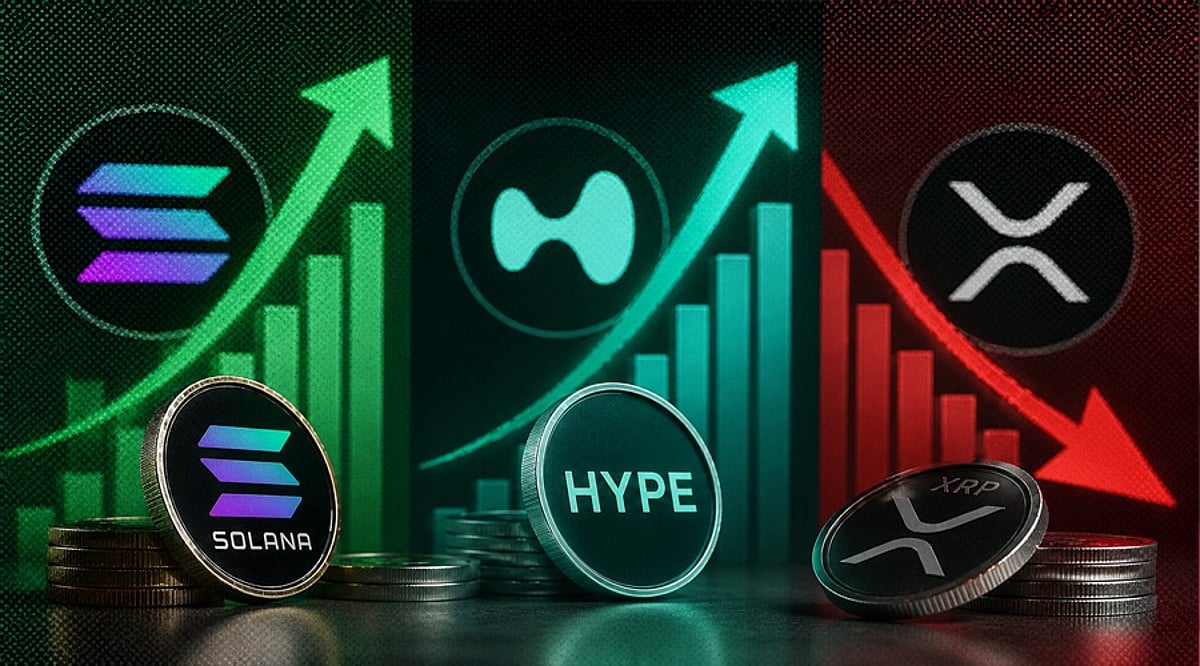
    Spot cryptocurrency ETFs tied to Solana and Hyperliquid saw fresh capital inflows on July 1, while XRP funds recorded withdrawals amid selective demand across digital asset markets. Data from SoSoValue shows Solana spot ETFs posted approximately $500,000 in net inflows, while Hyperliquid funds gained $2.9 million. In contrast, XRP spot ETFs registered $1.86 million in net outflows.

    The divergent flows highlight that investors continue to direct capital toward specific assets rather than the broader crypto market. Daily ETF flows often reflect shifting demand, portfolio rebalancing, profit-taking, or reduced risk appetite.

    Solana Price Recovery Attracts Renewed Interest

    Solana traded above $78 on Thursday, gaining nearly 10% over the week. Stronger derivatives data, modest fund demand, and improving technical momentum supported the recovery. CoinGlass data shows Solana’s long-to-short ratio at 1.11, its highest level in more than a month. A ratio above one indicates bullish positions outnumber bearish positions.

    Solana’s funding rate also turned positive, reaching 0.0017% on Thursday. Positive funding means long traders pay short traders, signaling stronger demand for upward price exposure.

    According to SoSoValue, Solana spot ETFs attracted $521,070 on Wednesday, contributing to a cumulative $3.55 million in net inflows through Wednesday. While the flow remains modest, it aligns with improving market indicators. Further inflows could support price demand if the trend continues and strengthens.

    Hyperliquid Gains While XRP Funds Experience Capital Losses

    Hyperliquid spot ETFs recorded $2.9 million in net inflows on July 1, surpassing Solana’s daily total. The protocol has gained attention among traders using on-chain derivatives. Meanwhile, XRP spot ETFs moved in the opposite direction, posting $1.86 million in withdrawals. The outflows reflect weaker daily demand compared with Solana and Hyperliquid products.

    XRP remains linked to ongoing legal proceedings between Ripple Labs and the U.S. Securities and Exchange Commission, and the uncertainty has contributed to cautious investor sentiment. At the same time, the Solana Foundation introduced Solana Governance Proposals, establishing an on-chain process for major network decisions. Validators can submit, support, and vote on broad governance questions.

    The framework limits proposals to high-level network direction rather than detailed technical changes. Validators use the svmgov program to conduct stake-weighted voting. A validator vote account must hold at least 100,000 SOL in delegated stake before placing a proposal on-chain. The proposal then requires support from 15% of active stakeholders. Validators prove voting weight through Merkle proofs linked to an on-chain stake snapshot. The process gives validators a formal avenue to shape major questions about Solana’s future direction.

    What’s Next for Crypto ETFs?

    Solana and Hyperliquid ETFs attracted fresh capital, while XRP funds recorded notable withdrawals. Solana also gained support from improved derivatives data, price recovery, and new validator governance measures. Investors should monitor ETF flows, market positioning, and network developments for clearer signals about future demand.

  • XRP Defends $1 Support as ETF Inflows and Network Activity Surge

    XRP Defends $1 Support as ETF Inflows and Network Activity Surge

    XRP remained near $1 after losing 1.05% during the latest session, while lower leverage and stronger network activity helped buyers defend support. The token fell from $1.0476 to $1.0366, then recovered after testing levels near $1.02. Traders now focus on whether the $1 base can support a move toward $1.08-$1.10.

    Leverage Reset Changes XRP’s Short-Term Setup

    Open interest dropped from a $1.3 billion peak to below $150 million, removing much of the leveraged positioning created during earlier rallies. Funding rates also turned negative as traders reduced long exposure. At the same time, long liquidations surged 832% above their three-month average. One candle cleared $6.7 million from leveraged positions, showing the scale of the recent market reset. Even so, XRP continued to hold above the $1 psychological level. The token traded between $1.0201 and $1.0476, while buyers repeatedly responded near the lower end of that range.

    Network Activity and RLUSD Trading Expand

    XRP Ledger activity improved during the second half of June. Daily active addresses rose from about 23,000 on June 14 to nearly 39,500 by June 27, marking a 72% increase. Meanwhile, Ripple-backed Evernorth said RLUSD has become a growth engine for XRP Ledger activity rather than a replacement for XRP. Its June 30 report ranked RLUSD among the ledger’s most-traded issued assets. RLUSD’s share of on-chain trading increased from below 1% to about 12% during 2026. The RLUSD/XRP pair also recorded about $900 million in trading volume over six months. Since launch, more than $2.5 billion has traded through RLUSD pairs on the XRP Ledger. The growth developed alongside rising address activity and continued demand for XRP-linked investment products.

    ETF Inflows Rise as Traders Watch Key Levels

    XRP spot ETFs recorded $15.34 million in inflows on June 29. The inflows extended institutional demand even as broader crypto sentiment remained weak. Selling pressure broke support near $1.0350 during the June 30 session before XRP tested $1.0249 and stabilized. Buyers then returned near the lows as trading volume increased sharply. Volume reached 92.73 million XRP at 01:00 UTC, about 134% above the 24-hour average. A later rebound lifted XRP from $1.024 to $1.038. During that rebound, volume rose to 3.88 million XRP as the price moved above resistance near $1.032. The next immediate barrier remains near $1.0460.

    XRP still trades below its major moving averages. The 20-day EMA stands near $1.11, followed by the 50-day near $1.20 and the 100-day near $1.31. The 200-day moving average remains near $1.52. Meanwhile, the 14-day RSI recovered to about 33, although momentum still sits below neutral levels. Bollinger Bands narrowed after June’s selloff, pointing to lower volatility. XRP still needs to reclaim the middle band near $1.12 before the technical structure improves. Immediate support sits between $1.0250 and $1.0350. A daily close below $1 would bring the $0.90-$0.85 area back into focus, while a break above $1.10 would strengthen recovery prospects.

    What’s Next?

    XRP continues to defend the $1 support level as leverage declines, network activity expands, and ETF inflows remain positive. However, the token must reclaim $1.08 to $1.10 to confirm stronger momentum. Traders should monitor the $1 floor closely since a sustained break could expose lower support zones.

  • What XRP Holders Can Expect from a Ripple IPO: No Direct Payouts, But Major Upside Potential

    What XRP Holders Can Expect from a Ripple IPO: No Direct Payouts, But Major Upside Potential

    Key Takeaways

    • XRP holders will not automatically receive Ripple company shares after an IPO.
    • Ripple’s valuation has climbed close to $50 billion, increasing IPO speculation.
    • XRP price could rise sharply if institutional demand grows after listing.

    For years, Ripple Labs has remained one of the biggest private companies in the cryptocurrency industry. Now, fresh market developments have once again pushed speculation around a possible Ripple IPO into the spotlight. Investors across the crypto market have started asking one major question: if Ripple goes public, what could XRP holders actually receive?

    The simple answer is that XRP holders will most likely not receive direct payments or company shares. However, recent developments show that a Ripple IPO could still create major financial opportunities for those holding XRP.

    Ripple IPO Rumors Have Become Stronger

    Talk about Ripple entering the stock market has grown much stronger in recent months. Ripple has stayed private for years, but new financial data has made analysts believe that a public listing may happen sooner than expected.

    Recent private market transactions show Ripple shares trading near $136.90 per share. This has pushed Ripple’s estimated company valuation close to $50 billion, which marks roughly 376% growth in private valuation over a relatively short period.

    This huge rise in valuation has made Ripple one of the most valuable private companies in the digital asset sector. Many analysts now believe that 2026 has become the strongest possible timeline for a public listing.

    Strong Company Performance Supports IPO Expectations

    Reports show that the company recently completed a $750 million share buyback program. A buyback usually signals strong confidence from company leadership and often shows that the business has enough capital available internally.

    At the same time, major financial institutions have started showing interest in a future Ripple listing. Japanese financial giant SBI Holdings, one of Ripple’s long-time partners, has reportedly shown interest in investing somewhere between $626 million and $1.25 billion once Ripple eventually enters public markets.

    XRP Holders Do Not Own Ripple Shares

    One of the biggest misunderstandings in crypto markets comes from the belief that owning XRP means partial ownership in Ripple Labs. Ripple Labs and XRP operate as two different things. Ripple is a private technology company that focuses on payment infrastructure, blockchain solutions, custody services, and financial settlement systems. XRP is a digital asset that runs independently on the XRP Ledger. If Ripple launches an IPO, XRP holders will not automatically receive company stock, ownership rights, or direct payouts from the money raised through the listing.

    XRP Could Still Benefit After an IPO

    Even though XRP holders would not receive direct company shares, the token could still benefit in a major way. History shows that whenever large crypto companies enter public markets, investor confidence usually rises across related assets. If Ripple becomes a publicly traded company, institutions may start paying much closer attention to the entire Ripple ecosystem.

    At the moment, XRP trades between $1.04 and $1.15, far below its previous July 2025 peak near $3.65. Despite lower prices compared to previous highs, XRP’s overall market position has become stronger over the past year.

    Major XRP Ecosystem Growth Continues

    The XRP ecosystem has expanded significantly during the past year, which adds more strength to the long-term story. In March 2026, U.S. regulators officially recognized XRP as a commodity, which removed a major regulatory concern that had affected the asset for years.

    At the same time, the United States now has seven spot XRP ETFs actively trading, something that has helped attract institutional capital. Since launch, these XRP ETFs have already brought in nearly $1.43 billion in cumulative inflows, which shows growing demand from larger investors.

    Ripple has also expanded its stablecoin project called RLUSD, which recently crossed $1.5 billion in market capitalization. On top of that, RippleNet now connects more than 300 financial institutions worldwide, which continues to strengthen Ripple’s role in global payments.

    What Could XRP Holders Actually Receive?

    If Ripple launches its IPO, shareholders of Ripple Labs could benefit directly since they own part of the company. XRP holders will not receive direct payouts as XRP ownership does not equal company ownership. A successful public listing could increase media attention, attract institutional capital, improve market confidence, and create fresh buying pressure around XRP itself.

    Several market analysts currently estimate medium-term XRP price targets between $3 and $8, depending on ETF demand, broader market conditions, and future adoption.

    Why This Matters

    Ripple’s $50B IPO clarifies that token holders don’t own corporate equity, but it brings massive Wall Street validation. Transitioning to a public entity boosts institutional trust, potentially driving widespread commercial utility and price appreciation across the XRP ecosystem.

    Final Outlook

    No evidence suggests that Ripple will directly distribute company shares or cash payouts to XRP investors once the IPO happens. If Ripple successfully enters public markets with a valuation between $50 billion and $60 billion, confidence around the entire ecosystem could rise sharply. Instead of direct cash payouts or free company stock, the biggest benefit may simply come from a strong rise in XRP value after one of crypto’s most highly anticipated public listings.

    FAQs

    1. Will XRP holders receive free Ripple shares after the IPO? No. XRP is an independent digital asset, and owning it does not grant corporate stock, equity rights, or direct cash payouts from Ripple Labs’ public listing.
    2. What is Ripple’s current estimated valuation? Driven by recent private market transactions and a $750 million share buyback program, Ripple Labs’ private market valuation is currently estimated close to $50 billion.
    3. Can XRP price rise if Ripple goes public? Yes. A successful public listing could dramatically boost media visibility, improve investor confidence, and attract substantial new institutional capital, which may drive up XRP’s price.
    4. How many XRP ETFs currently trade in the U.S.? There are currently seven spot XRP exchange-traded funds actively trading in the U.S. market, which have brought in nearly $1.43 billion in cumulative inflows.
    5. What is the biggest benefit for XRP holders from an IPO? The biggest benefit is indirect long-term asset appreciation and increased commercial adoption, rather than direct payouts or free stock distributions.