

Tag: ETF

  • Dogecoin 2026: ETF Adoption and Payment Expansion Could Determine DOGE’s Next Move

    Dogecoin 2026: ETF Adoption and Payment Expansion Could Determine DOGE’s Next Move

    Dogecoin (DOGE) is trading near $0.075 in late June 2026, despite the introduction of two U.S. spot exchange-traded funds (ETFs), clearer regulatory classification, and a growing payment infrastructure. Price forecasts range from $0.05 to $1 as investors weigh whether institutional access and real-world usage can generate sustained demand for the meme coin.

    ETF Growth Fails to Shift DOGE Demand

    DOGE holds a market capitalization of approximately $14.6 billion and has been trading within a tight range of $0.074 to $0.076. Resistance remains near $0.078 after an eight-month downturn in the altcoin market. The REX-Osprey DOJE fund launched in September 2025, while 21Shares listed TDOG on the Nasdaq in January 2026. TDOG maintains Dogecoin reserves on a one-to-one basis.

    Dogecoin also benefits from a formal commodity classification from the U.S. Securities and Exchange Commission (SEC). This status reduces the securities-law uncertainty that previously affected several digital assets.

    21Shares introduced the leveraged TXXD product in 2025, creating a wider regulated trading market around DOGE. Still, cumulative ETF inflows remain modest relative to Dogecoin’s market value. Spot DOGE funds recently recorded their longest positive inflow streak since launch—three consecutive weeks of gains—but the data has not yet signaled a major shift in institutional appetite.

    Annual Issuance Shapes the Price Prediction

    Dogecoin adds approximately five billion tokens each year through its fixed block reward. Unlike Bitcoin, DOGE has no hard supply cap, so new demand must absorb continuing issuance. This structure means flat demand creates gradual price pressure. ETF purchases must cover both new supply and existing selling before they materially alter the token’s demand curve.

    The base Dogecoin price prediction places DOGE near $0.15 if ETF inflows grow and the wider altcoin market recovers—roughly doubling its late-June price. The bull scenario targets $1 during a broad memecoin revival, requiring a strong risk-on market, sustained ETF demand, and continued institutional participation.

    By contrast, the bear scenario points to $0.05 if inflows remain limited and risk appetite stays weak. Market conditions remain challenging, with 84% of Binance-listed altcoins trading below their 200-day averages.

    Payment Expansion Adds a Longer-Term Use Case

    House of Doge has expanded payment infrastructure during 2026 through partnerships with merchant and consumer-finance providers. The initiative aims to move DOGE beyond brokerage accounts and speculative trading.

    House of Doge and MoonPay announced a merchant-payments partnership in June 2026. Earlier integration work targeted financial applications that could route Dogecoin through established consumer platforms.

    Dogecoin processes blocks in about 10 to 15 seconds, and transaction fees remain low. These features support everyday payments, although faster and cheaper alternatives already operate across the market.

    Merchant usage would need to absorb a meaningful share of the five billion new DOGE entering circulation each year. Current adoption has not yet reached that scale. ETF flows provide the clearest near-term measure of institutional demand, while payment activity remains an early adoption channel that requires broader participation from merchants and consumers.

    What’s Next?

    Dogecoin’s 2026 outlook depends on whether ETF inflows and payment adoption can outpace ongoing supply growth. The base case favors a move toward $0.15, while stronger demand could support higher targets. Investors should closely track fund flows, market sentiment, and real-world usage before assessing DOGE’s next major move.

  • Solana (SOL) Bounces Off $60 Support: Oversold Signals and ETF Hopes Fuel Breakout Prospects

    Solana (SOL) Bounces Off $60 Support: Oversold Signals and ETF Hopes Fuel Breakout Prospects

    Solana’s native token, SOL, has staged a notable recovery after dipping near the critical $60 support level during a broad market correction. Strong buying pressure at this zone halted further declines, reigniting trader confidence and speculation about a potential breakout.

    At press time, SOL is trading around $66–$68, having touched lows close to $61 during the recent sell-off driven by Bitcoin’s brief drop near $60,000. Despite the broader weakness, Solana held one of its strongest support levels, signaling resilient demand.

    Technical Indicators Point to Oversold Reversal

    The Relative Strength Index (RSI) recently entered oversold territory, a historical precursor to short-term rebounds for SOL. Past data shows that similar oversold readings often preceded swift recoveries, and the bounce from $60 reinforces this pattern. Analysts now watch whether this rebound matures into a sustained uptrend or fades as a dead cat bounce.

    Correction Erased Earlier Gains, but Network Fundamentals Remain Strong

    Earlier this year, SOL traded above $90 before losing nearly 25% due to weak market sentiment, global economic uncertainty, and Bitcoin’s decline. However, the defense of $60 demonstrated strong buying interest at lower levels. Meanwhile, Solana’s blockchain continues to thrive: the network processed 25.3 billion transactions in Q1 2026, active addresses are near record highs, and stablecoin usage is rising. This divergence between price weakness and on-chain strength underpins long-term optimism.

    ETF Speculation and Rising Volume Lift Sentiment

    Renewed discussions around a potential spot Solana ETF have improved market sentiment. Although no official approval has been granted, the prospect of institutional inflows keeps traders hopeful. Additionally, 24-hour trading volume has surged past $3.8 billion, indicating renewed participation after panic selling subsided.

    Key Resistance at $70 in Focus

    Traders now eye the $70 resistance level. A decisive break above could trigger buying toward the $78–$80 range, where SOL traded before the correction. Failure to clear $70 might lead to a retest of $60. The coming sessions will be critical in determining the token’s short-term direction.

    Network Upgrade and Long-Term Outlook

    Solana’s development team continues advancing the Alpenglow upgrade, which aims to reduce transaction finality to ~150 milliseconds and boost validator performance. This technical improvement could strengthen Solana’s position in DeFi, gaming, and asset tokenization, adding to the positive long-term narrative.

    For now, SOL stands at a crossroads. Oversold signals, robust network activity, rising volume, and ETF hopes have revived breakout hopes, but the market awaits confirmation above $70 to validate a sustained recovery.

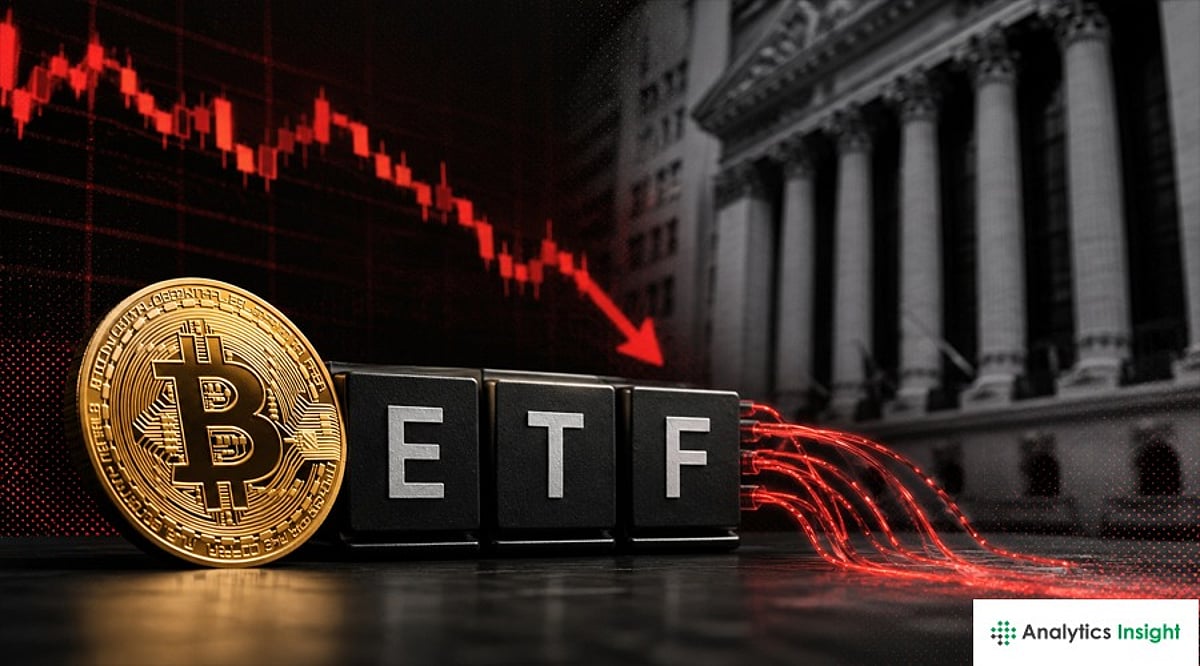
  • Bitcoin ETF Assets Drop Below $73 Billion as BTC Falls Under $60,000 – June Outflows Hit $3.61 Billion

    Bitcoin ETF Assets Drop Below $73 Billion as BTC Falls Under $60,000 – June Outflows Hit $3.61 Billion

    US-listed spot Bitcoin exchange-traded funds recorded $696.3 million in net outflows on June 25 as Bitcoin slipped below the $60,000 mark. This marked the largest single-day withdrawal in June and extended the funds’ losing streak to six consecutive trading days.

    The latest outflow pushed June total withdrawals to $3.61 billion and brought year-to-date net outflows to approximately $4.6 billion. The data signals weakening demand from institutional investors as Bitcoin trades near its lowest level of 2026.

    ETF activity has become a key focus for market participants. These products previously provided steady buying pressure, but persistent redemptions are now returning coins to the market while investors reassess risk across cryptocurrencies and high-growth tech assets globally.

    Bitcoin ETF Withdrawals Accelerate in June

    The June 25 outflow surpassed the previous monthly high of $519.2 million recorded on June 2. Second-quarter net withdrawals now stand at roughly $4.07 billion, despite the funds attracting nearly $1.97 billion in April.

    Investors withdrew about $2.43 billion in May and another $3.61 billion in June, bringing the combined two-month total to approximately $6.04 billion. Spot Ether ETFs also posted about $81.87 million in outflows on the same day.

    BlackRock’s iShares Bitcoin Trust led second-quarter losses with roughly $2.01 billion in net outflows. The fund saw around $4.02 billion in withdrawals across May and June, reducing its net assets to about $44.43 billion. Fidelity’s Bitcoin fund recorded approximately $889 million in second-quarter withdrawals.

    ETF Assets Fall as Bitcoin Tests Lower Prices

    Total assets held by US spot Bitcoin ETFs dropped to about $72.6 billion, the lowest level since late 2024 and a decline of nearly 57% from the October 2025 peak of $169.5 billion.

    The drop coincided with Bitcoin losing roughly half its value from its October high. The cryptocurrency touched a 2026 low near $58,190 on Thursday before recovering toward $60,000.

    Separate wallet data shows the ETFs hold about 1.24 million BTC, with roughly 63,500 BTC leaving the products over the past 30 days. This has raised fresh questions about short-term institutional demand. Traders are watching whether daily ETF withdrawals slow near the $60,000 level and monitoring trading volume, derivatives funding rates, and open interest for signs of additional selling pressure.

    Strategy Slows Purchases as Funding Questions Grow

    Strategy bought about 3,600 BTC in June, down sharply from nearly 25,000 BTC in May and more than 50,000 BTC in April. Company filings also showed a net sale of 32 BTC earlier in the month, an unusual move during its long accumulation campaign.

    The company’s STRC preferred stock closed at $75.69 on Thursday, down 6.37% and well below its intended $100 benchmark. Some analysts have questioned whether Strategy should pause Bitcoin purchases and rebuild cash while market prices remain under pressure.

    CryptoQuant analysts expressed doubts about the company’s buying schedule and risk controls. Bitcoin supporter Samson Mow offered a different perspective, noting that STRC has a “self-repairing mechanism” when it trades below $100. He said Strategy can stop issuing new shares through its at-the-market program, which limits added supply.

    Bitcoin’s near-term direction may depend on whether ETF flows stabilize. Investors are also watching large technology shares, as stronger demand for artificial intelligence stocks has drawn capital away from other assets.