Tag: Ethereum

  • Ethereum’s Modular Architecture and Major Upgrades Pave the Way for Global Blockchain Adoption

    Ethereum’s Modular Architecture and Major Upgrades Pave the Way for Global Blockchain Adoption

    Key Takeaways

    • Ethereum transaction fees have dropped from over $2 to under $0.02 after major network upgrades.
    • More than 95% of Ethereum ecosystem transactions now move through fast and cheap Layer-2 networks.
    • Ethereum currently secures over $99 billion in Total Value Locked, showing strong institutional confidence.

    Ethereum has reached a pivotal stage in its evolution. For years, blockchain technology struggled with slow speeds, high transaction costs, and limited scalability—barriers that prevented mass adoption. Today, a redesigned architecture addresses these challenges head-on, positioning Ethereum as the backbone of a new digital economy.

    This transformation signals that Ethereum is no longer just a cryptocurrency network. It is becoming a robust digital infrastructure capable of supporting finance, enterprise systems, digital ownership, artificial intelligence, and next-generation internet applications. Experts believe this shift marks the beginning of widespread global blockchain adoption.

    A New Structure Changes Everything

    Ethereum’s most significant change is its move to a modular blockchain design. Previously, the main network handled every transaction, smart contract, and security process, leading to congestion and high fees during peak periods. The new architecture separates these tasks into distinct layers.

    The main Ethereum chain now focuses on security and final settlement, while Layer-2 networks handle the bulk of transaction activity. This division allows Ethereum to process far more activity without straining the main chain.

    Dencun Upgrade Brings Huge Fee Reduction

    The Dencun upgrade in 2024 introduced EIP-4844, which added blob transactions—a form of cheaper temporary data storage for Layer-2 networks. The impact was immediate: transaction fees across Ethereum scaling networks dropped by more than 90%. Average mainnet fees fell from over $2 to under $0.02, while Layer-2 fees dropped to roughly $0.0015 per transaction. This cost reduction removed one of blockchain’s biggest barriers to everyday use.

    Pectra Upgrade Improves Network Efficiency

    The Pectra upgrade, launched in May 2025, brought 11 technical improvements focusing on staking, wallet usability, and network performance. A key change raised the maximum staking limit per validator from 32 ETH to 2,048 ETH, allowing infrastructure providers to operate more efficiently and reduce network pressure. By mid-2026, Ethereum boasted over 920,000 active validators, making it one of the largest proof-of-stake networks in the world and strengthening security and trust.

    Layer-2 Networks Become the Main Engine

    Ethereum has fully embraced a rollup-centric ecosystem. Today, more than 95% of all Ethereum ecosystem transactions occur on Layer-2 networks, which offer faster, cheaper processing while relying on the main chain for security. This model solves the scalability trilemma—balancing decentralization, security, and speed—that long plagued blockchain systems.

    Future Upgrades Push Ethereum Further

    Developers are already working on future upgrades like Full Danksharding, which will massively expand data capacity for Layer-2 networks, potentially enabling tens of thousands of transactions per second. Another innovation, Verkle Trees, will reduce storage requirements for validators by nearly 57%, making node operation cheaper and more accessible while improving decentralization.

    Institutions Show Strong Confidence

    Ethereum’s growing strength has attracted significant institutional interest. The network now secures more than $99 billion in Total Value Locked across decentralized finance applications. Stablecoins, tokenized real-world assets, and enterprise blockchain systems increasingly depend on Ethereum’s security and its vast global developer community.

    Ethereum Expands Beyond Finance

    Ethereum’s role extends beyond finance. Developers are building blockchain-based artificial intelligence systems, including ERC-8004 AI agents. This standard allows autonomous AI systems to operate directly on Ethereum, making transactions and verifying identity without human intervention.

    Why This Matters

    This architectural shift transforms Ethereum from an expensive, slow cryptocurrency network into a viable global computing infrastructure. By cutting transaction costs over 90% and incorporating autonomous AI standards, Ethereum solves the scalability trilemma and lays the groundwork for mainstream enterprise and retail adoption.

    The Future of Blockchain Begins Here

    Blockchain technology faced adoption hurdles for years. Ethereum’s new architecture directly addresses these challenges with a smarter, more flexible design. Faster transactions, near-zero fees, improved validator efficiency, and support for emerging technologies have completely changed Ethereum’s position in the tech landscape.

    Written by Pardeep Sharma

  • Bitcoin ETFs See $696M Outflow, Metaplanet Hits 52-Week Low, and AAVE Surges 5%: Crypto News Roundup

    Bitcoin ETFs See $696M Outflow, Metaplanet Hits 52-Week Low, and AAVE Surges 5%: Crypto News Roundup

    The crypto market saw major developments on June 26 as Bitcoin spot ETFs recorded a heavy outflow of $696.29 million, while Bitcoin treasury firm Metaplanet’s stock fell to a new 52-week low. Meanwhile, Ethereum activity stayed strong as Sharplink and BitMine added to ETH exposure, and AAVE outperformed the broader market, gaining over 5%.

    Bitcoin Records $696 Million in Outflows

    According to SoSoValue, Bitcoin spot ETFs saw a total net outflow of $696.29 million yesterday. The Bitcoin spot ETF with the highest net inflow was Morgan Stanley’s ETF MSBT, with a daily net inflow of $9.17 million, bringing its total historical net inflow to $326.93 million. The Bitcoin spot ETF with the highest net outflow was Fidelity’s ETF FBTC, with a daily net outflow of $274.48 million, and its total historical net inflow stands at $10.14 billion. The total net asset value of Bitcoin spot ETFs is $72.57 billion, with an ETF net asset ratio of 6.09%. The historical cumulative net inflow has reached $52.05 billion.

    Metaplanet Hits 52-Week Low Despite 40,177 BTC Treasury

    Metaplanet fell sharply on June 26 as investors continued to sell the Tokyo-listed Bitcoin treasury company. According to Google Finance, the stock closed at ¥197, down 10.45% for the day. The stock touched ¥195 during the session, marking a fresh 52-week low. Its 52-week high stands at ¥1,681, meaning the shares now trade about 88% below that peak. Google Finance listed Metaplanet’s market capitalization at ¥252.41 billion and daily volume at 34.90 million shares. The company has added 27,832 BTC over the past year while the stock has continued to fall. Metaplanet’s latest public Bitcoin balance stands at 40,177 BTC.

    Sharplink Buys More Ethereum

    Sharplink resumed buying Ethereum for the first time in eight months. According to on-chain data from Arkham, a wallet linked to the company received 5,000 ETH, valued at approximately $7.85 million, from crypto prime brokerage FalconX. The timing of the purchase attracted attention as ETH declined to around $1,537, its lowest level in 2026. Andri Fauzan Adziima, Research Lead at Bitrue Research Institute, said the purchase shows that institutional conviction is still strong despite subdued market conditions. The company now holds approximately 876,285 ETH, making it one of the largest institutional holders of Ethereum globally.

    BitMine Stakes 160,480 ETH

    BitMine has staked another 160,480 ETH worth about $248.7 million, according to on-chain tracker Lookonchain. The move raised the company’s total staked ETH to about 4.88 million tokens, or roughly 86% of its total Ethereum holdings. The latest staking move came days after BitMine released its June 22 holdings update. The company said it held 5,672,956 ETH, 205 BTC, $601 million in cash and marketable securities, and stakes in Beast Industries and Eightco Holdings. The company reported annualized staking revenue of about $223 million and said fully staked ETH could produce higher yearly rewards through its validator network and partners.

    AAVE Surges 5%

    Aave rose more than 5%, making it one of the top-performing crypto assets despite the broader market decline. This advance contrasts with the selling pressure suffered by Bitcoin and other major altcoins. CoinGecko indicated that the native token accumulated a rally of nearly 30% over a 14-day period, adding an 11.7% gain over the past week. This rally coincides with the publication of a projection analysis issued by Standard Chartered. According to the document signed by the bank’s global head of digital assets research, Geoff Kendrick, the decentralized protocol could experience substantial expansion during the remainder of the decade.

  • Ethereum Holds Key $1,500 Support; $5,100 Breakout Target Remains in Focus

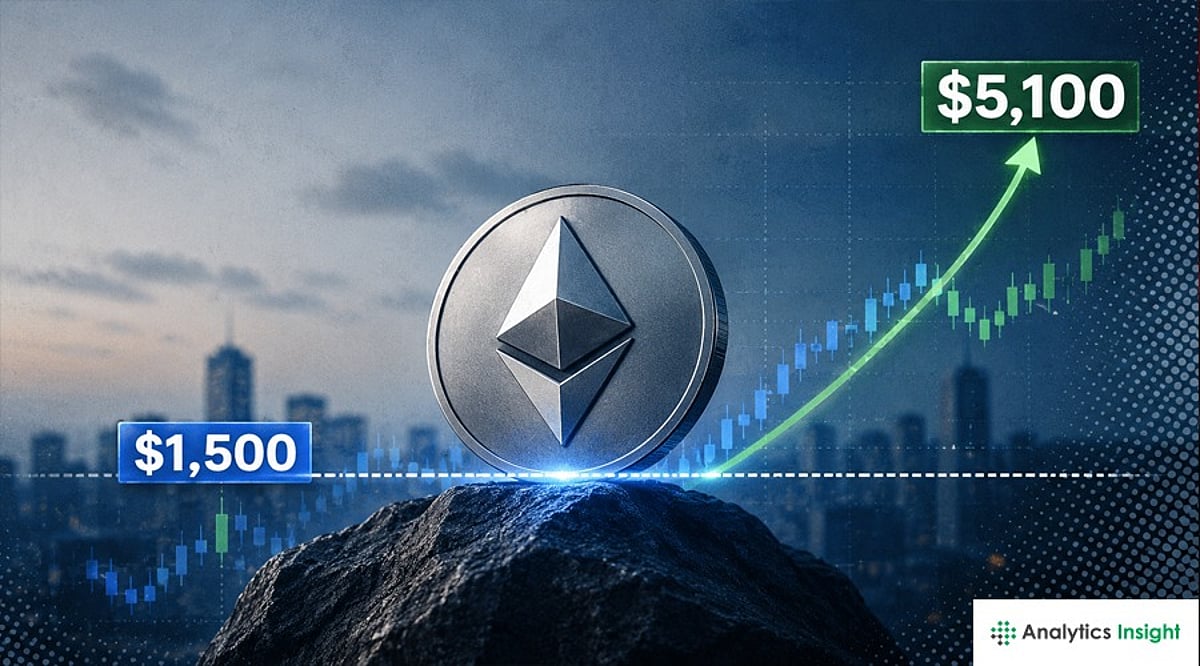
    Ethereum Holds Key $1,500 Support; $5,100 Breakout Target Remains in Focus

    Ethereum traded near a critical support zone on June 24 as ETF outflows, weak momentum, and a break below the 200-day simple moving average kept pressure on the asset. The token stood at about $1,670, below $1,700 and near a level that has shaped its wider recovery since 2022.

    Key Support Defines the Near-Term Setup

    Ethereum has repeatedly bounced from the $1,500 to $1,650 area since the 2022 bear-market bottom. The zone protected every major low during the past several years. It also notes that Ethereum reached about $1,618 on the weekly chart. Earlier rebounds from this area came in 2023, late 2023, and 2025.

    According to analyst Ardi, weekly closes below $1,500 would mark a clear structural breakdown. He said that holding above that level would keep the broader support pattern intact.

    Chart Traders Compare ETH With the Russell 2000

    A separate chart view compares Ethereum with the Russell 2000. Both assets formed rounded bases after major declines, then recovered toward long-standing resistance. The Russell 2000 has already moved above its horizontal resistance near 2,500. That breakout strengthened its broader bullish structure.

    Ethereum has not matched that move. It still trades below a resistance band ranging from $4,300 to $5,100 and remains within a short-term descending channel. James Easton said the Russell 2000 pattern could offer a roadmap for Ethereum.

    If ETH breaks above the falling channel, traders would first watch the previous all-time-high region. A confirmed move above roughly $5,100 could place Ethereum in price discovery.

    The data also points to a speculative long-term path toward five-figure levels, including prices above $10,000. Even so, the outcome remains unconfirmed.

    ETF Outflows Add Pressure on Price

    Ethereum’s weakness also comes from continued ETF outflows. On June 23, Ethereum ETFs recorded $82 million in net outflows, their fourth straight day of withdrawals. Market caution has grown amid uncertainty tied to Iran and the outlook for U.S. interest rates. ETH also fell below its 200-day simple moving average, which signals short-term weakness.

    Analysts say some bulls want to see ETH break above $1,800 before momentum returns. Others point to the broader support near $1,500 as the key line to defend.

    The asset traded at an all-time high of $4,953.73 on August 24 of last year. For now, the market continues to watch whether Ethereum can reclaim nearby resistance around $1,900 to $2,000.

    What’s Next?

    Ethereum remains under pressure as ETF outflows persist and the price trades below key resistance levels. At the same time, the $1,500 support zone continues to hold, preserving the broader recovery structure. Traders now focus on whether ETH can defend support and regain momentum above $1,800 while keeping longer-term targets in view.

  • RLUSD Supply on XRP Ledger Surpasses Ethereum as XRP Utility Prospects Improve

    RLUSD Supply on XRP Ledger Surpasses Ethereum as XRP Utility Prospects Improve

    Ripple USD (RLUSD) has achieved a significant distribution milestone, with the XRP Ledger (XRPL) overtaking Ethereum as the stablecoin’s largest native network. On-chain data shows approximately $801.8 million in RLUSD on XRPL, compared to about $795.6 million on Ethereum, giving Ripple’s blockchain a narrow lead in the $1.6 billion RLUSD market.

    However, the shift is largely attributed to Ethereum token burns rather than a surge in new demand on XRPL. About three-quarters of the RLUSD removed over the past month came from Ethereum through redemptions and burns, making the ‘flippening’ partly a result of treasury operations rather than a clear migration of users or trading activity.

    RLUSD now ranks among the ten largest stablecoins, with daily trading volume reaching approximately $166 million. The stablecoin’s activity on XRPL can involve XRP directly, as users pay transaction fees in XRP and the network can route trades through XRP when direct markets between two assets lack liquidity. This could create additional XRP use across payments, exchange transfers, and decentralized trading, provided users actively move the stablecoin and create active markets.

    Meanwhile, RLUSD has expanded into Japan through SBI VC Trade after receiving regulatory clearance, with Ethereum serving as the initial network for the Japanese rollout. An XRPL Foundation representative noted that Ethereum’s early role was expected and that XRPL-based RLUSD could join the Japanese market later, though no fixed timetable has been confirmed.

    The central question remains whether RLUSD on XRPL will generate sustained trading, payment, and liquidity activity to drive XRP demand, or if the supply shift will remain a technical milestone without lasting external volume.

  • Sharplink Resumes Ethereum Purchases After Eight-Month Pause, ETH Price Support at $1,500 in Focus

    Sharplink Resumes Ethereum Purchases After Eight-Month Pause, ETH Price Support at $1,500 in Focus

    Sharplink has resumed buying Ethereum for the first time in eight months. A wallet linked to the company received 5,000 ETH, worth nearly $7.85 million, from FalconX, according to Arkham data. The purchase marks Sharplink’s first ETH acquisition since October 2025. The company has not publicly confirmed the transaction, and The Block said it had reached out for comment.

    Sharplink now holds around 876,285 ETH and ETH equivalents. As of June 21, the company said that stash was worth roughly $1.3 billion.

    Treasury Position and Market Scale

    EmberCN estimated Sharplink’s average acquisition cost at $3,609 per ETH. That estimate points to an unrealized loss of about $1.79 billion on the treasury. Even so, Sharplink remains the world’s second-largest public ETH treasury company. Tom Lee’s Bitmine Immersion leads the category with 5.67 million ETH, or about $8.7 billion, as of June 14.

    Sharplink rebranded from SharpLink Gaming in February. Since then, it has moved beyond ether staking and into other on-chain yield strategies.

    The company also reported $12.1 million in first-quarter revenue this year. That total rose sharply from $742,000 in the same quarter last year.

    Ethereum Catalysts and Price Watch

    Sharplink pointed to regulation, improving market conditions, and real-world asset tokenization as long-term reasons for its Ethereum view. It also backed Ethlabs, a nonprofit formed by former Ethereum Foundation researchers.

    Ethlabs aims to prepare the network for its next stage of institutional adoption. Ethereum co-founder and Sharplink chairman Joe Lubin supports the group, along with Bitmine Immersion. At the same time, Ethereum price watchers remain focused on network upgrades that could speed transfers between Layer 1 and Layer 2 systems. Lubin said the goal is smoother coordination through zero-knowledge proofs, or ZK proofs.

    The planned changes could also reduce the need for bridges. In addition, they may connect liquidity more closely across the Ethereum ecosystem and support more activity on-chain. Can Ethereum keep its structure intact if the $1,500 level breaks?

    That question has traders watching the chart closely. Analyst Ardi said ETH should avoid closing below $1,500 over the next four months. He said the level has held through every major pullback since the 2022 bear market ended. For now, buyers are trying to keep ETH above that support zone while the market waits for stronger demand.

    What’s Next?

    Sharplink has resumed buying Ethereum after an eight-month pause and now holds more than 876,000 ETH and equivalents. The company cited regulation, tokenization, and network upgrades as long-term drivers. Traders are now watching whether ETH can hold the key $1,500 support level.

  • Bitcoin Options Expiry Looms as Crypto Market Sinks to New Lows

    Bitcoin Options Expiry Looms as Crypto Market Sinks to New Lows

    Bitcoin and Ethereum options worth approximately $11 billion are set to expire on Friday, June 26, as the cryptocurrency market trades near fresh lows. The batch includes around 153,500 Bitcoin contracts valued at roughly $9.3 billion. Month-end and quarter-end expiries often bring sharper price swings, adding to market tension.

    The total crypto market value has dropped by more than $180 billion since Monday, slipping to an almost two-year low. Spot prices have taken another hit as traders face a fresh wave of pressure.

    Bitcoin traded near $58,000 before recovering toward $60,000 in Asian trading, down 2.7% on the day and 4.5% on the week. The expiry could add more pressure to an already battered spot market.

    Bitcoin Options Lean Toward Calls

    Bitcoin options show a put/call ratio of 0.73, indicating call sellers slightly outweigh put sellers in this week’s expiration. Even so, the setup still points to a tense finish for traders. Max pain sits near $72,000, about $13,000 above current spot prices, meaning most contracts would expire out of the money.

    Open interest remains highest at the $80,000 strike on Deribit, reaching $1.4 billion. Short sellers also hold about $1 billion in open interest at $60,000. Across all exchanges, total BTC options open interest has climbed to $34 billion, according to Coinglass.

    Deribit noted that BTC heads into expiry well below its $72,000 max pain level, and recent quarterly expiries have shown limited evidence of a stable pinning effect before settlement.

    Ethereum Joins the Wider Risk-Off Move

    Ethereum options add another layer of pressure. Around 1 million ETH contracts worth $1.6 billion are expiring, with max pain near $2,000 and a put/call ratio of 0.54. Total ETH options open interest across exchanges stands near $5.7 billion.

    Greeks Live said puts continue to command a clear premium over calls across major tenors, with near-term downside protection remaining in demand while longer-dated pricing stays more stable.

    Ether fell more than 5% to about $1,555 and briefly touched $1,522. XRP dropped 4.9% to $1.03, Dogecoin slid 3.8% to $0.074, and Solana fell 1.2% to $68. Ether was also briefly overtaken by Tether in market cap.

    Pressure also came from outside crypto. Global stocks fell to a two-week low after Apple dropped 6.1% on higher product prices. South Korea’s Kospi sank as much as 9%, while Nasdaq 100 futures fell 1.5%. Brent crude slipped below $74 a barrel after a strike in the Strait of Hormuz briefly renewed supply concerns.

    What’s Next?

    The $11 billion Bitcoin options expiry arrives as crypto markets remain under heavy pressure following sharp price declines across major digital assets. Rising open interest, key max pain levels, and broader weakness in global markets leave traders focused on potential volatility during the quarterly settlement.