Tag: Ethereum

  • Why Ethereum Stays a Leading Crypto Investment in 2026 Amid Rising Rivals

    Why Ethereum Stays a Leading Crypto Investment in 2026 Amid Rising Rivals

    Ethereum maintains its position as the second-largest cryptocurrency by market cap, even as newer blockchains like Solana, Avalanche, and NEAR Protocol offer faster transactions and lower fees. Despite these challenges, a combination of institutional demand, continuous network upgrades, dominance in decentralized finance (DeFi), and emerging AI use cases keeps Ethereum at the forefront of the crypto market.

    Institutional Confidence Remains Strong

    Major companies continue to accumulate Ethereum despite broader market weakness. BitMine Immersion Technologies purchased 71,179 ETH in a single week, pushing its total holdings above 4.7 million ETH (worth approximately $9.8 billion). Similarly, SharpLink resumed buying after an eight-month pause, signaling long-term institutional conviction.

    Constant Network Upgrades

    Ethereum’s development roadmap remains active. The upcoming Glamsterdam upgrade focuses on speed, efficiency, and validator improvements, while the earlier Pectra upgrade enhanced staking rewards and validator systems. These regular enhancements ensure Ethereum evolves faster than most competitors.

    Unmatched DeFi Dominance

    Ethereum remains the backbone of decentralized finance. Billions of dollars in value are locked across Ethereum-based lending platforms, decentralized exchanges, NFT marketplaces, and stablecoin systems. Other blockchains have built DeFi ecosystems but none have matched Ethereum’s liquidity and developer tooling.

    Security and Staking

    With over 920,000 active validators, Ethereum’s proof-of-stake network is highly decentralized and secure. Staking reduces circulating supply and provides yield for holders, further supporting long-term value.

    Future Innovation: AI and Beyond

    Ethereum is poised to benefit from emerging technologies like decentralized AI. The ERC-8004 standard for autonomous AI agents and networks could create new demand for ETH as the underlying settlement layer.

    Technical Outlook

    As of late June 2026, ETH trades between $1,550 and $1,650. Analysts watch the $1,668 level closely; sustained holding above this point could signal a recovery, while a break below may lead to further downside. Short-term volatility persists, but long-term fundamentals remain intact.

    Conclusion

    Institutional buying, regular upgrades, DeFi leadership, and a massive developer base make Ethereum irreplaceable in the crypto ecosystem. While faster rivals attract retail attention, Ethereum’s deep liquidity, strong security, and innovative pipeline keep it among the top crypto assets to watch in 2026.

  • Bitcoin ETF Outflows Hit $1.79B, Sharplink Acquires $62.4M in Ethereum, TRON Surpasses 390M Accounts

    Bitcoin ETF Outflows Hit $1.79B, Sharplink Acquires $62.4M in Ethereum, TRON Surpasses 390M Accounts

    The cryptocurrency market witnessed several major developments this week, including significant Bitcoin spot ETF outflows, a large Ethereum purchase by Sharplink, a milestone for USDT0, and TRON accounts crossing the 390 million mark. Additionally, Kiwoom Securities is reportedly eyeing a stake in South Korean exchange Bithumb.

    Bitcoin Spot ETFs See $1.79 Billion in Weekly Outflows

    According to SoSoValue, Bitcoin spot ETFs recorded a net outflow of $1.79 billion during the past trading week. BlackRock’s IBIT led the outflows with $1.303 billion, followed by Fidelity’s FBTC with $315 million. The Grayscale Bitcoin Mini Trust bucked the trend with a weekly net inflow of $71.701 million. The total net asset value of Bitcoin spot ETFs now stands at $72.82 billion, with a cumulative historical net inflow of $51.61 billion.

    USDT0 Surpasses $100 Billion in Transaction Volume

    Tether-backed stablecoin USDT0 has crossed $100 billion in cumulative transaction volume, less than 530 days after its January 2025 launch. Developed by Everdawn Labs, USDT0 is backed one-to-one by Tether’s USDT and enables seamless cross-chain transfers. This milestone underscores the growing role of stablecoins in global payments and institutional finance.

    Sharplink Acquires $62.4 Million in Ethereum

    After an eight-month pause, Sharplink resumed Ethereum accumulation, purchasing a total of $62.4 million worth of ETH since Thursday. On-chain data from Arkham reveals the company bought 5,000 ETH on Thursday, another 5,000 ETH on Friday, and 29,196 ETH via three over-the-counter transactions on Saturday. The purchases came as Ethereum trades down 22.8% month-on-month and nearly 50% year-to-date.

    TRON Accounts Reach 390.24 Million

    TRON’s total activated accounts hit 390,243,569, surpassing the 390 million milestone, according to Tronscan data. The network’s total transaction count exceeded 14.5 billion, with total value locked (TVL) above $25.4 billion and on-chain stablecoin market capitalization exceeding $90.4 billion.

    Kiwoom Securities Eyes Stake in Bithumb

    According to a ChosunBiz report, Kiwoom Securities and Bithumb are discussing a third-party share allocation. The exchange would issue new shares for Kiwoom to purchase, though the size and percentage stake are still under negotiation. This follows Hana Bank’s recent plans to acquire a $670 million stake in Dunamu, operator of Upbit, and Samsung affiliates purchasing about $407.7 million worth of Dunamu shares.

  • Crypto Sell-Off Deepens: Why Bitcoin, Ethereum, XRP, and Dogecoin Are Dropping and What July Could Bring

    Crypto Sell-Off Deepens: Why Bitcoin, Ethereum, XRP, and Dogecoin Are Dropping and What July Could Bring

    The cryptocurrency market has entered a turbulent phase as major digital assets continue to lose value. Bitcoin, Ethereum, XRP, and Dogecoin have all suffered sharp price drops in the final weeks of June 2026. Investor confidence is fragile, and many traders are watching closely to see whether July will bring relief or further declines.

    Market Overview

    Bitcoin slipped below the critical $60,000 level, trading near $59,800 — one of its lowest points in months. Ethereum fell more steeply, now around $1,555. XRP dropped to roughly $1.03, while Dogecoin declined sharply to about $0.074. The total crypto market capitalization has fallen below $2.3 trillion, erasing billions in value.

    Key Factors Driving the Decline

    Weak Global Stock Markets

    Crypto prices are increasingly correlated with technology stocks. Recent sell-offs in the tech sector — driven by weakness in semiconductors and artificial intelligence — have spilled over into digital assets, amplifying the downturn.

    Massive Bitcoin ETF Outflows

    Bitcoin exchange-traded funds (ETFs) experienced outflows of nearly $1.79 billion in the past week alone, one of the largest weekly withdrawals on record. This selling pressure has added to Bitcoin’s woes and reduced institutional demand.

    Shift Toward AI Stocks

    Investor capital is rotating out of crypto and into AI-related companies, which are perceived as offering faster growth. This shift has drained liquidity from the crypto market, hitting Ethereum, XRP, and Dogecoin especially hard.

    Heavy Liquidations

    The futures market saw over $1 billion in long positions liquidated as leveraged traders were forced out. Bitcoin open interest has dropped sharply, indicating that many short-term traders have exited, deepening the correction.

    Why Altcoins Fell Harder Than Bitcoin

    Ethereum’s decline was exacerbated by slowing network activity and weaker decentralized finance demand. XRP, despite some positive institutional news, could not escape the broader market weakness. Dogecoin, as a highly speculative meme coin, experienced the largest percentage drop — nearly 9.8% in the past week, compared to Bitcoin’s 4.5% fall.

    Can July Bring a Recovery?

    Analysts are watching Bitcoin’s support zone between $50,000 and $60,000, a range that has historically attracted buyers. A recovery could occur if ETF outflows slow and global stock markets stabilize. However, risks remain: high interest rates, weak institutional demand, and cautious sentiment could push prices lower before any rebound. July offers hope for stabilization, but a strong rally depends on improved macroeconomic conditions.

    Frequently Asked Questions

    1. Why is Bitcoin falling right now?
      Bitcoin is dropping due to ETF outflows, weak stock markets, and reduced investor confidence.
    2. Why did Ethereum fall more than Bitcoin?
      Ethereum faced extra pressure from slowing network activity and declining DeFi demand.
    3. Why is Dogecoin dropping sharply?
      Dogecoin is highly speculative and tends to react more aggressively during market fear.
    4. Can crypto recover in July 2026?
      A recovery is possible if global markets stabilize and institutional buying returns.
    5. What price level matters most for Bitcoin now?
      Analysts closely watch the $50,000 to $60,000 support zone for possible recovery.
  • Bitcoin, Ethereum, XRP Find Footing as Traders Eye Key Support Levels and Macro Data

    Bitcoin, Ethereum, XRP Find Footing as Traders Eye Key Support Levels and Macro Data

    Bitcoin, Ethereum, and XRP started the new week with signs of stability after posting steep losses during the previous trading sessions. The three largest cryptocurrencies by market capitalization remain under technical pressure, but recent price action shows that selling has slowed near important support levels.

    Bitcoin recovered near $60,000, Ethereum continued to trade above $1,500, and XRP defended the $1.00 mark. At the same time, traders continued monitoring macroeconomic developments, exchange flows, and technical indicators for signs of the market’s next move.

    Bitcoin Holds Above $60,000 While Recovery Faces Resistance

    Bitcoin traded back above $60,000 after falling nearly 6% over the previous week. The rebound came as the market attempted to stabilize following broad selling across digital assets. Despite the recovery, Bitcoin remained below its 50-day, 100-day, and 200-day exponential moving averages, showing that the broader trend has not changed.

    The Relative Strength Index (RSI) stayed close to 33, placing Bitcoin just above oversold conditions. The MACD also remained slightly negative, although selling momentum appeared to weaken. Traders continued watching resistance around $64,000, followed by the major moving averages near $66,971, $70,591, and $76,516. Until those levels are reclaimed, the latest recovery remains limited.

    Ethereum and XRP Defend Key Price Levels

    Ethereum traded near $1,585 and continued holding above the $1,500 support area. The asset also remained below its major moving averages, leaving the broader technical structure under pressure. However, the RSI remained near oversold territory, while the MACD turned slightly positive, showing that downside momentum had eased.

    If Ethereum continues higher, resistance stands near the 50-day EMA around $1,833, followed by the $2,000 area and the 100-day EMA near $2,010. On the downside, traders continued watching $1,500 closely because a break below this level could expose support near $1,385.

    XRP traded around $1.05 while defending the psychological $1.00 support level. The token also stayed below its major moving averages and beneath a descending price channel. Its RSI remained near 33, while the MACD continued to show weak momentum. Resistance remained near $1.19, followed by $1.21 and $1.30.

    Exchange Flows and Macro Events Remain in Focus

    Market participants also monitored activity on Binance after the exchange recorded more than $400 million in weekly net outflows during the week beginning June 22. The reported outflows represented a small share of the exchange’s total tracked assets, although Binance recorded the largest weekly net outflows among major exchanges.

    The movement came ahead of the European Union’s Markets in Crypto-Assets (MiCA) transition deadline and followed Binance’s withdrawal of its MiCA license application in Greece. Broader market conditions also remained tied to global developments. Reports that the United States and Iran agreed to halt strikes and resume talks lifted equity futures, but cryptocurrencies showed only a limited response.

    Bitcoin traded near $59,700, while Ether posted modest gains and XRP remained under pressure. Market participants also continued monitoring upcoming US economic data, including the Personal Consumption Expenditures (PCE) report, for additional direction.

    For now, Bitcoin, Ethereum, and XRP have stabilized near important support levels. Traders continue watching whether buyers can maintain those areas while the market reacts to technical signals and broader economic developments.

  • Bitcoin Hovers Near $59.5K, Ethereum Trades at $1,580 as US-Iran Tensions and Record ETF Outflows Rock Markets

    Bitcoin Hovers Near $59.5K, Ethereum Trades at $1,580 as US-Iran Tensions and Record ETF Outflows Rock Markets

    Bitcoin is navigating its weakest June in four years, trading near $59,427, as a combination of renewed US-Iran geopolitical tensions, a historic $4 billion monthly ETF outflow record, and hawkish Federal Reserve expectations compress price action into a critical $58,000–$61,000 range. Ethereum is holding around $1,580, with both major cryptocurrencies facing headwinds from institutional capital rotation and macroeconomic uncertainty.

    Bitcoin Price Today: $59,427

    Bitcoin is down 0.90% over 24 hours and roughly 6.80% on the week. The token has spent most of June below the $62,000 resistance cluster, failing repeatedly to reclaim key moving averages overhead. A weekly close below $60,000 keeps the near-term bias firmly to the downside. The $58,000 level is now the most actively defended support on the chart. A confirmed break below it opens a path toward $55,000, with some analysts flagging $52,000 as the next structural floor. On the upside, reclaiming $61,200–$62,500 with volume is the prerequisite for any meaningful recovery toward $64,000–$66,000.

    “Bitcoin continues to trade in a tight $58,000–$61,000 range as investors weigh renewed geopolitical tensions in the Middle East against weakening institutional demand. BTC is on track to end June down nearly 19%, marking its weakest monthly performance since mid-2022. Spot Bitcoin ETFs have also recorded more than $4 billion in net outflows this month, the largest monthly withdrawal since their launch.” — Akshat Siddhant, Lead Quant Analyst at Mudrex

    “Bitcoin is down nearly 7% on the week, with altcoins taking an even bigger hit. Both Bitcoin and Ether are on track to finish the second quarter in the red, marking back-to-back losing quarters to start the year. For Bitcoin, this is only the third time it has started the year with two straight losing quarters.” — Piyush Walke, Derivatives Research Analyst at Delta Exchange

    Ethereum Price Today: Around $1,580

    Ethereum is trading near $1,580, under pressure but still holding above the key $1,500 support level. A break below $1,500 could trigger a deeper decline toward $1,440, according to analysts.

    Market Drivers

    US-Iran Ceasefire Tensions Reignite

    Weekend military exchanges between the US and Iran tested the fragile ceasefire that had been holding since April. While both sides have paused strikes for now, the Strait of Hormuz remains a pressure point for global oil flows. Elevated crude prices compound inflation concerns, adding to the hawkish Fed narrative and suppressing risk appetite across crypto markets.

    Record ETF Outflows

    Spot Bitcoin ETFs are on track for their worst monthly outflow since launch in January 2024, with cumulative June redemptions exceeding $4 billion. Weekly redemptions last week hit $1.79 billion, pushing cumulative net inflows from over $66 billion down to approximately $51 billion. BlackRock’s IBIT has absorbed the largest share of redemptions. Capital continues to rotate toward AI-linked equities, drawing risk appetite away from crypto.

    Strategy’s Valuation Falls Below Bitcoin Holdings

    Strategy Inc., the largest single corporate Bitcoin holder with over 847,000 BTC, has seen its market valuation fall below the worth of its own coin holdings. The company’s preferred stock (STRC) has slipped to record lows, triggering concerns it may need to sell Bitcoin to meet dividend obligations. Ripple CEO Brad Garlinghouse criticized the funding model as financial engineering.

    CZ Attributes Decline to AI Competition

    Binance founder Changpeng Zhao noted that crypto’s roughly 50% decline over the past year is due to the gravitational pull of AI infrastructure spending, geopolitical tensions, and the typical four-year halving cycle. US hyperscalers are projected to spend over $700 billion on AI infrastructure this year, competing directly for speculative capital.

    Top 10 Crypto Movers

    • Gainer: TRON (+0.75%) — Relative resilience supported by consistent stablecoin transfer volumes.
    • Losers: Dogecoin (-2.41%), BNB (-1.29%), Solana (-0.42%) — High-beta assets continue to bleed amid macro-driven selloff.

    Fear and Greed Index

    The Fear and Greed Index sits near 18, deep in “Extreme Fear,” reflecting broad caution heading into the final trading days of June.

    Investor Outlook

    Bitcoin enters the final two trading days of June in a structurally weak position. The $58,000–$59,000 support band is the market’s last meaningful floor before a deeper move toward $52,000. July has historically delivered average Bitcoin returns of 7.6% to 10.3%, offering a seasonal tailwind if sentiment improves, but requires a macro catalyst to activate.

    Investors should monitor daily ETF flow data from SoSoValue, geopolitical headlines out of the Middle East, and the Dollar Index. Avoiding leverage and maintaining tight risk management remains the practical priority until $60,000 is reclaimed with conviction.

    FAQs

    What is the Bitcoin price today? Bitcoin is trading near $59,427, down 0.90% over 24 hours. Support sits at $58,000–$58,300, with $52,000 as the next structural floor. Resistance is at $61,200–$62,500, then $64,000.

    Why is Bitcoin falling in June 2026? Spot Bitcoin ETFs have recorded over $4 billion in outflows this month, the largest monthly redemption since launch. Hawkish Fed expectations, US-Iran geopolitical uncertainty, and capital rotation into AI equities have compressed sentiment.

    Which coins are losing the most today? Dogecoin leads declines at -2.41%, followed by BNB at -1.29% and Solana at -0.42%. TRON is the top-ten gainer at +0.75%.

    What should crypto investors watch this week? Track daily spot Bitcoin ETF flow data, geopolitical developments in the US-Iran standoff, and Bitcoin’s ability to hold $58,000. The $59,000–$60,000 zone is the session’s most critical price band.

  • Enterprise Blockchain Showdown 2026: Ethereum, Solana, and Hyperledger Compared

    Enterprise Blockchain Showdown 2026: Ethereum, Solana, and Hyperledger Compared

    Enterprise blockchain adoption has surged as businesses choose Ethereum for security, Solana for speed, and Hyperledger for private networks, making blockchain a core part of enterprise infrastructure.

    Overview

    • Ethereum: Top choice for secure enterprise blockchain applications and tokenized finance.
    • Solana: Leads in transaction speed with over 65,000 TPS and extremely low fees.
    • Hyperledger: Dominates private enterprise networks where compliance and data control matter most.

    Blockchain technology has become a major part of business infrastructure. A few years ago, companies mainly tested blockchain through small experiments. Today, large companies, banks, healthcare firms, supply chain networks, and even governments use blockchain for real business operations.

    The enterprise blockchain market has grown quickly this year. Reports show that blockchain use in supply chain systems alone may cross $3.3 billion in 2026. Another fast-growing area is tokenized real-world assets (RWAs). This sector saw almost 589% growth entering 2026, which shows how serious enterprise adoption has become.

    As more companies move toward blockchain, three major platforms dominate the discussion: Ethereum, Solana, and Hyperledger. Each platform solves different business problems.

    Ethereum Remains the Enterprise Leader

    Ethereum continues to hold the strongest position in enterprise blockchain with its maturity and trust factor. Most large companies that build blockchain-based systems still prefer Ethereum because it has existed longer and has proven reliability.

    One of Ethereum’s biggest strengths is its huge developer ecosystem. Current estimates show more than 31,800 active developers working within the Ethereum ecosystem. This number remains far ahead of most blockchain competitors. For enterprises, this means easier access to engineers, better support systems, and stronger technical infrastructure.

    Ethereum has also improved its technology this year. Developers now focus on Verkle Trees architecture, a major network upgrade that helps reduce proof sizes and makes the network more efficient.

    Large financial institutions continue to choose Ethereum for tokenized securities, cross-border payments, digital identity systems, and decentralized finance products.

    The biggest weakness still comes from network speed and transaction cost. Ethereum remains slower than newer blockchain networks, especially when huge transaction volume enters the system. Even with these challenges, Ethereum remains the safest enterprise option for long-term business use.

    Solana Focuses on Speed and Scale

    Solana is challenging Ethereum and many other platforms by establishing a faster and less expensive option to serve businesses’ needs.

    Theoretically, Solana can handle 65,000 transactions per second on the network. In production, Solana has consistently processed over 3,400 transactions per second. The average cost per transaction on Solana is under $0.01, making it an attractive option for large-scale applications.

    Another area of rapid growth for Solana has been the developer ecosystem. Over the past few weeks alone, Solana has added over 7,600 new developers and overall ecosystem growth has exceeded 80% year on year.

    This extraordinary growth has prompted many businesses to build on Solana for payment systems, gaming solutions, high-volume applications, and IoT devices.

    Some companies continue to shy away from Solana because it previously experienced network outages. Businesses need reliable infrastructure at all times, so reliability is a major concern for many enterprises. While Solana is clearly superior in performance, many businesses still prefer Ethereum to ensure stability.

    Hyperledger Dominates Private Enterprise Networks

    Hyperledger takes a different approach compared to Ethereum and Solana. While public blockchains allow open participation, Hyperledger focuses on private blockchain systems where only approved participants enter the network. This makes Hyperledger highly attractive for enterprises that need control, privacy, and regulatory compliance.

    Hyperledger Fabric is currently the most widely used framework for permissioned enterprise blockchain systems. Recent improvements in Fabric 2.5+ have made the network faster while keeping strong security standards.

    A major real-world example comes from De Beers and its Tracr platform, built on Hyperledger infrastructure. The platform has now registered more than 5 million rough diamonds, representing almost two-thirds of company production value.

    Large organizations use Hyperledger for supply chain tracking, healthcare data systems, interbank settlements, and government record management. The biggest advantage comes from privacy and governance. The main drawback comes from reduced decentralization, since the network does not operate like public blockchains.

    Which Blockchain Wins in 2026?

    Depending on the business needs, the choice of platform varies:

    • Ethereum: Best for finance, tokenization, and enterprise apps where security and trust are key. Its developer ecosystem provides a huge competitive advantage.
    • Solana: Ideal when transaction speed is a priority. Extremely low fees and high throughput make it suitable for companies executing many transactions.
    • Hyperledger: Preferred for private enterprise systems requiring high control over access, data visibility, and regulatory compliance.

    The Future of Enterprise Blockchain

    The blockchain industry no longer focuses on one network. Companies now choose platforms based on their specific business model instead of following a single trend. Enterprise blockchain has moved far beyond early experimentation. It now serves as real infrastructure for global business operations.

    Frequently Asked Questions

    1. Which blockchain is best for enterprise use in 2026? Ethereum leads overall with security, trust, and the largest developer ecosystem.
    2. Why do companies choose Solana over Ethereum? Solana offers faster transaction speed and lower fees for high-volume applications.
    3. What makes Hyperledger different from Ethereum and Solana? Hyperledger focuses on private permissioned blockchain networks instead of public decentralized systems.
    4. How big is the enterprise blockchain market in 2026? Supply chain blockchain infrastructure alone is expected to cross $3.3 billion in market value.
    5. Is blockchain still experimental for enterprises? No. Blockchain has become real infrastructure for finance, healthcare, supply chains, and government systems.
  • How to Invest $500 in Crypto Today: A Balanced Portfolio for June 2026

    How to Invest $500 in Crypto Today: A Balanced Portfolio for June 2026

    With crypto markets showing signs of recovery in June 2026, a carefully planned $500 investment can balance stability and growth. Rather than betting everything on a single coin, spreading funds across five strong projects—Bitcoin, Ethereum, Solana, Chainlink, and Hyperliquid—offers a mix of safety, innovation, and upside potential.

    Bitcoin (BTC) – The Safe Foundation

    Bitcoin remains the most trusted crypto asset, with a market cap near $1.28 trillion. Institutional demand through spot ETFs continues to support its price, making it a reliable anchor for any portfolio. Investing $175 in BTC provides a stable base and reduces overall risk.

    Ethereum (ETH) – Technology Leader

    Ethereum powers thousands of dApps, DeFi platforms, and NFTs. Recent network upgrades have improved speed and scalability. At around $1,730, ETH offers strong value. A $125 allocation gives exposure to the second-largest blockchain without overexposure.

    Solana (SOL) – High-Growth Contender

    Solana’s fast, low-cost transactions attract developers in gaming and DeFi. With a market cap above $42 billion and price near $74, SOL offers significant growth potential—though with higher volatility. Allocating $100 taps into this upside while keeping the rest of the portfolio stable.

    Chainlink (LINK) – Infrastructure Play

    Chainlink connects smart contracts to real-world data, a critical function for tokenization and DeFi. As the ecosystem grows, LINK benefits from its role as infrastructure. A $50 position adds diversification and long-term value.

    Hyperliquid (HYPE) – Aggressive Speculation

    Hyperliquid has surged on the rise of decentralized futures trading. This newer token carries higher risk but also the chance for outsized gains. A $50 bet suits investors willing to accept volatility for potential rapid returns.

    Final Portfolio Allocation

    • Bitcoin (BTC): $175 – Stability and institutional trust
    • Ethereum (ETH): $125 – Strong technology and adoption
    • Solana (SOL): $100 – Fast network growth
    • Chainlink (LINK): $50 – Essential blockchain infrastructure
    • Hyperliquid (HYPE): $50 – High-risk, high-reward

    While the crypto market remains volatile after Bitcoin’s 50% correction earlier in 2026, clearer regulations, rising stablecoin adoption, and growing institutional participation strengthen long-term confidence. Projects with real use cases and solid technology are best positioned for the second half of the year.


    Frequently Asked Questions

    1. Why should I not invest all $500 in one cryptocurrency?
    Diversification protects your portfolio from major losses if a single coin underperforms.

    2. Is Bitcoin still a good investment in 2026?
    Yes, Bitcoin remains the strongest long-term crypto asset due to institutional adoption and market dominance.

    3. Why is Ethereum considered a strong choice?
    Ethereum powers smart contracts, DeFi, NFTs, and thousands of blockchain applications worldwide.

    4. Is Solana riskier than Bitcoin and Ethereum?
    Yes, Solana has higher volatility but also stronger growth potential thanks to its fast, low-cost network.

    5. Why is Hyperliquid considered an aggressive investment?
    It’s a newer project tied to decentralized futures trading, offering higher upside but significantly greater short-term risk.

  • Ethereum Price Pressures Mount: ETH Approaches $1,500 as Exchange Inflows Rise

    Ethereum Price Pressures Mount: ETH Approaches $1,500 as Exchange Inflows Rise

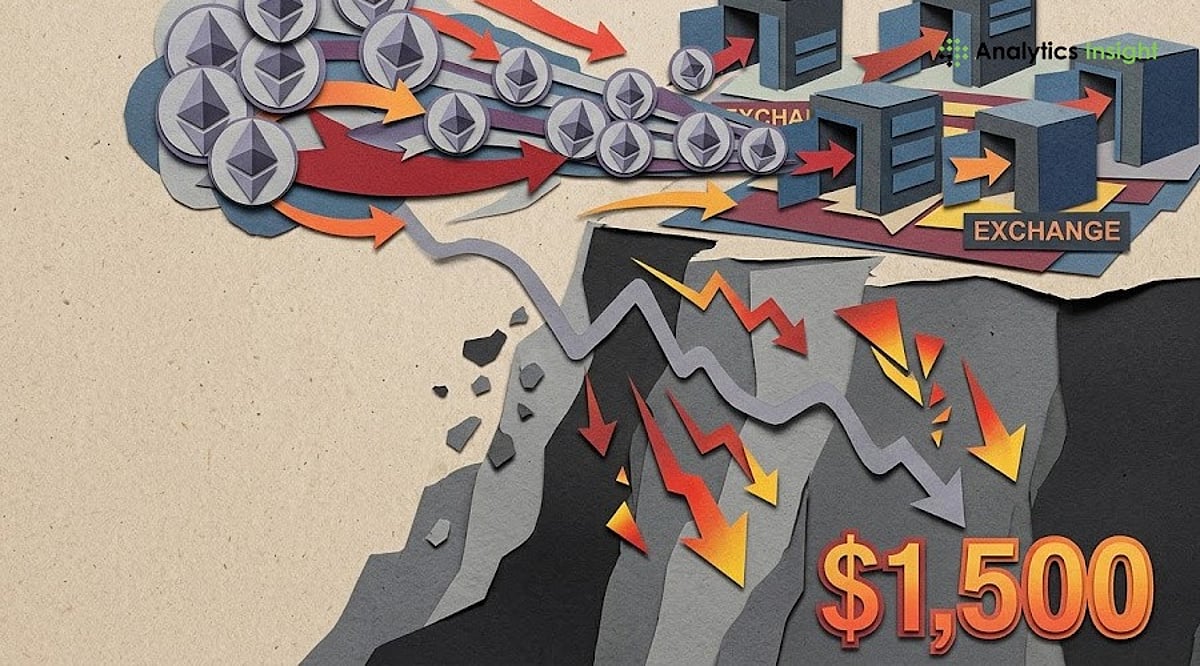
    Ethereum fell back toward the $1,500 area after sellers rejected another recovery attempt near a major resistance zone. Rising exchange inflows and a weak chart structure continue to support a cautious market outlook.

    Ethereum Remains Trapped Below Major Resistance

    Ethereum continues to form lower highs and lower lows on the daily chart. The pattern keeps the broader trend bearish and shows that sellers still control price direction. ETH also trades below its 100-day and 200-day moving averages. In addition, the asset remains under a long-term descending trendline that has limited previous recovery attempts.

    The latest rebound stalled below the $1,720 to $1,780 supply zone. Sellers then pushed ETH back toward the $1,460 to $1,560 demand area. Buyers have responded near that support region, but the reaction remains limited. ETH has not reclaimed the resistance range or changed the wider bearish structure.

    Until price moves above $1,780 with sustained strength, market rallies may remain corrective. A break below current demand could expose Ethereum to another downward move. Can buyers defend the $1,500 region long enough to challenge the resistance that has repeatedly stopped each recovery?

    Four-Hour Chart Shows a Fragile Recovery

    The four-hour chart reflects the same pressure across a shorter timeframe. Sellers rejected ETH near $1,720 to $1,780 before driving it toward the lower range boundary. Ethereum later recorded a modest rebound from the $1,500 to $1,530 area. That response shows buyers remain active around the market’s immediate demand zone.

    Even so, ETH still trades near the bottom of its broader consolidation range. Each recovery attempt has also formed a lower high, which keeps short-term momentum weak. For now, Ethereum may continue moving between about $1,520 and $1,750. The lower boundary remains important because a breakdown could increase selling pressure.

    By contrast, a move above the upper range would improve the short-term structure. It could also allow buyers to begin another recovery attempt toward higher resistance.

    Exchange Inflows Add Pressure Near Support

    On-chain data also shows a rise in Ethereum exchange netflows. The 14-day moving average has turned sharply positive during recent trading sessions. Higher netflows mean more ETH is moving onto exchanges. Holders may transfer assets for trading, selling, or reducing market exposure.

    Such inflows do not guarantee a price decline. Still, they add supply pressure while Ethereum trades close to a major support region. The increase has occurred as ETH moved back toward the $1,500 zone. That combination leaves the market sensitive to further weakness around current demand.

    Price stability near support and lower exchange inflows would reduce immediate pressure. Until then, Ethereum remains below key averages and the main resistance zone.

    Conclusion

    Ethereum remains under bearish pressure as sellers defend the $1,720 to $1,780 resistance zone and exchange inflows increase. Buyers must protect support near $1,500 to prevent deeper losses. Traders should watch for either a confirmed support breakdown or a strong resistance reclaim before assessing the next move.

  • Bitcoin Holds Near $61,487 as Record ETF Outflows, Dollar Strength Weigh on Crypto Markets

    Bitcoin Holds Near $61,487 as Record ETF Outflows, Dollar Strength Weigh on Crypto Markets

    Market Overview

    Bitcoin is trading at $61,487 as six straight weeks of spot ETF outflows drain institutional capital, pushing the Fear and Greed Index to 24 in Extreme Fear territory. Dogecoin is down 3.81% in 24 hours and 10.48% on the week, leading losses among the top ten, while XRP and Hyperliquid follow with notable declines. Traders are monitoring the $60,000 support floor closely, with a confirmed break risking a slide toward $55,000 amid sustained macro pressure from the Fed and the Dollar Index.

    Bitcoin Price Today

    Bitcoin is holding near $61,487, showing a modest 24-hour gain of 1.87% off session lows. The token is recovering cautiously after testing the $59,000 region earlier in the week. Support sits at $60,000, a level traders are treating as the cycle’s last credible floor. A firm break below opens the path toward $55,000. Resistance is stacked at $63,000, then $64,400 to $65,000, where the 21-day EMA has been rejecting rallies.

    Giving the market overview, Akshat Siddhant, Lead Quant Analyst at Mudrex, stated: “Bitcoin hit a multi-year low of $59,000 as risk-off sentiment continued to dominate global markets. The Dollar Index stands at a 13-month high, indicating growing confidence in the US economy. Typically, BTC and the dollar have shown an inverse correlation, adding to the selling pressure. For now, investors are closely watching key US macroeconomic data, including the PCE inflation report, GDP figures, and jobless claims, which could play a major role in determining Bitcoin’s next directional move.”

    Meanwhile, Piyush Walke, Derivatives Research Analyst at Delta Exchange, noted: “Bitcoin plunged below the key $60,000 support level, falling to around $59,068 amid a sharp market sell-off. The decline was fueled by investor concerns over financing risks at Strategy Inc., a broader shift of retail capital toward AI-related stocks, persistent inflation, and expectations of higher interest rates from the Federal Reserve.” He added, “The $59,000 level now serves as a crucial support zone, having been tested multiple times in the past. A break below $59,000 could trigger a deeper correction toward the $52,000 region. On the upside, immediate resistance is located between $64,400 and $65,000, which also coincides with the 21-day EMA rejection zone.”

    According to the WazirX Market Desk: “Bitcoin is trading near $60.6K, while Ethereum is around $1,620, with both assets moving in a narrow range as broader market sentiment remains cautious. Despite the consolidation, institutional participation, ETF interest, and long-term adoption continue to provide support for the crypto market.” The desk also noted Jupiter (JUP) gained over 6% after renewed attention on its Litterbox buyback program, while Hyperliquid recovered after recent volatility, supported by continued whale accumulation.

    The CoinSwitch Markets Desk added: “BTC dipped to $59K before buyers stepped in to take it to $61K. The slide below $60K reflects current market conditions of spot BTC ETF outflows, the Fed’s hawkish stance, and a strengthening US dollar. On the chart, liquidity at $61,800 to $62,000 acts as a magnet. If momentum holds, price could be drawn there as shorts get squeezed, though that same cluster may cap the bounce as resistance. Should support fail, $55K remains a plausible cycle low.”

    Crypto Prices Today: Top 10 Coins at a Glance

    Biggest Gainers: Bitcoin, BNB, Ethereum

    Bitcoin leads the session with a 1.87% recovery, bouncing off the week’s lows as some short positions get squeezed. BNB adds 1.46%, benefiting from steady on-chain activity on the BNB Chain network. Ethereum follows at 1.30%, holding above $1,644 as traders watch for a decisive reclaim of the $1,700 zone.

    Biggest Losers: Dogecoin, Hyperliquid, XRP

    Dogecoin leads today’s declines with a 3.81% drop, extending a painful weekly loss of 10.48% as risk appetite stays compressed. Hyperliquid follows with a 3.67% slide, giving back recent gains as derivatives volumes pull back. XRP slips 1.81% on a 24-hour basis but holds a steep 7.16% weekly loss, with the CLARITY Act’s uncertain Senate timeline keeping buyers cautious.

    Crypto News Today Driving Market Sentiments

    Bitcoin ETF Outflows Extend to Six Consecutive Weeks, Totaling $5.94 Billion

    US spot Bitcoin ETFs have now posted outflows across six straight weeks, the longest redemption streak in the funds’ history. Galaxy Research data puts total withdrawals at $5.94 billion over that span, with June 23 seeing a rare $39.2 million inflow that offered brief relief. BlackRock’s IBIT has led redemptions in several sessions, signaling that even the dominant ETF product is not immune. Year-to-date net inflows have slipped to $55.79 billion from $58.09 billion in April.

    Binance Faces MiCA License Collapse as June 30 Deadline Closes In

    Binance is racing against the clock after its bid to secure a critical passporting license in Greece unraveled, leaving its European operations without a compliant path forward. Gillian Lynch, Binance’s head of Europe and the UK, confirmed the firm is actively exploring alternative licensing pathways and is not planning to exit the EU. The European Securities and Markets Authority has warned all unlicensed crypto firms to begin winding down EU activities immediately. Binance now has days to find a replacement license before June 30, after which the platform would be required to halt services for millions of European users.

    CLARITY Act Awaits Senate Floor Vote as White House Targets July 4 Deadline

    The CLARITY Act remains on the Senate Legislative Calendar under General Orders, eligible for a full floor vote but still facing a 60-vote threshold. The White House is pushing hard for a July 4 signing, but Catholic leaders and advocacy groups have filed formal opposition letters to Senate leadership. A 15-9 Senate Banking Committee vote in May cleared the bill out of committee, with two Democrats joining all Republicans. Passage would classify most digital assets as commodities under CFTC oversight, removing years of regulatory ambiguity for XRP, Solana, and other major tokens.

    Dollar Index Reaches 13-Month High, Squeezing Bitcoin

    The US Dollar Index has climbed to a 13-month high, maintaining its inverse pressure on Bitcoin and risk assets broadly. Markets are now pricing a 68.8% probability of zero Fed rate cuts in all of 2026. Inflation came in at 3.8% year-over-year in April, the hottest reading since May 2023. The Fed held rates steady at its June 16-17 meeting, with Fed Chair Kevin Warsh eliminating forward guidance, adding another layer of uncertainty to rate expectations.

    Strategy’s Bitcoin Sale and Whale Exits Add to Selling Pressure

    Strategy disclosed its first Bitcoin sale in nearly four years, offloading 32 BTC at approximately $77,135 per coin. The transaction raised roughly $2.5 million and shook sentiment far beyond its modest size. On-chain data shows whales holding between 10 and 10,000 BTC sold approximately 25,000 BTC over the past week. The combined signal from corporate and whale exits has reinforced the market’s cautious tone heading into the weekend.

    Investor and Market Outlook

    Bitcoin is attempting a tentative recovery near $61,487, but the broader picture remains fragile. Six weeks of institutional outflows, a 13-month-high Dollar Index, and a hawkish Fed have kept the Fear and Greed Index anchored at 24. Liquidity is rotating away from crypto and toward AI stocks and the SpaceX IPO. That competition for speculative capital is a structural headwind that technical signals alone cannot overcome.

    The $60,000 level remains the market’s key test. Corporate buyers are still present, with Strategy and Strive adding Bitcoin at average prices near $65,850, offering a structural counterweight to the dominant redemption narrative. A confirmed hold above $60,000 keeps the path open toward $63,000 and the $64,400 to $65,000 EMA cluster. Traders should track PCE inflation data, jobless claims, and any Senate movement on the CLARITY Act as the week’s remaining catalysts.

    FAQs

    What is the Bitcoin price today?

    Bitcoin is trading near $61,487 today, up 1.87% in the past 24 hours. Support sits at $60,000, with a deeper floor near $55,000 if that level fails. Resistance holds at $63,000, then $64,400 to $65,000.

    Why is Bitcoin under pressure this week?

    Bitcoin is under pressure from six straight weeks of spot ETF outflows, a 13-month-high Dollar Index, and a hawkish Fed that has pushed zero-rate-cut odds to 68.8% for all of 2026. Strategy’s first Bitcoin sale in four years also rattled sentiment.

    What is the biggest crypto news today?

    The CLARITY Act awaits a Senate floor vote, Binance’s collapsing MiCA license with a June 30 deadline, and Bitcoin’s record ETF outflow streak are the top stories driving market sentiment today.

    Which coins are falling the most today?

    Dogecoin leads losses at -3.81%, followed by Hyperliquid at -3.67%. On a weekly basis, Dogecoin is down 10.48% and XRP has shed 7.16%, making both the standout underperformers of the cycle.

    What should crypto investors watch this week?

    Track the US Dollar Index for further breakout signals, the Senate’s CLARITY Act vote, and the Binance MiCA situation ahead of the July 1 EU deadline. PCE inflation data and jobless claims are the key macro prints that could shift Fed expectations and risk appetite.


  • Bitcoin ETF Outflows Hit $469M, SHIB Reserves Surge to 80.5T, and $10B BTC Options Near Expiry

    Bitcoin ETF Outflows Hit $469M, SHIB Reserves Surge to 80.5T, and $10B BTC Options Near Expiry

    The cryptocurrency market witnessed a series of significant developments on June 25, 2026. Spot Bitcoin ETFs recorded $469.08 million in net outflows, led by BlackRock’s IBIT, while SHIB exchange reserves surged to 80.5 trillion tokens. Meanwhile, SBI Group announced a $289 million acquisition of Japanese exchange Bitbank, and $10 billion in Bitcoin options are set to expire this week. Indonesia also introduced mandatory certification for crypto influencers.

    Bitcoin ETFs See $469 Million Outflows

    According to SoSoValue, the Bitcoin spot ETF market experienced a total net outflow of $469.08 million yesterday. The Grayscale Bitcoin Mini Trust ETF BTC recorded the highest net inflow at $23.56 million, bringing its historical total to $2.38 billion. On the other hand, BlackRock’s IBIT led outflows with $239.29 million, while its historical net inflow stands at $61.48 billion. The total net asset value of Bitcoin spot ETFs is $73.87 billion, representing an ETF net asset ratio of 6.04% and a historical cumulative net inflow of $52.75 billion.

    SHIB Exchange Reserves Spike to 80.5 Trillion Tokens

    The SHIB market is seeing a dramatic shift in investor sentiment. Large holders have begun transferring funds to centralized exchanges, interrupting a months-long accumulation trend. CryptoQuant data shows the Exchange Reserve indicator surged to 80.5 trillion SHIB over a few days. This expanded available supply drove the token’s price down to approximately $0.0000044. Daily net inflows into exchanges reached 749.8 billion SHIB, signaling strong selling pressure.

    SBI Group Acquires Bitbank for $289 Million

    SBI Group announced the acquisition of Japanese cryptocurrency exchange Bitbank for ¥46.7 billion (approximately $289 million). This move is expected to push SBI’s crypto custody balance above ¥1 trillion (about $6.2 billion), making it the largest crypto business in Japan. A subsidiary of SBI Holdings will acquire Bitbank shares from founders and other individual shareholders in August. Combined with SBI VC Trade’s accounts (as of April), the merged entity will have approximately 2.92 million total accounts and combined custodial assets of roughly ¥1.1 trillion.

    $10 Billion Bitcoin Options Expiry Approaches

    According to Bloomberg, Deribit will see approximately $10 billion in notional value of Bitcoin options expire on Friday, accounting for about 37% of current total open interest. The put-to-call ratio stands at 0.83, indicating bullish bets still dominate, but most call options are out-of-the-money. Puts are concentrated in the $60,000–$65,000 and $70,000–$75,000 ranges, suggesting bearish positions are more likely to profit. Jean-David Pequignot, Deribit’s Chief Business Officer, noted that this options portfolio, positioned for higher medium-term prices, is now under test amid falling spot prices.

    Indonesia Mandates Certification for Crypto Influencers

    Indonesia’s Financial Services Authority (OJK) issued Regulation No. 6 of 2026, requiring individuals who recommend cryptocurrencies to obtain competency certification unless they already hold a relevant license. The regulation limits influencers to promoting only digital assets listed on authorized exchanges. Any digital asset service provider featured in promotional content must hold the necessary regulatory license. Marketing campaigns must be conducted through regulated financial services businesses, which remain responsible for the promotional material.