Tag: Ethereum

  • Ethereum’s Neutral Infrastructure: Why Openness Gives It a Lasting Edge in Blockchain

    Ethereum’s Neutral Infrastructure: Why Openness Gives It a Lasting Edge in Blockchain

    Ethereum stands apart in the blockchain industry because its neutral infrastructure keeps the network open, decentralized, secure, and accessible for everyone. Recent upgrades, lower fees, and strong adoption continue to strengthen its long-term position.

    Key Takeaways

    • No company or authority controls who builds or operates on the Ethereum network.
    • Recent upgrades have pushed transaction fees below $0.02 under normal conditions.
    • Ethereum’s $205 billion market value and growing enterprise adoption signal long-term confidence.

    The blockchain industry has grown rapidly in recent years, but not every network follows the same approach. Some give more control to a small group of companies or developers, while others focus on keeping the system open and fair. Ethereum’s neutral blockchain infrastructure functions like public infrastructure—no single company, government, or organization decides who can build or use it. Every developer, business, and user gets equal access. Since its launch, Ethereum has prioritized openness over control, creating trust across the industry and helping it grow faster than many competing blockchains.

    Ethereum Has the Largest Developer Ecosystem

    Recent industry reports show Ethereum still hosts the largest number of smart contract developers worldwide. More than 30% of all active Web3 developers work within the Ethereum ecosystem. Developers prefer Ethereum because the network remains open and does not favor specific companies or projects. Every builder gets the same infrastructure access, with no special privileges for large organizations. This environment fosters natural innovation. Thousands of decentralized applications already run on Ethereum, including finance platforms, blockchain games, NFT marketplaces, artificial intelligence projects, and many other services. This ecosystem scale keeps Ethereum ahead of newer blockchain competitors.

    Proof-of-Stake Made Ethereum Even Stronger

    Ethereum became even stronger after The Merge, one of the biggest upgrades in blockchain history, which moved the network from Proof-of-Work to Proof-of-Stake. Before this change, Ethereum depended on energy-intensive mining systems. After the upgrade, it relies on validators who help secure the network by staking ETH instead of using mining machines. More than 120 million ETH are currently in circulation, and staking participation continues to grow across independent validators worldwide. This system spreads control across a larger number of participants, reduces dependence on centralized operators, and helps protect Ethereum’s decentralized structure. Ethereum’s market value currently remains above $205 billion, firmly keeping it in second place behind Bitcoin in the global crypto market.

    Lower Fees Have Improved Ethereum’s Position

    For many years, Ethereum faced criticism for expensive transaction fees. However, recent upgrades have significantly improved this situation. Research from mid-2026 shows major efficiency improvements across Ethereum Mainnet and Layer 2 networks. In the past, average transaction fees often exceeded $2 during busy periods. Today, fees frequently remain under $0.02 under normal conditions. Layer 2 scaling systems built around Ethereum have reduced average transaction costs by more than 95%, making the network much more affordable for developers and businesses while maintaining strong security standards. This balance between affordability and security gives Ethereum a major advantage over competing blockchain networks.

    Ethereum Allows Different Applications to Connect Easily

    Ethereum’s open structure allows applications to interact without needing permission from any central authority. A decentralized finance application can connect directly with an NFT marketplace, a gaming platform can work with a payment protocol, and artificial intelligence systems can interact with blockchain-based financial products.

    Ethereum Continues to Improve for the Future

    One major upgrade planned for 2026 is the Glamsterdam hard fork, which focuses on improving network performance while keeping decentralization intact. The plan includes raising gas limits toward 100 million, improving transaction execution speed, and introducing systems such as Enshrined Proposer Builder Separation (ePBS).

    Institutions Continue to Trust Ethereum

    Regulatory clarity around Ethereum-based exchange-traded products has encouraged greater participation from financial institutions. Even during periods of market volatility in 2026, Ethereum continues to attract enterprise adoption. Large institutions increasingly view Ethereum as foundational digital infrastructure rather than just another cryptocurrency.

    Why This Matters

    Ethereum’s neutral infrastructure prevents centralized control, ensuring the network remains fair, open, and unalterable. For institutions and developers, this absolute censorship resistance makes it the only trustworthy foundation for long-term global financial systems and applications.

    Neutral Infrastructure Gives Ethereum Long-Term Strength

    Many blockchain networks focus mainly on speed or low fees, often by giving greater control to a small number of validators or centralized teams. As blockchain technology becomes more important in global finance and digital infrastructure, neutrality becomes a major advantage.

    Frequently Asked Questions

    1. What makes Ethereum different from other blockchain networks? Ethereum operates strictly as neutral public infrastructure, meaning no single company, government, or central group controls who can build on the platform or access its global network services.
    2. What exactly is neutral blockchain infrastructure? It is a decentralized design principle ensuring the underlying network remains entirely open, fair, and accessible to all global users and developers, with zero special corporate privileges.
    3. How has Ethereum improved its network efficiency recently? Major structural upgrades and advanced Layer 2 scaling systems have drastically reduced average transaction fees by over 95% while fully preserving the blockchain’s core security standards.
    4. Why do software developers heavily prefer building on Ethereum? Ethereum hosts the world’s largest Web3 developer ecosystem because it provides an open, stable architecture where every engineer receives identical infrastructure access without needing centralized permission.
    5. Why do large financial institutions trust the Ethereum ecosystem? Global enterprises trust Ethereum because its proven decentralized design, robust protocol security, and improving regulatory clarity make it the ideal foundational digital infrastructure for long-term institutional deployment.

  • Ethereum Institutional Launches to Boost Adoption as Spot ETF Outflows Reverse

    Ethereum Institutional Launches to Boost Adoption as Spot ETF Outflows Reverse

    Ethereum Institutional has launched as an independent non-profit organization aimed at accelerating institutional adoption of Ethereum, Layer 2 networks, and blockchain applications. The initiative arrives as United States spot Ethereum exchange-traded funds (ETFs) recorded $14.8 million in net inflows on July 1, ending nine consecutive trading days of withdrawals.

    Former Ethereum Foundation team leads David Walsh and Matthew Dawson are spearheading Ethereum Institutional’s outreach to traditional financial companies. The organization plans to serve as a neutral entry point for banks, asset managers, and custodians seeking clearer access to Ethereum’s technology and broader ecosystem.

    Ethereum Institutional’s work will focus on building relationships across traditional finance while supporting the use of Ethereum, Layer 2 solutions, and related financial applications. The initiative aims to strengthen institutional confidence by improving communication between blockchain developers and financial firms that require scalable infrastructure and regulatory credibility.

    BlackRock’s iShares Ethereum Trust (ETHA) led the July 1 inflows with $36.6 million, contributing the majority of the market’s positive daily total. However, other products moved in the opposite direction. BlackRock’s ETHB lost $1.7 million, while Fidelity’s FETH recorded $1.6 million in net withdrawals. Grayscale’s Mini Ethereum Trust posted an $18.5 million outflow as investors continued shifting capital among competing Ethereum funds with different fee structures.

    Cumulative flow data showed withdrawals of approximately $380 million across the spot Ethereum ETF market during the previous nine trading sessions. Although the July 1 inflow remained modest compared with those withdrawals, it ended the market’s recent stretch of daily net outflows.

    The reversal also showed that institutional demand remained uneven, with investors favoring some providers while reducing exposure through competing Ethereum products.

    Market focus now turns to sustained institutional demand. Ethereum Institutional will focus on expanding adoption among financial institutions and increasing access to Layer 2 networks and blockchain-based applications. Traders and analysts will track whether spot Ethereum ETFs can record further inflows after the July 1 change in direction.

    Sustained inflows over several weeks would provide stronger confirmation of a trend reversal than the results from one trading session. The organization’s progress will also depend on its ability to build working relationships with banks, custodians, and asset managers across traditional finance.

    Its launch places institutional engagement alongside Ethereum’s technical initiatives as the network seeks broader financial use and stronger market credibility. Upcoming ETF sessions will show whether the inflow marked a durable shift or a brief interruption in the recent withdrawal trend.

  • Bitcoin ETFs See $294M Outflow, Metaplanet Revenue Hits ¥11.4B, Avalanche Stock Plunges 73%

    Bitcoin ETFs See $294M Outflow, Metaplanet Revenue Hits ¥11.4B, Avalanche Stock Plunges 73%

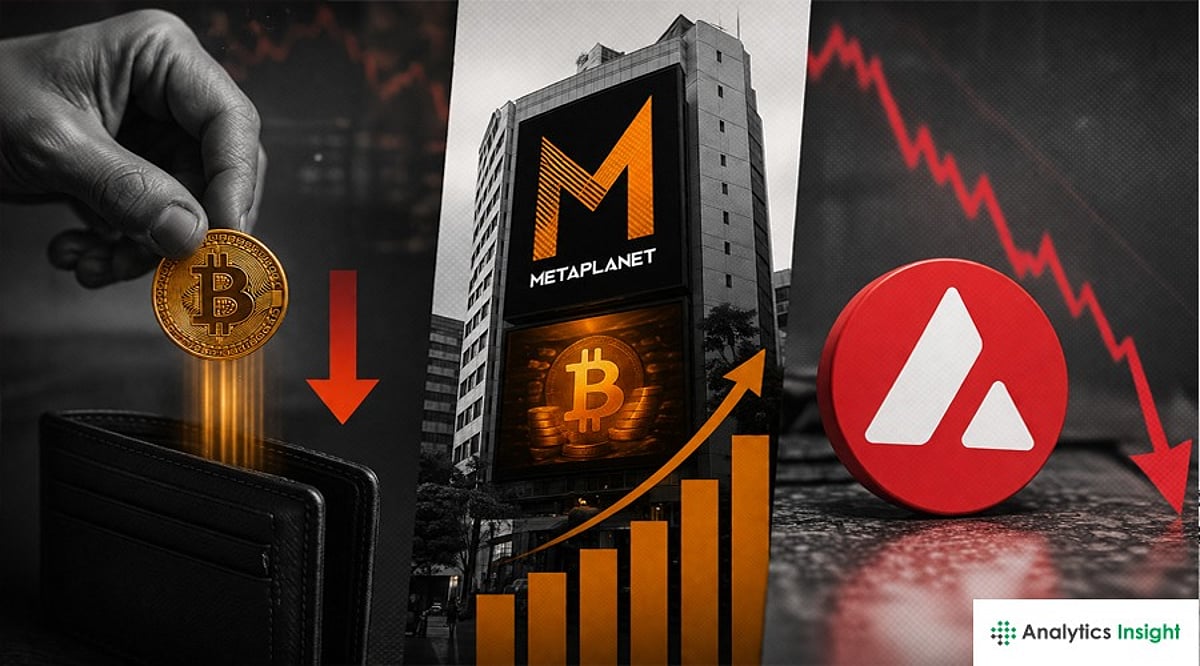
    The crypto market witnessed major developments as Bitcoin spot ETFs reported $294.62 million in net outflows, while XRP whales accumulated during the price dip. Meanwhile, Metaplanet disclosed its BTC revenue and Avalanche Treasury stock fell.

    Bitcoin Saw $294 Million in Outflows

    According to SoSoValue, the Bitcoin spot ETF saw a total net outflow of $294.62 million yesterday. The Bitcoin Spot ETF with the highest net inflow yesterday was the Grayscale Bitcoin Mini Trust ETF $BTC, with a daily net inflow of $36.33 million. The second highest was Morgan Stanley’s ETF MSBT, with a daily net inflow of $29.81 million, and the total historical net inflow of MSBT currently stands at $364.01 million. The Bitcoin Spot ETF with the highest net outflow yesterday was BlackRock’s ETF IBIT, with a daily net outflow of $219.39 million, and the total historical net inflow of IBIT currently stands at $60.03 billion. The total net asset value of Bitcoin Spot ETFs is $72.46 billion, with an ETF net asset ratio of 6.01%. The historical cumulative net inflow has reached $50.86 billion.

    XRP Whales are Accumulating

    According to market analyst Xaif Crypto, XRP’s drop to $1.04 appears to have triggered fear among smaller traders, but large investors saw it as a buying opportunity. XRP has since recovered to $1.06. A key indicator is the All CEX whale spread, which has climbed to 50.9%, signaling that whales now control a significantly larger share of XRP held on centralized exchanges. Coinbase whale outflows have surged. Transfers of more than 1 million XRP jumped from 10% to 25.7% of total exchange activity in just two weeks. Large withdrawals are widely viewed as a bullish signal, suggesting investors are moving tokens into private wallets for long-term holding instead of preparing to sell.

    Metaplanet Reports Bitcoin Income Business Revenue

    Japanese listed company Metaplanet released results for its Bitcoin income business revenue in the second quarter of fiscal 2026. According to Foresight News, the business recorded operating revenue of 1.75 billion yen in the second quarter. Metaplanet said cumulative revenue for the first half of the fiscal year reached 4.72 billion yen. The company added that over the past 12 months, cumulative revenue from its Bitcoin income business totaled 11.4 billion yen.

    Ethereum Posts Historic Third Straight Losing Quarter

    The second-largest cryptocurrency has fallen victim to the prolonged bear market as the second quarter closed. This makes it the asset’s third consecutive quarterly loss. Since reaching its all-time high of nearly $5,000 in August 2025, the price of the cryptocurrency has maintained a steady downward trajectory. Data from CoinGecko reveals that the asset is now trading around $1,560, representing a 70% contraction from its peak price. Historically, the month of July does not usually favor the platform’s performance, having closed lower in six of the last ten years.

    Avalanche Treasury Stock Collapses

    Avalanche Treasury Co. shares have fallen sharply since their Nasdaq debut as lower AVAX prices have weighed on the company’s digital asset holdings. The AVAX-focused digital asset treasury firm began trading under the ticker AVAT on June 11. The stock recently traded near $0.50, down about 73% from its $1.85 close on debut. AVAX recently traded near $6.69, up 0.94% over 24 hours but down 23% over the past month. Avalanche Treasury reported a net loss of $26.78 million for the quarter ended March 31, according to its latest SEC filing. The company also reported $1.22 million in cash and a net working capital deficit of $9.06 million at quarter-end.

    FAQs

    1. How much outflow did Bitcoin spot ETFs record?
    According to SoSoValue, Bitcoin spot ETFs recorded total net outflows of $294.62 million yesterday. BlackRock’s IBIT saw the largest withdrawal at $219.39 million.

    2. Which Bitcoin ETF saw the highest inflow?
    The Grayscale Bitcoin Mini Trust ETF recorded the highest daily inflow at $36.33 million. Morgan Stanley’s MSBT followed with $29.81 million in daily inflows, taking its historical inflow to $364.01 million.

    3. Why are XRP whales accumulating?
    According to market analyst Xaif Crypto, XRP’s fall to $1.04 created fear among smaller traders but attracted larger investors. Coinbase whale transfers above 1 million XRP rose from 10% to 25.7% of exchange activity in two weeks.

    4. How much revenue did Metaplanet report from its Bitcoin income business?
    According to Foresight News, Metaplanet’s Bitcoin income business generated ¥1.75 billion in operating revenue during Q2 FY2026. The company said revenue reached ¥4.72 billion in the first half and ¥11.4 billion over the past 12 months.

    5. Why did Avalanche Treasury stock fall sharply?
    Avalanche Treasury stock has dropped around 73% from its Nasdaq debut close as weaker AVAX prices pressured its digital asset holdings. The company also reported a quarterly net loss of $26.78 million and a working capital deficit of $9.06 million.

  • How Zero-Fee Trading Models Are Reshaping Bitcoin and Ethereum Profitability

    How Zero-Fee Trading Models Are Reshaping Bitcoin and Ethereum Profitability

    The structure of crypto trading is shifting toward lower explicit costs, tighter exchange competition, and more aggressive liquidity capture. Zero-fee models sit at the center of this transition, influencing not only how trades are priced but also how participants adapt to changing cost signals and execution conditions.

    Rather than acting as a simple pricing incentive, zero-fee regimes reshape the hierarchy of constraints that guide trading decisions. Cost is no longer a visible filter at the point of entry. Instead, it is embedded in execution mechanics, liquidity response, and order book interaction quality.

    Liquidity remains heavily concentrated in major digital assets rather than dispersed across the broader market. Bitcoin and Ethereum continue to function as the primary execution layer for global crypto exposure, meaning most meaningful cost dynamics and efficiency gains are expressed through these two instruments.

    Bitcoin trades in the high $59,000 range, while Ethereum holds near the mid $1,500 range. Both assets operate in a phase where directional conviction is inconsistent across time horizons. In this setting, returns depend less on directional accuracy and more on execution efficiency across entry, adjustment, and exit.

    Zero fees are therefore relevant not as a headline incentive, but as a structural change in how net returns are formed from gross market movement.

    What Zero Fees Actually Change

    Zero trading fees remove the explicit commission layer embedded in spot and derivatives execution, including maker and taker fees. On the surface, this compresses observable trading costs and appears to improve profitability uniformly.

    However, trading costs are not eliminated. They are redistributed into execution layers that behave dynamically rather than remaining fixed per trade. The cost structure shifts toward spread capture, slippage variability, and timing sensitivity. This creates a variable-cost regime where outcomes depend on liquidity depth, volatility, and order aggressiveness rather than predictable deductions.

    In highly liquid assets such as BTC and ETH, spreads remain tight and order books absorb moderate flow efficiently. Here, removing fees translates more directly into net performance gains because fewer structural inefficiencies offset the benefit. In thinner markets, execution friction dominates. Wider spreads and inconsistent liquidity reduce the marginal benefit, as market impact replaces commissions as the primary cost driver.

    The key shift is not cost removal itself, but the integration of execution quality into decision-making alongside price direction.

    Market Backdrop and Execution Sensitivity

    Crypto market structure continues to reflect selective liquidity concentration, where participation clusters around a limited set of large-cap assets rather than dispersing evenly across the ecosystem. Within this structure, BTC and ETH function as both tradable assets and liquidity infrastructure, acting as pricing references and absorption layers for broader market flow. This dual role increases sensitivity to cost structure changes, as execution efficiency improvements propagate through concentrated capital channels.

    When momentum weakens, price behavior becomes more fragmented. Movement shifts toward shorter cycles driven by liquidity gaps, positioning adjustments, and reactive order flow. Activity increases not because conviction strengthens, but because portfolios are adjusted more frequently. This creates a structural effect where execution frequency rises even without changes in exposure. Zero fees therefore matter through cumulative interaction rather than isolated trades.

    Why Zero Fees Do Not Automatically Improve Performance

    Zero fees do not improve trading edge. They improve the efficiency of edge realization. Research in market microstructure, including Barber and Odean’s Trading Is Hazardous to Your Wealth, shows that higher trading frequency is associated with lower net returns among retail participants. The driver is not only cost accumulation but also declining decision quality under increased activity.

    When friction exists, it filters marginal trades. When removed, that filter weakens, increasing the probability of lower-conviction execution. In crypto markets, this effect is amplified by continuous access and instant execution. Reduced friction increases both financial and behavioral trading frequency. Importantly, this does not necessarily reduce individual trade quality. It increases variation in decision quality over time, which reduces consistency in aggregate performance.

    How Zero Fees Affect Profit Mechanics

    The impact is best understood through trade-level economics. Consider a BTC position entered at $60,000 and exited after a 1% move. Gross profit is $600 per BTC. Under a typical 0.20% round-trip fee structure, about $120 is deducted, reducing net profit to $480 before slippage and spread effects. With zero fees, this deduction disappears. Market outcome remains unchanged, but gross-to-net conversion improves structurally.

    Zero fees do not change expectancy, volatility distribution, or directional probability. They improve retention of returns generated by existing strategy design. ETH and other liquid assets follow the same logic, though realized impact depends on liquidity stability and execution timing.

    Liquidity Concentration and Structural Advantages

    Liquidity remains concentrated in a small group of large-cap assets rather than evenly distributed across the ecosystem. This reflects where capital can enter and exit with minimal friction. Bitcoin and Ethereum sit at the center of this structure, functioning as both investment assets and liquidity hubs for retail, institutional, and algorithmic flow. This produces deeper order books and more stable execution compared to smaller assets.

    Two advantages follow: spreads remain tighter, reducing deviation between theoretical and executable pricing, and order books absorb volatility more efficiently, limiting extreme dislocations during rapid moves. Under zero-fee conditions, these factors determine how much of the cost reduction translates into real performance. In BTC and ETH, fee removal compounds efficiency because execution impact is already controlled. In thinner markets, slippage dominates and reduces the benefit.

    Portfolio Behavior and Rebalancing Dynamics

    Zero fees reshape portfolio construction by changing the cost of capital rotation. Active traders frequently adjust exposure between BTC, ETH, stablecoins, and selected altcoins based on volatility shifts, macro signals, or relative strength. Each adjustment normally carries a cost that influences rebalancing frequency. When fees are removed, this constraint disappears. Adjustments become easier and faster to reverse, increasing responsiveness to market shifts.

    Rebalancing becomes more continuous rather than episodic. Instead of waiting for large thresholds, traders can adjust exposure in smaller increments. This allows positioning across BTC and ETH, or majors and altcoins, to be recalibrated more fluidly as leadership rotates. Decisions become more real-time rather than delayed. The trade-off is clear: responsiveness improves, but discipline becomes more important in filtering signal from noise.

    Execution Quality Becomes the Primary Constraint

    Once explicit fees are removed, execution quality becomes the dominant performance variable. Execution quality includes entry precision, slippage behavior, order type efficiency, and liquidity depth at execution time. These replace fees as the main source of cost variation. Skill shifts from cost management to execution precision under changing liquidity conditions. Lower friction also increases trading velocity, raising the importance of pre-planned decision-making before entry.

    Leverage amplifies this dynamic. Fee savings do not affect liquidation thresholds or volatility exposure. When combined with higher frequency, portfolio risk can expand independently of execution gains.

    The Hidden Risks

    The most immediate risk is overtrading. When costs disappear, marginal setups become easier to justify, which can increase trading activity without any real improvement in strategy quality or edge. A second risk is underestimating spreads. Even in zero-fee models, bid-ask spreads and market impact can, in some cases, exceed traditional trading fees, particularly in less liquid conditions or during volatility spikes when order books thin out.

    A third risk is implicit leverage expansion. Lower friction can encourage larger position sizes or more frequent trades, while actual risk exposure per trade remains unchanged. Over time, this can quietly increase overall portfolio risk without being clearly recognized. A fourth risk is performance misinterpretation. Cleaner net P&L figures may mask inefficiencies in execution quality, timing, or order selection, leading traders to overestimate their true skill level. Over time, these factors can contribute to strategy drift, where increased activity is mistaken for improved performance or a stronger edge.

    How to Use Zero Fees on Toobit

    A practical approach starts with liquid pairs. BTC and ETH provide the clearest environment for translating fee savings into measurable gains due to deeper liquidity and tighter spreads. Monitor Toobit VIP rates and execution conditions, then evaluate whether expected movement justifies total cost, including spread and slippage. Order type selection becomes more important. Limit orders improve price control, while market orders provide speed when necessary. Lower friction increases execution frequency, so planning before entry becomes essential. Selective participation remains critical. Even without fees, not every move is worth trading. Liquidity, volatility, and structure still determine opportunity quality.

    Final Thoughts

    Zero trading fees improve crypto trading economics by removing explicit cost layers, but their real impact depends on execution behavior. The strongest benefits appear in BTC and ETH due to liquidity depth and stable execution. However, these same conditions require greater discipline because trading becomes easier and more frequent. The main limitation is behavioral, not structural. Reduced friction weakens natural constraints on unnecessary activity, increasing the importance of selectivity and execution control. Ultimately, performance depends less on cost reduction and more on disciplined capital deployment. Liquidity, timing, spread quality, and position sizing remain the core drivers of outcomes. Zero fees improve efficiency but do not replace judgment or structure.

  • Ethereum Price Prediction: Could ETH Hit $10,000 by 2030?

    Ethereum Price Prediction: Could ETH Hit $10,000 by 2030?

    Key Takeaways

    • Ethereum remains the dominant blockchain for DeFi, stablecoins, and NFTs despite current market weakness.
    • Institutional adoption and staking mechanisms continue to strengthen Ethereum’s long-term growth prospects.
    • A $10,000 ETH price by 2030 is considered feasible if market conditions remain favorable.

    Ethereum, the second-largest cryptocurrency by market capitalization, continues to be a cornerstone of the blockchain ecosystem. Despite trading around $1,550–$1,650 in July 2026—well below its 2021 all-time high of $4,891—many analysts maintain a bullish long-term outlook. The central question remains: Can Ethereum reach $10,000 by 2030?

    Ethereum’s Current Market Position

    2026 has been a challenging year for Ethereum. High interest rates, economic uncertainty, and a broad crypto market downturn have kept prices under pressure. However, market weakness does not diminish Ethereum’s network dominance. It remains the backbone of decentralized finance (DeFi), hosts the premier NFT platforms, and handles massive stablecoin volume daily.

    Institutional Interest Could Push Prices Higher

    Rising institutional interest is a major factor behind positive analyst sentiment. Large financial firms are exploring crypto investments through ETFs and regulated products. Standard Chartered has issued one of the most aggressive forecasts, projecting Ethereum could reach $40,000 by 2030 under favorable conditions. Such predictions underscore the strong institutional belief in Ethereum’s future.

    Network Upgrades Continue to Improve Ethereum

    Developers are actively working on upgrades to improve transaction speed, reduce gas fees, and increase scalability. These technical improvements aim to address historical issues like high fees during periods of high demand. Successful upgrades could strengthen Ethereum’s position relative to newer, faster blockchains.

    Staking Creates Supply Pressure

    Ethereum’s transition to Proof-of-Stake has locked a significant portion of ETH in staking contracts, reducing circulating supply. When supply is limited and demand rises, prices tend to increase. This reduced supply is a key long-term advantage that could support price growth.

    Stablecoins and Real-World Assets Add Value

    Ethereum leads in stablecoin infrastructure, with USD Coin and Tether processing billions in transactions daily. Additionally, tokenization of real-world assets—bonds, real estate, traditional financial products—is gaining traction, and Ethereum remains the preferred network for many such projects, adding utility and demand.

    Risks That Could Slow Growth

    Despite the positive outlook, Ethereum faces challenges. Competition from newer blockchains like Solana and Sui, which offer lower fees and faster transactions, continues to attract developers. Regulatory uncertainty also looms, with governments worldwide debating crypto laws, taxation, and investor protections. Strict regulations could dampen adoption and market sentiment.

    Can Ethereum Reach $10,000 by 2030?

    For Ethereum to hit $10,000, its price would need to rise nearly sixfold from current levels. While ambitious, many market forecasts consider this target realistic if favorable conditions develop. Conservative estimates place ETH between $5,000 and $7,000 before 2030, while more bullish predictions exceed $10,000. Some institutional forecasts even suggest $40,000 during a strong crypto cycle.

    Why This Matters

    The disconnect between Ethereum’s depressed price and its unrivaled dominance in stablecoins, staking, and asset tokenization creates a unique market anomaly. This utility floor keeps banking giants bullish on a long-term structural recovery to $10,000.

    Final Outlook

    Ethereum remains a strong long-term investment option in the crypto space. Despite weak short-term performance, its fundamentals—leadership in DeFi, growing institutional adoption, stablecoin usage, and ongoing network upgrades—make it a viable candidate for future growth.

    FAQs

    1. What is Ethereum’s current price status in July 2026?

    Ethereum is trading under heavy pressure in the $1,550–$1,650 range, far below its historical peaks.

    2. Is a $10,000 target for Ethereum by 2030 realistic?

    Yes, many institutional analysts view it as structurally feasible, contingent on network upgrades, institutional inflows, and regulatory clarity.

    3. Why do financial institutions maintain a bullish long-term outlook despite the current slump?

    Ethereum processes over 50% of the world’s stablecoins, serves as the premier layer for tokenizing real-world assets, and has over 30% of its total supply locked in staking contracts.

    4. What are the main risks that could derail Ethereum’s long-term growth?

    Primary risks include competition from faster blockchains like Solana and Sui, macroeconomic pressures from high interest rates, and shifting international regulatory frameworks.

    5. What is the highest institutional price prediction for Ethereum?

    Standard Chartered has forecasted Ethereum could reach $40,000 by 2030, drawing comparisons to Amazon’s post-dot-com recovery.

    Disclaimer: This article is for informational purposes only and does not constitute investment advice. Cryptocurrency investments are risky; always conduct your own research.

  • BlockDAG Boosts World Cup Bonus to 100% While Ethereum Faces Resistance and MemeCore Rallies Briefly

    BlockDAG Boosts World Cup Bonus to 100% While Ethereum Faces Resistance and MemeCore Rallies Briefly

    The cryptocurrency market presents a mixed picture today as three major stories unfold. MemeCore (MEME) shows a short-term price jump, while Ethereum (ETH) struggles under heavy resistance. Meanwhile, BlockDAG (BDAG) has doubled its World Cup bonus to 100%, drawing significant attention from traders.

    MemeCore Crypto News: Temporary Gains with Long-Term Risks

    Recent MemeCore crypto news indicates a 15.2% price surge to $0.78, bringing its market cap back to $861.12 million. Daily trading volumes reached $16.67 million, reflecting steady liquidity. The price has climbed above its 20-day moving average of $0.7197 and 50-day average of $0.6573, leading some analysts to project a 71% chance of further upside into the $0.631 to $0.9466 range.

    However, the coin remains well below its 200-day moving average of $2.2263, indicating that the recovery is fragile and medium-term risks persist.

    Ethereum Price Chart: Weak Demand Limits Recovery

    The Ethereum price chart reveals ongoing challenges. ETH is trading within a falling channel below its 100-day and 200-day moving averages. Buyers are defending the $1,500 support zone, but strong resistance lies at $1,750 and $1,850. Weak demand from large U.S. institutional investors further dampens recovery prospects, making a sustained uptrend unlikely in the near term.

    BlockDAG’s 100% World Cup Bonus and AI Launch Fuel Momentum

    BlockDAG has captured the spotlight by doubling its World Cup bonus from 50% to 100%, meaning buyers receive double the coins for the same purchase price. This promotion coincides with the launch of BDAG AI, which boosted the project’s valuation by $500 million. Currently, BDAG is priced at $0.00000066, with a buyback program set at $0.03, offering a substantial potential return.

    Traders are moving quickly to secure the bonus before it expires. Coins are delivered instantly to wallets, allowing immediate participation in the ecosystem.

    Conclusion: A Diverging Market Landscape

    While MemeCore sees temporary gains and Ethereum faces headwinds, BlockDAG stands out with its aggressive bonus and AI-driven valuation spike. For investors seeking the best crypto to buy today, BDAG’s low entry price and 100% bonus present a compelling opportunity. As always, conduct your own research before investing.

    Disclaimer: This article is for informational purposes only and does not constitute investment advice. Cryptocurrency investments carry risk; perform your own due diligence.

  • SharpLink Resumes Ethereum Accumulation, Boosts Treasury to 886,725 ETH

    SharpLink Resumes Ethereum Accumulation, Boosts Treasury to 886,725 ETH

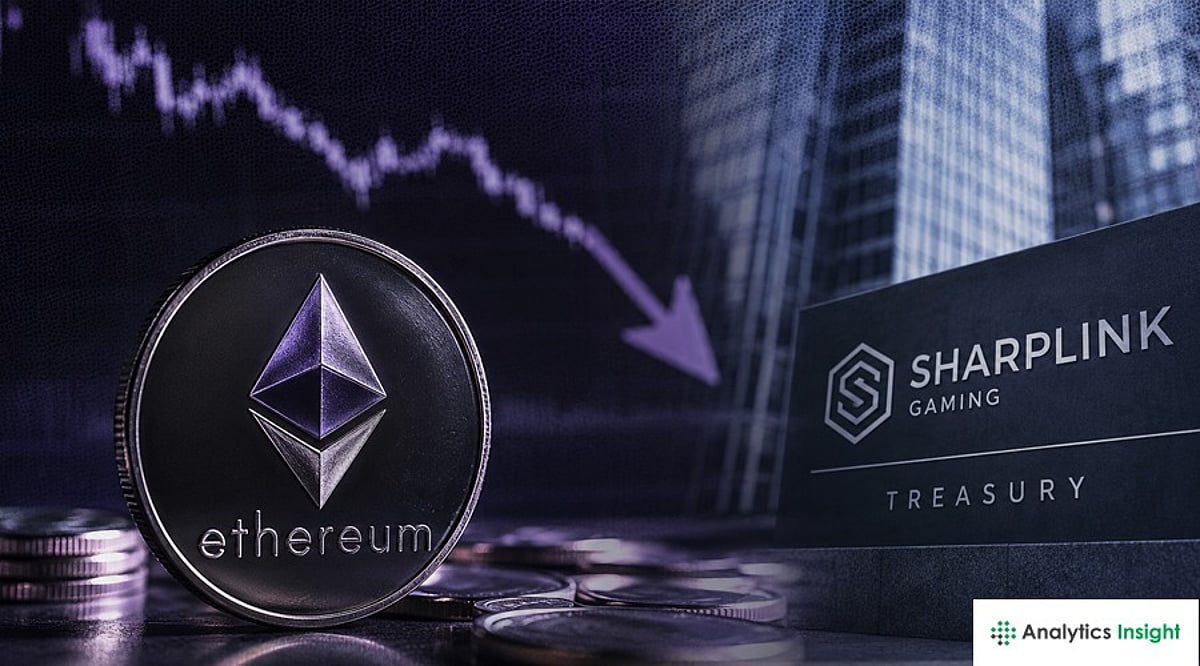
    SharpLink (SBET) has resumed its Ethereum accumulation strategy after a months-long pause, purchasing 10,000 ETH last week at an average price of $1,611 per token. The acquisition brings the company’s total holdings to 886,725 ETH, valued at approximately $1.4 billion based on current market prices. The move follows a $75 million registered direct offering that strengthened SharpLink’s balance sheet and signaled renewed confidence in digital asset treasury management.

    SharpLink Restarts Ethereum Buying

    The Florida-based company made its first Ethereum purchase since October, adding 10,000 ETH at an average of $1,611 each. SharpLink now holds 886,725 ETH, with its treasury valued at roughly $1.4 billion. The purchase was funded by a $75 million direct offering, which CEO Joseph Chalom said was designed to support the company’s active Ethereum treasury strategy and increase Ethereum per share over the long term.

    SharpLink also repurchased more than 2.13 million common shares last week at an average price of $4.69 per share, reflecting its belief that the stock is significantly undervalued. Since launching its buyback program in August, the company has repurchased over four million shares. Despite these moves, SharpLink shares closed Tuesday at $4.80, down 2.44% for the session and still 88% below its 52-week high of $40.46, a decline tied to Ethereum’s broader market weakness.

    Ethereum Faces Market Pressure

    Ethereum has posted three consecutive quarterly losses, declining 25.4% in Q2 2026 after drops of 29.2% in Q1 2026 and 28.2% in Q4 2025, according to Coinglass. Over the past 24 hours, $58.5 million in Ethereum liquidations occurred, with long positions accounting for $41.3 million. Technical indicators show Ethereum trading below its 20-day, 50-day, and 100-day exponential moving averages at $1,669, $1,824, and $2,002, respectively. The asset remains below a descending trendline near $1,617, with the Relative Strength Index at 34 (just above oversold territory) and the Stochastic Oscillator near 21.

    Analysts identify immediate resistance at $1,611 and $1,617, with higher levels at $1,669, $1,741, $1,806, $1,824, $1,909, and $2,002. Support stands at $1,524 and $1,404, with a deeper decline potentially exposing the key support near $1,155.

    Treasury Strategy Extends Beyond Holdings

    SharpLink recently joined Chairman Joe Lubin and BitMine to fund the launch of Ethlabs, a nonprofit focused on Ethereum research and development. The company initiated its Ethereum treasury strategy in May 2025, shifting toward ETH accumulation when prices were slightly below current levels. While SharpLink has not disclosed any staking activity, institutional staking demand is growing across proof-of-stake networks, and the company could eventually expand beyond passive holdings.

    Regulatory uncertainty remains a factor for public companies with crypto treasuries. U.S. securities laws require careful classification of digital assets, and future SEC guidance could impact how firms account for holdings and manage treasury positions.

    What’s Next?

    SharpLink’s renewed Ethereum buying, combined with its share buyback program and participation in Ethlabs, highlights its commitment to a crypto-focused treasury strategy. As Ethereum navigates a prolonged downturn, the company’s moves may influence how other public corporations approach digital asset accumulation.

  • Ethereum on Track for Historic Three-Quarter Losing Streak as Institutional Strategies Diverge

    Ethereum on Track for Historic Three-Quarter Losing Streak as Institutional Strategies Diverge

    Ethereum is approaching its first three-quarter losing streak as prices continue to weaken, institutional strategies diverge, and staking absorbs supply amid persistent negative sentiment. The world’s second-largest cryptocurrency by market capitalization fell below $1,800 after failing to break through the key $2,400 resistance level.

    Ethereum Approaches a Historic Quarterly Decline

    CoinGlass quarterly return data shows that Ethereum closed the fourth quarter of 2025 in negative territory and has continued falling through the first and second quarters of 2026. Another negative quarterly close would mark three consecutive losing quarters for the first time, extending a downturn that has lasted longer than previous corrections. While Ethereum has faced major price declines before, recoveries typically followed within one or two quarters. This time, sustained selling has kept pressure on bullish traders for an extended period.

    BlackRock and BitMine Follow Opposite Paths

    Large institutions have not moved in unison during Ethereum’s decline. According to market updates, BlackRock sent additional Bitcoin and Ether to Coinbase Prime while reducing its Ether exposure. The asset manager sold Ether for seven consecutive trading days, with its most recent purchase occurring about two weeks before the latest report.

    In contrast, Tom Lee’s BitMine continued buying the asset despite broader market weakness. The firm added 27,084 ETH—worth approximately $42.5 million—to its corporate holdings, raising its total position to 5.7 million ETH. That holding represents about 4.72% of Ethereum’s total supply.

    Staking Absorption Complicates Market Positioning

    Analytics firm CryptoQuant notes that Ethereum now faces a collision between negative sentiment and supply absorption through staking. The firm describes this combination as a precarious environment, particularly for short-sellers. Staking reduces the amount of organic supply available for active trading, while weak sentiment can increase volatility as buyers and sellers react to changing support levels.

    The question remains: Can staking absorption contain further selling while major institutions continue taking opposite positions? Traders are watching whether Ethereum can hold key support areas after its move below $1,800. Trading volume has remained subdued during the latest phase, showing cautious participation across the market. This reduced activity adds another layer of uncertainty around Ethereum’s near-term price direction.

    What’s Next?

    Ethereum faces a possible third consecutive negative quarter as weak sentiment and selling pressure continue. BlackRock has reduced exposure while BitMine expands its holdings, and staking absorbs available supply. Market participants are advised to monitor support levels, institutional activity, and trading volume before making trading decisions.

  • Ethereum’s 2026 Growth Slowdown: Price, Network Activity and Competition Shake Confidence

    Ethereum’s 2026 Growth Slowdown: Price, Network Activity and Competition Shake Confidence

    Key Takeaways

    • Ethereum price sits nearly 68% below previous cycle highs, reflecting weakened market confidence.
    • Active wallet addresses have dropped 46% since February 2026, signaling lower network participation.
    • Competition from Solana, Avalanche, and Base intensifies pressure on Ethereum’s dominance.

    Ethereum has long been a cornerstone of the digital asset market. As the second-largest cryptocurrency by market cap, it pioneered decentralized finance (DeFi), NFTs, blockchain gaming, and smart contracts. For years, rapid adoption and innovation fueled the narrative of unstoppable growth. However, recent trends indicate that momentum is slowing.

    In 2026, Ethereum faces a tougher environment. Weak price performance, declining network activity, rising competition, and shifting investor sentiment have raised doubts about whether it can maintain its previous growth trajectory.

    Ethereum Price Remains Under Pressure

    One of the clearest signs of slowing momentum is Ethereum’s market performance. Currently trading near $1,570, ETH has fallen roughly 68% from its cycle highs. This weak performance has disappointed many investors, especially as Bitcoin has fared much better in the same period.

    Ethereum’s total market capitalization now stands around $190 billion, with daily trading volume between $9 billion and $10 billion. Although price swings persist, a sustained upward move has yet to materialize. The lack of a strong recovery has created uncertainty, with many investors waiting for clearer signals before committing capital.

    Network Activity Has Fallen Sharply

    On-chain activity is a critical health metric for any crypto network, and Ethereum’s metrics are flashing red. Since February 2026, the number of active wallet addresses has plummeted nearly 46% — from a peak of about 795,000 to just 420,000.

    This decline is significant because active wallets represent real user engagement. Fewer transactions and lower participation suggest waning demand for the network. Ethereum’s success has always depended on heavy usage; the current slowdown raises concerns about organic growth.

    Competition Has Intensified

    Ethereum once dominated the blockchain sector with little competition, but that has changed. Networks like Solana, Avalanche, and Base now aggressively court developers and users with faster transactions and lower fees. These advantages attract projects seeking better user experience and cost efficiency.

    While Ethereum still leads in Total Value Locked (TVL) — a measure of capital deployed in DeFi — its lead is no longer as secure as it once was.

    Questions Around Ethereum’s Value Model

    The successful transition to Proof-of-Stake (The Merge) reduced energy consumption by over 99%, a major achievement. However, questions remain about Ethereum’s economic model. Unlike Bitcoin, which is increasingly viewed as digital gold, Ethereum’s value proposition is more complex.

    The network supports applications, but investors debate whether higher usage directly translates into ETH price appreciation. Additionally, the rise of Layer 2 solutions moves many transactions off the main blockchain. While this improves efficiency, it also creates uncertainty about how much value flows back to the native ETH token.

    Institutional Investors Show Mixed Signals

    Despite market weakness, some large institutions still show confidence. Crypto treasury company Sharplink recently purchased 10,000 ETH ($16 million), and Bitmine Immersion Technologies bought over 71,000 ETH — one of the largest purchases in 2026.

    Development Work Continues at a Strong Pace

    Ethereum still leads in developer activity. The Ethereum Foundation is working on the Glamsterdam network upgrade, which aims to restructure data processing and block building to improve base-layer performance. Developers also introduced Reth v0.1.0-alpha, a modular node system designed to boost overall efficiency.

    Investor Confidence Has Weakened

    Sentiment around Ethereum has clearly deteriorated. The ETH/BTC ratio has fallen to multi-year lows, meaning Ethereum continues to underperform Bitcoin. Analysts increasingly view Bitcoin as the stronger institutional asset, especially after spot ETF products drove demand.

    Global economic uncertainty and tighter liquidity have also reduced risk appetite across crypto. Altcoins like Ethereum typically suffer more during such periods.

    Why This Matters

    Ethereum’s slowdown represents a major structural shift in Web3. With active mainnet addresses dropping 46% and the ETH/BTC ratio hitting multi-year lows, the second-largest cryptocurrency must defend its market share against faster, cheaper competitors like Solana and Base.

    The Growth Story Has Slowed, But Not Ended

    Ethereum is not losing relevance, but its rapid growth phase has clearly decelerated. The network still leads in innovation, developer activity remains strong, and some institutional investors continue to accumulate.

    Nevertheless, Ethereum faces a difficult period. Dropping user activity, fierce competition, and shaken investor confidence pose serious challenges. The old narrative of unstoppable growth no longer holds the same weight.

    Frequently Asked Questions

    1. What are the main drivers behind Ethereum’s momentum loss in 2026?

    The slowdown stems from a 46% drop in active wallet addresses since February 2026, prolonged price stagnation, and aggressive competition from low-cost blockchains like Solana and Avalanche.

    2. Where does Ethereum’s price and market valuation stand right now?

    Ethereum trades near $1,570, roughly 68% below its historic highs. Market capitalization is about $190 billion, with daily trading volumes between $9–10 billion.

    3. Are institutional investors still buying ETH despite declining user activity?

    Yes. Sharplink acquired 10,000 ETH ($16 million), and Bitmine Immersion Technologies bought over 71,000 ETH — one of 2026’s largest trades.

    4. Why are Layer 2 solutions causing debate over Ethereum’s economic value?

    Layer 2 networks improve speed and cost by moving activity off the main chain, but they complicate the investment narrative by making it unclear whether Layer 2 growth boosts ETH’s price.

    5. How are developers responding to Ethereum’s growth challenges?

    Development remains highly active. The Ethereum Foundation is progressing with the Glamsterdam upgrade and launching Reth v0.1.0-alpha, a modular node system to improve network efficiency.

  • SharpLink Acquires $62.4M in Ethereum After 8-Month Pause, Boosting Holdings to 870K+ ETH

    SharpLink Acquires $62.4M in Ethereum After 8-Month Pause, Boosting Holdings to 870K+ ETH

    SharpLink has re-entered the cryptocurrency market with a significant purchase of $62.4 million worth of Ethereum, ending an eight-month period of inactivity. The acquisition signals sustained corporate confidence in the digital asset despite ongoing market weakness and substantial unrealized losses on its existing position.

    Blockchain records indicate that SharpLink acquired approximately 39,196 ETH during the final week of June 2026. The initial transactions occurred on June 25 and June 26, when the company bought 5,000 ETH valued at about $7.85 million through digital asset broker FalconX. Subsequent purchases pushed the total investment above $62 million.

    Ethereum Holdings Rise Above 870,000 ETH

    With this latest purchase, SharpLink’s total Ethereum reserves have reached somewhere between 870,000 and 876,000 ETH, currently worth around $1.3 billion to $1.4 billion at prevailing market prices. That positions SharpLink as the second-largest corporate Ethereum holder globally, trailing only Bitmine Immersion Technologies, which holds over 5.6 million ETH.

    The company now commands close attention from market participants, who view its strategy as a bellwether for the adoption of cryptocurrency as a corporate treasury asset.

    Ethereum Price Remains Under Heavy Pressure

    SharpLink’s purchase comes at a time when Ethereum prices are languishing near $1,550–$1,600, representing a nearly 50% decline since the start of 2026. Over the past month alone, ETH has fallen by roughly 23%. Many analysts were surprised that the company chose to accumulate during such a downturn rather than wait for a recovery.

    Company Faces Large Unrealized Losses

    Despite the additional acquisition, SharpLink is sitting on substantial paper losses. Market experts estimate the company’s average purchase price for its total Ethereum hoard is around $3,609 per ETH. Given current prices, unrealized losses are estimated between $1.7 billion and $1.8 billion.

    Instead of reducing exposure amid those losses, SharpLink has taken the opposite approach, increasing its Ethereum allocation—a move that runs counter to typical corporate caution.

    SharpLink Changed its Business Strategy

    SharpLink, formerly known as SharpLink Gaming, pivoted in 2025 to focus on building a large Ethereum treasury. The company raised nearly $425 million to fund its purchases, drawing comparisons to the Bitcoin-heavy strategy of MicroStrategy. The key difference: SharpLink has committed solely to Ethereum.

    Staking Creates Additional Rewards

    SharpLink hasn’t simply stored its Ethereum; it has staked virtually all of its holdings. Staking rewards have already generated more than 22,000 ETH for the company, providing a stream of value independent of price appreciation. Institutional ownership in SharpLink has reached nearly 46%, reflecting broad support for the strategy despite the bearish crypto climate.

    Broader Ethereum Market Still Looks Weak

    Even as SharpLink accumulates, the broader Ethereum market faces headwinds. Spot Ethereum ETFs in the U.S. have reported several weeks of outflows, with nearly $13 million exiting in a single week. BlackRock’s Ethereum trust has been a primary source of those withdrawals, indicating short-term investor caution.

    SharpLink’s latest move underscores a longer-term perspective: major corporations view deep market corrections as opportunities to accumulate. The company’s willingness to absorb over $1.7 billion in paper losses while continuing to buy—and earning staking rewards in the process—offers a resilient model that stands in contrast to the outflows seen in institutional ETF products.

    SharpLink has also extended support to Ethlabs, a nonprofit research group focused on Ethereum infrastructure development, backed by Ethereum co-founder Joseph Lubin. The initiative aims to prepare Ethereum for large-scale institutional use.