Tag: Federal Reserve

  • MCX Gold Slips 0.27% to Rs 1,44,901 as Brent Crude Rises; US-Iran Uncertainty Weighs

    MCX Gold Slips 0.27% to Rs 1,44,901 as Brent Crude Rises; US-Iran Uncertainty Weighs

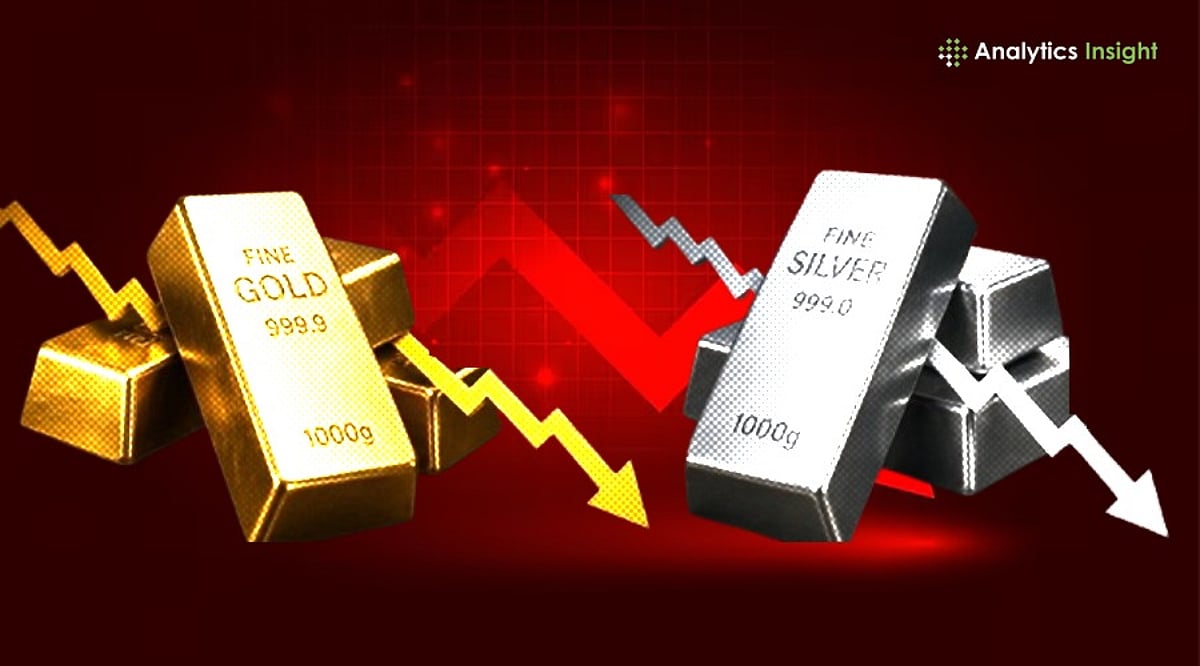
    Gold prices on the Multi Commodity Exchange (MCX) declined on July 10, tracking weak global cues and ongoing uncertainty surrounding the US-Iran conflict. August gold futures slipped 0.27% to Rs 1,44,901 per 10 grams. September silver futures also edged lower, falling 0.08% to Rs 2,26,200.

    Meanwhile, international crude oil prices gained. Brent crude futures rose 0.50% to $76.66 a barrel, while US West Texas Intermediate (WTI) advanced 0.46% to $72.41 a barrel.

    According to the CME FedWatch Tool, traders now see a 64% probability of a September rate hike by the Federal Reserve, up from 54% a week earlier.

    Domestic Gold Prices

    In the domestic spot market, 24K gold rose by Rs 38 to Rs 1,44,820 per 10 grams, while 22K gold gained Rs 35 to Rs 1,32,750. City-wise, Mumbai and Kolkata quoted identical rates at Rs 1,44,820, Delhi was at Rs 1,44,950, and Chennai at Rs 1,45,640.

    US Gold Prices

    In the US, gold prices edged higher on Friday as the dollar softened and concerns over escalating US-Iran tensions fueled inflation worries, keeping the Federal Reserve on a hawkish path. Spot gold was up 0.2% at $4,128.92 per ounce. US gold futures for August delivery held steady at $4,139.50.

    Spot silver rose 0.8% to $60.46 per ounce, platinum gained 1.6% to $1,636.68, and palladium added 1.6% to $1,267.

    Key Levels to Watch

    “Gold is in consolidation mode today following yesterday’s gains, with traders hesitant to commit to further upside amid the prevailing uncertainty over US-Iran relations,” said Tim Waterer, chief market analyst at KCM Trade.

    “I expect gold will continue to attract buyers on dips as long as oil stays around current levels. However, any sharp spike in oil could reignite inflation and interest rate fears, which would be to gold’s detriment,” Waterer added.

    Internationally, gold has support at $4,110 and $4,074, while resistance is at $4,165 and $4,200 per troy ounce. Silver has support at $59.80 and $58.50, with resistance at $61.40 and $63 per troy ounce.

    On MCX, gold has support at Rs 1,44,400 and Rs 1,43,650, and resistance at Rs 1,46,150 and Rs 1,47,000. Silver has support at Rs 2,24,000 and Rs 2,21,000, with resistance at Rs 2,29,100 and Rs 2,32,000.

  • Gold Prices Slide on MCX as Middle East Tensions and Fed Rate Hike Expectations Dampen Sentiment

    Gold Prices Slide on MCX as Middle East Tensions and Fed Rate Hike Expectations Dampen Sentiment

    Gold futures on the Multi Commodity Exchange (MCX) declined on July 9, driven by renewed geopolitical tensions between the US and Iran and growing expectations of aggressive monetary tightening by the Federal Reserve. August gold futures slipped 0.24% to Rs. 1,43,371 per 10 grams, while September silver futures dropped 0.44% to Rs. 2,22,464.

    On the global front, Brent crude oil futures rose 1.05% to $78.84 a barrel, and US West Texas Intermediate (WTI) crude advanced 1.07% to $74.31 a barrel, as market participants priced in the increased risk premium from the unstable US-Iran ceasefire agreement.

    According to the CME FedWatch Tool, traders now see a 68% probability of a Fed rate hike in September, up from 63% previously. This repricing of a possible second interest rate hike as early as Q1 next year has been a key factor pressuring gold prices, according to Kelvin Wong, senior market analyst at OANDA.

    Domestic and US Gold Prices

    In India, 24K gold fell by Rs. 11 to Rs. 1,43,240 per 10 grams, while 22K gold declined by Rs. 10 to Rs. 1,31,300. City-wise, Mumbai and Kolkata recorded prices at Rs. 1,43,240, Delhi at Rs. 1,43,390, and Chennai at Rs. 1,44,220.

    Internationally, spot gold dropped 0.4% to $4,060.46 per ounce, hovering near a one-week low. US gold futures for August delivery were down 0.3% at $4,069.80. Spot silver fell 0.9% to $57.77 per ounce, while platinum rose 0.8% to $1,591.13 and palladium gained 0.8% to $1,223.95.

    Key Levels to Watch

    Analysts have identified key support and resistance levels for gold and silver. Internationally, gold has support at $4,055 and $4,010 and resistance at $4,122 and $4,150 per troy ounce. Silver has support at $57 and $55.50 and resistance at $60 and $61.40.

    On the MCX, gold has support at Rs. 1,43,100 and Rs. 1,42,200 and resistance at Rs. 1,44,400 and Rs. 1,45,150. Silver has support at Rs. 2,20,000 and Rs. 2,16,600 and resistance at Rs. 2,26,600 and Rs. 2,30,000.

    Market participants will continue to monitor developments in the Middle East and any new signals from the Federal Reserve regarding the timing of policy tightening, which could further influence precious metal prices.

  • S&P 500 and NASDAQ Dip as Oil Surges on Trump’s Iran Warning

    S&P 500 and NASDAQ Dip as Oil Surges on Trump’s Iran Warning

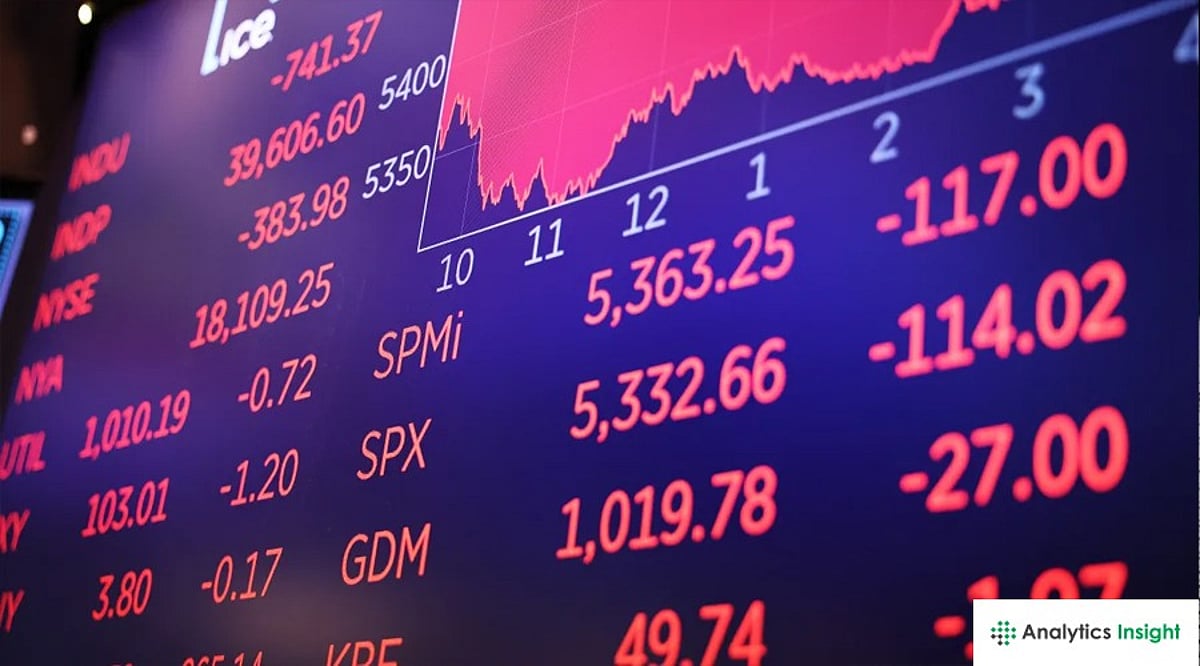
    Wall Street moved lower on Wednesday after President Donald Trump declared the interim US-Iran accord ‘over,’ reigniting fears of conflict near a critical global energy route. The Dow Jones Industrial Average fell roughly 1.5%, the S&P 500 dropped 0.7%, and the NASDAQ Composite declined 0.8% by late morning trading.

    The market reaction was notable but orderly. Oil prices spiked sharply, Treasury yields climbed, and investors rotated away from travel and consumer stocks. However, gains in chip and energy shares helped cushion the broader decline across major indices.

    Stocks Fall, But Losses Stay Contained

    US equities opened under pressure after Trump said he had no interest in further talks with Iran and warned of possible additional US strikes. The comments followed renewed attacks tied to the Strait of Hormuz, a key waterway for global oil flows.

    Despite the tension, the selloff remained narrower than a full risk-off event. At 11:30 a.m. ET, the Dow was down 810 points to 52,115. The S&P 500 slipped to 7,431, while the NASDAQ fell to 25,565. Decliners outpaced advancers on both the NYSE and NASDAQ, signaling broad caution.

    Oil Jumps as Hormuz Risks Return

    Oil prices delivered the clearest market reaction to Trump’s remarks. Brent and US West Texas Intermediate crude both surged more than 5% as traders reassessed supply risks from the Gulf region.

    The move was not worse because traders had already priced in months of Middle East disruption. Some investors also waited to see whether shipping through the Strait of Hormuz would face a fresh full blockade. Fiona Cincotta of City Index captured this caution, saying, “This was always a very fragile peace process.”

    Chip Gains Cushion NASDAQ

    Technology stocks offered partial support, mainly through chipmakers. Broadcom rose after Apple announced plans to spend more than $30 billion under a chip-supply agreement with the company. This gain helped ease pressure on the NASDAQ, which has faced recent volatility.

    The Philadelphia SE Semiconductor Index also advanced, while energy was one of the few S&P 500 sectors in positive territory. Nine of the 11 main S&P 500 sectors traded lower. Travel shares weakened as higher fuel prices raised cost concerns for airlines and cruise operators.

    Investors Watch Fed Minutes

    The timing added another layer for markets, with the Federal Reserve set to release minutes from its June policy meeting at 2 p.m. ET. The meeting was the first under Chair Kevin Warsh, who has shifted away from forward guidance and kept rates unchanged at 3.50% to 3.75%.

    Higher oil prices brought inflation risk back into focus before the release. Ian Lyngen of BMO Capital Markets said June core inflation figures could draw less attention if crude keeps moving higher in July. He added that the Fed minutes may look “somewhat stale” after the latest Middle East turn.

    Doubts Keep the Reaction Measured

    Analysts pointed to uncertainty rather than a single clear market path. Matthew Ryan of Ebury said ‘the million-dollar question’ was whether talks had fully broken down or only hit a temporary setback. This doubt helped explain why stocks fell but did not collapse.

    Meanwhile, the International Monetary Fund lowered its 2026 global growth forecast to 3.0% and cited war-related energy risks. The update gave investors another reason to watch oil, inflation, and central bank policy closely, while markets waited for clearer signs on Iran, shipping flows, and Fed thinking.

  • MCX Gold Declines 0.35% to ₹1,44,885 as Middle East Tensions and Fed Rate Concerns Weigh

    MCX Gold Declines 0.35% to ₹1,44,885 as Middle East Tensions and Fed Rate Concerns Weigh

    Gold prices on the Multi Commodity Exchange (MCX) slipped on July 8, tracking weakness in global bullion markets as escalating tensions between the United States and Iran in the Middle East stoked inflation fears and strengthened the U.S. dollar. August gold futures fell 0.35% to ₹1,44,885 per 10 grams, while September silver futures dropped 0.8% to ₹2,29,007 per kilogram.

    Brent crude futures jumped 2.55% to $76.05 a barrel, and U.S. West Texas Intermediate (WTI) advanced 2.51% to $72.21 a barrel, reflecting supply concerns from the geopolitical unrest.

    Fed Rate Hike Expectations Rise

    According to the CME FedWatch Tool, traders now see a 63% probability of a rate hike in September, up from 57% previously. Higher interest rates tend to pressure gold prices by increasing the opportunity cost of holding non-yielding assets.

    Domestic Gold Prices

    In the domestic market, 24K gold fell by ₹77 to ₹1,44,490 per 10 grams, while 22K gold declined by ₹70 to ₹1,32,450. City-wise, Mumbai and Kolkata quoted gold at ₹1,44,490, Delhi at ₹1,44,640, and Chennai at ₹1,45,420.

    U.S. Gold and Metals Market

    In the U.S., spot gold rose 0.5% to $4,125.59 per ounce, while August gold futures shed 0.5% to $4,136.30. Spot silver gained 0.8% at $60.47 per ounce, platinum slipped 0.3% to $1,635.45, and palladium dropped 0.6% to $1,268.64.

    Key levels for MCX gold indicate immediate resistance at ₹1,46,000 per 10 grams and support at ₹1,44,000. Analysts note that while the broader trend remains under pressure, a technical pullback is possible at current levels. For MCX silver, major resistance is at ₹2,32,500 per kilogram, with support at ₹2,28,000.

    “Over the past 24 hours, there was a little bit of a scare again on the inflation front. So bonds came in lower, the dollar popped a little, gold pulled back, and now seems to be kind of stabilising after that correction. At this point, we’ve been watching gold attempt to carve out a bottom,” said Ilya Spivak, head of global macro at Tastylive.

  • Bitcoin Shows Independent Price Action: Is the Rebound a Trend Reversal or Just a Bounce?

    Bitcoin Shows Independent Price Action: Is the Rebound a Trend Reversal or Just a Bounce?

    Bitcoin has started to exhibit price action of its own following a recent rally from $57,742 to the current level at $62,770.67. However, macroeconomic uncertainty, derivatives hedging, and fresh geopolitical risks persist, keeping recovery pressure on the market.

    Fed Signals Ease Inflation Concerns

    The rebound started when Fed Chair Kevin Warsh avoided announcing a rate cut but said that the inflation outlook had eased slightly in recent weeks. He also reiterated the Fed’s policy of sustaining the 2% inflation target. The market focused more on the first half of the message. Traders started to ease back on hopes of further hikes after inflation concerns eased and US employment data weakened. For Bitcoin, this mattered because higher interest rate expectations usually reduce the valuation space for risk assets. The rebound above $60,000 was not just a technical bounce but rather a genuine step up. Rates signaled a repricing of “rate-hike pressure” and unwinding of previous panic trades.

    Liquidations Fuel the Bitcoin Rebound

    According to CoinGlass, Bitcoin’s drop toward $57,700 triggered nearly $395 million in liquidations. This indicates the sell-off was not triggered by normal selling but also by forced selling from leveraged sell positions. Markets often rebound after forced liquidations subside. Once macro news becomes less negative, short sellers begin to reduce risk. The short covering puts buying pressure and can speed up the buying trend. Similarly, Bitcoin hit $62,000 when both Ethereum and Solana also recovered, causing $281 million worth of bearish liquidations. This indicates that spot demand was not the only factor affecting the recovery rate, but rather the derivatives positioning as well.

    Options Market Still Signals Caution

    While the rally is underway, traders are not yet convinced that a trend change is underway. Traders on Deribit purchased around $50 million in put options, and Bitcoin and Ethereum put/call skew remained negative, indicating demand for downside protection. The derivatives market continues to buy insurance, but the spot market is rebounding. Traders who felt the trend had completely turned would probably see premiums declining more quickly. The broader trend is also looking fragile, with a ‘death cross’ on technical charts providing some caution.

    Altcoins Join the Recovery

    Bitcoin bounced back above $60,000, along with Ethereum, Solana, and Dogecoin. Capital is starting to move into the large-cap altcoins, and Ethereum has surged by approximately 12% during the past week. CoinMarketCap reported that the altcoin season index increased to its highest level in three months at 52. This is a sign of the increase in risk appetite, but it’s not an official altcoin season.

    Why This Matters

    This rebound highlights Bitcoin’s battle between macro relief and geopolitical friction. While easing Fed inflation concerns and short liquidations fuel short-term recovery, persistent options hedging and rising West Asia tensions prove that institutional investors still treat crypto as a high-risk asset.

    Technical Structure

    On Wednesday, the US military executed strikes against Iran in retaliation for three ships struck by Tehran in the Strait of Hormuz. Brent crude oil price rose 3.26% to $76.58, following a 5% jump the previous day, while Bitcoin was losing ground. Bitcoin trades below $63,000, reflecting a capped recovery below its 50-day Exponential Moving Average (EMA) at $65,581. The 200-day EMA at $75,459 sits well above the 50-day EMA, retaining a broader bearish bias. The Relative Strength Index (RSI) at 48 is moving flat near the midline while the Moving Average Convergence Divergence (MACD) holds above the signal line as the histograms contract, hinting at only residual buying interest. Bitcoin should clear the 50-day EMA at $65,581 for a steady bullish recovery that could target the $70,000 threshold, followed by the 200-day EMA at $75,459.

    FAQs

    1. Why did Bitcoin rebound from recent lows? Bitcoin rebounded after inflation concerns eased and weak US employment data reduced expectations of further rate hikes. Short-covering after heavy liquidations also added buying pressure.
    2. Is Bitcoin’s rebound a confirmed trend reversal? Not yet. Bitcoin has recovered above $60,000, but it remains below the 50-day EMA at $65,581 and the 200-day EMA at $75,459, keeping the broader trend cautious.
    3. What role did liquidations play in Bitcoin’s recovery? According to CoinGlass, Bitcoin’s fall near $57,700 triggered nearly $395 million in liquidations. After forced selling, short-covering helped accelerate the rebound toward $62,000.
    4. Why is the options market still cautious on Bitcoin? Traders continue to buy downside protection through put options, showing that the derivatives market has not fully accepted the rebound. This suggests investors still fear another downside move.
    5. What price level must Bitcoin clear for bullish momentum? Bitcoin needs to break above the 50-day EMA near $65,581 to strengthen recovery momentum. Above that, the next key upside levels are $70,000 and the 200-day EMA near $75,459.
  • MCX Gold Slips 0.63% to Rs 1,45,990 as Brent Crude Rises; Fed Minutes in Focus

    MCX Gold Slips 0.63% to Rs 1,45,990 as Brent Crude Rises; Fed Minutes in Focus

    Gold prices edged lower on the Multi Commodity Exchange (MCX) on July 7, as investors turned cautious ahead of the release of the US Federal Reserve’s minutes from its June policy meeting. The August gold futures contract declined 0.63% to settle at Rs 1,45,990 per 10 grams, while September silver futures dropped 1.23% to Rs 2,33,201.

    In the energy market, Brent crude futures gained 0.60% to $72.42 a barrel, and US West Texas Intermediate (WTI) crude rose 0.51% to $68.90 a barrel. The rise in crude prices added to inflationary concerns, which weighed on bullion demand.

    According to the CME FedWatch Tool, market expectations for a September rate hike by the Federal Reserve have eased slightly to 56%, down from 60% previously. The upcoming Fed minutes are expected to provide further clarity on the central bank’s monetary policy trajectory.

    Domestic Gold Prices

    In the domestic spot market, 24K gold fell by Rs 136 to Rs 1,45,260 per 10 grams, while 22K gold declined by Rs 125 to Rs 1,33,150. Regional variations were observed: Mumbai and Kolkata quoted gold at Rs 1,45,260, Delhi at Rs 1,45,410, and Chennai at Rs 1,47,920.

    US Gold Prices

    Internationally, gold prices eased on Tuesday, trading below a two-week high. Spot gold slipped 0.6% to $4,138.32 per ounce, while US gold futures for August delivery fell 0.4% to $4,149.90. Among other precious metals, spot silver declined 1% to $61.48 per ounce, platinum eased 0.1% to $1,629.46, and palladium rose 0.4% to $1,272.85.

    Key Levels to Watch

    Nicholas Frappell, global head of institutional markets at ABC Refinery, noted that gold price action reflects a continuation of last week’s pattern, with the market forming a support base while awaiting direction from the Fed minutes.

    Internationally, gold has support at $4,135 and $4,100 per troy ounce, with resistance at $4,194 and $4,220. Silver support stands at $61.20 and $59.80, with resistance at $63.40 and $64.20. On MCX, gold support is at Rs 1,46,100 and Rs 1,45,500, while resistance is at Rs 1,47,400 and Rs 1,48,200. Silver support on MCX is at Rs 2,33,300 and Rs 2,30,000, with resistance at Rs 2,38,800 and Rs 2,41,000.

    Market participants remain focused on the Fed’s policy outlook, which will likely dictate the near-term direction for gold and other commodities.

  • MCX Gold Slips 0.63% to Rs. 1,45,990 as Brent Crude Rises; All Eyes on Fed Minutes

    MCX Gold Slips 0.63% to Rs. 1,45,990 as Brent Crude Rises; All Eyes on Fed Minutes

    Gold futures on the Multi Commodity Exchange (MCX) traded lower on Tuesday, July 7, as investors awaited the release of the US Federal Reserve’s June policy meeting minutes for further clues on the central bank’s monetary policy trajectory. The August gold contract declined by 0.63% to settle at Rs. 1,45,990 per 10 grams.

    In the precious metals complex, September silver futures also witnessed a decline, falling 1.23% to Rs. 2,33,201 per kilogram. Meanwhile, in the energy market, Brent crude futures edged up 0.60% to $72.42 a barrel, while US West Texas Intermediate (WTI) crude advanced 0.51% to $68.90 a barrel.

    According to the CME FedWatch Tool, market participants now see a 56% probability of a rate hike at the Fed’s September meeting, down from the previous week’s reading of 60%.

    Domestic Gold Prices

    In the local physical market, 24-karat gold fell by Rs. 136 to Rs. 1,45,260 per 10 grams, while 22-karat gold declined by Rs. 125 to Rs. 1,33,150. Regional variations were observed: Mumbai and Kolkata quoted 24K gold at Rs. 1,45,260, Delhi at Rs. 1,45,410, and Chennai at Rs. 1,47,920.

    US Gold Prices

    US gold prices eased on Tuesday, trading below a two-week high, as investors adopted a cautious stance ahead of the Fed minutes. Spot gold fell 0.6% to $4,138.32 per ounce, and US gold futures for August delivery dipped 0.4% to $4,149.90.

    Among other precious metals, spot silver slipped 1% to $61.48 per ounce, platinum eased 0.1% to $1,629.46, while palladium posted a modest gain of 0.4% to $1,272.85.

    Key Levels to Watch

    “Gold price action looks like a continuation of last week’s basing, forming a support level. The market is clearly waiting for direction from the Fed minutes to get a better sense of the Fed’s thinking on short-term interest rate policy,” said Nicholas Frappell, global head of institutional markets at ABC Refinery.

    Internationally, gold has support at $4,135 and $4,100 per troy ounce, with resistance at $4,194 and $4,220. Silver support stands at $61.20 and $59.80, while resistance is seen at $63.40 and $64.20. On MCX, gold support is at Rs. 1,46,100 and Rs. 1,45,500, resistance at Rs. 1,47,400 and Rs. 1,48,200. For silver MCX, support is at Rs. 2,33,300 and Rs. 2,30,000, with resistance at Rs. 2,38,800 and Rs. 2,41,000.

    Investors remain focused on the Fed minutes release scheduled later this week, which could provide clearer signals on the timing and pace of potential rate adjustments.

  • XRP Gains Momentum as Fed Rate Cut Hopes Rise: Key Drivers Explained

    XRP Gains Momentum as Fed Rate Cut Hopes Rise: Key Drivers Explained

    XRP has moved higher in recent days as investors react to shifting expectations about U.S. interest rates. The latest economic reports point to slower inflation and weaker job market growth, prompting many market experts to anticipate that the Federal Reserve will lower borrowing costs later this year instead of maintaining high rates. This shift has created fresh demand for assets that typically perform well when financial conditions ease, with cryptocurrencies—and XRP in particular—standing out among the leading digital assets.

    Lower Rate Expectations Support Crypto Prices

    Interest rates play a crucial role in the economy. When rates are high, investors tend to move money into safer assets like Treasury bonds. When rates are expected to fall, the opposite occurs: investors seek assets with high growth potential. Recent U.S. economic data confirmed that the Fed is likely to adopt a more lenient monetary policy, causing Treasury yields to decline and allowing many cryptocurrencies to recover from earlier losses.

    Bitcoin Rally Lifts the Entire Crypto Market

    Bitcoin often sets the direction for digital assets. As Bitcoin rallies, confidence spreads to other cryptocurrencies. The latest Bitcoin surge has created a positive atmosphere, with higher trading activity as investors prepare for possible rate cuts. Better liquidity supports risk assets, and XRP has delivered stronger gains than several other large cryptocurrencies during this recovery.

    Ripple Continues to Build Its Network

    XRP’s rise isn’t solely tied to macroeconomic news. Ripple has expanded its payment network and blockchain services, adding partnerships focused on faster and cheaper international money transfers. The XRP Ledger has also grown through projects in decentralized finance, tokenized real-world assets, and business blockchain solutions. These developments reinforce confidence that XRP has practical uses beyond trading.

    Better Regulatory Outlook Boosts Confidence

    Regulatory clarity is a key contributor to XRP’s resurgence. After years of legal ambiguity in the U.S., the situation now appears more favorable. Many analysts believe clearer regulations could bring banks, financial institutions, and hedge funds into the crypto sector, removing uncertainties and encouraging institutional adoption.

    Institutional Interest Continues to Grow

    Large financial institutions have shown increasing interest in digital assets. XRP remains part of this conversation, with growing expectations that investment products linked to the cryptocurrency—such as exchange-traded funds—may become available. Although regulatory approval is still needed, optimism has built, and many analysts believe institutional investment could become an important demand driver.

    Technical Picture Shows Positive Momentum

    Market charts indicate stronger buying activity. XRP has held above important support levels while trading volume has increased during the recent rally. These signals suggest buyers have returned. Traders are watching key resistance levels; a successful move above them could attract even more demand. However, cryptocurrencies remain highly volatile, and short-term swings can still occur.

    Risks Have Not Disappeared

    Despite positive developments, risks remain. Strong economic data or an unexpected rise in inflation could cause the Fed to postpone rate cuts, potentially reducing demand for cryptocurrencies. Political events, sudden regulatory changes, or shifts in investor sentiment are also factors to consider.

    Outlook for XRP

    XRP has received support from multiple positive developments: softer U.S. economic data, a stronger crypto market, continued growth of Ripple’s ecosystem, rising institutional interest, and better regulatory conditions. The coming months could prove important. If interest rates move lower and Ripple continues expanding its network, market conditions may remain favorable. While price fluctuations are likely, the combination of improving economic conditions and stronger project fundamentals creates a positive outlook for XRP in the current market cycle.

  • Bitcoin Bounces Back Above $63,000 as Whale Buying Offsets Heavy ETF Outflows

    Bitcoin Bounces Back Above $63,000 as Whale Buying Offsets Heavy ETF Outflows

    The crypto market traded on a stronger footing today as Bitcoin climbed near $63,148, rising 0.70% on the day and 6.09% over the week. The rebound follows a harsh first half of 2026, during which Bitcoin slumped from above $93,000. Despite the recovery, the Bitcoin price is still down 27.84% year-to-date after closing June near $60,000.

    Bitcoin Regains Ground After June Sell-Off

    Bitcoin moved back above $63,000 after reversing late-June losses during thin July 4 trading. The move marked its highest level in more than a month, while XRP gained 5% in 24 hours to lead major tokens. Still, the broader picture reveals deep market damage. Bitcoin dropped to a fresh 21-month low in the final week of June before buyers returned in early July.

    Crypto prices today reflect two competing forces. ETF outflows continue to weigh on sentiment, yet large Bitcoin holders have stepped in with aggressive dip buying.

    ETF Outflows Clash with Whale Accumulation

    U.S. spot Bitcoin ETFs recorded their largest monthly outflow since inception in June, with roughly $4.51 billion leaving the products. BlackRock’s IBIT led the withdrawals, according to the figures provided in the report.

    The scale of these outflows prompted Citigroup to cut its one-year Bitcoin target from $112,000 to $82,000. That revision followed weaker demand from ETF-linked capital flows.

    At the same time, Bitcoin whales bought $16.7 billion worth of Bitcoin over two weeks. That buying came as ETFs bled about $4 billion, creating a clear split between institutional product flows and large-holder accumulation.

    Softer macro signals also supported the BTC rebound. Bitcoin climbed back above $61,000 after Federal Reserve Chair Kevin Warsh suggested inflation risks had eased, reducing fears of harsher policy.

    Bitcoin’s Role Moves Beyond Market Cycles

    Bitcoin’s next decade is expected to be shaped less by protocol changes and more by global financial adoption. This view positions Bitcoin as a monetary network rather than a technology stock, payment company, or software platform.

    Bitcoin’s core role centers on stable operation, scarce supply, and final settlement. Its value proposition rests on serving as neutral digital capital that supports credit and commercial activity.

    The base layer supports large-scale asset liquidation, corporate reserves, collateral settlement, and final ownership transfers. Meanwhile, payments, lending, credit products, banking services, and wealth tools can develop around Bitcoin-linked systems.

    The four-year halving cycle still matters, as each halving cuts new supply and protects Bitcoin’s 21 million supply rule. However, halving alone can no longer explain Bitcoin’s overall trend.

    Capital flows now hold greater influence over price movements. ETF flows, corporate treasury allocations, sovereign reserves, derivatives funds, insurance funds, collateral demand, credit structures, and global savings flows all shape demand.

    The next stage of Bitcoin adoption may come through balance sheets across industries. Bitcoin’s broader use will depend on deeper capital markets, wider applications, and rising institutional participation.

    What’s Next?

    Bitcoin regained strength above $63,000 as whale accumulation helped offset heavy crypto ETF outflows. Still, year-to-date losses show that pressure remains. The market’s next direction may depend on capital flows, institutional demand, and Bitcoin’s growing role in global financial systems.

  • S&P 500 and Nasdaq Rise on Chip Stock Rebound, Dow Slips After Record High

    S&P 500 and Nasdaq Rise on Chip Stock Rebound, Dow Slips After Record High

    U.S. stocks closed mixed on Monday as investors returned from the Independence Day holiday with renewed interest in technology and semiconductor shares. The S&P 500 and Nasdaq Composite advanced, while the Dow Jones Industrial Average slipped after briefly crossing the 53,000 threshold for the first time.

    The market’s focus remained on semiconductor stocks, Federal Reserve meeting minutes, and the start of second-quarter earnings season. Key names watched by traders included Broadcom, Apple, Microsoft, SpaceX, and SK Hynix.

    Chip Stocks Lead Nasdaq and S&P 500 Higher

    The Nasdaq Composite gained approximately 1.1%, while the S&P 500 rose 0.5% in morning trading. The Dow Jones Industrial Average fell 0.3% after briefly touching a fresh intraday record above 53,000. This divergence highlighted a split market, with technology stocks leading gains while some blue-chip names lost ground.

    Chip stocks rebounded after two weak sessions last week. The Philadelphia SE Semiconductor Index surged more than 4%, and the information technology sector led gains on the S&P 500. The recovery helped lift investor sentiment following recent pressure on AI-linked shares.

    Broadcom rose 5.7% after extending its chip supply partnership with Apple through 2031. The deal covers custom chip development and supply, giving investors another reason to return to semiconductor names. Micron Technology, Marvell Technology, Teradyne, Western Digital, and Oracle also gained as AI and data center demand remained in focus.

    Meanwhile, SK Hynix prepared to launch a U.S. listing aimed at raising approximately $28 billion. The offering added more attention to the global AI chip trade. The South Korean memory chipmaker has already drawn strong market interest this year, although its shares have also experienced sharp swings.

    Investors Watch Fed Minutes and Economic Data

    Investors also looked ahead to minutes from the Federal Reserve’s latest policy meeting. The minutes are due Wednesday and will be closely watched after the first meeting led by new Fed Chair Kevin Warsh. Traders have reduced bets on a July rate hike after last week’s cooler jobs report.

    According to CME FedWatch data, traders now see a 24% chance of a 25-basis-point rate hike at the July 29 meeting, down from about 30% a week earlier. The shift came as investors judged whether softer labor data could give the Fed more room to wait.

    The Institute for Supply Management reported that its services index slipped to 54.0 in June, close to market forecasts. The reading indicated that U.S. services activity continued to grow, though at a slightly slower pace. Prices eased but remained high, while employment moved back into growth territory.

    Trade Nation’s senior market analyst, David Morrison, expressed doubt about how much clarity the Fed minutes may offer. “Warsh wants the Fed to concentrate on the data and stick to that and not give any projections,” he said. “So it could be that the minutes don’t really give very much away.”

    Earnings Season and Stock Movers Stay in Focus

    Second-quarter earnings will become a key test for Wall Street later this week. Delta Air Lines and PepsiCo are among the companies expected to report results. Investors are watching whether corporate updates can support the market after strong gains in the major indexes last week.

    Morrison also pointed to uncertainty around the largest technology stocks. “This earnings season is important, given the fact that the Magnificent 7 have had a pretty tough time with things of late,” he said. He added that “just a little bit of good news” could help them resume their rally.

    Microsoft shares fell 1.8% after the company announced it would cut about 4,800 jobs, equal to roughly 2.1% of its workforce. The stock’s decline weighed on sentiment around large-cap technology, even as broader tech shares rose.

    SpaceX gained as investors prepared for its entry into the Nasdaq 100 on Tuesday. The move is expected to drive buying from funds that track the index. Elsewhere, O’Reilly Automotive dropped after reports indicated the company made a cash offer for Genuine Parts’ auto unit.

    Global markets were more muted. European stocks slipped slightly, while Asian markets ended mixed. Japan’s Topix rose, South Korea’s Kospi fell, and Hong Kong’s Hang Seng gained. Oil prices drifted after OPEC+ members agreed to raise output again in August, while U.S. Treasury yields edged lower.

    With the second-quarter earnings season beginning and the Federal Reserve minutes due later this week, investors are expected to look for fresh signals on corporate profitability and the future path of U.S. interest rates, which could shape the market’s next move.