Tag: Financial Services

  • Bitget Expands to New Zealand With Financial Services Provider Registration

    Bitget Expands to New Zealand With Financial Services Provider Registration

    Bitget, the world’s largest Universal Exchange (UEX), has officially entered the New Zealand market by registering as a Financial Services Provider on the country’s Financial Service Providers Register (FSPR).

    The registration strengthens Bitget’s financial services framework, covering key service categories such as foreign currency exchange, domestic and cross-border money transfers, client asset custody, portfolio and money management, and the execution of financial product or foreign exchange transactions on behalf of clients.

    In addition to the FSPR registration, Bitget has joined the New Zealand Insurance and Financial Services Ombudsman (IFSO) Dispute Resolution Scheme. This independent scheme provides eligible customers with an external channel to raise and resolve disputes related to participating financial service providers.

    This move is part of Bitget’s broader strategy to build the operational and compliance infrastructure required for its expanding range of financial products, including traditional market instruments, foreign exchange services, and tokenized real-world assets.

    “Financial platforms need compliance structures that can support a wider mix of assets and services,” said Gracy Chen, CEO of Bitget. “The registration adds another layer to our international financial services framework as the platform continues connecting digital assets with established markets.”

    The Universal Exchange model brings crypto assets, tokenized stocks, commodities, foreign exchange, and other financial products into a single trading platform. Bitget continues to develop its services through registered entities and qualified partners across different jurisdictions.

    Disclaimer: Product availability remains subject to applicable laws, local requirements, and regional eligibility. Registration on the FSPR does not constitute an endorsement, approval, or guarantee by the New Zealand Government, the Financial Markets Authority (FMA), or the Registrar of Financial Service Providers.

  • The Architect Behind Enterprise Platforms: A Conversation on Scaling, Quality, and AI in Software Engineering

    The Architect Behind Enterprise Platforms: A Conversation on Scaling, Quality, and AI in Software Engineering

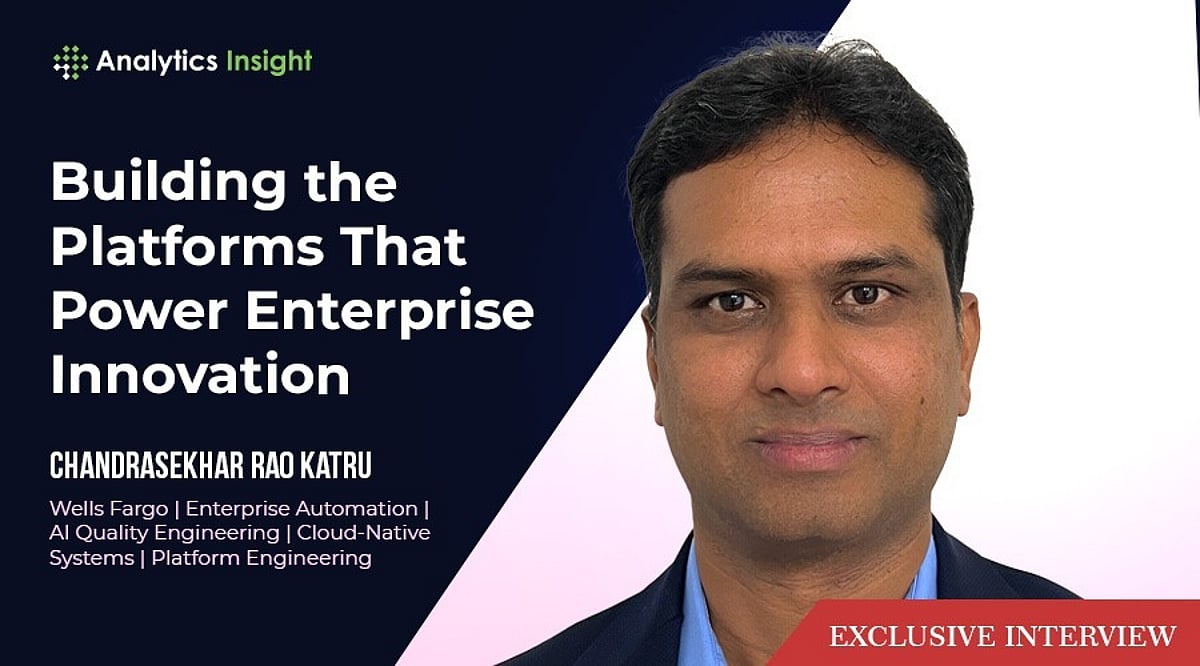
    In this interview, Chandrasekhar, a seasoned software and platform engineering leader with nearly two decades of experience, shares his journey from building telecommunications billing systems to designing the infrastructure that powers one of America’s largest banks. He discusses the principles that have guided his work, the challenges of building platforms at scale, and how he integrates AI into quality engineering while maintaining compliance in regulated environments.

    Q: Could you briefly introduce yourself and share your journey into software engineering and platform engineering?

    A: I started as a Java developer in telecommunications, writing billing systems for British Telecom. That environment is unforgiving—processing errors have direct financial consequences for customers, so correctness at the design stage is not optional.

    What pulled me toward platform engineering was a pattern I kept seeing across every organization I worked in: teams solving the same infrastructure problems in isolation, building their own tooling, making the same avoidable mistakes. The London 2012 Olympics work sharpened this. When systems serve a global audience simultaneously, the shared infrastructure underneath the application matters as much as the application itself. I started building for that layer deliberately. Twenty years on, that is still the core of what I do.

    Q: Over the past two decades, what have been the most significant lessons you’ve learned from building enterprise-scale software systems?

    A: The first is that what works for one team breaks at fifty. Scale does not give you more of the same problems—it surfaces assumptions nobody noticed they had made. Decisions that felt reasonable in year one become liabilities in year five, and the engineers who made them are often long gone.

    The second came from Weight Watchers. The SmartPoints algorithm touched millions of daily decisions about what people ate. A subtle error there was not a software bug; it was a public health issue. I carry that framing into financial services. The downstream consequences of a bad deployment are real and human, and that changes how seriously you take the platform work upstream of every release.

    The third is harder to articulate but matters as much: staying longer than is fashionable. The full lifecycle of a platform—design, adoption, scaling, failure, recovery, evolution—takes years to live through. I have seen that arc on more than one system and it has fundamentally changed how I build.

    Q: You developed an automation framework that became the standard across thousands of projects at a major financial institution. What problem were you trying to solve and what impact has it delivered?

    A: The core problem was that quality had no common language across the organization. Teams were running inconsistent configurations, different frameworks, different data strategies, different reporting formats. You could not compare quality signals across teams because the signals themselves were incompatible. Leadership had no reliable picture of delivery health at the portfolio level.

    I redesigned the framework by embedding it directly into CI/CD pipelines, ensuring that any team capable of executing a build could also execute automation. I also rebuilt the entire test result structure throughout so that logging and failure reporting would be consistent regardless of which team or application was running the tests. The impact is measurable: the framework now operates as the standard across more than 2,500 enterprise projects, quality gates are automated rather than manually enforced, and the duplicated infrastructure investment across teams has been largely eliminated.

    Q: How do you ensure software quality and governance across an organization with tens of thousands of engineers without slowing down innovation?

    A: The honest answer is that speed and governance only conflict when governance is badly designed. I have been on both sides of that. I have watched teams grind to a halt because every release needed a manual sign-off from three people. I have also built systems where compliance happened automatically and nobody had to slow down to think about it.

    What I did was embed the quality checks directly into the pipeline so they run without anyone asking them to. Tests fire automatically. Policy gates trigger automatically. Audit records get created automatically. When doing the right thing is also the fastest thing, engineers just do it. It is a design decision I made deliberately. The governance is still there—it just does not require a human in the loop at every step. In a bank that ships software every day, that is the only way it works in practice.

    Q: Can you tell us about the cloud-native execution platform you’ve built and the challenges of operating it at such a large scale?

    A: When I took on this problem, teams were running tests on static infrastructure and execution time was a significant bottleneck. Test suites had grown to the point where sequential execution was taking hours. By then automated testing stops serving its purpose—the feedback arrives after the team has already moved on and the value is lost.

    I built the platform on Kubernetes so workloads run in parallel across containerized environments. In a regulated bank, though, making execution fast is only part of the problem. It also has to be auditable, and those two requirements pull in opposite directions. I originally built on AKS for orchestration, autoscaling and Azure-native integration. I am now expanding it with OpenShift support, which adds image signing, namespace isolation and role-based access controls that compliance teams require and that can be independently verified across environments.

    The numbers reflect what that shift produced. The platform now executes over 137,000 validation jobs and approximately 875,000 automated tests within a thirty-day period, with an average execution time of around 26 minutes. Jobs that previously took hours now finish in under half an hour. But throughput is not the metric I care most about. It results in trustworthiness. Teams have to be able to act on what the platform tells them and that requires a level of reliability that does not happen by accident.

    Q: What role is AI playing in modern quality engineering and how are financial institutions leveraging it to improve software delivery?

    A: I have applied AI to strengthen the automation systems I built, while preserving the control and audit mechanisms that regulated environments require. I introduced a GenAI-based approach to extend automation coverage to approximately 800 applications that previously had none, generating tests calibrated to each application’s complexity and integrating them automatically into the test execution platform.

    I built predictive models into automation workflows that surfaced failure patterns and dependency behavior under load that manual review would have missed. In one instance, a predictive model I built identified a dependency timing issue across seemingly unrelated failures, which significantly reduced investigation time and helped teams reach the root cause faster. But I did not automate decisions based on those outputs. In a regulated environment the model provides insight—the decisions and audit trails remain under human control. The capability is real; the implementation has to be redesigned around compliance requirements before it can run in production.

    Q: As organizations continue their cloud transformation journeys, what are the biggest mistakes you see teams making when adopting cloud-native technologies?

    A: The biggest one I keep seeing is teams treating migration as a hosting decision when it is actually an architectural redesign. I have watched teams lift applications that were built around shared memory and persistent connections, drop them into containers and then spend the better part of two years debugging failures that their old architecture never produced. The containers did not break anything—they just made visible what was always there.

    The second mistake is skimping on observability—and I ran into this myself. Early in building our cloud-native platform we had a category of failures that looked completely random. Nothing in the logs connected them. I added distributed tracing and it turned out to be a container warm-up timing issue that only showed up under certain cluster loads. Without that instrumentation I would still be guessing. In a regulated environment that kind of unexplained failure is not just an ops problem—it creates a compliance problem. I built observability from the start after that.

    Q: What does effective platform engineering look like in a highly regulated environment such as banking and financial services?

    A: The platform has to answer a regulator’s question before it is asked. What was deployed? When? By whom? What validations ran before it reached production?

    Early in my platform work, I had a release that cleared every quality gate—tests ran, coverage thresholds were met, the pipeline went green. It was stopped anyway because the test execution logs were not stored in a format that satisfied the audit requirement. The capability was there; the evidence trail was not. That incident changed how I design permanently. I now ensure every automation workflow captures logs, inputs, outputs and decision points in a structured, reviewable format. Traceability is a first-class requirement from day one, not something retrofitted after a compliance review.

    Effective platform engineering here also means risk and compliance teams are design partners, not downstream reviewers. The institutions that do this well end up with platforms that are both faster to use and easier to audit, because the compliance path and the delivery path are the same path.

    Q: Your research work has received recognition from global institutions and researchers. How do you bridge the gap between academic research and real-world engineering challenges?

    A: The research grows directly out of production problems. While building the data quality dashboard platform, I kept hitting a question that existing literature did not answer well: how do you make quality signals meaningful to non-engineers at enterprise scale? I worked through it, published the findings and that paper has since been cited by researchers at Delft University of Technology, institutions across China and others across fifteen countries. But the more important outcome was that the design patterns I developed for the paper became the foundation for how I structured quality reporting across the platform itself. The research and the engineering fed each other directly.

    As a practitioner, I am accountable for systems that run in production under load in regulated environments. I cannot theorize around a failure—I have to fix it. The research pushes me to evaluate whether the failures I encounter reflect broader, generalizable patterns. That combination produces reusable solutions with documented reasoning behind them, not one-off fixes and not just theory. I have over 100 citations from researchers across fifteen countries and that reach consistently tells me the problems I am solving inside one institution are problems the global research community recognizes as important.

    Q: Looking ahead, what technology trends do you believe will have the biggest impact on enterprise software development and platform engineering over the next five years?

    A: The thing I am watching most closely is AI moving from something that helps individual developers to something that sits inside the delivery pipeline itself. In the platforms I run I am already working through early versions of this: AI-assisted test generation, predictive failure analysis, automated coverage decisions. It works, but it creates a question I do not think the industry has answered yet: how do you audit a system that is partly generating itself, at enterprise scale, inside a regulated institution? That is something I am actively designing around right now.

    The London 2012 experience comes back to me when I think about where this is heading. Those systems had to be correct before they went live. There was no patching it during the opening ceremony. AI in the pipeline raises the same question at a much larger scale and with far less transparency about why decisions were made. The institutions that work out governance early will have a real advantage. The ones that leave it for later will find out why that was a mistake.


  • How Explainable AI Restores Transparency in Insurance Underwriting

    How Explainable AI Restores Transparency in Insurance Underwriting

    Underwriting functions have experienced their highest level of transformation through artificial intelligence, which currently dominates the financial services sector. Insurers and financial institutions are increasingly relying on machine learning models to accelerate risk assessment processes while improving predictive accuracy and making decision-making more efficient. However, the growing complexity of these systems raises significant concerns about transparency, fairness, and regulatory compliance.

    Organizations face major reputational damage when automated systems fail to provide proper justifications for their results. Customers demand clear explanations behind negative outcomes, and regulators require businesses to maintain auditability. As a result, explainability systems have become essential for both business operations and ethical standards.

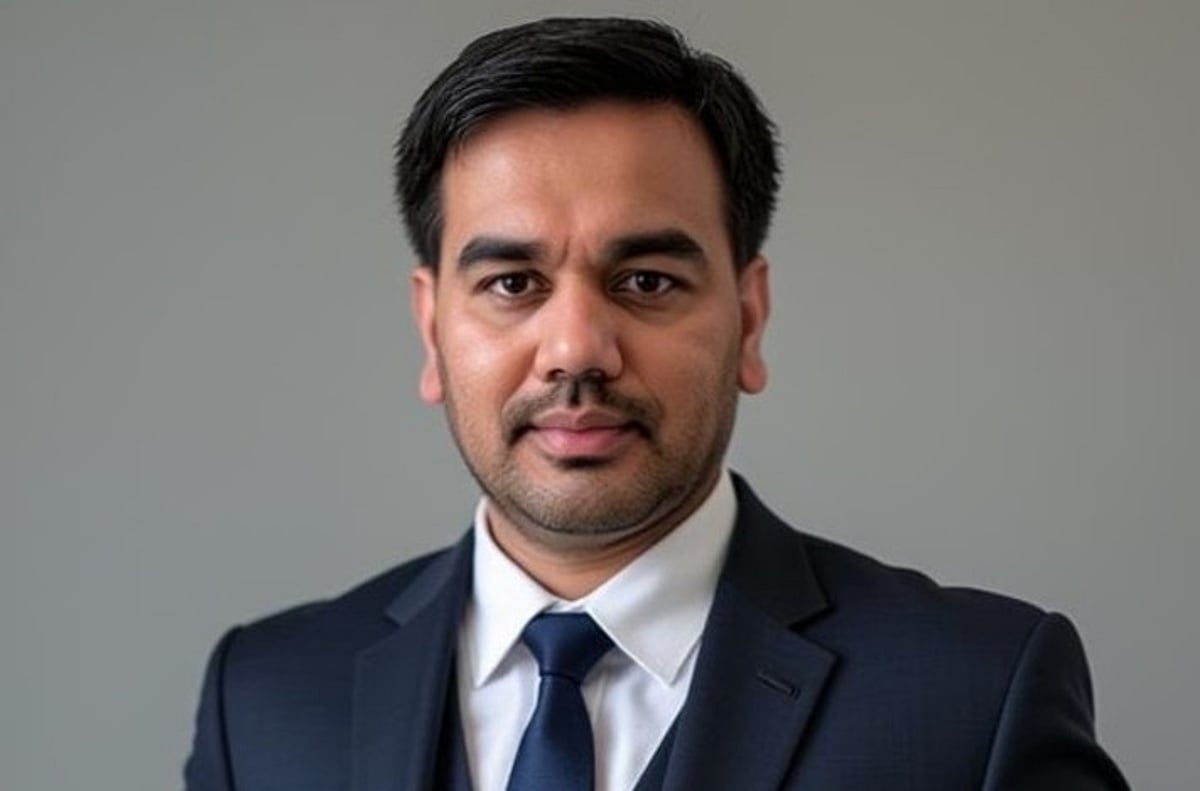
    Within this evolving landscape, Jalees Ahmed has been working at the intersection of AI innovation and governance, focusing on validating explainable AI systems in underwriting environments. While data scientists design models and business teams deploy them, his role ensures that automated decisions remain transparent, consistent, and defensible under regulatory scrutiny. His work centers on validating AI outputs so underwriting decisions can be clearly explained, audited, and trusted.

    “AI in underwriting cannot simply be accurate, it must be accountable,” Jalees explains. “If a customer receives an adverse decision, the organization must be able to clearly explain why, how, and based on which validated factors. Accuracy without transparency creates risk.”

    Recognizing that traditional QA approaches were insufficient for probabilistic machine learning systems, Jalees developed structured validation frameworks specifically tailored for AI-driven underwriting. These frameworks focus on feature attribution testing, decision traceability, explanation consistency, and reproducibility controls. Rather than merely verifying outputs, his approach examines behavioral stability, fairness metrics, and governance alignment to ensure models operate within ethical and regulatory boundaries.

    The measurable impact of this work has been significant:

    • Production defects in AI underwriting models reduced by 37% through structured explainability validation testing.
    • Zero major audit findings recorded by implementing traceability validation controls and strengthening documentation standards.
    • AI feature validation coverage expanded from 57% to 82%, reducing data-driven decision errors by 21%.
    • Automated explainability test scripts shortened model validation cycle time by 32%.
    • Improved clarity and consistency in adverse action explanations contributed to a 30% reduction in underwriting decision disputes.

    These improvements addressed one of the most persistent challenges in AI adoption: the “black box” problem. Machine learning systems often generate decisions that are difficult to interpret or validate, creating uncertainty for regulators and business leaders alike. Jalees responded by establishing structured validation controls for feature influence analysis and decision logging, transforming opaque systems into auditable and defensible solutions.

    He also confronted the absence of standardized AI testing practices. Traditional functional testing does not adequately address model drift, probabilistic variability, or fairness risks. By introducing repeatable governance strategies for model stability, bias testing, and explanation validation, he helped embed discipline and accountability into AI lifecycle management. Fairness testing and disparate impact analysis became ongoing processes rather than one-time compliance exercises, reducing ethical, legal, and reputational risks.

    Equally important was bridging communication gaps between data science teams, underwriting professionals, compliance officers, and IT stakeholders. By translating complex model outputs into business-aligned validation criteria, Jalees strengthened collaboration and decision accountability across departments.

    “Explainability is not purely technical,” he notes. “It requires alignment between engineering precision and business responsibility. If teams cannot understand or defend a model’s reasoning, innovation becomes a liability rather than an advantage.”

    From his perspective, the role of Quality Assurance in AI underwriting has evolved into a strategic function that safeguards trust. Data quality and feature integrity, he emphasizes, are often the hidden vulnerabilities in automated systems. Without rigorous validation, explainability can become superficial—technically present but practically insufficient.

    Looking ahead, he anticipates greater regulatory scrutiny, more advanced automated AI testing frameworks, continuous model monitoring, and deeper validation of human-AI decision interactions. As underwriting becomes increasingly automated, governance and transparency will define sustainable innovation.

    “The future of underwriting will not be defined by how quickly decisions are made,” Jalees concludes. “It will be defined by how responsibly they are made. Transparency is not slowing AI adoption—it is ensuring that it endures.”

    As financial institutions continue to integrate advanced AI into core decision-making processes, the importance of explainability and structured validation is becoming unmistakable. In reinforcing transparency and accountability within automated underwriting systems, Jalees Ahmed’s work reflects a broader industry realization: technological progress must be matched by governance discipline, or trust—the foundation of financial services—begins to erode.

  • FTSE 100 Opens Higher on Ukraine Diplomacy, Brent Crude Drops; Sky-ITV Deal and EasyJet Takeover Move Markets

    FTSE 100 Opens Higher on Ukraine Diplomacy, Brent Crude Drops; Sky-ITV Deal and EasyJet Takeover Move Markets

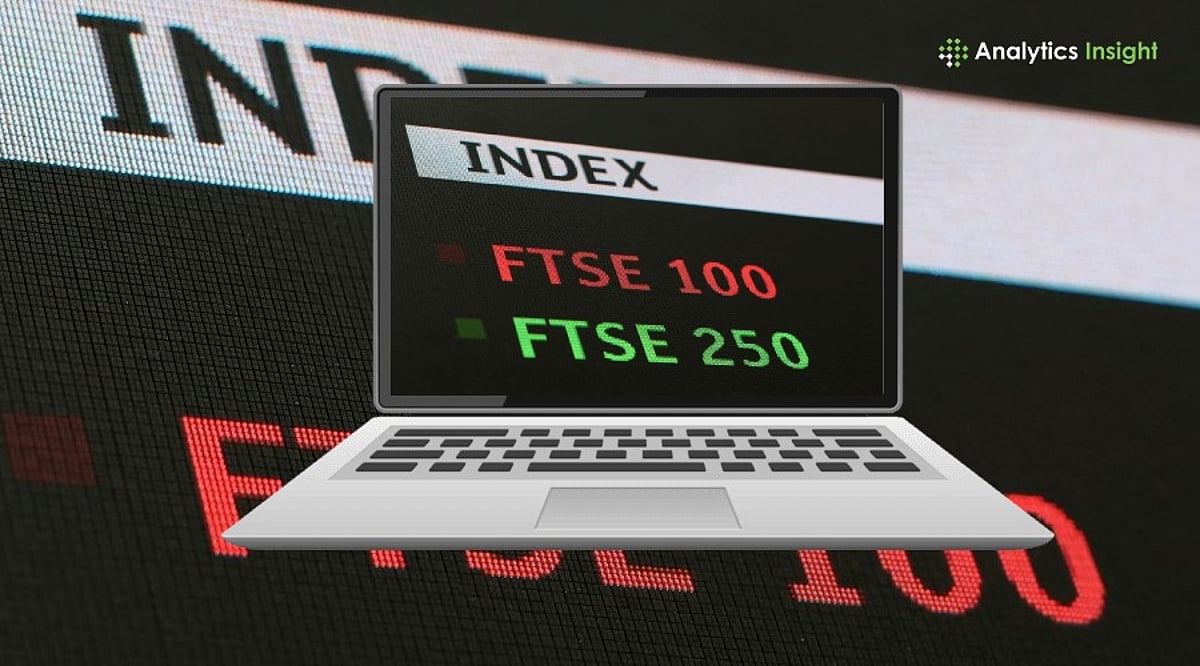
    The FTSE 100 opened 40 points higher at 10,720 on Monday, buoyed by diplomatic developments over Ukraine and a drop in Brent crude prices. The index gained as investors weighed positive geopolitical signals alongside a busy UK corporate calendar featuring a major broadcasting merger and a budget airline takeover.

    Market Open and Key Drivers

    Brent crude futures fell 0.46% to $71.79 a barrel, while US West Texas Intermediate (WTI) rose 0.36% to $68.44. The decline in oil prices helped ease inflation concerns, supporting equity markets. On the diplomatic front, US President Donald Trump held separate calls with Russian President Vladimir Putin and Ukrainian President Volodymyr Zelensky ahead of this week’s NATO summit in Ankara. The Kremlin said the discussions covered efforts to resolve the conflict in Ukraine as well as issues in Iran and the wider Middle East. Meanwhile, Ukraine rejected Russia’s claim that Moscow had captured the strategic eastern city of Kostyantynivka.

    The pound stood at $1.3343 early Monday, down from $1.3351 on Friday. Against the euro, sterling eased to €1.1666 from €1.1672.

    Gainers and Losers

    Top gainers:

    • BAE Systems: +2.55% to £2,032
    • Aberdeen Group: +2.40% to £264.60
    • RELX: +2.36% to £2,389
    • Experian: +2.08% to £2,699
    • Babcock International Group: +1.97% to £1,059.50
    • St. James’s Place: +1.96% to £1,328.50

    Top losers:

    • Halma: -1.30% to £3,962
    • Diploma: -0.97% to £7,130
    • Spirax Group: -0.96% to £6,710
    • Fresnillo: -0.72% to £2,901
    • DCC: -0.58% to £6,055
    • Games Workshop: -0.28% to £21,080

    Sky Acquires ITV Broadcasting Business

    Sky confirmed plans to acquire ITV’s broadcasting business for £1.6 billion. The deal includes £1.2 billion in cash upfront and another £200 million in cash payable in 2028. As part of the agreement, Sky will also transfer ownership of its production company Love Productions—the creator of The Great British Bake Off—to ITV. The acquisition comes as Comcast, Sky’s owner, works to spin off its media businesses, including Sky, into the separately listed NBCUniversal.

    EasyJet Agrees £5.2 Billion Takeover

    EasyJet has agreed to a £5.2 billion takeover offer from US investment firm Castlelake at £6.90 per share. Chris Beauchamp, chief market analyst at IG, commented: “Castlelake’s pursuit of easyJet is ending the way we knew it would, the board having satisfied honour by getting the bidders to boost their original offer. While a decent premium to the lacklustre trading of recent years, it still represents a deep discount to the share price of the late 2010s, a sign of how in need easyJet is for someone to take the controls and plot a more successful flightpath.” EasyJet shares rose nearly 10% to £612.20, a four-year high.

    CBI Survey Shows Financial Services Decline

    Rising oil prices fueled concerns about inflation and interest rates, leading to a sharp slump in financial services activity in the second quarter. Profitability fell heavily to -65% in June from +38% in March, and sentiment deteriorated from +31% in March to -34% in June. Louise Hellem, CBI Chief Economist, said: “The political transition underway must not slow delivery of the government’s Financial Services Growth and Competitiveness Strategy at a time when activity has deteriorated, and firms are facing a more uncertain outlook.”

    Global Market Overview

    US markets were closed on Friday for the Independence Day holiday. In Asia on Monday, Japan’s Nikkei 225 fell 0.2%, China’s Shanghai Composite dropped 0.3%, Hong Kong’s Hang Seng rose 0.8%, and Australia’s S&P/ASX 200 slipped 0.2%. In India, the Nifty 50 and Sensex both gained 0.66% and 0.70%, respectively.

  • How Intelligent CI/CD and Infrastructure Automation Cut Operational Risk in Financial Services

    How Intelligent CI/CD and Infrastructure Automation Cut Operational Risk in Financial Services

    In financial services, the cost of a failed software release is rarely limited to engineering. A single production issue can disrupt payments, delay transactions, lock out customers, and draw immediate scrutiny from risk and compliance teams. As banks expand across cloud-native systems, digital channels, and modern payments infrastructure, the pace of change has increased sharply. So has the need to make every release path more controlled, predictable, and resilient.

    That pressure is now visible well beyond internal technology teams. Reuters reported in March 2026 that more than 40% of cyber incidents reported to the UK’s Financial Conduct Authority in 2025 involved a third party, including outages at Cloudflare and AWS. In Australia, regulators intensified scrutiny of ASX after software-upgrade failures and trade-processing glitches, and Reuters reported that an announcements-platform outage in December 2025 placed about 80 companies into a trading halt after the exchange linked the disruption to a software deployment for a security upgrade. In April 2026, S&P Global downgraded ASX after ASIC found governance and risk-management failures, underscoring how technology execution can now influence not only resilience but institutional credibility.

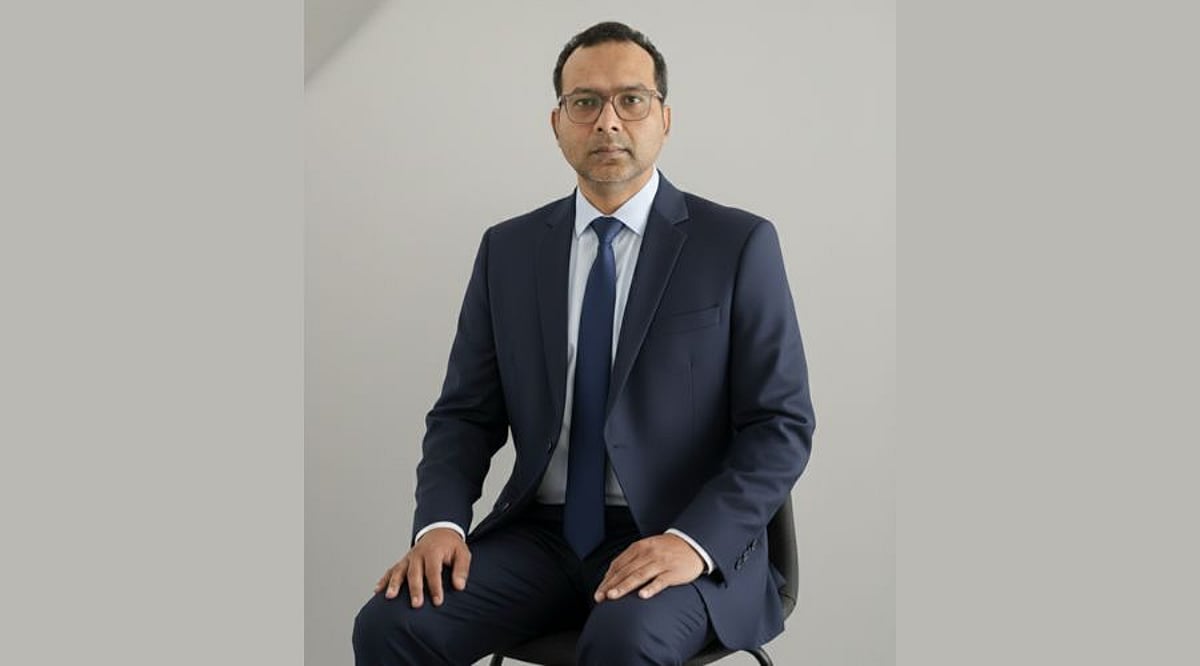
    Against that backdrop, Amol Agade’s work is best understood not simply as delivery acceleration, but as a response to a broader problem in regulated technology operations: how to increase the pace of change without weakening control. His focus in DevOps, automation, and regulated delivery has been on building release systems that detect risk earlier, reduce avoidable friction, and improve audit readiness before changes ever reach production.

    Over the past decade, his work has centered on modernizing how mission-critical banking platforms are built, tested, provisioned, and released. By embedding predictive checks, policy-based controls, and stronger automation into CI/CD pipelines, he has helped teams move away from fragile, manually coordinated release processes and toward more repeatable, governed systems. In practice, that has meant standardizing how infrastructure is provisioned, how deployment decisions are evaluated, and how operational evidence is captured across engineering workflows.

    The operational gains are most visible before changes reach production. In programs where predictive checks and policy-driven controls were standardized, deployment-related incidents fell by more than two-fifths. Infrastructure preparation that once required days of manual coordination was reduced to less than 30 minutes in standardized environments, while environment-related defects fell materially as provisioning became more consistent. In some systems, automated diagnostics and telemetry-driven analysis also shortened recovery times significantly by identifying likely causes earlier and reducing dependence on ad hoc troubleshooting.

    Security and compliance readiness improved as well. With automated patching, configuration management, and more consistent guardrails built into delivery workflows, compliance performance moved from uneven baseline coverage to a far more dependable level, in some cases improving from roughly two-thirds of target coverage to well above 90 percent. Agade’s contribution has also been organizational: treating automation not merely as a convenience, but as a risk-control strategy. Standard Terraform modules, reusable delivery patterns, and embedded compliance rules created a common language for safer change across engineering teams and adjacent platform partners.

    The broader lesson is becoming harder for financial institutions to ignore. In an environment where regulators are tightening incident-reporting expectations and market operators are being penalized for technology failures, intelligent CI/CD and infrastructure automation are no longer just productivity tools. They are increasingly part of how financial institutions defend trust, reduce operational risk, and deliver change safely at scale. Agade’s work fits into that larger shift: not as a stand-alone success story, but as a practical example of how governed automation is becoming a core discipline in modern banking operations.

  • Leading AI Executives Shaping Finance in 2026

    Leading AI Executives Shaping Finance in 2026

    Artificial intelligence is rapidly transforming financial services, from trading floors to retail banking and wealth management. This list highlights the leaders driving that transformation inside the world’s most influential institutions and fintech innovators. From generative AI assistants for advisers to enterprise-wide risk and fraud systems, these executives are defining how intelligence is built, governed, and deployed at scale. Together, they represent the shift from experimentation to production-grade AI that is already changing how finance operates.

    10. Kristin Milchanowski – BMO Financial Group

    Kristin leads BMO’s data and AI strategy, driving digital transformation across the bank’s North American operations. With a background in science and psychology, she champions ethical AI adoption and strong governance frameworks, focusing on data-driven innovation that enhances customer trust while modernizing financial services.

    9. Sarah Guo – Conviction

    Sarah Guo founded Conviction, a venture capital firm that backs early-stage AI companies with funding and operational support. Her network connects startups with talent, customers, and investors.

    8. Andrew Chin – AllianceBernstein

    As the firm’s first Chief AI Officer, Andrew leads the strategy to embed machine learning across asset management. He previously served as Chief Risk Officer and focuses on leveraging data science to improve investment decisions and operational efficiency.

    7. Marco Argenti – Goldman Sachs

    Marco is a strong advocate for agentic AI in banking, promoting systems that actively execute complex tasks. He encourages engineering teams to build personalized AI model toolkits and emphasizes evolving developer roles toward supervising and orchestrating intelligent agents.

    6. Adam Lieberman – Finastra

    Adam leads the AI-first strategy at Finastra, focusing on open finance and generative AI. He oversees intelligent solutions that optimize lending and treasury operations while ensuring advanced analytics are securely embedded in global financial infrastructure.

    5. Shobhit Varshney – Citi

    As Global Head of AI, Shobhit drives generative AI adoption across Citi’s institutional and consumer businesses. Formerly an AI leader at IBM, he focuses on modernizing legacy banking systems and improving developer productivity with a disciplined, compliant approach.

    4. Rachel Schutt – BlackRock

    Rachel leads BlackRock’s AI Labs, a central hub applying AI to high-stakes financial problems. Co-author of Doing Data Science and former Chief Data Scientist at News Corp, she formalizes rigorous data science practices to improve alpha generation and risk management.

    3. Bhavesh Dayalji – S&P Global

    Bhavesh serves as Chief AI Officer at S&P Global and CEO of Kensho. He defines the company’s AI vision and enterprise-wide strategy, scaling practical, trusted AI solutions that enhance data-driven decision-making across global financial markets.

    2. Teresa Heitsenrether – JPMorgan Chase

    Teresa leads AI adoption at the world’s largest bank, overseeing a multi-billion-dollar technology budget supporting over 1,000 data scientists and machine learning engineers. She scales generative AI across fraud detection, risk management, operations, and wealth management while maintaining stringent governance and regulatory standards.

    1. Jeff McMillan – Morgan Stanley

    Jeff is the architect behind Morgan Stanley’s partnership with OpenAI and the AI @ Morgan Stanley Assistant, deployed to thousands of financial advisers. He leads firmwide generative AI strategy, capturing institutional knowledge and making it accessible across wealth management workflows with a human-in-the-loop model.