Tag: generative AI

  • How AI Is Revolutionizing Web Stories and Digital Content Creation

    How AI Is Revolutionizing Web Stories and Digital Content Creation

    Artificial intelligence is rapidly changing how web stories are created, allowing writers and creators to generate high-quality content in seconds using advanced generative models.

    Modern AI tools can understand prompts and convert them into structured stories, blog posts, scripts, and social media content with impressive accuracy and creativity.

    With AI-powered writing assistance, creators can now focus more on ideas and storytelling while automation handles formatting, grammar, and structure.

    Generative AI models can adapt tone and style based on audience type, making content more engaging for tech readers, students, or general audiences.

    AI is also improving visual storytelling by generating images, thumbnails, and design layouts that match the written content automatically.

    In journalism and blogging, AI helps speed up research by summarizing complex topics and extracting key insights from large datasets.

    Personalized content delivery is becoming more common, where AI recommends stories based on user interests, reading behavior, and engagement patterns.

    However, challenges remain such as misinformation, bias in generated content, and the need for human fact-checking to ensure accuracy.

    Despite limitations, AI is expected to become a core part of digital publishing, enabling faster workflows and more interactive storytelling experiences.

  • OpenAI Names Former Uber India President Prabhjeet Singh as Managing Director for India

    OpenAI Names Former Uber India President Prabhjeet Singh as Managing Director for India

    OpenAI has appointed Prabhjeet Singh, the former President of Uber India and South Asia, as its Managing Director for India, signaling the company’s deepened commitment to one of its fastest-growing global markets. Singh will join the AI startup in September as the most senior executive in the country, tasked with leading operations, partnerships, and AI adoption.

    This strategic hire comes at a time when OpenAI is expanding its footprint in India, driven by surging demand for generative AI solutions from businesses, developers, and consumers. The company views India as a key market for scaling AI adoption and forging strategic alliances.

    Singh to Drive Growth and Partnerships

    In his new role, Singh will oversee OpenAI’s India operations, focusing on consumer growth, enterprise adoption, strategic partnerships, regulatory compliance, and overall business performance. He will collaborate with public and private sector organizations to accelerate AI adoption across the country. Singh will report to Kiran Mani, OpenAI’s Managing Director for the Asia-Pacific region, who was recently appointed to lead the company’s regional expansion.

    A Veteran of India’s Tech Industry

    Singh recently stepped down as President of Uber India and South Asia after more than a decade with the ride-hailing giant. During his five-year tenure starting in 2015, he was instrumental in expanding Uber’s presence, adding new mobility services, and building a strong footprint in India and neighboring regions. Before leading Uber, Singh worked in strategy and business development, earning recognition for driving growth in one of the company’s most challenging markets.

    India Crucial for OpenAI’s Expansion

    The appointment underscores OpenAI’s broader ambition to establish a stronger presence in India, as companies, startups, universities, and governments increasingly embrace generative AI. Analysts view the move as a deliberate effort to hire a leader with deep knowledge of India’s tech sector. Singh’s experience in scaling digital businesses will help OpenAI expand as AI technology gains traction among businesses and individuals.

    This development comes amid intense global competition in the AI industry, with major players making significant investments in India’s rapidly growing sector.

  • MIT Issues New Guidelines for Responsible Use of Generative AI in Communications

    In a move to maintain editorial integrity and public trust, the Massachusetts Institute of Technology (MIT) has released a set of guidelines governing the use of generative artificial intelligence (AI) across its official communications channels. The guidelines, effective December 6, 2023, were developed by the Institute Office of Communications (IOC) with input from internal communicators and MIT faculty members.

    The core principle is that human authorship remains paramount. All articles, newsletters, and video scripts published on IOC-managed platforms—including MIT News, the MIT Daily/Weekly newsletters, the MIT homepage, and Institute-level social media accounts—must be written by humans. The IOC cites the well-documented potential for inaccuracy and bias in AI-generated text as the primary reason for this restriction. While much of MIT’s content undergoes expert vetting before publication, the IOC aims to minimize any risk of disseminating incorrect or biased information.

    However, the guidelines do permit limited use of generative AI tools in a preparatory or assistive capacity. This includes generating ideas, researching background information, creating outlines, analyzing data, copyediting, cutting text, drafting headlines, image captions, alt-text, meta descriptions, and social media posts. These uses are classified as preparation and summarization, and content prepared with such assistance is allowed on IOC channels, provided that all material is thoroughly fact-checked and vetted by human communicators before submission.

    A notable change is the prohibition on publishing AI-generated images in IOC content. Previously accepted for accompanying MIT News articles, such images will no longer be used, aligning with the emphasis on human authorship. Exceptions may be made for AI-generated images used for research purposes that directly illustrate the described research. Brainstorming, planning color palettes, moodboarding, or developing an image concept using generative AI is still acceptable. AI-generated thumbnail images for links to non-IOC websites are also allowed.

    While these guidelines are mandatory for IOC platforms, other MIT departments, labs, and centers are free to adopt them or develop their own approaches. The IOC acknowledges that these guidelines will evolve as AI technology and its societal use continue to develop. Any significant changes will be communicated across the Institute.

    By adopting these principles, MIT aims to preserve the trust, accuracy, and editorial standards that its audiences expect, while responsibly integrating new technologies that can enhance communications.

  • Microsoft and Inworld AI Join Forces to Create Generative AI Tools for Xbox Game Development

    Microsoft and Inworld AI Join Forces to Create Generative AI Tools for Xbox Game Development

    Microsoft has announced a multi-year partnership with Inworld AI to develop generative AI tools for Xbox game developers. The collaboration aims to empower creators with AI-driven tools for building characters, stories, quests, and dialogue, leveraging large language models similar to those powering OpenAI’s GPT.

    The partnership will produce an “AI design copilot” system that helps developers create detailed scripts, dialogue trees, and quest lines. Additionally, an AI character engine will enable more immersive and dynamic in-game interactions. The tools are designed to be cross-platform and accessible to developers of all sizes, from indie studios to major AAA teams.

    Ilya Gelfenbeyn, CEO of Inworld AI, noted that generative AI unlocks new opportunities for storytelling and character engagement within games. Haiyan Zhang, General Manager of Gaming AI at Xbox, emphasized that the approach is rooted in meaningful innovation, empowering people, and responsibility. She stated that the tools will be built on Microsoft’s AI principles and Responsible AI Standard.

    This announcement follows Microsoft’s broader AI push, including the recent introduction of Copilot for Office, which automates tasks like email drafting and document summarization. By extending generative AI into gaming, Microsoft aims to reduce complexity for developers and enhance player experiences, particularly as the metaverse and VR/AR sectors are projected to grow to $615 billion by 2030.

    The partnership brings together Inworld’s expertise in generative AI for characters, Microsoft’s Azure OpenAI Service, Microsoft Research’s insights into future play, and Xbox’s legacy of responsible creator tools. Together, they plan to deliver an accessible, responsibly designed multi-platform toolset for dialogue, story, and quest design.

  • Top AR/VR and AI Developments: From Apple Vision Pro to Generative AI in Gaming

    Top AR/VR and AI Developments: From Apple Vision Pro to Generative AI in Gaming

    The world of augmented reality (AR), virtual reality (VR), and artificial intelligence (AI) continues to evolve rapidly. Recent headlines highlight how these technologies are converging to reshape industries from entertainment to manufacturing. Here’s a roundup of key stories.

    Apple Vision Pro Ushers in a New Era of Spatial Computing

    Apple’s Vision Pro headset marks a significant milestone in AR technology. With spatial computing expected to dominate the global tech market, the device is poised to test multiple industries, from healthcare to education, by blending digital content seamlessly with the physical world.

    Microsoft and Inworld AI Partner on Generative AI for Xbox

    Microsoft has joined forces with Inworld AI to develop generative AI tools for Xbox game developers. This collaboration showcases how AI is extending beyond business digital transformation into entertainment, enabling more dynamic and responsive gaming experiences.

    Web3, AI, and the Metaverse Transform the Music Industry

    The metaverse is revolutionizing the music industry, with artists like Robbie Williams venturing into Web3 spaces. Virtual concerts and AI-driven experiences are creating new revenue streams and fan engagement models.

    Asian Games 2023 Embraces AI and Eco-Friendly Tech

    Held in Hangzhou, China, the Asian Games 2023 features esports as a medal event for the first time. The event also showcases AI and eco-friendly technologies, highlighting digital transformation on a global stage.

    Deloitte: Industrial Metaverse to Transform Manufacturing

    A report from Deloitte reveals that most manufacturing companies are leveraging the industrial metaverse. However, cybersecurity and data protection remain key concerns as factories become more digitized.

    Virtual Marriage: Woman ‘Marries’ AI-Powered Partner

    In a sign of emerging trends, a woman has entered into a virtual ‘marriage’ with an AI-powered partner. This unconventional union raises questions about the future of relationships and markets in a digitally connected world.

    Top 10 Augmented Reality Companies for Business

    Augmented reality is building on the Internet of Things (IoT) to unlock new commercial opportunities. From Pokémon Go to enterprise solutions, AR is expected to redefine how businesses interact with the physical world.

    Stay tuned for more updates as AR, VR, and AI continue to shape our future.

  • Leading AI Executives Shaping Finance in 2026

    Leading AI Executives Shaping Finance in 2026

    Artificial intelligence is rapidly transforming financial services, from trading floors to retail banking and wealth management. This list highlights the leaders driving that transformation inside the world’s most influential institutions and fintech innovators. From generative AI assistants for advisers to enterprise-wide risk and fraud systems, these executives are defining how intelligence is built, governed, and deployed at scale. Together, they represent the shift from experimentation to production-grade AI that is already changing how finance operates.

    10. Kristin Milchanowski – BMO Financial Group

    Kristin leads BMO’s data and AI strategy, driving digital transformation across the bank’s North American operations. With a background in science and psychology, she champions ethical AI adoption and strong governance frameworks, focusing on data-driven innovation that enhances customer trust while modernizing financial services.

    9. Sarah Guo – Conviction

    Sarah Guo founded Conviction, a venture capital firm that backs early-stage AI companies with funding and operational support. Her network connects startups with talent, customers, and investors.

    8. Andrew Chin – AllianceBernstein

    As the firm’s first Chief AI Officer, Andrew leads the strategy to embed machine learning across asset management. He previously served as Chief Risk Officer and focuses on leveraging data science to improve investment decisions and operational efficiency.

    7. Marco Argenti – Goldman Sachs

    Marco is a strong advocate for agentic AI in banking, promoting systems that actively execute complex tasks. He encourages engineering teams to build personalized AI model toolkits and emphasizes evolving developer roles toward supervising and orchestrating intelligent agents.

    6. Adam Lieberman – Finastra

    Adam leads the AI-first strategy at Finastra, focusing on open finance and generative AI. He oversees intelligent solutions that optimize lending and treasury operations while ensuring advanced analytics are securely embedded in global financial infrastructure.

    5. Shobhit Varshney – Citi

    As Global Head of AI, Shobhit drives generative AI adoption across Citi’s institutional and consumer businesses. Formerly an AI leader at IBM, he focuses on modernizing legacy banking systems and improving developer productivity with a disciplined, compliant approach.

    4. Rachel Schutt – BlackRock

    Rachel leads BlackRock’s AI Labs, a central hub applying AI to high-stakes financial problems. Co-author of Doing Data Science and former Chief Data Scientist at News Corp, she formalizes rigorous data science practices to improve alpha generation and risk management.

    3. Bhavesh Dayalji – S&P Global

    Bhavesh serves as Chief AI Officer at S&P Global and CEO of Kensho. He defines the company’s AI vision and enterprise-wide strategy, scaling practical, trusted AI solutions that enhance data-driven decision-making across global financial markets.

    2. Teresa Heitsenrether – JPMorgan Chase

    Teresa leads AI adoption at the world’s largest bank, overseeing a multi-billion-dollar technology budget supporting over 1,000 data scientists and machine learning engineers. She scales generative AI across fraud detection, risk management, operations, and wealth management while maintaining stringent governance and regulatory standards.

    1. Jeff McMillan – Morgan Stanley

    Jeff is the architect behind Morgan Stanley’s partnership with OpenAI and the AI @ Morgan Stanley Assistant, deployed to thousands of financial advisers. He leads firmwide generative AI strategy, capturing institutional knowledge and making it accessible across wealth management workflows with a human-in-the-loop model.

  • Perplexity’s Ascent: How Aravind Srinivas Built an AI Search Challenger from IIT Madras to Silicon Valley

    Perplexity’s Ascent: How Aravind Srinivas Built an AI Search Challenger from IIT Madras to Silicon Valley

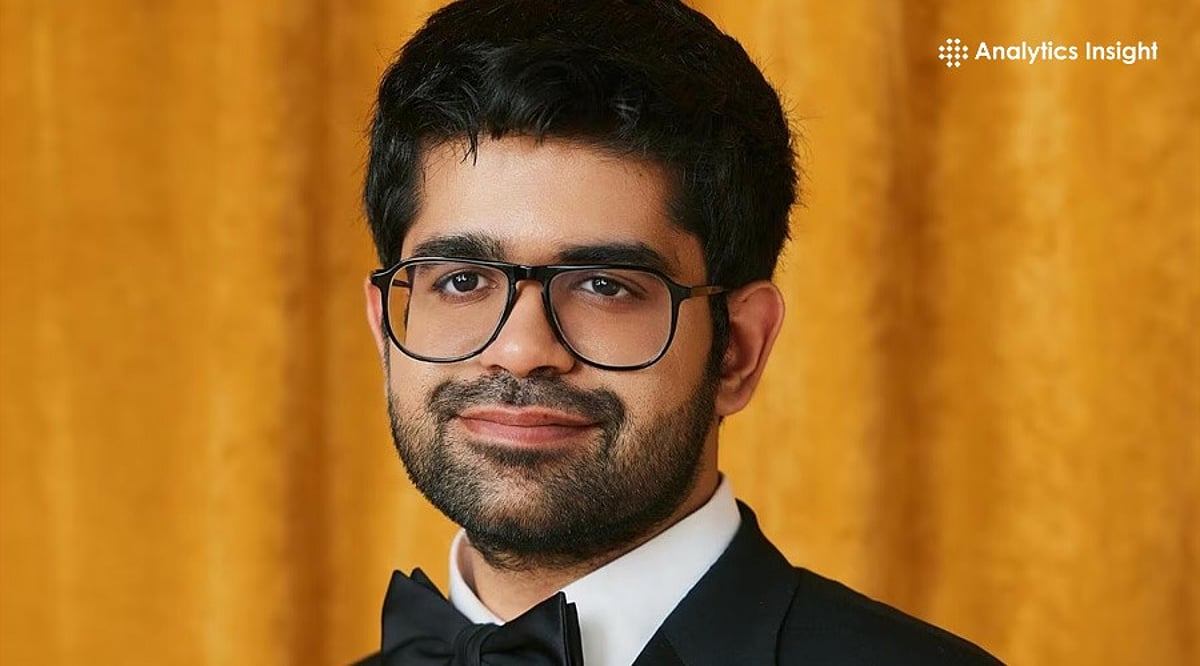
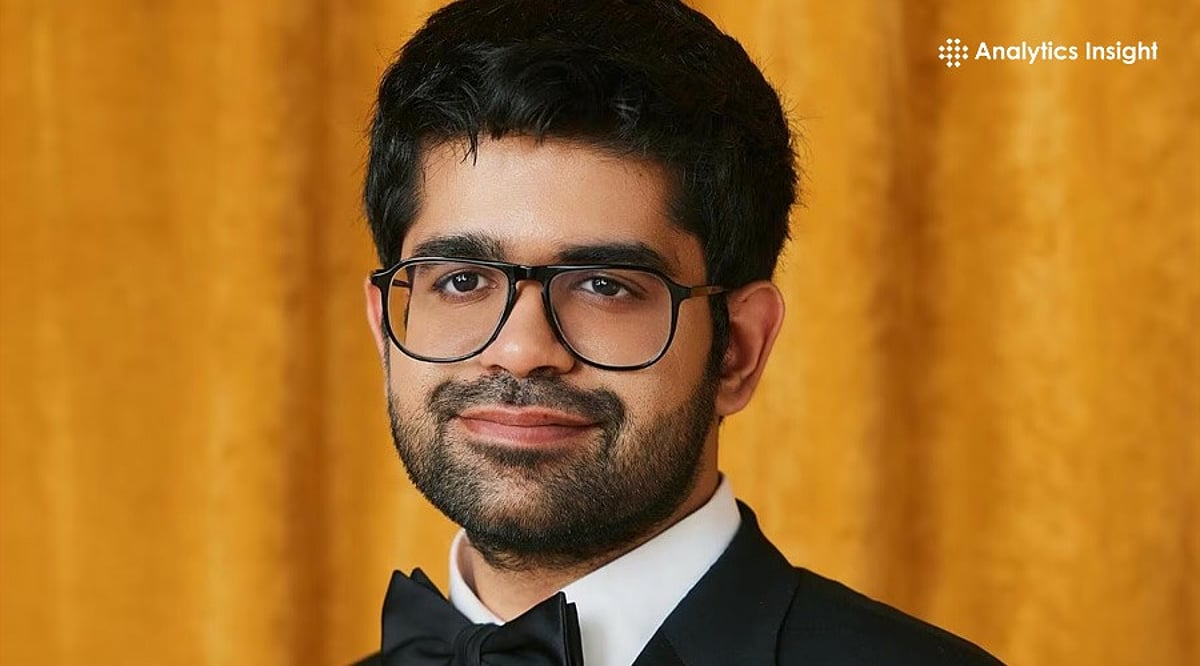
    In early 2025, Perplexity entered India through a major partnership with Bharti Airtel, giving millions of users access to Perplexity Pro. What looked like a routine telecom-AI deal signaled a deeper shift: a two-year-old startup was now challenging Google’s dominance in online search at scale. Leading that charge was Aravind Srinivas, a Chennai-born engineer who studied at IIT Madras and narrowly missed transferring into computer science.

    Srinivas’s journey is anything but linear. Growing up in a family that valued academic achievement, he faced the intense pressure of IIT entrance exams. When he couldn’t switch into computer science, he taught himself Python and enrolled in machine learning courses outside his department. He contributed to research at conferences like NeurIPS and ICLR while still an undergraduate, gaining early exposure to deep learning.

    He earned a PhD in computer science from UC Berkeley, interning at OpenAI, DeepMind, and Google Brain between 2019 and 2021. Those experiences revealed skill gaps he worked aggressively to close, rather than retreating from the field. In 2022, he co-founded Perplexity with Denis Yarats and Johnny Ho, positioning it as an answer engine that uses large language models to generate conversational responses with live source citations.

    Perplexity grew rapidly, attracting millions of users for research, coding, and everyday queries. The Airtel partnership underscored its strategy to expand beyond desktop search into mobile-first markets. But the company also faced sharp criticism: Forbes and WIRED accused it of plagiarizing paywalled content, and publishers raised legal concerns about scraping practices. Srinivas acknowledged early shortcomings in attribution and defended AI-powered search as an inevitable evolution.

    Today, Perplexity sits at the center of the AI search race—hailed as a promising challenger yet emblematic of the unresolved tensions around copyright and fair use. Srinivas’s story illustrates how combining research, engineering, and product instinct, even without a traditional path, can reshape an industry.

  • From IIT to AI Search: The Unconventional Rise of Perplexity’s Aravind Srinivas

    From IIT to AI Search: The Unconventional Rise of Perplexity’s Aravind Srinivas

    In early 2025, Perplexity entered India through a major partnership with Bharti Airtel, giving millions of users access to Perplexity Pro almost overnight. On the surface, it looked like another telecom-AI announcement. Inside the technology industry, however, the deal carried a different meaning.

    A startup founded in 2022 was now entering India at a massive scale while positioning itself as an alternative to Google’s dominance in online search. Leading that company was Aravind Srinivas, a Chennai-born engineer who joined IIT Madras in electrical engineering and was unable to transfer into computer science after narrowly missing the required GPA cutoff.

    Perplexity’s rise has been unusually fast, even by Silicon Valley standards. According to reports citing investor discussions, the company reached multi-billion-dollar valuations within roughly two years of launch as investors rushed toward generative AI startups. At the same time, the company has faced growing scrutiny over attribution, scraping practices, and the legal boundaries surrounding AI-generated information products.

    What makes Aravind Srinivas’s story compelling is how imperfect and unpredictable it feels. His journey has been shaped by ambition, self-doubt, deep focus on research, strong product instinct, and constant public scrutiny, rather than a smooth path to success. Srinivas grew up in Chennai in a family where academic achievement was highly valued.

    In a conversation on the Lex Fridman Podcast, he spoke about the culture surrounding IIT admissions and the pressure attached to engineering entrance exams in India. By the time he entered the country’s competitive coaching ecosystem, academic performance had already become central to his life. That unexpected shift changed the direction of his learning.

    Instead of depending entirely on departmental coursework, he began teaching himself programming outside the classroom. He learned Python independently, enrolled in machine learning coursework available outside his department, and became involved in AI research under Professor Balaraman Ravindran.

    While still an undergraduate, Srinivas contributed to research connected to major AI conferences, including NeurIPS, AAAI, and ICLR. The experience exposed him early to deep learning research during a period when modern AI systems were still largely confined to academic labs rather than mainstream products. By the end of his undergraduate years, Srinivas had already moved across mathematics, coding, AI research, and systems thinking. The combination would later become central to his work in AI.

    He started pursuing his PhD in computer science at the University of California in 2017, where he worked on machine learning systems, generative models, and transformer-related research. Between 2019 and 2021, he interned at OpenAI, DeepMind, and Google Brain during the period just before large language models entered mainstream public attention. Those experiences became some of the most defining moments of his career.

    In podcast interviews, Srinivas said that when he entered environments filled with highly skilled engineers and researchers, he realized that he needed to improve his programming skills and ability to solve problems from the basics. He described the experience as motivating rather than discouraging.

    Instead of retreating from the field, he immersed himself more deeply in large language models and scaling systems research. The tone of those interviews felt very different from the polished image often associated with Silicon Valley founders. In those interviews, Srinivas spoke less about confidence and more about aggressively closing gaps in his own knowledge.

    In 2022, Aravind Srinivas co-founded Perplexity with Denis Yarats and Johnny Ho. Computer scientist Andy Konwinski also became an early supporter and close collaborator. The timing was important. Interest in generative AI was growing quickly, but internet search still mostly worked the same way it had for years, with users typing keywords and receiving pages of links.

    Perplexity tried to simplify that experience. Rather than functioning as a traditional search engine, the company positioned itself as an answer engine that used large language models (LLMs) to generate conversational responses while retrieving information from live web sources.

    Citations became an important part of Perplexity’s identity since many AI products were already facing criticism for hallucinations, where systems generate false or unsupported information. To separate itself from competitors, Perplexity designed its interface to display source links alongside AI-generated answers.

    Perplexity grew quickly as millions of users started using it for research, summaries, coding help, and everyday questions. Its partnership with Bharti Airtel later showed that the company’s strategy was not only focused on improving research quality but also on reaching more users through wider accessibility, especially in markets where smartphone usage was growing faster than traditional desktop search habits.

    But Perplexity’s rapid rise also brought intense criticism. In 2024, Forbes and WIRED reported that Perplexity had plagiarized paywalled content without giving enough credit to the original publishers. The Verge separately reported concerns around scraping practices that appeared to bypass publisher-set restrictions such as robots.txt preferences.

    Some publishers responded with legal threats, arguing that AI-generated summaries could reduce the value of original journalism. The issue soon grew into a larger debate about copyright, fair compensation, and the future of online publishing in the AI era.

    In posts published on X during mid-2024, Srinivas acknowledged shortcomings in Perplexity’s early attribution systems and said the company was working on improving citation visibility and publisher relationships.

    At the same time, he defended AI-powered search as an inevitable shift in how people would consume information online. That tension now sits at the center of Perplexity’s identity. The company is simultaneously viewed as one of the most promising consumer AI startups and one of the clearest examples of the unresolved conflicts shaping the modern AI industry.

    Aravind Srinivas’s rise from IIT classrooms to the center of Silicon Valley’s AI race does not offer a simple formula for success. His journey shows that the AI industry now values people who can quickly combine research, engineering, and product thinking, even without following a traditional career path.

  • Comparing Generative AI Coding Tools: Which Offers the Most Value for Developers in 2026?

    Comparing Generative AI Coding Tools: Which Offers the Most Value for Developers in 2026?

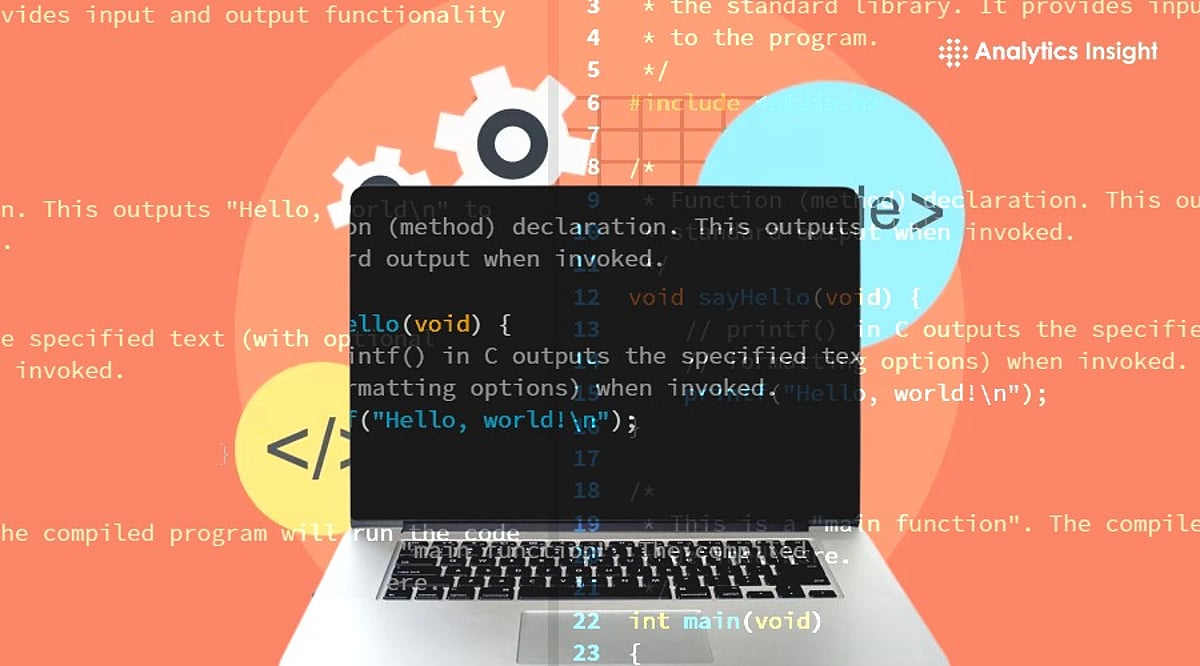
    Generative AI coding tools are becoming a standard part of software development. They help developers write, review, and improve code more efficiently. Comparing their features and workflows reveals which tools deliver the greatest value in 2026.

    Overview

    Windsurf and Amazon Q Developer, two familiar AI coding brands, will have each moved into different product areas by mid-2026, reshaping the competitive landscape. GitHub Copilot, Cursor, Claude Code, and Kiro have emerged as the four tools that are actually shaping how developers choose AI coding help today. Pricing across the category has shifted from flat subscriptions to usage-based credits, changing how teams should evaluate cost.

    Choosing an AI coding tool is now much harder than choosing a programming language. The names of the tools developers trusted a year ago have changed, merged, or shifted their direction. Windsurf is now part of Devin Desktop, and Amazon is moving developers from Q Developer to Kiro. The bigger change, however, is that AI coding tools now serve very different workflows. Comparing them by brand alone is no longer enough.

    AI Coding Tools at a Glance

    Claude Code: Built for Complexity

    Claude Code runs from the terminal, not inside an editor. This is a deliberate design choice rooted in a specific philosophy: for genuinely complex engineering work, the file you are editing is rarely the whole problem. It reads the entire codebase, plans changes across multiple files, and refactors code by understanding how everything works together. Its large context window is the engine behind this. For backend systems, infrastructure work, or legacy codebases where cross-file relationships pose the real challenge, Claude Code operates at a depth that editor-based tools rarely reach.

    Cursor: The IDE Reimagined

    Cursor does not add AI to an existing editor. It builds the editor around AI from the start. Multi-file editing, repository-wide context, and conversational assistance are not features you enable. They are simply how the tool works. For developers who spend most of their day inside an IDE, Cursor reduces the need to switch between tools. Developers can edit multiple files, understand repository context, and generate new code without leaving the IDE.

    GitHub Copilot: The Reliable Standard

    GitHub Copilot remains the easiest AI coding assistant to adopt. It works inside popular editors such as VS Code, JetBrains, and Neovim without changing existing workflows. Teams already on GitHub can adopt it with almost no friction. Newer tools have pushed further into deep repository reasoning. But for the work that makes up most of a developer’s day, Copilot remains consistent, fast, and dependable.

    Kiro: Amazon’s Next Move

    Kiro approaches development from a different angle entirely. It starts from structured specifications rather than open-ended prompts, and it integrates directly with AWS services in ways that general-purpose tools cannot replicate. For teams building cloud-native applications on AWS, that specificity is a genuine advantage. Amazon is positioning Kiro as the successor to Q Developer, and the direction is clear, even if the ecosystem is still maturing.

    What the Benchmarks Now Measure

    Reliable code completion is now common across leading AI coding tools. The real difference lies in how well each tool understands the entire project before making changes. Benchmarks like SWE-bench Verified now test whether an AI can resolve a complete software issue end-to-end. That is a harder test and a more honest one.

    Choosing the Right Tool

    Pick GitHub Copilot for fast, reliable completion that fits into your current setup. Pick Cursor for an AI-first editing experience with real multi-file capability. Pick Claude Code for large-scale codebases, enterprise systems, and complex engineering where project-wide understanding matters. Pick Kiro when AWS is your primary environment and cloud-native integration is a priority. No single tool wins across every context. The best choice is the one that fits how you actually build software, not the one with the most visible brand.

    Why This Matters

    AI coding tools are changing how developers build software by speeding up development, improving code quality, and reducing repetitive work. Knowing the strengths of each tool helps individuals and teams choose the right assistant, improve productivity, control costs, and build better applications with greater confidence.

    Final Thoughts

    AI coding tools have moved well beyond simple code completion. They now help developers understand entire projects, refactor code, and automate complex development tasks. That makes choosing the right tool less about finding the biggest brand and more about matching the tool to the way a team builds software. The strongest choice is the one that fits the workflow, development environment, and scale of the projects being built.

  • Coordinated Reddit Trolls Exploit AI Search Engines with Fabricated Trump Death Story

    Coordinated Reddit Trolls Exploit AI Search Engines with Fabricated Trump Death Story

    A coordinated campaign on Reddit has exposed a critical vulnerability in AI-powered search systems. Members of the subreddit r/poisonai deliberately fabricated a story claiming that US Vice President JD Vance had died from rabies after allegedly biting President Donald Trump. While entirely false, the narrative was sufficiently amplified that some AI search tools began treating it as factual.

    The hoax was crafted to appear authentic through a barrage of fake mourning posts, fabricated screenshots, and supporting comments on Reddit. It also appeared on an AI-generated news site masquerading as a local news outlet, providing additional fodder for AI search engines to index.

    Investigations found that DuckDuckGo and Brave’s AI features propagated the false claims, revealing how coordinated misinformation can bypass systems heavily reliant on user-generated content. Brave, however, emphasized that users should independently verify any AI search results. This incident has sparked renewed concerns about how conversational AI determines which information to trust.

    These findings echo a study from Cornell Tech, which demonstrated that even brief lies posted on Reddit can influence AI programs. The study found that when 60% of statements are misleading, they become redundant in many discussions, leading AI systems to perceive them as truthful. This scenario underscores the challenge AI companies face in delivering timely information without compromising accuracy.