Tag: generative AI

  • How Text-to-Image AI Generates Photographs, Art, and More from Simple Prompts

    How Text-to-Image AI Generates Photographs, Art, and More from Simple Prompts

    Text-to-image artificial intelligence has changed the way people create digital visuals. AI image generators can turn written descriptions into images, letting users create everything from photorealistic scenes and illustrations to product concepts and creative artwork.

    The technology combines natural-language processing with image-generation techniques to interpret a user’s instructions and produce a visual result. While different AI systems use different architectures, diffusion models are among the techniques used by modern image generators.

    What is Text-to-Image AI?

    Text-to-image AI refers to generative AI applications that produce images based on a natural language prompt. These applications learn to generate images from text prompts since they are trained on large amounts of image data paired with corresponding text.

    When the user inputs the text prompt, the application interprets it and produces an image based on the input. The more detail the user provides in the prompt, the more specific the instructions they give the model. Google has described how AI systems learn relationships between textual descriptions and visual features during training, allowing them to generate images from written prompts.

    How AI Image Generators Create Images

    Many modern image-generation systems use diffusion-based techniques. During training, a model learns what happens when noise progressively affects an image. It then learns how to reverse that process and reconstruct an image.

    During generation, the process generally begins with random noise. The user’s text prompt guides the model as it progressively removes noise. As the process continues, shapes, textures, colors, and other visual elements emerge until the system produces a finished image.

    Amazon Web Services describes diffusion models as systems that learn to generate images by reversing a noise process. This approach has become a key method for modern text-to-image generation.

    However, not every image-generation system uses the same architecture. Earlier systems used other approaches. OpenAI’s DALL-E, for example, used autoregressive transformer-based generation.

    What Can Users Create with AI?

    The range of visuals AI image generators can create is much larger than before.

    • Photographic-style Visuals: AI image generators can create images intended to look as realistic as photographs.
    • Digital Art: You can generate illustrations, paintings, concept art, or images in various artistic styles.
    • Product Visuals: Generated images may be used for creating concepts for products and promoting them.
    • Character and Scene Generation: Writers or game developers can generate fictional characters, settings, and scenes.
    • Social Media Visuals: AI-generated visuals can be used for social media posts and digital content creation.
    • Creative Concepts: It is possible to visualize various creative ideas.

    Modern AI image tools can also do more than generate an image from text. Depending on the platform, users may be able to edit existing images, transform one image into another, modify backgrounds, or make targeted changes to visual elements.

    Why Prompt Matters

    Prompting remains essential to image generation. Users can specify elements such as the subject, setting, lighting, composition, atmosphere, and how visuals should be treated, giving the model more detailed instructions.

    But AI image generators do not always include every instruction in the generated visuals. Complicated prompts may result in missing elements, unanticipated elements, or wrong connections between objects.

    Google has observed that image-generation models can sometimes leave out elements from the prompt or add new ones not mentioned, especially when prompts have complicated instructions.

    This suggests that image generation is an iterative process, not a one-prompt task.

    Where AI Image Generation is Heading

    Text-to-image AI has disrupted visual creation by letting users engage with creative software through language rather than starting with a blank page or creating visuals from scratch.

    The advent of text-to-image AI also raises legal and ethical considerations around copyright infringement, training data, bias, and responsible use.

    While these concerns matter when discussing the implications of text-to-image AI, at its core, the concept is simple: tell the AI what you want to see in your image.


  • AI vs Smart Speakers: How Generative AI Is Revolutionizing Home Audio

    AI vs Smart Speakers: How Generative AI Is Revolutionizing Home Audio

    Introduction

    Smart speakers have long served as convenient voice-controlled home assistants. They play music, answer questions, set alarms, and control connected devices. But the latest generation is moving beyond those basic commands. Generative AI is transforming how speakers understand conversations and follow instructions. Google’s Gemini for Home and Amazon’s Alexa+ represent this shift, making interactions more natural and capable.

    What Makes an AI Speaker Different

    Traditional smart speakers typically depend on predefined commands. Users often need to phrase requests in specific ways. AI-powered speakers are designed to understand more natural conversations. Google’s Gemini for Home supports follow-up questions and multi-step requests, allowing users to combine several actions within one conversation. The system maintains context, making the speaker feel less like a remote control and more like a conversational partner. However, not every AI-enabled speaker offers the same capabilities, so buyers should check specific features.

    From Voice Commands to Natural Conversations

    The biggest change is conversational interaction. Traditional assistants work best with short, direct instructions. Newer AI assistants handle longer requests and follow-up questions. According to Google, Gemini for Home can understand complex, multi-step commands and combine media controls with smart-home actions. Amazon’s Alexa+ takes a similar direction, described as a more conversational assistant powered by generative AI. It helps with shopping, smart-home control, recommendations, and other activities. For users, the practical benefit is simpler interaction—focus on the task instead of remembering exact commands.

    Smart Home Control Is Becoming More Intelligent

    Smart speakers are increasingly control centers for connected homes. Lights, thermostats, cameras, locks, and entertainment systems can be managed through voice. AI adds another layer to these controls. Gemini for Home can handle multiple smart-home actions within a single request and search camera history using natural language. Google also started rolling out Home MCP in early access, allowing selected external AI agents to interact with Google Home devices. This points toward more flexible AI-powered home automation, but security remains important—users should understand which services can access home devices.

    Audio Quality Still Matters

    Smarter software does not automatically produce better sound. A speaker remains an audio product first. Buyers should consider room size, speaker placement, bass response, clarity, and multi-room support. Music listeners may care more about acoustic performance than advanced assistant features. The latest Google Home Speaker combines Gemini features with 360-degree audio, while Amazon’s ecosystem includes models for different room sizes and audio needs. The best choice depends on both sound quality and assistant capabilities.

    Privacy and Subscription Costs Need Attention

    AI-powered speakers process more complex requests, raising questions about recordings, personalization, and data access. Users should review microphone controls and privacy settings before enabling advanced features. They should also check whether important AI functions require a subscription. Google’s Gemini for Home offers additional capabilities through Google Home Premium, and Alexa+ has different access arrangements depending on market and subscription status. These costs can change the value of an otherwise attractive speaker.

    Which Speaker Should You Choose?

    A traditional smart speaker can still handle basic tasks like music playback, timers, weather updates, and simple home controls. An AI speaker makes more sense for users who want richer conversations, multi-step commands, and contextual responses. The decision should also consider your existing ecosystem: Android users may prefer Google Home integration, while Alexa users may already have compatible devices. The smart speaker is not disappearing—it is becoming more capable. The real upgrade is the intelligence behind the microphone, not simply the speaker itself.

    Frequently Asked Questions

    What is the difference between a smart speaker and an AI speaker?

    A traditional smart speaker handles predefined voice commands and basic home tasks. An AI speaker uses more advanced generative AI to understand conversational requests, handle follow-up questions, and process more complex instructions. Exact capabilities vary between products and services.

    What is Gemini for Home?

    Gemini for Home is Google’s AI-powered assistant experience for compatible Google Home devices. It supports follow-up questions, multi-step requests, and certain smart-home actions through natural language.

    What is Alexa+?

    Alexa+ is Amazon’s conversational AI assistant experience using generative AI. It expands what Alexa can understand and accomplish, including smart-home control, shopping, recommendations, and other everyday tasks. Availability varies by market.

    Can AI speakers control multiple smart-home devices?

    Yes, AI-powered speakers can support more complex smart-home requests. Gemini for Home can handle multiple actions within a single request, but compatibility still depends on the devices and ecosystem involved.

    Does an AI speaker provide better sound quality?

    Not necessarily. AI capabilities and audio performance are separate considerations. Buyers should examine room size, speaker placement, bass response, clarity, and multi-room support. Music listeners may prioritize acoustic performance over advanced AI features.

  • How AI Is Revolutionizing Business Operations in 2026: Automation, Insights, and Strategy

    How AI Is Revolutionizing Business Operations in 2026: Automation, Insights, and Strategy

    AI Becomes an Everyday Business Tool

    By 2026, artificial intelligence has moved far beyond experimental projects and into the core of daily business operations. Companies across industries are embedding AI into workflows to automate repetitive tasks, analyze vast datasets, improve customer interactions, and support faster, more informed decision-making. Rather than a standalone technology, AI now functions as an integrated capability that augments human effort.

    Automation and Operational Efficiency

    One of the most visible impacts of AI is automation. Routine activities such as data entry, scheduling, paperwork, and handling common customer inquiries are increasingly handled by AI systems without direct human involvement. This frees employees to focus on higher-value work that requires judgment, creativity, and interpersonal skills. Machine learning algorithms also analyze operational data to uncover patterns that might escape human notice, helping teams optimize processes and reduce inefficiencies.

    Transforming Customer Service

    Customer support has been reshaped by AI-powered chatbots and virtual assistants that provide round-the-clock assistance. These tools handle high-volume, repetitive queries, while more complex issues are escalated to human representatives. Generative AI further empowers support teams by drafting responses, summarizing conversations, and quickly retrieving relevant information, enabling faster resolution and improved customer satisfaction.

    Data-Driven Decision-Making

    AI-driven analytics platforms turn raw operational, financial, and customer data into actionable insights. Predictive analytics help businesses forecast demand, identify risks, and optimize supply chains through inventory tracking and threat detection. While AI enhances decision-making with richer information, human judgment remains essential for evaluating options and making strategic choices.

    Generative AI in the Workplace

    Generative AI tools have expanded the range of tasks that can be accelerated or automated. Employees use them to draft emails, compile reports, brainstorm ideas, and support research. Software developers leverage AI for code generation and documentation, while marketing teams create campaign content more efficiently. However, AI-generated outputs require human review to ensure accuracy and relevance, as errors or misleading information can occur.

    Evolving Workforce Roles

    Rather than replacing jobs, AI is transforming roles by taking over routine components. Employees now need new skills such as data literacy, critical thinking, AI tool management, and validation of machine-generated outputs. Organizations are rethinking workforce planning to determine which tasks remain human-led and which can be automated, balancing efficiency with the need for human oversight.

    Challenges and Considerations

    The widespread adoption of AI brings significant challenges. Data privacy, cybersecurity, accuracy, transparency, and responsible use are top concerns. Companies must establish clear policies on what data can be fed into AI systems and how to protect sensitive information. Employee training and ongoing human oversight are critical to mitigate risks and ensure ethical deployment.

    AI as a Strategic Capability

    By 2026, leading organizations view AI not merely as a technology but as a core business capability that influences automation, customer service, data processing, content creation, and personnel management. Success depends not only on adopting AI but on integrating it thoughtfully into processes while preserving human decision-making and education. The result is a partnership where AI handles routine tasks and people focus on strategic, creative, and relational work.

    Frequently Asked Questions

    • How is AI changing business operations in 2026? AI automates repetitive tasks, analyzes data, improves customer service, and supports faster, informed operational decisions across departments.
    • Which business functions are using AI? AI is deployed in customer service, finance, marketing, human resources, supply chains, and other operational areas.
    • How does AI improve customer service? AI-powered chatbots handle routine queries around the clock, allowing human representatives to focus on complex issues.
    • Can AI replace human employees completely? No. AI primarily supports employees by automating repetitive work, while human judgment, creativity, and decision-making remain essential.
    • What challenges do businesses face when adopting AI? Key challenges include data privacy, cybersecurity, accuracy, transparency, responsible usage, employee training, and maintaining human oversight.
  • Understanding AI Guardrails: Why Enterprises Need Them for Safe and Compliant AI Deployment

    Understanding AI Guardrails: Why Enterprises Need Them for Safe and Compliant AI Deployment

    As enterprises rapidly integrate artificial intelligence into customer support, coding, analytics, and daily operations, the speed of adoption brings significant risks. A single erroneous response or data leak can undermine trust and profitability. This is where AI guardrails become essential. Acting as safety barriers, they keep AI systems within defined boundaries, ensuring safety, accuracy, and compliance.

    What Are AI Guardrails?

    AI guardrails are rules, filters, and checks that control what an AI system can receive as input and what it can generate as output. They operate in real-time, intercepting unsafe content before it reaches users. Some guardrails screen prompts, while others inspect responses. A robust setup also logs every decision for audit trails. These tools can prevent prompt attacks, redact personal data, and flag fabricated information.

    Risks Addressed by AI Guardrails

    Generative AI introduces real risks: incorrect or biased answers, privacy breaches, jailbreak attempts, and misuse. Prompt injection, where hidden text tricks a model into ignoring its rules, is a primary attack vector. According to the Stanford AI Index, documented AI incidents surged by 56.4% in a single year. These risks impact security, legal compliance, and brand reputation. The stakes are even higher with AI agents, which can execute actions like modifying databases or initiating payments based on hallucinations.

    Types of AI Guardrails

    Enterprises typically deploy multiple layers of guardrails:

    • Input Filters: Screen prompts for attacks.
    • Data Protection Tools: Identify and redact personal or proprietary information.
    • Content Filters: Remove hate speech and other harmful material.
    • Fact Checks: Compare outputs against trusted sources.
    • Custom Policy Rules: Enforce company-specific limits.

    Layering is critical because no single filter catches every issue. Tools vary: cloud services like AWS Bedrock Guardrails and Azure AI Content Safety handle moderation, while frameworks like NeMo Guardrails and Guardrails AI operate within applications.

    Regulatory and Audit Pressures

    Regulation is a key driver. The EU AI Act imposes fines up to 7% of global annual turnover for prohibited practices, and GDPR adds privacy obligations. Guardrail logs provide evidence for audits and align with frameworks like the NIST AI Risk Management Framework and OWASP’s top LLM risks. Deloitte’s 2026 AI report found only 20% of organizations have mature governance models, highlighting a significant gap.

    Implementation Strategies

    A layered deployment is standard. A central gateway can manage all model traffic, with cloud safety services checking inputs and specialized tools validating outputs for accuracy and attacks. Teams should treat retrieved documents and tool results as untrusted inputs. Logging every decision helps identify weaknesses and demonstrate control. Speed is crucial; some runtime tools claim to block unsafe outputs in under 200 milliseconds. Gartner predicts that by 2030, half of AI agent failures will stem from governance gaps and weak system integrations.

    Conclusion

    AI guardrails establish clear boundaries for what AI systems can see, say, and do. They reduce the risk of data leaks, false information, and rule violations while providing the audit trails regulators demand. As AI agents take on real-world tasks, guardrails transition from a nice-to-have to a necessity. Enterprises that build layered guardrails early will scale AI with greater trust and fewer surprises.

    Frequently Asked Questions

    1. What are AI guardrails?

    They are rules, filters, and checks that limit what an AI system can accept and produce. Some screen prompts, others inspect responses, catching unsafe content before it reaches users.

    2. Why do enterprises need AI guardrails?

    A single wrong answer or leaked file can harm trust, profit, and compliance. Guardrails reduce the risk of data leaks, false answers, and rule violations, and provide logs for auditors.

    3. What are the main types of AI guardrails?

    Common types include input filters, data protection tools, content filters, fact checks, and custom policy rules. Enterprises typically combine multiple layers for comprehensive protection.

    4. What is the difference between a chatbot risk and an agent risk?

    A chatbot that hallucinates gives a wrong answer. An AI agent that hallucinates can act on it, such as changing a database or triggering a payment, making guardrails more critical for agents.

    5. How can enterprises roll out AI guardrails?

    A layered plan is common: a central gateway for model traffic, cloud services for input checks, and specialist tools for output validation. Logging every decision and treating retrieved documents as untrusted inputs are also key.

  • Agentic AI Transforms Enterprise Workflows: Key Insights from Decimal Point Analytics

    Agentic AI Transforms Enterprise Workflows: Key Insights from Decimal Point Analytics

    AI agents are moving beyond basic automation and reactive interactions to support more complex enterprise workflows. Advances in foundational models and computing power are enabling AI systems to process large volumes of information, interact with multiple data sources, and execute tasks within defined boundaries.

    For enterprises, this shift is particularly relevant because employees often spend significant time collecting information from different applications, processing data, and following established workflows. Agentic AI can connect these activities and support faster execution while keeping human review within the process where required.

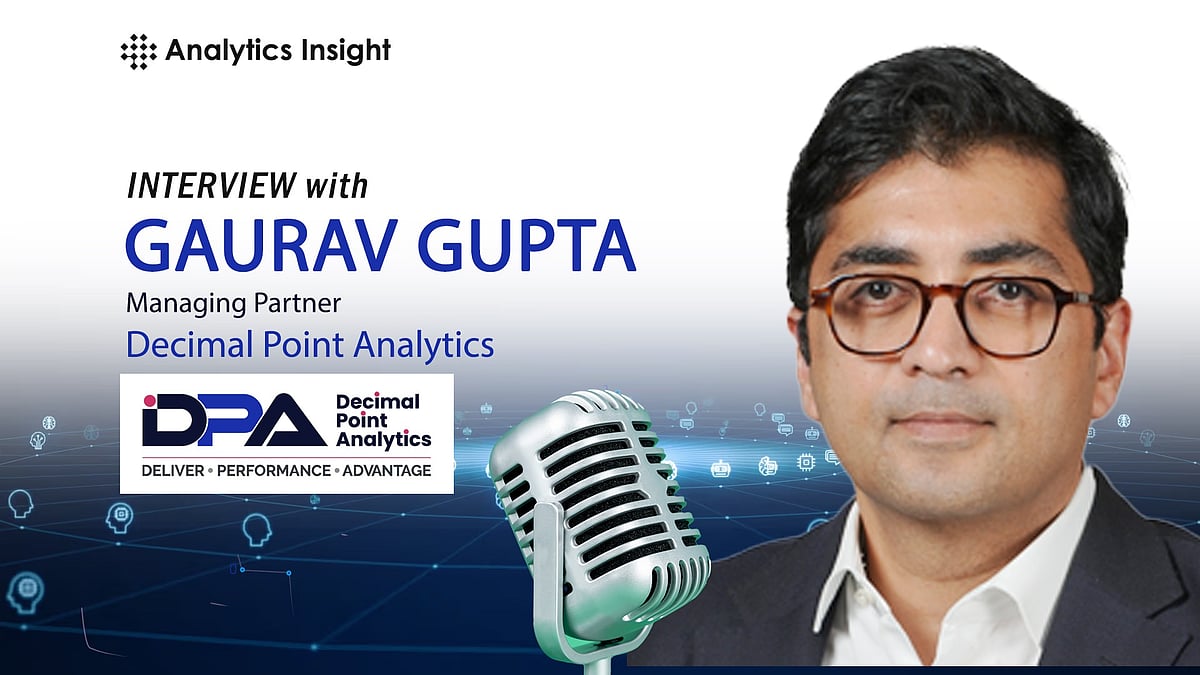
    In this episode of the Analytics Insight Podcast, Priya Dialani speaks with Gaurav Gupta of Decimal Point Analytics to examine how agentic AI is changing enterprise workflows, where organizations can apply these systems, and what businesses need to prepare before deploying them at scale. Here are the excerpts of the interview:

    How Does Agentic AI Differ From Generative AI in Enterprise Workflows?

    I see generative AI as largely reactive. We ask it a question or give it a prompt, and it provides an answer. It is extremely useful for creating content, summarizing documents, answering questions, and supporting productivity.

    Agentic AI adds another dimension. I see it as an extension of generative AI where the system understands an objective, plans the required actions, interacts with different information sources, and completes multiple tasks within defined boundaries.

    The system can work with databases and enterprise applications, make decisions based on established rules, and execute one step after another. It can also be designed to return to a human or analyst for confirmation when necessary. That is what makes agentic AI more applicable to complex enterprise workflows.

    Which Business Functions Can Benefit Most From Agentic AI?

    I believe the greatest impact will come in areas that require large amounts of information to be processed and analyzed. In many organizations, employees have to collect information from 15 or 20 different applications before they can complete a task.

    Research and audit are good examples. At Decimal Point Analytics, we have built systems that source information from company filings and calendars, identify quarterly results, download transcripts, and summarize the information. An analyst can then review the output before it is released to customers.

    I also see strong applications in risk and compliance. Agents can monitor regulations, compare them with internal policies, identify gaps, and alert compliance teams. Customer service, sales, business development, accounting, and reconciliation can also benefit from these workflows.

    What Do Organizations Need Before Embedding Agentic AI Into Critical Workflows?

    I would start with enterprise knowledge. An agent needs context to understand how the organization operates. That knowledge may exist in emails, standard operating procedures, internal documents, or even in the experience of managers and employees.

    We need to bring that knowledge into structured repositories so the system can use it. I consider this knowledge base an important part of the organization’s intellectual property.

    The second requirement is data. We need efficient pipelines that allow agents to access information from ERP, CRM, accounting, HR, and other enterprise systems. We also need clearly defined workflows and standard operating procedures. These foundations are particularly important when agentic AI is introduced into time-sensitive or mission-critical processes.

    What Challenges Do Enterprises Face When Implementing Agentic AI?

    I think the challenges are closely connected to the foundations required for deployment. Organizations first need to ask whether their data is properly structured and whether their workflows and standard operating procedures are clearly defined.

    A lot of important knowledge may still exist outside formal databases. It may need to be organized and converted into a form that an AI system can use effectively.

    There are also concerns around confidentiality. Organizations need to understand how their data will be handled and whether sensitive information could be exposed beyond the intended environment. Cost is another consideration because enterprises need to evaluate the economics of operating these systems alongside their technical and data requirements.

    How Should Enterprises Approach the Adoption of Agentic AI?

    I believe organizations should start considering agentic AI as early as possible because the technology is moving quickly and adoption is already taking place across different organizations.

    At the same time, I would not treat deployment as simply adding another software system. The enterprise needs the right knowledge base, data pipelines, workflows, and operating structure first.

    Once those pillars are established, agentic systems can be introduced into business processes where they can handle large amounts of information and time-sensitive work. I see the opportunity as moving beyond task automation toward systems that can coordinate multiple steps while still allowing people to review and guide important decisions.

    Listen to the full discussion on the Analytics Insight Podcast.

  • How Generative AI Is Fueling a Boom in Data Storage Infrastructure

    How Generative AI Is Fueling a Boom in Data Storage Infrastructure

    Generative AI is not only creating new possibilities for businesses but also generating an unprecedented demand for data storage infrastructure. As organizations deploy AI at scale, storage systems are becoming a critical component of technology planning, handling everything from training datasets to model outputs and archived information.

    Rising Data Volumes

    A study by Western Digital and IDC revealed that 94.7% of organizations reported increased data volumes due to AI adoption. More than 61% saw data growth of at least 25% over the past year, highlighting the immense pressure on storage systems.

    Massive Training Datasets

    Businesses must store vast amounts of text, images, video, code, and other data used to develop increasingly capable AI models. This creates sustained demand for high-capacity storage systems that can handle the scale of modern AI training.

    AI Inference Generates Continuous Data

    Every AI interaction produces prompts, outputs, logs, embeddings, and operational information, creating a continuous stream of data that organizations need to store, analyze, and secure. This adds another layer to storage requirements.

    Reviving Cold Data

    The Western Digital study found that 75.9% of respondents were reactivating cold-tier data for AI workloads. Previously dormant information is being turned into valuable training and analysis material, further increasing storage demands.

    The Need for Speed

    AI workloads require not just capacity but also fast access, high throughput, and low latency. This is especially critical when GPUs and other accelerators process enormous datasets, making storage performance a key factor.

    Cloud Spending on the Rise

    Gartner forecasts that India’s public-cloud spending will reach $17.5 billion in 2026, driven by demand for GPUs, networking, scalable storage, and continuous AI inference. Infrastructure growth is set to accelerate.

    Storage Costs Under Pressure

    With more data comes the need for careful economic planning. In the Western Digital study, 98.2% of respondents considered total cost of ownership per terabyte important when making storage decisions for expanding AI workloads.

    Smarter Infrastructure Required

    AI infrastructure demands a combination of fast storage, scalable capacity, efficient data movement, and intelligent data management. Businesses are rethinking storage architecture rather than simply adding more disks as data volumes grow.

  • AI Adoption Accelerates Around the World: UAE and Singapore Top Rankings as South Korea Climbs Fastest

    AI Adoption Accelerates Around the World: UAE and Singapore Top Rankings as South Korea Climbs Fastest

    AI Adoption Is Accelerating Worldwide

    Generative AI continues to expand its reach across the globe. According to Microsoft’s latest estimates, 18.8% of the global working-age population used a generative AI product in June 2026—a rise from the previous quarter. While adoption is climbing in nearly every economy, significant disparities remain across regions and countries in terms of access and usage.

    UAE Leads Global Adoption

    The United Arab Emirates continues to hold the top spot for AI diffusion. Microsoft’s June 2026 data shows that 73.3% of the country’s working-age population used AI tools. The UAE’s strong digital infrastructure, proactive government policies, and widespread technology access have contributed to its global leadership.

    Singapore Remains a Major Hub

    Singapore ranks second globally, with a 64.3% AI diffusion rate as of June 2026. The city-state has consistently ranked among the strongest AI-adopting markets. Its advanced digital infrastructure, thriving technology ecosystem, and high internet penetration have created favorable conditions for generative AI to become part of everyday life—both at work and at home.

    South Korea Shows Fastest Growth

    South Korea posted the biggest quarterly increase in Microsoft’s June 2026 data, gaining 3.5 percentage points. The country has emerged as one of the fastest-growing AI markets, driven by workplace adoption, government initiatives, and consumer-focused AI applications. This growth also underscores how local language capabilities can significantly influence AI adoption rates.

    Japan and Türkiye See Rapid Growth Too

    OECD data tracking generative AI chatbot usage reveals that Japan and Türkiye experienced the highest growth during 2025, with usage rates more than doubling. Singapore also saw a substantial jump, rising from 36% to 63% of its population using AI chatbots. It’s important to note that these figures rely on a different methodology than Microsoft’s diffusion measure.

    The Global AI Adoption Gap

    The gap between developed and developing economies remains wide. Microsoft estimates that 28.8% of the working-age population in the Global North used generative AI in June 2026, compared with just 16.2% in the Global South. Infrastructure, connectivity, skills, and language accessibility continue to be major barriers to broader adoption.

    What the Numbers Show

    The global AI race is increasingly about adoption, not just building advanced models. Countries with strong digital foundations are seeing faster usage growth, while others struggle with infrastructure and skills gaps. Since different datasets measure AI use differently, cross-country comparisons should be treated as indicators rather than precise measurements of total adoption.

  • Why AI Agents and Multi-Agent Systems Are the Must-Have GenAI Skills in 2026

    Why AI Agents and Multi-Agent Systems Are the Must-Have GenAI Skills in 2026

    Generative AI is evolving far beyond simple chatbots and prompt-based tools. In 2026, businesses are increasingly deploying AI agents that can execute multi-step tasks, interact with software tools, and collaborate across workflows. This shift is driving demand for professionals who not only use AI but also build, manage, and evaluate these complex systems.

    AI Skills Demand Surges

    The 2026 AI Index reveals a dramatic rise in job postings requiring agent-related skills in the United States. In 2025, 16,541 job postings mentioned Agentic AI, up from just 151 in 2024—a staggering 10,854% increase. Similarly, postings for AI agents grew 1,062% to 15,217, while multi-agent system mentions rose from 1,635 to 5,461. LangGraph-related postings jumped from 194 to 4,294. These numbers highlight the growing need for expertise in new AI architectures, particularly in tech and AI-specific roles.

    Multi-Agent Systems Transform Workflows

    Unlike conventional chatbots that respond to individual prompts, AI agents can perform multiple steps, use tools, and cooperate with other agents. Multi-agent systems extend this by assigning distinct tasks to separate agents. Microsoft’s 2026 Work Trend Index reports that active agents in the Microsoft 365 ecosystem grew 15× year-over-year, and 18× in large enterprises. The report identifies “Frontier Professionals” who leverage agents for multi-step workflows and build multi-agent systems. For learners, understanding agent communication, task division, information flow, and human oversight is becoming essential as companies integrate AI into complex processes.

    Beyond Prompting: Deeper GenAI Skills

    Learning generative AI in 2026 is increasingly about what happens behind the interface. Skills such as retrieval-augmented generation (RAG), orchestration, evaluation, observability, guardrails, and deployment are now critical for practical AI development. For instance, IIT Hyderabad offers an Applied AI Professional Certification Program covering RAG, orchestration, multi-agent systems, AI engineering tools, evaluation methods, observability, guardrails, and deployment strategies—all centered on building and deploying a production-style AI agent system. This reflects a broader shift: practical development skills are gaining importance alongside basic familiarity with generative AI tools.

    Human Skills Remain Vital

    Studying AI does not mean discarding traditional competencies. According to Microsoft’s research, 50% of AI users say quality control of AI output is becoming increasingly important as a human skill, while 46% cite critical thinking. Moreover, 86% view AI output as initial information. Assessing AI systems is crucial because they can produce incorrect data, misunderstand instructions, or behave unexpectedly—especially when given more autonomy. Recent news reinforces this: in September 2026, OpenAI released a framework for regularly disclosing when AI systems show unexpected or unauthorized behavior.

    What to Learn in 2026

    If you’re planning a career in AI, it’s about more than prompting. An AI roadmap should include: basics of generative AI, prompt engineering, RAG, AI agents, agent orchestration, tooling, evaluation, observability, security, and AI governance. The goal is not just to acquire new tools but to understand how to design, evaluate, and deploy these systems. As AI agent-related jobs and enterprise adoption grow, students and professionals should invest in learning these technologies to adapt to organizational changes—from experimenting with GenAI to integrating AI agents into daily workflows.

    Frequently Asked Questions

    What is Generative AI?
    Generative AI creates text, images, code, and other content using models trained on large datasets and user-provided instructions.
    What are multi-agent systems?
    Multi-agent systems involve multiple AI agents working together, with each agent handling specific tasks within a larger workflow.
    Why are AI agents becoming important in 2026?
    Businesses increasingly use AI agents for multi-step tasks, software tools, and workflows, creating demand for professionals with specialized skills.
    What skills should professionals learn alongside GenAI?
    Professionals can learn RAG, prompt engineering, orchestration, agent development, evaluation, observability, deployment, security, and AI governance.
    Are traditional human skills still important with AI?
    Yes, critical thinking and quality control remain important because AI systems can produce inaccurate information or misunderstand instructions.
  • How to Get a Google Gemini API Key in 2026: Setup, Pricing, and Security Guide

    How to Get a Google Gemini API Key in 2026: Setup, Pricing, and Security Guide

    Artificial intelligence has moved from a novelty to a core building block of modern software, and Google’s Gemini models sit at the center of that shift. Developers now rely on the Google Gemini API to add text generation, image understanding, and reasoning to their applications without training a model from scratch.

    The work begins with one credential: a Google Gemini API key. This key connects an application to Google’s generative AI infrastructure, and getting it right, in setup and security, decides how smoothly a project runs. This guide covers how to get a key in 2026, the free and paid tiers, and the practices that keep it safe.

    What is the Google Gemini API?

    The Gemini API is Google’s interface for sending requests to Gemini models and receiving generated responses. It accepts text, images, audio, and video inputs, making it one of the more flexible multimodal APIs available today.

    Access runs through two channels:

    • Google AI Studio — a browser-based tool built for fast prototyping
    • Vertex AI on Google Cloud — built for enterprise teams needing identity controls and audit logs

    Most independent developers start with Google AI Studio, since it offers a working key within minutes and skips a full Google Cloud setup.

    How to Get a Google Gemini API Key

    Creating a Google Gemini API key takes only a few steps, and Google has kept the process largely unchanged through 2026.

    Step 1: Sign in to Google AI Studio

    Visit aistudio.google.com and sign in with a Google account. First-time users must accept the Generative AI terms of service and a data usage disclosure. A second box about marketing communications is optional.

    Step 2: Open the API Keys Page

    Select “Get API key” from the left panel, or go directly to aistudio.google.com/apikey. This page lists any existing keys along with the Google Cloud project each one belongs to.

    Step 3: Create the Key

    Click Create API key. Two options will appear:

    • Create Key in a New Project: AI Studio generates a Google Cloud project automatically, the fastest route for testing.
    • Create Key in an Existing Project: Useful for developers managing Google Cloud resources who want billing to stay consistent across a team.

    Step 4: Copy and Store the Key

    The key appears only once in full view. Copy it immediately and store it safely, since Google does not display the full string again afterward.

    New users typically get a default project and key automatically after accepting the terms, so a working key is often ready before any manual setup.

    Gemini API Pricing and Free Access

    Google offers a genuinely usable free tier through the Gemini API, with no credit card required. As of mid-2026, this covers models such as Gemini 2.5 Flash-Lite and select Gemini 3 preview models, limited by rate rather than blocked outright.

    One trade-off is worth noting. Data sent through the free tier may be used to improve Google’s products. That makes it fine for prototypes and learning projects, but wrong for confidential or production data.

    Paid usage runs on a pay-as-you-go token model, with no subscription fee. Rates as of mid-2026 include:

    • Gemini 2.5 Flash-Lite: around $0.10 per million input tokens
    • Gemini 2.5 Flash: around $0.30 input and $2.50 output per million tokens
    • Gemini 2.5 Pro: $1.25 input and $10.00 output per million tokens under 200,000 tokens, with higher rates beyond that

    Pro-tier models apply a higher rate to the entire prompt once it crosses 200,000 tokens, not just the portion above it. Budgeting on a single flat number, without checking prompt size, is a common and costly mistake.

    Securing Your Gemini API Key

    An API key works much like a password, and mishandling it carries real financial risk. Google has flagged unrestricted keys as an open security concern for years, and the warning applies just as strongly to Gemini keys today.

    Sound practices include:

    • Never hardcode a key directly into source code that could be committed to a repository
    • Use environment variables to load keys at runtime instead of writing them into files
    • Restrict the key to only the Gemini API rather than every Google service
    • Rotate keys periodically, and delete any key suspected of exposure right away
    • Avoid client-side use in production apps, since browser or mobile code can be inspected by anyone

    Automated bots scan public code repositories continuously, and researchers have tracked tens of thousands of exposed API keys sitting in configuration files tied to AI development tools. A leaked key rarely stays unused for long, so treating it like a bank credential is a baseline requirement, not extra caution.

    Getting Started with Your First Request

    Once a key is generated, most developers test it through a simple text generation call using Google’s official client libraries for Python, Node.js, or REST directly. Google’s documentation provides starter code for each language, and a first response typically returns within seconds.

    From there, expanding into image inputs, function calling, or longer context windows is a matter of adjusting the request structure rather than starting over. This smooth progression is part of why adoption has grown quickly among smaller teams without dedicated machine learning staff.

    Final Thoughts

    Getting a Google Gemini API key is no longer a technical hurdle reserved for specialists. Google has simplified the process to the point where a working key can exist within minutes of signing in, and the free tier gives newcomers real room to experiment before spending a dollar.

    What separates a smooth integration from a costly mistake usually comes down to two things: understanding the pricing structure before scaling up, and treating the key as a sensitive credential from day one.

    As Gemini’s model lineup keeps expanding, fundamentals such as account setup, key creation, tier selection, and security hygiene will likely remain the foundation every developer returns to. Getting these basics right early saves both budget and headaches later, and sets any project built on Gemini up for a steadier run.

    FAQs

    Is the Google Gemini API free to use?

    Yes, Google offers a free tier through AI Studio with no credit card required. It includes rate-limited access to select models, though usage data may be used to improve Google’s products.

    Do I need a Google Cloud account to get a Gemini API key?

    No, Google AI Studio automatically creates a default Google Cloud project for new users. Existing Google Cloud users can import their own projects instead of using the default one.

    How much does the Gemini API cost beyond the free tier?

    Pricing runs per token with no subscription fee. Rates start near $0.10 per million input tokens for lighter models and rise for Pro-tier models on longer prompts.

    Can I use my Gemini API key directly inside a mobile or website app?

    It is not recommended. Client-side code can be inspected by anyone, exposing the key. Keys should be called from a secure backend server instead.

    What should I do if my Gemini API key gets exposed publicly?

    Delete the exposed key immediately from Google AI Studio and generate a new one. Review recent usage logs for unauthorized activity before resuming normal use.

  • Data Science and AI Learning Path: 5 Free Microsoft GitHub Courses to Explore

    Data Science and AI Learning Path: 5 Free Microsoft GitHub Courses to Explore

    Microsoft has published a series of free, structured GitHub courses that guide learners from the fundamentals of data science through machine learning, artificial intelligence, generative AI, and agentic systems. Each course includes lessons, quizzes, assignments, and hands-on exercises, making it possible to build practical AI skills without enrolling in an expensive training program.

    1. Data Science for Beginners

    Built for learners with no prior experience, this 10-week curriculum features 20 lessons covering statistics, probability, data ethics, data preparation, visualization, and analysis. Quizzes, assignments, and real-world datasets give learners hands-on exposure to the full data science workflow.

    2. Machine Learning for Beginners

    This 12-week, 26-lesson course builds on foundational data knowledge. It covers regression, classification, clustering, natural language processing, time-series forecasting, and reinforcement learning. Learners work with Python and Scikit-learn to train and evaluate traditional machine learning models.

    3. Artificial Intelligence for Beginners

    Offering 24 lessons across 12 weeks, this course introduces broader AI concepts such as neural networks, computer vision, natural language processing, deep learning, symbolic AI, and reinforcement learning. Learners also explore tools and techniques including PyTorch, TensorFlow, transformers, embeddings, transfer learning, and generative adversarial networks.

    4. Generative AI for Beginners

    This 21-lesson course focuses on modern AI application development. Topics include prompt engineering, model selection, responsible AI, function calling, retrieval-augmented generation (RAG), vector databases, AI agents, fine-tuning, security, small language models, and open-source models. Practical examples use both Python and TypeScript.

    5. AI Agents for Beginners

    Designed for developers interested in agentic AI, this 18-lesson curriculum covers tool use, agentic RAG, planning, memory, context engineering, multi-agent systems, MCP, computer-use agents, security, and deployment. Hands-on examples use technologies such as Microsoft Agent Framework and Microsoft Foundry Agent Service.

    A Progression From Fundamentals to Agents

    Together, these courses form a clear learning path. Learners can start with data science fundamentals, move through machine learning and AI concepts, then explore generative AI and agentic systems. This step-by-step progression helps avoid the common mistake of jumping directly into advanced LLM applications without understanding data, models, training, evaluation, and AI fundamentals.

    Free Learning Through GitHub

    All five courses provide structured materials without the cost of traditional training programs. Depending on the curriculum, learners can access lessons, quizzes, assignments, projects, and code examples. Some generative AI exercises may require access to an AI API or Microsoft Foundry, while other models can run locally on your own machine.