Tag: Indian stock market

  • Red Sea Attacks Spark Selloff on Dalal Street: Sensex and Nifty Slump on Oil Supply Fears

    Red Sea Attacks Spark Selloff on Dalal Street: Sensex and Nifty Slump on Oil Supply Fears

    Indian equity markets ended lower on Thursday as renewed attacks in the Red Sea stoked fears of oil supply disruptions, sending crude prices higher and dampening investor sentiment. The benchmark BSE Sensex dropped 0.28% to 76,539.97, while the Nifty 50 slipped 0.21% to 23,945.30, according to TradingView data.

    The selloff was triggered by the Houthi militia’s strikes on two Saudi oil tankers in the Red Sea, following a warning from the UK Maritime Trade Operations (UKMTO) about a potential attack on a commercial vessel off the coast of Saudi Arabia. The incidents have intensified concerns over the safety of one of the world’s busiest shipping lanes, raising the specter of prolonged disruption to global oil flows.

    Crude Oil Surge Puts Pressure on India’s Economy

    Geopolitical instability pushed Brent crude near the $96-per-barrel mark, while West Texas Intermediate (WTI) crude hovered above $88 per barrel. For India, which imports the majority of its crude oil requirements, higher prices are expected to widen the import bill, stoke inflationary pressures, and potentially weaken the rupee. This combination is likely to weigh on investor appetite for equities, particularly in sectors reliant on expensive raw materials.

    Banking and Realty Stocks Lead the Decline

    Selling pressure was broad-based, with profit booking observed in banking, financial services, real estate, healthcare, and pharmaceutical stocks. Midcap and smallcap indices also closed in negative territory, reflecting a cautious mood across the market. However, losses were partially offset by gains in automobile stocks, which extended their recent rally on the back of strong corporate earnings. Media shares also managed to stay afloat, trading modestly higher during the session.

    Markets Await Fresh Global Cues

    Investors are now closely monitoring developments in the Red Sea and the broader West Asia conflict, along with crude oil price movements. Any further escalation in geopolitical tensions or signs of supply disruptions could keep volatility elevated in the coming sessions. At the same time, domestic earnings reports and global economic data are expected to influence the near-term direction of the markets.

    Join our WhatsApp Channel to get the latest news, exclusives, and videos on WhatsApp.
  • Indian Stock Market Update: Sensex Rises 325 Points, Nifty Settles at 24,160 as IT Stocks Rally

    Indian Stock Market Update: Sensex Rises 325 Points, Nifty Settles at 24,160 as IT Stocks Rally

    Indian equity markets ended the July 16 session on a positive note, driven by a rally in IT stocks and favorable global cues. However, gains were trimmed in the afternoon after news of Iran’s renewed blockade of the Strait of Hormuz rattled investor sentiment. The BSE Sensex closed at approximately 77,380, up 325 points (0.42%), while the NSE Nifty 50 settled near 24,160, gaining 82 points (0.34%).

    Key Market Drivers

    Markets opened strongly following lower-than-expected US inflation data and strong quarterly results from US banks, which boosted Wall Street and Asian markets. The Nifty IT sector was the best performer, surging 1.98% in morning trade, supported by TCS’s Q1 FY27 results. Broader indices also saw gains, with the Nifty Midcap 100 and Smallcap 100 rising 0.45% each in the first half.

    However, the positive momentum reversed in the afternoon after reports that Iran had shut down the Strait of Hormuz, pushing crude oil prices higher for the fourth consecutive day. This led to profit booking, with the Nifty Metal Index falling 1.11% and IT stocks giving back some gains.

    Top Gainers and Losers

    Top Gainers: IT stocks led the rally, including Infosys, TCS, and HCL Technologies. Other notable gainers included Reliance Industries and HDFC Bank.

    Top Losers: Metal stocks faced selling pressure, with Hindalco and Tata Steel among the laggards. Energy stocks also declined due to rising oil prices.

    Market Outlook

    With Sensex weekly options expiring on Thursday and ongoing geopolitical uncertainty in the Middle East, markets are expected to remain cautious. Key triggers for the rest of the week include Federal Reserve Chair Kevin Warsh’s testimony, Q1 FY27 results, and developments in the Iran-Hormuz situation.

    Disclaimer: This article is for informational purposes only and does not constitute financial advice. Always conduct your own research before investing.

  • Sensex Holds 77,000 While Crude Oil Volatility Pressures Bank Nifty: Indian Stock Market Update

    Sensex Holds 77,000 While Crude Oil Volatility Pressures Bank Nifty: Indian Stock Market Update

    Indian stock markets opened higher on Wednesday, tracking global gains, but underlying sentiment remained cautious due to escalating geopolitical tensions in the Middle East. At the open, the Sensex rose 170 points, the Nifty 50 gained nearly 50 points, and the Bank Nifty advanced 160 points. This follows a decline on Tuesday when the Sensex fell 561.46 points (0.72%) to settle at 77,054.94, and the Nifty 50 dropped 158.95 points (0.66%) to 24,052.05.

    Foreign institutional investors (FIIs) sold Indian equities worth Rs. 739 crore on July 14, while domestic institutional investors (DIIs) remained net buyers with inflows of Rs. 2,927 crore. The Indian rupee opened at Rs. 96.17 against the US dollar, gaining marginally from its previous close.

    Sensex Outlook

    Technically, the Sensex formed a bearish candle on the daily chart, indicating potential further weakness. According to Shrikant Chouhan, Head of Equity Research at Kotak Securities, “The intraday market texture is non-directional; perhaps traders are waiting for either side to break out. 77,000 would act as a crucial support zone, while 77,300 would be the key resistance area for the bulls. Selling pressure below 77,000 is likely to accelerate, and the market could retest levels around 76,300-76,000. On the flip side, above 77,300, the chances of hitting 77,500-77,800 would turn bright.”

    Nifty 50 Outlook

    The Nifty 50 has entered a consolidation phase after snapping its three-session winning streak. The index formed a small bearish candle with a long upper shadow, indicating selling pressure at higher levels. Bajaj Broking Research noted, “We expect the index to extend the recent consolidation in the range of 23,800-24,350. Within the consolidation, last Friday’s gap area and Monday’s low of 24,000-23,950 will act as immediate support. Holding above this level could lead to a pullback towards 24,250-24,350, the upper band of the consolidation range.”

    Analysts point to the 24,000 to 23,950 zone as the immediate floor. If the index stays above this area, a recovery toward 24,250-24,350 is possible. A stronger support lies between 23,800 and 23,900. However, a sustained upward rally will only materialize if the index breaks decisively above 24,350.

    Bank Nifty Outlook

    On Tuesday, Bank Nifty declined 669.15 points (1.15%) to close at 57,462.30, forming a bearish candle. The index slipped below the 57,500 mark, reflecting selling pressure in banking stocks. According to Bajaj Broking, Bank Nifty is likely to remain in a 56,500 to 58,700 trading range. A breakout above 58,700 could trigger a rally toward 59,300 and possibly 60,000. On the downside, 56,500 is the key floor to watch, aligning with the 20-week and 50-week EMAs and last week’s low, making it a major demand zone.

    Disclaimer: This article is for informational purposes only and does not constitute investment advice. Always conduct your own research before making investment decisions.

  • Foreign Investors Pour $2.6 Billion into Indian Stocks: What’s Driving the July 2026 Rally?

    Foreign Investors Pour $2.6 Billion into Indian Stocks: What’s Driving the July 2026 Rally?

    After months of sustained selling, foreign investors have made a strong comeback to the Indian stock market in July 2026. This reversal has injected fresh optimism and lifted overall market sentiment. During the first ten days of July, Foreign Portfolio Investors (FPIs) invested approximately Rs. 24,662 crore ($2.6 billion) into Indian equities, marking one of the most aggressive buying phases in recent months.

    Market experts believe this is not a fleeting trend but the result of several converging factors. Attractive valuations, supportive government policies, a stable macroeconomic environment, and expectations of robust corporate earnings have collectively restored confidence in Indian assets.

    Key Drivers Behind the FII Inflow

    • Better Valuations: The earlier market correction made quality large-cap stocks more affordable, especially in banking and financial services.
    • Policy Support: Tax reforms and liquidity measures by the government and the Reserve Bank of India have improved the investment climate for foreign capital.
    • Stable Rupee: The Indian rupee has remained relatively stable compared to other emerging market currencies, reducing currency risk for foreign investors.
    • Earnings Optimism: Anticipation of strong Q1 FY2027 corporate results is driving interest in sectors with steady growth.

    Banking Sector Leads the Charge

    The banking and financial services sector has been the primary beneficiary of the renewed FII buying. Large private banks and non-banking financial companies (NBFCs) have seen substantial inflows, supported by healthy credit demand and stable asset quality. Stocks in this segment have outperformed the broader market during recent trading sessions.

    What to Watch in the Rest of July

    If the current trend persists, banking and financial stocks could continue to lead gains. The Nifty 50 may test higher resistance levels as investor confidence improves. However, global factors such as interest rate expectations, crude oil price movements, and geopolitical developments remain key risks. The upcoming Q1 earnings season will be crucial; strong results could sustain the rally, while disappointments may trigger short-term corrections.

    Other sectors that could benefit from the FII flows include capital goods, infrastructure, select IT companies, and consumer-focused businesses with strong earnings visibility.

    Conclusion

    The return of foreign investors marks a significant shift in sentiment after months of outflows. While global uncertainties persist, the combination of domestic policy support, stable economic fundamentals, and improving earnings outlook has created a favorable environment for Indian equities. The trajectory for the remainder of July will depend on earnings reports, global events, and the pace of foreign investment. If the current momentum holds, the Indian stock market is poised for a sustained rally with support from both domestic and foreign players.

  • Kalyan Jewellers Surges 47% in Four Days – Should Investors Buy, Sell, or Hold?

    Kalyan Jewellers Surges 47% in Four Days – Should Investors Buy, Sell, or Hold?

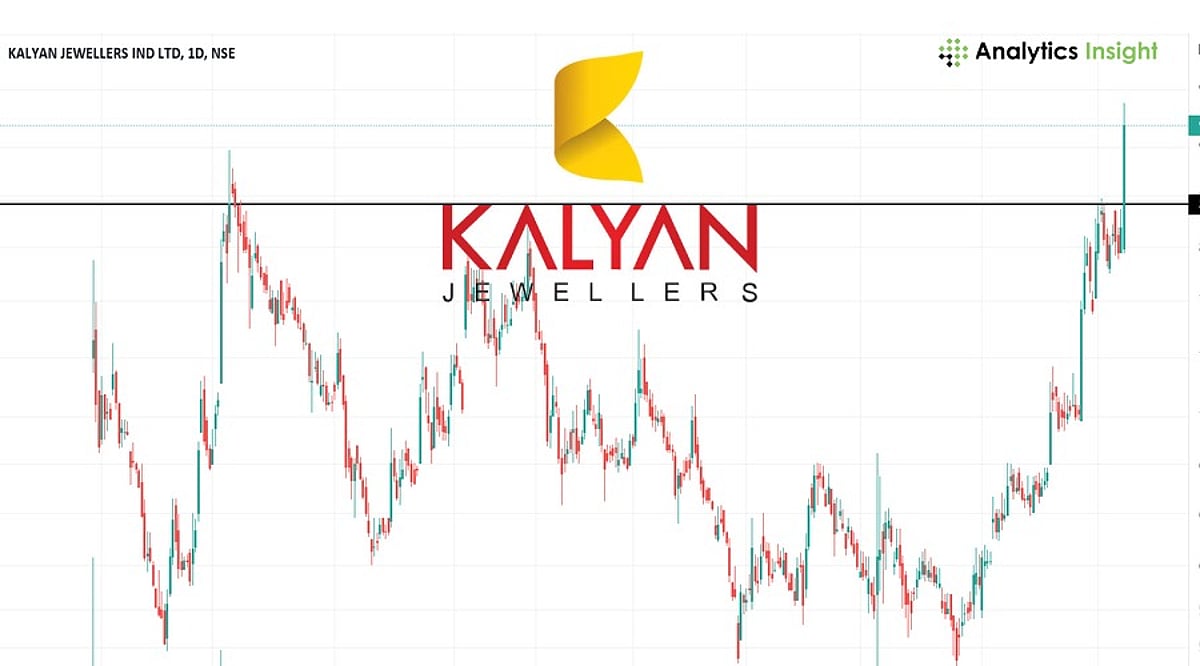
    Kalyan Jewellers closed at Rs. 524.75 on the NSE on Monday, capping a stunning four-day rally of nearly 47%. The stock touched an intraday high of Rs. 527.60, adding roughly Rs. 16,500 crore to the company’s market capitalization. The surge has made it one of the strongest performers on Dalal Street this week.

    Driven by a better-than-expected quarterly business update, robust domestic demand, and aggressive showroom expansion, investor confidence surged across the organized jewelry sector. The stock also broke above key resistance levels, attracting momentum traders and triggering short covering.

    While the rally reflects strong fundamentals, the rapid price appreciation now raises a critical question: should investors chase the stock or book profits?

    What’s Fueling the Rally?

    Several catalysts converged to propel shares higher:

    • Strong Q1 performance: Kalyan Jewellers reported impressive revenue growth despite elevated gold prices, indicating resilient demand for branded jewelry.
    • Expansion strategy: The company continues to open new showrooms, especially in high-growth regions, leveraging a franchise model to scale quickly.
    • Sector tailwinds: India’s organized jewelry market benefits from shifting consumer preferences toward hallmark jewelry, transparent pricing, and trusted brands.
    • Wedding and premiumization demand: Secular trends like wedding spending and premiumization provide a long-term growth runway.

    These structural factors go beyond short-term trading momentum, creating a compelling investment thesis.

    Valuation Concerns Emerge

    Despite the positive outlook, a 47% rise in just four sessions significantly alters the risk-reward equation. The stock now prices in not only a strong first quarter but also sustained earnings growth over several quarters. Expectations have risen sharply.

    To justify the current valuation, Kalyan Jewellers must consistently deliver revenue growth, maintain healthy margins despite gold price volatility, and execute its expansion plans effectively. Any slowdown in execution could trigger a correction.

    Should Investors Book Profits?

    The answer depends on your investment horizon:

    • Short-term traders: Booking partial profits after a near 50% run-up is logical, as sharp moves often lead to consolidation.
    • Long-term investors: Those focused on the structural growth story of India’s organized jewelry market may prefer to hold, given Kalyan Jewellers’ strong positioning. Portfolio rebalancing, rather than a full exit, can be a prudent approach.

    Peer Performance

    The rally also lifted sentiment for other listed jewelry stocks. Titan, Senco Gold, P N Gadgil Jewellers, and Thangamayil Jewellery have all gained on improved sector confidence and strong business updates.

    Market Outlook

    The recent surge reflects more than a short-term reaction – it signals growing confidence in organized jewelers that are capitalizing on formalization of the Indian jewelry market. However, given the sharp rally, the stock’s next leg will depend on the company’s ability to convert demand into earnings growth, sustain margins, and execute expansion successfully.

    FAQs

    1. Why did Kalyan Jewellers’ shares rally nearly 47%?

    The rally followed a strong Q1 business update, robust domestic demand, store expansion plans, and increased investor confidence in organized jewelry retailers.

    2. Should investors book profits after the rally?

    Short-term traders may consider partial profit booking, while long-term investors should focus on earnings growth, expansion strategy, and future business performance.

    3. How did Kalyan Jewellers perform on Monday?

    The stock rose 10.21% to close at Rs. 524.75 on the NSE, with an intraday high of Rs. 527.60.

    4. Which other jewellery stocks are gaining?

    Titan, Senco Gold, P N Gadgil Jewellers, and Thangamayil Jewellery have also gained on improving sector sentiment.

    5. What will determine Kalyan Jewellers’ future stock performance?

    Consistent revenue growth, healthy margins, successful store expansion, festive demand, and sustained investor confidence.

    Disclaimer: This article is for informational purposes only and does not constitute investment advice. Always do your own research before investing.

  • Indian Stock Markets End Flat Amid US-Iran Tensions and Oil Price Surge

    Indian Stock Markets End Flat Amid US-Iran Tensions and Oil Price Surge

    Indian equity benchmarks ended Monday’s session on a mixed note as escalating geopolitical tensions between the United States and Iran sent crude oil prices soaring, fueling inflation concerns and dampening investor sentiment. The Sensex recovered from early losses to close 83 points higher at 77,653, while the Nifty 50 pared its intraday decline to end nearly flat at 24,202.

    Markets opened sharply lower after renewed military exchanges in the Middle East pushed Brent crude nearly 4% higher to around $79 a barrel. The surge in oil prices raised worries about India’s import bill, corporate profitability, and the possibility of prolonged higher interest rates. Weak global cues, a softer rupee, and cautious trading ahead of the first-quarter earnings season added to the pressure.

    Key Market Movers

    Despite the weak start, selective buying in heavyweight stocks helped benchmarks recover. IT stocks led the rebound, with the Nifty IT index surging around 4%. Tata Consultancy Services (TCS) rallied 8% over two sessions after announcing a multi-year AI-powered network transformation deal with ABB. Infosys and HCLTech also gained. ICICI Bank held near Rs. 1,400, while Axis Bank saw mild profit booking.

    Kalyan Jewellers extended its 47% rally after a strong Q1 business update, though analysts flagged elevated valuations. Goodluck India rose nearly 3% on a 2:1 bonus share announcement. Meanwhile, Swiggy slipped over 2% after the FSSAI issued nine notices to its Instamart unit over alleged violations.

    Geopolitical and Global Impact

    Escalating US-Iran tensions triggered a global risk-off sentiment. Brent crude climbed to $78.68 a barrel, and the US dollar strengthened. Japan’s Nikkei fell nearly 2%, and South Korea’s Kospi plunged 9% as SK Hynix tumbled 15% after profit booking. Gold prices dropped more than 1% as rising oil revived inflation fears. The Indian rupee weakened to a one-month low of 95.76 per dollar, though likely RBI intervention limited losses.

    India’s Volatility Index (VIX) surged over 9%, reflecting heightened investor caution. Foreign institutional investors (FIIs) pulled $46 billion from emerging market equities in June, with heavy selling in South Korea and Taiwan tech stocks. However, FIIs trimmed stakes in nearly 280 BSE 500 companies yet some stocks rallied up to 220% in three months.

    Analyst Views and Outlook

    Goldman Sachs turned optimistic on Indian equities, projecting the Nifty 50 to reach 26,500 by June 2027. Axis Direct’s Rajesh Palviya said the near-term trend remains positive as long as Nifty holds above 24,100, with upside targets of 24,350 and 24,550. InvestorAI remains overweight on jewellery, cement, and healthcare, betting on domestic demand resilience. However, it warned that Brent crude above $80 per barrel is the biggest near-term risk, especially if Strait of Hormuz disruptions persist.

    Market participants will closely watch US inflation data due on July 14, Fed Chair Kevin Warsh’s congressional testimony, and further developments in the Middle East for directional cues.

  • Nifty50 Crosses 24,000 Mark, Sensex Gains 447 Points in Positive Session

    Nifty50 Crosses 24,000 Mark, Sensex Gains 447 Points in Positive Session

    The Indian stock market extended its winning streak on Thursday, July 9, 2026, with both the Nifty50 and Sensex posting strong gains. The Nifty50 climbed 147.05 points to close at 24,029.10, while the Sensex rose 447.14 points to 76,950.74. The rally was driven by robust buying in consumer durables and auto stocks, despite global uncertainties stemming from fresh tensions between the United States and Iran.

    Consumer Durables and Auto Stocks Lead the Rally

    Consumer durables emerged as the strongest sector, with significant buying interest. Auto stocks also performed well, providing solid support to the benchmark indices. The strength in these sectors helped balance weakness in other parts of the market, particularly the IT sector.

    Top Gainers and Broader Market Performance

    Bharti Airtel, Sun Pharmaceutical Industries, and Eternal led the gains among large-cap stocks. The broader market outperformed, with the Nifty MidCap rising 1.14% and the Nifty SmallCap gaining 1.5%, indicating widespread investor confidence beyond just large-cap names.

    Mixed Sector Performance

    The Nifty Consumer Durables recorded the highest gain among sectoral indices, while the Nifty IT remained under pressure. However, the strength in consumer durables and auto stocks outweighed the weakness in IT.

    Global Developments and IPO Activity

    Traders monitored US-Iran tensions, but domestic buying helped offset global headwinds. In the primary market, several IPOs attracted attention: Laser Power & Infra (₹742 crore), Devson Catalyst (₹42.32 crore), and Happy Steels (₹25 crore) opened for subscription, while the Kusumgar IPO (₹650 crore) entered its second day.

    Market Outlook

    With the Nifty50 holding above 24,000 and Sensex near 77,000, positive momentum is expected to continue if global conditions remain stable. Investors are advised to keep an eye on sector-specific movements and upcoming IPO progress.

  • Tata Motors Stock at Rs 424.15: Can Strong Domestic Demand Offset Q1 Margin Pressures?

    Tata Motors Stock at Rs 424.15: Can Strong Domestic Demand Offset Q1 Margin Pressures?

    Tata Motors Ltd. is trading at Rs 424.15 on the NSE as investors prepare for the company’s first-quarter FY27 earnings announcement. While domestic demand for passenger and commercial vehicles remains resilient, global challenges—particularly at Jaguar Land Rover (JLR)—and rising input costs are expected to squeeze margins. Analysts are closely watching management guidance to gauge the stock’s near-term direction.

    Domestic Demand Remains a Pillar of Strength

    India’s passenger vehicle market continues to show robust growth, especially in the SUV segment where Tata Motors holds a strong position. The company’s leadership in electric vehicles (EVs) also supports its long-term growth story. In the commercial vehicle space, infrastructure development, logistics activity, and fleet replacement cycles are driving steady demand. These segments are expected to provide stable revenue streams.

    Margin Pressure: The Key Concern

    Despite healthy demand, profitability remains the primary worry. Higher commodity costs, competitive discounting, and global supply disruptions are compressing margins. JLR, a major profit contributor for Tata Motors, faces its own headwinds—production challenges, shifting demand for luxury vehicles, and pricing pressures. Investors will focus on operating margin trends and cost management strategies outlined in the earnings report.

    Technical Setup: Consolidation Phase

    From a technical perspective, Tata Motors appears to be in a consolidation phase after a steep decline. The stock has found support near Rs 420, but resistance at Rs 435–440 and Rs 450 must be broken for a bullish reversal. On the downside, Rs 400 is the critical support level. The market is waiting for a fundamental trigger from the Q1 results.

    Key Positives and Risks

    • Positives: Resilient domestic demand, EV leadership, strong SUV and commercial vehicle pipeline, improving rural demand.
    • Risks: JLR uncertainty, high input costs, competitive discounting, global macroeconomic headwinds.

    Market Outlook

    Tata Motors enters earnings season with solid demand fundamentals but persistent profitability concerns. The stock’s near-term direction hinges on JLR’s performance, margin recovery, and management’s FY27 guidance. A positive earnings surprise could push the stock toward Rs 450, while disappointment may test support at Rs 400.

    FAQs

    1. Why are investors closely watching Tata Motors’ Q1 FY27 results?

    Investors are focusing on operating margins, JLR’s performance, domestic demand trends, EV growth, and management’s outlook for the remainder of FY27.

    2. What is the biggest concern for Tata Motors ahead of its earnings?

    The primary concern is margin pressure from higher commodity costs, discounting, and uncertainty around JLR’s global operations, which significantly impact consolidated profitability.

    3. How is Tata Motors’ domestic business expected to perform?

    The domestic business is expected to remain resilient, supported by healthy SUV demand, steady commercial vehicle sales, improving rural demand, and continued EV leadership.

    4. What technical levels should investors monitor in Tata Motors stock?

    Key support levels are Rs 415 and Rs 400, while resistance is at Rs 435–440 and Rs 450 ahead of the earnings announcement.

    5. What could drive Tata Motors shares after the Q1 results?

    A positive earnings surprise, stronger operating margins, encouraging JLR performance, and optimistic management guidance could boost investor confidence and support further gains.

  • Indian Stock Market Tumbles: Sensex Drops to 76,504, Nifty Falls Below 23,900 Amid US-Iran Tensions

    Indian Stock Market Tumbles: Sensex Drops to 76,504, Nifty Falls Below 23,900 Amid US-Iran Tensions

    Indian benchmark indices closed sharply lower on Wednesday as renewed US-Iran tensions triggered a broad market sell-off, pushing the Sensex down 1,677 points to 76,503.60 and the Nifty 50 down 516 points to 23,882.05. Rising crude oil prices, a stronger dollar, and weak global cues fueled risk aversion across sectors.

    Market Overview

    The trading session started cautiously with the Sensex slipping to around 77,650 and the Nifty falling below 24,250. However, a late-session sell-off deepened losses, with the Nifty crashing below 23,900. The India VIX surged nearly 28% to 14.88, signaling heightened investor nervousness.

    Sectoral Performance

    All major sectoral indices ended in the red. The Nifty PSU Bank index fell 2.7%, followed by Nifty Bank (-2.26%), Oil & Gas (-2.22%), Private Bank (-2.19%), and FMCG (-2.19%). Broader markets also suffered, with the Nifty Midcap 100 declining 1.5% and the Nifty Smallcap 100 dropping 2.2%. Market breadth was weak, with over 3,000 stocks declining.

    Stocks in Focus

    Gainers: ONGC gained 0.61%, Bajaj Auto advanced 0.33%, and Wipro added 0.25% — the only Nifty 50 stocks in positive territory. Unichem Laboratories surged 20% to lead broader market gainers.

    Losers: Shriram Finance slumped 4.51%, InterGlobe Aviation fell 4.48%, Maruti Suzuki dropped 3.48%, and Bajaj Finance declined 3.20%. Jio Financial Services fell over 5%.

    Currency and Commodity Impact

    The Indian rupee weakened 0.67% to 95.55 against the US dollar, pressured by rising crude oil prices and a stronger dollar. Crude oil surged 6.27% to $74.86 per barrel after US President Donald Trump declared the ceasefire with Iran over, intensifying supply concerns.

    Corporate Highlights

    Restaurant Brands Asia: Completed a Rs. 2,235 crore deal with Inspira Global, which now holds a 41.78% stake.

    Knack Packaging: Listed at an 11% premium over its IPO price.

    Cochin Shipyard: The government will exercise the oversubscription option for its OFS after strong investor demand.

    Inox India: Secured fresh orders worth Rs. 939 crore since May 21.

    SEPC: Approved acquisition of up to 90% stake in Abu Dhabi-based Avenir International for Rs. 1,530 crore.

    Uno Minda: Announced Rs. 320 crore investment in a new passenger vehicle seating plant.

    Marksans Pharma: To acquire 100% of Germany-based ABCnow GmbH for €0.9 million.

    Analyst Outlook

    Market experts noted that the Nifty’s sharp fall below key support levels has weakened the short-term technical outlook. Analysts recommend a sell-on-rallies approach until benchmark indices reclaim crucial resistance zones, while closely monitoring geopolitical developments and crude oil prices.

    Disclaimer: This article is for informational purposes only and does not constitute investment advice. Readers should conduct their own research before making any investment decisions.

  • Bajaj Auto Buyback Concludes: Stock Holds Above ₹10,000 as ₹5,633 Crore Tender Ends

    Bajaj Auto Buyback Concludes: Stock Holds Above ₹10,000 as ₹5,633 Crore Tender Ends

    Bajaj Auto shares traded above ₹10,000 on July 7, 2026, as the company’s ₹5,633 crore buyback offer entered its final day. Investors closely tracked the tender while weighing the premium offer against the company’s long-term growth trajectory in electric vehicles (EVs), exports, and earnings.

    The stock closed at ₹10,079.50 on the NSE, up ₹43 (0.43%), reflecting sustained investor confidence. The buyback, one of the largest ever by an Indian automobile manufacturer, underscores management’s commitment to shareholder value.

    Buyback Details and Capital Allocation Strategy

    Bajaj Auto is repurchasing 46.94 lakh shares at ₹12,000 per share through the tender offer route. Promoters are not participating, leaving the entire offer open to public shareholders. The move is expected to reduce outstanding equity and improve earnings per share over time.

    Auto Sector in Focus: TVS Motor, Apollo Tyres Also on Radar

    The positive sentiment isn’t limited to Bajaj Auto. Brokerage firm Kotak Institutional Equities has identified TVS Motor and Apollo Tyres as preferred picks for the June quarter, citing easing raw material costs, resilient domestic demand, and favorable product mix. The broader auto sector benefits from healthy financing conditions and rising consumer preference for premium vehicles.

    EV Competition Intensifies

    India’s electric two-wheeler market is becoming increasingly competitive. Bajaj Auto is expanding its Chetak electric scooter range with a cautious approach, balancing market share gains with profitability — a strategy that sets it apart from some rivals focused solely on volume.

    What Investors Should Watch Going Forward

    With the buyback complete, attention shifts to the company’s operational performance. Key metrics include:

    • June quarter earnings
    • Export growth trajectory
    • Chetak EV sales and market share
    • Operating margins
    • Future capital allocation plans
    • Buyback acceptance ratio
    • Management commentary on FY27 demand

    Sustainability of the Auto Rally

    The sector has shown strong momentum, but investors remain cautious about rising EV competition, export market volatility, commodity prices, and rural demand recovery. However, declining input costs, premiumization trends, and solid balance sheets provide a positive medium-term outlook.

    Bajaj Auto’s prudent capital management and consistent profitability position it well in India’s evolving mobility landscape. The buyback serves as a testament to its financial strength, but long-term value hinges on earnings growth, export recovery, and successful execution in EVs.