Tag: Inflation

  • MCX Gold Dips 0.46% as Brent Crude Surges Past $85, Inflation Worries Persist

    MCX Gold Dips 0.46% as Brent Crude Surges Past $85, Inflation Worries Persist

    Gold prices on the Multi Commodity Exchange (MCX) traded lower on July 15, despite a slowdown in U.S. inflation that reduced expectations for aggressive Federal Reserve rate hikes and weakened the U.S. dollar. August gold futures declined 0.46%, settling at Rs. 1,41,600 per 10 grams. Meanwhile, September silver futures slipped 0.31% to Rs. 2,22,499 per kilogram.

    In the energy markets, Brent crude futures jumped 1.20% to $85.75 per barrel, while U.S. West Texas Intermediate (WTI) advanced 0.92% to $80.07 per barrel. The rise in crude oil prices reignited inflation concerns, putting pressure on precious metals.

    According to the CME FedWatch Tool, traders now see a 58% chance of a September rate hike by the Fed, down from 78% earlier, reflecting the market’s shifting outlook on monetary policy.

    Domestic Gold Prices

    In the Indian domestic market, 24K gold rose by Rs. 77 to Rs. 1,43,570 per 10 grams, while 22K gold advanced by Rs. 70 to Rs. 1,31,600. By city, Mumbai and Kolkata quoted gold at Rs. 1,43,570, Delhi at Rs. 1,43,720, and Chennai at Rs. 1,43,780.

    U.S. Gold Prices

    U.S. gold prices fell on Wednesday after climbing more than 2% in the previous session, as rising oil prices fueled inflation concerns and uncertainty. Spot gold was down 0.5% at $4,035.67 per ounce, while U.S. gold futures for August delivery eased 0.7% to $4,042.20.

    Spot silver lost 0.3% to $58.48 per ounce. Among other precious metals, platinum gained 0.2% to $1,635.56, and palladium edged 0.2% higher to $1,307.11.

    Key Levels to Watch

    Kelvin Wong, senior market analyst at OANDA, commented: “I reckon that the market is now looking past the CPI data, which is kind of a lagging indication… Trump continues to maintain the blockade of ships that is flowing out of the Strait of Hormuz, causing oil prices to rise and gold to come under pressure.”

    Internationally, gold has support at $4,022 and $3,989, while resistance is at $4,110 and $4,140 per troy ounce. Silver has support at $57.40 and $56, with resistance at $60.60 and $62.00 per troy ounce.

    On MCX, gold has support at Rs. 1,41,400 and Rs. 1,40,650, and resistance at Rs. 1,43,350 and Rs. 1,44,500. Silver has support at Rs. 2,20,000 and Rs. 2,17,700, and resistance at Rs. 2,26,000 and Rs. 2,28,800.

  • S&P 500 Gains as June Inflation Slows and Bank Profits Surge

    S&P 500 Gains as June Inflation Slows and Bank Profits Surge

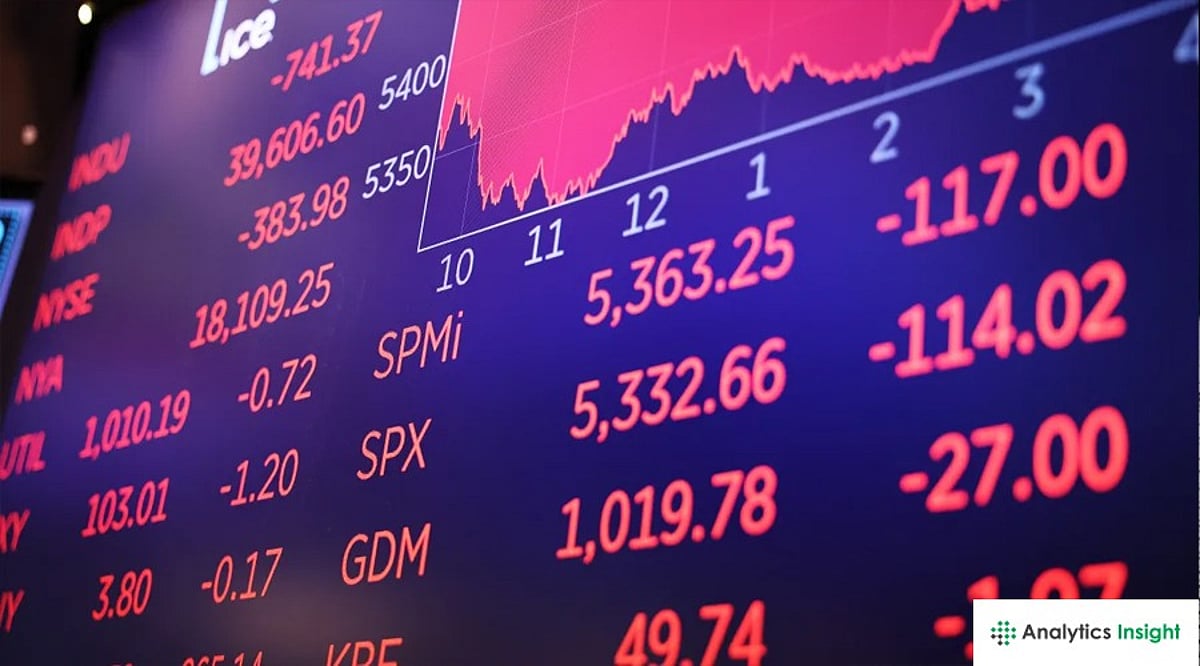
    U.S. stocks climbed on Tuesday after June inflation data came in cooler than expected, easing fears of an imminent Federal Reserve rate hike. The S&P 500 rose 0.5%, the NASDAQ Composite added 1%, and the Dow Jones Industrial Average gained roughly 86 points, or 0.2%. However, a steep drop in IBM shares and rising oil prices capped broader gains.

    June Inflation Data Boosts Market Sentiment

    The Consumer Price Index fell 0.4% in June from the prior month, bringing the annual inflation rate down to 3.5% from 4.2% in May. Economists had anticipated a 0.2% monthly decline and a 3.8% annual rate. The softer data reduced concerns that rising energy costs would push prices higher, and Treasury yields fell in response, lifting technology and housing-related stocks. Builders FirstSource and Lennar both gained as borrowing costs eased.

    Traders also scaled back bets on a July rate increase. According to CME FedWatch data, the probability of a hike dropped to 17% from 42% the previous day. Markets still see a higher chance of tighter policy at the September meeting.

    Bank Earnings Lift Financial Sector

    Major banks kicked off second-quarter earnings season with stronger-than-expected profits. Goldman Sachs rose after beating estimates, driven by dealmaking and equities trading. JPMorgan Chase, Citigroup, and Bank of America also gained on higher quarterly earnings. Wells Fargo traded lower despite reporting profit above expectations. The broader S&P 500 financial sector moved higher, with most major sectors posting gains during early trading.

    Investors are watching earnings reports for insights into consumer spending, business activity, and credit conditions. The reports showed steady card spending and stronger trading revenue, along with fresh data on loan demand.

    IBM Plunge Weighs on Dow

    IBM shares tumbled about 24% after the company warned that second-quarter revenue and profit would miss expectations due to weak demand in software and infrastructure. The decline pressured the Dow and dragged down other software stocks, including Oracle, ServiceNow, and Accenture. CEO Arvind Krishna acknowledged that the company failed to close several large deals on schedule, stating, “We did not adapt and move quickly enough,” while pointing to weaker execution across key businesses.

    Oil Prices Rise Amid Geopolitical Tensions

    Oil prices climbed as tensions between the United States and Iran escalated. U.S. crude traded above $80 per barrel, and Brent crude moved above $85 after President Donald Trump announced plans to restore a blockade on Iranian shipping through the Strait of Hormuz. The move raised concerns about global energy supplies. Higher fuel costs could slow the recent decline in inflation and maintain pressure on the Federal Reserve.

    Skyler Weinand of Regan Capital noted that the inflation surge linked to the conflict may be fading but warned that the relief “may just be temporary” as regional tensions increase.

    Chip Stocks Rebound After Monday’s Losses

    Semiconductor shares recovered after heavy selling in the previous session. The VanEck Semiconductor ETF rose nearly 2%, and the Philadelphia Semiconductor Index gained more than 3%. Applied Materials, Teradyne, Lam Research, Micron Technology, and STMicroelectronics all moved higher. NVIDIA also gained after falling sharply on Monday. The rebound helped the NASDAQ recover part of its previous decline, while investors continued to watch valuations in the volatile AI sector.

    Fed Chair Kevin Warsh prepared to testify before Congress later Tuesday, reiterating that returning inflation to the central bank’s 2% target remains a priority. He did not provide a direct signal about the Fed’s next rate decision.

    Disclaimer: Analytics Insight does not provide financial advice or guidance on cryptocurrencies and stocks. This article is for informational purposes only and does not constitute investment advice. Always conduct your own research before making any investments.

  • US Stock Futures Decline as Middle East Tensions Drive Oil Prices Higher, Stoking Market Anxiety

    US Stock Futures Decline as Middle East Tensions Drive Oil Prices Higher, Stoking Market Anxiety

    US stock futures edged lower on Monday as renewed tensions in the Middle East unsettled investors and sent crude oil prices higher, raising concerns over inflation and global economic growth.

    Nasdaq futures suffered the biggest loss, with S&P 500 and Dow Jones Industrial Average futures indicating the market will open lower as investors weighed the impact of rising energy prices amid uncertainty over the interest rate outlook.

    Oil Rise Puts Pressure on Market Sentiment

    Oil prices increased amid growing tensions between the United States and Iran. Concerns about potential oil supply disruptions have arisen due to the strategically located Strait of Hormuz, which is among the most active oil transportation routes worldwide.

    Brent crude oil has been hovering near $79 per barrel, while West Texas Intermediate has exceeded $74 per barrel. Increased oil prices have caused inflation concerns.

    Tech and semiconductor stocks continued to underperform as investors cut positions in growth sectors. Increasing bond rates have contributed to weakness in tech stocks due to their sensitivity to rate changes.

    Attention Turns to Earnings and Inflation Reports

    Despite geopolitical and market uncertainties, investors are preparing for yet another busy week on Wall Street. Several big US banks are expected to report earnings next week, kicking off the earnings season. Market participants will watch how tech firms perform during earnings in the upcoming days.

    Moreover, investors will consider figures on US inflation and statements by Fed Chair Kevin Warsh, which may have a strong impact on market expectations for further Fed action. Any indications of inflation persistence, especially following the oil price hike, may add to the list of reasons to maintain high interest rates.

    For now, investors are trying to weigh geopolitical influences against company earnings and economic data. It seems that all these issues will play an important role in global markets in the coming days.

  • Indian Rupee Weakens Past 96 Against US Dollar for First Time Since May Amid Rising Oil Prices and Dollar Strength

    Indian Rupee Weakens Past 96 Against US Dollar for First Time Since May Amid Rising Oil Prices and Dollar Strength

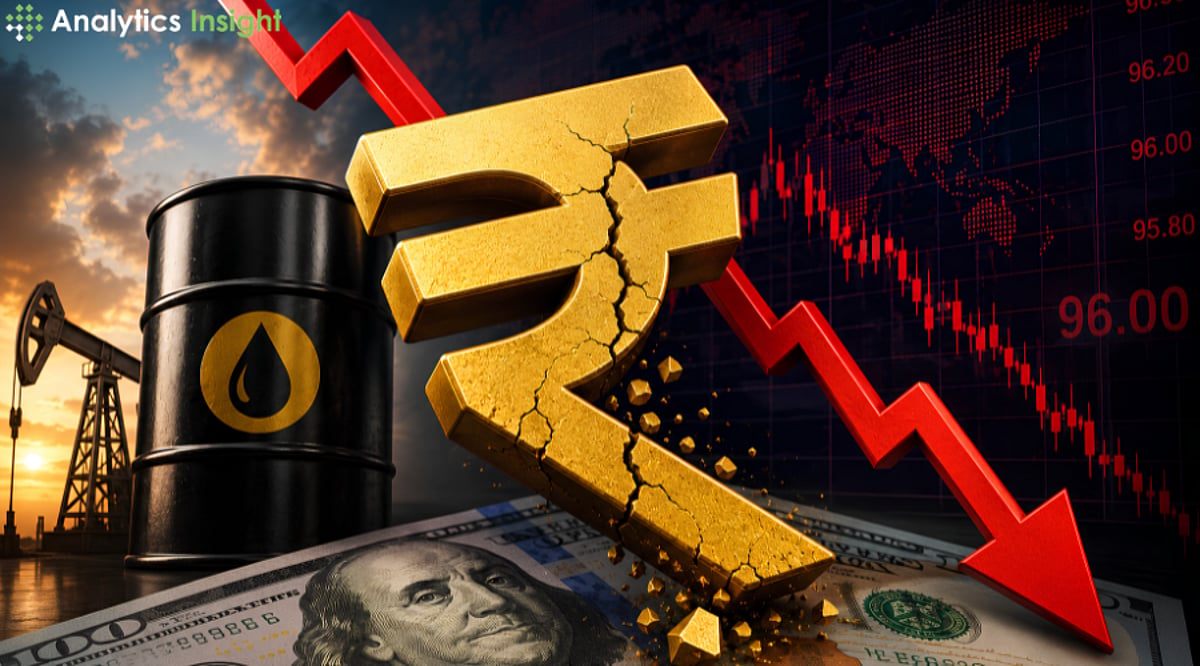
    The Indian rupee slipped below the 96-mark against the US dollar on Monday, reaching its weakest level since May, as a sharp rally in global crude oil prices and rising US bond yields reignited pressure on the domestic currency. The latest decline comes after the rupee had briefly recovered in recent weeks, supported by Reserve Bank of India (RBI) measures aimed at attracting dollar inflows.

    The renewed weakness follows escalating geopolitical tensions in the Middle East, which have pushed Brent crude prices to their highest level in over a month. As India imports nearly 85% of its crude oil requirements, higher energy prices typically widen the country’s import bill, increase demand for dollars, and weigh on the rupee.

    Oil Prices and US Yields Drive Currency Weakness

    Currency dealers mentioned that the rupee came under pressure from a mix of rising oil prices and a firmer US dollar. Brent crude has climbed by more than 20% compared with its recent lows. At the same time, US Treasury yields have moved higher after hawkish signals from Federal Reserve officials, making dollar-denominated assets more attractive to investors.

    The stronger greenback has also helped push down several currencies across Asia, including the rupee. As India is heavily reliant on crude oil imports, the ripple effect is felt throughout the exchange market.

    RBI Intervention Expected to Curb Volatility

    It is expected that the RBI will monitor rupee movements and, if it sees the situation becoming volatile, intervene to stabilize the currency. Earlier, it had sold dollars in the forex market to avoid a sharp devaluation. Analysts feel that intervention might curtail losses, but it will not change the trend if oil prices remain high.

    What Does This Mean for Consumers?

    As the rupee falls, its impact will be felt in the prices of imports such as crude oil and electronics. Over time, this will result in higher fuel prices and transport expenses.

    For now, traders will closely watch developments in the Middle East, movements in global crude prices, and the Federal Reserve’s policy outlook, all of which are expected to determine the rupee’s near-term direction. Unless oil prices ease or foreign capital inflows improve, the Indian currency is likely to remain under pressure in the coming sessions.

  • Fed Chairman Kevin Warsh Establishes Task Forces to Examine AI and Monetary Policy

    Fed Chairman Kevin Warsh Establishes Task Forces to Examine AI and Monetary Policy

    Federal Reserve Chairman Kevin Warsh has announced the formation of five task forces to review critical areas of U.S. monetary policy and central bank operations. The panels will focus on Fed communications, the inflation framework, the balance sheet, economic data, and new technologies—including artificial intelligence.

    The initiative places AI at the center of Warsh’s early agenda. Several members of the technology panel have publicly argued that AI could boost productivity and alter the trajectory of U.S. growth.

    Warsh stated that the task forces will operate independently with support from Fed staff, providing evidence-based feedback and recommendations to the Federal Open Market Committee by the end of 2026. “The goal is straightforward: to ensure the Fed is best positioned to achieve our objectives in this consequential time,” he said.

    Former Bank of England Governor Mervyn King will co-lead the communications review. Raghuram Rajan, former head of India’s central bank, and Harvard professor Jeremy Stein will lead the balance-sheet panel. The AI task force will be led by Marc Andreessen, Stanford economist Charles I. Jones, and Microsoft executive Asha Sharma—all vocal proponents of AI’s economic potential.

    The AI panel arrives amid debate among Fed officials about how quickly the technology can raise productivity. While some FOMC participants see room for faster growth, others caution over timing and scale. New York Fed President John Williams warned that AI-driven demand has pushed up prices for electricity and semiconductors, describing the price path as a “hockey stick.” He emphasized that supply must expand to keep inflation under control.

    Former Walmart CEO Doug McMillon will help lead the data-quality review, which comes as job-market data faces increased scrutiny due to revisions and lower survey response rates. The task forces are expected to complete their work by the end of 2026.

  • S&P 500 and NASDAQ Dip as Oil Surges on Trump’s Iran Warning

    S&P 500 and NASDAQ Dip as Oil Surges on Trump’s Iran Warning

    Wall Street moved lower on Wednesday after President Donald Trump declared the interim US-Iran accord ‘over,’ reigniting fears of conflict near a critical global energy route. The Dow Jones Industrial Average fell roughly 1.5%, the S&P 500 dropped 0.7%, and the NASDAQ Composite declined 0.8% by late morning trading.

    The market reaction was notable but orderly. Oil prices spiked sharply, Treasury yields climbed, and investors rotated away from travel and consumer stocks. However, gains in chip and energy shares helped cushion the broader decline across major indices.

    Stocks Fall, But Losses Stay Contained

    US equities opened under pressure after Trump said he had no interest in further talks with Iran and warned of possible additional US strikes. The comments followed renewed attacks tied to the Strait of Hormuz, a key waterway for global oil flows.

    Despite the tension, the selloff remained narrower than a full risk-off event. At 11:30 a.m. ET, the Dow was down 810 points to 52,115. The S&P 500 slipped to 7,431, while the NASDAQ fell to 25,565. Decliners outpaced advancers on both the NYSE and NASDAQ, signaling broad caution.

    Oil Jumps as Hormuz Risks Return

    Oil prices delivered the clearest market reaction to Trump’s remarks. Brent and US West Texas Intermediate crude both surged more than 5% as traders reassessed supply risks from the Gulf region.

    The move was not worse because traders had already priced in months of Middle East disruption. Some investors also waited to see whether shipping through the Strait of Hormuz would face a fresh full blockade. Fiona Cincotta of City Index captured this caution, saying, “This was always a very fragile peace process.”

    Chip Gains Cushion NASDAQ

    Technology stocks offered partial support, mainly through chipmakers. Broadcom rose after Apple announced plans to spend more than $30 billion under a chip-supply agreement with the company. This gain helped ease pressure on the NASDAQ, which has faced recent volatility.

    The Philadelphia SE Semiconductor Index also advanced, while energy was one of the few S&P 500 sectors in positive territory. Nine of the 11 main S&P 500 sectors traded lower. Travel shares weakened as higher fuel prices raised cost concerns for airlines and cruise operators.

    Investors Watch Fed Minutes

    The timing added another layer for markets, with the Federal Reserve set to release minutes from its June policy meeting at 2 p.m. ET. The meeting was the first under Chair Kevin Warsh, who has shifted away from forward guidance and kept rates unchanged at 3.50% to 3.75%.

    Higher oil prices brought inflation risk back into focus before the release. Ian Lyngen of BMO Capital Markets said June core inflation figures could draw less attention if crude keeps moving higher in July. He added that the Fed minutes may look “somewhat stale” after the latest Middle East turn.

    Doubts Keep the Reaction Measured

    Analysts pointed to uncertainty rather than a single clear market path. Matthew Ryan of Ebury said ‘the million-dollar question’ was whether talks had fully broken down or only hit a temporary setback. This doubt helped explain why stocks fell but did not collapse.

    Meanwhile, the International Monetary Fund lowered its 2026 global growth forecast to 3.0% and cited war-related energy risks. The update gave investors another reason to watch oil, inflation, and central bank policy closely, while markets waited for clearer signs on Iran, shipping flows, and Fed thinking.

  • Wall Street Surges as June Jobs Data Softens Fed Rate Hike Outlook

    Wall Street Surges as June Jobs Data Softens Fed Rate Hike Outlook

    U.S. stocks moved higher on Thursday after a weaker-than-expected June employment report eased concerns that the Federal Reserve might raise interest rates in the near term. The Dow Jones Industrial Average reached a new record intraday high above 52,800, while the S&P 500 also advanced. Investors shifted focus to labor market data that pointed to slower hiring while unemployment remained relatively stable.

    The report pushed Treasury yields lower and lifted expectations that the Fed may leave rates unchanged at its next policy meeting. Gains in materials and consumer staples helped offset continued weakness in semiconductor stocks, allowing major indexes to climb.

    June Payrolls Miss Forecasts as Unemployment Holds Steady

    The U.S. economy added 57,000 nonfarm payroll jobs in June, well below economists’ expectations of around 110,000 to 115,000. Despite slower hiring, the unemployment rate came in at 4.2%, slightly better than the forecasted 4.3%. The softer data interrupted several months of stronger hiring and was seen as a sign that the labor market is cooling without broad weakness, reducing the need for the Fed to tighten monetary policy further.

    Florian Ielpo, head of macro at Lombard Odier Investment Managers, described the report as “the best number we could hope for,” noting that the job market remains fine but not hot enough to accelerate inflation. Bret Kenwell, US investment analyst at eToro, added that while the report doesn’t signal labor-market trouble, it does cool the hawkish narrative.

    Markets Trim Expectations for Another Fed Rate Hike

    Following the employment data, traders lowered odds of a near-term Fed rate increase. The two-year Treasury yield, which closely tracks policy expectations, fell. Market pricing shifted toward a greater probability that policymakers would keep rates unchanged later this month.

    Fed Chair Kevin Warsh had noted on Wednesday that inflation risks had eased, reaffirming the central bank’s 2% target. The latest jobs figures shifted attention to the labor side of the Fed’s dual mandate. Bradford Smith, portfolio manager at Janus Henderson Investors, said the print “takes some of the pressure off” the Fed to hike near term, especially with moderating oil prices and softer hiring.

    Dow Reaches Another Record While Chip Stocks Lag

    The Dow Jones Industrial Average set a fresh intraday record above 52,800, and the S&P 500 traded higher. However, the Nasdaq underperformed as semiconductor shares extended recent losses. The VanEck Semiconductor ETF declined, with Teradyne, KLA, Nvidia, and Micron trading lower.

    Despite chipmaker weakness, market participation broadened. Materials and consumer staples led S&P 500 sector gains, and advancing stocks outnumbered decliners on both the NYSE and Nasdaq. Ielpo noted that investors are finding value outside AI and technology, favoring a broader market approach.

    Investors Monitor Inflation Risks and Broader Trends

    Although the jobs report eased immediate rate-hike fears, investors continue watching inflation and geopolitical developments, particularly oil price volatility tied to tensions involving Iran and the Strait of Hormuz. Indirect U.S.-Iran talks showed little progress, but oil prices moved lower on hopes that tensions would remain contained.

    Active fund managers posted stronger June performance as market breadth improved. According to Jefferies strategist Steven DeSanctis, about 70% of active managers beat their benchmarks, with nearly 88% of small-cap managers outperforming as leadership expanded beyond high-growth stocks. Investors also monitored AI-related shares after recent volatility, with analysts noting that improving breadth has allowed gains to spread across sectors.

    Disclaimer: This article is for informational purposes only and does not constitute investment advice. Always conduct your own research before making investment decisions.

  • Bitcoin Rebounds to $60,700, Solana Surges Past $78 as Fed Chair Warsh Eases Inflation Concerns

    Bitcoin Rebounds to $60,700, Solana Surges Past $78 as Fed Chair Warsh Eases Inflation Concerns

    Bitcoin is stabilizing above the crucial $60,000 level as long-term holders absorb heavy ETF outflows, while the upcoming US jobs report and shifting dollar strength are expected to shape the crypto market’s next major move.

    Bitcoin Price Today: $60,677

    Bitcoin is trading near $60,677, up 2.63% over the past 24 hours and holding above the $60,000 mark. The token slid to a 21-month low of $57,950 earlier this week but has since clawed back above $60,000, a level that dominated traders’ conversation through most of June.

    Market sentiment improved after Fed Chair Kevin Warsh told an ECB forum panel that inflation risks appear to be easing, even as he avoided firm guidance on rate policy. A weaker US dollar and crude oil sliding to a four-month low have also removed some pressure from risk assets. Robinhood’s launch of its own public blockchain added further momentum, pulling fresh attention toward crypto infrastructure plays just as the broader market searched for a positive catalyst.

    Market Analysis and Expert Insights

    Akshat Siddhant, Lead Quant Analyst at Mudrex, noted: “Bitcoin is stabilising near the $60,000 psychological level after rebounding from a 21-month low of $57,950. A weaker U.S. dollar and crude oil prices falling to a four-month low have improved risk sentiment, helping BTC recover.” He added, “Although spot Bitcoin ETFs ended June with $4.5 billion in net outflows, long-term holders have absorbed some of the selling pressure, accumulating 270,000 BTC over the past two weeks.”

    The CoinSwitch Markets Desk commented: “BTC reclaimed the key $60K level after dipping to $58K. On the macro side, the US dollar pulled back from its highs, a tailwind for BTC. The long-dollar trade is crowded at +$34.3B, an 18-month high, hinting a dollar reversal may be near. Long-term holders added roughly 270K BTC in two weeks, showing big players are buying the dip.”

    Crypto Prices Today: Top 10 Coins at a Glance

    Based on CoinMarketCap data as of July 2:

    • Biggest Gainers: Solana leads with a 3.85% gain, followed by Hyperliquid at 2.98% and Bitcoin at 2.63%.
    • Biggest Laggards: TRON is the weakest mover among the top ten, up just 0.29%. USDC and Tether stayed near their dollar pegs.

    Crypto News Today Driving Market Sentiments

    Fed Chair Warsh Signals Cooling Inflation Risk

    Kevin Warsh told an ECB forum panel that inflation pressures appear to be easing. He declined to offer forward guidance on rates but described the upcoming July Fed meeting as likely to bring a real internal debate over policy direction. Bond yields stayed elevated after his remarks, with the 10-year Treasury near 4.50%.

    Spot Bitcoin ETFs Post Record Monthly Outflow

    US spot Bitcoin ETFs shed roughly $4.5 billion in June, their worst month since launching in January 2024. BlackRock’s IBIT absorbed a large share of the redemptions. XRP and Hyperliquid funds bucked the trend, pulling in $59.4 million and $161 million, respectively, suggesting investors are growing selective rather than exiting crypto altogether.

    Robinhood Launches Public Blockchain and Expands Crypto Suite

    Robinhood unveiled Robinhood Chain, a public layer-2 blockchain built on Arbitrum, at a London event this week. The launch brings tokenized stock trading live across more than 120 countries. A new lending product, Robinhood Earn, is part of the rollout too. Robinhood shares jumped 8% on the announcement.

    Investor and Market Outlook

    Bitcoin enters July with cautious optimism after a historically weak first half. The token fell in both Q1 and Q2, only the third time that has happened since 2018. In the two earlier instances, the second half brought little relief. July has historically been kind to Bitcoin, with the token closing green in 9 of the last 13 years, with average returns near 7.25%. That seasonal pattern, paired with Warsh’s softer tone, leaves room for further upside if ETF flows stabilize.

    Investors should track daily ETF flow data from SoSoValue and Treasury yield movement this week. Bitcoin’s ability to hold above $60,000 remains the key signal to watch. A confirmed break past $62,000 would strengthen the bullish case, while a slip under $58,000 would revive downside risk toward $55,000.

  • Bitcoin Hovers Near $60K as Peace Talks Lift Stocks, Strategy Losses Mount

    Bitcoin Hovers Near $60K as Peace Talks Lift Stocks, Strategy Losses Mount

    Bitcoin opened Monday near $59,700 as renewed U.S.-Iran peace efforts lifted equity futures but failed to revive crypto demand. The asset fell 0.3% during the session and 6.8% across the week. Meanwhile, fresh criticism of Strategy’s Bitcoin purchases added pressure around the market’s largest corporate holder.

    Peace Talks Lift Stocks but Leave Bitcoin Flat

    Axios reported that the United States and Iran agreed to halt strikes and meet this week in Qatar. The talks will cover the Strait of Hormuz and a broader path toward ending the conflict. S&P 500 and Nasdaq 100 futures gained 0.5% following the report. Crypto markets barely responded, continuing a pattern that has shaped trading during the past two weeks.

    Ether rose 0.3% to $1,572, while Solana gained 1.5%. By contrast, XRP and Dogecoin extended their declines as traders remained cautious. Bitcoin rallied after the June 19 peace agreement. Yet those gains faded as a hawkish Federal Reserve outlook and exchange-traded fund outflows returned to focus.

    Meanwhile, South Korea announced plans to double DRAM production capacity around Seoul within five years. Samsung and SK Hynix committed 800 trillion won, or about $518 billion, toward four fabrication plants. Asian technology hardware shares declined during the rotation, although eight of the eleven MSCI Asia Pacific groups advanced. The artificial intelligence chip trade continued to shape wider market movements.

    Will the Qatar talks and Thursday’s inflation report give Bitcoin a lasting catalyst? Both events now represent major tests for crypto markets this week.

    Strategy Losses Renew Scrutiny of Saylor’s Approach

    Economist Peter Schiff said Sunday that Michael Saylor had destroyed shareholder value through Strategy’s Bitcoin accumulation plan. He cited the company’s paper losses and declining stock price. According to Schiff, Strategy carries almost $14 billion in unrealized losses on its Bitcoin holdings. He also compared its $29.54 billion market value with the $64.10 billion spent acquiring Bitcoin.

    Strategy holds more than 847,363 Bitcoin at an average purchase price of $75,651. That position makes the company the world’s largest corporate Bitcoin owner. Schiff argued that a large Strategy sale could push Bitcoin lower and limit potential liquidation proceeds. He has repeatedly criticized the company’s business model and cryptocurrency exposure.

    Last week, Schiff said Saylor’s Bitcoin bet could become the largest losing trade in history. He has also called MSTR stock the worst route to Bitcoin exposure.

    MSTR Slides as Strategy Defends its Market Role

    Concerns grew after Strategy disclosed Bitcoin sales earlier this month. The announcement weakened the ‘never sell’ position that many bullish investors had associated with the company. Since that disclosure, MSTR shares have fallen 45%. The stock closed Friday at $82.31 after dropping 3.54% during the regular trading session.

    Saylor has defended Strategy’s actions during the current bear market. He said the company has provided liquidity and support for Bitcoin rather than creating systemic risk.

    Bitcoin later traded near $60,041, up 0.28% over 24 hours, according to Benzinga Pro. That reading remained close to the level recorded during Monday’s flat market opening.

    What’s Next?

    Bitcoin remained near $60,000 even as U.S.-Iran peace talks supported equities, while Strategy faced renewed criticism over its mounting paper losses and declining share price. Investors should now watch the Qatar negotiations and inflation data, as both could shape Bitcoin’s next major market direction.

    This article was originally published by Analytics Insight and has been adapted for publication.

  • Inflation Adjusted: GTA 6 Is the Most Affordable Mainline GTA in 25 Years

    Inflation Adjusted: GTA 6 Is the Most Affordable Mainline GTA in 25 Years

    The price of Grand Theft Auto VI has reignited debate among gamers. Rockstar Games set the Standard Edition at $79.99, a figure that feels steep to many. However, when adjusted for inflation, the new entry may actually be the most affordable mainline GTA title in a quarter-century.

    A comparison using U.S. National Average Wage Index data reveals that the average annual income for American workers in 2024 was $67,027—roughly $5,600 per month. At $79.99, GTA 6 represents just 0.119% of that annual income, whereas earlier entries in the series reached nearly 0.15%.

    For context, GTA 3 launched in 2001 at $49.99, which equates to approximately $90 in today’s dollars. Similarly, GTA: Vice City and GTA: San Andreas would cost around that same amount if released in 2026. GTA 4 debuted at $59.99, which would now be worth well over $90 after inflation. This means GTA 6 offers better purchasing power compared to several of its predecessors.

    While the math makes a strong case, many players remain focused on the sticker price. Rising costs of living mean that every dollar counts, and the $80 price tag still feels like a significant expense for many households.

    In other news, a Polish gaming podcast, Rock and Borys, has suggested that Rockstar may not ship GTA 6 with a 60 FPS mode at launch. Instead, the feature might arrive via a post-launch update, with the game initially running at 30 FPS. Nothing has been confirmed, but fans are divided: some are willing to wait for a smoother experience, while others expect a title of this scale to include 60 FPS support from day one.

    Ultimately, inflation-adjusted pricing shows GTA 6 is more affordable than older GTA games, but that doesn’t change the immediate financial reality for players. The conversation around value and cost will likely continue as the release approaches.