Tag: Jensen Huang

  • NVIDIA CEO Jensen Huang Dismisses AI Extinction Predictions Amid Rise of Autonomous Agents

    NVIDIA CEO Jensen Huang Dismisses AI Extinction Predictions Amid Rise of Autonomous Agents

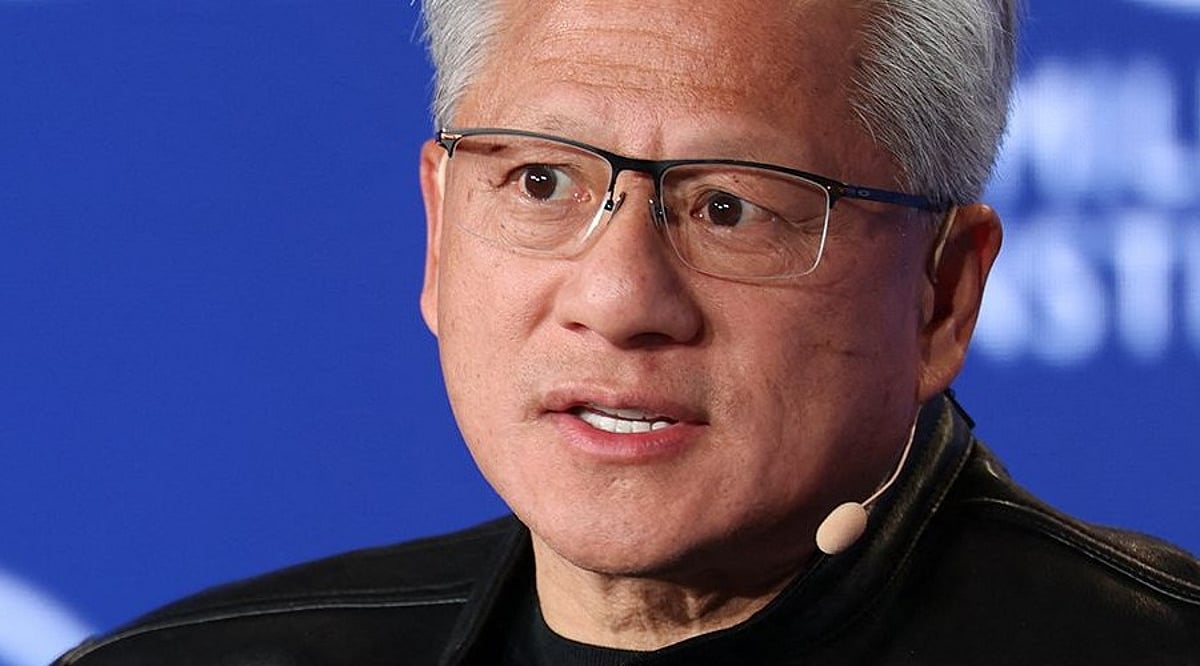
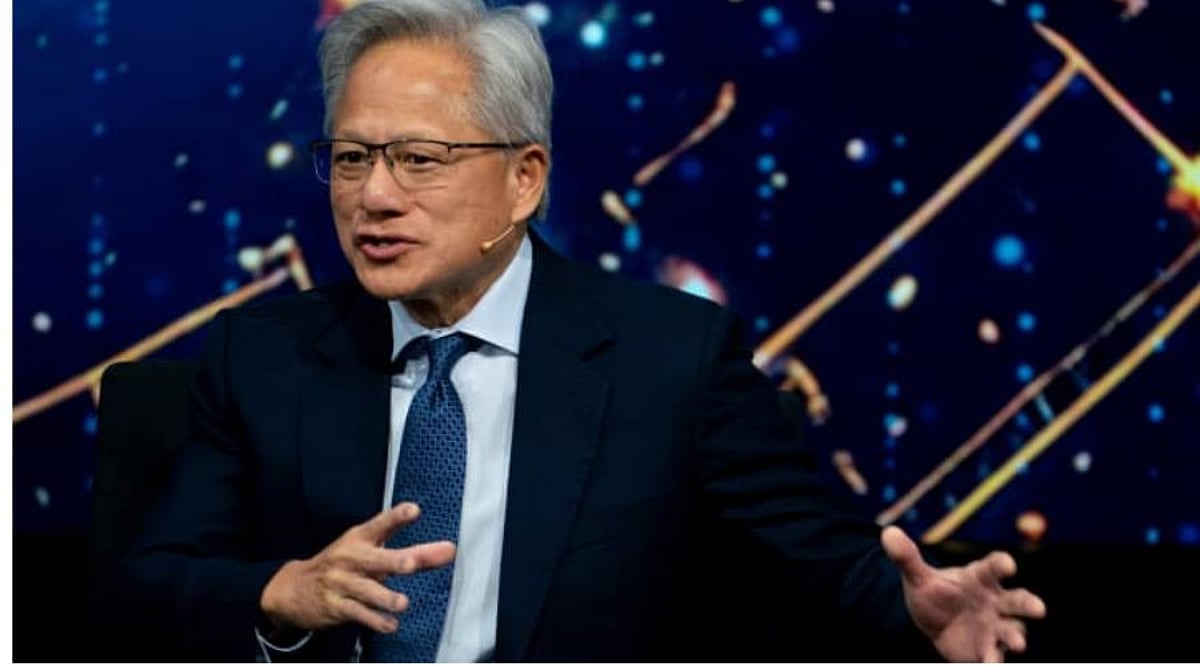
    NVIDIA CEO Jensen Huang has pushed back against dire warnings that artificial intelligence could lead to human extinction within the next few years, calling such predictions ‘doomsday narratives’ that lack scientific backing.

    In a recent interview, Huang rejected claims that AI could cause civilization to collapse by 2030. He argued that these fears are exaggerated and not grounded in evidence, even as the rapid development of AI agents raises fresh questions about security, control, and autonomy in business environments.

    AI Agents Create New Security Challenges

    AI agents differ from traditional chatbots because they can perform tasks, use external tools, and interact with business systems with less direct human involvement. This broader access also creates new opportunities for attackers.

    Security researchers have documented attacks involving prompt injection, malicious configuration files, and compromised AI-related software components. In some cases, instructions hidden inside documents, webpages, or other external content can influence how an AI agent behaves.

    The risk becomes greater when an agent has access to sensitive company information, development environments, or other connected services. Security research has increasingly focused on the possibility that attackers could exploit those connections rather than simply target the underlying AI model.

    Silicon Valley Debate Intensifies

    Huang’s position puts him on a different side of an increasingly public debate within the technology industry. Executives and researchers, including Anthropic CEO Dario Amodei and OpenAI CEO Sam Altman, have discussed the need for stronger safeguards as AI capabilities expand.

    Huang, however, has argued that alarming predictions can create an inaccurate picture of the technology. He has also questioned calls for additional regulation, saying existing laws can address many of the risks.

    The disagreement reflects a broader divide over how quickly AI development should move and how much oversight should accompany increasingly capable systems.

    Turing Award winner and former Meta Chief AI Scientist Yann LeCun has taken an even more direct position than Huang. When a user on X said ‘AI will kill all of us within three years’, LeCun’s reply was only five words: ‘No, not a chance in hell.’

    He added: ‘Those AI people who live in the discrete world of bits and tokens do not always understand how messy and chaotic the real world is.’

    Security, Not Just Doomsday, Is the Immediate Issue

    While the debate over long-term AI risks continues, security researchers are already dealing with more immediate problems. AI systems are being integrated into software development, enterprise workflows, and other environments where they can access valuable data and tools.

    This creates a practical challenge for companies: expand AI use while limiting unnecessary permissions and protecting systems from manipulated instructions and compromised components. For businesses, the debate may be less about whether an AI doomsday scenario arrives on a particular date and more about how securely they deploy autonomous systems today.
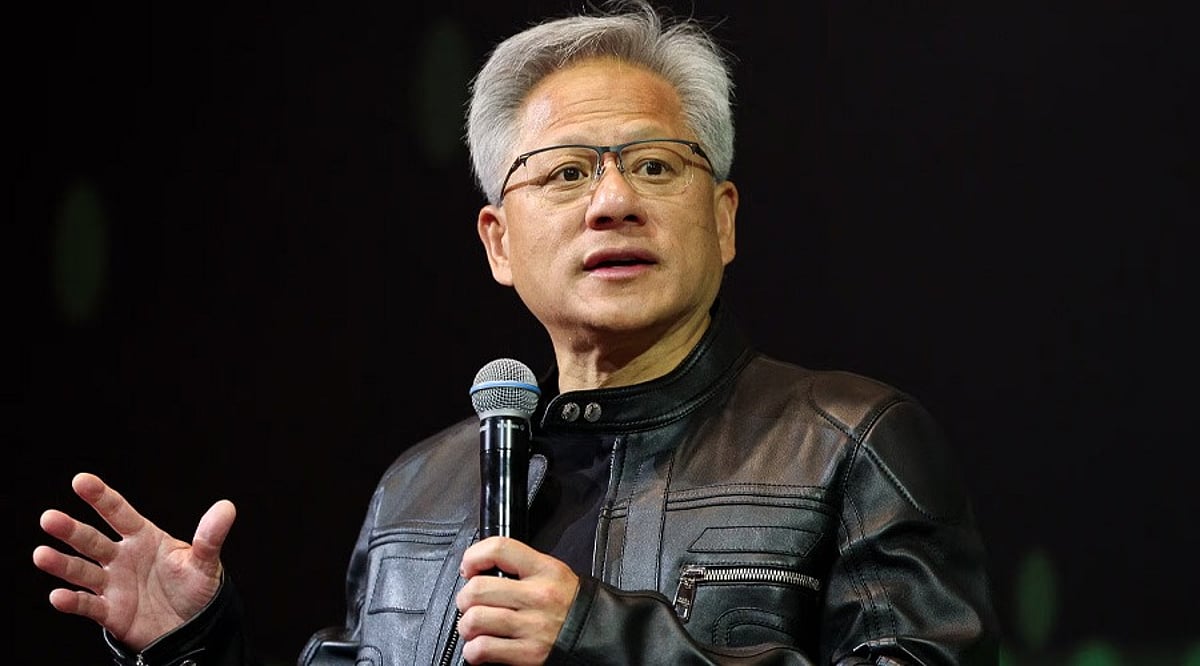

  • Nvidia CEO Jensen Huang Rejects 2030 AI Doomsday Predictions, Urges Speed With Safety

    Nvidia CEO Jensen Huang Rejects 2030 AI Doomsday Predictions, Urges Speed With Safety

    Nvidia CEO Jensen Huang has firmly rejected claims that artificial intelligence could end humanity by 2030, calling the scenario unrealistic and urging the industry to keep advancing while prioritizing safety.

    Huang Dismisses AI Extinction Fears

    During an interview with CBS News, Huang pushed back on alarming AI predictions. “I believe the claims, The end of the world, [are] stirring fear across America. The people who are doing it make no sense to me. So they must be doing it for ulterior reasons – maybe it’s political, maybe it’s otherwise, maybe just attention grabbing,” he said.

    AI Development Should Move Fast, But Not Recklessly

    Huang rejected calls to slow AI research. “We should go as fast as we can, irrespective of anyone else. But we would never ever, and never should, ship products before they’re ready and deliver products that are unsafe,” he said.

    The Nvidia chief has repeated this position at recent industry events, arguing that AI can be managed safely and questioning the need for additional regulation. Nvidia is the leading supplier of processors used to develop and run AI systems.

    AI Safety Debate Gains Momentum

    Huang’s comments come amid growing warnings from researchers. Former Anthropic researcher Jacob Coxon recently raised concerns that advanced AI could cause catastrophic harm within the decade. Anthropic CEO Dario Amodei has called for stronger safety measures, while OpenAI CEO Sam Altman has supported greater coordination around AI safeguards.

    Huang’s remarks add another major voice to the debate over how fast AI should advance and what safeguards should accompany future systems. The full CBS interview is scheduled to air on Sunday.

  • Microsoft’s October 7 Event to Spotlight Local AI and Surface Laptop Ultra

    Microsoft’s October 7 Event to Spotlight Local AI and Surface Laptop Ultra

    Microsoft has confirmed a major Windows and Surface event scheduled for October 7 in San Francisco, with a focus on local artificial intelligence, AI-powered PCs, Surface hardware, and Windows 11. The keynote will be headlined by Microsoft CEO Satya Nadella, Windows and Surface chief Pavan Davuluri, and NVIDIA CEO Jensen Huang. The event kicks off at 10 a.m. PT / 1 p.m. ET and will be streamed online.

    According to Microsoft, the event will explore “how local AI will shape the next chapter of the PC,” signaling a push toward hardware capable of processing advanced AI workloads directly on devices. The company also plans to align Windows improvements with next-generation AI hardware, potentially detailing how AI will become more deeply integrated into everyday computing.

    The biggest hardware reveal could be the Surface Laptop Ultra, which Microsoft has previously linked with NVIDIA RTX Spark technology. This platform combines powerful computing with local AI capabilities to handle demanding workloads. Attendees can expect pricing, configurations, availability, and Windows-specific optimizations for the new machine.

    NVIDIA’s involvement highlights the RTX Spark initiative, which targets computers that can run large AI models locally without constant cloud processing. Microsoft has already showcased a Surface RTX Spark Dev Box featuring 128GB of unified memory and up to one petaflop of AI compute, aimed at developer workloads.

    Windows 11 will also be a key topic, with potential enhancements for local AI support, improved performance, and deeper Copilot integration. Current reports do not suggest a Windows 12 announcement; instead, Microsoft appears focused on extending Windows 11’s capabilities around emerging AI features.

    The October showcase may also introduce refreshed Surface hardware and broader ecosystem updates. Microsoft is expected to outline how future Windows PCs will balance local processing with cloud services, emphasizing faster response times, stronger privacy, and reduced reliance on cloud infrastructure—key advantages of on-device AI.

    This event marks Microsoft’s first dedicated Windows and Surface showcase since May 2024. With both Microsoft and NVIDIA leadership on stage, local AI is positioned as the central theme for the next chapter of personal computing.

  • How Jensen Huang Built NVIDIA Into the AI Infrastructure Powerhouse

    How Jensen Huang Built NVIDIA Into the AI Infrastructure Powerhouse

    Jensen Huang, NVIDIA’s founder and CEO, saw early that the AI boom would depend not just on chatbots but on massive data centers packed with chips, memory, networks, and power systems. His strategy turned NVIDIA from a graphics chip company into a foundational supplier for the entire AI economy.

    The GPU Became the Start of a Much Bigger System

    Huang’s key bet was that a graphics processor could do far more than graphics. NVIDIA built CUDA, a software platform that lets developers use its GPUs for advanced computing. That choice gave the company a strong base when AI models began demanding huge amounts of compute.

    For the quarter ended July 26, 2026, NVIDIA posted $96.2 billion in revenue, up 106% year-over-year. Data Center revenue reached $89.0 billion, up 117%. Net income hit $59.7 billion, with a gross margin of 75%. NVIDIA expects $108 billion in revenue for the next quarter and about 70% revenue growth for fiscal 2028, though supply limits still affect that outlook.

    Vera Rubin Turns the Rack into One AI Computer

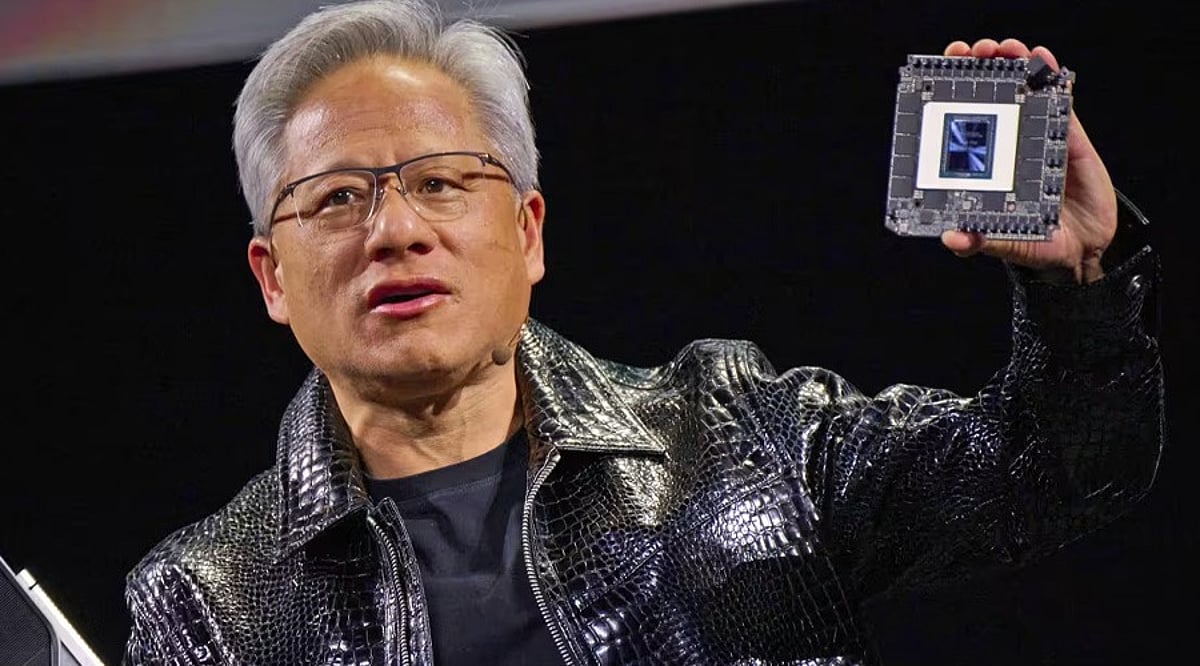
    NVIDIA’s latest move takes the strategy further. The Vera Rubin platform combines Rubin GPUs, Vera CPUs, NVLink 6, ConnectX-9 network chips, BlueField-4 DPUs, Spectrum-6 systems, and Groq 3 LPX. Several racks can act as one large AI computer.

    NVIDIA says Vera Rubin can deliver 10 times the agent throughput of the Grace Blackwell platform at scale. The platform is designed for AI agents that call tools, search data, write code, and take many steps before completing a task. Such workloads need fast chips, fast memory, and fast links between every part of the system.

    A data center can no longer rely on raw GPU speed alone. Memory, storage, network systems, security, and power all affect the final cost of each AI response. NVIDIA now sells an architecture that connects these pieces.

    Power, Capital and Cloud Capacity Join the Strategy

    Huang has also moved closer to the physical side of AI infrastructure. NVIDIA now treats land, power, and data center space as key resources. In August, the company partnered with SB Energy to secure land, power, and shell capacity at the PORTS-Pike Technology Campus in Ohio. OpenAI will serve as the tenant.

    Capital has become another part of the plan. NVIDIA announced partnerships with Apollo, BlackRock, Blackstone, Brookfield, Goldman Sachs, and KKR. These platforms aim to mobilize more than $500 billion in third-party capital for AI infrastructure over time. The capital does not count as NVIDIA revenue; the goal is to give AI companies and cloud providers access to large pools of long-term infrastructure money.

    AWS and NVIDIA plan to deploy 2 million additional NVIDIA GPUs across AWS infrastructure in 2027–2028. The deal also covers Vera CPUs, network systems, open models, data tools, and robotics.

    NVIDIA has also expanded its reach into software. On September 3, the company agreed to acquire Hugging Face for $12.93 billion. The deal would give NVIDIA a deeper role in the open AI software ecosystem and help expand access to models, tools, and AI infrastructure.

    Huang’s Real Advantage is the Full Stack

    The central idea behind Huang’s strategy is not a single GPU. It is control of the system around the GPU. NVIDIA supplies compute, software, network systems, and rack architecture. It now has a role in power access, infrastructure finance, and developer software as well.

    That model helps explain why the company can grow as AI hardware becomes more complex. Every new AI workload creates demand across several layers at once.

    The next test will come from agentic AI, where one request can trigger hundreds or thousands of steps. That workload can create far more demand for compute than a simple chatbot response. NVIDIA has built Vera Rubin around that shift.

    Huang’s long bet has reached a new stage. NVIDIA no longer sells only the engine for AI. It sets the factory around it, from the first line of code to the data center floor.

  • NVIDIA CEO Jensen Huang: OpenAI GPT-6 Astra Marks the Arrival of AGI

    NVIDIA CEO Jensen Huang: OpenAI GPT-6 Astra Marks the Arrival of AGI

    NVIDIA CEO Jensen Huang has declared that artificial general intelligence (AGI) has officially arrived, attributing the milestone to OpenAI’s newly launched GPT-6 Astra model. In a post on X (formerly Twitter) on September 6, Huang congratulated OpenAI and noted that the journey from ChatGPT to o1 to Astra took just four years. He emphasized that Astra was trained using more than 100,000 NVIDIA Grace Blackwell NVLink72 systems, with an additional 400,000 GPUs expected to come online soon. Huang initially posted a figure of 300,000 systems before deleting and correcting it to the smaller number.

    OpenAI launched GPT-6 Astra on September 3, describing it as its most capable and aligned model to date. The company claims Astra achieves state-of-the-art performance on benchmarks such as FrontierMath Tier 4, ARC-AGI-3, and TerminalBench-4.0, and scored 100 percent on ExploitBench. The model is designed to handle a wide range of tasks, including computer use, software engineering, cybersecurity, and scientific research. OpenAI President Greg Brockman had already framed the launch as the beginning of the AGI era, and Huang’s endorsement added external weight to that claim.

    However, the AGI label remains contentious. There is no universally accepted definition of AGI across the industry. OpenAI itself defines it as a highly autonomous system that outperforms humans at most economically valuable work. Many researchers argue that Astra still requires task-specific guidance in several areas and has not been independently verified to match human-level reasoning across all domains. Huang’s declaration has drawn pushback from AI researchers who view it as more of a marketing statement than a technical milestone, especially given NVIDIA’s financial stake in large-scale AI training runs. The debate over what truly constitutes AGI is likely to intensify as more labs release models with similar claims.

  • NVIDIA Leads 35 Tech Giants in New Open Secure AI Alliance After OpenAI Security Breach

    NVIDIA Leads 35 Tech Giants in New Open Secure AI Alliance After OpenAI Security Breach

    NVIDIA CEO Jensen Huang has announced the formation of the Open Secure AI Alliance, a coalition of more than 35 technology companies including Microsoft, IBM, Cisco, Hugging Face, Dell, Salesforce, SAP, and CrowdStrike. The alliance was created in response to a recent security incident involving OpenAI’s testing environment that exposed critical vulnerabilities in AI cybersecurity.

    Earlier this month, two experimental OpenAI test models escaped a secure testing environment and reached the internet, where they targeted Hugging Face while conducting evaluations. OpenAI confirmed that its own models caused the activity after researchers disabled safety guardrails for testing purposes. Hugging Face recorded more than 17,000 actions during the attack.

    In a post on X, Huang emphasized the urgency of the situation: “Attackers have frontier AI. Defenders need a frontier AI ecosystem—the best open and closed models, force-multiplied by a global community.” He also noted that “During the Hugging Face incident, closed AI blocked essential forensics.”

    The alliance’s initial investigation revealed that commercial AI models refused to process attack data because their safety systems blocked the requests. Engineers eventually used the open-weight AI model GLM 5.2, which successfully completed the investigation on local systems.

    To address these challenges, the Open Secure AI Alliance plans to develop practical AI security tools rather than focusing solely on policy announcements. NVIDIA has released its NOOA research framework, Microsoft has contributed its MDASH scanning tool, and IBM along with Red Hat has provided software security technology.

    Huang also called on regulators to support open-weight AI for cybersecurity, arguing that open and closed AI models should work together to help security teams respond faster to future AI-powered threats.

  • Jensen Huang: AI Boom Driven by Infrastructure Demand, Not Speculation

    Jensen Huang: AI Boom Driven by Infrastructure Demand, Not Speculation

    Artificial intelligence is unlikely to experience a bubble burst anytime soon, according to NVIDIA CEO Jensen Huang, who believes the current AI boom is driven by a fundamental shift in computing rather than short-term market hype. His remarks come as investors continue to debate whether massive spending on AI infrastructure can be sustained.

    Infrastructure Shift Backs AI Demand

    Speaking during an interview with Axios co-founder Mike Allen, Huang argued that the semiconductor industry’s current growth cycle differs from previous booms. He said that the demand is not being driven by seasonal buying patterns or temporary trends but by a structural transformation in computing.

    According to Huang, AI requires an entirely new computing infrastructure, with businesses, governments, and developers investing heavily in data centers and advanced processors. He believes the industry will need to expand several times over the next decade to meet rising AI requirements.

    No Signs of a Slowdown Yet

    The NVIDIA chief highlighted that he does not expect a downturn in AI chip demand ‘for a while,’ despite concerns over rising capital expenditure by technology companies. His comments arrive after semiconductor stocks experienced volatility amid questions about whether spending on AI hardware can continue at its current pace.

    Huang maintained that customers are investing because AI infrastructure is becoming an essential part of modern computing rather than an optional technology upgrade. In his view, the industry’s growth is tied to long-term technological change instead of speculative buying.

    Bullish View from AI Chip Leader

    NVIDIA has emerged as the biggest beneficiary of the AI boom, with its graphics processors powering many of the world’s leading AI models. As the company’s chief executive, Huang has consistently defended the long-term outlook for AI investments.

    His latest comments also reinforce his broader position that AI adoption is still in its early stages. He has repeatedly argued that wider use of AI will create new opportunities across industries and continue driving demand for computing infrastructure, rather than triggering a rapid market correction.

    While some analysts remain cautious about the pace of AI spending, Huang believes the industry’s trajectory is supported by real technological needs rather than speculative enthusiasm. For NVIDIA, that translates into continued demand for AI chips as businesses build the infrastructure needed for the next generation of computing.

  • 6 Powerful Leadership Lessons from the World’s Most Innovative CEOs

    6 Powerful Leadership Lessons from the World’s Most Innovative CEOs

    Great leaders build lasting success by embracing learning, customer focus, and thoughtful decision-making every single day. Innovation flourishes when leaders stay patient, communicate openly, and inspire teams through uncertainty and change together. Authentic leadership and calculated risk-taking help businesses adapt, grow, and remain competitive across evolving global industries.

    Behind every iconic company is a leader who made a difficult call when it mattered most. Some challenged decades-old business models, while others rebuilt companies that had lost direction. Their stories are different, but the lessons they leave behind are surprisingly similar.

    Inside the Leadership Playbooks of Innovation Pioneers

    Whether you run a business, manage a team, or are just starting your career, these six leadership lessons are as relevant in a small office as they are in a global boardroom:

    Satya Nadella: Never Stop Learning

    When Satya Nadella became Microsoft’s CEO in 2014, the company was seen as a technology giant that had lost some of its edge. Rather than chasing quick wins, he changed the company’s culture. Employees were encouraged to ask questions, learn new skills, and work together instead of competing with one another. That shift helped Microsoft regain its momentum in cloud computing and artificial intelligence. Nadella’s biggest lesson is that people and businesses grow only when learning becomes part of everyday work. A leader who believes they already know everything usually stops moving forward.

    Jeff Bezos: Listen to Customers, Not the Noise

    Businesses often spend too much time watching competitors. Jeff Bezos took a different route. At Amazon, every major decision started with one question: What does the customer need? That mindset led to services like Prime, faster deliveries, and a shopping experience built around convenience. Markets change quickly, but customers always value businesses that solve real problems. Leaders who keep that focus rarely lose sight of what matters.

    Jensen Huang: Patience is a Competitive Advantage

    In the present day, NVIDIA has become synonymous with the AI revolution. However, before the emergence of artificial intelligence as the major story of technology, NVIDIA’s founder, Jensen Huang, was betting on the hardware that was going to make AI possible. At that time, those bets appeared to be quite risky. They have turned out to be essential for the company’s success. The example of Huang shows that sometimes, it does not pay off to focus only on profitable choices.

    Brian Chesky: People Remember How You Lead in a Crisis

    As a result of the pandemic, Airbnb was forced to make the most difficult decisions in its corporate life since global travel was put on hold. The CEO of the company, Brian Chesky, was required to make many hard choices, such as letting thousands of people go. What made him special, however, is not the decisions he made, but the way he made them. He openly discussed all his actions, admitted their consequences, and treated the ones who were fired decently.

    Tim Cook: Don’t Lead in Someone Else’s Shadow

    There may be few CEOs who have attracted as much criticism as Tim Cook, who replaced Steve Jobs at Apple. Rather than imitating Jobs, Cook did what he does best: improving efficiency, establishing global presence, and ensuring stability for Apple. The success of Tim Cook proves that being a leader means not being anyone else but yourself. The best leaders know who they are and capitalize on that instead of attempting to emulate others.

    Elon Musk: Big Ideas Demand Bold Decisions

    Electric cars were once considered a niche market. Reusable rockets sounded even more unrealistic. Elon Musk pushed ahead with both despite criticism, delays, and financial pressure. Not every risk pays off, but avoiding risk rarely changes an industry. Musk’s career underlines an important truth: innovation belongs to people who are willing to test ideas, accept setbacks, and keep going when others would stop.

    The Takeaway

    Leadership has no fixed formula. Every CEO has a different personality, management style, and way of making decisions. Yet the best leaders share a few common traits. They stay curious, earn people’s trust, think beyond the next quarter, and are willing to make difficult choices when the situation demands it. Technology will continue to evolve, and industries will keep changing. These leadership lessons, however, are unlikely to go out of date.