Tag: leadership

  • Future-Proof Leadership: Essential Strategies for Executives in 2026

    Future-Proof Leadership: Essential Strategies for Executives in 2026

    The leadership playbook that worked five years ago is being rewritten in real time. Economic volatility, AI-driven organizational change, and accelerating geopolitical shifts are forcing business executives to develop an entirely different set of capabilities. Gartner’s 2026 CIO and technology executive survey found that 94% of leaders expect major changes to their plans within 24 months, yet fewer than half of digital initiatives meet their stated targets. The gap between ambition and execution isn’t a resource problem; it’s a leadership one.

    Build Adaptive Decision-Making into Your Operating Model

    The concept of annual planning cycles is rapidly becoming outdated faster than most corporate leaders appreciate. According to Gartner studies, less than 18 percent of all leaders have adopted the approach of dynamic off-cycle decision-making today, but these few leaders are 24 percent more likely to be high-performers. Future-ready leaders will move away from using the calendar to drive decisions and adopt trigger-driven decision making, where they make decisions based on market triggers as opposed to the next quarterly meeting. It entails forming small cross-functional decision teams, escalation processes, and building a culture that encourages mid-course corrections.

    Lead AI Adoption as a People Challenge, Not a Technology One

    The executives gaining ground fastest on AI recognized early that adoption stalls because of leadership culture, not technology, a point Dataiku’s CEO has noted publicly. Two practical implications follow: AI upskilling needs its own budget line separate from developer training, and role redesign needs to happen proactively in collaboration with HR, mapping which responsibilities will shrink, which will expand, and which new decision-making accountabilities AI will create. Leaders who leave this to figure itself out tend to end up with expensive tools and resistant organizations.

    Prioritize Outcomes Over Initiatives

    One of the clearest traits separating strong leaders in 2026 is the ability to translate technology investment into financial language. Organizations where the CXO consistently connects digital initiatives to revenue, cost reduction, or customer outcomes are 25% more likely to outperform peers, yet fewer than a third do this consistently. This means moving internal reporting away from initiative milestones toward business metrics: not “we deployed the platform,” but “we reduced processing time by 40% and recovered $3M in annual overhead.” Boards and CFOs are demanding this level of accountability, and executives who can’t make the case in business terms risk losing credibility and budget.

    The Five Leadership Capabilities Worth Building Now

    Leaders of successful transformation efforts exhibit one commonality: they have established trust in their organization across all functions without using force. The finance, operations, IT, and HR functions do not wait for someone to give them guidance about how to interpret transformation efforts; rather, they are writing the transformation story. Tactics that can be employed by any organization include cross-functional rotation of future leaders before any big initiative, creating performance measures that go beyond departmental lines, and making sure the transformation steering committee is really steering and not just reporting.

    Develop Geopolitical and Regulatory Fluency

    Geopolitical volatility and data sovereignty regulations are altering how planning is done for executives who have not yet developed expertise in this arena. In an analysis conducted by Gartner, it was revealed that CIOs who effectively mitigate geopolitical sourcing risks were 51% more successful than others, but only 28% are doing so. From a more general perspective, what this implies is that executives must be clear about which markets, suppliers, and data streams pose regulatory risk in light of the European AI Act, Indian DPDP, and future US data sovereignty regulation.

    Why This Matters

    Technology alone no longer determines business success, leadership does. Organizations that cultivate adaptive leaders, align AI with business outcomes, and respond quickly to changing markets are significantly better positioned to outperform competitors, manage disruption, attract talent, and sustain growth in an increasingly uncertain global business environment.


  • The Enterprise Leader’s Guide to Digital Transformation Roadmaps

    The Enterprise Leader’s Guide to Digital Transformation Roadmaps

    Digital transformation succeeds or fails long before any system goes live. Nearly 90% of organizations run some form of transformation program, yet only 30% meet their goals. Sequencing and governance now matter more than the tools themselves. Enterprise leaders no longer question whether digital transformation deserves a place on the boardroom agenda; attention has shifted toward execution, sequencing, and accountability across every business unit.

    Why Most Programs Fail

    Consultants tracking enterprise technology describe the gap between ambition and actual results as structural, not temporary. Most programs struggle to close the gap between what leadership promised and what teams delivered. The root cause is rarely the technology — it is almost always the sequence in which decisions get made. Roadmaps built purely on technology upgrades rarely survive contact with actual budgets.

    Data Foundations Are Critical

    Transformation programs tend to stumble at the data layer, often before execution even begins. Data quality remains the single largest barrier: 64% of leaders name it their top challenge, and 77% describe their own data as average or worse. Investing heavily in AI without fixing data quality first backfires within months. Enterprises that treat data governance as groundwork, not an afterthought, move faster once AI work actually starts. Skipping this step simply moves the cost further down the timeline, where it costs more to fix.

    Key Priorities for Enterprise Roadmaps

    Digital leaders now build transformation into core strategy rather than treating it as a side initiative. TEKsystems research shows digital leaders are 2.5 times more likely to embed transformation deeply than laggards. Governance has become its own workstream, with steering committees that have direct executive sponsorship over sequencing and budget calls. The following priorities consistently surface across enterprise roadmaps that deliver measurable returns:

    • Data governance and quality repair ahead of AI scaling
    • Cloud-native infrastructure supporting hybrid, distributed workloads
    • Change management run as its own workstream with metrics
    • Initiatives ranked by value, feasibility, and delivery risk
    • Agentic AI rollout paired with architectural oversight

    Governance and Execution Gaps

    Successful programs pour nearly half their total effort into change management, not technology deployment. SupraITS research puts that figure near 50% for leading organizations. Yet only 27% of operations leaders report broad organizational impact from recent digital investments, per PwC’s 2026 survey. Integration complexity and inconsistent user adoption top the list of obstacles. Executive sponsorship alone rarely closes this gap; a dedicated program office tracking progress is essential. Middle management often decides whether a roadmap survives past its first year.

    What This Means for Enterprise Strategy

    A widening gap between transformation spending and actual results shows that budget size guarantees nothing. Leadership alignment, sequencing discipline, and honest data readiness now separate enterprises earning real returns from those still experimenting without direction. Organizations with strong integration achieve 10.3x ROI versus 3.7x, proving that disciplined roadmaps, cloud readiness, and structured change management deliver stronger business outcomes.

    Final Words

    Enterprise leaders entering the next phase of digital transformation are relearning an old lesson: spending the most no longer guarantees the strongest results. Structured sequencing, disciplined governance, and honest data assessments now separate lasting transformation from repeated, costly experimentation. The roadmap itself has become the real differentiator, not any single technology purchase. Enterprises aligning data foundations, cloud architecture, and workforce readiness before scaling AI will capture compounding returns and enter the next decade ready to lead.

  • Building a People-First Digital Transformation Roadmap: Key Phases and Strategies for Enterprise Success

    Building a People-First Digital Transformation Roadmap: Key Phases and Strategies for Enterprise Success

    Digital transformation in 2026 has reached a critical juncture: expectations are higher than ever, yet execution consistently falls short. According to Gartner’s 2026 CIO survey, 94% of CIOs anticipate major changes to their plans within 24 months, but only 48% of digital initiatives meet or exceed business targets. The gap is not ambition or investment—it’s the lack of a disciplined roadmap that turns strategy into sequenced, accountable execution.

    Why Most Transformation Roadmaps Fail

    The most common failure occurs when digital transformation is treated as a mere IT upgrade. Assigned solely to the CIO or IT department, it becomes a technology implementation rather than a holistic business change. Another error is rolling out new platforms without redesigning the processes around them—new tools on old workflows rarely deliver efficiency gains. Many companies also fail to measure ROI at intermediate stages, leaving them blind to course corrections needed mid-implementation.

    The Five Phases of an Effective Roadmap

    A strong roadmap breaks the journey into sequenced phases:

    1. Maturity Assessment: Evaluate people, process, technology, and data. Most enterprises still run 400+ fragmented applications and legacy ERP systems from the early 2000s—this baseline is essential.
    2. Strategy Definition: Align technology investments with business goals and define clear metrics.
    3. Early Execution (90-Day Quick Wins): Build momentum with small, visible successes.
    4. Infrastructure Modernization: Move to cloud-native architecture and zero-trust security.
    5. AI and Automation Integration: Embed AI into core workflows across finance, operations, and customer service.

    Governance and Ownership Determine Success

    The clearest differentiator between successful and stalled transformations is ownership. Effective roadmaps are collectively owned by the CEO, CIO/CTO, COO, CFO, and CHRO—shared accountability, not one executive’s burden. Gartner research shows CIOs who tie technology initiatives to measurable financial outcomes are 25% more likely to outperform peers, though only a third consistently do so.

    The 2026 Shift: From AI Pilots to Operational Integration

    The biggest change in roadmaps this year is the move away from isolated AI experiments that never leave pilot phases. Enterprise AI adoption has doubled year-over-year, reaching 24% in 2026 (up from 12%). Digital leaders are nearly four times more likely to achieve this maturity. Experts note that 2026 marks the year AI adoption shifts from a technical problem to a people and management challenge—roadmaps now explicitly address these human factors.

    Building a Roadmap That Survives Reality

    Winning companies in 2026 share three traits: a senior executive responsible for results (not just delivery), a dedicated budget for change management and training separate from technology, and quarterly review cadences from day one. The lesson: success comes not from bigger goals but from the discipline to execute them.

    Why This Matters

    As organizations accelerate AI adoption and cloud modernization, successful digital transformation depends on leadership, governance, and employee adoption—not technology alone. A structured roadmap reduces risk, improves ROI, and ensures transformation initiatives deliver lasting business value.

  • Software Architects and Tech Leads: 7 Essential Books for 2026

    Software Architects and Tech Leads: 7 Essential Books for 2026

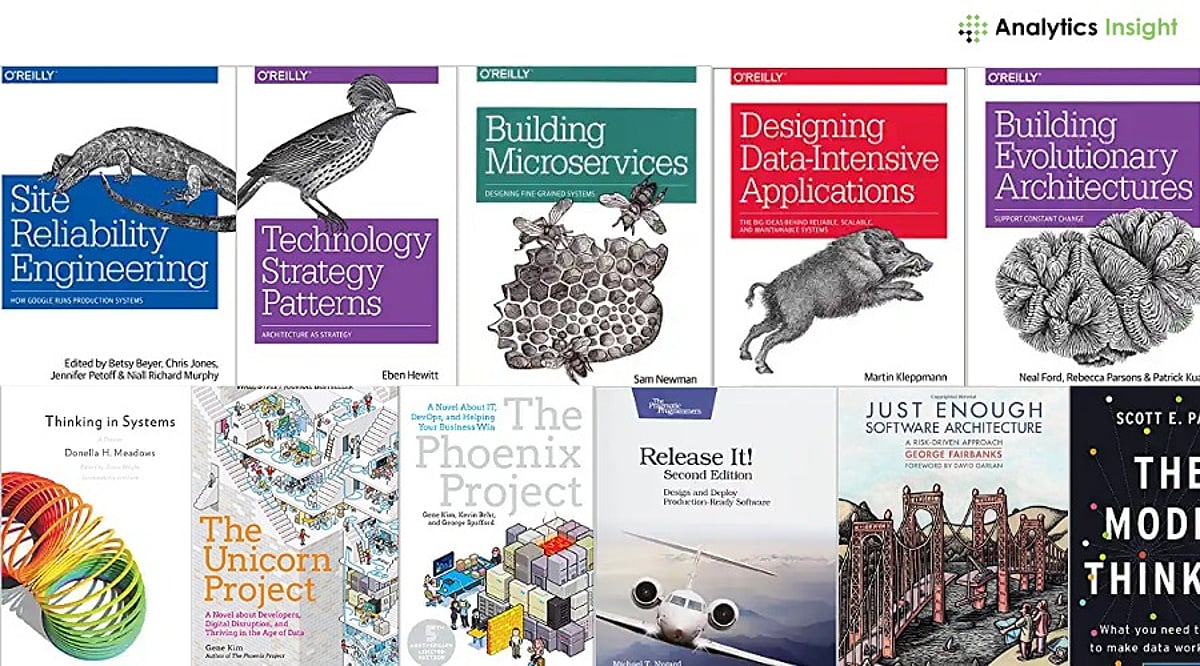
    Software architecture isn’t just about designing systems anymore. Today’s architects are expected to make decisions that affect scalability, security, cloud adoption, AI integration, and even business outcomes. As companies continue to modernize their technology stacks, experienced software architects and tech leads are becoming harder to find. According to the Stack Overflow Developer Survey 2025, more than 84% of developers already use or plan to use AI tools in their workflows, making strong architectural thinking more valuable than ever. If you’re planning to step into an architecture role or simply want to become a better technical leader, these seven books deserve a place on your reading list.

    1. Designing Data-Intensive Applications

    Martin Kleppmann’s classic explains distributed systems, databases, replication, and scalability in an understandable way. Essential for cloud-native and large-scale data systems.

    2. Fundamentals of Software Architecture

    Mark Richards and Neal Ford cover architecture patterns, trade-offs, and decision-making for developers transitioning to leadership roles.

    3. Software Architecture: The Hard Parts

    Neal Ford, Mark Richards, Pramod Sadalage, and Zhamak Dehghani explore real-world trade-offs in distributed transactions, event-driven systems, and evolutionary architecture.

    4. Clean Architecture

    Robert C. Martin emphasizes separating business logic from dependencies to build maintainable, long-lasting software.

    5. Software Engineering at Google

    Titus Winters, Tom Manshreck, and Hyrum Wright share Google’s engineering culture insights on code reviews, testing, documentation, and technical debt—applicable anywhere.

    6. Building Microservices (Second Edition)

    Sam Newman provides practical guidance on microservices boundaries, API management, and cloud-first architecture.

    7. Head First Software Architecture

    Raju Gandhi and Mark Richards offer a visually engaging introduction to architecture fundamentals for aspiring architects.

    Looking Ahead

    The role of a technical leader today involves having good judgment, communicating ideas well, and knowing system design. Technologies will change, but the principles in these books will remain valid for years.

    FAQs

    Which book is best for beginners? Head First Software Architecture is excellent for transitioning developers.

    Why should software architects read books in 2026? To stay current with AI, cloud, and distributed systems best practices.

    Is Clean Architecture still relevant? Yes, its principles of maintainability and separation of concerns endure.

    Which book is best for distributed systems? Designing Data-Intensive Applications is the go-to resource.

    Can these books help developers become tech leads? Absolutely, they build technical knowledge and leadership skills.

  • Proven Leadership Strategies That Forge Resilient Organizations

    Proven Leadership Strategies That Forge Resilient Organizations

    Strong leadership is the bedrock of organizational resilience. When employees trust their leaders, feel safe sharing ideas, and know the organization can adapt without losing direction, they handle uncertainty far better. Resilience is not a folder of contingency plans—it is how people are led. Disruption is now a daily reality: economic dips, tech shifts, supply-chain shocks, and changing customer habits are constant. The organizations that recover fastest are those where leadership has already built a culture of adaptability, accountability, and learning—long before a crisis arrives.

    Leadership Principles Behind Resilient Organizations

    The following leadership approaches enable organizations to stay resilient, empower employees, and respond effectively to change and unexpected challenges.

    Give People a Reason to Stay Focused

    In tough situations, people do not expect leaders to have all the answers. They expect clarity. A clear purpose helps teams understand where they are heading, even if the path remains vague. When leaders communicate the bigger picture—not just quarterly goals—teams can make decisions and stay focused.

    Trust Grows Through Everyday Actions

    Trust is not built overnight or during a crisis. It is built through constant, honest communication and leaders who are willing to address harsh realities. Employees appreciate honesty far more than corporate speak. Sharing problems openly treats people as partners, not onlookers.

    Give Teams the Confidence to Act

    Decision-making cannot be quick when every step requires multiple approvals. Good leaders create an environment where people can make sound decisions based on their own roles. Empowering employees speeds up decision-making and fosters a sense of ownership.

    Keep Learning, Even in Good Times

    Assuming today’s success guarantees tomorrow’s is risky. Markets, customers, and technology evolve constantly. Leaders who foster curiosity and learning enhance their organization’s ability to succeed. Training is important, but so is giving people opportunities to experiment and learn every day.

    Resilience Starts with People

    Strategies keep operations running; people keep business moving. Tired, neglected, and detached employees will fail when the going gets tough. Well-being matters for business success, not just HR. When managers listen, acknowledge effort, create balance, and foster psychological safety, they build committed teams that can handle any setback.

    Break Down Silos

    Problems rarely affect a single department. Solutions require cross-department effort, information, and accountability. Leaders who encourage collaboration enable faster action. Diversity of views leads to better decisions, and transparency prevents small issues from escalating. Collaboration also ensures collective responsibility.

    Stay Ready Instead of Waiting

    Preparation is often overlooked in favor of crisis management, but it is crucial for recovery. Companies that assess risks, refine continuity plans, and develop future leaders will recover more quickly because they are already prepared.

    Build Leaders at Every Level

    A resilient organization should not depend on one individual. Leaders must exist in every department so that people can step into leadership roles when needed. Coaching, mentoring, and delegating responsibilities create a pipeline of leaders.

    Final Takeaway

    Resilience is shaped by everyday leadership choices: how openly people communicate, how much trust exists, and how willing the organization is to learn and adapt. Businesses will keep facing uncertainty, but those led with empathy, clarity, and confidence are more likely to emerge stronger. Resilience is not about resisting change—it is about helping people move through it together.

    Why This Matters

    Strong leadership determines how organizations respond to uncertainty. The right approach strengthens decision-making, builds employee confidence, encourages adaptability, and helps businesses recover faster while maintaining stability, growth, and long-term competitiveness.

    FAQs

    1. What is organizational resilience? It is a company’s ability to prepare for, respond to, and recover from disruptions while maintaining operations, supporting employees, and achieving long-term objectives.
    2. Why is leadership important for organizational resilience? Leaders shape culture, guide decision-making, build confidence, and create strategies that help organizations adapt and recover during uncertainty.
    3. Which leadership style is best for building resilience? There is no single best style. Organizations benefit from combining transformational, adaptive, strategic, collaborative, servant, authentic, and learning-oriented leadership based on needs.
    4. How can leaders improve resilience in the workplace? By communicating openly, empowering employees, encouraging innovation, investing in learning, promoting collaboration, and preparing through risk management and planning.
    5. What are the biggest benefits of resilient leadership? Improved employee engagement, stronger business continuity, enhanced adaptability, faster recovery from disruptions, and sustained competitiveness in a rapidly changing environment.
  • Top AI Certifications for CEOs and Senior Executives in 2026

    Top AI Certifications for CEOs and Senior Executives in 2026

    As AI governance, board expectations, and enterprise transformation accelerate, CEOs are increasingly turning to executive-focused AI certification programs. These programs strengthen strategic decision-making, improve cross-functional leadership, and build confidence in evaluating AI investments—all without requiring technical expertise.

    Many CEOs still rely on secondhand briefings from technical teams instead of forming independent judgment on artificial intelligence. Boards now expect leaders to defend AI strategy on their own terms. This gap between passive awareness and active command has pushed senior executives toward formal certification.

    PwC recently found that 70% of CEOs expect generative AI to reshape their business models within three years. Only 28% of leadership teams feel prepared for that shift. Certification programs built for executives close this gap by turning technical concepts into usable strategic frameworks.

    AI Certifications for Executives

    Certifications built for executives differ sharply from technical bootcamps aimed at engineers or data scientists. These programs assume no coding background. Instead, they concentrate on strategic frameworks, governance structures, and organizational change management. Curricula generally cover AI capabilities, ethical risk, vendor evaluation, and communication with technical teams.

    Enrollment numbers reflect this shift in priorities. Coursera reported a 67% rise in enrollments across AI leadership courses among C-level executives. Boston Consulting Group separately found that leaders with high AI literacy report revenue outperformance at more than twice the rate of less literate peers.

    AI Certifications for CEOs and Senior Executives

    Choosing the right program depends on organizational stage, industry, and the specific leadership gap a CEO wants to close. Some executives need governance fluency to satisfy regulators. Others want applied frameworks to guide transformation projects spanning multiple business units.

    Certification providers now design separate tracks for CEOs, CFOs, and CTOs rather than a shared curriculum. Each role interacts with artificial intelligence through a different lens. A CEO typically needs a wide view of strategy, market positioning, and board-level communication around AI spending. A CFO instead focuses on cost modeling and measurable return on that spending.

    Top Programs for CEOs and Senior Leaders

    • MIT Sloan Artificial Intelligence: Implications for Business Strategy – Delivered jointly through MIT Sloan and MIT CSAIL, this six-week program pairs AI fundamentals with enterprise strategy challenges. A capstone project applies coursework directly to the participant’s own organization.
    • Stanford AI for Leaders – Senior managers and transformation leads gain a functional grasp of AI capabilities and operational risk. Structured case studies walk through how these risks play out inside real organizations.
    • Oxford Saïd Business School Executive AI Programme – Oxford applies its own strategic framework to real business problems through a personalized capstone project. CEOs, CTOs, and transformation officers learn to govern and measure AI across regulated units.
    • Wharton AI and Machine Learning for Business – Wharton’s certificate centers on data-driven methods that senior managers can apply soon after finishing the program. Vendor evaluation and cross-functional AI initiatives receive particular attention throughout the coursework.
    • Chief Executives Council AI Prompting and Automation Certificates – Built alongside Arizona State University, these certificates prioritize repeatable, hands-on AI use inside daily executive work. No coding background is required, and workflow automation sits at the center.
    • Harvard Business School Online Artificial Intelligence for Business – Harvard’s course studies how artificial intelligence reshapes entire industries, with heavy emphasis on strategy and rollout. Graduates receive a verified certificate recognized widely across corporate leadership circles.

    Why Executives Are Pursuing AI Certification

    • Boards expect leaders to explain AI strategy without depending entirely on technical staff.
    • Regulatory scrutiny around AI governance keeps expanding across most major industries.
    • Certification signals readiness to boards, investors, and prospective hires evaluating leadership credibility.
    • Companies with more AI-literate senior executives report stronger revenue outcomes overall.
    • Programs increasingly blend ethics, governance, and applied strategy instead of isolated technical modules.

    Accreditation, faculty reputation, and relevance to a specific industry deserve close attention before enrollment. Most application requirements include five to ten years of senior management experience. Prior coding knowledge rarely matters here, since the emphasis stays on functional strategic understanding.

    Final Thoughts

    AI certification for senior executives has moved well past a resume credential or a passing trend. Each program addresses a genuine gap between technical capability and confident leadership judgment. None of these credentials replaces an executive’s own strategic instinct or accountability for outcomes.

    Leaders gaining real value from these programs tend to choose deliberately rather than enroll broadly. CEOs who match certification choice to their organization’s actual AI maturity see results sooner. As adoption accelerates across every industry, executives treating certification as genuine preparation will lead with sturdier judgment and lasting credibility.

  • Rami Fahim: The CEO Driving AI-Powered Transformation at FlairsTech

    Rami Fahim: The CEO Driving AI-Powered Transformation at FlairsTech

    Rami Fahim is a technology executive recognized for shaping global IT service delivery and innovation. As Chief Executive Officer of FlairsTech, he leads an international organization that provides software development and customer operations services to businesses worldwide. Known for championing innovation, talent, and operational excellence, Fahim has helped position the company as a trusted technology partner for thousands of organizations.

    Early Life and Education

    Rami Fahim built his career on a strong combination of technical expertise and business insight. He earned a Bachelor of Engineering in Computer Engineering from Concordia University in 2000, developing a solid foundation in technology. Later, he pursued a Master of Business Administration from McGill University in 2007, strengthening his leadership, strategy, and global business management capabilities.

    Professional Career

    Rami Fahim assumed the role of Chief Executive Officer at FlairsTech, where he oversees global strategy, operations, and innovation. He leads teams delivering software development and customer operations services to organizations worldwide. His leadership focuses on building high-performing teams, expanding international reach, and creating technology-driven solutions that help businesses improve efficiency and customer experience.

    Business Intervention in AI

    FlairsTech uses AI-driven solutions to help organizations transform their operations through automated processes combined with workflow optimization and decision support systems which improve efficiency and decrease operational expenses while enabling teams to deliver results that meet organizational goals in all areas of their work.

    • Smart Operations: AIMY uses artificial intelligence to conduct automated quality checks while it retrieves information immediately and it helps users make faster decisions by combining artificial intelligence with human knowledge to enhance precision and provide consistent customer service.
    • Workflow Intelligence: The AI platform analyzes workflows to decrease manual work while it delivers practical insights which help organizations boost their operational performance and efficiency and their teams achieve quicker and more precise business results.
    • PMO Optimization: AIMY-powered PMO Services enable organizations to optimize their project workflows while they achieve better resource management and make informed decisions which help them complete projects on schedule and within budget while they meet their strategic goals.
    • Intelligent Monitoring: It uses artificial intelligence to forecast application problems while it carries out repetitive work and decreases false alarm notifications which results in better operational efficiency and lower expenses and lets teams work on important strategic projects.
    • Intelligent Automation: It uses artificial intelligence to streamline IT operations, customer experience management, project management office functions and business processes which helps teams work more efficiently while reducing their operational costs and producing measurable effects on all service areas.
    • AI-Driven Finance: It uses artificial intelligence to automate all aspects of bookkeeping and invoice processing and dispute resolution which results in better accuracy and faster work processes and lower expenses and complete financial compliance and the ability to grow business operations.

    Business Achievements

    FlairsTech has established international offices in Egypt and Poland and Canada under Rami Fahim’s leadership. The company now supports more than 2,500 organizations through a team of over 600 professionals. Fahim has developed the company through his dedication to innovation and his commitment to developing talent and operational excellence. The company’s software development services and customer operations services have established it as a trustworthy global provider.

    Controversies

    Rami Fahim currently lacks any public personal controversies which he needs to address. He has gained recognition for his role in developing FlairsTech because he successfully led the company’s expansion while driving innovation through managed services and AI-based business solutions and his dedication to ethical professional practices and value-based technology implementation.

  • Sonos Restructuring: Top Product and Design Executives Depart in Leadership Overhaul

    Sonos Restructuring: Top Product and Design Executives Depart in Leadership Overhaul

    Premium audio product manufacturer Sonos has laid off several senior executives from its product and design divisions, moving ahead with a larger restructuring plan. The move follows earlier workforce reductions and aims to flatten management layers, improve execution, and accelerate product development.

    Among those laid off was Dana Krieger, Vice President of Design, who spent 12 years at Sonos. The restructuring also affects other experienced leaders across product and user experience teams, raising questions about the company’s future product pipeline.

    In a memo seen by Bloomberg, Sonos CEO Tom Conrad wrote, “I want a Sonos that moves with more conviction and more velocity. Fewer months in conference rooms. More prototypes in our labs. More decisions made and executed. More exceptional products in the world for our customers.”

    The latest changes follow an earlier round of layoffs in June, when Sonos cut around 3% of its workforce, mostly involving workers in product, design, and user experience fields. Sonos is still reeling from the results of its ill-fated decision to introduce a major redesign of its mobile app in 2024, which was heavily criticized for removing important features and causing usability problems. The backlash eroded customer trust and ultimately led to leadership changes.

    The departure of key figures has raised concerns within the industry regarding Sonos’ capacity to continue innovating in the premium smart audio market. However, Sonos believes that a reduction in bureaucracy will make product development more efficient and improve collaboration across teams. The latest restructuring signals that Sonos remains committed to streamlining its business despite concerns over the departure of experienced product leaders. Given rising competition in the connected audio and smart home product market, Sonos hopes that its organizational structure will help it get back on track. The results will be seen in the upcoming quarter.

  • 7 Must-Read AI Newsletters for Business Leaders in 2026

    7 Must-Read AI Newsletters for Business Leaders in 2026

    As artificial intelligence reshapes industries at an unprecedented pace, executives need curated, reliable sources to separate signal from noise. The right AI newsletter delivers actionable insights, strategic analysis, and practical use cases—without overwhelming your inbox. Here are seven top newsletters every business leader should consider adding to their morning routine.

    Top AI Newsletters at a Glance

    The Rundown AI

    Perfect for those with only five minutes a day, The Rundown AI covers AI breakthroughs, product launches, and regulatory news in a concise format. It also includes productivity tips and tutorials, making it valuable for both engineers and executives seeking actionable insights.

    The Batch

    Created by DeepLearning.AI, The Batch translates complex AI research into digestible explanations for business leaders. It focuses on why a development matters and how companies can apply it, helping executives bridge the gap between technical teams and corporate strategy.

    Exponential View

    Written by technology analyst Azeem Azhar, Exponential View offers deep analysis of the intersection of AI, geopolitics, economics, and innovation. It’s ideal for long-term strategic thinking rather than daily news consumption.

    Superhuman AI

    Designed for professionals who want to leverage AI for productivity, Superhuman AI delivers practical tips on new tools, automation, and prompts. Busy executives will appreciate its focus on actionable suggestions without heavy technical jargon.

    The Neuron

    The Neuron presents the latest AI news in a conversational, easy-to-read tone. It covers major company updates, new products, enterprise software, and productivity—all in short articles perfect for morning reading.

    TLDR AI

    For executives working closely with engineering or product teams, TLDR AI summarizes research papers, product updates, and machine learning news in a few minutes. It’s a quick way to stay informed on technical developments.

    Ben’s Bites

    Founded by entrepreneur Ben Tossell, Ben’s Bites offers a founder’s perspective on the AI ecosystem, tracking startups, investments, product announcements, and real-world case studies. It’s a valuable source for executives scouting innovations, partnerships, and acquisition opportunities.

    Why This Matters

    Regularly reading a trusted AI newsletter sharpens strategic thinking, provides fresh ideas, and supports informed decision-making in an increasingly AI-driven world. A balanced mix of daily briefings and weekly deep-dives keeps leaders ahead without information overload.

    Conclusion

    No single newsletter covers everything. Combine a daily briefing like The Rundown AI for news, The Batch for knowledge, and Exponential View for long-term strategy. This trio ensures you stay informed, educated, and strategically prepared.

    Frequently Asked Questions

    Which AI newsletter is best for busy executives?

    The Rundown AI offers concise daily updates, helping executives stay informed about major AI developments, business trends, and useful productivity tools.

    Are AI newsletters free to subscribe to?

    Many leading AI newsletters offer free editions, while some provide premium subscriptions with deeper analysis, exclusive content, and additional resources.

    How often should executives read AI newsletters?

    Reading one daily newsletter and one weekly strategic publication is usually enough to stay updated without feeling overwhelmed by information.

    Which AI newsletter focuses on long-term business strategy?

    Exponential View examines AI, innovation, economics, and technology trends, helping leaders understand long-term business opportunities and emerging market shifts.

    Can AI newsletters help with business decision-making?

    Yes. They provide curated insights, practical use cases, and industry trends that support informed decisions on AI adoption and digital transformation.

  • Why Top CXOs Turn Workplace Conflict Into a Strategic Advantage

    Why Top CXOs Turn Workplace Conflict Into a Strategic Advantage

    In any workplace, conflict is inevitable. As organizations grow, workforces become more diverse, business priorities shift, and departments must collaborate more closely than ever. What separates high-performing companies from mediocre ones is how their leaders respond to these inevitable tensions. Great CXOs don’t see conflict as a destabilizing force—they view it as an opportunity to improve communication, strengthen collaboration, and make better decisions. Rather than wielding authority, they build a culture where people feel safe expressing divergent views while staying aligned with the organization’s larger goals.

    Why This Matters

    As businesses become more collaborative and fast-paced, a CXO’s ability to handle conflict directly affects employee engagement, innovation, decision-making, organizational culture, productivity, and ultimately, business success.

    Addressing Issues Before They Escalate

    Experienced leaders know that unresolved disputes rarely resolve themselves. Even minor disagreements between colleagues or departments can erode productivity, client outcomes, and employee motivation. Successful CXOs inspire managers to recognize early signs of conflict and initiate conversations before problems grow. Early intervention prevents misunderstandings from affecting morale and performance.

    Keeping the Focus on the Problem

    Effective leadership requires distinguishing between the person and the problem. Astute CXOs ensure that office disputes don’t become personal. Discussions center on the facts, business goals, and potential solutions. The leader facilitates conversations where employees can discuss barriers, consider options, and reach mutually beneficial outcomes. When discussions remain solution-focused, employees feel safer engaging and contributing without fear of retribution.

    Building a Culture of Psychological Safety

    High-performing organizations operate on trust. Employees must be able to present ideas, raise concerns, and even critique established practices, knowing their input will be taken seriously. Effective CXOs foster psychological safety by encouraging open, constructive debate while maintaining professionalism and respect. This environment sparks creativity, as workers express themselves freely without waiting for issues to escalate into bigger problems.

    Listening Before Making Decisions

    Good leaders know that conflict resolution begins with listening. Great CXOs gather diverse perspectives from everyone involved and spend time understanding the root causes of disagreements. Many workplace conflicts stem not from opposing goals but from miscommunication, misunderstanding, or lack of information. By listening carefully, leaders make better judgments and employees become more receptive to outcomes.

    Balancing Empathy with Accountability

    Empathy is a critical leadership quality in today’s workplace, but seasoned CXOs know it must be paired with accountability. Recognizing employees’ challenges—both professional and personal—builds trust. At the same time, leaders maintain performance standards. Employees know they will receive support without being excused from their responsibilities.

    Turning Healthy Debate into Better Decisions

    The most effective executive teams don’t always agree. Instead of avoiding disagreements, top CXOs encourage constructive arguments that push people out of their comfort zones. Different functions see issues from various angles—one focuses on costs, another on implementation, another on customer implications. After the debate, the team reaches consensus on the path forward, resulting in stronger strategies and better outcomes.

    Leading Through Communication and Example

    Employees closely watch how CXOs behave during tough times. Leaders who maintain professionalism during conflicts set standards that ripple through the entire company. Communication is also vital: successful managers explain the rationale behind decisions, how they align with business priorities, and what steps are expected from employees. This transparency builds confidence in leadership. The CXO’s conduct becomes a model for others to follow.

    The Leadership Advantage

    Conflict is inevitable as organizations grow, adopt new technology, and respond to changing environments. The defining quality of effective CXOs is not avoiding conflict but resolving it constructively. By addressing problems promptly, fostering open communication, creating psychologically safe environments, and balancing empathy with accountability, today’s leaders turn organizational conflicts into learning and development opportunities. In today’s dynamic business world, conflict management is not just a leadership tool—it is a strategic means of building organizational culture, fostering innovation, and ensuring long-term business performance.