Tag: leadership

  • How Stock Incentives Drive $200 Million CEO Paydays: Inside the Debate Over Executive Compensation

    How Stock Incentives Drive $200 Million CEO Paydays: Inside the Debate Over Executive Compensation

    The debate over executive compensation has intensified as CEO pay packages continue to hit unprecedented levels. Across the United States, a handful of corporate leaders are earning compensation worth more than $200 million annually, driven largely by stock awards and long-term performance incentives. However, while firms argue that these compensation packages align executives’ and shareholders’ interests, many people wonder whether such remuneration is reasonable, given income disparities and the need to reduce labor costs.

    These days, the world’s highest-paid chief executives are not earning large salaries. Rather, they earn money through a complex compensation system that depends on the company’s growth expectations and its market capitalization performance.

    Stock Awards Drive Billion-Dollar Wealth

    Executive compensation has changed significantly over the last decade. The trend is toward replacing fixed pay with equity compensation, which may be highly rewarded through increased value in the event of strong share performance.

    Performance Share Units (PSU), Restricted Stock Units (RSU), stock options, and long-term incentive programs are the main methods of executive compensation today. They pay the CEO not for financial success but for creating value for the shareholders.

    Such a method results in very large compensation, exceeding $200 million per year, especially for technology, media, and manufacturing companies in fast-growing markets.

    The CEOs Leading the Pay Rankings

    Several corporate leaders have topped global compensation charts in recent years.

    Hock Tan, Broadcom

    The CEO of Broadcom is known to be one of the highest-paid CEOs in the world. The pay packets he receives have always exceeded $200 million due to stock awards tied to high revenues and returns on shareholder investments. With Hock Tan’s guidance, Broadcom has become the world’s most valuable semiconductor company.

    Tim Cook, Apple

    The CEO of Apple, Tim Cook, is another example of a highly paid executive who occasionally earns more than $200 million due to the vesting of long-term stock awards. While he receives a relatively modest salary, the significant reward comes from equity awards linked to Apple’s performance.

    Nikesh Arora, Palo Alto Networks

    The cybersecurity firm Palo Alto Networks has one of the most expensive compensation packages for its CEO, Nikesh Arora. His earnings were mainly linked to the stocks he received for growth in the cybersecurity industry.

    David Zaslav, Warner Bros. Discovery

    David Zaslav, the media executive, is known for having an expensive compensation package, worth hundreds of millions of dollars, despite the company’s restructuring, layoffs, and cuts in content production budgets.

    Why Boards Approve Massive Compensation

    Boards have claimed that outstanding leadership provides immense value for stakeholders. A chief executive officer who can provide tens of billions of dollars of market capitalization can deserve a pay package of a few hundred million dollars.

    There has also been increased competition for seasoned managers. Organizations fear losing talented leadership to competitors, especially in sectors such as technology, artificial intelligence, medicine, and finance.

    The performance-based pay system enables the board to protect the generous pay by emphasizing that managers will earn their compensation through shareholder benefits.

    Growing Shareholder Pushback

    However, despite all the above-mentioned arguments, executive remuneration is being increasingly scrutinized. Institutional shareholders have become more inclined to vote down executive remuneration schemes deemed excessively generous in ‘Say on Pay’ votes. Even proxy advisors have recommended reviewing executive incentives that seem out of touch with financial results.

    Furthermore, employee organizations have continued to raise doubts about the growing disparity between CEOs’ earnings and those of ordinary workers. Nowadays, in many multinational companies, a CEO’s earnings are several hundred times those of an average employee.

    The criticism becomes particularly sharp when companies announce layoffs, cost reductions, or weak financial results while awarding executives record compensation.

    Global Trend Beyond Silicon Valley

    Although US executives dominate the highest-paid rankings, generous compensation packages are increasingly appearing worldwide. Companies in Europe and Asia have adopted performance-based equity incentives slowly to attract talented people from around the world.

    On the other hand, regulations are tighter outside the United States because many countries require increased transparency, shareholder approval, and disclosure of CEO-worker compensation ratios.

    Future of Executive Compensation

    AI, digitalization, and semiconductor revolutions are transforming corporate leadership goals. As competition within such spheres intensifies, companies need to offer generous compensation packages to attract top-notch executives.

    However, there is also a demand for accountability. In the future, reward packages will be designed based on corporate success and shareholders’ interests.

    The issue of $200 million paychecks for CEOs is not going away any time soon. While their advocates see such compensation programs as a way of investing in outstanding leadership that will deliver billions in value to the company, their opponents interpret them as a sign of economic inequality.

    Why This Matters

    Executive pay reflects corporate priorities, investor confidence, and governance standards. As CEO compensation reaches record highs, the debate over fairness, accountability, and the widening gap between executives and employees grows stronger.

  • MIT Athletics Highlights: NCAA Championships, Wellness Initiatives, and Community Impact

    MIT Athletics Highlights: NCAA Championships, Wellness Initiatives, and Community Impact

    MIT’s Department of Athletics, Physical Education, and Recreation (DAPER) has had a remarkable year, marked by historic championship wins, innovative wellness programs, and a strong sense of community. From sweeping NCAA Division III women’s track and field titles to launching a new Exercise is Medicine class, the department continues to integrate physical activity with academic excellence.

    Championship Success

    The women’s cross country, indoor track and field, and outdoor track and field teams each won their first NCAA Division III national championships in the 2024-25 season, making MIT the first women’s program to sweep all three titles in the same academic year. Additionally, the women’s swimming and diving team captured its first national championship, with three individual titles and four relay wins. Senior Alexis Boykin earned national titles in shot put and weight throw, while the women’s cross country team claimed victory at the LaVern Gibson Cross Country Course.

    Leadership and Recognition

    G. Anthony Grant, MIT’s director of athletics and DAPER department head, was named a 2025-26 NACDA Athletics Director of the Year, recognizing his support for student-athletes, coaches, and department culture.

    Wellness and Academics

    MIT launched the Exercise is Medicine class, blending physical activity with academic coursework. The MIT Wellness Wizard Certificate program promotes health and well-being across campus, and the MedLinks program continues to provide minor medical aid to students in residence halls. A new experimental course brings movement into classrooms and academics into the gym, while Professor Emma Teng and Lead Wellness Instructor Sarah Johnson created a class focused on the mind-body connection.

    Community and People

    Nick Jewell, associate director of club sports, intramural sports, and sport camps, shares how athletics help build community. Senior Olivia Rosenstein balances cross-country with research in quantum gasses and early-universe radio signals. The department mourned the loss of Ken Johnson Jr., DAPER director of communications, promotions, and marketing. Arina Khotimsky ’23 was awarded the 2023 Michel David-Weill Scholarship for her planned career in international energy negotiations. MIT.nano’s Immersion Lab Gaming Program awarded its third annual seed grants, advancing technologies for gaming and data visualization.

  • MIT Administration Updates: Governance, Appointments, and Strategic News

    MIT Administration Updates: Governance, Appointments, and Strategic News

    MIT’s administration encompasses the governance, leadership appointments, and institutional strategies that drive the Institute forward. The following are key highlights from recent MIT News coverage on the administration topic, covering board elections, faculty hires, financial reports, and the evolving role of science and education.

    • MIT Corporation elects 10 term members, two life members for 2026 – The term members will each serve five years on MIT’s board of trustees. (May 28, 2026)
    • 3Q: Why science is curiosity on a mission – VP for Communications Alfred Ironside describes how a new initiative from MIT seeks to remind Americans of the value and power of curiosity-driven research. (May 14, 2026)
    • Q&A: MIT SHASS and the future of education in the age of AI – As the School of Humanities, Arts, and Social Sciences marks 75 years, Dean Agustín Rayo reflects on how AI is reshaping higher education and why SHASS disciplines continue to be central to MIT’s mission. (April 14, 2026)
    • Desirée Plata appointed associate dean of engineering – Faculty member in civil and environmental engineering will advance research and entrepreneurial initiatives across the School of Engineering. (April 8, 2026)
    • The strength of “infinite hope” – MIT Dean of Engineering Paula Hammond keynotes the 52nd MLK Celebration, with a message of resilience and determination. (February 17, 2026)
    • Maria Yang named vice provost for faculty – Design leader brings extensive interdisciplinary track record to key role supporting faculty across the Institute. (February 12, 2026)
    • Brian Hedden named co-associate dean of Social and Ethical Responsibilities of Computing – He joins Nikos Trichakis in guiding the cross-cutting initiative of the MIT Schwarzman College of Computing. (February 4, 2026)
    • Keeril Makan named vice provost for the arts – An acclaimed composer and longtime MIT faculty member, Makan will direct the next act in MIT’s story of artistic leadership. (January 28, 2026)
    • MIT in the media: 2025 in review – MIT community members made headlines with key research advances and their efforts to tackle pressing challenges. (December 22, 2025)
    • MIT community in 2025: A year in review – Top stories highlighted the Institute’s leading positions in world and national rankings; new collaboratives tackling manufacturing, generative AI, and quantum; how one professor influenced hundreds of thousands of students around the world; and more. (December 22, 2025)
    • NIH Director Jay Bhattacharya visits MIT – In a conversation with Rep. Jake Auchincloss, Bhattacharya focused on the agency’s policy goals and funding practices. (December 8, 2025)
    • Paula Hammond named dean of the School of Engineering – A chemical engineer who now serves as executive vice provost, Hammond will succeed Anantha Chandrakasan. (December 5, 2025)
    • MIT releases financials and endowment figures for 2025 – The Institute’s pooled investments returned 14.8 percent last year; endowment stands at $27.4 billion. (October 10, 2025)
    • At convocation, President Kornbluth greets the Class of 2029 – “We believe in all of you,” MIT’s president said at the welcoming ceremony for new undergraduates. (August 25, 2025)
    • Marcus Stergio named ombudsperson – Offering confidential, impartial support, the Ombuds Office helps faculty, students, and staff resolve issues affecting their work and studies at MIT. (August 22, 2025)

    For the most recent administration news, visit the MIT News Administration topic page.

  • Jinhua Zhao Appointed Lead of MIT’s Urban Studies and Planning Department

    Jinhua Zhao Appointed Lead of MIT’s Urban Studies and Planning Department

    Jinhua Zhao MCP ’04, SM ’04, PhD ’09, a renowned transportation planner and educator, has been appointed head of the Department of Urban Studies and Planning (DUSP) at MIT, effective July 1. Zhao, the Class of 1941 Professor of Cities and Transportation, brings deep expertise in behavioral science and transportation, combined with artificial intelligence and public policy, to tackle urban challenges.

    MIT School of Architecture and Planning Dean Hashim Sarkis praised Zhao as a rare scholar who moves fluidly between cutting-edge research and real-world policy. ‘His work with governments and transportation agencies around the world is a model for what MIT’s impact can look like beyond our campus,’ Sarkis said. Zhao succeeds Professor Christopher Zegras, who served as department head since 2020.

    Zhao earned all three of his advanced degrees at MIT before joining the faculty. He noted that the Institute’s unconventional culture and interdisciplinary connectivity were key attractions. ‘We have fewer boundaries than other universities — intellectually and physically. Our infinite corridor literally connects us to so many disciplines,’ he said.

    Globally, Zhao has shaped mobility systems through collaborations with Transport for London, Hong Kong’s Mass Transit Railway, Japan Railways, and U.S. agencies like the MBTA, Chicago Transit Authority, and Washington Metropolitan Area Transit Authority. He has also guided autonomous vehicle deployment strategy in Singapore and the Middle East. ‘Every city I’ve worked with faces the same tension: The technology is moving faster than the institutions designed to govern it,’ Zhao explained. ‘My work has been about closing that gap.’

    At MIT, Zhao founded the MIT Mobility Initiative and hosts the weekly MIT Mobility Forum, which has grown from a small internal list to a global platform drawing over 200 practitioners, policymakers, and researchers weekly. He also directs the JTL Urban Mobility Lab, which unites behavioral science and transportation technology, and is a lead principal investigator with the Mens, Manus, and Machina initiative exploring AI, work, and learning.

    As department head, Zhao aims to accelerate the transfer of DUSP research to city leaders, planners, and engineers who make decisions on issues like aging infrastructure, AI integration, and congestion. ‘We know a great deal about how cities grow, how people move, and how that will change. The question is whether the people responsible for making these changes can access what we know, when they need it,’ he said.

    Zhao’s appointment underscores MIT’s commitment to addressing urgent urban challenges through interdisciplinary research and practice.

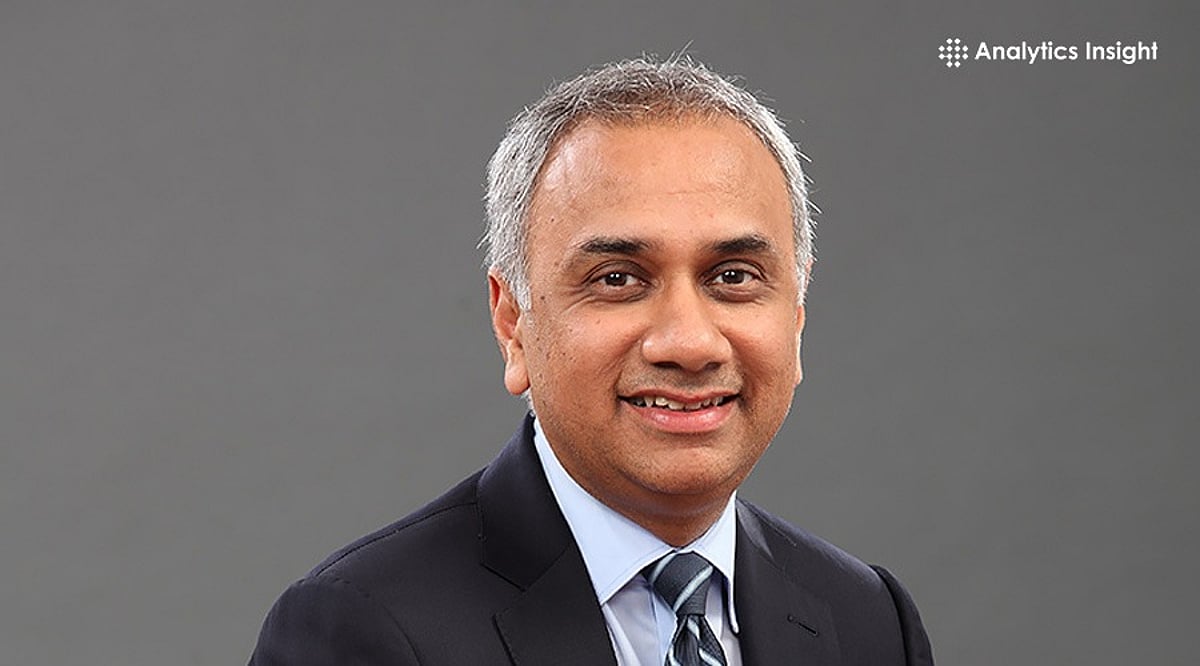
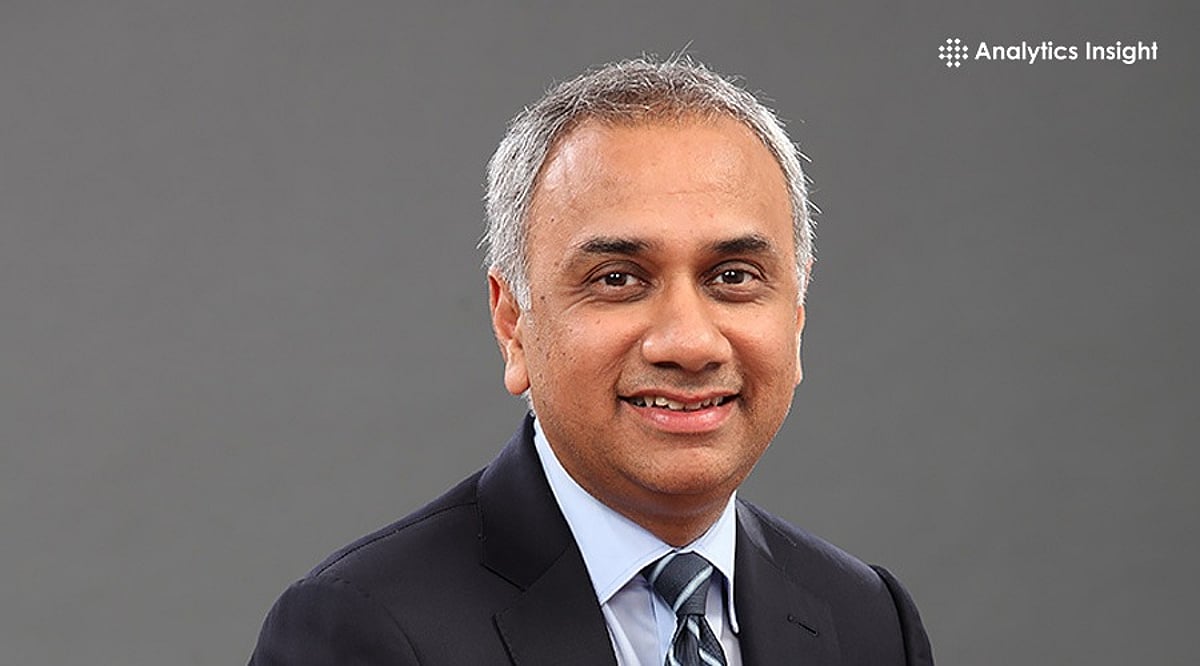
  • How Salil Parekh’s Quiet Leadership Steered Infosys Through Tech Turmoil

    How Salil Parekh’s Quiet Leadership Steered Infosys Through Tech Turmoil

    In an industry that rewards loud personalities and bold declarations, Salil Parekh has built his reputation doing the opposite. No viral statements, no constant media appearances, no carefully curated social media presence. Yet over the years, he has quietly become one of the most respected names in India’s IT industry, leading Infosys through one of the most turbulent periods in global technology.

    Since taking charge of Infosys in 2018, Parekh has helped the company grow amid rapid changes in the tech industry. Cloud computing, AI, automation, and digital services have become a much bigger part of business across the world. Through all these changes, Infosys has continued to grow steadily.

    The Journey Before Infosys

    Before joining Infosys, Parekh spent many years at Capgemini, where he held various leadership roles and worked with global clients across industries. Those years gave him deep experience in technology, consulting, and business operations. When Infosys announced him as CEO in 2018, the company was navigating a difficult period marked by leadership changes and internal disagreements. Many felt the company needed stability and calm leadership. Parekh entered quietly and focused on the work rather than creating headlines.

    A Different Kind of CEO

    One thing many people notice about Salil Parekh is his calm demeanor. He is not the type of business leader who tries to dominate every conversation. He speaks in a simple, measured way. Even during difficult times, he rarely appears reactive or dramatic. That style has helped him build trust over time. Inside Infosys, employees see him as practical and balanced — someone who listens carefully and focuses on long-term goals rather than short-term excitement. In a business world that often rewards loud personalities, his quieter approach stands out.

    Infosys Under His Leadership

    Infosys has transformed during Parekh’s tenure. The company expanded its digital and cloud services as businesses worldwide moved more operations online. Infosys also ramped up work in AI and automation to meet growing demand. The company continued signing large global deals and strengthening relationships with international clients. Employee training became a priority as technology evolved rapidly; Infosys invested heavily in helping workers learn new skills and adapt to shifting industry needs. The company’s global presence also grew stronger during these years.

    Navigating Difficult Times

    The tech industry has faced significant headwinds. Economic uncertainty affected business spending in many countries. Competition in the IT sector intensified, with companies vying for major contracts. Managing large teams across different countries brought challenges, especially during remote work periods. Then came the rapid rise of AI, pressuring technology companies to move faster and adapt to changing customer demands. Through all this, steady leadership proved essential. Instead of reacting with panic, Parekh kept the company focused on stability and long-term growth.

    Why His Leadership Style Matters

    Many business leaders today are known for their high visibility. Salil Parekh is respected for the opposite reason: he keeps a low profile and focuses on execution rather than publicity. Clients trust consistency, employees value stability, and investors look for leaders who remain calm during uncertain times. Parekh has built that reputation over years of consistent leadership. His style may not always generate headlines, but it has helped Infosys remain strong during a rapidly changing period for global technology.

    Final Thoughts

    Salil Parekh embodies a quieter style of leadership that many people still deeply value. He does not try to be the loudest voice in the room. Instead, he focuses on steady work, long-term growth, and keeping the company prepared for the future. As AI, cloud services, and automation continue to reshape the tech world, Infosys is navigating that shift under his guidance. His story is a reminder that strong leadership is not always about visibility — sometimes calm thinking, patience, and consistency matter even more.

  • How Salil Parekh Quietly Built a Legacy of Steady Leadership at Infosys

    How Salil Parekh Quietly Built a Legacy of Steady Leadership at Infosys

    While many tech leaders chase headlines, Salil Parekh has built Infosys with calm leadership, steady decisions, and long-term thinking. From AI growth to global uncertainty, the company continued expanding quietly under his balanced and practical leadership style. His journey shows that strong leadership is not always loud—consistency, patience, and stability often matter more than constant visibility.

    Leading Without the Noise

    In an industry that rewards loud personalities and bold declarations, Salil Parekh has built his reputation doing the opposite. No viral statements, no constant media appearances, no carefully curated social media presence. Yet over the years, he has quietly become one of the most respected names in India’s IT industry, leading Infosys through one of the most turbulent periods in global technology.

    Since taking charge of Infosys in 2018, Parekh has helped the company grow amid rapid changes in the tech industry. Cloud computing, AI, automation, and digital services have become a much bigger part of business across the world. Through all these changes, Infosys has continued to grow steadily.

    The Journey Before Infosys

    Before joining Infosys, Parekh spent many years at Capgemini, handling different leadership roles and working with global clients across industries. Those years gave him experience in technology, consulting, and business operations. When Infosys announced him as CEO in 2018, the company was going through a difficult period with leadership changes and internal disagreements. Many people felt the company needed stability and calm leadership. Parekh entered quietly and focused on the work instead of creating headlines.

    A Different Kind of CEO

    One thing many people notice about Salil Parekh is his calm personality. He is not the kind of business leader who tries to dominate every conversation. He usually speaks in a simple and measured way. Even during difficult times, he rarely appears reactive or dramatic. That style has helped him build trust over time. Inside Infosys, many employees see him as practical and balanced, often described as someone who listens carefully and focuses on long-term goals instead of short-term excitement.

    Infosys Under His Leadership

    Infosys has changed a lot during Parekh’s time as CEO. The company expanded its digital and cloud services as businesses around the world started moving more operations online. Infosys also increased its work in AI and automation as demand for those services grew. The company continued to sign large global deals and strengthen relationships with international clients. Employee training became important as technology evolved rapidly, and Infosys invested in helping workers learn new skills and adapt to shifting industry needs. The company’s global presence also became stronger during these years.

    Difficult Times Along the Way

    The tech industry has not had an easy few years. Economic uncertainty affected business spending in many countries. Competition in the IT sector intensified, with companies vying hard for major contracts. Managing large teams across different countries brought challenges, especially during remote work periods. Then came the rapid rise of AI, pressuring technology companies to move faster and adapt quickly to changing customer demands. Through these periods, steady leadership became very important. Instead of reacting with panic, Parekh kept the company focused on stability and long-term growth.

    Why His Leadership Gets Attention

    Many business leaders today are known for high visibility. Salil Parekh is respected for almost the opposite reason. He keeps a low profile and focuses more on execution than publicity. Clients trust consistency, employees value stability, and investors often look for leaders who stay calm during uncertain times. Over the years, Parekh has built that kind of image. His leadership style may not always create headlines, but it has helped Infosys stay strong during a fast-changing period for the global tech industry.

    Final Thoughts

    Salil Parekh embodies a quieter style of leadership that many people still deeply value. He does not try to be the loudest voice in the room. Instead, he focuses on steady work, long-term growth, and keeping the company prepared for the future. As AI, cloud services, and automation continue changing the tech world, Infosys is moving through that shift under his leadership. His story is a reminder that leadership is not always about visibility—sometimes calm thinking, patience, and consistency can matter even more.

  • MIT Economist David Autor Appointed Head of Department of Economics

    MIT Economist David Autor Appointed Head of Department of Economics

    David Autor, the Daniel (1972) and Gail Rubinfeld Professor in MIT’s Department of Economics, has been named head of the department, effective July 1, 2026. A faculty member since 1999, Autor is a leading researcher in artificial intelligence and the future of work.

    “David is a world-class labor economist,” said Agustín Rayo, the Kenan Sahin Dean of the School of Humanities, Arts, and Social Sciences. “He is also an individual of wisdom and insight. I look forward to welcoming him to the school’s leadership team.”

    Autor’s scholarship explores the labor-market impacts of technological change and globalization on job polarization, skill demands, earnings inequality, and electoral outcomes. He co-directs the James M. and Cathleen D. Stone Center on Inequality and Shaping the Future of Work.

    “I’ve been at MIT since 1999, and I owe my career to the Institute, the department, and colleagues who are as kind as they are accomplished,” Autor said. “Stepping into this role is a chance to contribute to a place that has shaped me at every stage.”

    Autor succeeds Jon Gruber, the Ford Professor of Economics, who served as department head since July 2023. In his new role, Autor aims to “build on the stellar standard set by its faculty and students while navigating budget tightening and a shifting political landscape.” He added: “Just as important, I want to lead the department toward the opportunities that advancing AI is opening in how we teach and what we research.”

    A co-director of the National Bureau of Economic Research (NBER) Labor Studies Program, Autor holds a BA in psychology from Tufts University and a PhD in public policy from Harvard Kennedy School. His honors include the NSF CAREER Award, an Alfred P. Sloan Fellowship, the Sherwin Rosen Prize, an Andrew Carnegie Fellowship, the Society for Progress Medal, and the Heinz 25th Special Recognition Award. In 2023 he was named a NOMIS Distinguished Scientist, and in 2024 an AI2050 Senior Fellow by Schmidt Sciences.